
Reviewed · JEWISH QUARTER TOURS
Budapest: Jewish History Guided Walking Tour with Historian
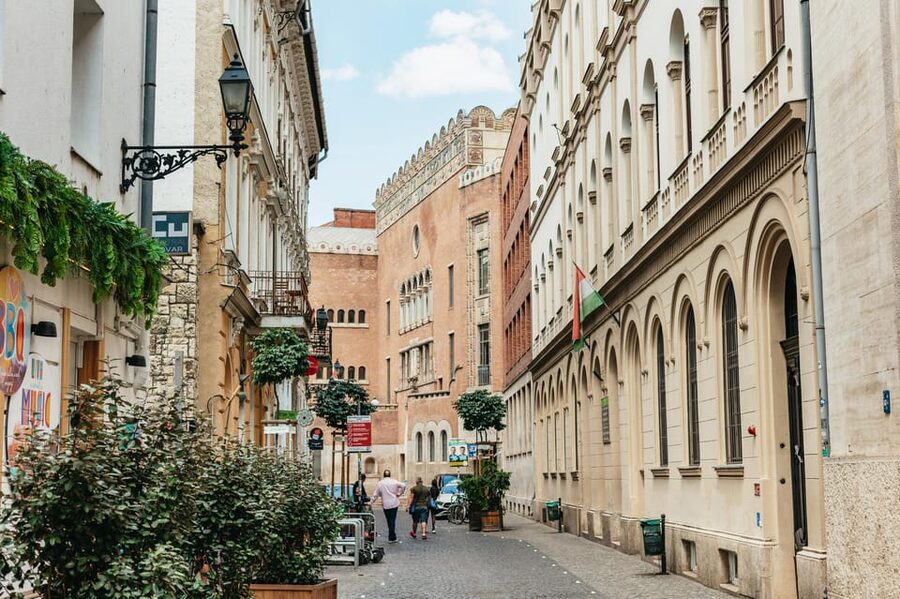
Budapest’s Jewish Quarter is not just a collection of handsome synagogues and trendy bars. It is a place where centuries of Jewish life, forced segregation, wartime courage, loss, and modern renewal all meet on a few walkable streets. This tour puts those layers together with a historian guide, rather than giving you a quick photo stop and a few dates.
I like the small group of up to 10, which makes it easier to hear the guide and ask questions. I also like the honest approach to Hungary’s past, including the difficult parts, plus the simple pleasure of coffee and flódni, a traditional Jewish cake. The main drawback is clear: you do not go inside the three synagogues, so you will need a separate ticket if their interiors are a priority.
Key points to know before you book
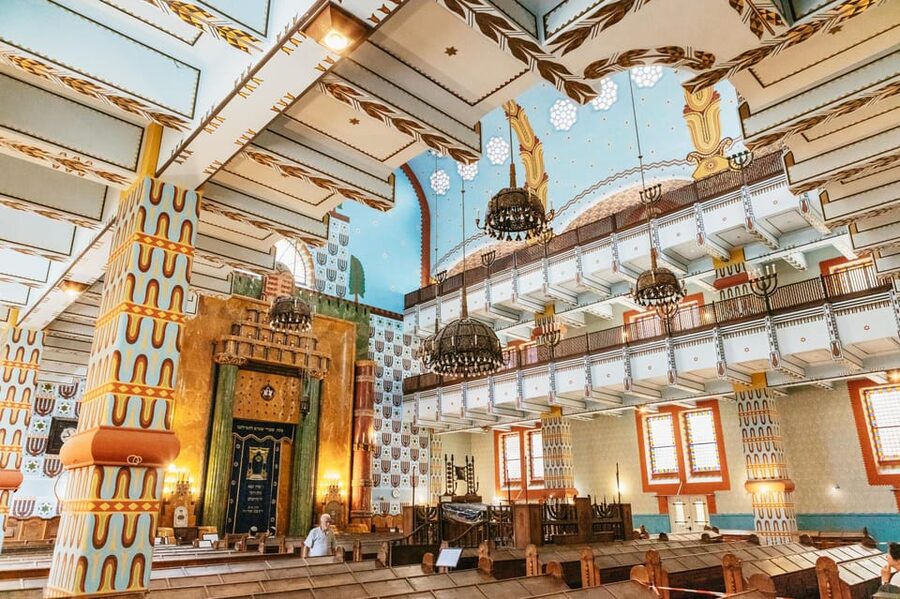
- Three major synagogues from the street: See the Dohány Street, Rumbach Street, and Kazinczy Street synagogues from outside, with historical explanation at each.
- A serious look at World War II: Learn about the former ghetto and the people who helped save Jewish lives in 1944 and 1945.
- Personal, flexible guiding: Guides such as Noémi, Gábor, András, Barbara, Andrea, and Maggie have been praised for clear storytelling and thoughtful answers.
- Flódni and a café break: The tour includes a local Jewish cake with coffee or a soft drink.
- More than old buildings: Gozsdu Passage, ruin-pub streets, kosher businesses, memorials, and street art bring present-day Erzsébetváros into the story.
- Easy central meeting point: Meet by the Kempinski Hotel Corvinus, facing the Ferris wheel at Erzsébet Square.
Starting at Erzsébet Square
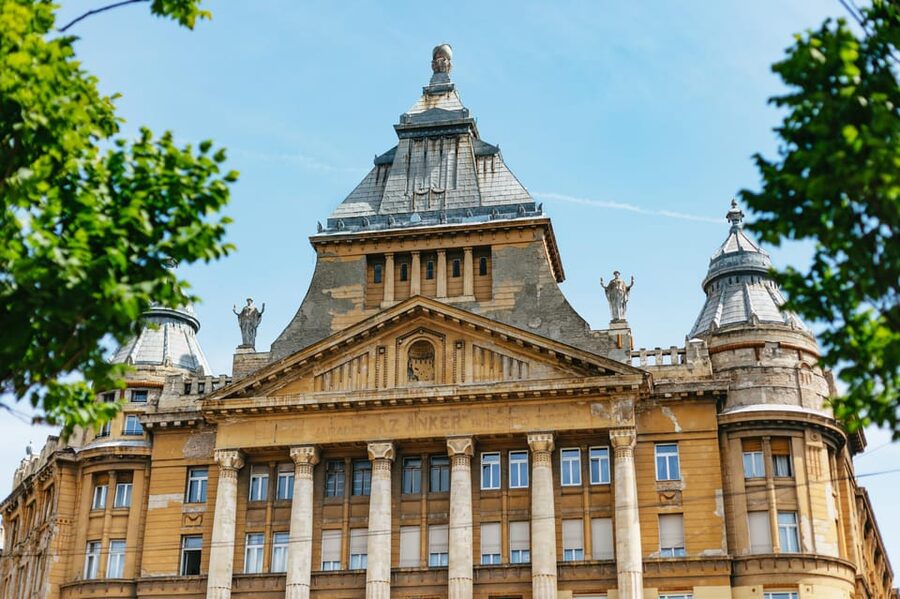
The meeting point is in front of the Kempinski Hotel Corvinus Budapest, facing the Ferris wheel on Erzsébet Square. This is a practical place to begin because Deák Ferenc tér is one of Budapest’s main transport hubs. You can reach it by the M1, M2, or M3 metro lines, along with several buses and trams.
I would arrive a few minutes early. The tour begins in the city center, but the main historical material unfolds in the 7th District, also called Erzsébetváros. The walk then moves through streets that can feel very different from the polished square where you meet.
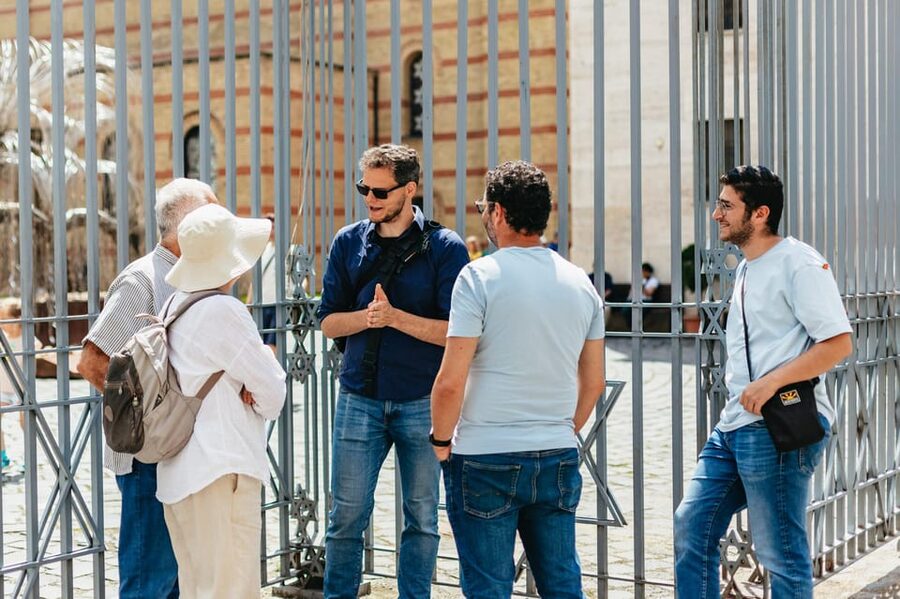
Your guide speaks English and leads the entire outing. The guide’s quality is one of the strongest parts of this experience. Names appearing among the guides include Gábor, András, Noémi, Barbara, Andrea, Judit, Maggie, Zsolt, Daniel, and Gabriel. The guiding style can vary, but the consistent theme is a strong command of Hungarian and Jewish history.
Several guides have been praised for making a large subject understandable. One used a tablet to explain Hungary’s changing borders and position in European history before entering the quarter. That kind of introduction is useful if you know little about Hungary, Poland, or Central Europe.
More Jewish Quarter walks:
- Budapest Jewish Heritage Memorial Walking Tour & Synagogue Entry
★ 5.0 · 568 reviews - Budapest: Jewish Heritage Guided Tour with Synagogue Ticket
★ 4.8 · 533 reviews - Jewish Quarter of Budapest Walking Tour
★ 4.7 · 369 reviews
Why the 7th District needs context
Jewish life has shaped this part of Budapest for more than 200 years. The district is not a museum frozen in one period. Synagogues, kosher shops, restaurants, apartments, memorials, cafés, nightlife, and street art share the same streets.
That mixture is precisely why a guide helps. On your own, you might see a grand façade, a weathered wall, or a fashionable bar and miss what came before it. A good guide connects the building to the people who used it, the laws that restricted them, and the political changes that altered the neighborhood.
The historical story reaches back well before World War II. You hear about Jewish migration into Budapest, changing legal restrictions, and the pressure placed on people to convert. This wider setting matters because the tragedy of the 1940s did not appear from nowhere. It developed within a longer history of acceptance, discrimination, opportunity, and exclusion.
I appreciate that the tour does not treat Jewish culture as a decorative addition to a city sightseeing route. The subject is handled as living history, with attention to the present Jewish community as well as the past.
The three synagogues from outside
The route introduces the three main synagogues associated with Budapest’s Jewish communities:
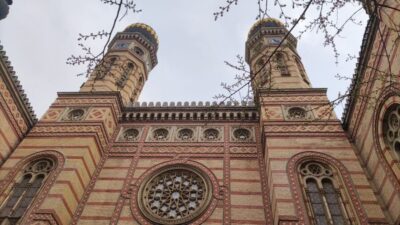
- The Dohány Street Synagogue, the largest of the three and one of the most imposing Jewish religious buildings in Europe.
- The Rumbach Street Synagogue, built in 1872 by Viennese architect Otto Wagner.
- The Kazinczy Street Orthodox Synagogue, connected with Budapest’s Orthodox Jewish community.
From the street, these buildings already offer plenty to discuss. Their size, style, and community connections reflect differences within Jewish life in Budapest. The tour helps you understand that the word synagogue does not tell the whole story. These were places of worship, community organization, education, and identity.
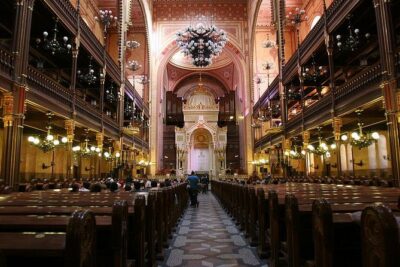
The Dohány Street building is the visual centerpiece. It is also important to set expectations. This walking tour visits the synagogue exterior only. Entry is not included, and you will not receive the interior tour, museum access, or cemetery visit that comes with a separate admission.
That limitation will matter to some people. If you want to study the architecture inside Dohány or visit the synagogue complex at length, plan another visit. If your goal is to understand how these buildings fit into the quarter, the exterior stops work well and keep the walk moving.
The Rumbach stop adds an architectural angle. Otto Wagner’s connection gives you a useful link between Budapest and the wider Central European design world. The Kazinczy Street stop helps explain the different strands of religious life that developed in the district.
Walking through the former ghetto
The tour then moves through streets associated with the former Budapest ghetto. The ghetto existed for less than two months, a short period with lasting consequences. Seeing part of the original ghetto wall gives that fact a physical reference point.
This is one of the most important parts of the walk because it strips away the idea that the quarter’s past is only about grand architecture. The same streets now filled with restaurants and nightlife were once enclosed and controlled. Your guide explains how Jewish residents were treated and how Hungarian society and politics shaped those events.
The subject is painful, and the tour does not soften it. Several guides have been praised for being direct rather than glossing over Hungary’s role in the persecution of Jews. That honesty is valuable, although you should come prepared for serious material. This is not a light sightseeing stroll with a historical theme added afterward.
The pace appears to work well for a broad range of visitors. It is a genuine walking tour, and one person described it as a lot of walking even though that was expected. Hot weather can make the route harder, while winter brings its own challenge. The tour runs in all weather, so wear comfortable shoes and dress for the forecast.
A few more Budapest half-days to weigh up
- Budapest: Historic Cruise with Welcome Drink
★ 4.7 · 6,512 reviews - Budapest Historical Sightseeing – Free Walking Tour
★ 5.0 · 1,302 reviews - Buda Castle District Dark History, Legends and Vampire Night Tour
★ 4.5 · 1,240 reviews - BloodThirsty Hungary: Walking tour & Dark Historical Stories
★ 4.9 · 633 reviews
Raoul Wallenberg, Carl Lutz, and local courage
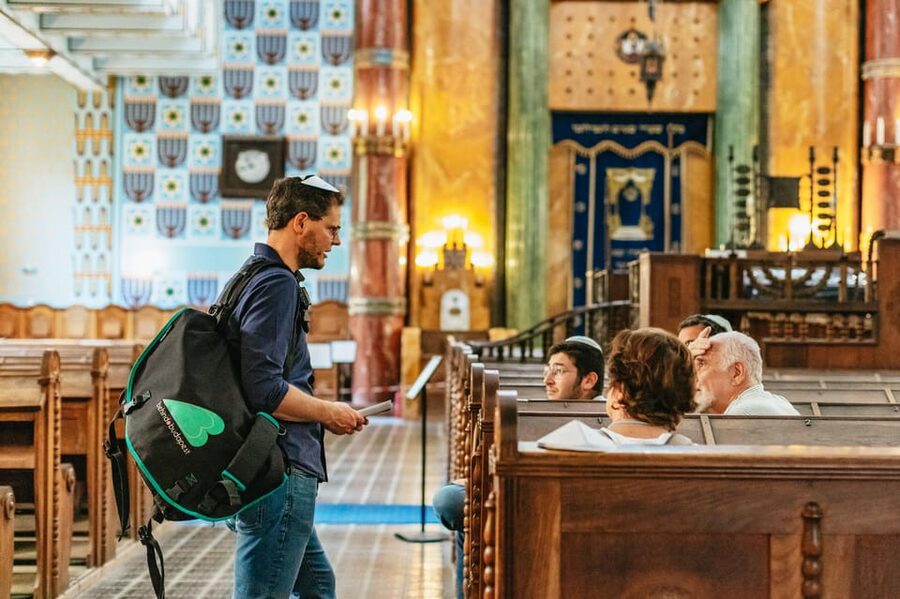
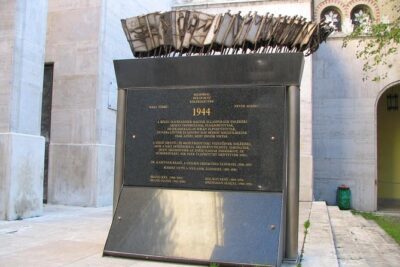
The walk includes memorials connected with Raoul Wallenberg and Carl Lutz, two figures who helped save Jewish lives during the winter of 1944 and 1945. Their actions are presented within the wider story of Budapest’s final wartime months.
These stops give the tour a human scale. Political decisions and military events can feel distant when presented only as dates. A memorial connected with an individual who took risks to protect others makes the moral choices more immediate.
Wallenberg and Lutz are recognized among those awarded the title Righteous Among the Nations. The tour also points you toward the broader network of people who acted during a period when doing the right thing could be dangerous. That balance matters. The story includes both institutional wrongdoing and personal courage.
I find this part especially useful for visitors who already know the broad outline of the Holocaust but want to understand how it played out in Budapest. The guide can place the city’s experience within Hungarian history instead of presenting World War II as a separate chapter with no local connection.
Gozsdu Passage, street art, and modern Erzsébetváros
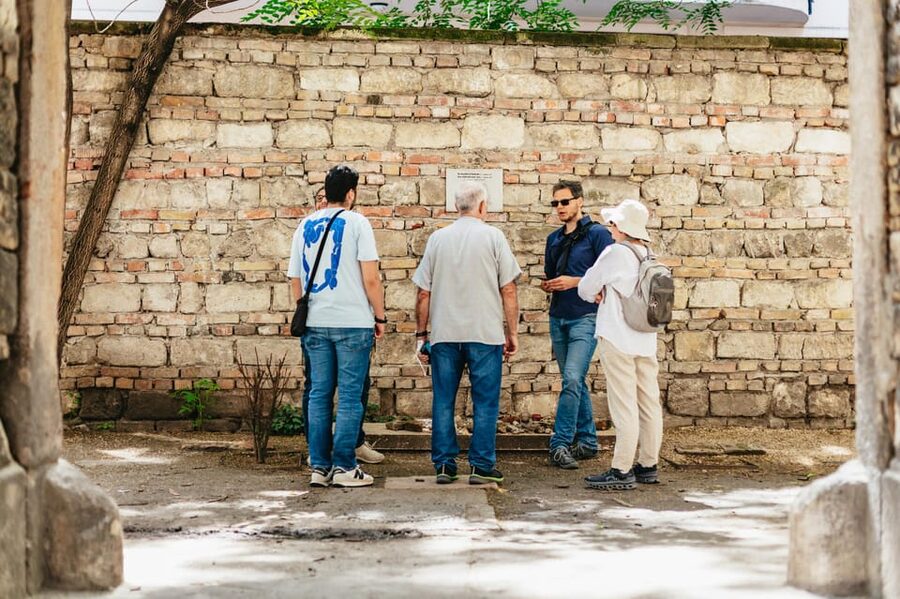
The route is not locked in the past. You walk through lively Gozsdu Passage and hear about the area’s ruin pubs and nightlife. You also see examples of Budapest’s street art and learn about less obvious corners of Erzsébetváros.
This modern layer gives the tour a needed balance. The district is now a popular place for eating, drinking, and going out, but that present-day energy can hide the area’s earlier identity. The guide helps you read both versions of the neighborhood at once.
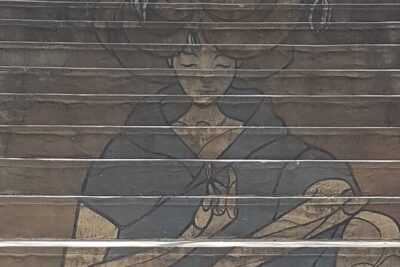
Street art adds visual variety during a route that contains some emotionally heavy stops. It also shows how current residents and artists continue to shape the district. You might not see every detail without someone pointing it out, so keep your eyes on side walls and smaller passages as you walk.
The nightlife advice is useful if you are staying in Budapest for more than a day. You hear where the famous ruin pubs fit into the neighborhood and how they relate, or do not relate, to its Jewish past. I would treat these suggestions as orientation rather than a planned pub crawl. The activity remains a history walk, not a nightlife tour.
Coffee, soft drink, and flódni
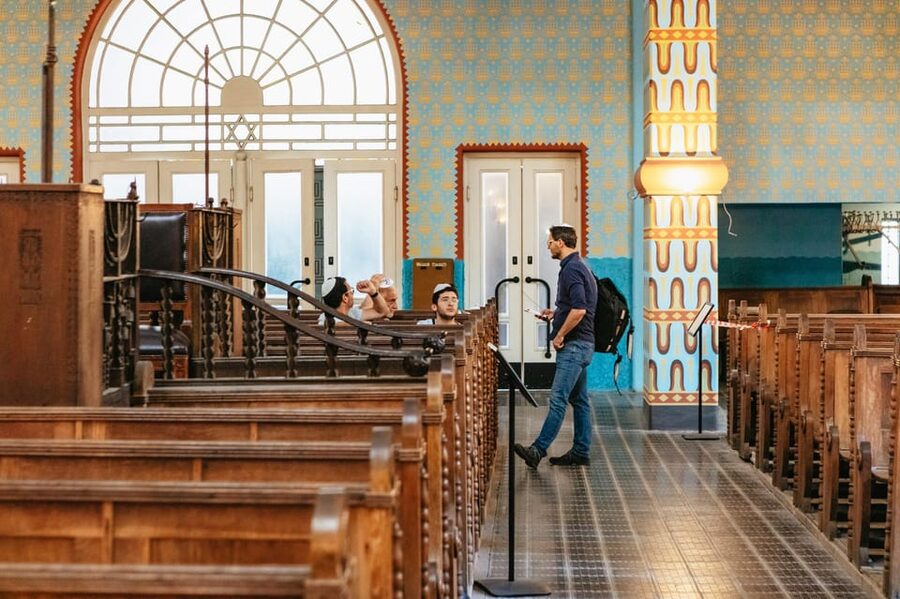
The café break lasts about 15 minutes and includes a coffee or soft drink with flódni. This traditional Jewish cake is made with layers and is associated with fillings such as walnut, poppy seed, apple, and plum.
The food stop is modest, but it improves the rhythm of the tour. After more than two hours of walking and concentrated historical discussion, a seated pause gives you time to ask a question or gather your thoughts. It also connects the subject to food traditions, not only buildings and wartime memorials.
Do not book this tour expecting a full meal or a cooking demonstration. The included treat is a small cultural sample. If you have dietary concerns, the supplied information does not specify ingredient substitutions, so you should confirm details before booking.
How the historian guides shape the experience
The guide can make or break a history walk, and this is where the experience earns much of its value. Gábor has been described as engaging, funny, and able to handle a group’s questions without losing the thread. András has been praised for combining Hungarian history with the more specific story of the Jewish quarter.
Noémi appears frequently among the guides and is known for a warm, clear approach. Several people valued her ability to explain difficult history, accommodate individual needs, and point out small details that are easy to miss. Barbara has also been praised for using personal family stories to add meaning to the tour.
Other guides, including Maggie, Daniel, Judit, Zsolt, and Gabriel, have been described as passionate, friendly, and easy to listen to. You cannot choose every guide by name, so book this for the structure and subject rather than for a guaranteed individual. Still, the range of strong guide names is reassuring.
A small group helps in practical ways. With no more than 10 people, you are more likely to hear explanations in busy streets and get an answer without interrupting a large crowd. A small group also allows the guide to adjust the pace. One person found a group of three ideal for questions, while another found 10 a comfortable size.
The one criticism worth noting is that the tour can occasionally feel less structured if synagogue opening information changes. That appears to matter mainly when visitors expect a particular interior visit. Since the advertised format is exterior viewing, you can avoid disappointment by treating the architecture stops as part of a broader neighborhood walk.
Is $63 a fair price?
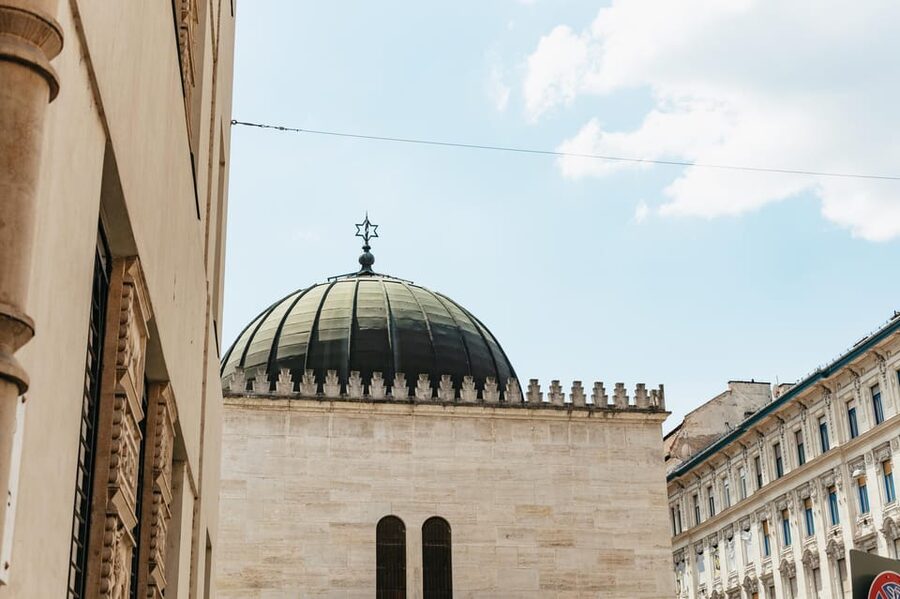
At $63 per person, this is not the cheapest way to walk around Budapest. You are paying for a 2.5-hour guided experience, a historian guide, a small group, and the café stop, not simply transportation between landmarks.
I consider the price reasonable if you want a serious introduction to the quarter. The guide supplies the context that turns a collection of streets into a coherent story. The value is strongest for first-time visitors, people with limited knowledge of Hungarian history, and anyone who prefers questions and conversation over an audio guide.
The price is less attractive if you mainly want synagogue interiors. Entry to all three is excluded, and the tour does not replace a dedicated synagogue visit. In that case, compare the cost of this walking tour with the admission fees and time needed for the sites you most want to see.
Free cancellation up to 24 hours before the start gives you some flexibility, and you can reserve now and pay later. Those booking terms are useful when your Budapest schedule is still shifting, but the main value decision remains simple: do you want historical interpretation, or do you mainly want entry tickets?
Who should book this walk?
I would choose this tour if you want to:
- Understand Jewish life in Budapest before, during, and after World War II.
- See the former ghetto area with historical explanation.
- Learn about Raoul Wallenberg, Carl Lutz, and other rescue efforts.
- Compare the three main synagogue exteriors.
- Find the Jewish Quarter’s kosher businesses, memorials, street art, and nightlife streets.
- Ask questions in a small English-speaking group.
- Add a traditional cake and café pause to a walking route.
I would choose something else, or add a second visit, if you need synagogue interiors, a longer museum experience, or a tour focused only on architecture. This experience covers a lot in 2.5 hours, so it favors breadth and clear storytelling over an exhaustive study of any single building.
Practical advice for the 2.5-hour route
Wear shoes suited to city walking. The route covers the Jewish Quarter on foot and can feel tiring on a hot day. Since the tour operates in all weather, bring suitable clothing rather than assuming the activity will be postponed.
Arrive at Erzsébet Square with enough time to find the Kempinski Hotel and the Ferris wheel. Deák Ferenc tér is the easiest transport reference point. You will spend roughly 2 hours and 15 minutes sightseeing, followed by about 15 minutes for coffee and cake.
If you want to enter the Dohány, Rumbach, or Kazinczy synagogue, plan that separately. The walking tour gives you the outside view and historical setting, but admission is not part of the $63 price.
I would also leave some time after the tour to revisit a street or memorial that caught your attention. The guide covers a large amount of material, and a second look can help you remember the district as a real neighborhood rather than a list of stops.
Should you book the Jewish Quarter walking tour?
Book it if you want Budapest’s Jewish Quarter explained with honesty, local detail, and a human voice. The combination of three synagogue exteriors, the former ghetto, rescue memorials, street art, Gozsdu Passage, and flódni gives you much more than a quick architecture tour.
The main condition is accepting what it does not include. You will not enter the synagogues, and the walking can be demanding in poor weather. For most visitors seeking a thoughtful first look at Jewish Budapest, the small group and strong historian guides make $63 a fair price. Add a separate synagogue admission later if the interiors matter to you.
FAQ
How long is the Budapest Jewish history walking tour?
The tour lasts 2.5 hours. About 2 hours and 15 minutes are devoted to guided sightseeing in the Jewish Quarter, followed by a 15-minute coffee and dessert break.
What is included in the tour price?
The price includes an English-speaking historian guide, the walking tour, and coffee or a soft drink with a local Jewish cake called flódni.
Can I enter the synagogues during this tour?
No. The three synagogue visits are exterior visits only. Entry to the Dohány Street, Rumbach Street, and Kazinczy Street synagogues is not included.
Where does the tour meet?
Meet in front of the Kempinski Hotel Corvinus Budapest, facing the Ferris wheel on Erzsébet Square. The closest transport stop is Deák Ferenc tér.
How large is the group?
The group is limited to 10 participants. This keeps the experience relatively personal and makes it easier to hear the guide and ask questions.
What language is the tour conducted in?
The live tour is conducted in English.
Does the tour operate in bad weather?
Yes. The tour starts in all weather conditions, so you should dress appropriately and wear comfortable shoes for city walking.
More Walking Tours in Budapest
- Budapest: Buda Castle Walk with Saint Stephen’s Hall
★ 4.5 · 3,012 reviews - Big Bus Budapest Hop-On Hop-Off Bus and Walking Tour
★ 3.5 · 2,206 reviews - Budapest: Buda Castle District Walking Tour
★ 4.6 · 2,108 reviews - Budapest City Landmarks Walking Tour in 2 Hours
★ 5.0 · 2,048 reviews
Just added around Budapest
- Budapest: Private, Personalized Pub Crawl, 3 drinks included★ 4.5 · 3 reviews
- Private day trip from Budapest to Bratislava, Vienna, and back★ 3.5 · 3 reviews
- Budapest: Private Adventure Sightseeing Bicycle Tour★ 4.5 · 3 reviews
- Private Danube Bend tour – full day★ 4.5 · 3 reviews
- Lake Balaton Full Day Private Wine Tour★ 5.0 · 3 reviews
- Budapest: Guided City Walking Tour in Buda and Pest★ 5.0 · 3 reviews
- Budapest Old Jewish Quarter History Private Walking Tour★ 5.0 · 3 reviews
- Budapest Urban Feast – Food Tour with Wine Tasting & Coffee House★ 4.5 · 3 reviews
Jewish Quarter Tours, compared.
Budapest Jewish Heritage Memorial Walking Tour & Synagogue Entry
Read our review →
Jewish Heritage Guided Tour with Synagogue Ticket
Read our review →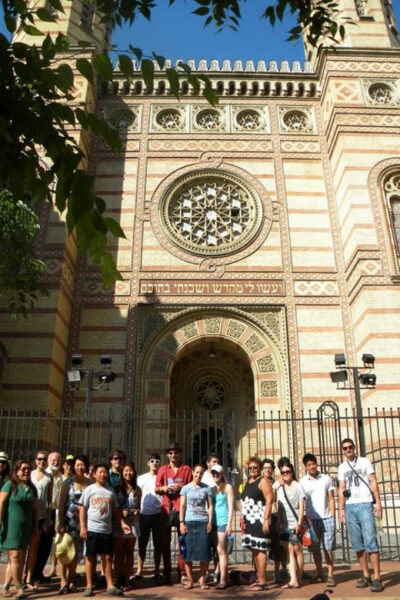
Past and Present of Budapest Jewish District Tour
Read our review →
Budapest Dohany Synagogue & Hungarian Jewish Museum & free extras
Read our review →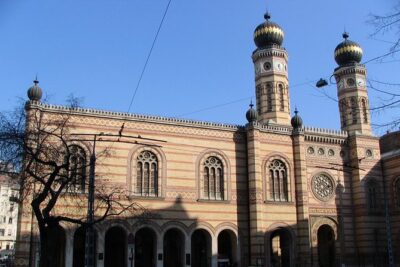
Budapest Dohany, Heroes’, Rumbach synagogues & Jewish Ghetto Tour
Read our review →Browse the lists this tour appears in