
Reviewed · JEWISH QUARTER TOURS
Past and Present of Budapest Jewish District Tour
Budapest’s Jewish District is more than a row of handsome synagogues. It is a place where the city’s Belle Époque prosperity, wartime destruction, modern street art, kosher life, and ruin-bar culture all meet. This 1-hour-45-minute walking tour gives you that full arc, from the arrival and growth of Hungary’s Jewish community to the Nazi occupation and today’s District VII.
I like two things here. First, the route connects major sights with less obvious details, including the former medieval city wall, a Schutzpass story, the last surviving piece of the ghetto wall, and the Orthodox community around Kazinczy Street. Second, the guides, including Gary, Eszter, Dora, Edith, Edi, Judith, Jude, Christine, Andy, and David, are praised for clear explanations, good pacing, humor, and strong command of the subject.
The main drawback is simple: you do not enter any synagogue. You see the exteriors, the Memorial Courtyard, and the cemetery from outside. If you want to tour the interiors, you will need a separate visit, extra time, and an admission fee.
Key points to know before you go
- The route links three important synagogues: You see the Great Synagogue, Rumbach Street Synagogue, and Kazinczy Street Synagogue from outside.
- The tour covers painful wartime history: Expect a serious account of the destruction of Budapest’s Jewish community during the Nazi occupation.
- The modern district gets equal attention: Gozsdu Udvar, murals, street art, kosher food, and Szimpla Kert show how District VII has changed.
- The walk ends at a useful orientation point: Szimpla Kert is a well-known ruin bar with pop-up exhibitions and no entry fee.
- The price works like a donation tour: The $3.63 booking fee covers administration, while the guide relies on tips at the end.
- You should wear comfortable shoes: The route is easy enough for most people, but you will stand and walk for nearly two hours.
A clear story from Belle Époque Budapest to District VII today
I like the shape of this tour because it does not treat the Jewish District as a museum frozen in 1944. You begin with the community’s growth during Budapest’s Golden Age, then move through exclusion, wartime danger, survival, and the area’s current cultural life.
That structure matters. It helps you see the district as a real neighborhood with many chapters, not only as a memorial to tragedy. The tour is serious, especially when it reaches the Holocaust and the Nazi occupation, but it also makes room for Jewish religious life, food, architecture, art, and present-day entertainment.
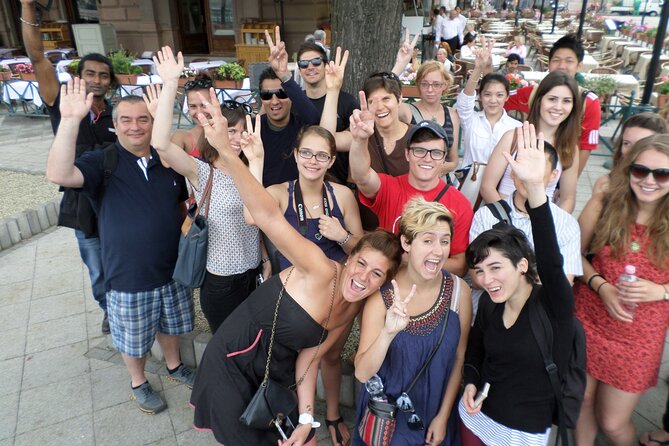
The group can contain up to 25 people. That is small enough for a guide to answer questions, though a full group may feel crowded at narrow streets and busy gathering points. Tours are offered in English, and the guide is a licensed local professional.
More Jewish Quarter walks:
- Budapest Jewish Heritage Memorial Walking Tour & Synagogue Entry
★ 5.0 · 568 reviews - Budapest: Jewish Heritage Guided Tour with Synagogue Ticket
★ 4.8 · 533 reviews - Jewish Quarter of Budapest Walking Tour
★ 4.7 · 369 reviews
Meeting beneath the Budapest Ferris wheel
The meeting point is the Budapest Ferris Wheel in Erzsébet tér, a central spot that is easy to connect with public transportation. You meet the guide there, hear the route, and get a quick outline of the main subjects ahead.
This opening is brief, about ten minutes, but it serves a useful purpose. The guide sets up the city’s Jewish story before the group reaches the religious buildings. You will hear about the Jewish people of Hungary and the focus on the period from the Belle Époque through the community’s destruction.
I would arrive a little early. Erzsébet tér is a central public square, and the Ferris wheel gives you a clear landmark, but a group can be easy to miss if you arrive at the last moment.
Deák Ferenc Square and the idea of Gaudiopolis
The second stop is Deák Ferenc Square, where the tour turns toward rescue and survival. Here you hear about Gaudiopolis, Latin for City of Joy, and the Schutzpass documents that saved thousands of Jewish lives.
This is one of the most useful parts of the walk because it adds human action to a period often reduced to dates and military events. The subject remains difficult, but the focus on rescue helps show that the wartime story included choices, risks, and efforts to protect people.
The stop also points out remains of the former medieval city wall. The wall is not just an old fragment of masonry. It helps explain how Jewish people were excluded from trading within the city limits, giving you an early example of official restrictions before the twentieth-century catastrophe.
That change in scale is a strength. You move from a large story about Hungarian society to a physical feature that shows how the city once controlled who could work and trade inside it.
The Great Synagogue, its courtyard, and cemetery

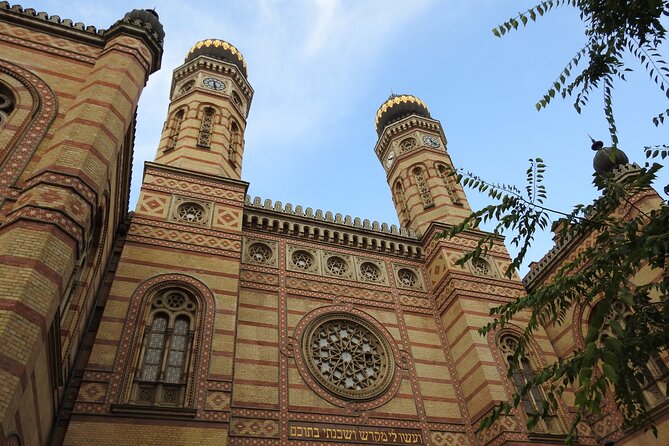
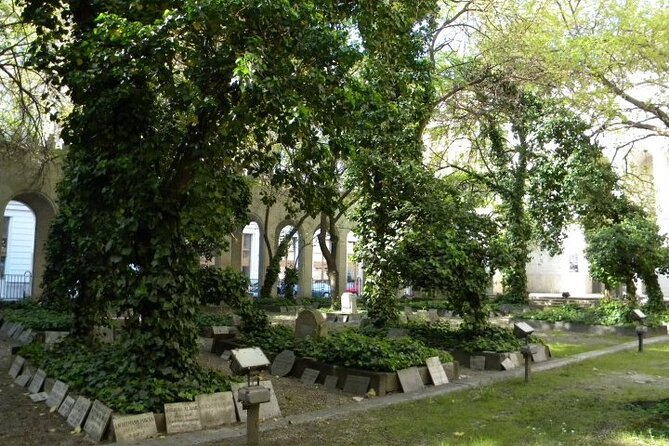
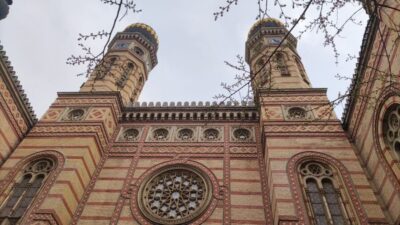
The Great, or Central, Synagogue on Dohány Street is the tour’s major architectural stop. It is described as the largest synagogue in Europe, and the guide explains the Neolog and Orthodox movements as well as Zionism.
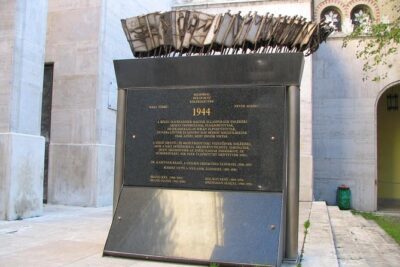
You do not go inside. Instead, you see the Memorial Courtyard and the cemetery from outside, while the guide explains the building and its place in Budapest’s Jewish life.
That limitation deserves plain warning. The Great Synagogue is a major Budapest sight, and some people book this walk expecting an interior visit. This experience is an exterior tour, so do not count on seeing the sanctuary, decorative details, or museum spaces from within.
Still, an outside explanation can be worthwhile if you want a short orientation before deciding on a separate paid visit. The guide gives context for the different Jewish movements, which can make a later synagogue visit easier to understand.
The cemetery and Memorial Courtyard also shift the mood of the walk. You are not simply looking at an impressive building. You are being asked to connect architecture with the fate of the people who worshipped there and the community that suffered during the Holocaust.
Same city, a completely different way to spend an afternoon:
- Budapest: City Highlights Cruise with Welcome Drink
★ 4.6 · 35,610 reviews - Budapest: Unlimited Prosecco, Beer and Aperol Spritz Cruise
★ 4.8 · 25,310 reviews - Budapest: Széchenyi Spa Day Ticket with Optional Upgrades
★ 4.3 · 23,911 reviews - Budapest: Nighttime or Daytime Sightseeing Cruise
★ 4.2 · 21,062 reviews
Rumbach Street Synagogue and District VII’s changing face
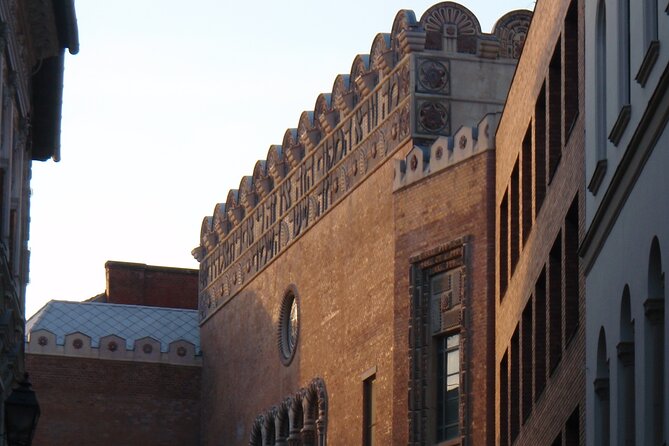
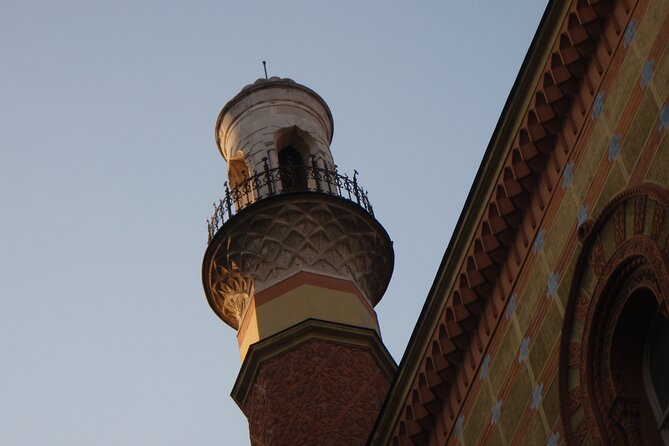
The route continues to Rumbach Street Synagogue, known for its restored interior and murals. Again, you remain outside, but the guide explains the building and points out nearby urban street art.
This pairing works well. Rumbach Street Synagogue represents restoration and religious architecture, while the murals show the district’s modern visual language. You begin to see why District VII can feel like several cities layered on top of each other.
The outside-only format is less satisfying here than an interior tour would be, especially if you are interested in decorative design. But it does keep the walk moving and lets you see more of the neighborhood in a limited period.
The route is not built around long photo stops. You should expect to stand while listening, then walk to the next point. One guide was praised for a pace comfortable even for older participants, but another participant found a different guide too fast and difficult to follow. That suggests a practical point: tell the guide if you need the group to slow down, and stay near the front if hearing English in a street setting is difficult.
Gozsdu Udvar and the last piece of the ghetto wall
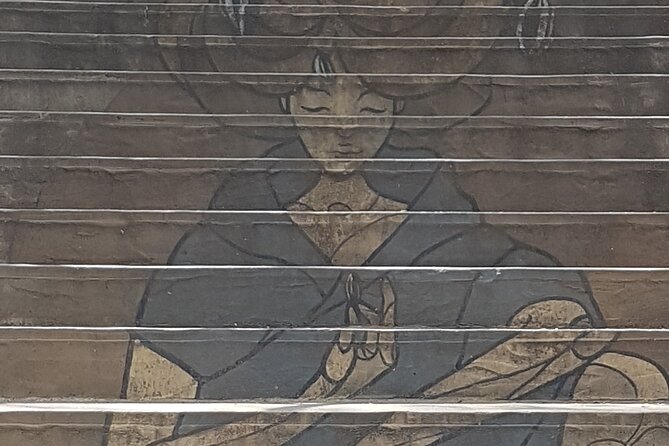
Gozsdu Udvar gives the tour its clearest look at present-day District VII. The passage mixes entertainment, food, culture, markets, and nightlife. You pass through it while learning how the area functions today.
The setting can feel far removed from the wartime chapters discussed earlier. That contrast is part of the point. The district is not only a memorial zone. It is also a place where people eat, shop, meet friends, and go out.
The stop includes the last piece of the ghetto wall. This is a small physical remnant, so you should not expect a large structure or a major museum display. Its value comes from the explanation around it. A fragment can make the boundaries and confinement of the ghetto easier to picture than a general description alone.
I find this kind of stop especially useful for first-time visitors because it encourages you to look closely at ordinary streets. The most important evidence is not always marked by a grand monument.
Kazinczy Street and Orthodox Jewish life
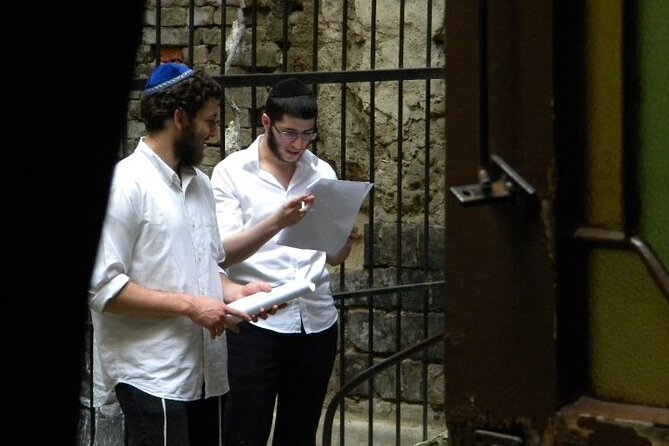
At Kazinczy Street Synagogue, the guide explains the Orthodox community, which is connected with around 50 to 60 families. You remain outside the synagogue, but the discussion covers kosher food, the Jewish ritual bath, and other aspects of religious practice.
This is a good correction to a common misunderstanding. Budapest Jewish life is not one single tradition. The earlier discussion of Neolog and Orthodox movements becomes more concrete here, and you get a sense of how religious customs shape buildings, food, and daily routines.
The stop is also helpful if you plan to eat in the district later. The tour does not include a meal, but the guide can place kosher food and religious practice in context. One of the tour’s appealing features is that it gives you small ideas for continuing on your own, from synagogue visits to finding local details and memorial markers.
As with the other synagogue stops, check your expectations. You are learning from the street, not entering the building.
Szimpla Kert, street art, and the final orientation
The walk ends at Szimpla Kert on Kazinczy Street. This is a ruin bar, and there is no entry fee. The guide points out more murals and street art, then gives a final orientation inside or around this well-known venue, where you may find pop-up exhibitions.
Ending here is practical. You finish in the middle of one of District VII’s best-known nightlife areas, with plenty of options nearby for food, drinks, and further walking. You can also pause to appreciate the sharp contrast between the district’s difficult past and its current creative scene.
Szimpla Kert is not a quiet memorial setting. It can be lively and distracting, so the final explanation may be less focused than a talk in a calm square. On the other hand, the location makes sense: it shows you the present-day neighborhood rather than ending only at a historical site.
If you want to continue exploring, the tour can point you toward subjects such as stumbling stones and small statues by Mihály Kolodko. Those details are not separate stops with guaranteed time, but they can give you ideas for a later walk.
What the guides do well, and where the experience can vary
The strongest pattern in the guide feedback is clear presentation. Gary is repeatedly described as friendly, passionate, and good at explaining how Budapest’s Jewish community arrived, survived, and sometimes prospered. Eszter and Esther are praised for organization, warmth, and care with difficult material.
Edi is singled out for a clear voice, a comfortable pace, complete answers, and useful suggestions for tourists. Judith, Dora, Edith, Jude, Christine, Andy, and David also receive praise for subject knowledge, humor, engagement, and enthusiasm.
That range of names tells you something important. This is a guide-led experience, so the personality and pace can vary by departure. The material is strong, but your experience will depend partly on who leads your group.
There is also a fair criticism to consider. One person found the treatment too generic and wanted more personal Budapest stories. Another found the walk too short, with no building entrances and only a small part of the wider Jewish District covered. A separate complaint described a guide who rushed and left people behind, although the company rejected that account and said the person described was not its Gary.
I would treat these points as useful expectations rather than reasons to avoid the tour. You get a compact introduction, not a specialist seminar or a full District VII exploration. If you want personal family stories, archive material, or extended time inside each synagogue, choose a longer paid experience or add separate visits.
Price, tipping, and what you actually receive
The listed price is $3.63 per person, made up of a booking fee. That fee goes toward administration and does not pay the guide. The guides depend on donations at the end, and the amount is your choice.
This is excellent value if you want a structured introduction at a very low upfront cost. You receive nearly two hours with a local English-speaking guide, a route through several important sites, and an explanation that would take research and careful map work to build yourself.
But the low price should not make you expect a fully private tour. The group may reach 25 people, and the guide’s income depends on tips. If you value the experience, budget for a donation rather than treating the booking fee as the whole cost.
There are no synagogue admission fees included because there is no interior admission. That keeps the walk affordable, but it also means you should add time and money if you want to enter the Great Synagogue or another building separately.
Who will get the most from this walk
I would choose this tour if you are visiting Budapest for the first time and want a useful introduction to District VII without giving up half a day. It is also a good fit if you want to understand the Jewish Quarter before returning for food, nightlife, museums, or synagogue visits.
The walk suits people who enjoy history presented outdoors and in plain language. Most participants can take part, and service animals are allowed. You should be comfortable standing and walking for nearly two hours, though one praised guide kept the pace manageable for seniors.
I would be more cautious if you have limited mobility, need frequent seating, or find accented English hard to follow. The route is outdoors, and at least one person found a strong Hungarian accent difficult to understand. Contact the provider before booking if this is a serious concern, since the exact guide is not guaranteed.
This is not the best choice for someone who mainly wants synagogue interiors. It is also not ideal if you want a slow, highly personal tour with long conversations at every stop. The strength is breadth and structure, not extended access.
Should you book the Past and Present of Budapest Jewish District Tour?
Book it if you want a short, affordable, serious introduction to one of Budapest’s most important districts. The best parts are the clear progression from the Golden Age to wartime destruction, the explanation of Neolog and Orthodox life, the ghetto wall fragment, and the final look at modern District VII around Gozsdu Udvar and Szimpla Kert.
Go in knowing that all synagogue visits are exterior-only. Wear good shoes, arrive at the Ferris wheel meeting point early, and stay close enough to hear the guide. If possible, use the walk as an introduction, then return on your own to the synagogue interior, memorial sites, food spots, or street art that caught your attention.
The 4.9 rating from 264 reviews and 99 percent recommendation figure point to a very dependable experience, while the lower scores remind you that pacing, accent, and the level of personal detail can vary. With free cancellation up to 24 hours before the start time, the risk is low. For most visitors interested in Budapest’s Jewish culture and past, this is a smart first step, not the final word.
FAQ
Where does the tour start?
The tour starts at the Budapest Ferris Wheel in Erzsébet tér, Budapest 1051, Hungary.
Where does the tour end?
The tour ends at Szimpla Kert, Kazinczy u. 14, 1075 Budapest. Szimpla Kert is a ruin bar with no entry fee.
How long does the tour last?
The walk lasts approximately 1 hour and 45 minutes.
Is the tour offered in English?
Yes. The tour is offered in English.
Do you enter the synagogues?
No. The tour visits the Great Synagogue, Rumbach Street Synagogue, and Kazinczy Street Synagogue from outside. At the Great Synagogue, you also see the Memorial Courtyard and cemetery from outside.
What are the main historical subjects?
The tour covers Jewish life in Hungary from the Belle Époque or Golden Age through the destruction of the community, along with the Neolog and Orthodox movements, Zionism, Gaudiopolis, Schutzpass documents, and the ghetto wall.
How large can the group be?
The maximum group size is 25 people.
Is the listed price the guide’s full payment?
No. The $3.63 booking fee goes toward administration and does not contribute to the guide’s earnings. Guides depend on donations at the end, and the amount is your choice.
Can I cancel the booking?
Yes. You can cancel up to 24 hours before the experience for a full refund. Cancellations or changes made less than 24 hours before the start time are not accepted for a refund.
Just added around Budapest
- Budapest: Private, Personalized Pub Crawl, 3 drinks included★ 4.5 · 3 reviews
- Private day trip from Budapest to Bratislava, Vienna, and back★ 3.5 · 3 reviews
- Budapest: Private Adventure Sightseeing Bicycle Tour★ 4.5 · 3 reviews
- Private Danube Bend tour – full day★ 4.5 · 3 reviews
- Budapest: Guided City Walking Tour in Buda and Pest★ 5.0 · 3 reviews
- Budapest Old Jewish Quarter History Private Walking Tour★ 5.0 · 3 reviews
- Lake Balaton Full Day Private Wine Tour★ 5.0 · 3 reviews
- Budapest Urban Feast – Food Tour with Wine Tasting & Coffee House★ 4.5 · 3 reviews
Jewish Quarter Tours, compared.
Budapest Jewish Heritage Memorial Walking Tour & Synagogue Entry
Read our review →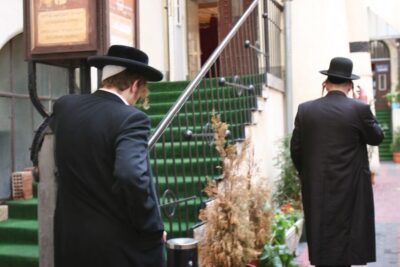
Jewish Heritage Guided Tour with Synagogue Ticket
Read our review →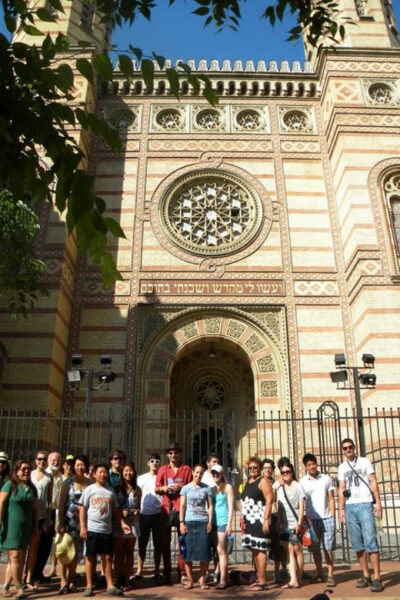

Budapest Dohany Synagogue & Hungarian Jewish Museum & free extras
Read our review →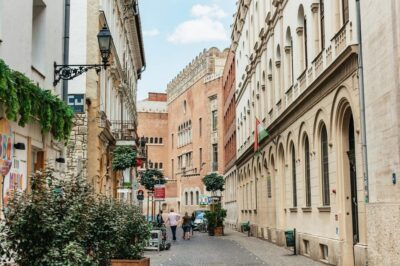
Jewish History Guided Walking Tour with Historian
Read our review →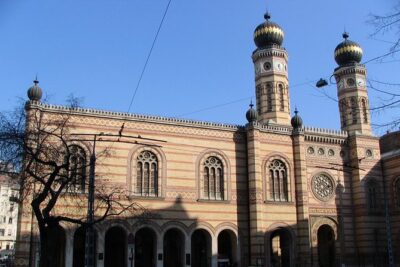
Budapest Dohany, Heroes’, Rumbach synagogues & Jewish Ghetto Tour
Read our review →Browse the lists this tour appears in