
Reviewed · JEWISH QUARTER TOURS
Budapest: Jewish Heritage Guided Tour with Synagogue Ticket
Budapest’s Jewish Quarter is best understood on foot, where grand synagogues, narrow streets, memorials, and traces of the former ghetto sit close together. This tour links those places into one thoughtful story, from Jewish life and worship to the Holocaust and the community’s present-day resilience.
I like the excellent access to Dohány Street Synagogue and its museum, and I like the way the walk moves beyond one famous building to the Martyrs’ Cemetery, the Tree of Life memorial, and other important sites. The main drawback is price: at $81 per person, this is not a cheap city walk, and the shorter option may leave you wishing for more time in the museum.
Key points to know before booking
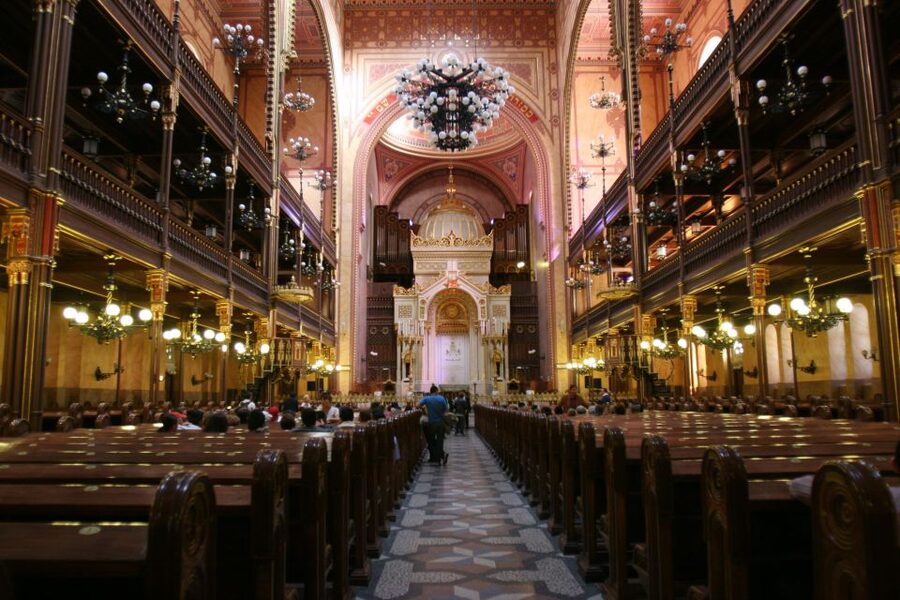
- Dohány Street Synagogue is the centerpiece: You enter one of Europe’s great synagogue buildings and learn why it matters to Hungarian Jewish history.
- The tour connects monuments with daily life: The museum covers religious practice, holidays, art, family life, and the community’s long presence in Hungary.
- The Holocaust sites are handled with care: The Martyrs’ Cemetery, Heroes’ Temple, Ghetto Wall, and Tree of Life create a serious, reflective part of the walk.
- The four-hour option adds important stops: Rumbach Synagogue and the Ghetto Wall exhibition are included only with the longer version.
- Guide quality matters here: Guides named in recent tour experiences include Benjamin, Orshi, Barbi, Ursula, Scilla, and Suzanne, with Benjamin especially praised for his personal connection to Budapest and Jewish heritage.
- Plan for a real walking tour: Wear comfortable shoes, bring identification, and leave luggage or large bags behind.
Why this Jewish Quarter walk matters
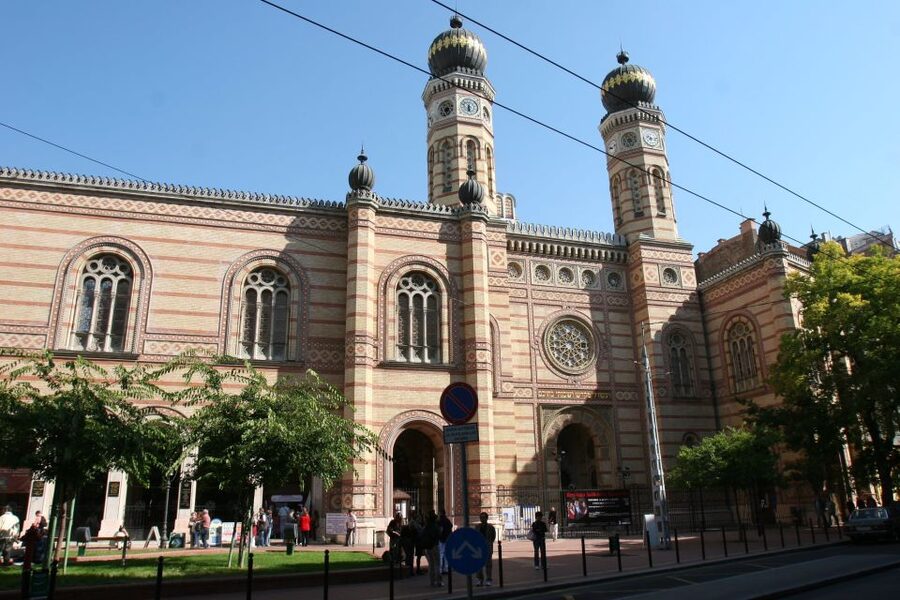
Budapest’s Jewish Quarter is not simply a district of impressive religious buildings. It is a place where community life, architecture, wartime persecution, and modern city life meet within a small area.
That makes a guided walk useful. Without context, you could admire the Moorish Revival details of a synagogue, pass a memorial tree, and move on without understanding the people and events tied to each place. A good guide gives those sights a human scale.
The walk focuses on Hungarian Jewish life over more than a century. You hear about the old Jewish neighborhood, the place of Jews in Hungarian society, the destruction caused by the Holocaust, and the community that continues today.
The tone is serious, but it is not only a tour of loss. Several guides have been praised for explaining both the painful chapters and the continuing life of Budapest’s Jewish community. That balance matters. You are not left with a story that ends in 1945.
More Jewish Quarter walks:
- Budapest Jewish Heritage Memorial Walking Tour & Synagogue Entry
★ 5.0 · 568 reviews - Jewish Quarter of Budapest Walking Tour
★ 4.7 · 369 reviews - Budapest: Best of Downtown and Jewish Quarter Tour
★ 5.0 · 312 reviews
Starting near Dohány Street Synagogue
The meeting point can vary with the option you book, but Dohány Street Synagogue is one stated starting location. Check your confirmation closely before setting out.
The synagogue is on Dohány Street in Pest’s historic Jewish Quarter. You will begin with a guided walk through nearby streets, using the buildings and street plan to place the community in its urban setting.
This opening section helps you see that Jewish Budapest was not an isolated corner of the city. Jewish residents worked, worshipped, raised families, and took part in Hungarian public life. The guide also introduces the district’s Hungarian name, Erzsébetváros, often rendered in English as Elizabethtown.
The exact order can vary, particularly between the two-hour and four-hour versions. Still, the main pattern is clear: walk through the quarter, visit the major synagogue and museum, then continue to memorial sites.
Rumbach Street Synagogue and the quarter’s architecture
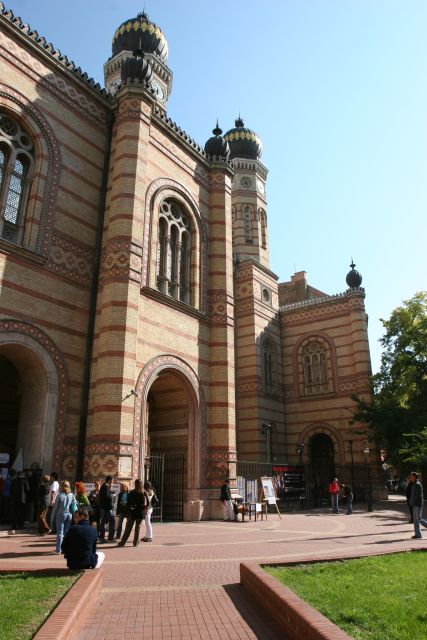
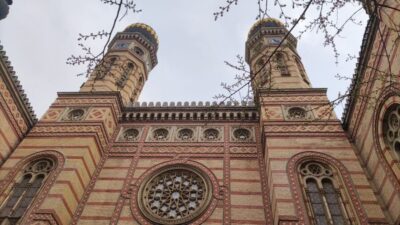
From the outside, Rumbach Street Synagogue gives you an early look at the district’s architectural variety. Its Moorish Revival design uses ornate forms that immediately set it apart from ordinary city buildings.
On the shorter tour, you may see Rumbach from the exterior. The four-hour option includes admission, giving you more time to appreciate the inside as well as the building’s place in the story of Budapest’s Jewish congregations.
That difference is important if architecture is a major reason you are booking. Rumbach is not just another photo stop. It helps show that Jewish religious life in Budapest was not represented by one single style or congregation.
The walk also includes Kazinczy Street Synagogue in the listed route. The quarter’s synagogues reflect different traditions and periods, and your guide can explain how they relate to one another.
One practical point: the streets are walked rather than crossed by coach or public transport. The pace has been described as manageable even for older participants who are not especially fit, but comfortable shoes remain a must.
Inside Dohány Street Synagogue
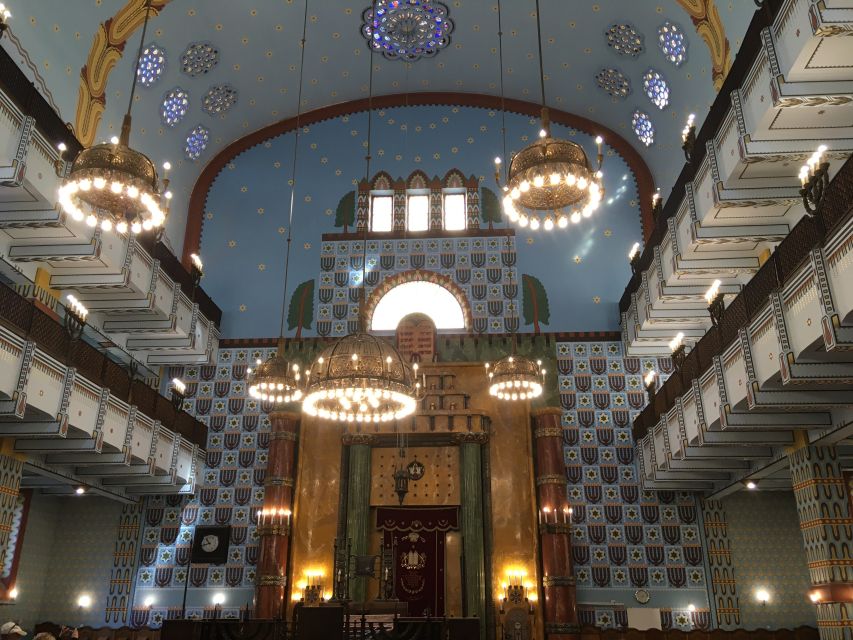
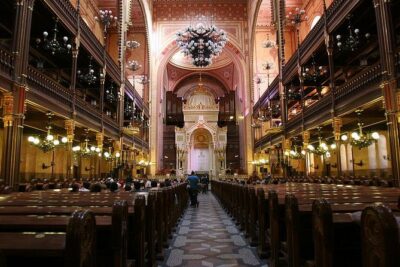
Dohány Street Synagogue is the visual and emotional center of the experience. It is described as the largest synagogue in Europe and the second largest in the world, so the scale is immediately striking.
Inside, look up. High ceilings, ornate decoration, and the building’s unusual combination of synagogue design and Moorish Revival style make this a place where the architecture needs time and explanation.
Your guide places the building within Jewish history rather than treating it as a grand hall alone. You learn about its role in Budapest’s Jewish community and its connection to the surrounding district.
A separate entrance is available for the tour, which can make the arrival more efficient than joining the main public line. This does not mean you should ignore the meeting instructions. Synagogue access can involve security and entry rules, so bring a passport or ID card as requested.
Dress and behavior should suit a religious and memorial site. The provided information does not spell out a full dress code, but respectful conduct is essential. Large bags and luggage are not allowed, and pets are not permitted.
A few more Budapest half-days to weigh up
- Budapest: Historic Cruise with Welcome Drink
★ 4.7 · 6,512 reviews - Budapest Historical Sightseeing – Free Walking Tour
★ 5.0 · 1,302 reviews - Buda Castle District Dark History, Legends and Vampire Night Tour
★ 4.5 · 1,240 reviews - BloodThirsty Hungary: Walking tour & Dark Historical Stories
★ 4.9 · 633 reviews
The Jewish Museum and everyday community life
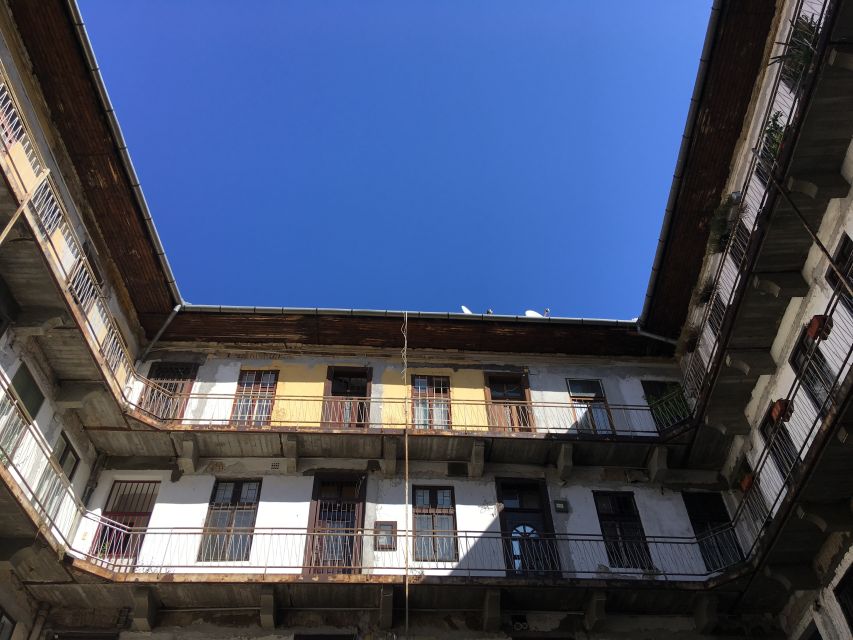
The Jewish Museum follows the synagogue visit and adds the objects and details that buildings alone cannot provide. Its collection includes Jewish art from Hungary and Eastern Europe, along with material connected to religious practice and home life.
This is where the tour shifts from broad historical events to the texture of ordinary experience. You learn about Jewish holidays, customs, and traditions, as well as the way Jewish identity was expressed in daily life.
The museum also gives you a way to understand the community as more than a victim group. Art, ritual, family, and education all form part of the story.
Allow enough attention for this stop. The shorter tour lasts about two hours overall, and one practical limitation is that museum time can feel brief if you want to read every display and examine every object. The guide-led visit gives you a clear framework, but it is not the same as a long, independent museum session.
If you are choosing between the two durations, ask yourself what you want. The shorter option works well if you want an introduction that combines the synagogue, museum, and main memorials. Choose four hours if you want more time with the sites and the added Rumbach Synagogue and Ghetto Wall exhibition.
The Holocaust room and Budapest’s wartime story
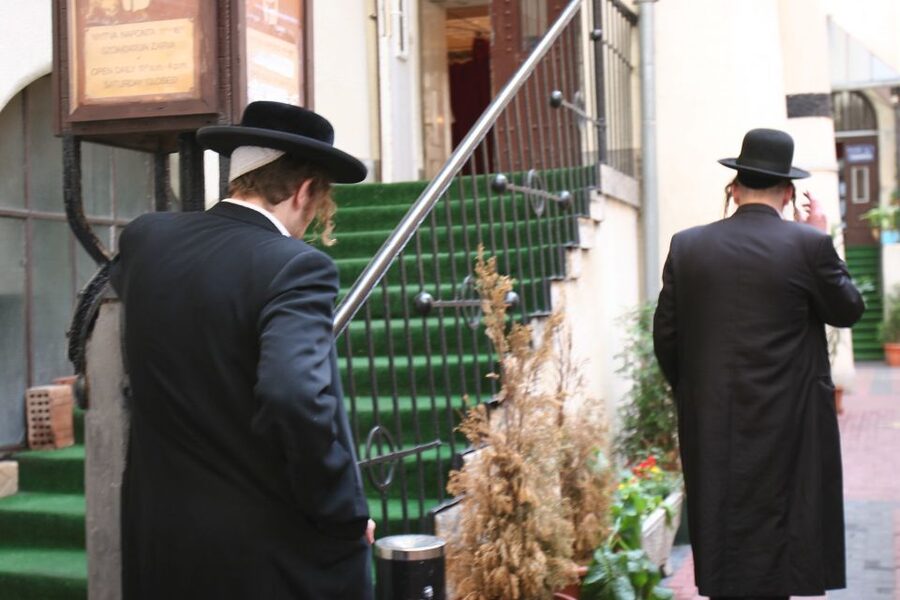
The museum includes a separate room dedicated to the Hungarian Holocaust and those who were killed. This is one of the most sobering moments of the visit.
The tour does not treat the Holocaust as a distant European event with no local setting. The walk through Budapest’s Jewish Quarter shows how persecution affected a specific neighborhood and its residents.
Your guide explains the historical chapters before, during, and after the war. Several guides have been praised for making difficult material understandable without turning the experience into a lecture detached from real people.
Expect this section to be emotional. One guide was specifically praised for making the horror clear while still leaving room for hope. That is a fair description of what this tour aims to do: remember the dead, explain what happened, and show that Jewish life did not disappear.
Because the subject is heavy, this is not the best choice if you want a light sightseeing outing. It is a history tour with memorial stops, and you should set aside time afterward if you prefer not to rush straight into another busy activity.
Martyrs’ Cemetery and the Raoul Wallenberg Memorial Park
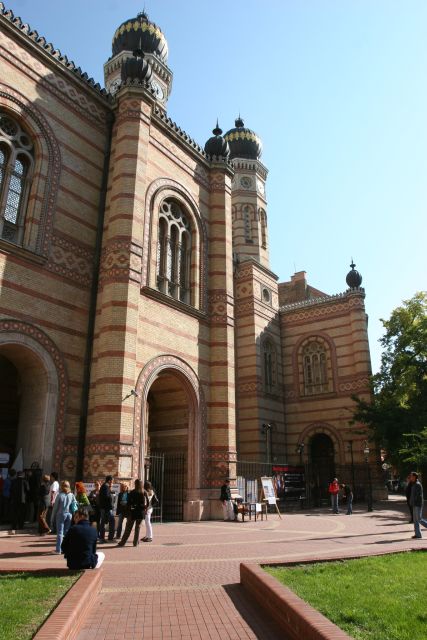
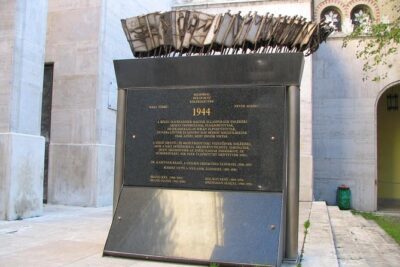
After the museum, the route continues to the Martyrs’ Cemetery and Raoul Wallenberg Memorial Park. These places move the experience from indoor exhibits to outdoor remembrance.
The cemetery is a quiet place within the wider synagogue complex. Your guide helps explain its significance and the people commemorated there, giving the memorial a local setting rather than leaving you with only dates and numbers.
In the park, the Tree of Life is the central memorial. Its metal leaves carry the names of Holocaust victims, turning a familiar symbol into a record of individual lives.
This is a stop where you should slow down. The value is not in checking off another attraction. It is in understanding how Budapest remembers those who were lost and how the memorial relates to the community around it.
The Raoul Wallenberg Holocaust Memorial Park entry is included. The Heroes’ Temple is also part of the visit, adding another place of remembrance within the synagogue complex.
Heroes’ Temple and the Ghetto Wall exhibition
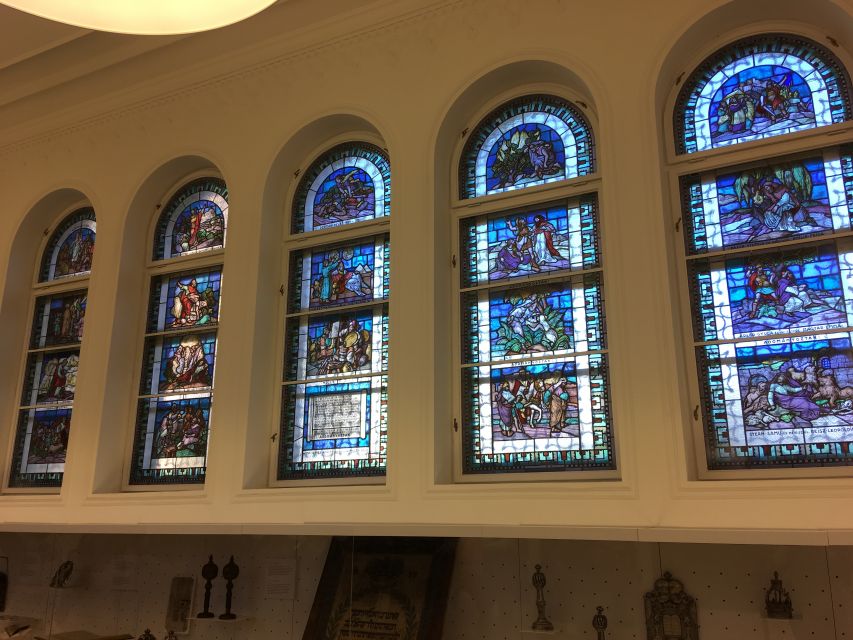
The Heroes’ Temple extends the memorial portion of the tour. Together with the cemetery and Tree of Life, it shows the many forms that public remembrance can take: a place of prayer, a burial ground, a symbolic sculpture, and a dedicated memorial space.
The four-hour version also includes the Ghetto Wall with its exhibition. This is a useful addition because it connects the history of persecution to the physical boundaries and conditions of the former ghetto.
If you have the time, I would choose the longer option for this reason alone. The extra stops give more shape to the historical account, while the short tour offers a tighter introduction.
The route is still a walking experience, so the longer choice means more time on your feet. That may not suit everyone, although the pace has been described as comfortable for older participants. The tour is not suitable for wheelchair users, according to the activity information.
The role of the guide
This tour depends heavily on the guide. The buildings are worth seeing on their own, but the connection between them is what turns the outing into a meaningful experience.
Benjamin is one guide frequently praised for his command of the subject, personal connection to the area, and open approach to questions. He is Budapest-born and was described as having grown up in the district, which can add a direct local perspective to the walk.
Other named guides include Orshi, Barbi, Ursula, Scilla, and Suzanne. Their described strengths include clear explanations of Jewish customs, patience, warmth, strong English, and a careful approach to painful history.
You should not assume that a particular guide will lead your departure unless your booking confirms it. Still, the repeated emphasis on guide quality tells you where much of the tour’s value lies.
The best way to get more from the walk is to ask questions. Guides have welcomed discussion about Jewish life, Hungarian society, architecture, the Holocaust, and the community today. The experience can feel more personal when you take part rather than simply follow along.
Some departures have ended with coffee and cake at a kosher restaurant, and guides have also offered local restaurant and ruin-bar suggestions. Treat that as a possible extra rather than a guaranteed inclusion, since it is not listed among the formal inclusions.
Two hours or four hours?
The duration ranges from two to four hours, with the exact choice depending on the option you book. The difference is not just a longer version of the same walk.
The shorter option includes the walking tour, guide, Jewish Museum, Dohány Street Synagogue, Raoul Wallenberg Memorial Park, and the main quarter sights. It suits you if you want a focused introduction or have limited time in Budapest.
The four-hour option includes entry to Rumbach Synagogue and the Ghetto Wall exhibition. It gives you more time to connect the district’s architecture, religious life, and wartime history.
A few people have chosen to extend from the short tour to the longer one after finding the guide and subject especially engaging. If you already know you want a full look at the quarter, book four hours from the start rather than hoping to change plans later.
At $81 per person, the price is easiest to justify on the longer version. You are paying for a live English guide, synagogue and museum admission, memorial access, and a focused route through a complicated subject.
The short tour can still offer good value if you would otherwise visit only Dohány Synagogue and miss the surrounding sites. But if you prefer to read museum displays at your own pace, the guided format may feel expensive, especially with limited time inside the museum.
Who should book this experience?
I would recommend it to you if you want history tied to real places. It is especially suitable for first-time visitors who might otherwise see the Jewish Quarter mainly as a nightlife district or a collection of attractive old buildings.
It also suits people with a family, cultural, or religious connection to Jewish history. The tour is not limited to Jewish participants, though. Its discussion of Hungarian society, war, persecution, architecture, and memory makes it relevant to anyone interested in Budapest’s past.
The walk works well for couples, families with older children, and adults who enjoy asking questions. The English guide format keeps the group focused, while the walking route gives you a better sense of the neighborhood than a vehicle-based tour.
You may want to skip it if you want only cheerful sightseeing, if you dislike guided interpretation, or if you need wheelchair access. You should also avoid booking it immediately before a fixed appointment, since the longer tour can take four hours and includes several reflective stops.
Book in advance if the schedule matters, but the flexible cancellation policy helps: you can cancel up to 24 hours before the activity for a full refund, and you can reserve now while paying later.
Should you book the Budapest Jewish Heritage Tour?
Yes, if you want a serious, well-organized introduction to Jewish Budapest rather than a quick synagogue visit. The strongest reasons are the carefully linked sites, the access to Dohány Street Synagogue and the museum, and the chance to hear local context from guides such as Benjamin, Orshi, or Scilla.
I would choose the four-hour option if your schedule allows. Rumbach Synagogue and the Ghetto Wall exhibition add useful depth, and the longer route gives the memorial sites more breathing room.
Choose the two-hour tour if you need a concise overview and want to keep the rest of your day open. Either way, bring identification, wear comfortable shoes, leave large bags behind, and approach the experience ready for difficult but important history.
FAQ
How long does the Jewish Heritage Guided Tour last?
The tour lasts between two and four hours, depending on the option you book. Check the available start times and duration before confirming.
Which language is the tour conducted in?
The live guided tour is conducted in English.
What attractions are included?
The tour includes a walking route through Budapest’s Jewish Quarter, entry to the Jewish Museum, Dohány Street Synagogue, and Raoul Wallenberg Memorial Park. The four-hour option also includes Rumbach Synagogue and the Ghetto Wall exhibition.
Is Rumbach Street Synagogue included with every option?
No. Entry to Rumbach Synagogue is included only with the four-hour option. The shorter tour may include an exterior view.
What should I bring?
Bring a passport or ID card and wear comfortable shoes. Pets, luggage, and large bags are not allowed.
Is the tour suitable for wheelchair users?
No. The activity is not suitable for wheelchair users.
Just added around Budapest
- Budapest: Private, Personalized Pub Crawl, 3 drinks included★ 4.5 · 3 reviews
- Private day trip from Budapest to Bratislava, Vienna, and back★ 3.5 · 3 reviews
- Budapest: Private Adventure Sightseeing Bicycle Tour★ 4.5 · 3 reviews
- Private Danube Bend tour – full day★ 4.5 · 3 reviews
- Budapest: Guided City Walking Tour in Buda and Pest★ 5.0 · 3 reviews
- Budapest Old Jewish Quarter History Private Walking Tour★ 5.0 · 3 reviews
- Lake Balaton Full Day Private Wine Tour★ 5.0 · 3 reviews
- Budapest Urban Feast – Food Tour with Wine Tasting & Coffee House★ 4.5 · 3 reviews
Jewish Quarter Tours, compared.
Budapest Jewish Heritage Memorial Walking Tour & Synagogue Entry
Read our review →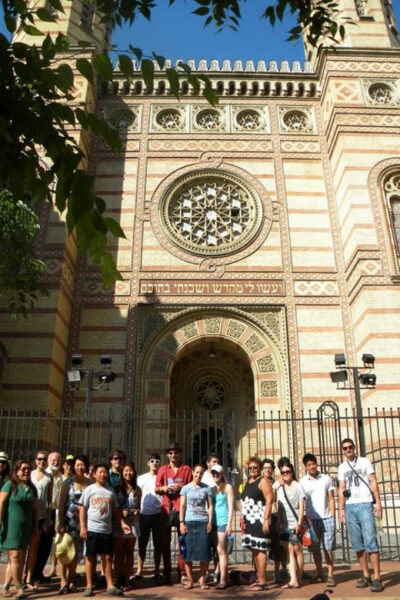
Past and Present of Budapest Jewish District Tour
Read our review →
Budapest Dohany Synagogue & Hungarian Jewish Museum & free extras
Read our review →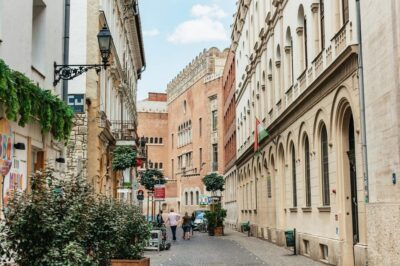
Jewish History Guided Walking Tour with Historian
Read our review →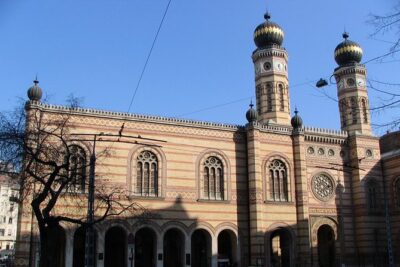
Budapest Dohany, Heroes’, Rumbach synagogues & Jewish Ghetto Tour
Read our review →Browse the lists this tour appears in