
Reviewed · JEWISH QUARTER TOURS
Jewish Quarter of Budapest Walking Tour
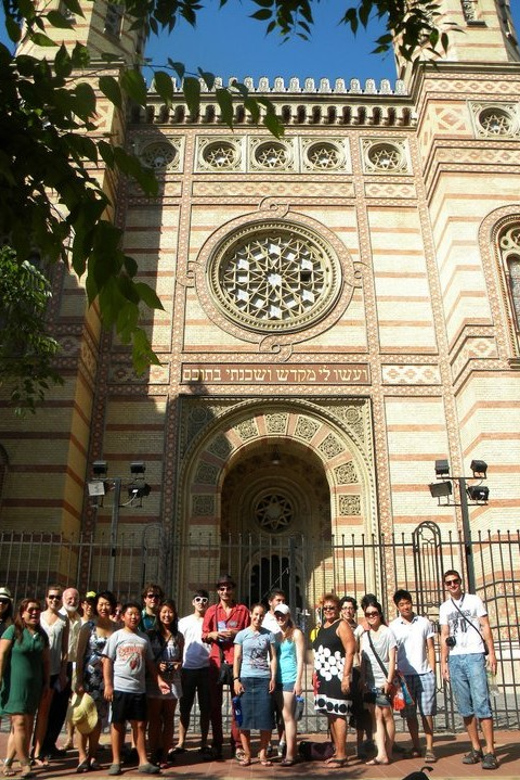
Budapest’s Jewish Quarter is more than a pretty collection of old buildings and late-night bars. This 1.5-hour walk connects the three synagogues of the Jewish Triangle with personal stories about Hungarian Jews, the Holocaust, and the people who helped others survive. It then shifts toward street art, miniature statues, ruin bars, and the district’s current character.
I like the mix of serious history and everyday Budapest. Guides such as Judit, Ester, Gary, Dora, and Ursula have been praised for clear storytelling, thoughtful answers, and useful food and bar suggestions. I also like that the tour ends at a local ruin bar, often Szimpla Kert, so you get a practical introduction to the neighborhood after the historical discussion.
The main consideration is that the synagogue interiors are not part of the walk. You can visit them separately, but you will need extra time and a separate admission. The tour also requires upper-intermediate English, and its emotional subject matter may feel heavy at times.
Key points to know before you book
- The three-synagogue route explains the Jewish Triangle, giving you a clear way to understand the district’s main religious landmarks.
- The stories include Hungarian Jewish life and the Righteous Gentiles, not only wartime dates and monuments.
- Street art, small statues, and ruin bars add a modern side to a neighborhood shaped by difficult events.
- Guides including Judit, Ester, Gary, Dora, and Ursula bring different strengths, from careful historical detail to lively recommendations.
- The booking fee is only $2.27, but your guide works for donations, with €10 per person given as a usual amount.
- The tour is in English and wheelchair accessible, but groups of eight or more cannot book it.
Why Budapest’s Jewish Quarter deserves a walking tour
You can wander the Jewish Quarter alone, but its symbols are easy to miss. A building may look like another aging facade, while a memorial, sign, or small piece of street art points to a much larger story. A guide gives these details a place in the wider history of Budapest.
The district also changes character as you walk. One moment the subject is Jewish community life or wartime persecution. Soon after, the guide may explain a miniature statue, an urban-art detail, or the rise of the ruin-bar scene. That contrast is not a distraction. It helps you see the quarter as a living part of the city rather than a museum frozen in the past.
The tour’s best quality is this link between history and present-day life. You are not only shown important buildings. You are encouraged to notice how the neighborhood remembers, adapts, and carries on.
More Jewish Quarter walks:
- Budapest Jewish Heritage Memorial Walking Tour & Synagogue Entry
★ 5.0 · 568 reviews - Budapest: Jewish Heritage Guided Tour with Synagogue Ticket
★ 4.8 · 533 reviews - Budapest: Best of Downtown and Jewish Quarter Tour
★ 5.0 · 312 reviews
Meeting at the Budapest Eye
The tour begins at the Budapest Eye ferris wheel, beside the fountain. Look for the royal blue flag, which is meant to make the meeting point easy to spot.
This is a practical location in central Budapest, but allow a few minutes to find the exact spot. The Budapest Eye is a visible landmark, yet a busy central area can still make a group meeting feel rushed if you arrive at the last moment.
The activity returns to the meeting point at the end, although the final ruin-bar stop gives you a natural chance to continue exploring nearby. Check the available starting times when booking, since the tour lasts 1.5 hours and the schedule can vary.
The Jewish Triangle and its three synagogues
The core of the walk is the Jewish Triangle, formed by three important synagogues. Even without entering, seeing the buildings together gives you a useful sense of the area’s religious and communal importance.
The guide explains the role of Hungarian Jews in the city and places the synagogues within the story of Budapest. This is where a guided walk earns its modest price. You can photograph an impressive building on your own, but you will not necessarily understand why its location, design, or place in the district matters.
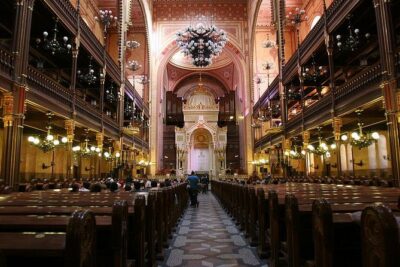
Because the interiors are excluded, think of this section as an introduction rather than a complete synagogue visit. If you want to go inside, plan a separate visit and check the opening rules and admission arrangements yourself. The walking tour does not replace that experience.
This arrangement has one benefit: the group keeps moving and can cover more of the neighborhood. The tradeoff is that you will not see the decorative interiors or spend extended time inside the synagogues.
Stories of Hungarian Jews and the Righteous Gentiles
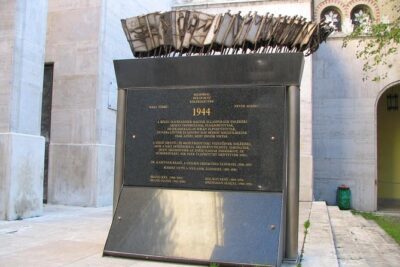
The historical portion deals with Hungarian Jewish life and the persecution that changed the community. The guide also discusses the Righteous Gentiles, people who helped Jews despite the danger around them.
This subject calls for care, and the strongest guides handle it without turning suffering into spectacle. Judit has been praised for a moving and patient presentation. Edith was singled out for a clear voice, careful preparation, and a compassionate manner. Another guide, described as fluent and respectful, connected difficult events to the people affected rather than treating them as a list of facts.
You should expect some heartbreaking moments. That is appropriate to the subject, but it is worth knowing before you book. The tour is not simply a light stroll through bars and colorful walls.
At the same time, the walk is not all solemn. Guides have been praised for adding humor at the right moments and keeping the group engaged. The balance works best when the guide gives the serious material enough space, then helps you return to the present-day streets.
One useful question to ask is how Jewish daily life looked before World War II. The tour covers the broad story well, but you may want to ask directly about ordinary routines, family life, work, customs, and neighborhood life. That can add a more personal scale to the historical account.
More walking tours in Budapest:
- Budapest: Buda Castle Walk with Saint Stephen’s Hall
★ 4.5 · 3,012 reviews - Big Bus Budapest Hop-On Hop-Off Bus and Walking Tour
★ 3.5 · 2,206 reviews - Budapest: Buda Castle District Walking Tour
★ 4.6 · 2,108 reviews - Budapest City Landmarks Walking Tour in 2 Hours
★ 5.0 · 2,048 reviews
Small symbols, street art, and Budapest’s modern side
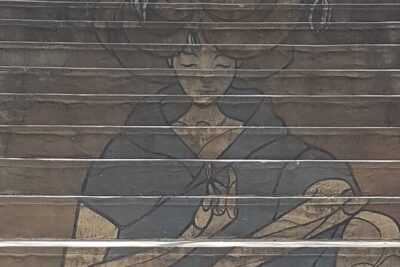
The quarter has a strong urban-art presence, and the walk points out details you might otherwise pass. Reviews of the experience specifically praise explanations of Budapest’s miniature statues and the stories behind them.
These small works matter because they give you a different way to read the city. Instead of looking only at grand monuments, you begin checking corners, walls, and street-level details. The guide’s comments can turn a short walk through an ordinary-looking street into a search for small pieces of local character.
Street art also helps explain the district’s current identity. The Jewish Quarter is associated with nightlife, creative spaces, and ruin bars, but the tour places those things beside the older buildings and historical memory. That makes the modern scene easier to understand and less likely to seem like a separate attraction dropped into an old neighborhood.
I would pay attention here even if your main goal is history. The artistic details give you useful photo stops, provide lighter moments, and help you keep noticing the area after the tour ends.
Finishing at a ruin bar
The walk ends at a local pub, with Szimpla Kert named repeatedly as the final stop. The timing is useful because you can step in before the bigger nighttime crowds arrive.
A ruin bar is not just a place to buy a drink. It is part of the Jewish Quarter’s current appeal, and it shows how older spaces have been reused for social life. The guide can also suggest other bars, restaurants, and things to do in Budapest.
If you know nothing about the ruin-bar scene, this ending is particularly handy. You do not have to spend the evening searching for a suitable place, and you can decide for yourself if the atmosphere fits your taste. If you prefer quiet historical sites, the bar may feel like an abrupt change, but the contrast is part of the tour’s design.
The tour does not promise a full evening out. It simply gets you to a local pub and gives you a place to continue independently. That is a good use of the final few minutes, especially for a first visit to Budapest.
The guides: different styles, the same useful role
Guide quality matters more than the low booking fee. The named guides associated with this experience include Judit or Judith, Ester, Gary, Dora, Ursula, Emmy, Andy, and Edith.
Judit is described as patient, warm, and very clear when explaining difficult material. Ester brings a personal style and a strong way of telling stories, with a final stop at a ruin bar. Gary is energetic and connects the Jewish Quarter to wider Hungarian and Budapest history. Dora is attentive and happy to answer questions.
You may receive a different guide, so do not book expecting one specific person unless the reservation system clearly lets you choose. The common strength is the guide’s role as an interpreter of the neighborhood, not simply a person leading you from one address to the next.
I recommend asking questions. Guides have offered suggestions for restaurants, bars, and other Budapest activities, and the tour seems especially useful when you treat it as a conversation. If you want more detail about prewar Jewish daily life, ask for it directly.
Price, tipping, and the real value
The listed cost is $2.27 per person. That is a booking and administration fee, not the guide’s pay.
The guide depends on donations at the end. A typical contribution is €10 per person, with some people giving more. In practical terms, you should budget the donation rather than treating the tour as a nearly free activity.
Even at that total, the value is strong if you want context, orientation, and a thoughtful introduction to the quarter. The walk combines religious landmarks, Jewish Hungarian history, wartime stories, urban art, miniature statues, nightlife, and local suggestions in a compact format.
The value is less clear if you want long visits inside the synagogues. Since admission is separate and the tour does not enter, you will need to pay for and arrange those visits on your own. You may also prefer a longer history tour if you want an extended discussion of Jewish life before World War II.
Pace, language, access, and group rules
The tour lasts 1.5 hours, a useful length for fitting into a busy Budapest day. It is long enough to cover the main themes without taking over your entire afternoon, though one guide’s praised qualities included such strong storytelling that the experience might leave you wishing for more time.
The tour is conducted in English, and an upper-intermediate level is essential. You need to follow historical explanations, names, and changing subjects while walking. If you understand simple travel English but struggle with longer spoken explanations, this may not be the right choice.
The activity is wheelchair accessible. The route is a walking tour through central streets, so you should still consider your own comfort with the walking pace and outdoor conditions. One guide was praised for finding shade, choosing quieter spots, and avoiding long periods of standing, which is useful on a warm day.
Groups of eight or more are not allowed to book, either together or by splitting the reservation. This rule keeps the format suited to smaller parties, but large family groups, school groups, and reunions will need another arrangement.
Children can come, though the subject matter requires some thought. The tour has been described as manageable with toddlers in a stroller only if they can remain quiet. That is a fair warning for a walking tour built around spoken explanation and serious stories.
When this tour fits your Budapest plans
I would place this tour early in your Budapest stay. It gives you a map of the Jewish Quarter, introduces several places to return to, and ends with a practical nightlife suggestion.
It suits you best if you want:
- A serious look at Jewish Hungarian history without spending an entire day indoors
- Personal stories about persecution and rescue
- A guide who can answer questions in English
- An introduction to street art, miniature statues, and ruin bars
- Restaurant and nightlife suggestions from someone familiar with Budapest
- A wheelchair-accessible walking experience
- A short activity that fits around other sightseeing
It may not suit you if you want synagogue interiors included, a private tour, or a long academic lecture. It is also not ideal if your English is below the required upper-intermediate level or if your group has eight or more people.
Bring comfortable shoes and arrive at the blue flag by the fountain with enough time to spare. Since the walk ends at a pub, you can continue your evening there, but you are free to leave rather than stay for a drink.
Should you book the Jewish Quarter walking tour?
Yes, if you want a compact and human introduction to one of Budapest’s most important districts. The strongest reasons to book are the guides’ careful handling of painful history, the three-synagogue framework, the attention to small urban details, and the ruin-bar finish.
I would book it early in your visit, then return separately to any synagogue you want to enter. Treat the $2.27 as a reservation fee and plan to tip around €10 per person if the tour earns it.
Skip it if you want a purely architectural tour or if you need the interiors included. For most English-speaking visitors who want Budapest’s past and present in the same walk, this is a well-priced, thoughtful choice.
FAQ
Where does the Jewish Quarter walking tour start?
Meet at the Budapest Eye ferris wheel, next to the fountain. The guide will be holding a royal blue flag.
Where does the tour finish?
The activity returns to the meeting point, though the tour also ends at a local pub or ruin bar as part of the experience.
How long does the tour last?
The walking tour lasts 1.5 hours. Starting times vary, so check availability when booking.
Is the tour conducted in English?
Yes. The live tour guide speaks English, and an upper-intermediate level is essential to follow the explanations.
Does the tour enter the synagogues?
No. The tour visits the three synagogues that form the Jewish Triangle from the outside. You can enter them separately on your own.
How much should I tip the guide?
The $2.27 booking fee covers administration and does not pay the guide. Guides depend on donations, and €10 per person is the usual amount suggested for a satisfactory experience.
Is the tour wheelchair accessible?
Yes, the activity is listed as wheelchair accessible. Groups of eight or more people cannot book the tour, even if they make separate reservations.
Just added around Budapest
- Budapest: Private, Personalized Pub Crawl, 3 drinks included★ 4.5 · 3 reviews
- Private day trip from Budapest to Bratislava, Vienna, and back★ 3.5 · 3 reviews
- Budapest: Private Adventure Sightseeing Bicycle Tour★ 4.5 · 3 reviews
- Private Danube Bend tour – full day★ 4.5 · 3 reviews
- Budapest Old Jewish Quarter History Private Walking Tour★ 5.0 · 3 reviews
- Lake Balaton Full Day Private Wine Tour★ 5.0 · 3 reviews
- Budapest: Guided City Walking Tour in Buda and Pest★ 5.0 · 3 reviews
- Budapest Urban Feast – Food Tour with Wine Tasting & Coffee House★ 4.5 · 3 reviews
Jewish Quarter Tours, compared.
Budapest Jewish Heritage Memorial Walking Tour & Synagogue Entry
Read our review →
Jewish Heritage Guided Tour with Synagogue Ticket
Read our review →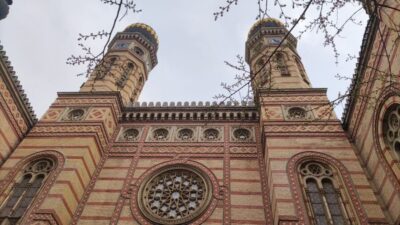
Past and Present of Budapest Jewish District Tour
Read our review →
Budapest Dohany Synagogue & Hungarian Jewish Museum & free extras
Read our review →
Jewish History Guided Walking Tour with Historian
Read our review →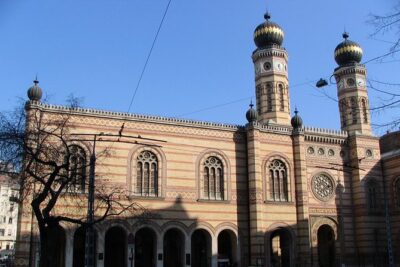
Budapest Dohany, Heroes’, Rumbach synagogues & Jewish Ghetto Tour
Read our review →Browse the lists this tour appears in