
Reviewed · JEWISH QUARTER TOURS
Budapest City Walk in Jewish Quarter
Budapest’s Jewish Quarter packs an extraordinary amount into a small part of Pest. In four hours, you can move from the grand Dohány Street Synagogue to tiny prayer houses, wartime memorials, the last remaining section of the ghetto wall, and everyday places such as courtyards, cafés, and food shops. The walking route connects places that are easy to miss on your own.
I like the private, flexible format, especially if you want to ask hard questions or spend more time on family history. I also like the guide’s personal connection to the subject. Timea Tarjani, one of the guides named by past guests, is described as a history teacher, a descendant of Holocaust survivors, and an active member of Budapest’s Jewish community.
The main consideration is cost. At $356.90 for up to six people, this is good value for a small group but less so for one or two people, especially since synagogue admission can add up to €46 per person. The tour also involves several hours on foot, though breaks can be requested.
Key points to know before booking
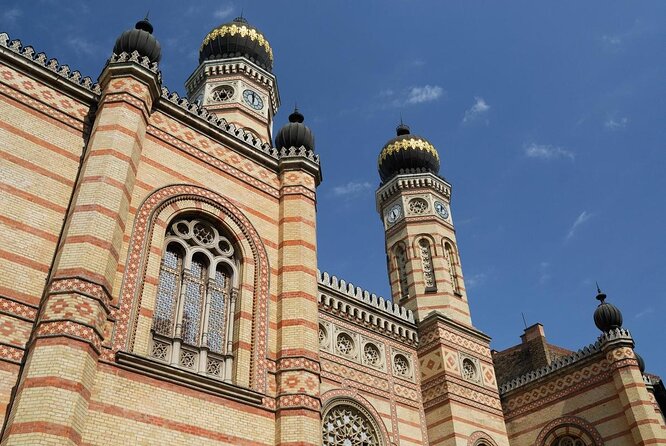
- The synagogue triangle: Visit or view the Dohány Street, Rumbach, and Kazinczy synagogues, each with a different character and story.
- Personal guiding: Timea Tarjani is specifically praised for combining Jewish and Hungarian history with family stories and current community life.
- WWII memorial sites: The route can include the Raoul Wallenberg Memorial Garden, stumbling stones, the ghetto wall, and the Shoes Monument by the Danube.
- Local life beyond monuments: Courtyards, small shops, cafés, confectioneries, galleries, the Kazinczy mikveh, and ruin bars add a present-day view.
- Flexible private walk: You can ask to linger at a site, skip a stop, or adjust the route around your interests.
- Hotel pickup included: The guide meets you in your hotel lobby or outside your rented flat and can arrange a restaurant drop-off afterward.
Why this compact Pest neighborhood deserves four hours
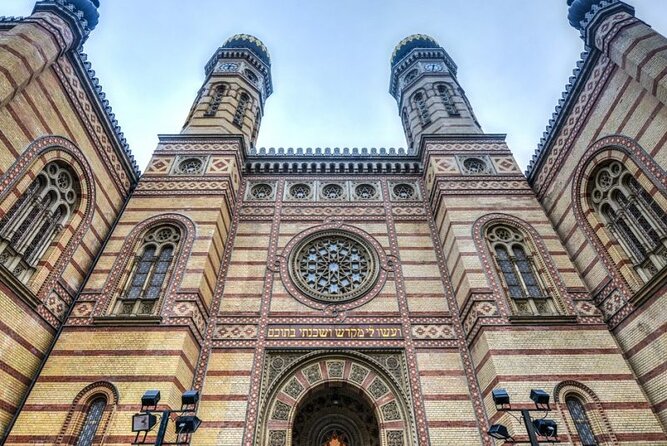
Budapest’s Seventh District is often reduced to two labels: Jewish heritage and ruin bars. Both are part of the picture, but neither tells the whole story.
The district’s streets hold grand synagogues, modest prayer rooms, residential courtyards, memorials, eateries, art spaces, and traces of wartime confinement. The value of a guided walk is that you can see how these layers sit beside one another rather than treating them as separate attractions.
I would not think of this as a quick sightseeing loop. The guide’s job is to give you a framework. You learn how Jewish life developed in Budapest, what happened during World War II, how the quarter changed under communism and after the political transition, and what Jewish life looks like today.
The compact setting helps. You are not spending half the day in a vehicle between distant landmarks. You walk from one street to the next, with the guide explaining the buildings and memorials along the way. That pace leaves room for questions, which is especially useful if you are exploring family roots or want more than dates and architectural facts.
More Jewish Quarter walks:
- Budapest Jewish Heritage Memorial Walking Tour & Synagogue Entry
★ 5.0 · 568 reviews - Budapest: Jewish Heritage Guided Tour with Synagogue Ticket
★ 4.8 · 533 reviews - Jewish Quarter of Budapest Walking Tour
★ 4.7 · 369 reviews
The synagogue triangle: Dohány, Rumbach, and Kazinczy
The three major synagogues form the core of the route. They are close enough to connect on foot, yet different enough that visiting more than one can be worthwhile.
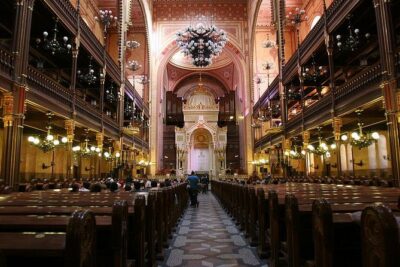
The Dohány Street Synagogue is the largest and most imposing of the three. The tour description identifies it as the second-largest non-Orthodox synagogue in the world. It is also closely tied to the wartime story of the district, making it an important starting point for understanding both Budapest’s Jewish community and the destruction of the ghetto during World War II.
The Rumbach Street Synagogue offers a different experience. Its inclusion helps you compare the traditions and architecture represented within Budapest’s Jewish life. The interior and atmosphere are not simply a repeat of Dohány, so seeing both gives the tour more range.
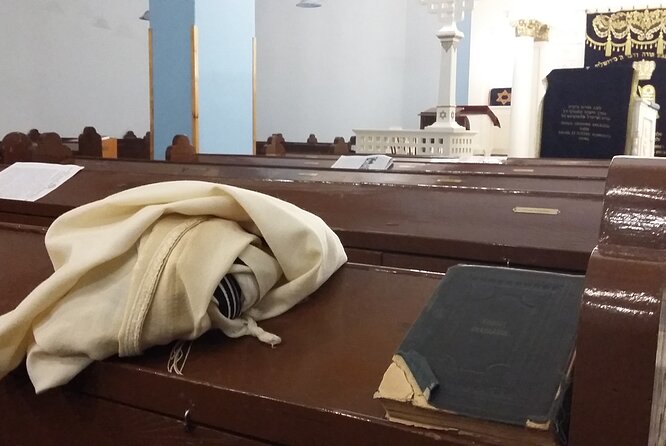
The Kazinczy Street Synagogue brings another perspective, including the Orthodox tradition and the nearby mikveh. The mikveh, or ritual bath, is one of the details that can be easy to pass without a guide. If religious practice interests you, ask the guide to spend extra time explaining what you are seeing.
Admission is not included. The maximum stated additional cost is €46 per person, though discounted rates may apply and you can choose to visit only one synagogue. That choice matters. If your budget is tight, select one interior and use the rest of the walk for outdoor memorials and neighborhood life.
You should also be ready to follow synagogue dress rules. Bring your own hat or cap and scarf if you prefer not to use the pieces supplied at the synagogues.
Memorials that give the quarter its emotional weight
This is a serious tour. The WWII material is not a decorative side note, and the most powerful sections may be difficult.
The Raoul Wallenberg Memorial Garden includes the Emmanuel tree, a memorial with leaves bearing names connected to victims of the Holocaust. The site gives the history a human scale. Instead of hearing only about population figures and political decisions, you are asked to think about individual lives and families.
The route may also include stumbling stones, small markers set into the pavement to remember people who were deported or murdered. They are easy to overlook because they sit at street level. A guide can point them out and explain their purpose, allowing you to pause without turning the moment into a rushed photo stop.
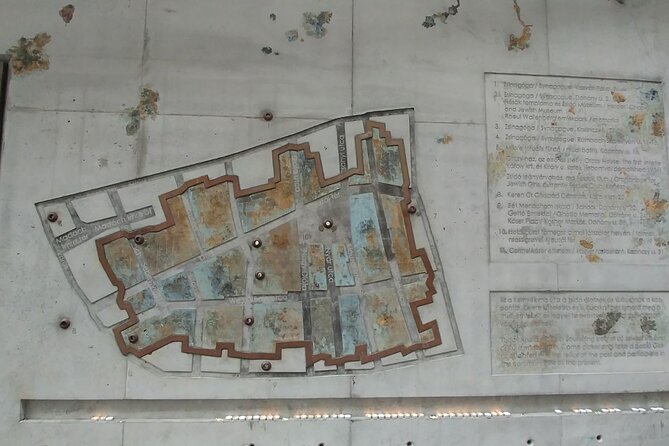
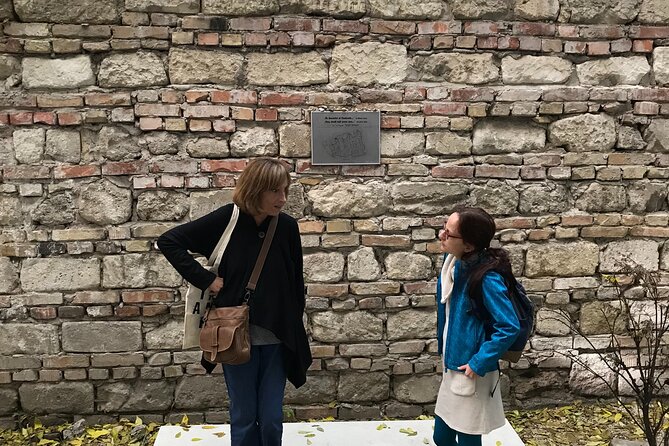
Another important site is the last remaining part of the WWII ghetto wall. Access to such a remnant is one reason this walk can reveal more than a standard route through the main synagogue district. The wall is modest compared with Budapest’s grand buildings, but that is exactly why it matters. It shows how confinement occupied ordinary urban space.
The tour can also reach the Shoes Monument on the Danube riverbank. This memorial is outside the tightest part of the Jewish Quarter, so the route may be adjusted depending on the day’s plan and your interests. It commemorates people who were ordered to remove their shoes before being shot at the river during the war.
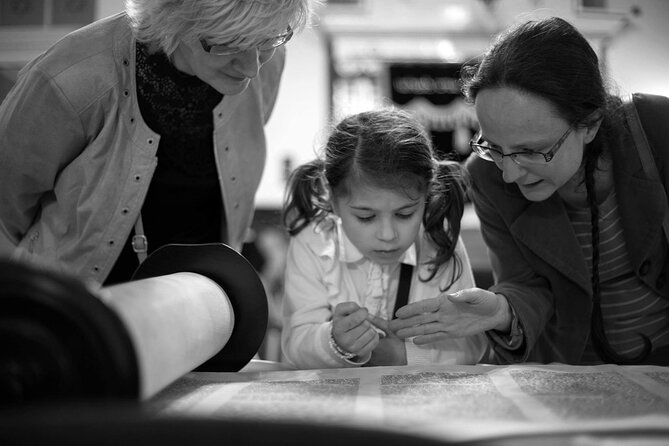
Give yourself emotional room here. Four hours allows for conversation, but the walk covers painful subjects. If your group includes children or teenagers, tell the guide what level of detail feels appropriate. One particularly useful point from the guide’s past work is her ability to keep younger visitors engaged while discussing difficult history.
Personal stories make the history easier to grasp
The strongest feature of this experience is the human scale of the guiding.
Timea Tarjani is identified as a history teacher and a granddaughter of Holocaust survivors. She also speaks about present-day Jewish life in Budapest and her own family’s connection to the community. That combination can make the past feel less sealed away in a museum.
You are not simply given a list of dates. You can ask how Hungarian Jewish identity changed over time, what happened to the community after the Holocaust, and what it means to live as a Jewish person in Budapest today. The guide’s personal connection is particularly useful if you are visiting as part of a heritage trip.
Past participants also describe Timea as warm, patient, and willing to discuss subjects outside the basic route. One family received help arranging COVID tests, another group benefited from assistance when a member felt faint from dehydration, and some groups spent longer than the planned four hours. Those examples show a generous guiding style, but you should not assume extra hours are guaranteed. Confirm the timing if you need to be somewhere afterward.
The guide may be Timea Tarjani, but guide assignments can vary. The experience includes a professional, licensed local guide, and the supplied information does not promise one specific person for every booking.
More walking tours in Budapest:
- Budapest: Buda Castle Walk with Saint Stephen’s Hall
★ 4.5 · 3,012 reviews - Big Bus Budapest Hop-On Hop-Off Bus and Walking Tour
★ 3.5 · 2,206 reviews - Budapest: Buda Castle District Walking Tour
★ 4.6 · 2,108 reviews - Budapest City Landmarks Walking Tour in 2 Hours
★ 5.0 · 2,048 reviews
Courtyards, cafés, and ruin bars
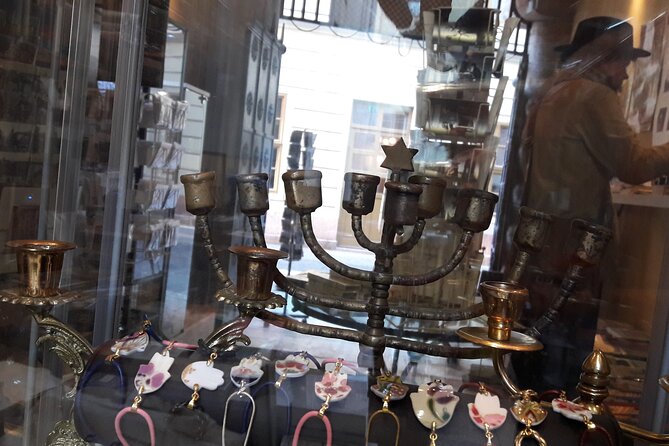
The quarter is not only a memorial district. It is also a place where people live, eat, shop, socialize, and work.
The route can include Gozsdu Courtyard, a series of connected courtyards with shops and places to eat. It can also lead into small local businesses, confectioneries, cafés, galleries, and festival spaces. These stops help you see the neighborhood as a living part of Budapest rather than a preserved historical zone.
You may also visit one of the city’s famous ruin bars, including Szimpla. These venues occupy old buildings and courtyards and have become a major part of Budapest’s modern identity. They are lively and visually unusual, but they are not inherently Jewish heritage sites. Their value on this walk is contrast: they show how the same quarter has been reused by a younger, more international city.
That contrast is worth discussing with the guide. The district’s current popularity brings restaurants, nightlife, and new businesses, but it also changes the character of the neighborhood. A private guide can help you separate the quarter’s genuine local life from its tourist image.
The food stops are not included, so budget separately for anything you eat or drink. The guide can recommend and book a local restaurant for lunch or dinner, and kosher meals or snacks can be arranged if requested.
A private walk with room to change direction
The advertised duration is about four hours, with hotel pickup and drop-off or restaurant drop-off included. The guide meets you in your hotel lobby or outside your rented flat. That is helpful in Budapest, particularly if you are staying outside the central district or prefer not to work out the first meeting point yourself.
The route is flexible. You can ask to spend more time at a synagogue, memorial, or family-history subject. You can also skip a stop that does not fit your interests. This is a better setup than a fixed group walk if your party includes people with different priorities.
The listed group price is $356.90 for up to six people. Split six ways, that is about $59.50 per person before any entrance fees. For a family or group of friends, the price becomes much easier to justify because you are paying for a private guide rather than six separate places on a large coach or walking tour.
For two people, the cost is a bigger decision. You are paying for personal attention, hotel pickup, route flexibility, and the guide’s time. If you mainly want a quick look at the synagogues, a lower-cost group walk may suit you better. If you want family history, sensitive WWII discussion, help with kosher planning, or a route shaped around your questions, the private format earns its price.
The listing also says the activity can have a maximum of 10 people, even though the headline price covers up to six. Clarify the final group arrangement when booking if group size matters to you.
Walking conditions and practical preparation
Expect a moderate amount of walking on city streets and between sites. The walk is not presented as strenuous, and you can ask for a break, but you should have a moderate level of physical fitness.
Wear comfortable shoes. Bring water, especially if you are visiting in warm weather. One past participant became faint from dehydration, a reminder that a thoughtful guide cannot replace basic preparation.
Synagogues may require appropriate clothing. Bring a hat or cap and scarf if you would rather use your own. Service animals are allowed, and the meeting area is near public transportation.
The experience is offered in English and operates daily according to the supplied schedule. The published operating information shows Monday departures between 9 a.m. and 2 p.m. Because that schedule can affect synagogue access and the order of stops, confirm your exact start time before you plan other activities.
Free cancellation is available if you cancel at least 24 hours before the start time. Changes or cancellations made later are not accepted for a refund.
Who will get the most from this experience
I would choose this walk if you want context rather than a checklist. It suits first-time visitors who want to understand the Seventh District, as well as returning visitors who have already seen the main Budapest sights.
It is especially useful for:
- Families tracing Hungarian or Jewish ancestry
- Visitors interested in Holocaust history and memorials
- People who want to understand modern Jewish life in Budapest
- Small groups who prefer a private pace
- Visitors seeking kosher food advice or restaurant help
- Teenagers who benefit from conversation rather than a formal lecture
You may want something else if you dislike serious historical subjects, have difficulty walking for several hours, or only want interior access to one specific synagogue. The tour mixes painful history with present-day cafés, shops, and bars, so it is not a purely religious tour or a purely WWII tour.
Should you book the Budapest Jewish Quarter walk?
Book it if you want to connect Budapest’s synagogues, memorials, wartime history, and current neighborhood life in one thoughtful walk. The personal guiding style associated with Timea Tarjani is a major reason to consider it, particularly for heritage travelers and families.
The price makes the most sense for four to six people. For one or two people, weigh the private attention against the extra synagogue fees. I would also contact the provider in advance about the exact route, the guide assigned, synagogue admission, and how much time you want to spend at the Shoes Monument.
If you come ready for a serious subject, wear good shoes, and use the flexible format to ask real questions, this can become one of the most meaningful parts of your Budapest visit.
FAQ
How long does the Budapest Jewish Quarter walk last?
The experience lasts approximately four hours.
What language is the tour offered in?
The tour is offered in English.
Is hotel pickup included?
Yes. Pickup is offered from the lobby of your hotel or in front of your rented flat or other accommodation.
How much does the tour cost?
The listed price is $356.90 per group for up to six people.
Are synagogue entrance fees included?
No. Entrance fees are not included. The maximum additional cost stated is €46 per person, with possible family and senior discounts. You can choose to visit only one synagogue.
Which synagogues may be included?
The route can include the Dohány Street, Rumbach, and Kazinczy Street synagogues, known together as Budapest’s synagogue triangle.
Can kosher food be arranged?
Yes. Kosher meals or snacks can be arranged if required. The guide can also recommend and book a table at a local restaurant for the tour day or another day of your stay.
How much walking is involved?
A moderate amount of walking is involved. You can ask for a break, and travelers should have a moderate level of physical fitness.
What happens if I need to cancel?
You can receive a full refund if you cancel at least 24 hours before the experience start time. Cancellations or changes made less than 24 hours before the start time are not accepted for a refund.
Just added around Budapest
- Budapest: Private, Personalized Pub Crawl, 3 drinks included★ 4.5 · 3 reviews
- Private day trip from Budapest to Bratislava, Vienna, and back★ 3.5 · 3 reviews
- Budapest: Private Adventure Sightseeing Bicycle Tour★ 4.5 · 3 reviews
- Private Danube Bend tour – full day★ 4.5 · 3 reviews
- Budapest: Guided City Walking Tour in Buda and Pest★ 5.0 · 3 reviews
- Budapest Old Jewish Quarter History Private Walking Tour★ 5.0 · 3 reviews
- Lake Balaton Full Day Private Wine Tour★ 5.0 · 3 reviews
- Budapest Urban Feast – Food Tour with Wine Tasting & Coffee House★ 4.5 · 3 reviews
Jewish Quarter Tours, compared.
Budapest Jewish Heritage Memorial Walking Tour & Synagogue Entry
Read our review →
Jewish Heritage Guided Tour with Synagogue Ticket
Read our review →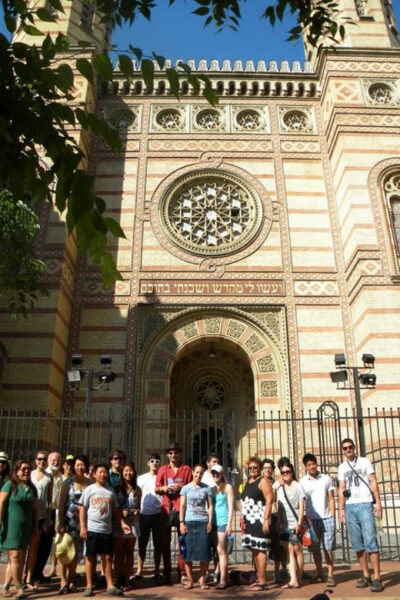
Past and Present of Budapest Jewish District Tour
Read our review →
Budapest Dohany Synagogue & Hungarian Jewish Museum & free extras
Read our review →
Jewish History Guided Walking Tour with Historian
Read our review →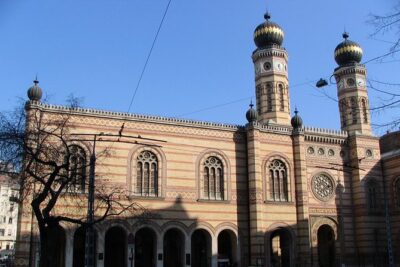
Budapest Dohany, Heroes’, Rumbach synagogues & Jewish Ghetto Tour
Read our review →Browse the lists this tour appears in