
Reviewed · JEWISH QUARTER TOURS
Budapest Dohany, Heroes’, Rumbach synagogues & Jewish Ghetto Tour
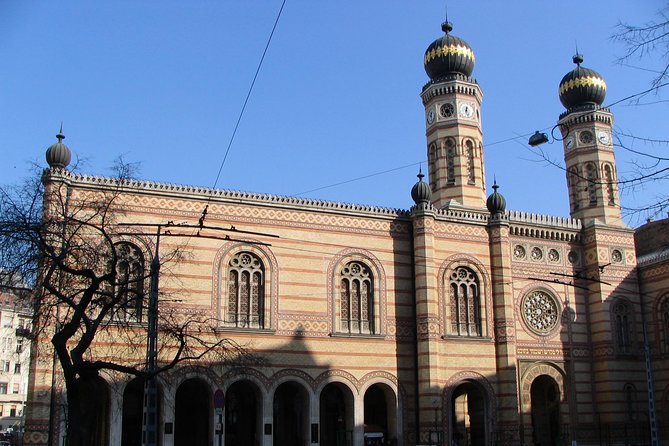
The most powerful part of this Budapest tour is the way synagogue architecture and Holocaust history meet on the same few streets. You move from the grand Dohány Synagogue to the quiet cemetery behind it, then through streets that once formed the Budapest ghetto and now hold cafés, galleries, kosher shops, and nightlife.
I like the included entry to the Great Synagogue and Rumbach Street Synagogue, since their interiors are the heart of the experience. I also like the guides’ personal connection to the subject. Milan, David, Micky, and other guides have been praised for clear explanations, humor, patience, and, at times, family stories tied to Hungarian Jewish history.
The main consideration is the pace. Much of the two hours and twenty minutes is guided explanation, not long-distance walking. Also, despite the title, this program does not visit Heroes’ Square. Kazinczy Street Synagogue is seen from the outside, and its entry is not included.
Key points to know before booking
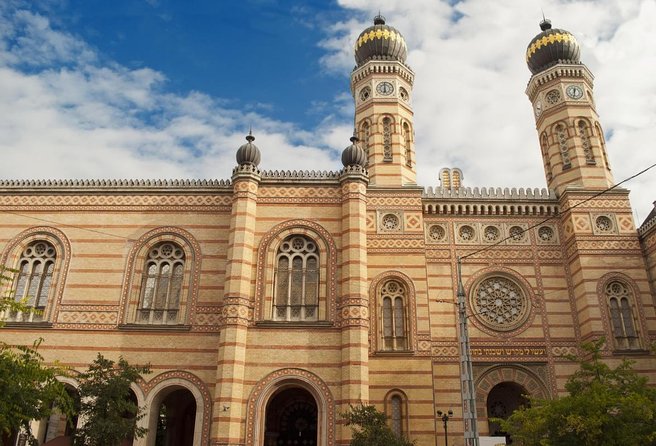
- Three distinct synagogue traditions: See the Great Synagogue, Rumbach Street Synagogue, and the exterior of Kazinczy Street Synagogue, each linked to a different part of Budapest’s Jewish life.
- A serious Holocaust focus: The tour includes the Emmanuel Tree of Life, the former ghetto cemetery, and stories of people who helped save Hungarian Jews.
- Rumbach is a major reward: Otto Wagner’s Moorish-style synagogue, recently restored, receives a substantial 45-minute visit.
- Guides shape the experience: Milan, David, Micky, and Daniel are among the guides named in feedback, with special praise for personal stories and clear historical explanations.
- The walk ends at Rumbach: You begin at Dohány Street Synagogue and finish at Rumbach Sebestyén Street 13.
- Dress with synagogue visits in mind: Shoulders must be covered, and clothing must reach the knee or be covered before entry.
Why this Jewish Quarter tour is worth your time
Budapest’s Jewish Quarter is easy to visit on your own, but its streets do not explain themselves. A café-lined lane may sit inside the former ghetto. A handsome apartment block may carry traces of Jewish commercial life. A modern ruin pub may occupy a district that once held kosher shops, schools, workshops, and homes.
That is where this guided walk earns its price of $63.52. You are not paying only to enter two synagogues. You are paying for the links between architecture, religion, Hungarian politics, wartime persecution, and the Jewish community that continues to live and work here.
The tour lasts about 2 hours 20 minutes and is offered in English. It can include up to 35 people, so this is not a private conversation. Still, the guides appear to manage questions well, and the route keeps the group within a compact section of Pest.
I would choose this early in a Budapest stay if Jewish history, architecture, or the city’s wartime past matters to you. It gives you a useful framework for returning to the quarter later on your own.
More Jewish Quarter walks:
- Budapest Jewish Heritage Memorial Walking Tour & Synagogue Entry
★ 5.0 · 568 reviews - Budapest: Jewish Heritage Guided Tour with Synagogue Ticket
★ 4.8 · 533 reviews - Jewish Quarter of Budapest Walking Tour
★ 4.7 · 369 reviews
The Great Synagogue: grand scale and Neologue identity
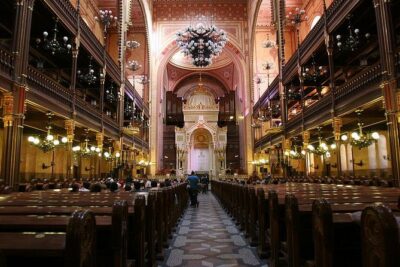
The tour starts at Dohány Street 2 to 4, home of the Great, or Central, Synagogue. This is the largest Jewish temple in Europe, and its size immediately sets it apart from the smaller neighborhood synagogues that follow.
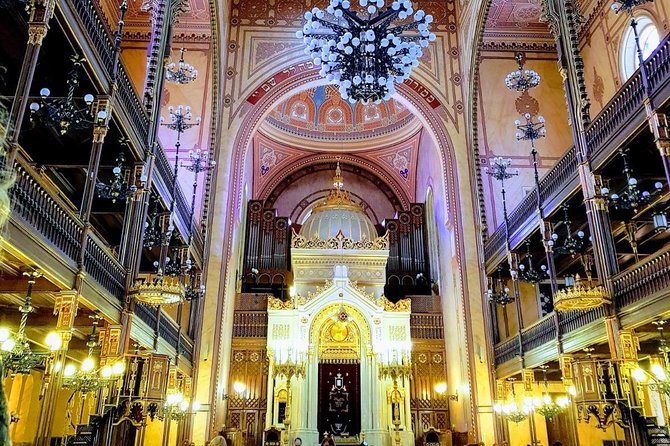
Inside, you learn about the Hungarian Neologue Jewish community. Neologue Judaism developed as a modernizing branch of Hungarian Jewish life, with its own religious and cultural outlook. The guide uses the building to explain how Hungarian Jews were not one uniform group, and why religious differences shaped synagogue design and community life.
The building dates from the 1850s Budapest period and is presented as a major architectural work. You can admire its interior and the organ associated with Franz Liszt. That detail alone gives the visit a wider cultural frame, linking Jewish Budapest to the city’s musical and architectural history.
The scheduled time here is about 30 minutes. That is enough for a focused introduction, but it may feel short if you want to study every feature or visit every part of the complex at length. One practical point is worth noting: the Great Synagogue complex has a basement museum, and you should ask your guide about it at the start if you want to know what is included in your visit. At least one person specifically wished this had been explained more clearly.
Raoul Wallenberg Park and the ghetto cemetery
The next stop shifts from ceremony to memory. At Raoul Wallenberg Holocaust Memorial Park, the guide explains the Hungarian Holocaust and the role of the Righteous Gentiles, people who risked their own lives to help Hungarian Jews.
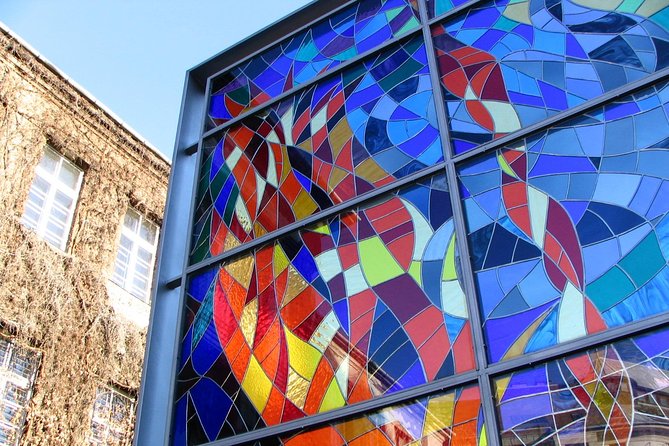
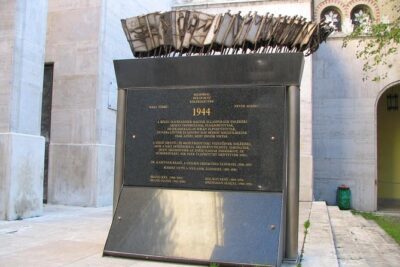
The park’s Emmanuel Tree of Life Memorial is the visual center. Its metal leaves carry the names of victims, making the memorial both a work of art and a record of loss. The guide also discusses people such as Carl Lutz, whose actions helped save thousands of Hungarian Jews.
Behind the Great Synagogue is a Holocaust cemetery created on the former Budapest ghetto grounds. More than 2,000 victims are buried there. This is a quiet and solemn part of the visit, and it helps you grasp that the ghetto was not an abstract boundary on a map. It was a place where people lived, suffered, and died.
The planned stop lasts about 20 minutes. That is enough for an introduction and time to look around, but the subject is heavy. I would not rush this portion to make room for shopping or food. The value here comes from listening carefully and allowing the place to speak without turning it into a photo stop.
Rumbach Street Synagogue and Otto Wagner’s design
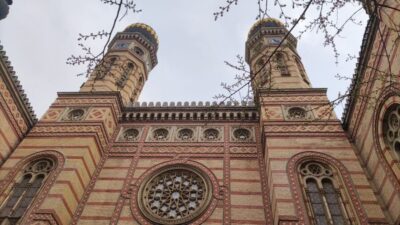
Rumbach Street Synagogue is the architectural surprise of the tour. Designed by Viennese architect Otto Wagner in 1872, it uses a Moorish style that feels very different from the Great Synagogue.
The building recently reopened after years of renovation. Its patterned surfaces, decorative forms, and unusual interior make it more than a second synagogue visit. It helps you see how Jewish communities in Budapest expressed identity through architecture while also responding to the artistic currents of the Austro-Hungarian era.
The scheduled visit lasts about 45 minutes, the longest single stop. That extra time matters. You can look at the building properly while the guide explains the community connected with it and the place it held in the former ghetto district.
The program ends here at Rumbach Sebestyén Street 13. That is useful planning information. You are not returned to Dohány Street, so leave extra time if you have a fixed reservation elsewhere. The tour begins at Dohány and concludes at Rumbach, only a short distance away within the same quarter.
Same city, a completely different way to spend an afternoon:
- Budapest: City Highlights Cruise with Welcome Drink
★ 4.6 · 35,610 reviews - Budapest: Unlimited Prosecco, Beer and Aperol Spritz Cruise
★ 4.8 · 25,310 reviews - Budapest: Széchenyi Spa Day Ticket with Optional Upgrades
★ 4.3 · 23,911 reviews - Budapest: Nighttime or Daytime Sightseeing Cruise
★ 4.2 · 21,062 reviews
Király Street and the changing Jewish Quarter
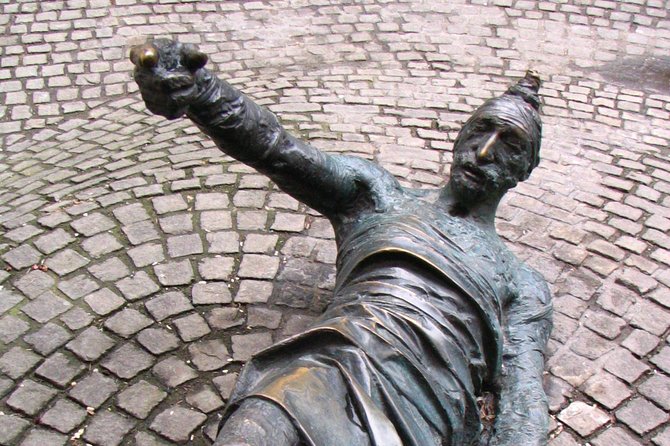
After the synagogue visits and memorials, the route becomes a street-level history lesson. Király Street was an important commercial route in Pest during the 18th and early 19th centuries. It became a center of trade and Jewish life, and the guide points out how that past connects with the area you see today.
The scheduled walk along Király Street is about 10 minutes. Do not expect a long architectural stroll. The point is to understand how commerce helped shape the quarter and how Jewish life became rooted in ordinary streets, shops, homes, and meeting places.
The area has changed again. Commercial and cultural activity has returned, but the quarter is not simply a preserved historical district. It is also a living part of Budapest, with nightlife and modern businesses layered over older buildings.
Gozsdu Udvar, food, and modern neighborhood life
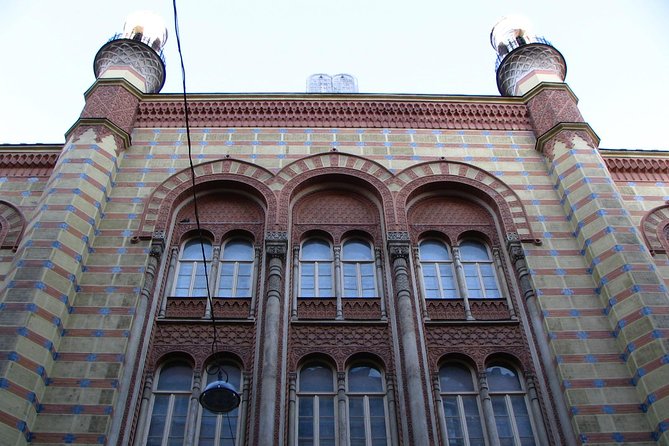
Gozsdu Udvar is described as one of the most colorful parts of the Jewish district. In earlier periods, the courtyards held kosher salami stores, food shops, and apartments. Today, the passage is associated with restaurants, drinks, local artists, artisan goods, antiques, and cultural activity.
You spend about 10 minutes here. That is enough to understand the setting, but not enough for a leisurely meal or serious browsing. If you want to try Jewish Hungarian food, plan to return after the tour.
One delicious detail is flódni, a Hungarian Jewish layered cake made with several fillings. The route points out a well-known place for it, but stopping to buy and eat it during the tour may mean falling behind the group. I would note the location and come back later rather than trying to turn a short guided stop into a bakery visit.
Carl Lutz, Spinoza, and the small details between the big stops
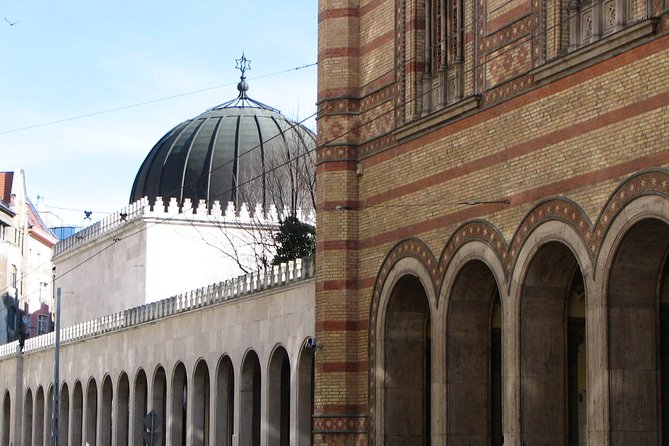
The Carl Lutz Memorial is a brief five-minute stop, but the story carries real weight. Lutz was one of the Righteous Gentiles who risked his life to save thousands of Hungarian Jews. A short explanation here adds a human face to the larger wartime story already introduced at the memorial park.
The route also passes Spinoza Színház, a restaurant, gallery, cultural venue, and theater named for the 17th-century Jewish Dutch philosopher Baruch Spinoza. The stop lasts about five minutes, so you will not get a full theater visit. Instead, it shows how the quarter’s present cultural life still draws on Jewish ideas, figures, and memory.
These short pauses work best when you understand their limits. They are signposts, not full visits. The guides use them to connect the larger historical story with places you might otherwise walk past.
Dob Street and the former Budapest ghetto
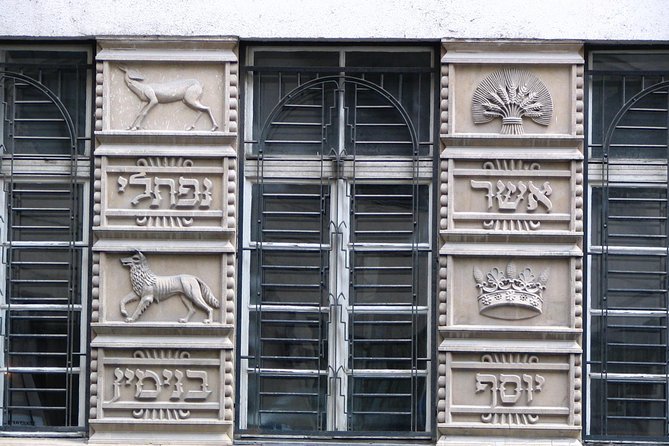
Dob Street runs parallel to Király Street and was once a central artery of Pest’s Jewish district. During the Second World War, it also ran through the Budapest ghetto.
This part of the route is valuable because it makes the ghetto’s geography more concrete. You are not only hearing dates and political facts. You are walking through the streets where the forced community was concentrated.
Today, Dob Street is again linked with Jewish life and Hungarian Orthodoxy. The contrast can be uncomfortable, but it is also one of the tour’s strengths. Budapest’s Jewish Quarter is not frozen in wartime memory. It is a place where historical wounds, religious practice, commerce, and nightlife now share the same blocks.
The stop is planned for about 10 minutes. The guide’s explanation is the main event, so stay close and listen for the connections between the streets you see and the earlier stops.
Kazinczy Street Synagogue from the outside
Kazinczy Street is often called Budapest’s cultural street. It is also home to the Hungarian Orthodox Jewish Center, with a synagogue, mikveh, kosher restaurants and cafés, schools, a butcher, and kosher food shops.
The synagogue’s architecture reflects the early 20th-century Budapest Secession style, the local form of Art Nouveau. It serves the traditional Hungarian Orthodox Jewish community, giving you another chance to compare religious traditions and architectural choices.
Entry to the Kazinczy Street Synagogue is not included. The program allows about 15 minutes here, but you should expect to admire the exterior rather than take the same kind of interior visit offered at Dohány and Rumbach. This is one of the clearest limits of the tour, especially if you book expecting three full synagogue entries.
The title also refers to Heroes’ Square, but Heroes’ Square does not appear in the route described here. If that Budapest landmark is important to you, plan a separate visit.
Guides who make the history personal
The guide can make or break a history tour, and this experience depends heavily on that person. Milan receives repeated praise for his preparation, calm manner, humor, and ability to answer questions. David is also singled out for bringing history to life through personal stories. Micky, sometimes spelled Micki, is described as gentle, clear, and easy to follow, while Daniel is praised for a friendly and informed approach.
Personal family connections appear to be part of the experience with some guides. One guide discussed a grandmother who survived the Holocaust, and another shared personal stories connected with the local community. These details can make the history feel immediate, but they also require care. This is a serious subject, and the best moments come when personal testimony supports, rather than replaces, the wider historical explanation.
The strongest guide style here seems to combine geography, architecture, religious differences, and family memory. You are not left with a list of buildings. You get a clearer idea of why Neologue, Orthodox, and other Jewish communities developed distinct identities in Budapest.
Price, group size, weather, and clothing
At $63.52 per person, the tour is not the cheapest way to see the Jewish Quarter. But entry to the Great Synagogue, the Holocaust Memorial Park, and Rumbach Street Synagogue is included, along with the guide and taxes. For someone who would otherwise pay separate admission fees and miss the historical links between sites, the package can be good value.
The group may include up to 35 people. That is manageable for a walking tour, though it is not intimate. If you want long private conversations or to set your own pace, this may feel structured. The upside is that the route is organized and the guide keeps the visit moving.
Wear practical shoes and dress for synagogue entry. Shoulders must be covered, and clothing must reach the knee or be covered before entering. A cover can be purchased on site, and men can get a head covering at the entrance. One person found the route chilly, so a light layer is wise even when the forecast looks mild.
The activity requires good weather. If poor weather cancels it, you can choose another date or receive a full refund. You can cancel for a full refund up to 24 hours before the start time, but late changes and cancellations are not accepted.
Who should book this Budapest walk?
I would recommend it to first-time visitors who want a guided introduction to Jewish Budapest, especially if you care about architecture and the Holocaust period. It also suits solo visitors, since the guide provides structure and context that can be harder to assemble alone.
History-minded families and older children may find it worthwhile, though the subject is serious and the talk-heavy format may not suit young children. Anyone with limited walking ability may manage the route, but the experience includes standing, street walking, and synagogue visits, so ask about your own comfort before booking.
I would skip it if you mainly want food, shopping, or a relaxed café crawl. You will pass places connected with flódni, kosher food, art, and nightlife, but the tour is built around history and explanation, not free time.
Should you book it?
Book this tour if you want the meaning behind Budapest’s Jewish Quarter, not just a quick look at ornate buildings. The Great Synagogue gives you scale, Rumbach gives you architectural character, and the ghetto cemetery and memorial park add the necessary human weight.
Before paying, be clear about two limits: Heroes’ Square is not part of the route, and Kazinczy Street Synagogue entry is not included. If those points are fine, the $63.52 price is reasonable for the admissions and roughly two hours of focused guiding. I would choose it for its strongest asset, the chance to connect Budapest’s Jewish past with the community and streets still visible today.
FAQ
How long does the Budapest Jewish Quarter tour last?
The tour lasts approximately 2 hours and 20 minutes.
What synagogues are included?
The tour includes entry to the Great Synagogue and Rumbach Street Synagogue. Kazinczy Street Synagogue is included as an exterior stop, but its admission is not included.
Does the tour visit Heroes’ Square?
No. Heroes’ Square is not included in the described route, despite appearing in the tour title.
Where does the tour start and finish?
It starts at Dohány u. 2 to 4 in Budapest. The program ends at Rumbach Street Synagogue, Rumbach Sebestyén u. 13.
What should I wear to enter the synagogues?
Shoulders must be covered, and clothing must reach the knee or be covered before entry. A cover is available for purchase on site, and men can obtain a head covering at the entrance.
Is the tour offered in English?
Yes. The experience is offered in English.
What happens if a synagogue closes unexpectedly?
If one synagogue closes, an alternative visiting time is offered, but no refund is provided because the tour is sold as a package. If all the synagogues close, you can receive alternative hours or dates, or a full refund.
Just added around Budapest
- Budapest: Private, Personalized Pub Crawl, 3 drinks included★ 4.5 · 3 reviews
- Private day trip from Budapest to Bratislava, Vienna, and back★ 3.5 · 3 reviews
- Budapest: Private Adventure Sightseeing Bicycle Tour★ 4.5 · 3 reviews
- Private Danube Bend tour – full day★ 4.5 · 3 reviews
- Budapest: Guided City Walking Tour in Buda and Pest★ 5.0 · 3 reviews
- Budapest Old Jewish Quarter History Private Walking Tour★ 5.0 · 3 reviews
- Lake Balaton Full Day Private Wine Tour★ 5.0 · 3 reviews
- Budapest Urban Feast – Food Tour with Wine Tasting & Coffee House★ 4.5 · 3 reviews
Jewish Quarter Tours, compared.
Budapest Jewish Heritage Memorial Walking Tour & Synagogue Entry
Read our review →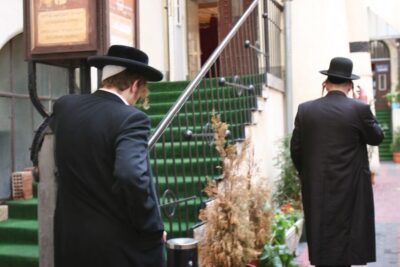
Jewish Heritage Guided Tour with Synagogue Ticket
Read our review →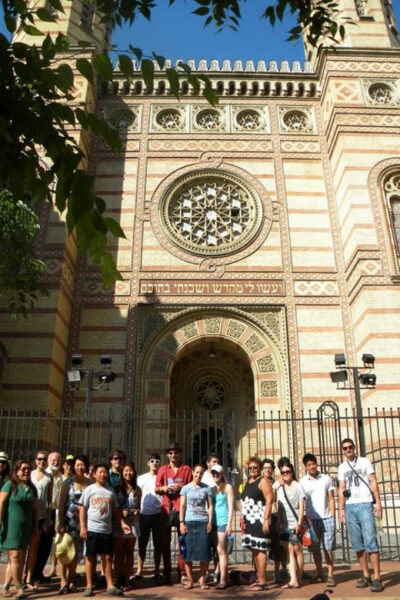
Past and Present of Budapest Jewish District Tour
Read our review →
Budapest Dohany Synagogue & Hungarian Jewish Museum & free extras
Read our review →
Jewish History Guided Walking Tour with Historian
Read our review →Browse the lists this tour appears in