
Reviewed · JEWISH QUARTER TOURS
Budapest Jewish Heritage Memorial Walking Tour & Synagogue Entry
Budapest’s Jewish heritage comes into sharp focus on this walking tour, beginning inside the grand Dohány Street Synagogue and continuing through the old Jewish Quarter, former ghetto, museums, memorials, and, on the longer route, the Orthodox Kazinczy Street Synagogue. The subject is serious, but the route is varied and grounded in real places.
I like the small group of no more than 15 because it gives you a better chance to ask questions. I also like the choice between a shorter Essential Tour and the longer Grand Tour, especially since the Grand route finishes with kosher cake or a discount at Carmel restaurant. The main drawback is that the experience can involve a lot of standing and listening, and one less-effective guide may be hard to hear.
Key points to know before booking
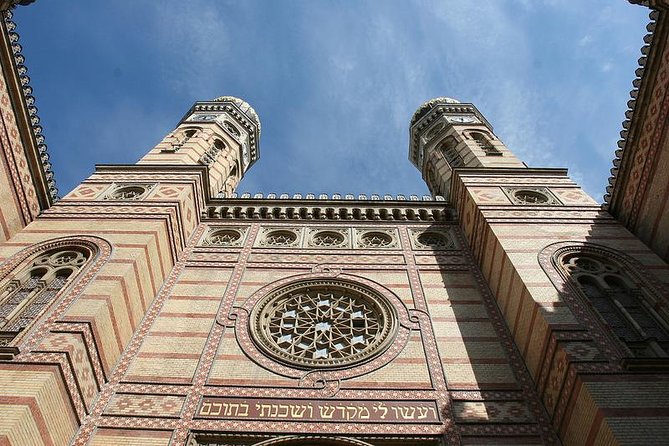
- Dohány Street Synagogue anchors the tour: You enter Europe’s largest synagogue and the second largest in the world.
- The Jewish Museum adds daily life and faith: Its collection covers Hungarian and Eastern European Jewish traditions, art, holidays, and the Holocaust.
- The Grand Tour is the better value for curious visitors: It adds Gozsdu Udvar, Carl Lutz Memorial Park, Kazinczy Street Synagogue, and a kosher sweet stop.
- The guides are a major part of the experience: Benjamin receives repeated praise for his storytelling and personal connection, while Daniel, Barbara, Barbie, and Turo are also singled out for strong presentations.
- The subject is moving and sometimes intense: The route deals with wartime persecution, the Budapest ghetto, and the Holocaust, not just architecture.
- The tour starts at 10 a.m.: It ends somewhere different from the synagogue, and hotel pickup is not included.
Why this tour matters in Budapest
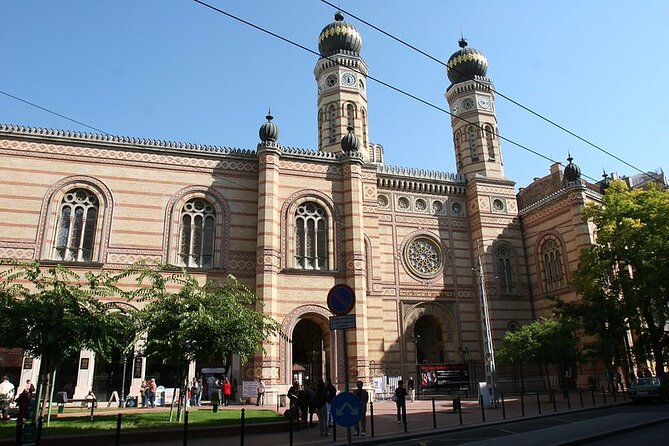
Budapest’s Jewish Quarter is easy to reduce to cafés, bars, and pretty Art Nouveau buildings. This tour helps you see the older story beneath that modern energy. You move through places tied to worship, community life, wartime rescue, loss, and the continuing presence of Jewish life in Hungary.
That mix is the strongest reason to book. You are not simply touring one impressive building. You are connecting the synagogue to the museum next door, the former ghetto streets, Holocaust memorials, and other houses of worship. The guide’s narration gives those sites a human scale.
The tone can be reflective and heavy. You will hear about the Holocaust, the World War II ghetto, and people who risked their lives to help Jewish residents. I would not plan this as a light morning activity before a busy lunch, but it is an important way to understand Budapest.
The tour is offered in English and begins at 10 a.m. The group is limited to 15 people, a useful size for a subject that depends on explanation and questions. Guides such as Benjamin have been praised for making room for personal questions, while Daniel is noted for explaining not just what happened, but why political decisions took the shape they did.
More Jewish Quarter walks:
- Budapest: Jewish Heritage Guided Tour with Synagogue Ticket
★ 4.8 · 533 reviews - Jewish Quarter of Budapest Walking Tour
★ 4.7 · 369 reviews - Budapest: Best of Downtown and Jewish Quarter Tour
★ 5.0 · 312 reviews
Inside the Great Synagogue on Dohány Street
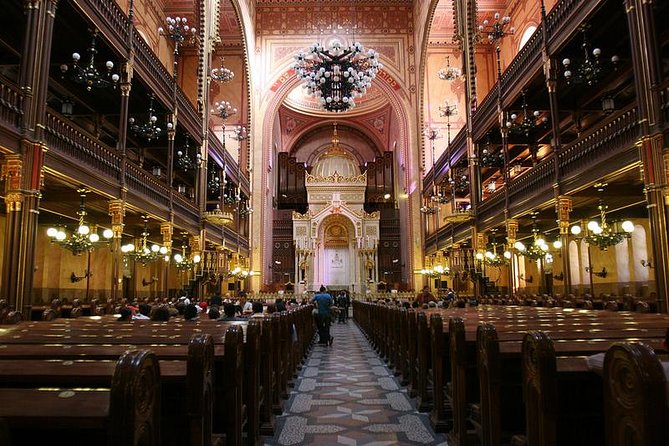
The first major stop is the Dohány Street Synagogue, also called the Great or Central Synagogue. The interior visit lasts about 30 minutes, and admission is included.
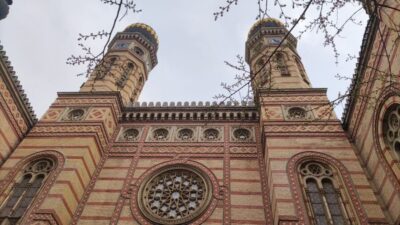
The building is the visual high point of the short route. It is Europe’s largest synagogue and the second largest in the world, so the scale alone makes an impression. Still, the value of the stop is not just the size or decoration. Your guide explains the role of the synagogue within Budapest’s Jewish community and places the building in the wider story of Hungarian Jewry.
Expect some time seated inside while the guide speaks. This allows for a focused explanation, but it also creates the main weakness of the tour. One account found the first part too centered on sitting and listening, with less walking and neighborhood interpretation than expected. If you prefer active sightseeing, keep that in mind before booking.
A good guide makes this portion work. Benjamin is repeatedly praised for clear English, warmth, and storytelling that feels personal rather than recited. Turo is also described as bringing passion to the subject while welcoming questions and keeping the group moving. The assigned guide can vary, so you should treat those names as examples rather than a guarantee.
The Jewish Museum and the story of everyday life
Next comes the Hungarian Jewish Museum and Archives, with about 45 minutes inside. Admission and a local guided visit are included.
This stop broadens the tour beyond monumental buildings. The collection covers Jewish traditions, religious holidays, ordinary life, and art from Hungary and Eastern Europe. A separate room deals with the Hungarian Holocaust, giving the wartime story its own quiet space.
I value this museum because it helps answer a basic question: what did Jewish life in Budapest look like before persecution destroyed so much of it? Religious objects and artwork can show family customs, community practice, and the rhythm of life in a way that a memorial alone cannot.
The museum visit may not always feel fully guided. One account described walking through the collection for roughly 20 minutes without much direct explanation, after a longer talk inside the synagogue. That experience suggests you should ask questions instead of waiting for every object to be explained. The quality of interpretation matters here, and the best guides connect the displays to the streets you will soon walk.
The memorial garden and Raoul Wallenberg’s legacy
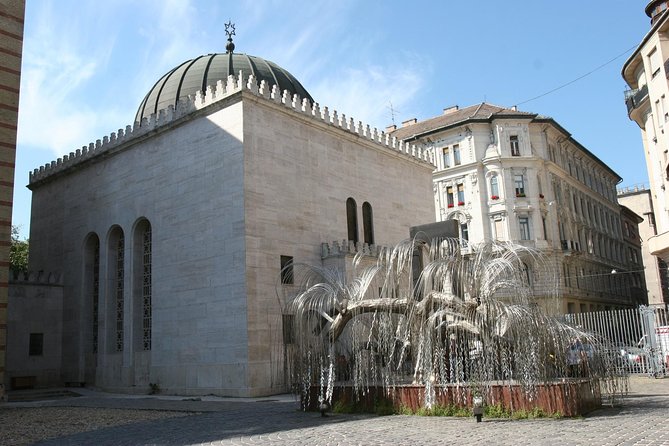
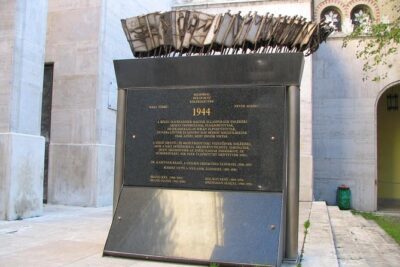
The route continues to the Raoul Wallenberg Holocaust Memorial Park. The park honors the Swedish diplomat credited with saving thousands of Jewish people during World War II.
This is one of the tour’s most solemn sections. The memorial setting asks you to pause and remember lives lost, but it also introduces the story of rescue and moral courage. That balance matters. The tour does not leave you with only dates and statistics. It also points to people who acted under terrifying conditions.
The itinerary also includes Heroes’ Temple, which honors Jewish lives lost during World War I. Its presence adds another layer to the story of the community. Jewish history in Budapest is not limited to the Holocaust, and this stop places earlier loss and civic identity beside the later catastrophe.
Allow yourself time to absorb the memorials. The official timing for the separate stops is not always given in the same way as the synagogue and museum, and the exact pace depends on the guide and group. The walk is not a race, but a full morning can feel intense because so many events are discussed close together.
A few more Budapest half-days to weigh up
- Budapest: Historic Cruise with Welcome Drink
★ 4.7 · 6,512 reviews - Budapest Historical Sightseeing – Free Walking Tour
★ 5.0 · 1,302 reviews - Buda Castle District Dark History, Legends and Vampire Night Tour
★ 4.5 · 1,240 reviews - BloodThirsty Hungary: Walking tour & Dark Historical Stories
★ 4.9 · 633 reviews
Walking through the old Jewish Quarter and former ghetto
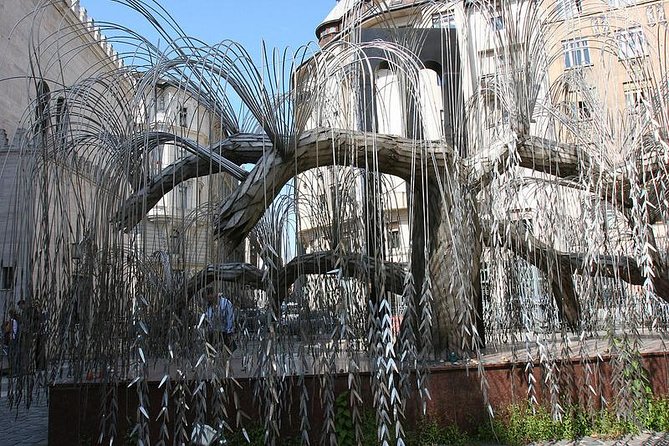
The streets between the sights are not filler. They are where the tour gives physical shape to the history.
You pass through the old Jewish Quarter, an area that became a ghetto during the Second World War. Seeing the streets in person helps you understand how a living neighborhood was confined and transformed. The route also includes discussion of the ghetto wall, according to one description of the walking program.
Today, parts of the quarter are known for restaurants, nightlife, shops, and the Gozsdu passage. That contrast can be jarring. On the Grand Tour, you pass through Gozsdu Udvar, a thriving passage that shows the district’s present-day energy. The guide’s job is to connect the modern scene with the community that existed before the war and the suffering imposed during it.
This is also where a strong guide can add the most value. Benjamin has been praised for discussing both Jewish history and present-day Hungarian Jewish life. That kind of context helps you avoid seeing the quarter only as a nightlife district or only as a memorial zone. It is both a living part of the city and a place marked by painful memory.
What the Grand Tour adds
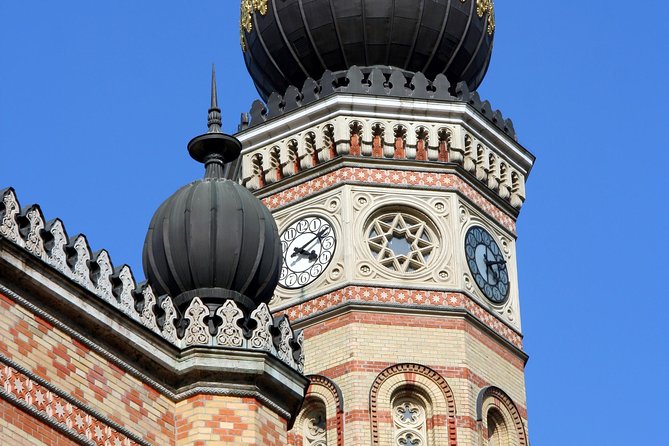
The Grand Tour continues beyond the Essential route and is the option I would choose if your schedule allows. It adds several stops that make the walking portion feel more complete.
At Gozsdu Udvar, you get a brief look at one of the quarter’s active modern passages. The stop is short, about five minutes, so do not expect a full visit. Its purpose is to show how the district functions today.
Carl Lutz Memorial Park receives about 20 minutes. Lutz was a Swiss diplomat associated with efforts to protect Jewish people during World War II. Like the Wallenberg memorial, this stop puts individual action beside the larger story of persecution. The two memorials create a useful contrast in the way the tour presents rescue.
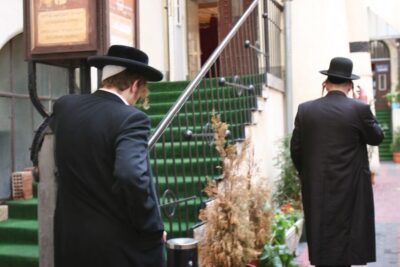
The Grand Tour then reaches Kazinczy Street Synagogue, the main synagogue of Hungarian Orthodox Jewry. It is described as one of Europe’s largest operating Orthodox synagogues and was built in the Art Nouveau style. The stop lasts about 30 minutes and adds a different religious and architectural perspective after the Dohány Street Synagogue.
That contrast is important. You see that Budapest’s Jewish community was not one uniform group with one style of worship. The synagogues reflect different traditions within Jewish life, and the guide can explain those differences in place.
The Grand Tour may also include a Judaica shop, based on the experiences described, where one participant found tefillin. This is not listed as a formal timed stop in the supplied schedule, so I would not book solely for it, but it can be a useful extra if you are interested in Jewish objects or practice.
Cake, coffee, and the end of the walk
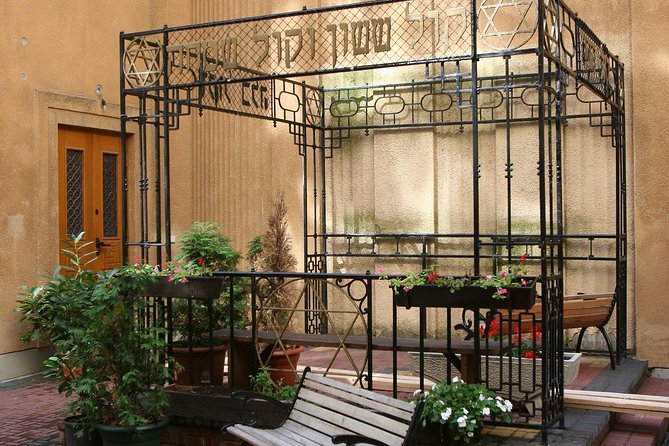
The Grand Tour finishes with a choice involving kosher food. You can accept an invitation for cake at the glatt kosher Fröhlich confectionery, or receive a 10 percent discount at the glatt kosher Carmel restaurant for later that evening.
The Fröhlich stop is a smart touch. After several hours of serious material, a modest sweet and coffee break gives the group a chance to talk and process what you have seen. One account specifically described the cake and coffee break as a good idea, while another enjoyed a kosher restaurant snack.
The Carmel discount is more flexible. You can use it later on your own rather than extending the walking tour with a full meal. This is a small benefit, but it adds some practical value to the Grand option if you already want to try kosher Hungarian food.
The end point is different from the starting point at Dohány Street Synagogue. That is worth noting when planning the rest of your day. Hotel pickup and drop-off are not included, but the starting point is near public transportation.
Essential or Grand Tour?
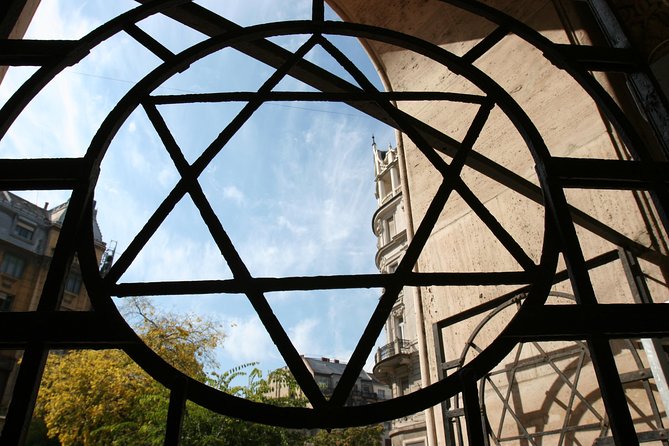
The Essential Tour is best for a tight schedule. You get the Great Synagogue, Jewish Museum, Raoul Wallenberg Memorial Park, Heroes’ Temple, and a walk through the former ghetto area. It gives you the core story in a shorter format.
Choose Essential if you have only one morning available, are mainly interested in the Dohány complex, or prefer to keep the history portion focused. It is still much more than a synagogue entry.
The Grand Tour is better for anyone with a serious interest in Budapest’s Jewish life, architecture, or wartime history. Kazinczy Street Synagogue adds a second religious tradition, Carl Lutz Memorial Park expands the rescue story, and the kosher food stop gives the morning a more local finish.
The Grand route also reduces the chance that the experience feels too concentrated inside one building. Since one account found too much sitting and not enough neighborhood walking on a shorter version, the added streets and stops may suit you better.
Is $83.44 a fair price?
At $83.44 per person, this is not a budget walk. The price includes a professional English-speaking guide, entry to the Great Synagogue, and, on the Grand Tour, entry to Kazinczy Street Synagogue. The museum visit is also part of the route.
The value depends on how much explanation you want. If you only want to see the Dohány building, purchasing entry alone would likely be a simpler choice. If you want the synagogue placed within Budapest’s Jewish Quarter, Holocaust memorials, Orthodox tradition, and present-day community, the guided format earns its price.
The group cap of 15 helps. You are paying for access and interpretation, not just movement between sights. Guides such as Benjamin have been praised for answering personal questions and linking historical facts to current life, which is the sort of service that makes a heritage tour useful.
The tour is booked an average of 53 days ahead, so you should not leave it until the last morning of your Budapest planning. Free cancellation is available up to 24 hours before the 10 a.m. start time. After that point, the payment is not refunded and late changes are not accepted.
Who will get the most from this experience?
I would recommend this tour to you if you want a clear introduction to Jewish history in Budapest and prefer to learn through buildings, streets, memorials, and objects rather than a museum visit alone.
It suits people interested in:
- Hungarian and European history
- Jewish religious traditions and daily life
- World War II, rescue efforts, and Holocaust remembrance
- Art Nouveau architecture and Budapest’s synagogue culture
- Current Jewish life in Hungary
- A small-group tour with time for questions
You do not need to be Jewish to find the tour worthwhile. The subject is also relevant if you care about civil rights, political history, social pressure, or how cities remember trauma.
The main caution is pace and presentation. The tour covers a lot in about three hours, and much of the learning comes through spoken explanation. If your guide speaks too softly or relies too heavily on a long talk, you may feel that you are sitting more than exploring. Stay near the guide and ask for clarification if needed.
Should you book the Budapest Jewish Heritage Tour?
Yes, if you want more than a quick look inside the Great Synagogue. The combination of synagogue, museum, memorial park, former ghetto, and Jewish Quarter gives you a strong foundation for understanding this part of Budapest.
I would choose the Grand Tour when possible. The Kazinczy Street Synagogue and Carl Lutz Memorial Park add real substance, while the kosher cake or Carmel discount gives the morning a friendly finish. Choose Essential only when time is tight.
Book this for the stories and the guide, not just the buildings. Benjamin, Daniel, Barbara, Barbie, and Turo have all been praised for clear and engaging presentations, with Benjamin receiving especially strong comments for his personal connection and willingness to discuss difficult questions. At $83.44, it is a considered purchase, but for an English-speaking introduction to Budapest’s Jewish heritage, it offers far more than a standard sightseeing walk.
FAQ
Where does the tour start?
The tour starts at Dohány Street Synagogue, Budapest, Dohány u. 2, 1074 Hungary.
What time does the tour begin?
The stated start time is 10 a.m.
How long does the experience last?
The tour lasts approximately three hours. The Grand Tour continues beyond the Essential route and adds more synagogues, memorials, and a kosher food stop.
Is entry to the Great Synagogue included?
Yes. Admission to the Great Synagogue is included in the tour price.
Is entry to Kazinczy Street Synagogue included?
Yes, but only with the Grand Tour option.
Is hotel pickup and drop-off provided?
No. Hotel pickup and drop-off are not included. The meeting point is near public transportation, and the tour ends at a different location.
How large is the group?
The activity has a maximum of 15 participants.
Is cancellation allowed?
You can cancel for a full refund up to 24 hours before the experience start time. Cancellations or changes made less than 24 hours before the start are not accepted for a refund.
More Walking Tours in Budapest
- Budapest: Buda Castle Walk with Saint Stephen’s Hall
★ 4.5 · 3,012 reviews - Big Bus Budapest Hop-On Hop-Off Bus and Walking Tour
★ 3.5 · 2,206 reviews - Budapest: Buda Castle District Walking Tour
★ 4.6 · 2,108 reviews - Budapest City Landmarks Walking Tour in 2 Hours
★ 5.0 · 2,048 reviews
Just added around Budapest
- Budapest: Private, Personalized Pub Crawl, 3 drinks included★ 4.5 · 3 reviews
- Private day trip from Budapest to Bratislava, Vienna, and back★ 3.5 · 3 reviews
- Budapest: Private Adventure Sightseeing Bicycle Tour★ 4.5 · 3 reviews
- Private Danube Bend tour – full day★ 4.5 · 3 reviews
- Budapest: Guided City Walking Tour in Buda and Pest★ 5.0 · 3 reviews
- Budapest Old Jewish Quarter History Private Walking Tour★ 5.0 · 3 reviews
- Lake Balaton Full Day Private Wine Tour★ 5.0 · 3 reviews
- Budapest Urban Feast – Food Tour with Wine Tasting & Coffee House★ 4.5 · 3 reviews
Jewish Quarter Tours, compared.
Jewish Heritage Guided Tour with Synagogue Ticket
Read our review →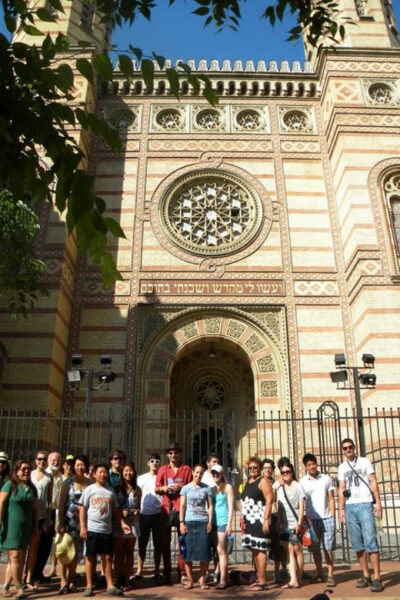
Past and Present of Budapest Jewish District Tour
Read our review →
Budapest Dohany Synagogue & Hungarian Jewish Museum & free extras
Read our review →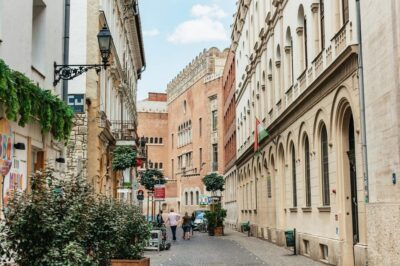
Jewish History Guided Walking Tour with Historian
Read our review →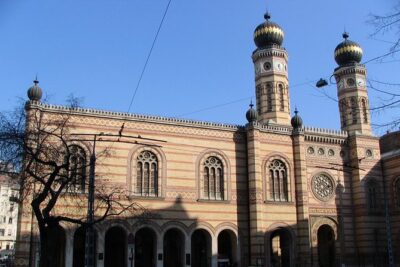
Budapest Dohany, Heroes’, Rumbach synagogues & Jewish Ghetto Tour
Read our review →Browse the lists this tour appears in