
Reviewed · JEWISH QUARTER TOURS
Budapest: Best of Downtown and Jewish Quarter Tour
Budapest reveals its personality as you walk from the grand Parliament Building into the Jewish Quarter. This tour links official Budapest, with its banks, palaces, and basilica, to a district known for synagogues, street art, ruin pubs, and food stalls. It is a useful way to see how the city’s formal center and creative nightlife fit together.
I like the route for two clear reasons: it gives you a quick grasp of Hungarian history and local habits, and it finishes in an area where you can keep exploring on your own. The digital restaurant guide, with 12 suggestions, adds real value if you are planning several meals in Budapest.
The main consideration is language. This is a German-language tour, and the walk does not include entry into Parliament, St. Stephen’s Basilica, or the synagogues. You are paying for a guided outdoor introduction, not a series of interior visits.
Key points before you book
- Parliament begins the story: You get a guided explanation and photo stop at one of Budapest’s defining buildings.
- The 1890s shape the middle of the walk: Downtown sights include art nouveau palaces, the Postal Savings Bank, and the Hungarian National Bank.
- St. Stephen’s Basilica is seen from outside: The stop gives you time to admire its monumental facade, but entrance is not included.
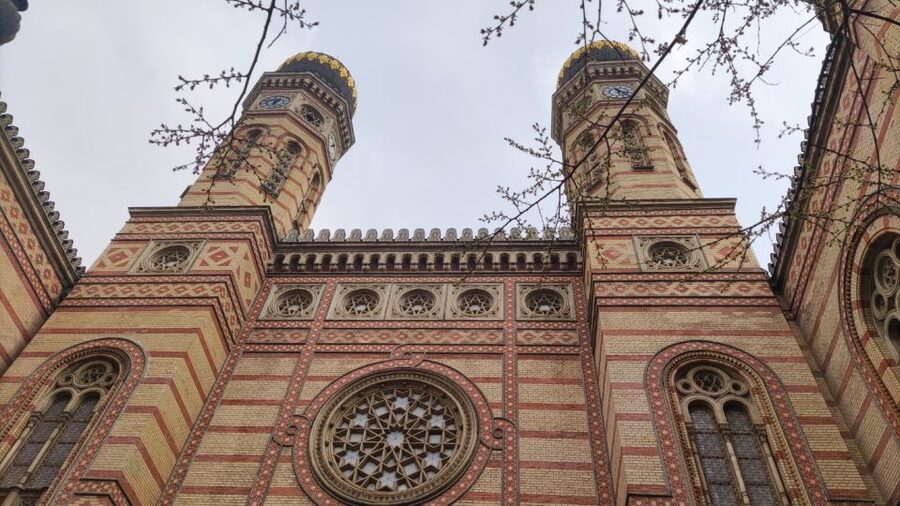
- The Jewish Quarter mixes old and new: Synagogues and Jewish monuments share the streets with street art and ruin pubs.
- Food advice is part of the package: You receive a digital Budapest restaurant guide covering 12 sites.
- The route finishes near Szimpla Kert: Kazinczy Street and Karavan Street Food make it easy to continue your evening.
Why this route works for a first look at Budapest
A 2.5-hour walk can easily become a list of names and dates. This one has a sensible shape. It starts with national government and city history, moves through the grand architecture of central Budapest, then shifts into the Jewish Quarter’s more personal and contemporary character.
That change matters. Budapest is not just a city of monumental buildings. It is also a city of courtyards, food counters, memorials, street art, and nightlife. By placing these elements in one route, the tour helps you understand the city’s contrasts without requiring a full day.
I would use this as an early activity in a Budapest stay. A good guide can help you place the Parliament, basilica, Jewish Quarter, restaurants, and ruin pubs on your mental map. You can then return to the places that caught your attention.
The guides named in the supplied tour information include Gábor Glasner, Zsuzsanna, Georgiana, and Shoshana. Guide assignment may vary, but the strongest praise is aimed at the personal side of the guiding: clear explanations, warmth, humor, cultural anecdotes, and practical food advice. The experience is conducted in German, so you should be comfortable following a German-speaking walking tour before booking.
More Jewish Quarter walks:
- Budapest Jewish Heritage Memorial Walking Tour & Synagogue Entry
★ 5.0 · 568 reviews - Budapest: Jewish Heritage Guided Tour with Synagogue Ticket
★ 4.8 · 533 reviews - Jewish Quarter of Budapest Walking Tour
★ 4.7 · 369 reviews
Meeting Gyula Andrássy and beginning near Parliament
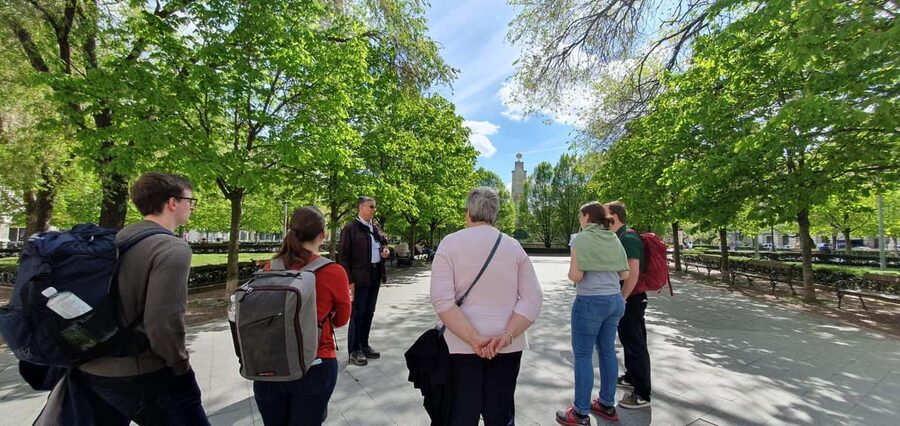
The meeting point is by the statue of Gyula Andrássy. Look for a guide wearing a tour guide card. Starting here gives the tour a clear historical opening rather than dropping you straight into a crowded shopping street.
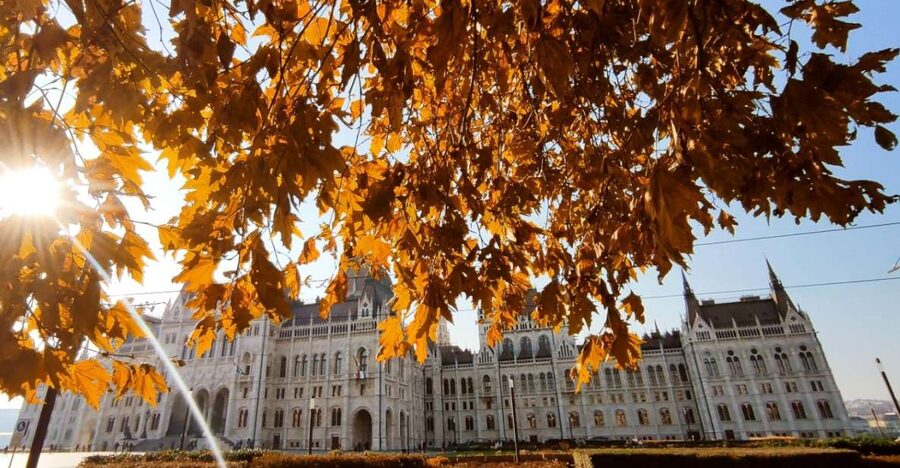
The first stop is the Hungarian Parliament Building. You spend about 15 minutes on a guided explanation, sightseeing, and photography. The tour does not take you inside, so think of this as an orientation stop focused on the building’s place in Hungarian history and the city’s political identity.
This is a strong choice for the start of a walking tour. Parliament is visually imposing, and a short explanation helps you understand why it matters before you move on. You should bring your own interest in photography, since the stop is partly built around views and pictures.
The limitation is equally clear: 15 minutes is enough for an introduction, not a full architectural study. If Parliament is at the top of your Budapest list, you will need a separate interior visit. No entrance fees are included, and the group does not go inside any of the buildings on this route.
Szabadság Square and the grand city center
From Parliament, the walk continues toward Szabadság Square. This is another roughly 15-minute stop for guided sightseeing and photographs. The square helps shift the focus from one famous building to the wider character of downtown Budapest.
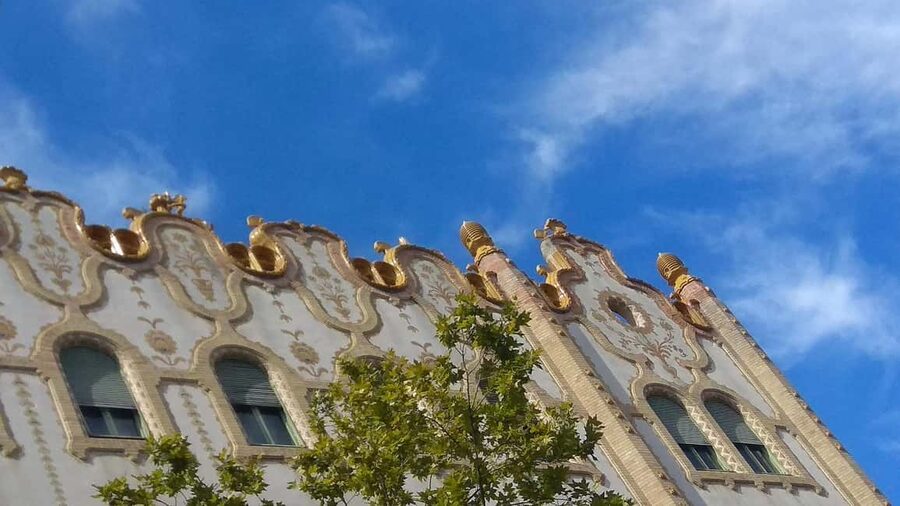
The tour points out old buildings dating from the 1890s, including art nouveau palaces, the Postal Savings Bank, and the Hungarian National Bank. That is one of the most useful parts of the walk for anyone who might otherwise hurry past the facades.
Look upward as you walk. The value here is in the details of the buildings and in the guide’s explanation of what they say about Budapest at the end of the 19th century. The route is not simply a march between famous attractions. It gives you a chance to notice the architecture between them.
The short stop also means you should not expect an exhaustive treatment of every building. The guide must keep moving toward the Jewish Quarter, so this section works best as a focused introduction. If you like architecture, note the places you want to revisit later at a slower pace.
St. Stephen’s Basilica from the outside
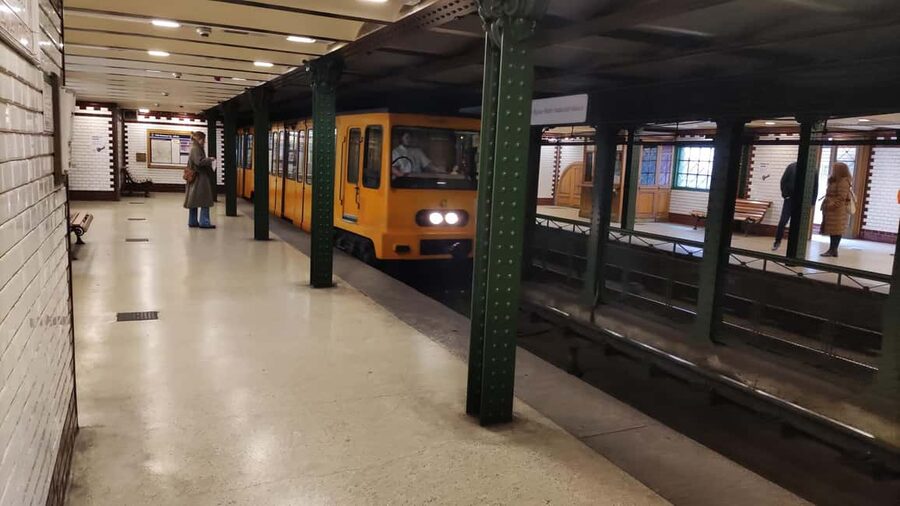
The next major stop is St. Stephen’s Basilica, with another 15 minutes for sightseeing, photography, and explanation. The basilica is one of central Budapest’s most recognizable buildings, and its monumental scale gives the route another strong visual anchor.
You will hear about the building as part of the city center and have time to admire it from outside. This is a good moment to pause, take pictures, and ask the guide about Hungarian customs and the country’s past. The tour is designed to connect the sights with Hungarian life, not only to identify them.
Again, there is no interior visit. If you want to see the inside of the basilica, you must arrange that separately and account for any entrance cost. That is not a flaw if you want a compact city walk, but it matters when comparing this tour with a ticketed sightseeing program.
I like the way the basilica stop balances the Parliament visit. Parliament represents the state, while the basilica gives you a different kind of landmark in the heart of the city. Together, they make the first half of the route easy to remember.
Same city, a completely different way to spend an afternoon:
- Budapest: City Highlights Cruise with Welcome Drink
★ 4.6 · 35,610 reviews - Budapest: Unlimited Prosecco, Beer and Aperol Spritz Cruise
★ 4.8 · 25,310 reviews - Budapest: Széchenyi Spa Day Ticket with Optional Upgrades
★ 4.3 · 23,911 reviews - Budapest: Nighttime or Daytime Sightseeing Cruise
★ 4.2 · 21,062 reviews
Entering Budapest’s Jewish Quarter
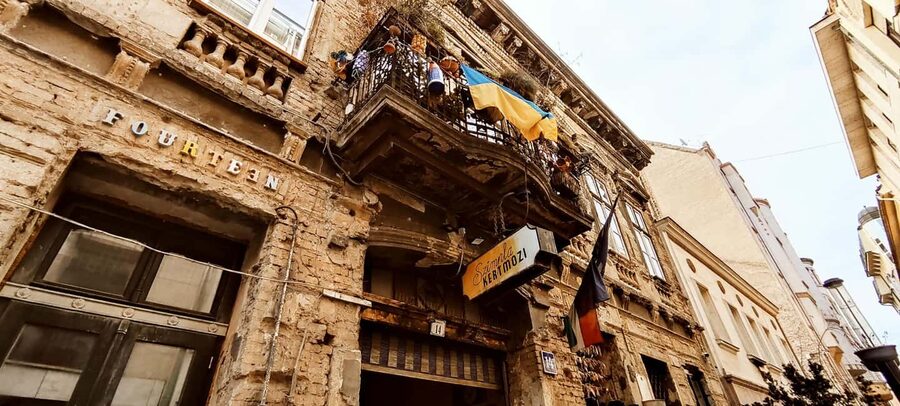
The Jewish Quarter receives the longest section of the tour, about 50 minutes. This is where the route becomes less formal and more layered. You will see several synagogues and Jewish monuments, then encounter modern street art, ruin pubs, and the local food scene.
The district deserves careful treatment. Its Jewish heritage is central to understanding this part of Budapest, and the guide’s role is to connect the surviving places and monuments with the city’s broader story. The tour also includes insights into Jewish culture, an aspect that Gábor was especially praised for in the supplied feedback.
At the same time, the district is not presented as a museum frozen in the past. Its streets are also associated with current city life. Street art and ruin pubs sit close to historic sites, and the route shows you both sides.
That mixture is the district’s appeal, but it can also feel like a sharp change from the solemnity of memorials and synagogues to the energy of nightlife. A good guide helps you read those contrasts with respect. You should approach this section as more than a pub crawl or a checklist of religious buildings.
The 50-minute timing is enough for a meaningful introduction, but not for entering and studying several synagogues. Since the tour remains outdoors, you will see the surroundings and receive context rather than a detailed interior tour. Anyone wanting extensive Jewish heritage visits should plan separate admissions.
Kazinczy Street, Karavan, and Szimpla Kert
The walk is described as ending on Kazinczy Street, near Karavan Street Food and Szimpla Kert. This is a practical finish. You are left in one of the best areas for continuing with dinner, a drink, or more independent exploration.
Szimpla Kert is a famous ruin pub, and Karavan is a street food court. The guide can point you toward places to eat and drink, and the digital restaurant guide adds 12 more recommendations. Several people singled out the food suggestions as useful enough to shape the rest of a short Budapest stay.
I would not assume every recommendation suits every budget or taste, but having local guidance at the end of the route is helpful. You can ask about where to eat after the walk instead of making a decision while hungry and standing in an unfamiliar street.
The finish also makes the tour feel practical rather than sealed off. You do not simply return to a coach or disappear into a transport transfer. You finish near places where you can apply what you have just learned.
What the guiding adds
The best part of this experience is likely to be the guide rather than any single landmark. The route itself is strong, but Parliament and the basilica can be seen without a tour. The added value comes from the explanations, anecdotes, local customs, and recommendations that give the walk a human scale.
Zsuzsanna received especially warm praise for bringing Budapest to life, answering questions, and making the time pass quickly. Georgiana was praised for kindness, informative commentary, and taking the group to picturesque spots. Shoshana was noted for practical advice about other places to see and restaurants, while Gábor was associated with strong insights into Jewish culture and an interesting German-language walk.
These details suggest a tour that can feel personal, especially when the group is small or private. A private group is available, though the supplied information does not specify its additional price or exact size. If you choose a private option, confirm those details before paying.
You should also keep your expectations realistic. A guide can explain a great deal in 2.5 hours, but the tour cannot cover every period of Hungarian history or every important site in the Jewish Quarter. Its strength is selection and connection.
Price, pace, and practical value
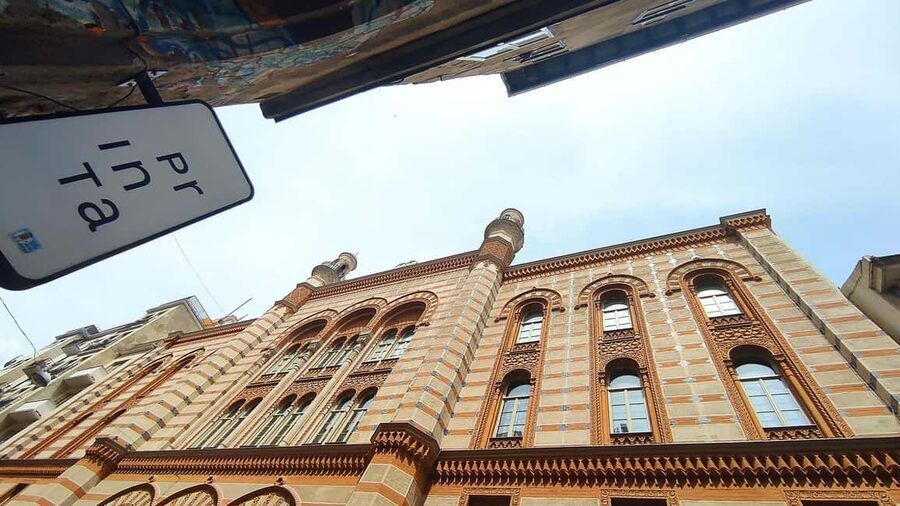
At $23 per person, this is reasonably priced for a live 2.5-hour walking tour in central Budapest. You are paying for a guide who covers several major areas, not for admission tickets or transportation.
The value is strongest if you want orientation. Parliament, Szabadság Square, St. Stephen’s Basilica, and the Jewish Quarter are easier to place after one continuous walk. The restaurant guide increases the practical return, especially if you are staying for only a few days.
The value is weaker if you want interiors. No building entry is included, and the tour does not provide hotel pickup or drop-off. You should also factor in the physical nature of a city walk, even though the activity is listed as wheelchair accessible.
The published duration is 2.5 hours, with starting times shown when you check availability. Since the stop timings total only part of the full duration, the remaining time is used for walking between locations and for explanations along the route. Wear comfortable shoes and leave room in your schedule for the finish near Kazinczy Street.
Free cancellation is available up to 24 hours in advance, and you can reserve now and pay later. Those policies are useful if your Budapest plans are still shifting, but the language remains the key booking issue.
Who should choose this Budapest walk
I would choose this tour if you want a well-shaped introduction to central Budapest and prefer learning while walking rather than sitting through a long lecture. It suits first-time visitors, short stays, and anyone who wants restaurant and nightlife suggestions alongside basic history.
It is also a good fit if the Jewish Quarter is on your list but you want more than a nightlife tour. The route gives attention to synagogues and Jewish monuments before moving into street art, ruin pubs, and food stops.
German-speaking visitors should find the format straightforward. The tour is not suitable if you require English commentary, since the activity is specifically conducted in German.
You may want something else if Parliament interiors, synagogue admissions, or the basilica interior are your main goals. In that case, book separate visits and use this walk only if you also want a city-center orientation and local recommendations.
Should you book it?
Book this tour if you want to connect Budapest’s grand public buildings with the everyday character of the Jewish Quarter in a single morning or afternoon. The route is compact, the price is fair, and the food advice gives you something useful after the guiding ends.
I would book it early in your stay, ideally before choosing your restaurants or evening plans. You will get more from the tour if you keep a few notes, ask questions, and treat the final stop near Szimpla Kert as the beginning of your own exploration.
Skip it if you need an English tour or if you want extensive interior access. For a German-speaking visitor seeking history, architecture, Jewish heritage, street art, and food guidance in 2.5 hours, it is a sensible introduction to Budapest.
FAQ
How long does the Budapest Downtown and Jewish Quarter Tour last?
The tour lasts 2.5 hours. Starting times depend on availability when you book.
What language is the tour conducted in?
The live tour is conducted in German.
Where does the tour start?
Meet by the statue of Gyula Andrássy. Your guide will be wearing a tour guide card.
Where does the tour finish?
The walking route is described as finishing on Kazinczy Street, near Karavan Street Food and Szimpla Kert.
Does the tour enter Parliament or St. Stephen’s Basilica?
No. The tour includes outdoor sightseeing and explanations, but it does not go inside the buildings.
Are entrance fees included?
No. Entrance fees are not included because the tour does not include interior visits.
Is hotel pickup and drop-off included?
No. You must make your own way to the meeting point, and hotel pickup and drop-off are not included.
Is the tour wheelchair accessible?
Yes. The activity is listed as wheelchair accessible.
Just added around Budapest
- Budapest: Private, Personalized Pub Crawl, 3 drinks included★ 4.5 · 3 reviews
- Private day trip from Budapest to Bratislava, Vienna, and back★ 3.5 · 3 reviews
- Budapest: Private Adventure Sightseeing Bicycle Tour★ 4.5 · 3 reviews
- Private Danube Bend tour – full day★ 4.5 · 3 reviews
- Budapest: Guided City Walking Tour in Buda and Pest★ 5.0 · 3 reviews
- Budapest Old Jewish Quarter History Private Walking Tour★ 5.0 · 3 reviews
- Lake Balaton Full Day Private Wine Tour★ 5.0 · 3 reviews
- Budapest Urban Feast – Food Tour with Wine Tasting & Coffee House★ 4.5 · 3 reviews
Jewish Quarter Tours, compared.
Budapest Jewish Heritage Memorial Walking Tour & Synagogue Entry
Read our review →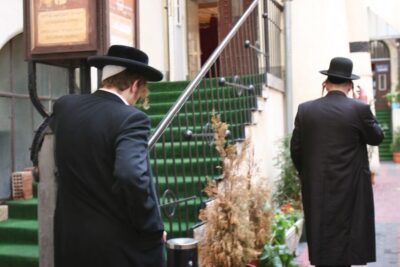
Jewish Heritage Guided Tour with Synagogue Ticket
Read our review →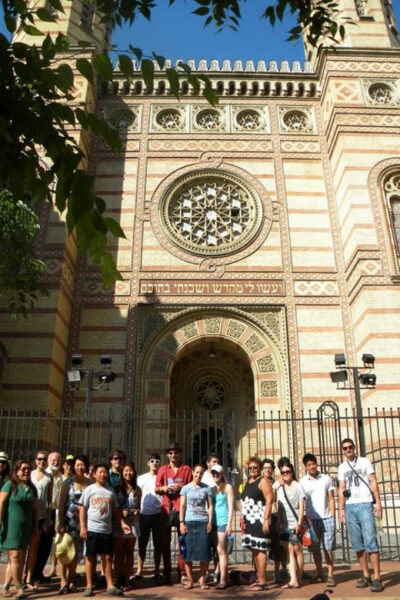
Past and Present of Budapest Jewish District Tour
Read our review →
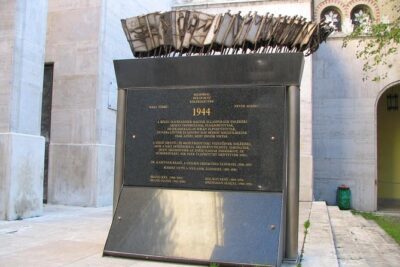
Budapest Dohany Synagogue & Hungarian Jewish Museum & free extras
Read our review →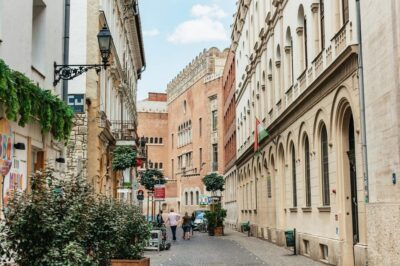
Jewish History Guided Walking Tour with Historian
Read our review →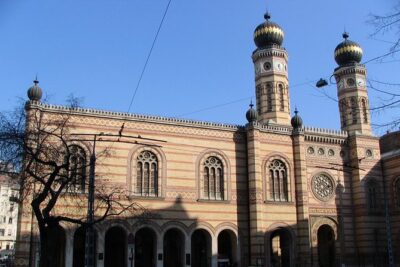
Budapest Dohany, Heroes’, Rumbach synagogues & Jewish Ghetto Tour
Read our review →Browse the lists this tour appears in