
Reviewed · JEWISH QUARTER TOURS
Jewish Heritage / Full tour
Budapest’s Jewish quarter is best understood through its contrasts: a grand synagogue, a quiet cemetery, memorials by the river, and streets now filled with street art and nightlife. This three-hour walking tour connects those pieces while also asking what Jewish life in Hungary means today.
I like the small-group format and the chance to talk openly with a local guide. I also like that the route includes both the famous Dohány Street Synagogue and less straightforward sites, such as the disputed Memorial to the Victims of the German Invasion. The main consideration is cost: the $80.86 tour price does not include the synagogue’s €26 entrance fee, and the subject matter can be emotionally heavy.
Key points to know before booking
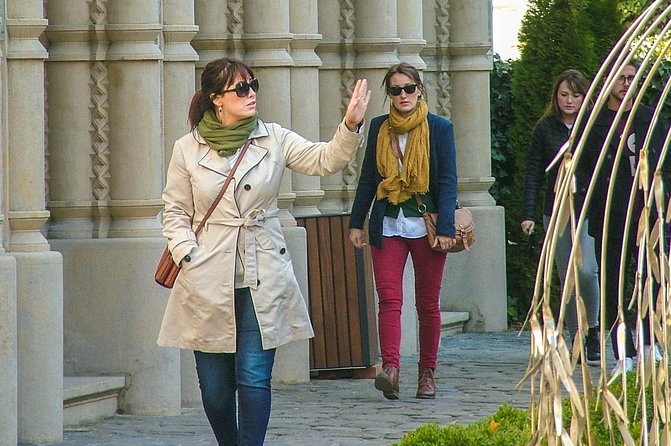
- Dohány Street Synagogue anchors the tour: You visit the synagogue complex, cemetery, Raoul Wallenberg Memorial Garden, and Emmanuel Tree.
- Edith is the named guide: She is praised for clear English, personal stories, careful answers, and a strong grasp of Hungarian Jewish life.
- The route includes two powerful memorials: Shoes on the Danube Bank and the contested German Occupation Memorial.
- Small groups make discussion possible: The advertised limit is small, with the additional information listing a maximum of 13 people.
- The tour fits into half a day: It lasts about three hours, leaving room for other Budapest plans.
- Budget for the synagogue separately: Admission is listed as €26 per person and is not included in the tour price.
Why this tour gives Budapest’s Jewish quarter meaning
You can walk through the Jewish district alone, but the signs and monuments do not always explain the arguments surrounding them. This tour gives you a route through the quarter and a guide to the painful, complicated story behind it.
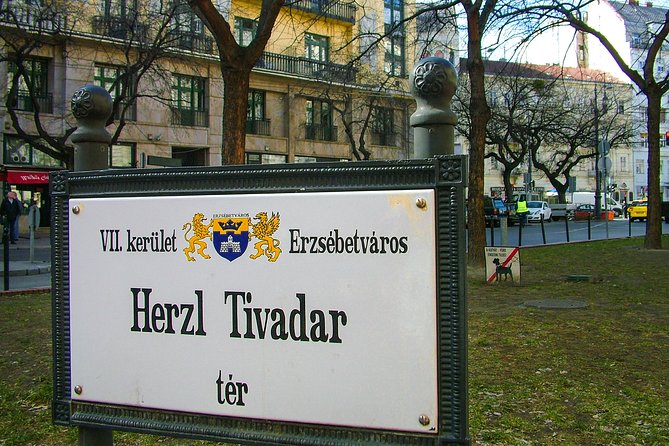
The experience begins at Deák Ferenc tér, a central meeting point that is easy to reach by public transport. From there, the route connects central Budapest with the Danube memorials and the Jewish quarter, ending at Dohány Street Synagogue on Dohány u. 2.
The tone is serious without being limited to the Holocaust. You learn about Jewish communities before and after the Second World War, the effect of Soviet rule, memorial debates, and Jewish life in Hungary today. The route also acknowledges that this district is not frozen in the past. Its streets now hold restaurants, ruin bars, nightlife, and some of Budapest’s best-known street art.
That balance matters. You see what was lost, but you also see a living neighborhood.
More Jewish Quarter walks:
- Budapest Jewish Heritage Memorial Walking Tour & Synagogue Entry
★ 5.0 · 568 reviews - Budapest: Jewish Heritage Guided Tour with Synagogue Ticket
★ 4.8 · 533 reviews - Jewish Quarter of Budapest Walking Tour
★ 4.7 · 369 reviews
Meeting Edith and the value of a personal guide
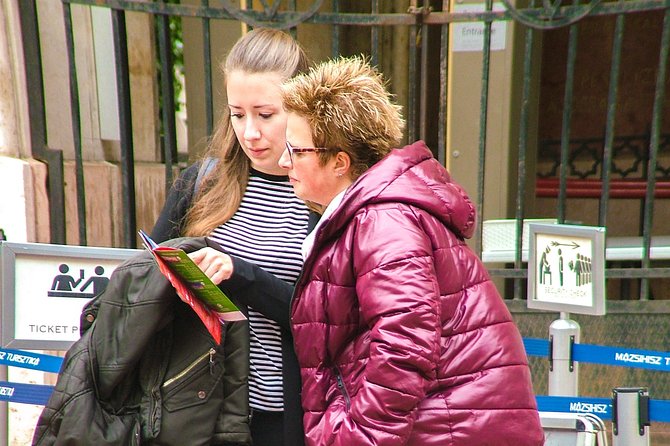
Edith is the guide named for this experience, and the strongest praise centers on her style. She explains difficult material in clear English, takes questions seriously, and adjusts the pace and emphasis to suit the people in front of her.
That flexibility is useful on a subject that can quickly become either too broad or too academic. Edith has been praised for adding personal reflections about Budapest and Hungary over the past 70 years, along with family stories that help connect large historical events to ordinary life.
You should not expect a scripted sightseeing lecture with a quick list of dates. The format encourages discussion about what it means to be Jewish in Hungary now. Questions are welcomed, and the guide may bring photographs or personal examples to add context.
The small group helps here. The published details describe a maximum of ten people in the tour highlights, while the additional information gives a maximum of 13. Either way, this is intended to be a small-group experience, not a large procession with a flag in the air.
Shoes on the Danube Bank: a quiet, direct memorial
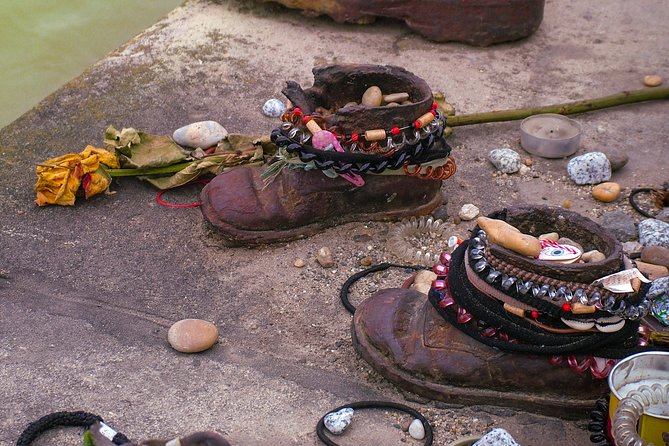
The stop at Shoes on the Danube Bank lasts about 15 minutes and is free to enter. It is one of Budapest’s most affecting memorials because of its simple form: metal shoes placed along the riverbank.
The memorial honors Jews who were shot into the Danube. Your guide provides the historical setting, then gives you time to look closely and absorb the scene. The river, the empty shoes, and the ordinary shape of the objects make this a particularly direct memorial.
This is not a place for a rushed photo stop. The tour allows only a short period here, so listen carefully and use the time well. If you know you need longer at memorial sites, you may want to return on your own later.
The stop also gives the tour an important change of setting. After streets, buildings, and urban life, the riverbank brings the story into open space. It is a brief visit, but it can stay with you long after the walk ends.
The German Occupation Memorial and Budapest’s public argument
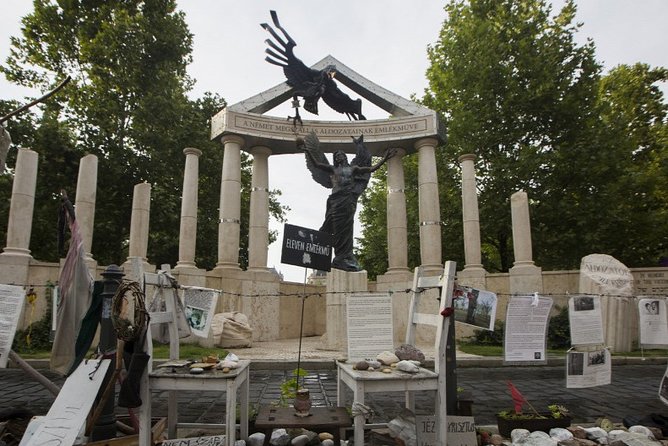
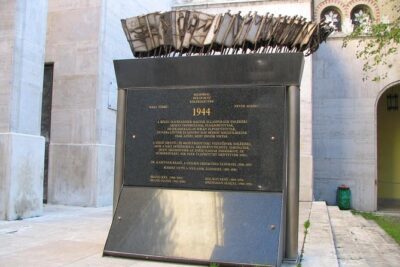
The Memorial to the Victims of the German Invasion is another 15-minute stop, also free. It is one of the most controversial memorials in Budapest, and the tour does not avoid that dispute.
The monument was erected at night and has been guarded by police. Protest materials have remained at the site since it was created roughly a decade ago, reflecting disagreement over how Hungary’s wartime responsibility should be represented.
The memorial is valuable precisely because it is not presented as a settled matter. You see a public argument about memory, guilt, responsibility, and national identity. The guide explains why the site has caused such strong reactions, including the fact that many of the victims represented by the memorial were Jewish.
This stop may be uncomfortable, and that is part of its purpose. You are not simply looking at an old monument. You are seeing how a country continues to argue about the meaning of its past.
A few more Budapest half-days to weigh up
- Budapest: Historic Cruise with Welcome Drink
★ 4.7 · 6,512 reviews - Budapest Historical Sightseeing – Free Walking Tour
★ 5.0 · 1,302 reviews - Buda Castle District Dark History, Legends and Vampire Night Tour
★ 4.5 · 1,240 reviews - BloodThirsty Hungary: Walking tour & Dark Historical Stories
★ 4.9 · 633 reviews
Inside the Dohány Street Synagogue complex
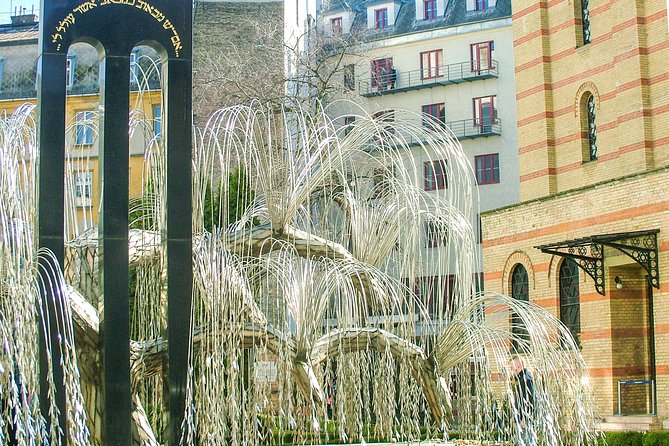
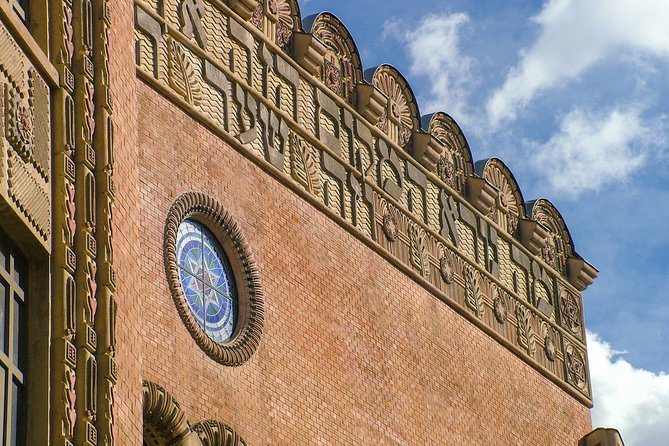
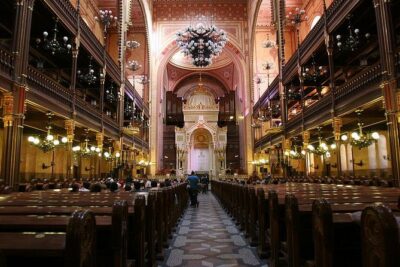
The main visit lasts about two hours and includes the Dohány Street Synagogue, the Jewish Cemetery, the Raoul Wallenberg Memorial Garden, and the Emmanuel Tree. The synagogue is described as the second largest in the world and is often presented as the largest in Europe.
Admission is not included. The listed entrance fee is €26 per person, so add that amount to the $80.86 tour price when comparing this experience with other Budapest walks. The extra fee is substantial, but it covers the central indoor portion of the route and gives the guide a setting in which to explain the community’s religious and cultural story.
The synagogue itself provides a strong visual focus, but the surrounding grounds carry much of the emotional weight. The cemetery and memorial garden connect the building to lives lost and communities disrupted. The Raoul Wallenberg Memorial Garden honors the Swedish diplomat who helped protect Hungarian Jews during the Second World War.
The Emmanuel Tree, created as a memorial and established by Tony Curtis, is one of the courtyard’s most recognizable features. Its leaves carry names of victims, turning a tree into a record of people rather than an abstract symbol.
You should expect a visit that moves between architecture, remembrance, and current identity. The guide’s role is important because the complex contains more than one story. It is a place of worship, a memorial site, a cultural landmark, and a reminder of Budapest’s Jewish community.
The streets beyond the synagogue
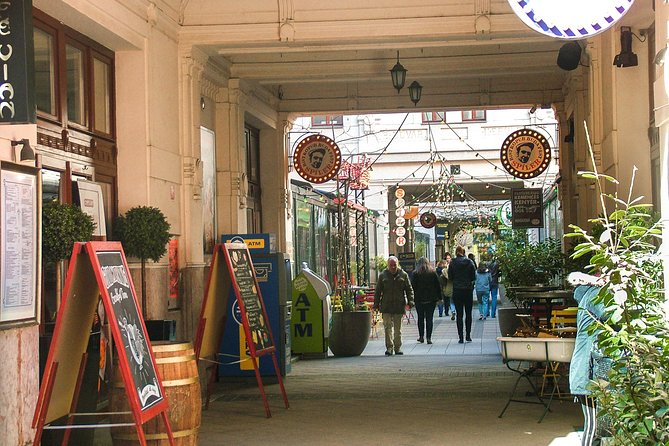
The walking portion does not stop at the synagogue gates. You see historic streets and former community areas, then get a look at the Jewish quarter as it functions today.
That present-day view is one of the tour’s useful touches. Budapest’s Jewish district is now known for nightlife and street art as much as for memorials and religious buildings. The contrast can feel jarring, but it helps you understand the neighborhood as a real part of the city rather than a museum set aside for the past.
The tour also includes an outside look at another functioning synagogue. Since the details do not identify the building or promise interior access, you should treat this as an exterior stop rather than a second synagogue visit.
As you walk, you can ask about restaurants, ruin bars, and local areas to explore later. Edith has helped people with these practical suggestions, which makes the tour more useful as a first or second day activity. You get cultural context, then a better sense of where to spend the rest of your evening.
Walking pace, transport, and timing
The experience is listed as approximately three hours. That is a good length for a focused introduction, but it is not a full-day examination of every Jewish site in Budapest.
Most of the route is on foot. Some versions of the walk have included Budapest’s rapid transit system, so be prepared for the possibility of using public transport between areas. Transportation is not included in the tour price, which means any transit cost is separate.
The meeting point is at Deák Ferenc tér, and the tour ends at Dohány Street Synagogue. Because the route is not a round trip, you should think about your next plan before you finish. The end point is central, with public transport nearby, so continuing into the Jewish quarter is practical.
Wear comfortable shoes. This is a walking experience with several stops, and the value comes from moving through the city rather than only standing inside one building. The pace has been adjusted for different needs, but the tour still asks you to walk for several hours.
The activity is offered in English. Confirmation is sent within 48 hours of booking, subject to availability. Service animals are allowed, and most people can participate.
What the $80.86 price really buys you
At $80.86 per person, this is not the cheapest way to see Dohány Street Synagogue. You also pay the €26 synagogue admission fee, and transportation is not included.
The price makes more sense if you want interpretation rather than entrance alone. A self-guided visit can show you the building and memorials, but it cannot easily explain the controversy around the German Occupation Memorial, connect the river shoes to the wider story, or respond to personal questions about Jewish life in Hungary today.
The small group also affects value. If the group is close to the advertised limit of ten, you have a better chance to speak with Edith and ask questions. The maximum listed elsewhere is 13, so the group may be a little larger than the headline suggests, but it remains far smaller than a standard coach tour.
I would consider the tour good value for people who care about context, personal discussion, and a carefully linked route. It is less attractive if you only want quick photographs of the synagogue and river memorials, or if you are trying to keep entrance costs very low.
The emotional weight of the route
This is not a light sightseeing walk. The Shoes on the Danube Bank, the cemetery, the Emmanuel Tree, and the wartime memorial all deal with persecution, death, loss, and contested memory.
The guide’s personal approach can make the subject more human, but it can also make the experience more intense. Edith has shared family and personal stories about Hungary and Budapest, adding a perspective that goes beyond dates and monuments.
You should allow yourself some quiet time after the tour if you need it. The route is short enough to fit into a busy day, but the material deserves attention. I would avoid placing it immediately before a tightly scheduled activity if you prefer time to reflect.
At the same time, the tour does not treat Jewish Budapest as only a story of destruction. It includes functioning religious life, current neighborhood culture, and discussion of what Jewish identity looks like in Hungary today. That wider frame keeps the experience from becoming a memorial checklist.
Who should book this experience
I would choose this tour if you want:
- A focused introduction to Jewish Budapest
- A guide who can discuss both history and present-day life
- A small group rather than a large organized walk
- The chance to ask questions throughout the route
- A visit to the synagogue complex alongside outdoor memorials
- A serious look at Hungary’s disputed public memory
It suits first-time visitors who want a meaningful half-day activity, as well as people returning to Budapest who have already seen the main sights. Several people have used the tour to understand parts of the city they would not have grasped from a self-guided walk.
It may not suit you if you want a relaxed entertainment-focused tour, dislike emotionally difficult subjects, or have limited interest in Jewish history and current community life. The price is also worth considering carefully once you add the synagogue ticket.
Free cancellation is available if you cancel at least 24 hours before the start time. Changes or cancellations inside that window are not refunded, and poor weather may lead to a new date or a full refund.
Should you book the Jewish Heritage Full Tour?
Yes, if the subject matters to you and you want more than a quick visit to a famous synagogue. The strongest reason to book is Edith’s ability to explain difficult history clearly while bringing in personal context and leaving room for real conversation.
The route gives you Budapest in three connected views: the religious and communal center at Dohány Street, the memorial landscape along the Danube, and the modern Jewish quarter with its nightlife and street art. Add the €26 entrance fee to your budget, wear good walking shoes, and arrive ready for serious discussion.
Skip it if you only want a low-cost sightseeing walk. But if you want to understand why these places matter, this is a compact and thoughtful choice.
FAQ
How long does the Jewish Heritage Full Tour last?
The tour lasts approximately three hours.
What language is the tour offered in?
The tour is offered in English.
What is included in the tour price?
Guiding by a local licensed tour guide is included.
Is admission to Dohány Street Synagogue included?
No. Entrance to Dohány Street Synagogue is not included and is listed at €26 per person.
Where does the tour start and end?
The tour starts at Deák Ferenc tér in Budapest and ends at Dohány Street Synagogue, Dohány u. 2.
How large is the tour group?
The highlights describe a maximum of ten people, while the additional details list a maximum of 13 participants.
Can I cancel for a full refund?
Yes. You must cancel at least 24 hours before the experience start time for a full refund. Cancellations made less than 24 hours in advance are not refunded.
Just added around Budapest
- Budapest: Private, Personalized Pub Crawl, 3 drinks included★ 4.5 · 3 reviews
- Private day trip from Budapest to Bratislava, Vienna, and back★ 3.5 · 3 reviews
- Budapest: Private Adventure Sightseeing Bicycle Tour★ 4.5 · 3 reviews
- Private Danube Bend tour – full day★ 4.5 · 3 reviews
- Budapest: Guided City Walking Tour in Buda and Pest★ 5.0 · 3 reviews
- Budapest Old Jewish Quarter History Private Walking Tour★ 5.0 · 3 reviews
- Lake Balaton Full Day Private Wine Tour★ 5.0 · 3 reviews
- Budapest Urban Feast – Food Tour with Wine Tasting & Coffee House★ 4.5 · 3 reviews
Jewish Quarter Tours, compared.
Budapest Jewish Heritage Memorial Walking Tour & Synagogue Entry
Read our review →
Jewish Heritage Guided Tour with Synagogue Ticket
Read our review →
Past and Present of Budapest Jewish District Tour
Read our review →
Budapest Dohany Synagogue & Hungarian Jewish Museum & free extras
Read our review →
Jewish History Guided Walking Tour with Historian
Read our review →Browse the lists this tour appears in