
Reviewed · JEWISH QUARTER TOURS
Budapest Jewish Heritage: Synagogues, Shoes, Secrets & Flódni
Budapest’s Jewish heritage is best understood on foot, where grand synagogues, a surviving ghetto wall, wartime memorials, and ordinary side streets tell one connected story. This private walk brings those pieces together with a Jewish guide such as Gabriella, Miklos, Edith, Kata, or Peter, and ends with flódni, a traditional layered pastry.
I especially like the three very different synagogues and the chance to ask questions instead of listening to a fixed group lecture. I also like the personal scale: guides have discussed family memories, Hungarian Jewish identity, and life between the world wars. The main caution is that entrance tickets are not included, and the short 2-hour-45-minute format can feel brisk if you want a very detailed Holocaust history.
Key points at a glance
- Three synagogues, three Jewish traditions: Compare the Great Synagogue, Rumbach Street Synagogue, and Orthodox Kazinczy Street Synagogue.
- A private, conversational walk: Your guide can shape the discussion around your interests, background, and questions.
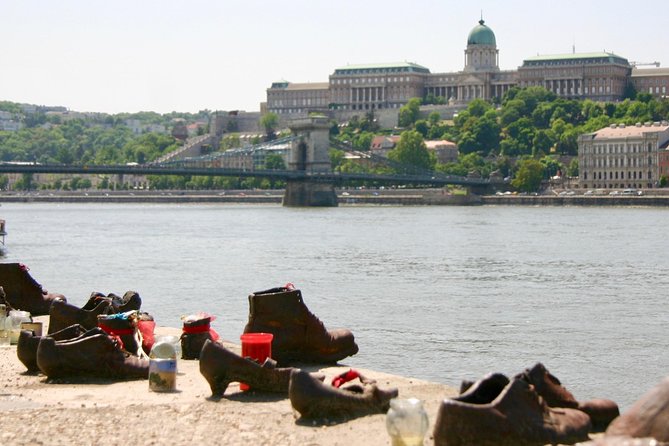
- World War II sites with human context: Visit the Carl Lutz Memorial, Shoes on the Danube Bank, the former ghetto area, and a remnant of the ghetto wall.
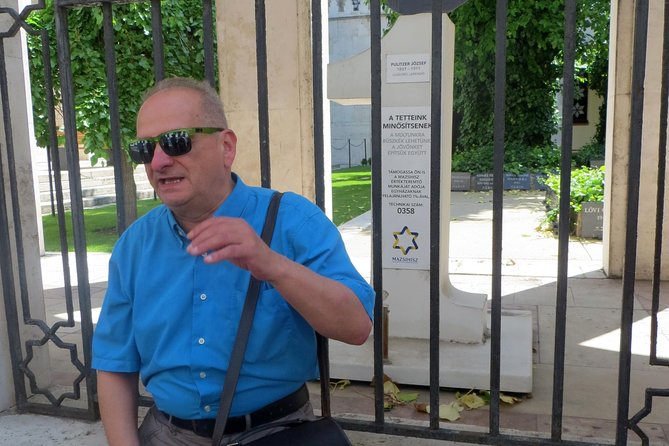
- Guides with varied personal perspectives: Gabriella, Miklos, Edith, Kata, and Peter have all led this experience, with some bringing family connections to Hungarian Jewish life.
- Flódni at the finish: The tour closes with an authentic Jewish pastry rather than simply ending at the last memorial.
- Budget for admission fees: The price is $102.95 per person, but synagogue entrance tickets and public transport are extra.
Why this Jewish Quarter walk matters
Budapest’s Jewish Quarter is not just a collection of beautiful religious buildings. It is a place where the success of Hungarian Jewish life, its divisions and traditions, the destruction of the Holocaust, and its survival afterward all occupy the same few streets.
That is what makes this experience useful. You are not simply taken from one photo stop to another. The walk begins at Herzl Square and the Great Synagogue, then links religious sites with the former ghetto and memorials to people who tried to save Jewish lives.
The private format is important here. You can ask why the three synagogues look so different, how Neolog Judaism differs from Orthodox practice, or what daily life was like for Jewish families before World War II. The guide can also adjust the tone and detail to your group. Kata, for example, has shared her own family’s experience as a Hungarian Jew, including the effects of the Holocaust and Soviet occupation.
This is a serious subject, but the tour does not end in solemn silence. Flódni gives you a small, edible connection to Jewish Budapest and a chance to talk through what you have seen.
More Jewish Quarter walks:
- Budapest Jewish Heritage Memorial Walking Tour & Synagogue Entry
★ 5.0 · 568 reviews - Budapest: Jewish Heritage Guided Tour with Synagogue Ticket
★ 4.8 · 533 reviews - Jewish Quarter of Budapest Walking Tour
★ 4.7 · 369 reviews
Starting at Herzl Square and the Great Synagogue
The walk begins at Budapest’s Dohány Street, beside the Great, or Central, Synagogue. Its address is Dohány u. 1, and the opening section sets the scale for Jewish life in Budapest before the war.
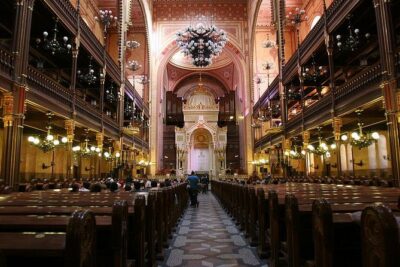
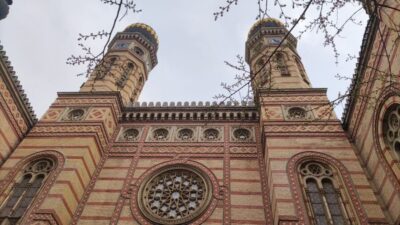
The Great Synagogue is the largest synagogue in Europe, with seating for about 3,000 people. It is also the center of Neolog Judaism, a Hungarian Jewish movement with its own traditions and approach. Your guide explains the building’s unusual architecture and places it within the wider story of Hungarian Jewry.
The planned stop lasts about 20 minutes. That is enough for an introduction and exterior discussion, but not enough for an exhaustive visit to every part of the complex. Admission is not included, so ask when booking or meeting whether your plan includes entering the building or viewing it from outside. This point matters because the synagogue itself can require a separate ticket.
The opening also introduces famous Hungarian Jews and the community’s contribution to the city. That wider lens keeps the tour from presenting Jewish Budapest only through wartime suffering. You learn about a community that helped shape the city before its destruction.
Rumbach Street Synagogue and the city’s Jewish divisions
A short walk brings you to Rumbach Sebestyén Street Synagogue, built in 1872 by Otto Wagner. Its Moorish design gives it a very different look from the Great Synagogue.
The building served the more moderate Conservative community and helps explain the divisions within Budapest’s Jewish population. This is one of the tour’s most useful features: you see that Jewish life was not a single uniform block. Different groups worshipped in different settings and developed distinct customs.
The interior has been restored, and the decorations retain an old, graceful character. The planned visit lasts about 15 minutes, with admission again listed as separate. If you want to spend substantial time inside, the included walking time may feel limited. If you are comparing architectural styles and listening to the guide’s explanation, it is a worthwhile compact stop.
I would pay attention here to the contrast between the synagogue’s polished interior and the difficult story unfolding outside its walls. The tour keeps moving between art, faith, community life, and political history.
Carl Lutz and the difficult work of rescue
The Carl Lutz Memorial is a short stop, about 10 minutes, but it carries considerable weight. During World War II, Swiss diplomat Carl Lutz helped save tens of thousands of Jews in Budapest from persecution and deportation.
The memorial is located in the area of the former Budapest ghetto. That setting connects the act of rescue to the crowded, dangerous world in which it took place. Rather than treating Lutz as an isolated heroic figure, the guide can place his actions beside the larger machinery of persecution.
This is one place where the private format helps. You can pause to ask about the difference between official diplomacy, individual courage, and the many people who faced impossible choices. The stop is free.
A few more Budapest half-days to weigh up
- Budapest: Historic Cruise with Welcome Drink
★ 4.7 · 6,512 reviews - Budapest Historical Sightseeing – Free Walking Tour
★ 5.0 · 1,302 reviews - Buda Castle District Dark History, Legends and Vampire Night Tour
★ 4.5 · 1,240 reviews - BloodThirsty Hungary: Walking tour & Dark Historical Stories
★ 4.9 · 633 reviews
Kazinczy Street Synagogue and Orthodox Budapest
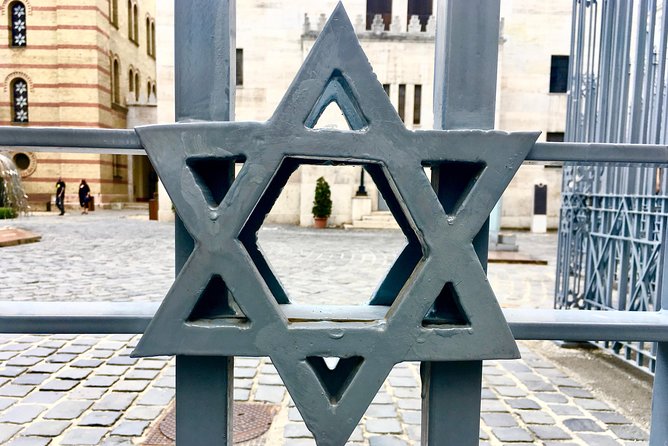
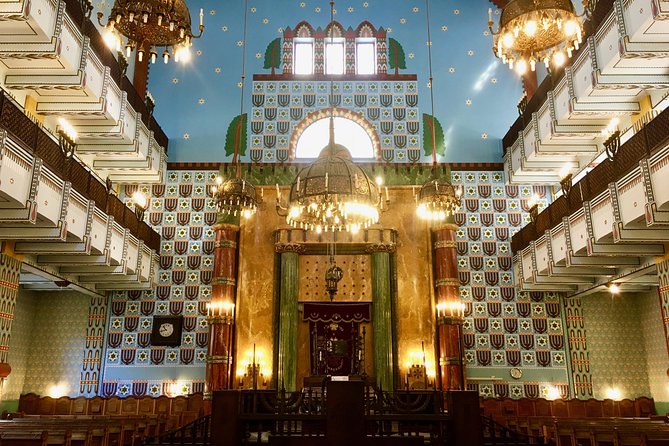
In a smaller side street, Kazinczy Street Synagogue introduces Budapest’s Orthodox community. Built in 1913, it uses a modern design with late Art Nouveau touches and bright colors.
The stained-glass ceiling windows were designed by Miksa Róth, an important detail to notice before you enter. The building provides another sharp contrast with both the Great Synagogue and Rumbach Street Synagogue.
The stop lasts about 10 minutes, and entrance is not included. That means the tour’s advertised price does not cover seeing all three synagogues from inside. You should treat the guide’s explanations as the main guaranteed element and confirm the current entrance arrangements if interior access is essential to you.
Still, even a short look at three buildings can teach you a great deal. The architectural differences are not random decoration. They reflect different religious communities, periods, and ideas about Jewish public life in Budapest.
Shoes on the Danube Bank
The stop at Shoes on the Danube Bank changes the pace and mood. The memorial consists of iron shoes along the river, recalling Jewish victims who were forced to remove their shoes before being shot at the water’s edge during World War II.
The shoes are plain, ordinary objects. That is precisely why the memorial is so powerful. You are not looking at an abstract monument. You are looking at the final belongings of people who were treated as disposable.
The memorial was unveiled on April 16, 2005. The stop lasts about 10 minutes and admission is included. Your guide pays respects here and explains the event that the sculpture recalls.
This is not a place for rushed photographs. Give yourself room to listen and reflect. The site is emotionally difficult, and the tour’s overall value depends partly on your willingness to engage with that history honestly.
The former ghetto and the surviving wall
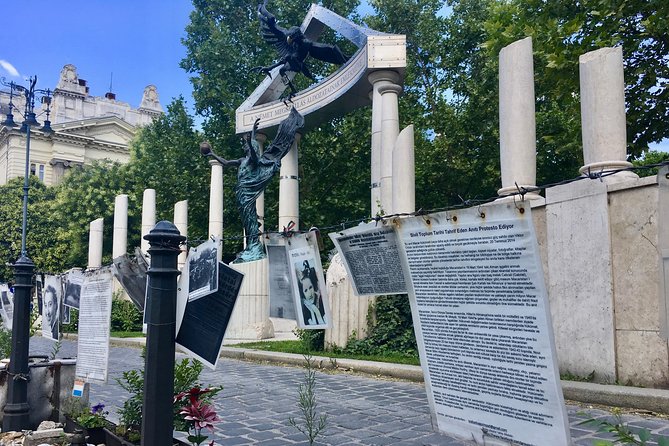
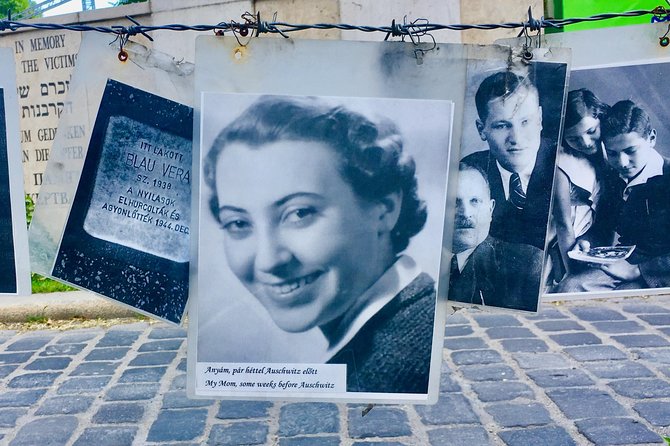
Back in Budapest’s Jewish Quarter, the tour examines the 1944 ghetto. Jewish residents were forced into a confined area toward the end of World War II, and a small section of the ghetto wall still survives.
The wall is easy to miss without guidance. On your own, you might pass through the neighborhood and see only present-day buildings and streets. The guide helps you imagine how the area was used, how people lived under confinement, and what eventually happened to them.
The scheduled stop is about 15 minutes and is free. That time can go quickly, especially if your group asks questions about deportation, survival, rescue, or the role of the Hungarian state.
One limitation deserves a clear mention. The tour summary promises insider stories and secrets of the ghetto, but the listed route does not provide a long, separate Holocaust case-study session. If you want a detailed account of protection networks, individual incidents, or the step-by-step process of persecution, tell your guide at the start. The private format gives you the best chance of shaping the discussion.
Raoul Wallenberg, the Tree of Life, and extra context
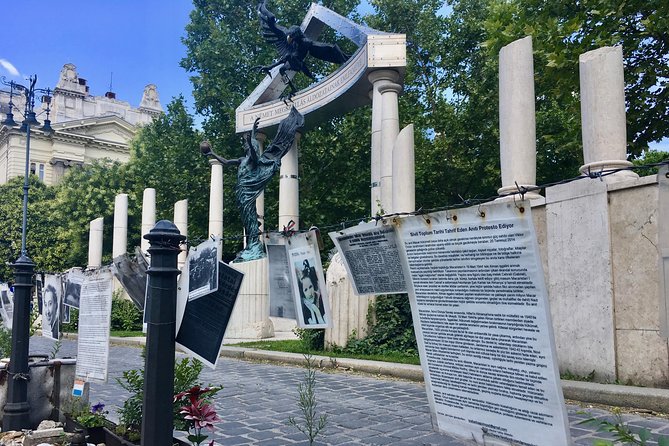
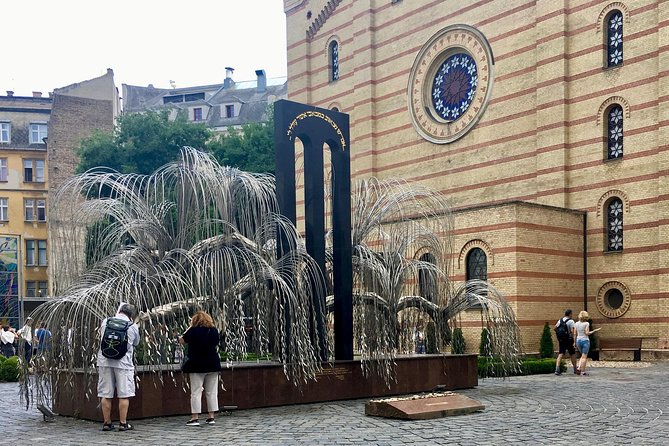
The route can also include additional Jewish Quarter memorials and sites depending on the guide’s approach and the time available. One important place connected with the area is the Raoul Wallenberg Holocaust Memorial Park, where names of murdered Jews are recorded on metal leaves of the Weeping Willow, or Tree of Life.
A memorial to Wallenberg and other Righteous Among the Nations adds another layer to the story of rescue. Guides have also discussed the contributions of famous Hungarian Jews such as Tony Curtis and Estée Lauder.
These details are valuable because they show Jewish Budapest as more than a vanished community. The quarter includes memory, restoration, cultural identity, and a continuing connection to the city. The exact balance of these extra points may depend on your guide and the time spent at the three main synagogues.
The guide makes the biggest difference
The experience is sold as a private tour with a genuine Jewish guide and historian guide. The names associated with the tour include Gabriella, Miklos, Edith, Kata, and Peter. Each guide brings a slightly different strength.
Gabriella is described as warm, passionate, and very strong on Hungarian Jewish history and wider European Jewish history. Edith uses questions to make you think about what you are seeing, rather than simply listing dates and facts.
Miklos has a background as a retired educator and gives the tour a more classroom-like structure, with historical context and discussion. Peter is praised for a carefully selected route and a conversational style. Kata brings a personal connection as a Hungarian Jew and has shared family stories about the Holocaust and Soviet occupation.
That variation can be a strength, but it also means the experience is not identical every time. One guide may focus more on architecture and religious branches. Another may spend more time on family life, the war, or present-day identity.
At the beginning, explain what brought you to the tour. You might be Jewish, partly Hungarian, interested in architecture, researching family history, or simply trying to understand Budapest. A guide can respond better when that context is clear.
Flódni, a fitting final taste
The walk ends on Dohány Street with flódni, a traditional Jewish pastry. Flódni is associated with layered fillings and Hungarian Jewish food culture, making it a fitting close to a tour about community and continuity.
The snack is included. Some guides may offer time for a drink or conversation at a nearby café, but you should not treat a full café visit as guaranteed. One past experience included coffee and pastry in a special café, while another included a shared snack in a small house synagogue kitchen. Those personal touches can happen, but the stated inclusion is the flódni.
I like this ending because food can carry history in a way a plaque cannot. It gives you a chance to discuss the tour with your guide and leave with a sense of Jewish Budapest as a living culture, not only a memorialized past.
What the $102.95 price buys you
At $102.95 per person, this is not a budget walking tour. The value comes from the private guide, the focused route, and the ability to ask questions throughout the walk.
You are paying for nearly three hours with a historian or Jewish guide rather than a large group moving from one scripted stop to the next. That matters most if you care about context, personal stories, or the differences among Jewish communities in Budapest.
The price is harder to justify if you only want exterior photographs. You must also budget separately for synagogue entrance tickets and public transportation if either is needed. Hotel pickup is offered, but the listed meeting point is at Dohány u. 1, so confirm the pickup arrangement before you go.
The tour is often booked well in advance, with an average booking lead time of about 61 days. That suggests planning ahead is sensible, particularly if you want a certain guide or have a tight schedule.
Timing, pace, and practical planning
The experience lasts about 2 hours and 45 minutes. The walking route includes several stops, and the scheduled times at the main sites range from 10 to 20 minutes.
Wear comfortable shoes and expect a serious walking discussion rather than a relaxed café outing. Public transportation is not included, and the tour ends back at the meeting point.
Hotel pickup is offered, and the activity is available in English. Confirmation is provided at booking. Service animals are allowed, and most people can participate, but the supplied details do not give a specific accessibility assessment for every synagogue or street section.
The tour is private, so only your group participates. That makes it a good choice before a cruise departure or another fixed appointment, but leave a buffer. A thoughtful conversation can extend the time, especially when family history or Holocaust memory is part of the discussion.
Free cancellation is available until 24 hours before the start time. Cancellations or changes made inside that window are not accepted for a refund.
Who should book this experience
I would choose this tour if you want Budapest’s Jewish Quarter explained through architecture, religious identity, family life, and wartime memory. It suits Jewish visitors tracing heritage, people with Hungarian family connections, and non-Jewish visitors who want a careful introduction rather than a quick memorial circuit.
It is also a strong fit if you prefer asking questions and having a guide respond to your interests. The private format can be especially useful when your group includes people with different levels of background knowledge.
I would hesitate if your main aim is a long, specialized Holocaust study. The route gives the Holocaust an important place, but the experience also covers synagogue architecture, Jewish denominations, famous Hungarian Jews, and the community’s life before World War II.
Should you book Budapest Jewish Heritage?
Book it if you value a personal guide, want to compare three major synagogues, and want the wartime memorials placed within the wider story of Hungarian Jewish life. The strongest reason to go is the connection among the sites: the grand synagogue, the Orthodox side street, the ghetto wall, the riverbank shoes, and the final flódni.
Before paying, confirm which synagogue interiors are included in your departure and tell the guide how much Holocaust detail you want. If you do that, the $102.95 price can be fair for a private, nearly three-hour history walk with a flexible conversation and a meaningful local finish.
FAQ
How long does the Budapest Jewish Heritage tour last?
The tour lasts approximately 2 hours and 45 minutes.
What is the price per person?
The listed price is $102.95 per person.
Is this a private tour?
Yes. Only your group participates in the activity.
Is hotel pickup available?
Yes, hotel pickup is offered. The listed meeting point is Budapest, Dohány u. 1, 1074 Hungary, so confirm the pickup details when booking.
Which synagogues are included?
The route includes the Great, or Central, Synagogue on Dohány Street, Rumbach Street Synagogue, and Kazinczy Street Synagogue.
Are synagogue entrance tickets included?
No. Entrance tickets are not included in the listed price.
Is the flódni pastry included?
Yes. The tour ends with an authentic Jewish dessert, flódni.
Is public transportation included?
No. Public transportation tickets are not included.
Can I cancel for a full refund?
Yes, if you cancel at least 24 hours before the experience’s start time. Cancellations or changes made less than 24 hours before the start time are not accepted for a refund.
Just added around Budapest
- Budapest: Private, Personalized Pub Crawl, 3 drinks included★ 4.5 · 3 reviews
- Private day trip from Budapest to Bratislava, Vienna, and back★ 3.5 · 3 reviews
- Budapest: Private Adventure Sightseeing Bicycle Tour★ 4.5 · 3 reviews
- Private Danube Bend tour – full day★ 4.5 · 3 reviews
- Budapest: Guided City Walking Tour in Buda and Pest★ 5.0 · 3 reviews
- Budapest Old Jewish Quarter History Private Walking Tour★ 5.0 · 3 reviews
- Lake Balaton Full Day Private Wine Tour★ 5.0 · 3 reviews
- Budapest Urban Feast – Food Tour with Wine Tasting & Coffee House★ 4.5 · 3 reviews
Jewish Quarter Tours, compared.
Budapest Jewish Heritage Memorial Walking Tour & Synagogue Entry
Read our review →
Jewish Heritage Guided Tour with Synagogue Ticket
Read our review →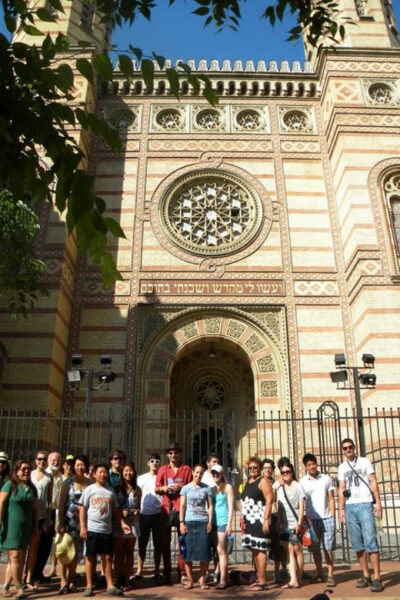
Past and Present of Budapest Jewish District Tour
Read our review →
Budapest Dohany Synagogue & Hungarian Jewish Museum & free extras
Read our review →
Jewish History Guided Walking Tour with Historian
Read our review →Browse the lists this tour appears in