
Reviewed · COMMUNIST HISTORY TOURS
Budapest: Communist History Tour with House of Terror Option
Budapest’s Communist past is easiest to grasp when you connect grand public monuments with ordinary streets, homes, cars, and memories. This tour begins at Parliament and traces the Soviet era through Liberty Square, Cardinal Mindszenty’s exile, a Cold War nuclear bunker, and sites linked to the 1956 uprising. You then choose between the playful Budapest Retro Center and the grim House of Terror Museum.
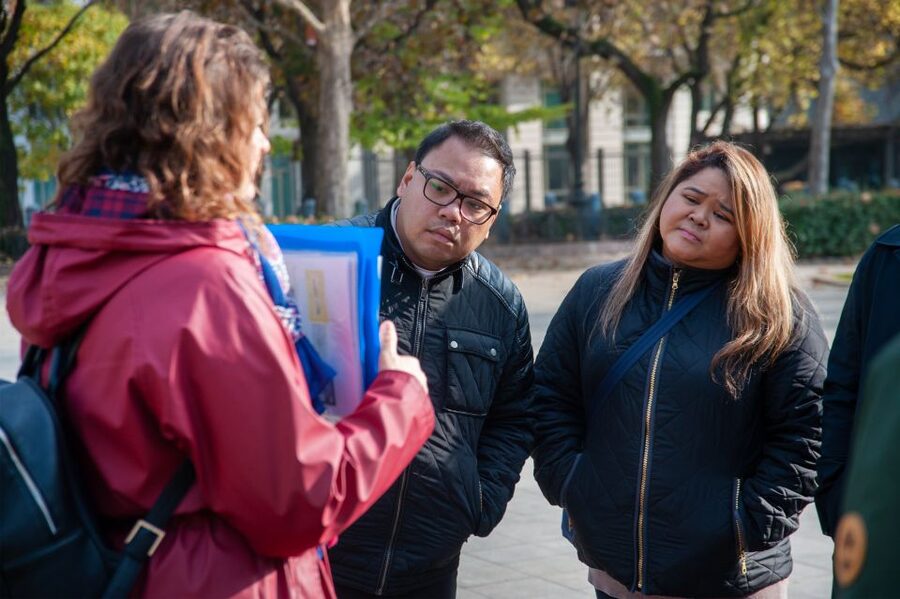
I like the small groups of up to 10, which give you room to ask questions and keep the walk conversational. I also like the guides’ personal connection to the subject. Guides such as Alexandra, Flora, Noémi, Kati, Bea, and Veronika have been praised for explaining difficult events clearly, while some have shared family memories of life under Communism.
The main thing to consider is the subject matter. The House of Terror route includes torture cells, deportations, labor camps, and political trials, so it can be emotionally heavy. The morning option is lighter in tone, but the museum visit may add time beyond the advertised two-hour experience.
Key points to know before booking
- Start at Parliament: The opening walk places Hungary’s Communist era beside the country’s most important modern political building.
- See the last Soviet monument in its original setting: Liberty Square still holds the Soviet Liberation Memorial.
- Choose your mood: The Retro Center is playful and object-filled, while the House of Terror is stark and deeply disturbing.
- Expect a history lesson, not a sightseeing stroll: The route focuses on occupation, repression, resistance, and the 1956 revolution.
- Small groups make a real difference: With no more than 10 people, you can ask about family stories, politics, and daily life.
- Bring patience for the walking portion: Some participants have found the pace comfortable, while anyone who is unwell or uses walking aids may need extra time.
Why this two-hour walk matters
Many city tours in Budapest concentrate on imperial buildings, thermal baths, food, or the Danube. This one asks you to look at the city through the years after World War II, when Hungary lived under Soviet military occupation and a Communist government for roughly 45 years.
That period is not ancient history. Older Hungarians lived through it, and its effects still shape public memory and political life. A guide can explain why a memorial remains in place, why a particular building mattered, and how a national uprising was crushed in a way that a plaque or guidebook cannot.
The tour is especially useful if your knowledge of Eastern European Communism begins and ends with a few Cold War headlines. You will hear about state control, religious repression, political police, economic life, and the 1956 revolt. The guide also helps separate the broad Soviet story from Hungary’s own experience.
I would not treat this as a casual two-hour walk with a few historical comments. The best guides, including Alexandra, Noémi, Flora, Kati, Bea, and Veronika, are described as clear, patient, and passionate. Several have offered personal or family perspectives, which can make the past feel close rather than sealed away in a textbook.
More communist-era history walks:
- Communism in Hungary with a Historian
★ 5.0 · 70 reviews - Budapest: 3-Hour Walking Tour About Communism (Small Group)
★ 4.7 · 70 reviews - Budapest Hammer & Sickle Communist Times Tour
★ 4.5 · 68 reviews
From Parliament to the memories of dictatorship
The walk begins near the Hungarian Parliament, one of Budapest’s grandest buildings. That location is more than a photogenic meeting point. Parliament represents the modern Hungarian state, while the nearby memorials point to the damage caused by dictatorship and political violence.
From there, the guide leads you through central Budapest toward Liberty Square. Along the way, the focus is on places connected with the Communist period and the anti-Soviet revolution of 1956. You are not simply told a list of dates. The route shows how political power was made visible in the city, and how resistance also left its mark.
One of the important stops is the memorial to victims of the Red dictatorship. It gives the opening walk a serious tone and helps explain the human cost behind official slogans and public ceremonies.
The guide also points out the famous windows associated with Cardinal József Mindszenty, the Catholic Church leader who spent many years in exile inside the United States Embassy. This detail gives the story a human scale. Instead of discussing religious repression as an abstract policy, you see the physical place tied to one man’s long confinement and political importance.
The route is central, but it is not just a parade of famous sights. You are asked to notice buildings, memorials, and spaces that can be easy to pass without understanding. That is where a good guide earns the fee.
Liberty Square and the Soviet Liberation Memorial
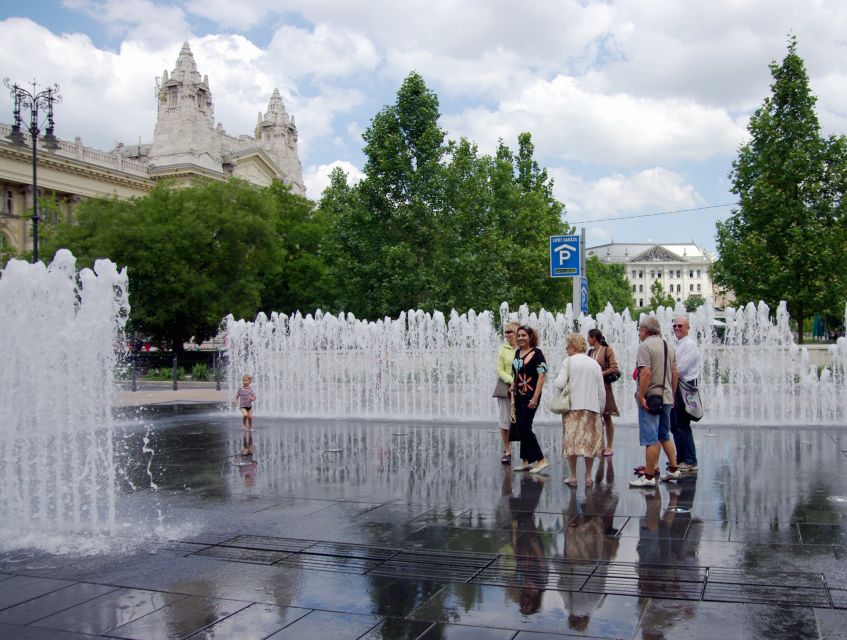
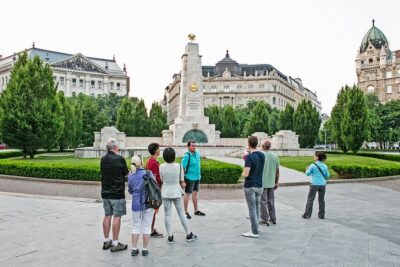
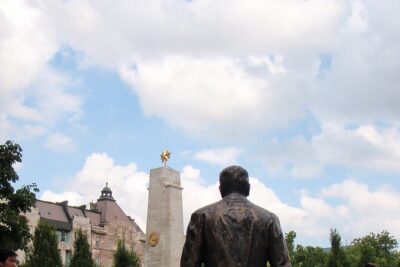
Liberty Square contains one of the tour’s strongest visual contradictions. Its name suggests freedom, yet the square still holds the Soviet Liberation Memorial, described as the last Communist monument in Budapest remaining in its original location.
That makes the square a useful place to discuss memory and politics. The monument is not presented simply as a piece of public art. Its presence raises a basic question: what should a city do with reminders of an occupation that some people see as liberation from Nazi Germany and others remember as the beginning of Soviet domination?
You do not need to share a particular political view to benefit from this stop. The value is in hearing how the same event can carry different meanings for different generations. This is one of the places where a local guide can provide context that is difficult to get from a photograph.
If you enjoy history that leaves room for uncomfortable questions, Liberty Square may be the most rewarding outdoor stop. If you prefer architecture and quick sightseeing, the discussion may feel slower than a standard city walk.
The Cold War bunker and the hidden machinery of fear
The tour includes the ventilation channels of a secret underground nuclear bunker built during the Cold War. You are not promised a full bunker visit, so keep your expectations in check. The interesting point is the infrastructure itself, the hidden systems built to protect officials and maintain control during a nuclear crisis.
This stop adds a physical layer to the political story. Communist rule was not only about speeches, uniforms, and statues. It also involved secrecy, emergency planning, surveillance, and fear of war.
The ventilation channels may not be the most visually dramatic part of Budapest, but they are exactly the sort of detail that gives the tour its character. You see how a normal-looking city held spaces designed for a very different reality.
A few more Budapest half-days to weigh up
- Budapest: Historic Cruise with Welcome Drink
★ 4.7 · 6,512 reviews - Budapest Historical Sightseeing – Free Walking Tour
★ 5.0 · 1,302 reviews - Buda Castle District Dark History, Legends and Vampire Night Tour
★ 4.5 · 1,240 reviews - BloodThirsty Hungary: Walking tour & Dark Historical Stories
★ 4.9 · 633 reviews
The 1956 revolution in streets and monuments
The Hungarian anti-Soviet revolution of 1956 is a central part of the walk. The guide points out locations linked to the uprising and explains both the courage behind it and the consequences that followed.
For many people, 1956 is the moment when Hungary’s Communist story becomes most sharply defined. It was a revolt against Soviet control and the Hungarian Communist system, but it also became a symbol of the limits imposed on countries inside Moscow’s sphere of power.
The walk cannot cover every political detail in two hours, but it gives you a structure for understanding what happened. You learn where events unfolded, how ordinary people became involved, and why the revolution remains so important in Hungarian memory.
I would use this tour as a foundation rather than a final lesson. If 1956 interests you, ask questions as you go. The small group format helps here, and several guides have been praised for answering questions at length without losing the thread of the walk.
Morning choice: the Budapest Retro Center
The morning option ends with a guided visit to the Budapest Retro Center. This is the friendlier of the two museum choices, though it still has historical value.
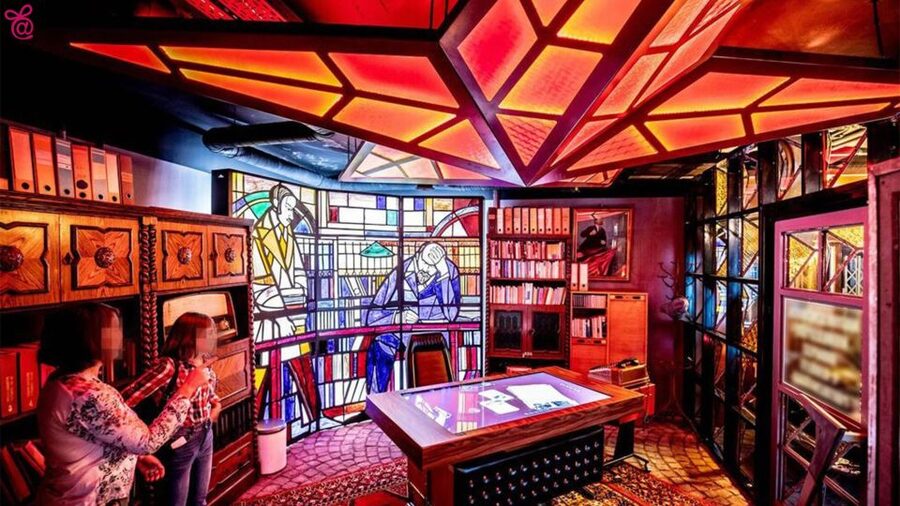
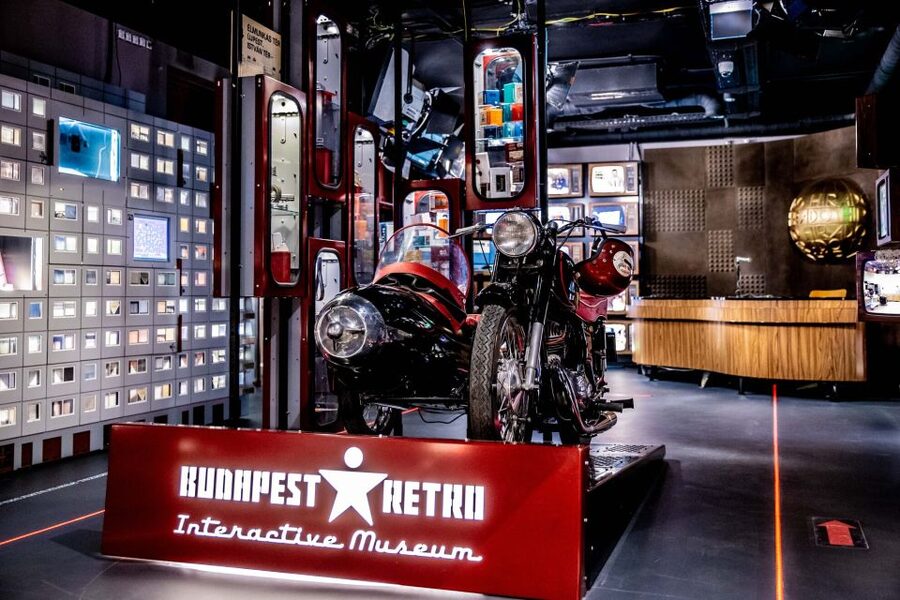
The collection covers everyday life from roughly the 1960s through the 1980s. You see street scenes, period vehicles, home interiors, thousands of ordinary objects, and material connected with the Soviet-Hungarian space flight. The exhibition occupies three floors and uses interactive displays rather than presenting everything in glass cases.
You may be able to dress as a Communist comrade or try presenting a television news broadcast from the period. Those activities give the museum a lighter touch, but they also help you understand how official life was staged and sold to the public.
This option suits you if you want context without spending the rest of the day in a dark museum. It is particularly good for families, teenagers, or anyone curious about daily life rather than only political leaders and prison cells.
The drawback is that the Retro Center may feel less emotionally powerful than the House of Terror. Its strength is detail: furniture, vehicles, packaging, clothing, and domestic objects. If you want a sharp account of repression, choose the other option.
Afternoon choice: the House of Terror Museum
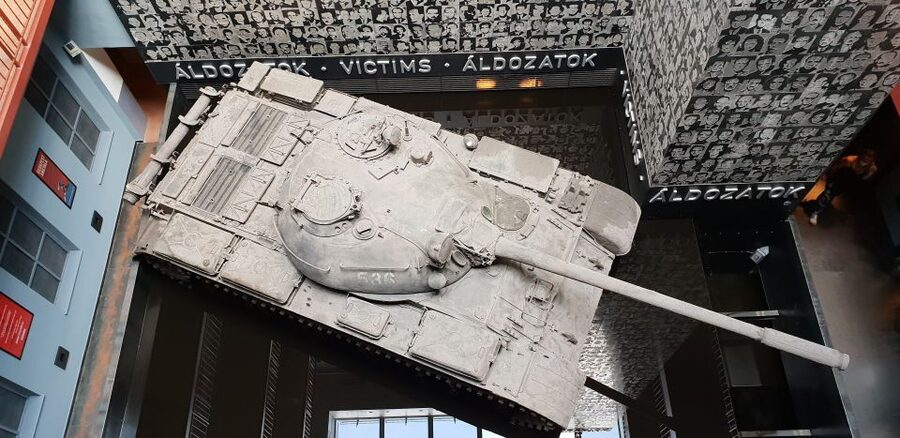
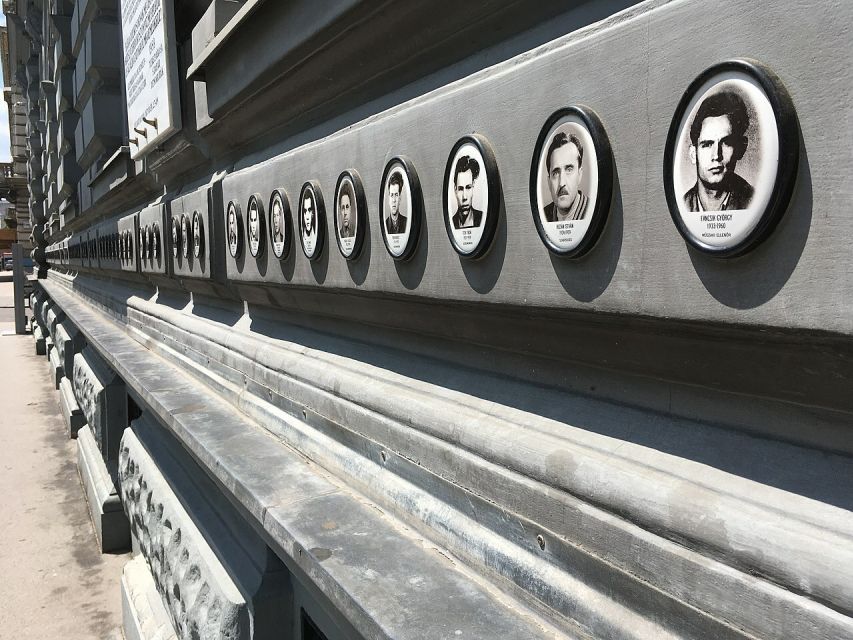
The afternoon option combines the Communist-themed walking tour with admission to the House of Terror Museum. Depending on the selection you make, you either visit the museum on your own or join a guided museum tour.
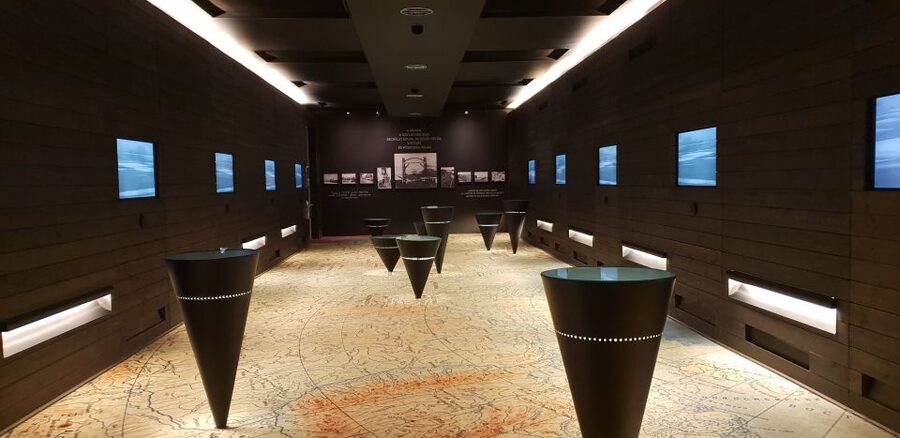
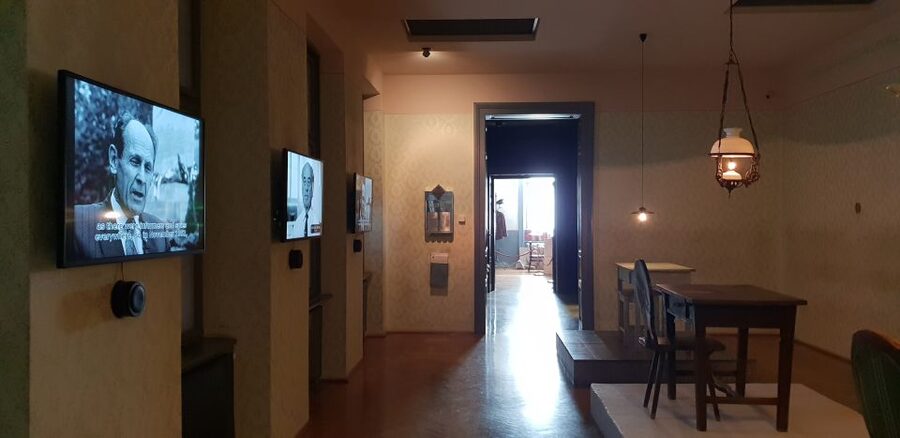
The building was formerly used by the AVO State Protection Police, Hungary’s local version of the Soviet KGB. The museum covers the period from World War II and Nazi rule through the Communist takeover, the life and economy of the 1950s, the 1956 revolution, and the collapse of Communism in 1989.
Inside, the focus is severe. You encounter interrogation and torture cells, the office of the feared director, accounts of mass deportations, labor camps, and political trials. The displays are meant to commemorate victims, but the experience is not gentle or detached.
This is where a guide is most useful. The museum contains powerful objects and rooms, but without context, you may struggle to place them in the larger sequence of events. A guide can explain which institutions controlled daily life, how political trials worked, and why the 1956 revolution ended as it did.
The House of Terror is not a quick attraction to tick off before lunch. Give yourself mental space afterward. Some participants have described the experience as haunting, emotional, and moving. That is not a warning against booking it. It is a warning to choose it with open eyes.
The museum is not operated by the tour guide. Your guide is an independent professional, not a museum employee. If you choose a museum option, do not search for your ticket at the regular ticket office. The guide provides it.
The guides are the heart of the experience
The strongest part of this tour is the person leading it. The guides are English-speaking professionals trained in history, and the most praised qualities are clear explanations, strong preparation, patience, and personal insight.
Alexandra has been praised for her depth, enthusiasm, and care with questions. Noémi has been described as especially well prepared and passionate, and one extended a museum visit to explain more of the exhibits. Flora has been noted for combining expertise with flexibility and for responding thoughtfully to personal emotions.
Kati has brought in useful connections between Hungary and the United States. Veronika has spoken from the perspective of someone who grew up in Communist Hungary. Bea has combined historical explanation with practical Budapest suggestions. Another guide, Alexandra, handled a mixed-language family by explaining the tour in both English and Hungarian.
You should not assume you will receive a particular guide unless the booking details say so. The names above show the range of experience you might encounter, not a guaranteed assignment.
A private tour is not promised, but a group can be as small as two or three people. One participant found themselves alone with the guide, while another group had six people. The maximum is 10, so this is far more personal than a large coach tour.
Timing, pace, and practical details
The advertised duration is two hours, but the morning option includes a one-hour guided visit to the Retro Center after the walk. The House of Terror choice also involves a museum visit, so check the exact option and schedule before you commit to another activity immediately afterward.
The morning and afternoon walking routes are described as identical for the first part. The main difference is the museum choice and how the museum visit is handled.
Wear comfortable shoes. The route crosses central Budapest and includes several outdoor stops. One participant who was ill could not keep up with the guide, and others have appreciated guides who waited for people using walking aids. That suggests the pace is generally manageable, but you should still tell the guide if you need more time.
The meeting point changes according to the option booked. Read the confirmation carefully rather than assuming every departure begins at Parliament.
The price is $58 per person. That is not the cheapest way to spend two hours in Budapest, but the value depends on how much context you want. You are paying for a small English-language group, a professional guide, the walking route, and admission to either the Budapest Retro Center or the House of Terror Museum.
If you visited both museums alone, you would save the guide fee but lose the interpretation that ties the sites together. For a first visit to Budapest, I think the fee is fair if Communist-era history is a main interest. It is less compelling if you only want general sightseeing or a quick introduction to the city.
Free cancellation up to 24 hours before the start and the option to reserve now and pay later make it easier to fit into a changing schedule. Starting times vary, so check availability for the day you want.
Who should choose this tour?
I would recommend it to Cold War enthusiasts, students, history teachers, families with older children, and anyone with Hungarian relatives who lived through the Soviet period. It also suits you if you want to understand modern Budapest beyond its imperial architecture and postcard views.
The Retro Center is the better choice if you want everyday details and a lighter atmosphere. The House of Terror is the better choice if you want political history, first-hand accounts, and a direct encounter with the machinery of repression.
You may want to skip it if you dislike walking, have very limited time, or prefer cheerful attractions. The House of Terror, in particular, can be upsetting. This is a serious history experience with occasional lighter touches, not a feel-good museum visit.
Should you book the Budapest Communist History Tour?
Book this tour if you want a clear, local explanation of Hungary’s years under Communist rule and Soviet occupation. The route from Parliament to Liberty Square gives you strong visual context, and the small group makes it easy to ask the questions that arise along the way.
Choose the Retro Center for a more accessible look at homes, transport, television, space travel, and daily routines. Choose the House of Terror if you are ready for a harder account of dictatorship, imprisonment, torture, deportation, and political violence.
At $58, the tour is best value for people who want understanding rather than a checklist of sights. Ask for the most context you can, allow time for the museum, and pick the option that matches your tolerance for difficult material. For that audience, this is one of the more useful ways to see the real Budapest behind the grand façades.
FAQ
How long does the Communist History Tour last?
The advertised duration is two hours. The morning option also includes a one-hour guided visit to the Budapest Retro Center, so check the exact timing of your selected option.
What language is the tour offered in?
The live tour guide speaks English. One guide has also provided explanations in both English and Hungarian for a mixed-language family, but bilingual service is not stated as a standard feature.
How large is the tour group?
The group is limited to 10 participants. Some departures may be much smaller, with past groups of two, three, or six people.
Where does the tour meet?
The meeting point varies according to the option you book. Check the booking information for the exact location.
What does the walking route include?
The walk begins near the Hungarian Parliament and continues through central Budapest to Liberty Square. It includes memorials to victims of Communist dictatorship, the Soviet Liberation Memorial, locations connected with Cardinal Mindszenty, Cold War nuclear bunker ventilation channels, and sites linked to the 1956 revolution.
What is the Budapest Retro Center option?
The morning option includes a guided visit to the Budapest Retro Center. Its three-floor collection covers everyday life from the 1960s through the 1980s, with street scenes, vehicles, home interiors, Soviet-Hungarian space-flight material, and interactive activities.
What does the House of Terror option cover?
The House of Terror Museum covers Hungary from World War II and Nazi rule through Soviet Communist occupation and the end of Communism in 1989. Exhibits include interrogation and torture cells, political trials, deportations, labor camps, and the 1956 revolution.
Do I collect the museum ticket at the ticket office?
No. The guide provides the museum ticket. The tour guide is an independent professional and is not employed by the museum, so you should not look for the ticket at the museum ticket office.
Just added around Budapest
- Budapest: Private, Personalized Pub Crawl, 3 drinks included★ 4.5 · 3 reviews
- Private day trip from Budapest to Bratislava, Vienna, and back★ 3.5 · 3 reviews
- Budapest: Private Adventure Sightseeing Bicycle Tour★ 4.5 · 3 reviews
- Private Danube Bend tour – full day★ 4.5 · 3 reviews
- Budapest: Guided City Walking Tour in Buda and Pest★ 5.0 · 3 reviews
- Budapest Old Jewish Quarter History Private Walking Tour★ 5.0 · 3 reviews
- Lake Balaton Full Day Private Wine Tour★ 5.0 · 3 reviews
- Budapest Urban Feast – Food Tour with Wine Tasting & Coffee House★ 4.5 · 3 reviews
Communist History Tours, compared.

3-Hour Walking Tour About Communism (Small Group)
Read our review →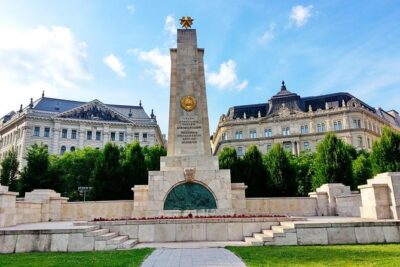
Lives of Hungarians Under Communist and Capitalist system
Read our review →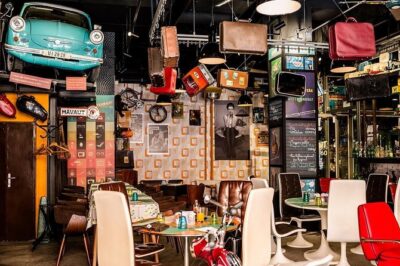
Private Budapest Hammer & Sickle Communist Times Tour
Read our review →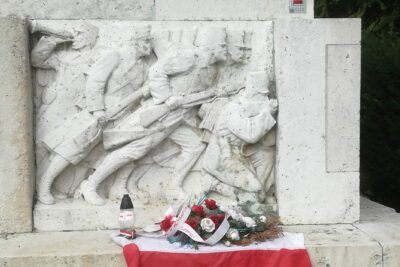
Communist History Evening Walking Tour of Budapest
Read our review →Browse the lists this tour appears in