
Reviewed · COMMUNIST HISTORY TOURS
Budapest: Memento Park and Icons of Communism Guided Tour
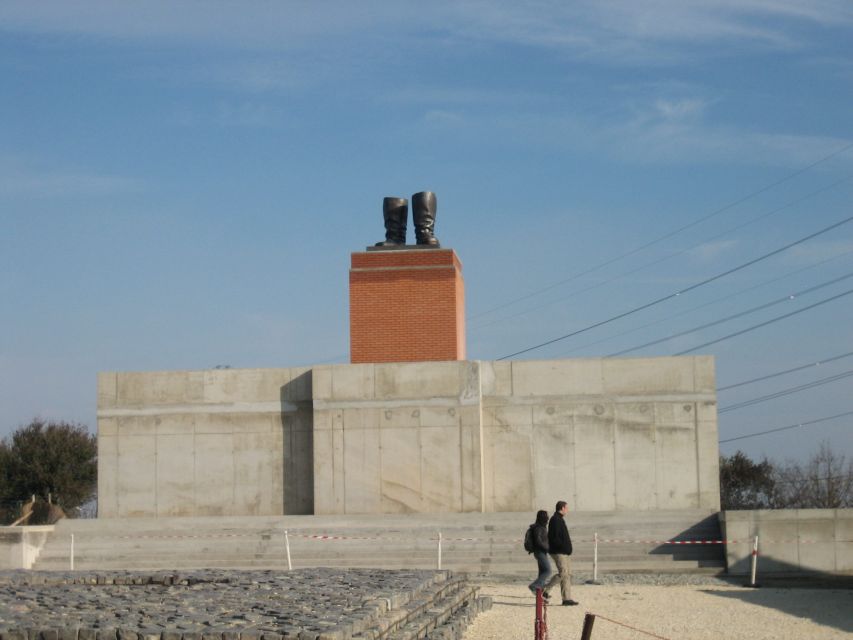
Budapest’s Memento Park puts the old regime in plain sight: giant statues of Marx, Engels, Lenin, and other Communist figures now sit outside the city as reminders of a system that once controlled everyday life. The most memorable sight is Stalin’s boots, all that remains of a huge statue pulled down by angry Hungarians.
I like the easy private-car ride and the small group, which gives the guide room to answer real questions. I also like that the tour deals with more than statues, explaining propaganda, intimidation, secret-police recruitment, and why Communist rule lasted for about 40 years in Hungary.
The main drawback is the travel time. You spend about 90 minutes in the car for roughly 90 minutes at the park, so this is best for visitors with a clear interest in 20th-century history rather than anyone looking for a quick central Budapest attraction.
Key points to know before you book
- Stalin’s boots tell the central story: Learn how a hated dictator’s giant statue was pulled down and reduced to a symbol of freedom.
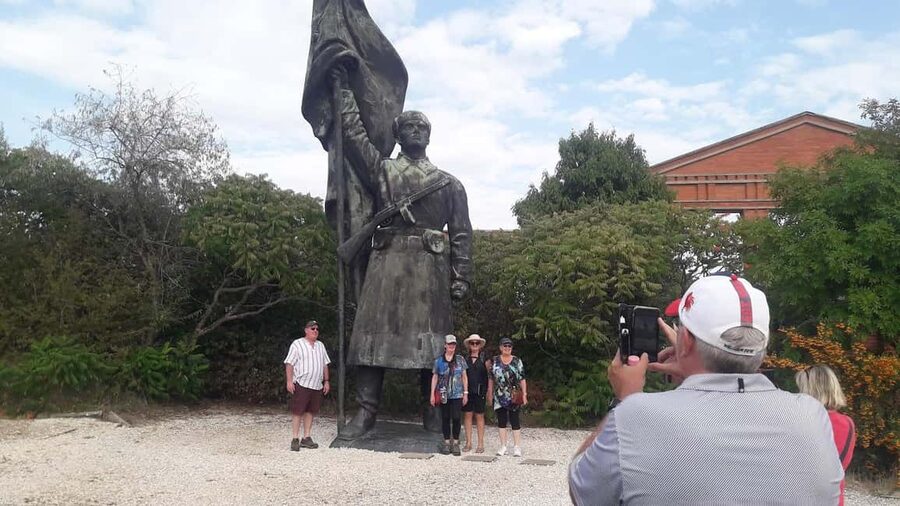
- The 41 statues are made for close viewing: You can walk among the monuments and take photos beside the former propaganda icons.
- The small group matters: With no more than seven participants, you get a more personal English-language explanation.
- Transport is built in: A private car takes you from Batthyány Square to the park and back, about 16 kilometers each way.
- The guide adds the missing context: Victor has been praised for making difficult political history clear, engaging, and accessible to families with teenagers.
- The experience is about daily life, not only ideology: Expect discussion of changing laws, fear, manipulation, and secret-police pressure.
Why Memento Park is worth the trip outside central Budapest
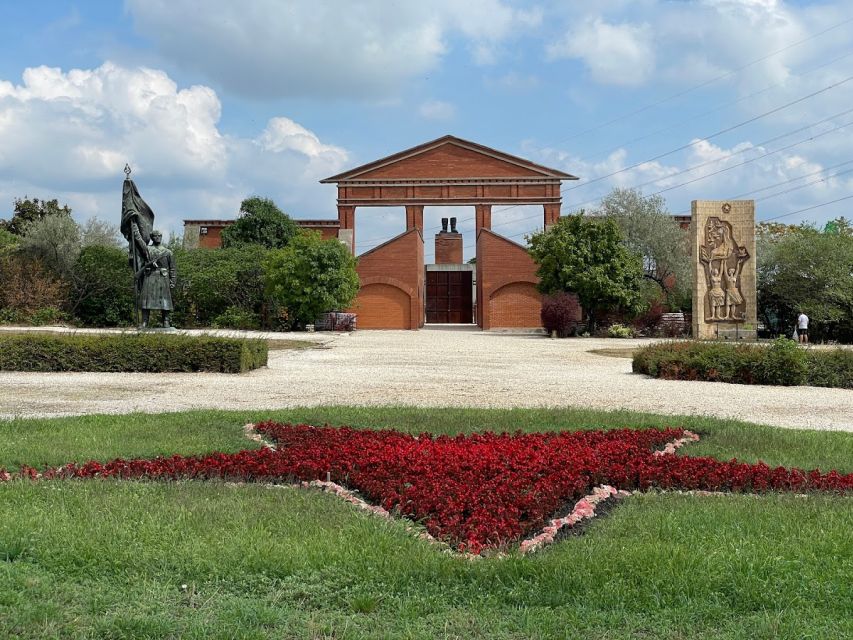
Memento Park is not a conventional museum. Instead of placing Communist monuments behind glass, it gathers them in an open-air setting where you can walk right up to them. That physical scale matters. A statue built to inspire obedience looks different when you can inspect it from every side, stand beside it, and see it stripped of its original setting.
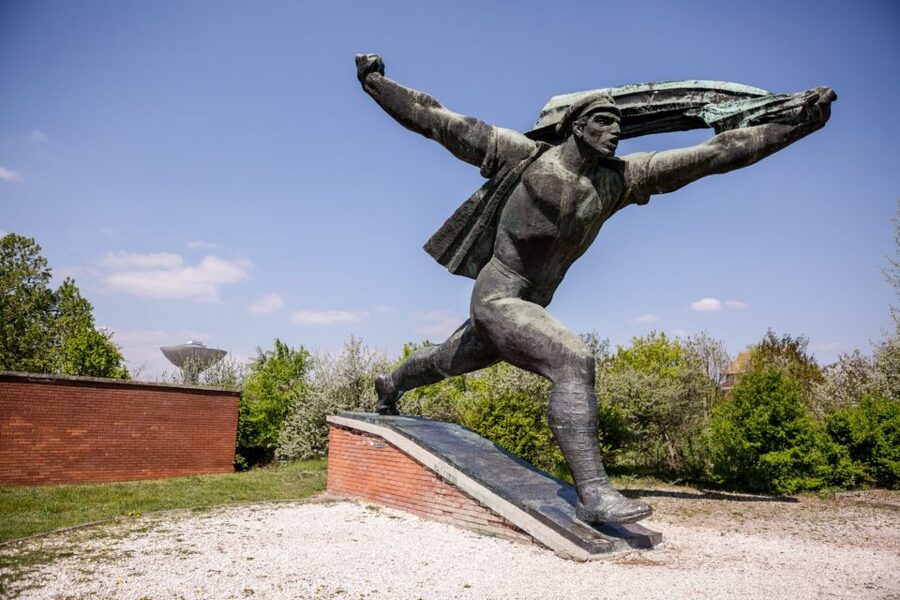
The park contains 41 statues and monuments removed after Hungary’s Communist system fell. Marx, Engels, and Lenin appear among the former symbols of state power. The park does not ask you to admire these figures. It gives you a place to consider how public art, political language, and fear worked together.
I find the setting especially useful because the monuments have lost their official power. They no longer tower over a public square during a government ceremony. They sit together as evidence of a former political order, which lets you look at them with more distance and less pressure.
A guide makes a real difference here. Without context, you may see a series of large statues and take a few amusing photos. With a guide, you can connect the statues to the rules, slogans, surveillance, and public rituals that shaped life under Communism.
More communist-era history walks:
- Budapest: Communist History Tour with House of Terror Option
★ 4.8 · 182 reviews - Budapest: 3-Hour Walking Tour About Communism (Small Group)
★ 4.7 · 70 reviews - Communism in Hungary with a Historian
★ 5.0 · 70 reviews
Meeting at Batthyány Square beside the Danube
The tour begins at Batthyány Square, a familiar transport point beside the Danube. Look for St. Anne Church, recognizable by its two towers. The meeting point is in front of the church, and you can reach the square by Metro Line 2 or trams 19 and 41.
This is a practical place to start because it is easy to find and well connected. Still, give yourself enough time to locate the church and arrive ready to leave. The tour uses a car rather than asking you to arrange a separate bus or taxi.
The return is also to Batthyány Square, so you finish where you began. That makes it easy to continue sightseeing on the Buda side or cross the river afterward.
The 45-minute ride to Memento Park
The drive to Memento Park takes about 45 minutes. The park is around 16 kilometers from the city center, or roughly 10 miles. This is not a minor transfer, and the time should factor into your decision.
I like the private-car arrangement because it removes the need to work out the trip on your own. The car is described as clean and comfortable, and the ride is led by the licensed English-speaking guide and driver. A bottle of water is included.
The drive also gives the guide time to set up the story before you arrive. The central question is not simply what Communism looked like in stone, but why the ideology gained room in Hungary after the Second World War and how a political theory associated with Marx became, in practice, a source of fear for millions.
Do not expect the ride to be a sightseeing tour in itself. The value is convenience, conversation, and preparation for the park. If you prefer to spend every minute in central Budapest, the travel time may feel long. If you want a guided explanation rather than an audio guide and an independent visit, the car is a useful part of the package.
Walking among 41 former Communist monuments
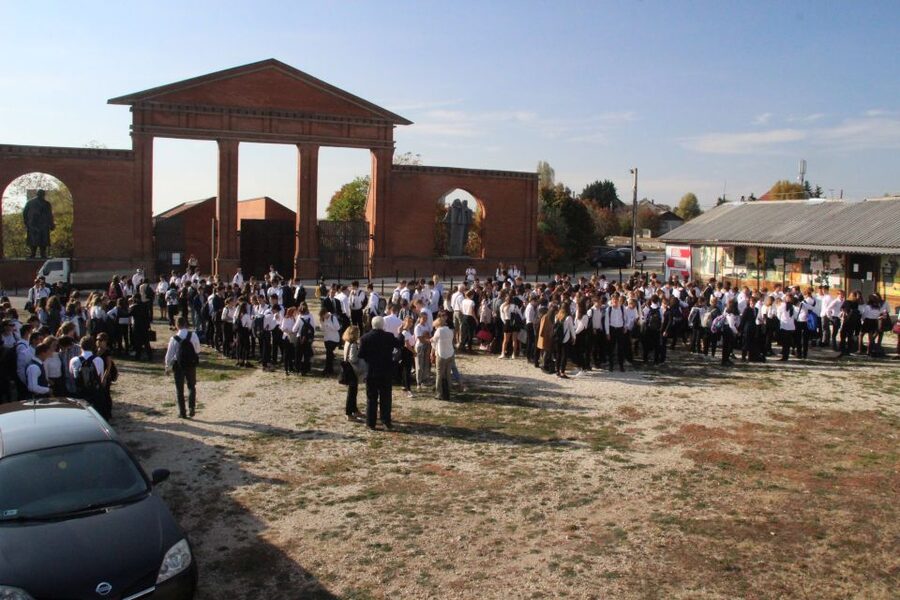
At Memento Park, the guided visit lasts about an hour and a half. You will walk through an open-air museum filled with statues and plaques from Hungary’s Communist period.
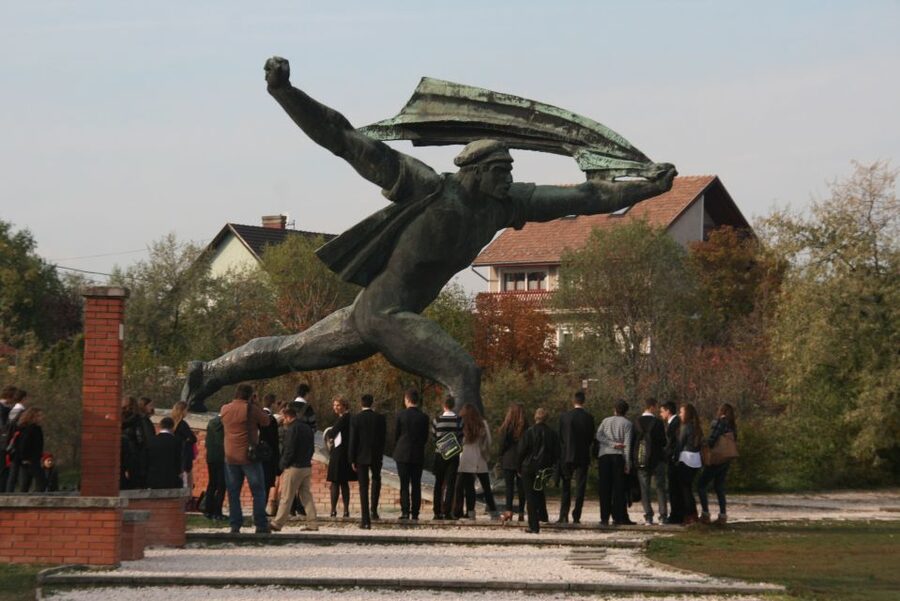
The monuments were created for public display and propaganda. Their size and posture were meant to make political leaders and ideas seem permanent, heroic, and beyond challenge. Seeing them gathered in one place changes the message. You can compare the figures, notice repeated visual themes, and think about how public art was used to shape what people believed.
The guide explains how the rule of law changed after the Communists gained power. This is one of the most valuable parts of the visit because it moves the discussion beyond political labels. You learn how an ordinary person could be intimidated, how the secret police recruited new members, and how the machinery of control affected people who were not party leaders or famous dissidents.
The walk is also suitable for questions. One of the strongest aspects of Victor’s guiding style is his ability to explain difficult subjects in plain language. He has been praised for answering basic questions without making visitors feel foolish, which is important when you are dealing with a political system that may be unfamiliar.
You have free time within the park as well as guided sightseeing. Use it to look at the statues from different angles and take photos. The guide will help take pictures of you beside the monuments at no extra charge.
A few more Budapest half-days to weigh up
- Budapest: Parliament Building Entry Ticket and Audio Guide
★ 4.5 · 3,844 reviews - Budapest: Opera House Guided Tour
★ 4.6 · 1,533 reviews - Budapest Small-Group Guided Tour on MonsteRoller e-Scooter
★ 5.0 · 1,517 reviews - Budapest: Guided Tour of the Parliament Building in Spanish
★ 4.6 · 1,240 reviews
Stalin’s boots and the image of a toppled dictator
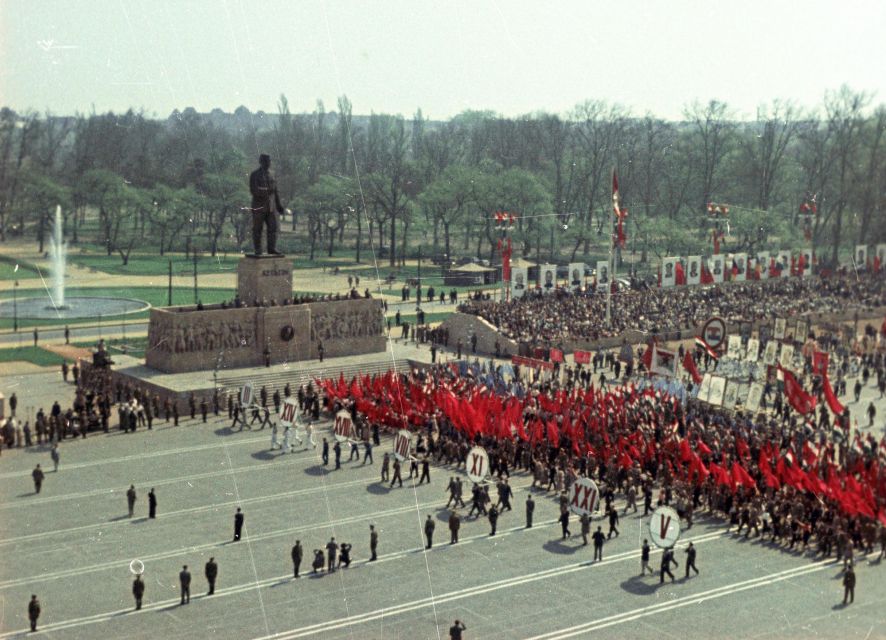
The most striking stop is the area connected with Stalin’s Grandstand. The tour asks you to picture an angry crowd pulling down the enormous statue of the Soviet dictator. The statue itself is gone. Only the boots remain.
That small surviving fragment carries more meaning than a complete statue might. Boots are usually associated with marching authority and military force. Here, they suggest a ruler whose public image could not survive popular anger. They have become a symbol of Hungary’s longing for freedom.
This is also where the tour’s physical setting does its best work. You are not just hearing that a monument was removed. You are looking at what remains, standing in the place connected with the event, and hearing why the statue was hated.
The moment is easy to remember, but the guide helps keep it from becoming a simple dramatic tale. The wider tour places the fall of the statue beside the longer story of propaganda, coercion, and the ways people tried to protect themselves under Soviet rule.
Propaganda, fear, and the ordinary person
Memento Park can look like a collection of failed heroes, but the serious subject is the human system around them. The guide explains how Communist propaganda worked and how public monuments helped make the ruling ideology seem natural and unavoidable.
You will also hear about the secret police and the pressure placed on ordinary people. Recruitment was not presented as a simple choice between good and evil. The important lesson is how fear can alter decisions, relationships, and a person’s sense of safety.
I value this focus because it keeps the tour grounded. You are not only learning names and dates. You are considering how people behaved when the law changed, when the state held unusual power, and when showing the wrong opinion could carry a cost.
The experience also addresses escape and resistance. The guide explains how brave people could get away and how some Hungarians found ways to resist or survive. The supplied information does not promise a full political history lecture, so think of this as a focused introduction to life under dictatorship rather than a complete account of every event.
How the small group changes the experience
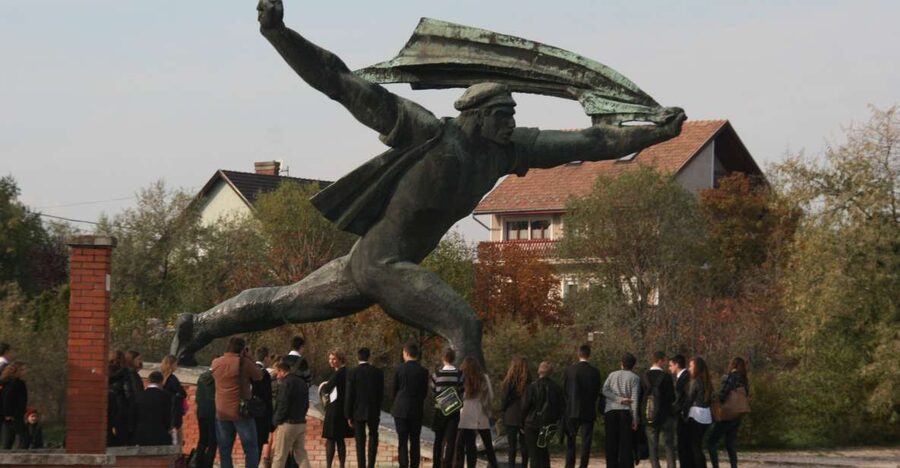
The group is limited to seven people. That is a major advantage at a site where context matters more than speed.
In a large group, a political-history tour can become a march from one statue to the next. Here, you have a better chance to stop, ask why a monument was made, or request clarification about a term or event. The guide can also help with photographs without turning the visit into a rushed photo stop.
Victor is the guide name most closely associated with the strongest feedback for this experience. He has been praised for being friendly, smart, funny, and thoughtful, and for making the park understandable to adults and teenagers. One family found that their two teenagers enjoyed his approach, which suggests that the tour is not delivered as a dry lecture.
The exact guide may depend on the date, so book this for the format and subject rather than assuming Victor will lead every departure. The provider describes the experience as led by a licensed English-speaking guide and driver.
The return ride and extra Budapest views
After about 90 minutes at the park, you return to the city by car. The standard route brings you back to Batthyány Square, completing a three-hour experience.
A guide may add extra sights on the way back. Victor has sometimes included places such as Gellért Hill and the Poets Circle, but these additions should not be treated as guaranteed itinerary stops. Their value is that they can connect the Communist story to other parts of Budapest and give you more to notice after the main visit.
The return trip can also be a useful time to ask questions. You may find that the drive back helps you sort out the difference between official propaganda and private opinion, or between the grand public story and the experience of an ordinary family.
Is $63 a fair price?
The cost is $63 per person. That is more than simply paying for entry to an open-air museum, but the comparison is not really ticket price versus ticket price.
Your fee includes transport from central Budapest and back, entry to Memento Park, a live English-speaking guide, a small group of up to seven, and a bottle of water. The private car is important because the park sits outside the center, and arranging the journey independently would take extra time and planning.
The guide is the main reason to pay the premium. An audio guide can identify statues, but it may not answer your questions or adjust the explanation for your interests. A live guide can explain why the monuments were built, connect them to Hungarian life, and help you see Stalin’s boots as more than an unusual photo stop.
The value is strongest if you are curious about Communism, Soviet influence, propaganda, or modern Hungarian identity. It is weaker if you only want to see unusual statues and have little interest in the political background.
You can also use the free cancellation option, with a full refund available when you cancel at least 24 hours ahead. You can reserve now and pay later, which helps if your Budapest plans are still shifting.
Who should book this three-hour tour?
I would recommend it to adults who want a focused look at Hungary’s 20th-century past, families with older children or teenagers, and anyone who prefers a personal guide to an audio device. The small group and private transport make it especially suitable if you value ease and conversation.
It also works well for repeat visitors who have already seen central Budapest. Memento Park offers a different side of the city, one tied to political memory rather than grand architecture, cafés, or thermal baths.
You should think twice if your time in Budapest is very short. Three hours is a meaningful part of a city visit, and half of the scheduled time is spent travelling. The park is also primarily about explanation and reflection. It is not a light entertainment stop, and the subject includes state control, fear, and political violence.
Wear comfortable shoes for walking through the open-air grounds. Bring questions, especially if you want to understand how public propaganda connected with private life. The included water is helpful, while food is not included, and souvenirs, postcards, and pictures can be purchased at the park shop.
Should you book Memento Park and Icons of Communism?
Book it if you want to understand how Hungary lived under Communism rather than simply photograph an unusual collection of statues. The combination of transport, entry, a small group, and a live guide makes the $63 price reasonable for a three-hour history experience outside central Budapest.
The strongest reason to choose it is the guide-led context, especially if Victor is leading your departure. The main caution is the 45-minute ride each way and the serious subject matter. For the right visitor, Memento Park turns a distant political system into something you can see, question, and remember.
FAQ
Where does the tour begin?
It begins at Batthyány Square in front of St. Anne Church, the church with two towers beside the Danube. You can reach the square by Metro Line 2 or trams 19 and 41.
How long does the experience last?
The full experience lasts three hours. The ride to Memento Park takes about 45 minutes, the park visit lasts about one and a half hours, and the return ride takes about 45 minutes.
How far is Memento Park from central Budapest?
Memento Park is about 16 kilometers, or 10 miles, from the city center.
Is transport included?
Yes. A private car takes you from Batthyány Square to Memento Park and returns you to the same meeting point afterward.
Is the tour conducted in English?
Yes. The tour includes a live English-speaking licensed guide.
How large is the group?
The group is limited to seven participants.
Just added around Budapest
- Budapest: Private, Personalized Pub Crawl, 3 drinks included★ 4.5 · 3 reviews
- Private day trip from Budapest to Bratislava, Vienna, and back★ 3.5 · 3 reviews
- Budapest: Private Adventure Sightseeing Bicycle Tour★ 4.5 · 3 reviews
- Private Danube Bend tour – full day★ 4.5 · 3 reviews
- Budapest: Guided City Walking Tour in Buda and Pest★ 5.0 · 3 reviews
- Budapest Old Jewish Quarter History Private Walking Tour★ 5.0 · 3 reviews
- Lake Balaton Full Day Private Wine Tour★ 5.0 · 3 reviews
- Budapest Urban Feast – Food Tour with Wine Tasting & Coffee House★ 4.5 · 3 reviews
Communist History Tours, compared.
Communist History Tour with House of Terror Option
Read our review →
3-Hour Walking Tour About Communism (Small Group)
Read our review →
Lives of Hungarians Under Communist and Capitalist system
Read our review →
Private Budapest Hammer & Sickle Communist Times Tour
Read our review →
Communist History Evening Walking Tour of Budapest
Read our review →Browse the lists this tour appears in