
Reviewed · COMMUNIST HISTORY TOURS
Communist History Evening Walking Tour of Budapest
Budapest’s communist past is easiest to grasp on foot, where former monuments, protest sites, churches, and government buildings still share the same streets. This two-hour evening walk follows that story from Blaha Lujza tér to Parliament, with a guide explaining how daily life and public spaces changed under the regime.
I like the small maximum group of 15, which gives you a better chance to ask questions, and I like the route’s mix of famous sights and less obvious historical details. The stories about the church, football star Ferenc Puskás, the former Stock Exchange, and the 1956 uprising give the walk a human edge. The main drawback is that you walk about 3 kilometers and spend much of the time outdoors, sometimes in noisy or crowded spots.
Key points to know before booking
- A 3-kilometer route through central Budapest: Start at Blaha Lujza tér and finish beside Parliament, close to Kossuth Lajos tér metro station and tram 2.
- Twenty-two historical locations and monuments: The route uses central districts, including areas around Andrássy Avenue, the basilica, Liberty Square, and Parliament.
- A guide-led look at communist Hungary: Expect discussion of church policy, political protests, the 1956 uprising, and the long effect of communism on present-day life.
- A compact evening schedule: The walk begins at 6:00 pm and lasts about two hours, a useful fit for a first or second night in Budapest.
- Personal attention in a group of up to 15: Guides such as Victoria have been praised for clear English, humor, and detailed answers.
- Simple inclusions and flexible cancellation: Bottled water is provided, and you can cancel for a full refund up to 24 hours before the start time.
Why this Budapest communist history walk works
This is not a museum tour with a fixed collection of objects. The city itself is the exhibit. You move through streets where the political system changed the use of buildings, the meaning of monuments, and the way people gathered in public.
That matters in Budapest because communist history is not confined to one memorial or one former government office. It appears in the treatment of religion, the memory of political violence, the fate of public institutions, and the stories of people who resisted or left.
The walk begins in central Pest and ends at Parliament Square, so you also get a useful orientation to the city. You will not spend the evening inside attractions, and admission fees are not part of the experience because the listed stops are viewed from public areas. For a visitor who wants context before exploring on their own, that is a sensible format.
The guide is the heart of the experience. Victoria is the named guide in several pieces of feedback, and she is described as a university history professor with clear English, a lively delivery, and a good sense of humor. You should not assume she will lead every departure, but the comments indicate the tour depends heavily on having a strong guide who can connect political events with present-day Hungary.
More communist-era history walks:
- Budapest: Communist History Tour with House of Terror Option
★ 4.8 · 182 reviews - Communism in Hungary with a Historian
★ 5.0 · 70 reviews - Budapest: 3-Hour Walking Tour About Communism (Small Group)
★ 4.7 · 70 reviews
Starting at Blaha Lujza tér at 6:00 pm
You meet at Blaha Lujza tér, in the 1085 postal district, at 6:00 pm. This is a practical central starting point, but you should allow time to find the exact meeting spot in the square rather than arriving at the last minute.
From there, the group walks toward Andrássy Avenue. The route covers roughly 3 kilometers, so comfortable shoes are important. You need to be able to walk or wheel yourself that distance, and the tour is best suited to anyone comfortable spending two hours outside.
The evening start has two advantages. You avoid the strongest daytime heat in warm months, and the timing leaves the earlier part of your day open for museums, Buda Castle, or the Great Market Hall. The trade-off is that daylight can fade during the walk, especially outside the long summer season. That is not a major issue for listening, but it can affect how clearly you see details on buildings and monuments.
Bottled water is included. I would still bring an extra drink on a hot day, since the route is active and the water provided is a useful courtesy rather than a full refreshment stop.
Walking Andrássy Avenue and reading the changes
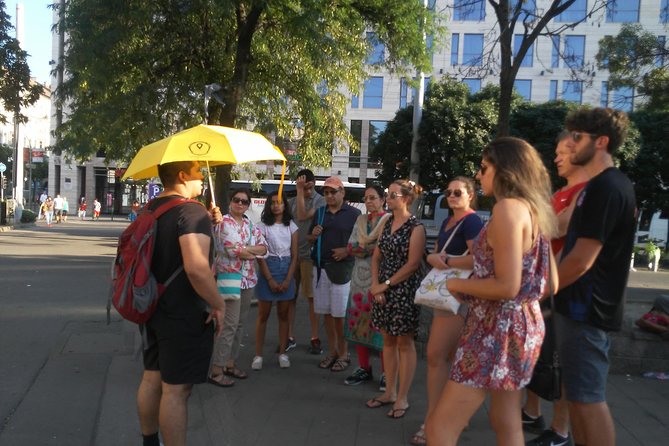
The walk down Andrássy Avenue gives the guide room to explain how the area and its former monuments changed over time. This is one of the better ways to approach communist history because you see how political power altered familiar civic spaces rather than treating the period as an isolated chapter.
The route reportedly covers 22 locations and monuments across Budapest’s central districts. Some are beautiful and easy to appreciate, while others are included because of what happened there, not because they are handsome. That distinction is worth keeping in mind. This is not a sightseeing route made up only of postcard views.
You will hear about the physical changes to the city and the ways public memory was managed. The useful question is not simply what a monument looks like now, but what it once represented, what happened to it under communism, and how Hungarians view that past today.
The guide’s explanation is especially valuable here. A plaque or building can tell you a date, but it rarely explains how a political system affected ordinary life. The strongest part of this walk is the link between streets and lived experience.
St. Stephen’s Basilica and the place of religion
The first named stop is St. Stephen’s Basilica, or Szent István Bazilika. You spend about 10 minutes here, with no admission ticket included because the discussion takes place from the public area.
The focus is the effect of communism on the Hungarian church and religion. That gives you a different entry point into the period from the usual focus on party leaders and state buildings. Religious institutions were part of the wider political struggle, and the basilica provides a powerful setting for explaining that tension.
This stop also includes the story of the famous Hungarian football player Ferenc Puskás. The tour explains how he fled the communist system and was later buried at the basilica. His story adds a personal and popular dimension to the political account. You are not just hearing about policy. You are also hearing about the choices faced by a public figure who left his country and was later honored there.
The basilica is one of the more attractive locations on the route, but the stop is brief. If you want a detailed look inside the church, its architecture, or its dome, you should plan a separate visit. Here, the building serves mainly as a setting for the discussion of religion, identity, and Puskás.
A few more Budapest half-days to weigh up
- Budapest: Historic Cruise with Welcome Drink
★ 4.7 · 6,512 reviews - Budapest Historical Sightseeing – Free Walking Tour
★ 5.0 · 1,302 reviews - Buda Castle District Dark History, Legends and Vampire Night Tour
★ 4.5 · 1,240 reviews - BloodThirsty Hungary: Walking tour & Dark Historical Stories
★ 4.9 · 633 reviews
Liberty Square and Budapest’s contested public memory
Liberty Square is one of the most important stops for anyone interested in Budapest’s communist period. You spend about 15 minutes here, again without a separate admission fee.
The square was the site of the Stock Exchange, which was closed at the beginning of communism. That single fact helps explain the scale of the political shift. The change was not only about leadership. It also altered economic institutions and the way public life was organized.
The square was also the site of bloody protests. This gives the stop a harder edge than a normal city-square visit. You will be asked to think about public space as a place of conflict, not simply as an open area surrounded by grand buildings.
I find this kind of stop especially useful because it connects several themes in one place: economics, political control, protest, and memory. It also helps explain why Budapest can feel visually elegant while carrying painful reminders beneath the surface.
A practical point: one piece of feedback suggested that the guide sometimes had to position the group near a fountain, a smelly corner, or a busy thoroughfare. That is a minor issue, but it can affect how well you hear. If the area is noisy, move close to the guide and ask for a repeat rather than missing an important explanation.
Parliament Square and the 1956 uprising
The final major stop is the Hungarian Parliament Building, where the tour ends after about 15 minutes of discussion. The meeting address is Kossuth Lajos tér 1 to 3, and the walk finishes on Parliament Square, close to Kossuth red line metro station and tram 2.
This is where the guide explains the 1956 uprising against the ruling Communist Party. Considerable blood was shed at the site, making it one of the most serious parts of the route. The square may look formal and impressive, but the story attached to it is about resistance, violence, and sacrifice.
The stop also gives the tour a clear ending. You move from changes to institutions and religion, through contested public space, to open resistance against the political system. The route does not treat the end of communism as a simple or painless event. It highlights the sacrifices made by Hungarians in the effort to remove communist rule.
You do not enter Parliament as part of this walk. If you want an interior visit, you will need to arrange that separately. The benefit here is the setting and the guide’s explanation, not access to the building.
Once the walk ends, you are well placed to continue by public transportation. The metro and tram connections make it easy to return to your hotel or move on to dinner, though the tour itself does not include food or drinks beyond bottled water.
What the guide adds beyond a museum visit
A museum can show you objects, photographs, and documents. A walking guide can show you where those events happened and explain how the same places functioned before, during, and after communism.
That difference is central to this experience. One guide described in the feedback, Victoria, is praised for connecting historical facts with present-day life in Budapest. She is also described as a university professor, with clear speech, strong English, humor, and the ability to answer most questions.
The guide’s personal connection to Budapest is useful too. The walk includes discussion of what it is like to live in Hungary today and how the communist era still affects society. That helps you avoid seeing communism as a closed chapter with no connection to modern life.
You should still keep your expectations realistic. The quality of a walking tour can change with the guide, group size, street noise, and weather. The strongest reports focus on the guide’s depth and delivery, so the experience is likely to be at its best when your guide is comfortable with questions and has time to explain them.
If you want even more detail on the period, the Terror Museum was suggested as a good follow-up. That museum is not included, but pairing it with this outdoor walk could give you both a street-level introduction and a more formal museum setting.
Is $36.01 a fair price?
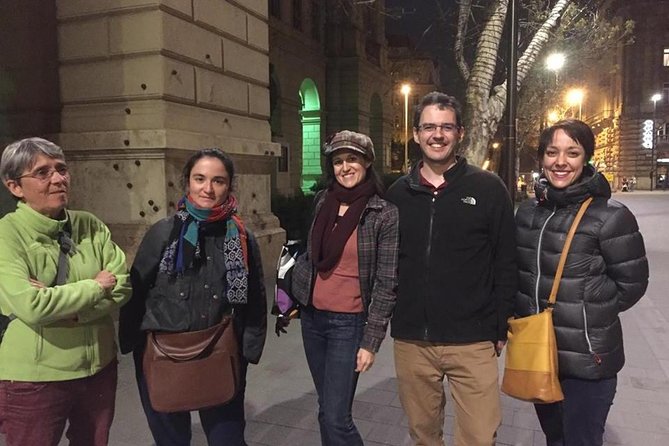
At $36.01 per person, this is not a bargain-priced free walk, but the price can make sense if you value a focused specialist guide and a small group. The tour lasts about two hours, covers around 3 kilometers, and includes 22 locations or monuments, with bottled water provided.
The key value is interpretation. You are paying to understand what you are seeing, not to enter paid attractions. Since the named stops are public sites and no admission tickets are included, a visitor who mainly wants interior access may find the price less appealing.
A group maximum of 15 is a real benefit. It is small enough for questions and easier listening than a large city walk. If the group is full, you should still expect to stand on ordinary city streets, sometimes near traffic or other activity.
The tour is booked about 26 days ahead on average, which suggests you should not leave it until the final day if your dates are fixed. Confirmation is provided at booking. Free cancellation is available until 24 hours before the start time. Changes or cancellations inside that window are not accepted for a refund.
The activity requires good weather and a minimum number of participants. If the operator cancels for either reason, you are offered another date or experience, or a full refund. That policy reduces the risk of booking an outdoor evening walk in uncertain conditions.
Who will get the most from this walk?
I would choose this tour if you want political and social context, not just a list of monuments. It suits history-minded visitors, people who have already seen Budapest’s main sights, and anyone who wants to understand why certain squares and buildings matter.
It is also a good choice for a first visit if you prefer to learn through conversation. The route introduces several central areas while giving you a reason to look closely at them.
Families with older children may find the stories engaging, especially the football connection and the accounts of protest and resistance. The subject includes bloodshed and political oppression, so it is not a light sightseeing stroll for very young children.
You should think twice if you dislike walking, need frequent indoor breaks, or want to spend the evening inside attractions. You should also allow for street noise and the possibility that some explanations take place in less comfortable spots.
Service animals are allowed, the route is near public transportation, and most people can participate if they can cover the 3-kilometer distance independently or with their mobility equipment.
Should you book the Communist History Evening Walking Tour?
Book it if you want Budapest’s communist past explained through actual streets and public spaces. The route gives you several strong anchors: religion at St. Stephen’s Basilica, economic and political change at Liberty Square, and the 1956 uprising at Parliament.
I especially like the combination of a short route, a small group, and a guide who can discuss both historical events and present-day Hungary. The main caution is that the experience depends on outdoor conditions and guide quality, and it does not include entry to Parliament, the basilica, or a museum.
For a visitor who wants a thoughtful introduction before visiting the Terror Museum or exploring Budapest alone, $36.01 is a reasonable spend. If your priority is architecture, indoor access, or a relaxed ride rather than a 3-kilometer walk, choose a different format.
FAQ
How long is the Communist History Evening Walking Tour?
The tour lasts approximately two hours.
Where does the tour start?
It starts at Blaha Lujza tér in Budapest, Hungary.
What time does the tour begin?
The start time is 6:00 pm.
Where does the tour end?
The walk ends at Budapest Parliament Square, at Kossuth Lajos tér 1 to 3. The end point is close to Kossuth red line metro station and tram 2.
How far do I need to walk?
You need to be able to walk or wheel yourself approximately 3 kilometers.
Is bottled water included?
Yes. Bottled water is included. Alcoholic beverages, parking fees, and other listed facility or equipment fees are not included.
More Evening Experiences in Budapest
- Budapest: 1-Hour Evening Sightseeing Cruise with Drink
★ 4.5 · 8,330 reviews - Budapest By Night Sightseeing Cruise
★ 4.1 · 5,835 reviews - Budapest: Evening Cruise including Drinks and Live Music
★ 4.1 · 5,512 reviews - Budapest: Buda Castle District Vampires and Myths Night Tour
★ 4.6 · 3,830 reviews
More Walking Tours in Budapest
- Budapest: Buda Castle Walk with Saint Stephen’s Hall
★ 4.5 · 3,012 reviews - Big Bus Budapest Hop-On Hop-Off Bus and Walking Tour
★ 3.5 · 2,206 reviews - Budapest: Buda Castle District Walking Tour
★ 4.6 · 2,108 reviews - Budapest City Landmarks Walking Tour in 2 Hours
★ 5.0 · 2,048 reviews
Just added around Budapest
- Budapest: Private, Personalized Pub Crawl, 3 drinks included★ 4.5 · 3 reviews
- Private day trip from Budapest to Bratislava, Vienna, and back★ 3.5 · 3 reviews
- Budapest: Private Adventure Sightseeing Bicycle Tour★ 4.5 · 3 reviews
- Private Danube Bend tour – full day★ 4.5 · 3 reviews
- Budapest: Guided City Walking Tour in Buda and Pest★ 5.0 · 3 reviews
- Budapest Old Jewish Quarter History Private Walking Tour★ 5.0 · 3 reviews
- Lake Balaton Full Day Private Wine Tour★ 5.0 · 3 reviews
- Budapest Urban Feast – Food Tour with Wine Tasting & Coffee House★ 4.5 · 3 reviews
Communist History Tours, compared.
Communist History Tour with House of Terror Option
Read our review →
3-Hour Walking Tour About Communism (Small Group)
Read our review →
Lives of Hungarians Under Communist and Capitalist system
Read our review →
Private Budapest Hammer & Sickle Communist Times Tour
Read our review →
Browse the lists this tour appears in