
Reviewed · COMMUNIST HISTORY TOURS
Budapest Hammer & Sickle Communist Times Tour
Budapest’s communist past is easiest to understand when you connect ordinary life with the places where history turned hard and dangerous. This 2.5-hour tour links the 1956 Revolution, Soviet control, religious life, and the fall of the Iron Curtain with stops at Liberty Square, Parliament, and the Shoes on the Danube Bank memorial area.
I like the small maximum of 10 people, which gives the guide room to answer questions. I also like the unusual museum portion, especially the recreated communist-era living room, old household objects, photographs, books, and stories about passports, travel, black markets, and scarce bananas. The main drawback is that the tour is information-heavy, and some of the opening discussion takes place indoors rather than on the street.
Key points to know before booking
- A history walk with an everyday-life museum: You see major political sites, then learn how families actually lived behind the Iron Curtain.
- The 1956 Revolution takes center stage: Parliament Square, the October 25 memorial, and Imre Nagy’s story give the uprising a clear local setting.
- Small groups improve the experience: With no more than 10 people, you can ask questions and follow the parts of Hungarian history that interest you most.
- Guides bring personal detail: Guides such as Anna, George, Tomas, Laszlo, Rebecca, Bogata, Andrea, and Balint have been praised for clear explanations and family memories of the period.
- Expect a city walk in all weather: The tour starts at Deák Ferenc Square at 3 p.m. and finishes near Liberty Square.
- Best for adults and older teenagers: It is not recommended for children under 14, and the subject matter includes war, repression, executions, and the Holocaust.
Why this tour makes Budapest’s recent past easier to grasp
Many Budapest tours focus on grand buildings, cafés, and the city’s Austro-Hungarian glory. This one moves into the uncomfortable decades that shaped modern Hungary: World War I, World War II, communist rule, the 1956 uprising, and the Soviet withdrawal.
That wider frame matters. The tour does not treat communism as an isolated chapter. Your guide explains how the collapse of earlier political systems, wartime occupation, and the postwar seizure of power led Hungary into decades of one-party rule.
I especially like the link between public events and private life. You hear about speeches, marches, tanks, executions, and political betrayal, then see the objects and rooms connected with children, family life, travel, and entertainment. That contrast helps you understand why political control reached far beyond government offices.
The strongest guides appear to be those who can explain both the facts and the human side. Anna is described as clear, thoughtful, and neutral, while George and Tomas are praised for their passion and personal connection to Budapest. Laszlo is also singled out for his easy-to-follow explanations. Guide assignments can change, but the experience clearly depends heavily on who leads it.
More communist-era history walks:
- Budapest: Communist History Tour with House of Terror Option
★ 4.8 · 182 reviews - Communism in Hungary with a Historian
★ 5.0 · 70 reviews - Budapest: 3-Hour Walking Tour About Communism (Small Group)
★ 4.7 · 70 reviews
Starting at Deák Ferenc Square and St. Stephen’s Basilica
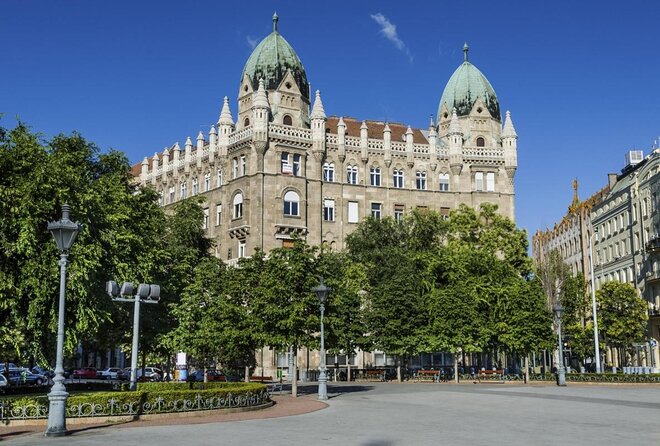
The meeting point is the Lutheran Church at Deák Ferenc Square, a central location near public transport. The tour begins at 3 p.m., so you can spend the morning seeing Buda or the Great Market Hall before joining the walk.
The first stop is St. Stephen’s Basilica, where the discussion turns to religion under communism. This is a useful opening because it shows that political control was not only about factories, borders, and party offices. Churches had to operate under a system that watched and restricted public life.
You spend about 15 minutes here. Admission to the basilica is not included, so do not assume this tour provides entry inside. The stop is mainly about the effect of communism on religious institutions and church life.
Liberty Square and the Soviet memorial
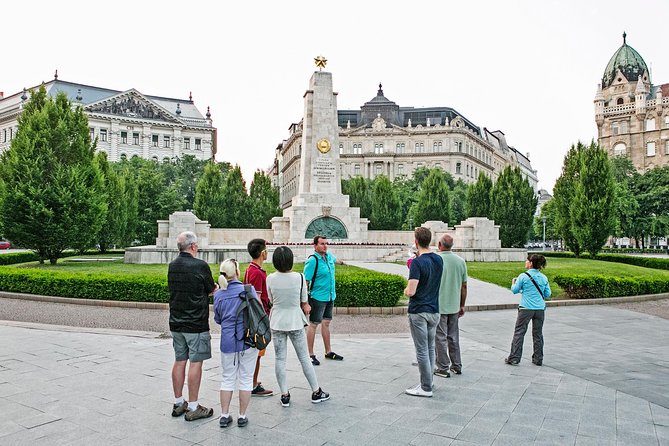
At Liberty Square, the tour examines the end of World War II, the beginning of Soviet occupation, and the way the Communist Party took power. The Soviet memorial remains one of the most politically charged objects in central Budapest.
You get about 15 minutes at this stop, and admission is free. The square works well as a history classroom because several layers of Hungarian memory meet in one place. The name Liberty Square sounds hopeful, yet the Soviet memorial points to the loss of political independence that followed the war.
Your guide also explains the city’s final tribute to the Soviet Union. That phrase captures the uneasy way Budapest has had to live with monuments connected to occupation and power. The stop is brief, so ask questions if you want more detail about the memorial or the postwar takeover.
Parliament Square and the first shots of 1956
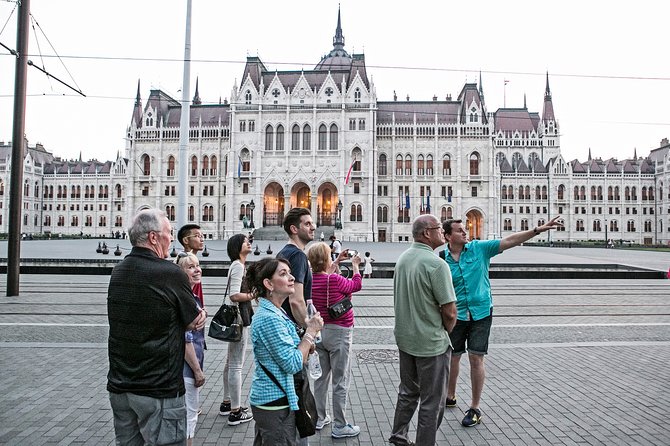
The Hungarian Parliament Building provides the tour’s central political setting. The square in front of Parliament played an important role in the first days of the 1956 Revolution, and the guide explains the grievances that brought people into the streets.
This is where the broad introduction becomes concrete. You learn about speeches, protests, and marches, along with the way party leaders responded as demonstrations grew. The first shots of the revolution were fired here, making the square more than a grand photo stop.
The visit lasts around 20 minutes. Entry into the Parliament building is not included, so the focus is on the exterior and the events tied to the square. You should expect a talk beside a busy city landmark, not a guided tour of the parliamentary interior.
The guide also introduces Imre Nagy, one of the key figures of 1956. Nagy was a communist who challenged Soviet leaders in Moscow, then was executed for treason. His story shows how narrow the room for political independence had become, even for someone inside the communist system.
Same city, a completely different way to spend an afternoon:
- Budapest: City Highlights Cruise with Welcome Drink
★ 4.6 · 35,610 reviews - Budapest: Unlimited Prosecco, Beer and Aperol Spritz Cruise
★ 4.8 · 25,310 reviews - Budapest: Széchenyi Spa Day Ticket with Optional Upgrades
★ 4.3 · 23,911 reviews - Budapest: Nighttime or Daytime Sightseeing Cruise
★ 4.2 · 21,062 reviews
The October 25 memorial and the human cost of revolt
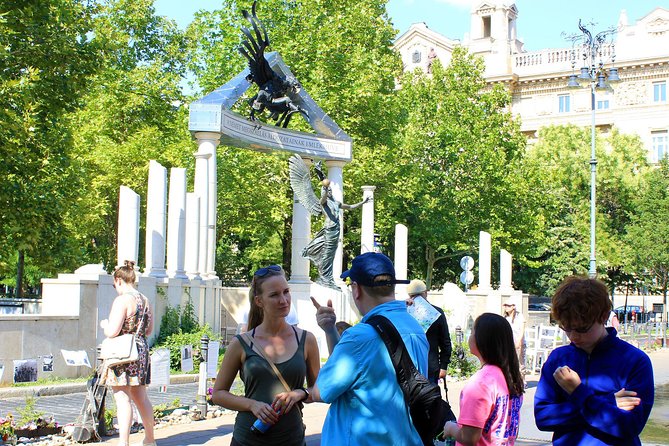
The In Memoriam 1956 October 25 Memorial and Exhibition deals with one of the darkest moments of the uprising. On the second day of the revolution, military authorities and Soviet tanks fired into a gathering crowd.
The exhibition uses archive footage and personal recollections to present the event. You spend about 15 minutes here, and admission is free. This section can be emotionally heavy, but it gives the revolution a human scale that a general timeline cannot provide.
I would not rush this stop. The memorial is one of the places where the tour moves beyond political labels and asks you to think about people caught in a violent confrontation. The content is not suitable for anyone seeking a light sightseeing walk, and parents should note the recommendation against children under 14.
Imre Nagy’s statue and the road toward freedom
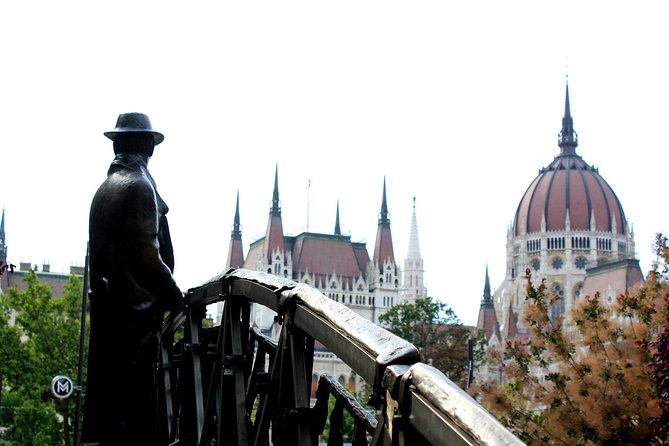
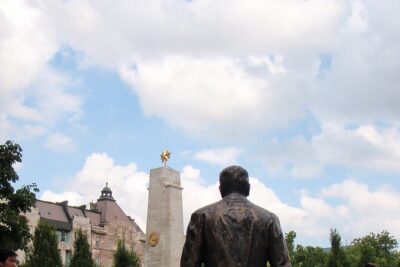
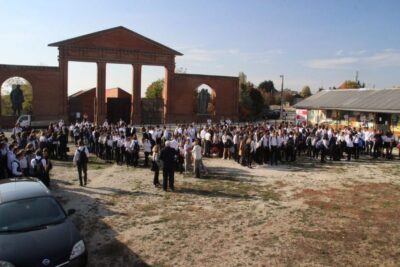
The statue of Imre Nagy provides another chance to consider the 1956 Revolution and the later change of regime. His reburial became an important moment in Hungary’s move away from communist rule.
The stop lasts around 15 minutes and is free to visit. Your guide connects Nagy’s fate with the broader prelude to freedom, including the fall of the Iron Curtain. This helps explain why 1956 remained important long after the uprising was crushed.
The tour is strongest when it shows that political change did not arrive all at once. The guide traces the memory of 1956 through later decades, showing how earlier events continued to influence public life and national identity.
The Budapest Retro Interactive Museum
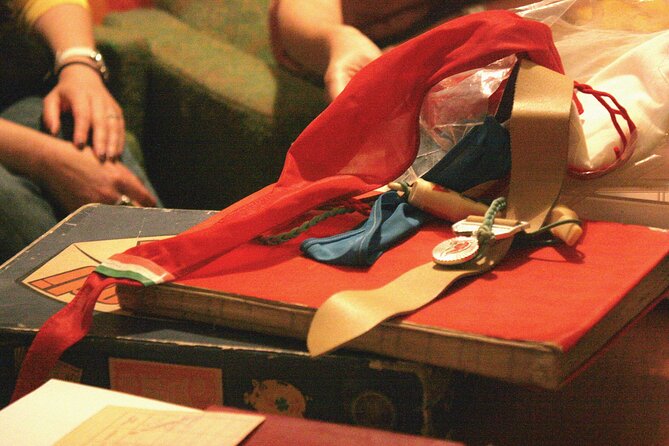
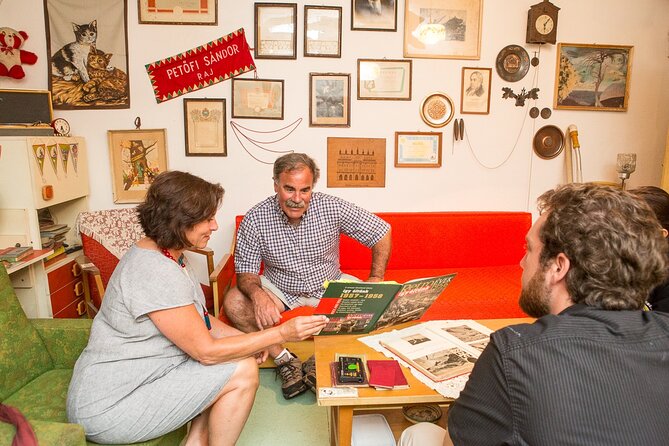
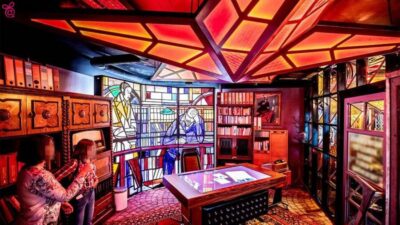
The museum portion is the experience’s most unusual feature. You enter a recreated communist-era setting and examine the details of everyday life. Several people who took the tour describe a mock 1960s or early 1970s living room with games, books, photographs, soda, household objects, and other period items.
This is where questions about life under big brother become practical. You learn how children were raised, how families spent their time, how people traveled, and where they were allowed to go. You also hear about the difficulty of obtaining a passport, the black market, and the famous lines for bananas.
The museum is not simply a room full of old objects. Your guide explains the story behind the items, which turns them into evidence of daily life. A board game or childhood scrapbook can reveal as much about a period as a political speech, particularly for visitors who did not grow up under a communist government.
The indoor section may begin in a basement or office setting, depending on how the operator organizes the day. One person found the opening discussion too long, while others considered the room the foundation of the entire tour. That difference is worth noting: if you prefer constant walking and landmark photos, this may feel slow. If you want to understand how ordinary families lived, it is likely the part you will remember best.
Some departures also include coffee, tea, or a soft drink. A few descriptions refer to snacks or a late lunch, but the stated inclusion is a beverage, so do not book this expecting a full meal.
How personal stories shape the walk
The guide makes or breaks a history tour, and this one has earned strong marks for clear English, warmth, and subject knowledge. Guides named in the feedback include Anna, Celeste, Greg, Andrea, Rebecca, Tomas, George, Laszlo, Bogata, and Balint Alkonri.
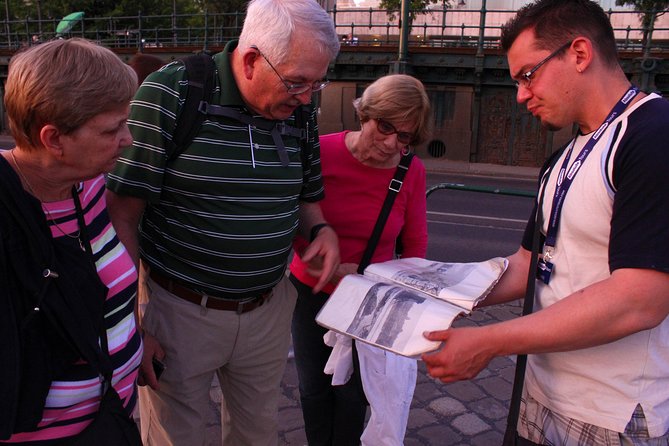
Several guides are described as using family memories from the communist years. That can make difficult topics easier to picture, especially when the discussion turns to travel restrictions, shortages, school life, and household routines.
At the same time, the tour aims for political context rather than a single loud opinion. Anna, in particular, is praised for presenting the communist past in a thoughtful and neutral way. That matters in Hungary, where the memory of occupation, dictatorship, war, and national independence remains politically sensitive.
You should still ask questions. The small group format can turn the walk into a conversation, and some departures have had only two or three people. A private-feeling experience is possible, but it is not guaranteed.
Walking conditions, sound, and timing
The tour lasts about two hours and 30 minutes, though some small groups have continued closer to three hours. The walk covers central Pest and ends near Liberty Square at Szabadság tér 1.
There is no audio equipment or headset. That is normally fine with a group of 10 or fewer, but city noise can interfere. One departure was affected by helicopters and aircraft during a Red Bull event, making it hard to hear the guide. Keep this in mind if you have hearing difficulties, and stay close to the guide during outdoor explanations.
The tour runs in all weather. Budapest can be cold, wet, or hot depending on the season, so wear shoes suited to walking and bring suitable layers. The route is near public transport, which makes the 3 p.m. start and central finish easy to fit into a day of sightseeing.
Because the route includes several outdoor stops, the tour is not ideal if you want to avoid bad weather. It is also not a museum-only activity. You should be ready to walk between sites and listen while standing in public squares.
Is $79.65 a fair price?
At $79.65 per person, this is not the cheapest way to learn about communist Budapest. You can find free walking tours with related subjects, and one person felt a free option offered more outdoor walking and information.
The paid tour earns its price through the combination of a small group, an English-speaking guide, a period exhibition, and a structured route through important sites. You are not only looking at monuments. You are getting the guide’s interpretation, access to the interactive museum, and a chance to ask questions in a group capped at 10.
I consider the price reasonable for visitors who want a focused introduction early in their stay. It gives you background that can improve the rest of your time in Budapest, especially when you later see Soviet-era memorials, Parliament, or reminders of the 1956 uprising.
The value is less clear if you already have a strong grasp of Hungarian political history or want a long, low-cost city walk. In that case, the indoor section and the price may not suit you. Book it for interpretation and personal context, not simply for the number of sights.
Who should book this Budapest history tour?
I would choose this tour if you enjoy modern European history, political change, museums, and conversations with local guides. It is especially useful early in your visit, when a clear explanation of the 20th century can give meaning to Budapest’s monuments and public spaces.
It also suits anyone curious about daily life under communism. The passport stories, banana lines, household objects, childhood materials, and mock apartment offer details that standard sightseeing tours often skip.
You may want another activity if your main goal is to enter Parliament, spend most of the time outdoors, or see a large number of attractions quickly. Parliament entry is not included, and the tour spends real time indoors discussing objects and personal experiences.
The tour is not recommended under age 14. Adults and older teenagers who can handle war, state violence, the Holocaust, political executions, and occupation will get the most from it.
Practical booking advice
The meeting point at the Lutheran Church of Ferenc Deák Square is central and near public transport. Arrive with enough time to locate the church, especially if you are unfamiliar with Budapest’s large Deák Square transit area.
The tour is offered in English and includes a mobile ticket. Confirmation is provided when you book. You do not receive hotel pickup or drop-off, so plan your own way to the meeting point and from the Liberty Square finish.
Free cancellation is available up to 24 hours before the 3 p.m. start time. Changes or cancellations inside that window are not accepted for a refund.
Should you book it?
Book this tour if you want Budapest’s communist period explained through both public events and private homes. The 1956 sites, Imre Nagy’s story, Liberty Square, and the October 25 memorial give the political story shape, while the Retro Interactive Museum shows what that system meant at the kitchen-table level.
Skip it if you want a bargain walk, a Parliament interior visit, or a mostly visual sightseeing route. For history-minded visitors, though, the small group, strong guide involvement, and everyday objects make the $79.65 worthwhile. Schedule it near the start of your Budapest stay, stay close enough to hear the guide, and allow extra time in case the discussion runs beyond the advertised two and a half hours.
FAQ
Where does the Budapest Hammer & Sickle Communist Times Tour begin?
It begins at the Lutheran Church of Ferenc Deák Square, Deák Ferenc tér 4, 1052 Budapest.
What time does the tour start?
The tour starts at 3 p.m.
Where does the tour finish?
It finishes near Liberty Square in central Budapest, at Szabadság tér 1, 1054 Budapest.
How long does the experience last?
The scheduled duration is approximately two hours and 30 minutes. Some small-group departures have lasted about three hours.
Is the tour conducted in English?
Yes. An English-speaking guide leads the experience.
Is entry to the Budapest Retro Interactive Museum included?
Yes. The museum visit is included in the experience, with the guide explaining the objects and stories in the exhibition.
Is Parliament admission included?
No. The Parliament stop focuses on the square and its role in the 1956 Revolution. Parliament admission is not included.
Is the tour suitable for children?
The experience is not recommended for anyone under 14. The subject includes war, occupation, political executions, the Holocaust, and the violent suppression of the 1956 Revolution.
Just added around Budapest
- Budapest: Private, Personalized Pub Crawl, 3 drinks included★ 4.5 · 3 reviews
- Private day trip from Budapest to Bratislava, Vienna, and back★ 3.5 · 3 reviews
- Budapest: Private Adventure Sightseeing Bicycle Tour★ 4.5 · 3 reviews
- Private Danube Bend tour – full day★ 4.5 · 3 reviews
- Budapest: Guided City Walking Tour in Buda and Pest★ 5.0 · 3 reviews
- Budapest Old Jewish Quarter History Private Walking Tour★ 5.0 · 3 reviews
- Lake Balaton Full Day Private Wine Tour★ 5.0 · 3 reviews
- Budapest Urban Feast – Food Tour with Wine Tasting & Coffee House★ 4.5 · 3 reviews
Communist History Tours, compared.
Communist History Tour with House of Terror Option
Read our review →
3-Hour Walking Tour About Communism (Small Group)
Read our review →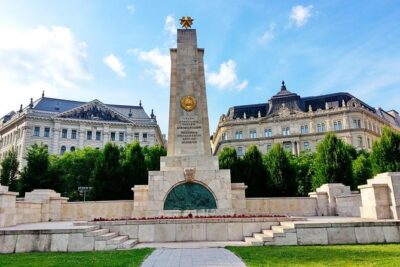
Lives of Hungarians Under Communist and Capitalist system
Read our review →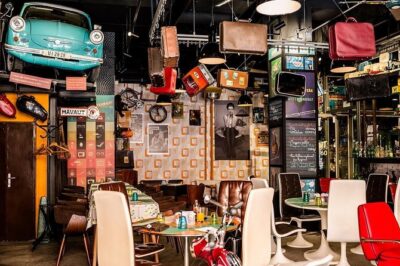
Private Budapest Hammer & Sickle Communist Times Tour
Read our review →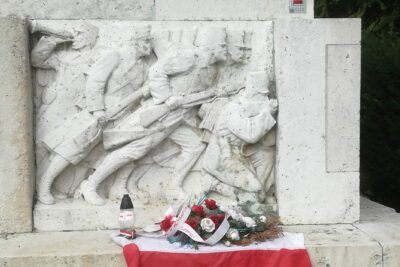
Communist History Evening Walking Tour of Budapest
Read our review →Browse the lists this tour appears in