
Reviewed · JEWISH QUARTER TOURS
Private Walking Tour in The Jewish District Budapest
Budapest’s Jewish Quarter is a place of grand prayer halls, painful wartime memories, lively bars, and ordinary city life all pressed into a few streets. This private walk connects those pieces through stories about Zionism, the Holocaust, and Jewish identity today, rather than treating the district as a collection of old buildings.
I like the one-to-one format, since your guide can adjust the pace and follow your questions. I also like the local angle: Benjamin, one guide connected with the tour, grew up in the area and points out places you could easily miss alone. The main catch is cost. At $228.29 per person, this is a serious outlay, and synagogue admission is extra.
Key points at a glance
- Private English-speaking guide: Only your group takes part, so you can ask direct questions and shape the conversation.
- Three distinct sides of the quarter: You see monumental synagogues, wartime memorial sites, and the modern ruin-pub scene.
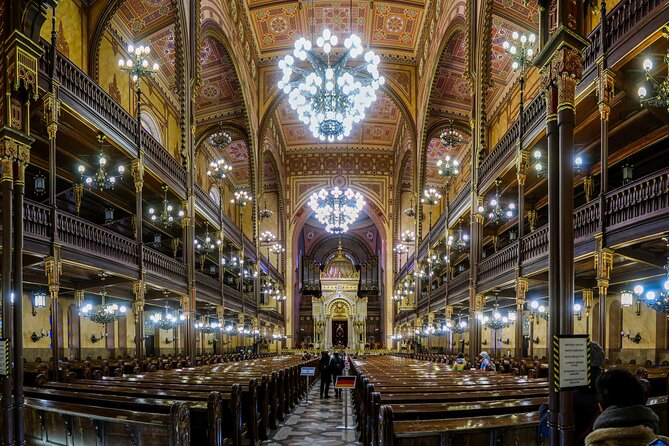
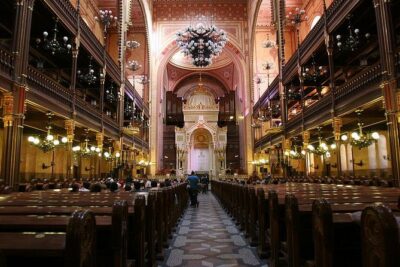
- Dohány Street Synagogue: The largest synagogue in Europe and the second largest in the world, with admission not included.
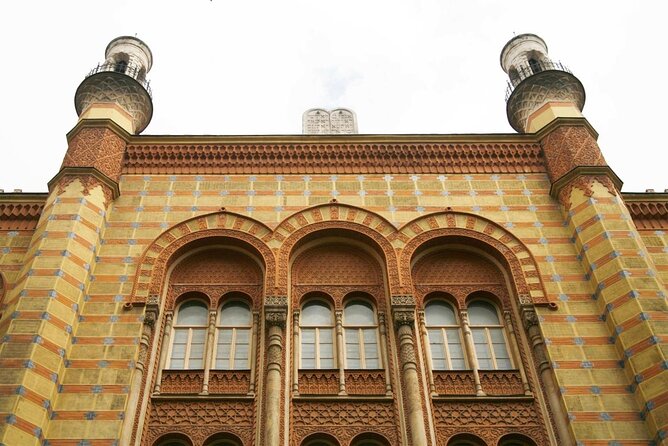
- Rumbach Street Synagogue: A recently restored Moorish-style building that had been abandoned for about 60 years.
- Kosher life today: The walk includes a small kosher market and discussion of Jewish holidays, Orthodox practice, and daily life.
- A flexible but costly option: The walk lasts about two and a half hours, while synagogue tickets add €12 to €45 per person.
Why Budapest’s Jewish Quarter needs a guide
You can walk through District VII and see cafés, bars, apartment buildings, and souvenir shops without realizing how much is beneath the surface. The private format helps connect the visible street scene with the people and events that shaped it.
The tour covers the origins of Zionism, the Holocaust, different branches of Judaism, and what it means to live as an Orthodox Jew today. Those subjects can become dry in a large group, but a personal guide gives you room to stop, ask for clarification, or spend longer on a subject that matters to you.
I would expect the best part of the walk to be the mix of tones. You are promised warm, comic, and tragic stories, which suits this neighborhood. Jewish Budapest is not only a place of mourning, and it is not only a nightlife district. You get both the sorrow and the everyday life.
A local guide can also explain what is happening now. The tour is not limited to vanished communities or wartime memorials. It asks how people live in the quarter today, how Jewish traditions continue, and how the district has changed.
More Jewish Quarter walks:
- Budapest Jewish Heritage Memorial Walking Tour & Synagogue Entry
★ 5.0 · 568 reviews - Budapest: Jewish Heritage Guided Tour with Synagogue Ticket
★ 4.8 · 533 reviews - Jewish Quarter of Budapest Walking Tour
★ 4.7 · 369 reviews
Starting at Dob utca and Dohány Street Synagogue
The meeting point is Budapest, Dob u. 1, in District VII. The tour then begins with the Dohány Street Synagogue, the largest synagogue in Europe and the second largest in the world.
Allow about 30 minutes for this stop. The description notes that it differs from many standard synagogues, so your guide can help explain its unusual character and place within Jewish religious history. Even if you have seen European synagogues elsewhere, this building gives the tour a powerful architectural and historical opening.
Admission is not included. Synagogue tickets across the tour cost between €12 and €45 per person, depending on the site and ticket choice, so check the current price before booking. If you want to enter, budget this separately from the $228.29 tour price.
There is an important practical point here: synagogue opening hours and access can affect the experience. One account describes the synagogues being closed during the walk, while the guide still pointed out fascinating places. That means you should not book this tour assuming every interior will be open.
If seeing the inside of Dohány is central to your plan, confirm the visiting arrangements before you go. If the building is closed, the guide can still discuss its role and exterior, but the experience will feel different from a full architectural visit.
Rumbach Street Synagogue and Moorish design
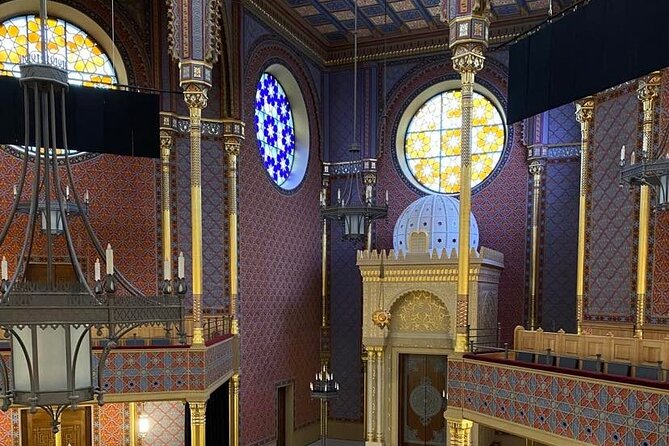
The next synagogue is Rumbach Street Synagogue, with about 15 minutes planned for the stop. It was recently renovated after roughly 60 years of abandonment, giving it a strong story of neglect, repair, and renewed use.
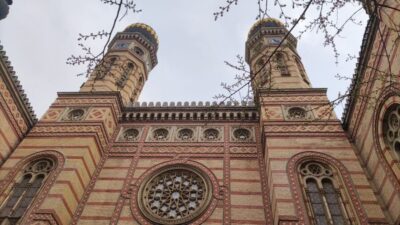
Its Moorish-style architecture is one of the main reasons to pay attention here. The design provides a useful reminder that Jewish buildings in Budapest do not all follow the same visual pattern. Your guide can place the building within the wider story of Jewish communities and religious branches in the city.
Admission is also extra. The short planned time suggests that this is mainly a focused stop rather than a long museum visit. If you want to study details at length, ask your guide how much time is available or consider returning on your own.
The two synagogues work well together. Dohány gives you scale and grandeur, while Rumbach offers a more concentrated look at restoration and architectural variety. Seeing both makes the quarter feel less like a single historical site and more like a network of institutions.
Szimpla Kert and the ruin-pub contrast

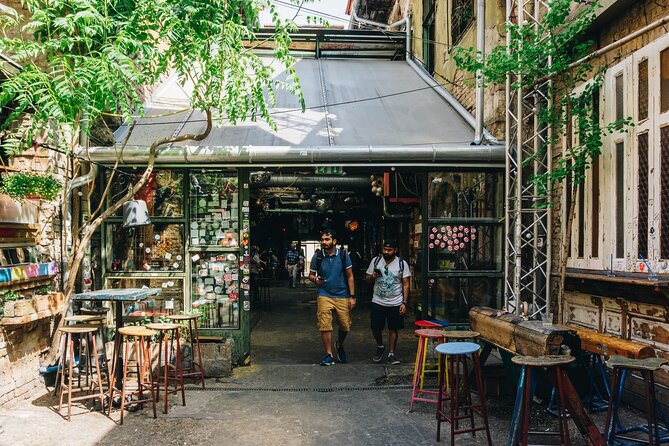
After the synagogues, the tour moves to Szimpla Kert, one of Budapest’s best-known ruin pubs. The planned visit lasts about 15 minutes, and admission is free.
This stop may seem unrelated to Jewish history at first. That contrast is exactly why it is useful. You move from religious buildings and wartime memory into the modern social life that now fills many old courtyards and buildings in the quarter.
Szimpla Kert is described as a representative example of ruin-pub culture. The building’s interior is part of the experience, though the supplied details do not promise a drink, a seated visit, or time for nightlife. Treat it as a short orientation stop, not a pub crawl.
I like this change of pace. A serious historical walk can become heavy, and the ruin pub shows how the neighborhood functions in the present. At the same time, you should be comfortable with the fact that the district is now a popular entertainment area. Those seeking only religious history may find this portion less important.
More walking tours in Budapest:
- Budapest: Buda Castle Walk with Saint Stephen’s Hall
★ 4.5 · 3,012 reviews - Big Bus Budapest Hop-On Hop-Off Bus and Walking Tour
★ 3.5 · 2,206 reviews - Budapest: Buda Castle District Walking Tour
★ 4.6 · 2,108 reviews - Budapest City Landmarks Walking Tour in 2 Hours
★ 5.0 · 2,048 reviews
Wesselényi Street and the Jewish Quarter’s streetscape
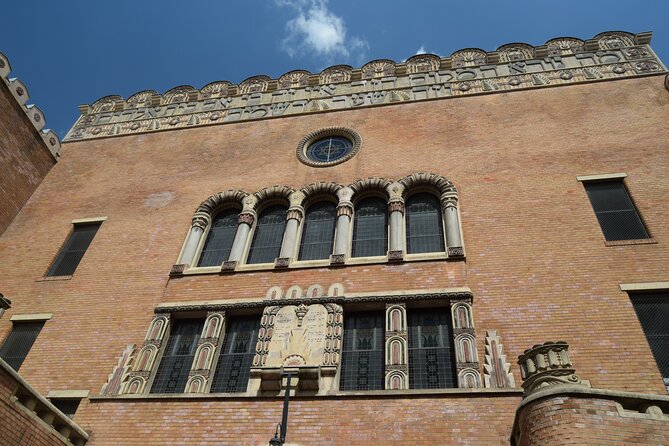
The walk continues through the historic Jewish Quarter around Wesselényi utca 21. This is a free outdoor stop lasting about 15 minutes.
Here, the guide’s value is less about a single attraction and more about reading the surroundings. Budapest’s Jewish Quarter is made of streets, façades, courtyards, addresses, and buildings that can look ordinary unless someone explains what happened there.
You may hear how residents live in the area today, along with stories tied to the district’s Jewish past. The tour’s focus on both history and present life helps avoid a common problem with memorial walks: treating a living neighborhood like an open-air museum.
Keep your eyes on the buildings as you walk. The information supplied for the tour points to façades that reveal stories, including at Kazinczy utca 55. That approach suits Budapest, where an address or doorway can carry more meaning than a polished monument.
Kazinczy utca 55 and the stories behind façades
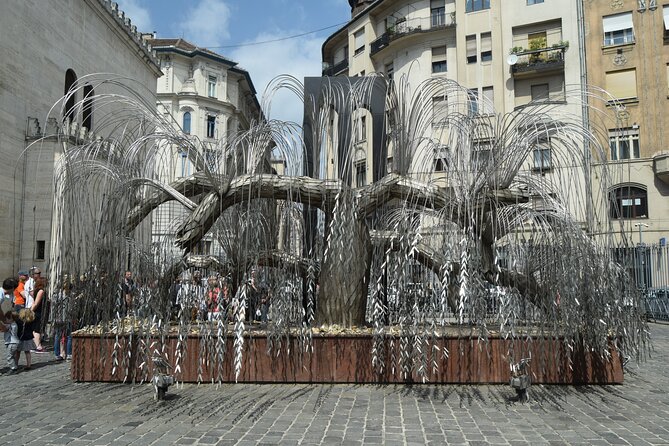
Kazinczy u. 55 is another 15-minute outdoor stop. It is a two-story building with a long history and a sense of mystery, and the façade is used to reveal its story.
The wording here is deliberately intriguing, but you should not expect a formal museum or an interior visit. The point is to understand how the district’s past survives in its ordinary architecture.
This is where a private guide can offer real value. You can ask what happened at the address, how the building fits into the quarter, and how much of its story is documented or remembered. A standard sightseeing route might pass the same façade without giving you a reason to pause.
The stop also breaks up the larger historical themes. Instead of hearing only about major movements and tragedies, you get a closer look at the physical places where people lived, worked, worshipped, and endured change.
The kosher market and Jewish life today
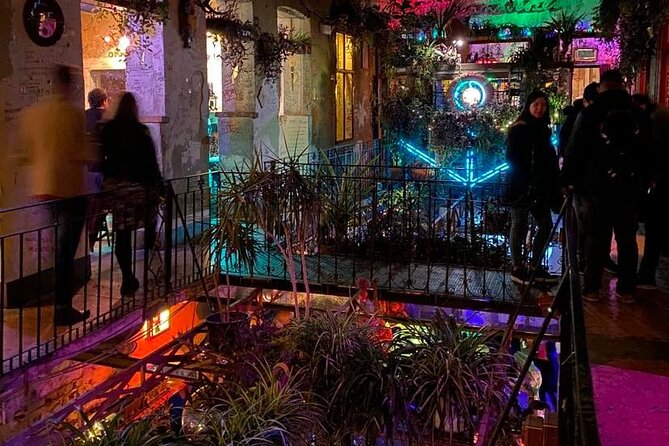
The Kóser Piac, or Kosher Market, is a small shop where you can find necessities for Shabbat and other Jewish holidays. The visit takes about 15 minutes and is free.
This is one of the most practical stops on the route. It shifts the discussion away from the past and toward the routines of religious life. You can learn what a kosher shop provides and how food connects with Jewish observance.
The tour also introduces the branches of Judaism and explains what it is like to be Orthodox today. That makes the market more than a shopping stop. It gives you a concrete place to consider how traditions are practiced in modern Budapest.
Because it is a small shop, the experience may be brief. The supplied information does not promise a purchase, tasting, or cooking demonstration. Still, I would value the stop because it helps keep the tour from presenting Judaism as something found only in monuments and memorials.
Finishing at the Shoes on the Danube Bank
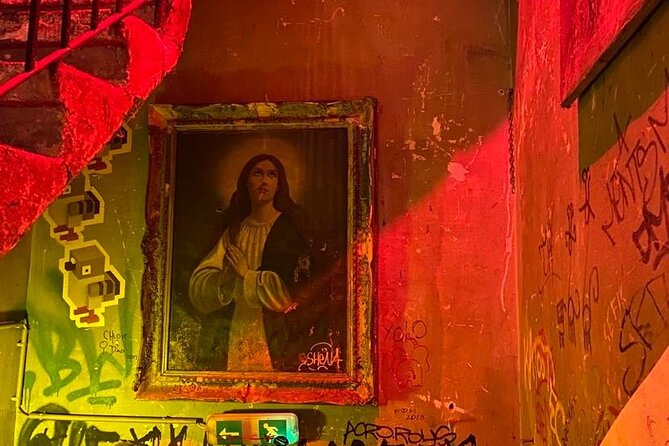
The walk ends at Shoes on the Danube Bank, at Budapest 1054. The memorial is not listed with a separate admission charge.
Ending here gives the tour a clear emotional direction. After learning about Jewish institutions, neighborhood life, and the Holocaust, you finish at a memorial that asks you to pause beside the river and remember those murdered during the Second World War.
The ending also changes your sense of Budapest. The Jewish Quarter is not isolated from the rest of the city, and the walk toward the Danube links District VII with a major public memorial. You may want quiet time at the end, so avoid scheduling a rushed appointment immediately afterward.
The tour details do not give a precise route length between stops. Since the activity lasts about two hours and 30 minutes and includes several 15-minute visits, expect a steady urban walk with time spent standing outdoors.
How the private format affects the experience
Only your group participates, which is the clearest reason to choose this tour over a large scheduled walk. You can ask direct questions about Zionism, Orthodox practice, the Holocaust, or the quarter’s current residents without waiting for a whole group to catch up.
The guide can also respond to your interests. If architecture matters most, you can focus on Dohány and Rumbach. If modern Jewish life matters more, spend extra time discussing the kosher market and religious branches. If the wartime story is your priority, ask how the sites connect to the Holocaust and the final memorial.
One guide, Benjamin, is described as a local who grew up in the area. That kind of personal connection can make a difference, especially in a neighborhood where the best information may involve small details and personal memory. Benjamin may not be the guide assigned to every booking, so treat his involvement as a possibility rather than a guarantee.
The private format does not automatically make every part better. A large group tour often costs less per person, and the basic route is compact enough to walk independently. You are paying for tailored attention and interpretation, not simply for transport or entry.
Is $228.29 per person a fair price?
At $228.29 per person, this is expensive for a two-and-a-half-hour walking tour. The price makes the most sense for a private group that values personal discussion and can share the cost across several people.
Group discounts are available, though the exact discount is not stated. Check the final booking price for your party rather than assuming the per-person figure will remain unchanged. You will also need to add synagogue admission, listed as €12 to €45 per person.
The value is strongest when you want context rather than a quick checklist of sights. A guide who can answer questions and explain how the district’s past connects with Jewish life today may give you more than a self-guided walk.
The value is weaker if you mainly want synagogue interiors. Since admission is extra and the synagogues may be closed at the time of the walk, confirm access first. You may prefer to visit the buildings independently and choose a lower-cost neighborhood walk for the streets.
Who should book this Jewish Quarter walk?
I would recommend it for first-time visitors who want a serious introduction to Budapest’s Jewish Quarter but do not want a lecture with a large crowd. It also suits families and private groups who prefer to ask questions openly and set their own pace.
The tour is a good match if you want several subjects in one outing: synagogue architecture, Zionism, Holocaust history, Orthodox practice, kosher food, ruin pubs, and current neighborhood life. That range is broad, so you will get the most from it if you appreciate connections between places rather than only landmark visits.
Most people can participate, and the route is near public transportation. You should still be ready for about two and a half hours of city walking and standing. The details do not specify step-free access or a reduced walking route, so ask the provider if mobility is a concern.
It may not suit you if you want a relaxed food tour, a nightlife experience, or a full synagogue tour with guaranteed interior access. Szimpla Kert is only one short stop, and the central purpose is history and culture.
Booking, timing, and cancellation advice
Confirmation is provided at booking, and the activity is offered in English. It is commonly booked about 30 days ahead, so reserve early if you need a particular date or want to coordinate synagogue opening times.
The tour starts at Dob u. 1 and ends at the Shoes on the Danube Bank. Since the ending is not back at the starting point, plan your onward route from the river rather than leaving your day open as if you will return to District VII.
Free cancellation is available up to 24 hours before the start time for a full refund. Changes or cancellations made less than 24 hours ahead are not accepted for a refund, and the cut-off uses Budapest local time.
Should you book it?
Book this private Jewish Quarter tour if you want a thoughtful, question-friendly walk that links Budapest’s Jewish past with its present. The local perspective, the contrast between Dohány, Rumbach, Szimpla Kert, and the kosher market, and the final stop at the Danube make the route varied and meaningful.
Think twice if $228.29 per person feels high or if synagogue interiors are your main goal. In that case, confirm opening hours, calculate the added admission, and compare the total with a self-guided visit. For a private group that wants personal attention and a guide who can explain the district beyond its famous façades, the price can be worthwhile.
FAQ
How long does the private Jewish District tour last?
The tour lasts approximately 2 hours and 30 minutes.
What language is the tour offered in?
The tour is offered in English.
Is this a private activity?
Yes. Only your group participates in the tour.
Are synagogue admission tickets included?
No. Tickets for Dohány Synagogue and other synagogues are not included. Admission costs are listed as €12 to €45 per person.
Where does the tour start and end?
The tour starts at Budapest, Dob u. 1, 1072 Hungary, and ends at the Shoes on the Danube Bank, Budapest 1054.
Can I cancel for a full refund?
Yes. You can cancel at least 24 hours before the experience start time for a full refund. Cancellations or changes made less than 24 hours before the start are not accepted for a refund.
Just added around Budapest
- Budapest: Private, Personalized Pub Crawl, 3 drinks included★ 4.5 · 3 reviews
- Private day trip from Budapest to Bratislava, Vienna, and back★ 3.5 · 3 reviews
- Budapest: Private Adventure Sightseeing Bicycle Tour★ 4.5 · 3 reviews
- Private Danube Bend tour – full day★ 4.5 · 3 reviews
- Budapest: Guided City Walking Tour in Buda and Pest★ 5.0 · 3 reviews
- Budapest Old Jewish Quarter History Private Walking Tour★ 5.0 · 3 reviews
- Lake Balaton Full Day Private Wine Tour★ 5.0 · 3 reviews
- Budapest Urban Feast – Food Tour with Wine Tasting & Coffee House★ 4.5 · 3 reviews
Jewish Quarter Tours, compared.
Budapest Jewish Heritage Memorial Walking Tour & Synagogue Entry
Read our review →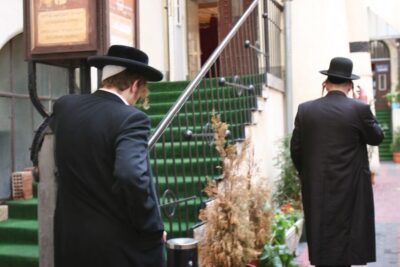
Jewish Heritage Guided Tour with Synagogue Ticket
Read our review →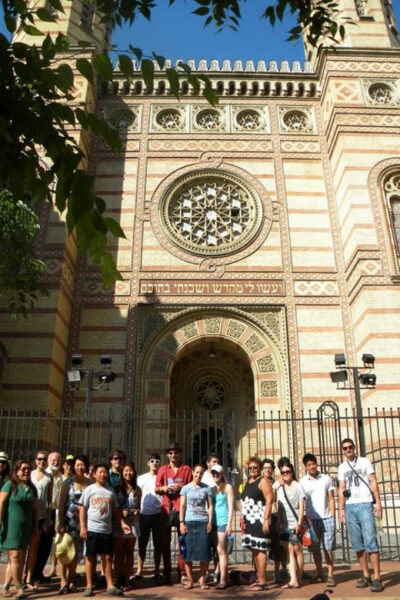
Past and Present of Budapest Jewish District Tour
Read our review →
Budapest Dohany Synagogue & Hungarian Jewish Museum & free extras
Read our review →
Jewish History Guided Walking Tour with Historian
Read our review →Browse the lists this tour appears in