
Reviewed · COMMUNIST HISTORY TOURS
Communist Budapest Walking Tour
Budapest’s communist past is easiest to understand when you connect monuments, public squares, propaganda, and everyday life. This three-hour walk does exactly that, moving from Parliament and the 1956 uprising to Cold War symbols, socialist statues, and the former secret police headquarters.
I like the small group size, capped at eight, because it gives you room to ask questions. I also like the way the tour links Hungary’s experience to the wider Cold War, from the Soviet War Memorial to Ronald Reagan’s statue and an atomic shelter. The main drawback is that the tour ends outside the House of Terror, and museum admission is not included.
- A historian leads the walk, with guides such as Andras and Kata offering detailed answers and discussion.
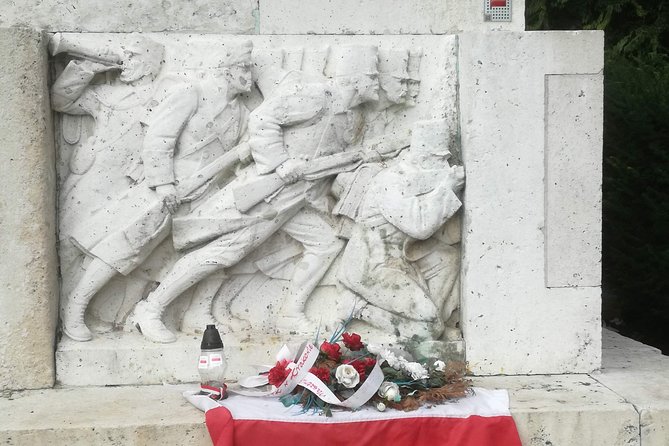
- Freedom Square brings several Cold War symbols together, including the Soviet War Memorial, the US Embassy, and the Ronald Reagan statue.
- The 1956 uprising gets real attention, especially at Kossuth Lajos Square and Bem József Square.
- Puskás Ferenc Stadium preserves socialist-realist statues, giving you a clear look at communist propaganda in public space.
- The House of Terror is the natural finishing point, but you must buy a separate ticket if you want to visit inside.
- Public transportation is part of the route, so bring or buy Budapest metro and tram tickets.
Why this Communist Budapest walk is worth your time
This is not a general sightseeing walk with a few old statues added for flavor. It is a focused look at how communism shaped Budapest, how the 1956 revolution began, and how Hungary remembers the Cold War today.
The subject can feel abstract when you read about the Iron Curtain in a book. Here, the guide places those events in actual squares and streets. You see where demonstrations gathered, where Soviet power was honored, and where American influence is now remembered with a statue of Ronald Reagan.
I especially like the human side of the tour. The best part is not simply learning dates or political labels. It is hearing how the regime used public architecture, sports, monuments, and official messages to influence daily life. The guides also make room for discussion, so you can ask about the turning points that interest you most.
This is a good choice if you want more than photographs. One past participant found it useful even without a strong interest in history, while another pointed out that it is not the right pick if you only want sightseeing. That is fair. The tour asks you to listen, think, and connect places with events.
Starting near Frankel Leó út and reaching Parliament
The listed meeting point is at Frankel Leó út 2-4 in Budapest’s District II. From there, the tour uses the metro to reach Kossuth Square in front of the Hungarian Parliament Building.
That transport matters. This is not a single compact loop where every stop is a few steps from the next. You should expect a mix of walking and public transportation, and you will need Budapest tram or metro tickets if you do not already have a visitor pass.
The guide helps you purchase the needed tickets, but I would still allow a little extra time before the start. A mobile ticket is available for the tour itself, and confirmation is issued when you book.
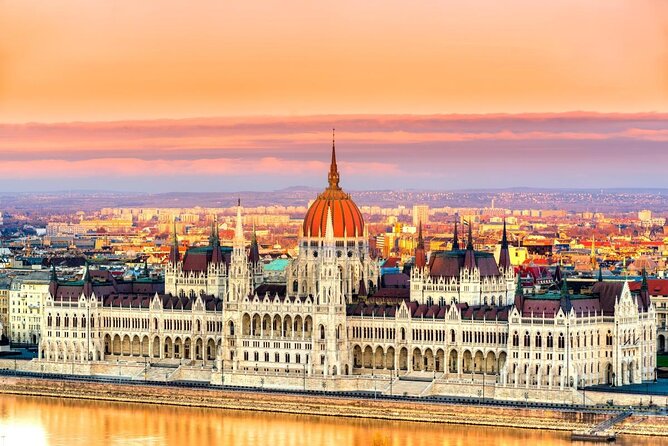
Parliament is a fitting place to begin. Kossuth Square connects Hungary’s national government with the memory of the 1956 revolution. Your guide uses monuments in and around the square to explain the uprising and the political pressure that shaped the country afterward.
The first stop lasts about 25 minutes, with no admission charge. You do not enter Parliament as part of this experience, so the focus is on the square, its memorials, and the guide’s explanation.
More communist-era history walks:
- Budapest: Communist History Tour with House of Terror Option
★ 4.8 · 182 reviews - Communism in Hungary with a Historian
★ 5.0 · 70 reviews - Budapest: 3-Hour Walking Tour About Communism (Small Group)
★ 4.7 · 70 reviews
Kossuth Square and the memory of 1956
The 1956 revolution is one of the essential stories of modern Hungary, and this walk gives it a physical setting.
The route also includes Bem József Square, identified as the place where the first major demonstration of the uprising began. That detail helps you understand how a public protest can grow into a national revolt. The guide can explain the wider political setting and answer questions about the events that followed.
Bem József Square also offers a small but useful glimpse of everyday life. A coffeehouse there has kept its original 1960s interior. It is a reminder that the period was not only about speeches, arrests, and state power. People still met for coffee, carried on routines, and tried to live ordinary lives within a restrictive system.
The square is scheduled for about 25 minutes, again without an admission fee. If you like social history, this may be one of the most useful stops because it moves beyond grand political events and points toward daily experience.
Freedom Square’s collision of Cold War symbols
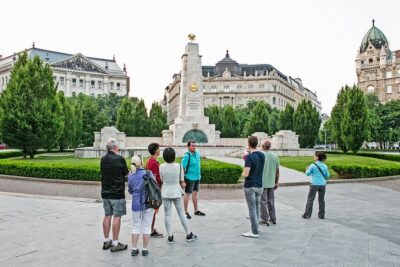
Freedom Square, or Liberty Square, is the tour’s most concentrated lesson in Cold War memory. In one area, you discuss the US Embassy, the Soviet War Memorial, Ronald Reagan’s statue, and an atomic shelter.
These symbols do not tell a simple story. The Soviet monument reflects the power that dominated Hungary after the Second World War. The US Embassy represents the Western side of the Cold War, while Reagan’s statue honors an American president associated with the fall of the Iron Curtain.
The guide’s job here is to explain the tension between those symbols, not just point them out. You can ask how Hungary remembers Soviet control, why Reagan is honored, and how the city handles monuments tied to opposing political systems.
The atomic shelter adds another layer. It brings the Cold War down from diplomacy and ideology to the fear of nuclear conflict. You may find this part especially useful if you know the Cold War mainly through major events and want to understand how its threat appeared in urban life.
The Soviet War Memorial is free to see, as are the other outdoor sites. The value comes from the explanation and the links between them. Without a guide, you could easily walk past the square and see only a collection of unrelated monuments.
Ronald Reagan’s statue and Hungary’s American connection
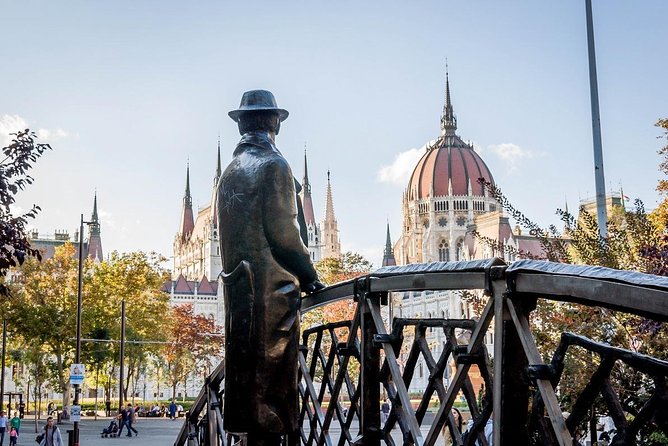
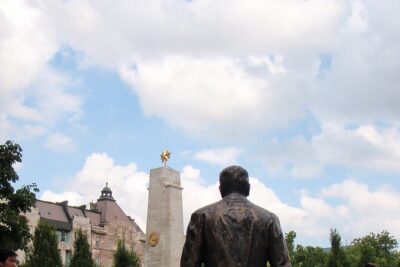
The Reagan statue receives its own stop, lasting about 10 minutes. Its presence in Budapest reflects Hungary’s sense of gratitude toward Reagan for his role in bringing down the Iron Curtain.
This is a quick stop, but it helps show how public memory changes. A statue is not only a likeness of a person. It also tells you who a country chooses to honor and what political story it wants to keep visible.
The guide can place Reagan’s image beside the Soviet memorial and the nearby American diplomatic presence. That contrast makes the square more interesting than a standard Cold War lecture. You see how Hungary’s past and present are represented side by side.
If you want a long political discussion at every monument, the short timing may feel limited. If you prefer a moving tour with several sharp examples, the 10-minute stop keeps the pace brisk.
More walking tours in Budapest:
- Budapest: Buda Castle Walk with Saint Stephen’s Hall
★ 4.5 · 3,012 reviews - Big Bus Budapest Hop-On Hop-Off Bus and Walking Tour
★ 3.5 · 2,206 reviews - Budapest: Buda Castle District Walking Tour
★ 4.6 · 2,108 reviews - Budapest City Landmarks Walking Tour in 2 Hours
★ 5.0 · 2,048 reviews
Puskás Ferenc Stadium and socialist-realist propaganda
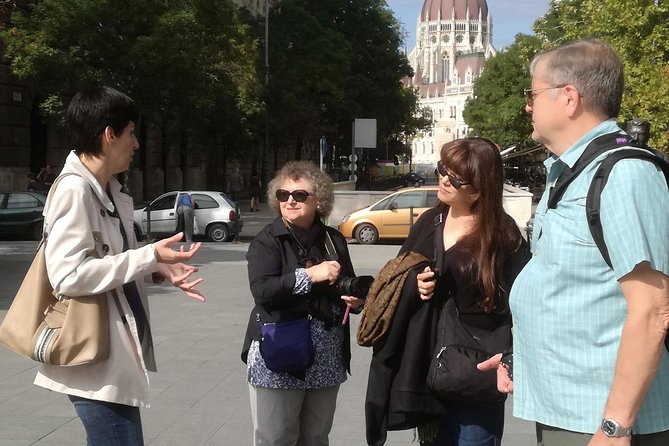
The former People’s Stadium, now Puskás Ferenc Stadium, shows how the communist state used sport and public art to promote its message.
The tour stops for about 20 minutes to look at the classic socialist-realist statues that remain near the stadium. Their style is forceful and deliberate, presenting idealized strength, discipline, and collective purpose. The figures were not placed merely to decorate the grounds. They helped project the values favored by the regime.
This is one of the more visual parts of the walk. You do not need a specialist background in art to see the heavy-handed quality of the imagery. The guide explains how propaganda worked through public places, not only through newspapers or political speeches.
The stadium is now associated with Hungarian football and the name of Ferenc Puskás, but the older statues preserve another layer of its identity. That contrast makes the stop worthwhile. You see how a public site can carry several political meanings over time.
Admission is free, and the stop is short enough that it does not turn the tour into a long museum-style lecture.
Outside the House of Terror Museum
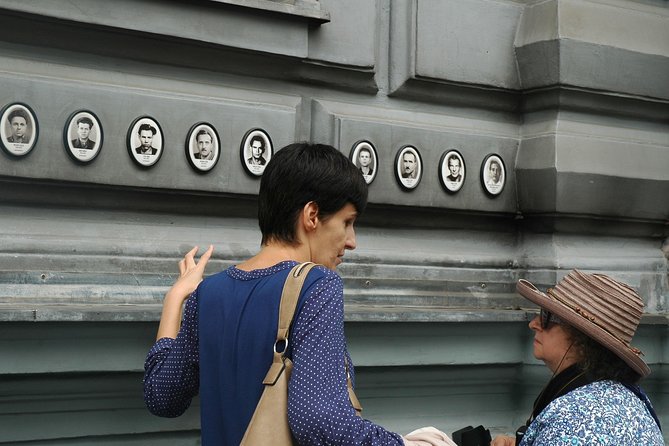
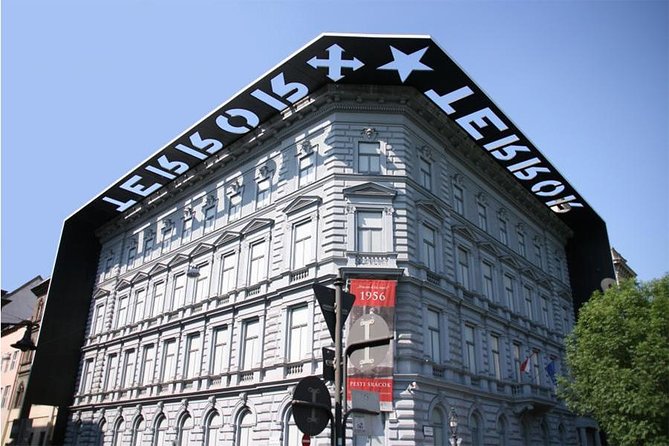
The tour concludes at the House of Terror Museum on Andrássy Avenue, in the former headquarters of Hungary’s communist secret services. A section of the Berlin Wall is displayed in front.
The building itself is an important part of the story. Ending here gives the walk a clear final point: you move from public squares and official monuments to a place connected with surveillance, imprisonment, and state control.
The museum interior is not included. That is both a limitation and a useful choice. You are not forced to spend extra time or money if you have had enough history for one afternoon. If the subject has caught your attention, you can continue on your own with a separate admission ticket.
Plan your day around that option. The tour does not include a guided visit inside, and the stated endpoint is outside the building. You may want to keep the rest of your schedule flexible if you hope to see the exhibits afterward.
What the guide adds to the experience
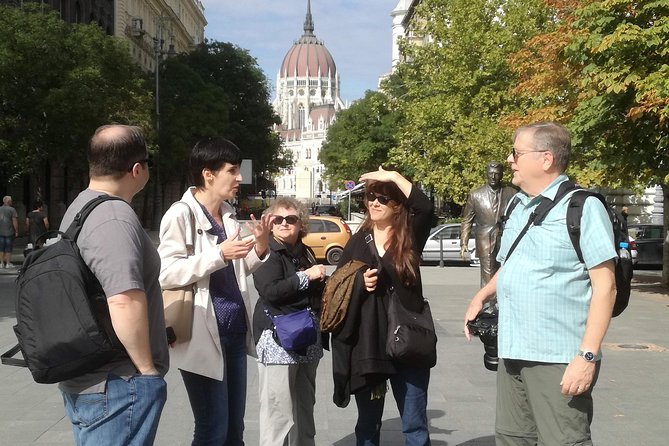
The guide makes the difference here. This subject can become a list of dates and political terms, but a good historian connects the places to real choices and pressures.
Andras is praised for detailed answers and wide-ranging discussion. Kata is also singled out for presenting the period clearly and helping people understand what life under communism felt like. The guides are local historians and enthusiastic hosts, and the format allows questions rather than forcing you through a fixed speech.
That matters because Hungary’s twentieth-century history has many difficult layers. The tour covers the 1956 uprising, Soviet influence, Cold War rivalry, propaganda, and the end of communist rule. You will get more from it if you arrive ready to ask about links between those subjects.
The group is small, with a maximum of eight people. The smaller setting should make it easier to hear the guide, pause at monuments, and take part in discussion. It also means the experience is more personal than a large city walk, but you should not expect the freedom of exploring alone.
Three hours, two departure choices, and the walking pace
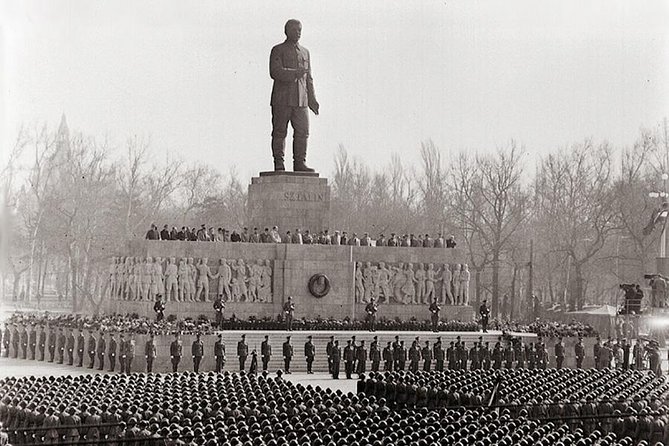
The experience lasts about three hours and offers a morning or afternoon departure. That flexibility makes it easy to fit around other Budapest plans.
You should wear good walking shoes and bring water. One three-hour route can cover a lot of ground, and the itinerary includes several outdoor stops plus metro travel. The tour is near public transportation, and most people can participate, but it is still wise to consider your comfort with standing and walking.
The pace is designed to cover several areas rather than spend an hour at one location. Stops range from about 10 to 25 minutes. That keeps the tour moving, although people who want long periods for photography or quiet reflection may find some locations brief.
The route ends at the House of Terror instead of returning to the starting point. That is helpful if you plan to visit Andrássy Avenue afterward, but it means you should plan your next stop from the museum rather than from Frankel Leó út.
Is $126.50 a fair price?
At $126.50 per person, this is not a budget walking tour. You are paying for a specialized subject, a historian-led experience, a small group, and a route that uses public transportation to connect several parts of Budapest.
The value depends on how much you want interpretation. The outdoor monuments themselves are free, and metro or tram tickets are not included. If you only want to see the Soviet memorial, Parliament, or the Reagan statue, you can visit those sites without booking a tour.
I think the price makes more sense for you if you want to understand what you are seeing. A strong guide can save you hours of reading and help connect places that otherwise seem unrelated. The group limit also gives you a better chance to ask questions about Hungary’s political past.
This is less appealing if you prefer a low-cost orientation walk or a tour packed with interiors and major attractions. The House of Terror admission is extra, and Parliament is viewed from the outside.
Who should book this experience?
I would choose this tour if you have already seen some of Budapest’s main sights and want to understand the forces that shaped the city in the twentieth century.
It suits:
- People interested in the Cold War and the 1956 uprising
- Visitors who prefer local history to standard sightseeing
- Anyone who wants a historian-led discussion
- First-time visitors who want context for Budapest’s monuments
- People comfortable with a three-hour walk that includes metro travel
- Those who may want to visit the House of Terror afterward
I would skip it if your main goal is architecture, shopping, food, or a quick overview of Budapest. The focus is firmly on communism, political memory, propaganda, and life during the Cold War.
The strongest part is the connection between places. Parliament, Freedom Square, Puskás Stadium, Bem József Square, and the House of Terror do not look like one story at first. The guide shows you how they fit together.
Practical details before you book
The tour is offered in English and can be booked by mobile ticket. Group discounts are available, and the experience is often reserved about 27 days ahead, so booking early may be sensible if your dates are fixed.
Free cancellation is available up to 24 hours before the start time. If you cancel or request changes inside that 24-hour window, you should not expect a refund or an accepted change.
The meeting point is Frankel Leó út 2-4, and the endpoint is the House of Terror Museum at Andrássy út 60. Since the walk does not return to its starting point, check your plans for the rest of the day before choosing a morning or afternoon departure.
Should you book the Communist Budapest Walking Tour?
Book it if you want Budapest’s communist past explained by a historian rather than simply photographed. The small group, strong guides such as Andras and Kata, and carefully chosen sites make this a focused way to understand 1956, Soviet influence, Cold War fears, and propaganda.
Skip it if you want a relaxed city stroll with little discussion, or if the $126.50 price feels high for mostly outdoor sites. For the right audience, though, the tour turns scattered monuments into a clear story and ends at the House of Terror, where you can continue the subject on your own.
FAQ
How long is the Communist Budapest Walking Tour?
The tour lasts approximately three hours.
What language is the tour offered in?
The tour is offered in English.
Where does the tour start?
The meeting point is Budapest, Frankel Leó út 2-4, 1027 Hungary.
Where does the tour end?
The tour ends outside the House of Terror Museum at Andrássy út 60, 1062 Budapest.
Is admission to the House of Terror Museum included?
No. The tour concludes outside the museum, and admission to the exhibits is not included.
Are public transportation tickets included?
No. If you do not already have a visitor pass, you need Budapest tram or metro tickets. The guide can help you purchase them.
How many people can join the tour?
The activity has a maximum of eight participants.
Can I cancel for a full refund?
Yes, if you cancel at least 24 hours before the experience start time. Cancellations or changes made less than 24 hours before the start time are not accepted for a refund.
Just added around Budapest
- Budapest: Private, Personalized Pub Crawl, 3 drinks included★ 4.5 · 3 reviews
- Private day trip from Budapest to Bratislava, Vienna, and back★ 3.5 · 3 reviews
- Budapest: Private Adventure Sightseeing Bicycle Tour★ 4.5 · 3 reviews
- Private Danube Bend tour – full day★ 4.5 · 3 reviews
- Budapest: Guided City Walking Tour in Buda and Pest★ 5.0 · 3 reviews
- Budapest Old Jewish Quarter History Private Walking Tour★ 5.0 · 3 reviews
- Lake Balaton Full Day Private Wine Tour★ 5.0 · 3 reviews
- Budapest Urban Feast – Food Tour with Wine Tasting & Coffee House★ 4.5 · 3 reviews
Communist History Tours, compared.
Communist History Tour with House of Terror Option
Read our review →
3-Hour Walking Tour About Communism (Small Group)
Read our review →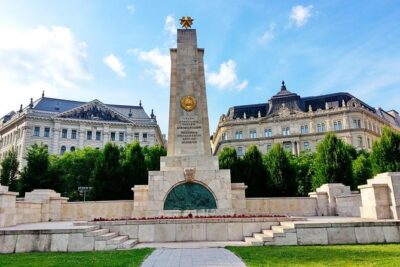
Lives of Hungarians Under Communist and Capitalist system
Read our review →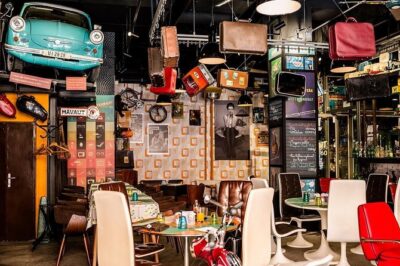
Private Budapest Hammer & Sickle Communist Times Tour
Read our review →
Communist History Evening Walking Tour of Budapest
Read our review →Browse the lists this tour appears in