
Reviewed · COMMUNIST HISTORY TOURS
Communism in Hungary with a Historian
Communist Budapest is best understood through the ordinary details: who got an apartment, who feared being reported, what happened to a family business, and how people kept religious life alive under party rule. This walking tour connects those personal stories to Elizabeth Square, Liberty Square, and Parliament, rather than treating communism as a string of dates.
I like the small group limit of 10, which gives you room to ask questions, and I like the final stop at Bambi Café, a Communist-era hangout where coffee helps tie the afternoon together. The main drawback is that this is chiefly an outdoor walking tour, and several sites are viewed from outside, so cold or wet weather can affect the experience.
Key points to know before booking
- Personal stories are central: Guides such as Raymond, Gábor, Greg, András, and Virág use family experiences to explain national events.
- The route crosses both sides of Budapest: You begin in Pest, use the metro, and usually finish in Buda near Margaret Bridge.
- Parliament is viewed from the outside: The stop focuses on the 1956 Bloody Thursday massacre on Kossuth Square, not an interior visit.
- A Communist-style café completes the afternoon: Bambi Café dates from 1961 and has kept much of its old character.
- The group is capped at 10 people: That matters on a history tour, since questions and discussion are part of the appeal.
- Metro tickets and coffee are included: You do not need to arrange the short public transport connection yourself.
Why this tour makes Communist Budapest easier to understand
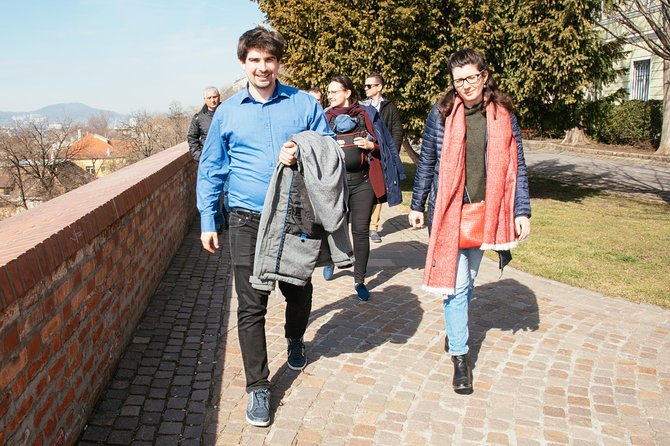
A standard city tour can show you grand buildings, river views, and famous monuments. This one asks a different question: how did political power change daily life in Hungary?
That shift is the tour’s strength. You hear about nationalization, housing controls, church restrictions, work, education, fear of informants, and the compromises people made to get through the day. The subject is serious, but the guides present it as a conversation rather than a classroom lecture.
Personal history gives the subject weight. Raymond, for example, explains how his family’s business was taken by the state. His grandfather was then made to work in the same factory for low pay, under a party loyalist with little practical experience. The family also lost apartments and was assigned to poorer housing shared with another family.
Details like this help you see communism as a system that reached into kitchens, workplaces, churches, and bedrooms. You are not simply hearing that private property was restricted. You are hearing what that policy could mean for one household.
The guides also try to explain the period without turning it into a simple good-versus-bad story. Gábor has been praised for presenting Hungary’s past in an honest and balanced way, while András links the Communist era to the years before and during the Second World War. That wider frame matters, since postwar communism did not appear out of nowhere.
More communist-era history walks:
- Budapest: Communist History Tour with House of Terror Option
★ 4.8 · 182 reviews - Budapest: 3-Hour Walking Tour About Communism (Small Group)
★ 4.7 · 70 reviews - Budapest Hammer & Sickle Communist Times Tour
★ 4.5 · 68 reviews
Elizabeth Square: beginning where symbols once changed
The tour meets at 2:00 p.m. outside the Kempinski Hotel Corvinus Budapest at Elizabeth Square. The location is central and easy to reach by public transport, making it a practical starting point for an afternoon activity.
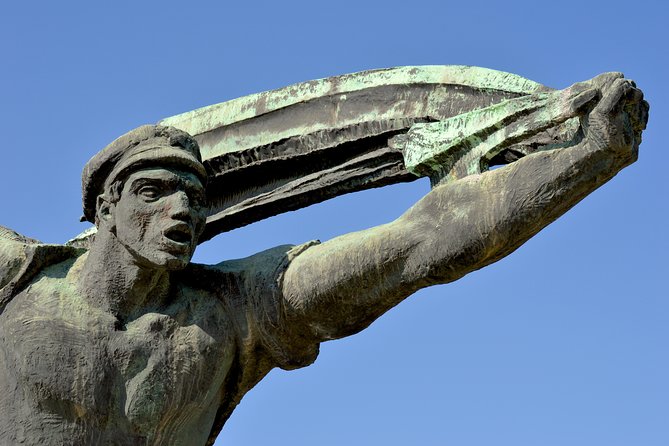
Elizabeth Square was once known as Stalin Square. You spend about 15 minutes here discussing its monuments and the political messages attached to public spaces. That opening sets the tone: Budapest’s streets are not just pretty scenery. Names, statues, and squares have been changed, removed, or reinterpreted as governments changed.
This is a short stop, but it gives you a useful habit for the rest of the walk. Look at what a monument celebrates, who placed it there, and what later generations chose to keep. The guide’s story does more than point out a statue. It explains how public memory was managed.
You also receive the metro tickets needed during the tour. That is a small but helpful touch. You can focus on the discussion instead of working out the Budapest transport system while the group moves on.
St. Stephen’s Basilica: religion under party rule
The walk continues to St. Stephen’s Basilica, where the guide discusses churches and religious life under communism. The basilica is seen from outside, and the tour does not include admission into the church.
That limitation is worth noting if you were hoping for an architectural visit. The focus here is not the dome, interior decoration, or formal church tour. Instead, you hear how religious institutions and families dealt with a government that promoted atheism and kept a close watch on independent organizations.
Family stories make this section more human. Guides have discussed the ways churches survived, including the difficult compromises made under party pressure. The subject can be uncomfortable, and that is precisely why it adds value to the walk. You begin to see faith not only as a private belief, but also as a social institution trying to preserve its place.
The stop lasts about 15 minutes. It is a discussion point, not a long sightseeing break, so you should keep your expectations clear.
Liberty Square: monuments, embassies, and a bunker
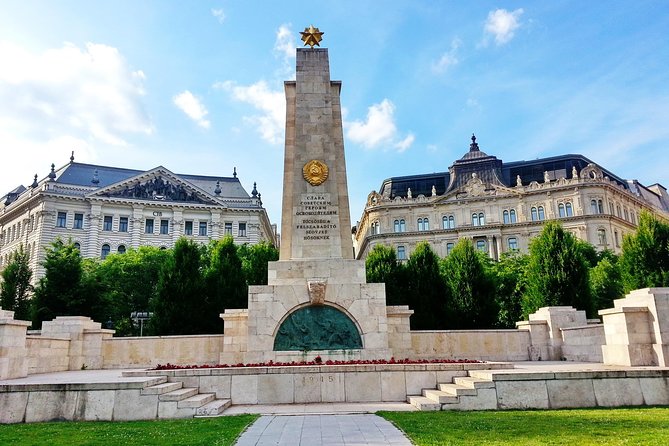
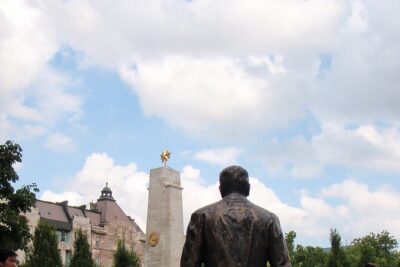
Szabadság tér, or Liberty Square, is the heart of the outdoor history portion. You spend about 45 minutes here, examining memorials, statues, embassies, and part of a bunker visible from the outside.
This square works well because several layers of twentieth-century politics sit close together. The guide uses the physical setting to explain how power was displayed and contested. A statue can honor one side of a conflict, while another monument nearby challenges that version of events. Embassies add another reminder that Hungary’s political story was tied to larger powers.
The bunker fragment is not a conventional museum visit. You do not go inside, based on the stated route, but seeing the remains from the street gives the discussion a physical anchor. It is easier to picture the tense years of occupation, war, and political control when the evidence is part of the pavement and buildings around you.
This is also where a strong guide earns the fee. The setting has plenty of plaques and monuments, but plaques rarely explain how people experienced events. Guides including Virág, who has studied the Communist era closely, and Raymond, who brings family experience into the talk, help connect public history to private life.
Same city, a completely different way to spend an afternoon:
- Budapest: City Highlights Cruise with Welcome Drink
★ 4.6 · 35,610 reviews - Budapest: Unlimited Prosecco, Beer and Aperol Spritz Cruise
★ 4.8 · 25,310 reviews - Budapest: Széchenyi Spa Day Ticket with Optional Upgrades
★ 4.3 · 23,911 reviews - Budapest: Nighttime or Daytime Sightseeing Cruise
★ 4.2 · 21,062 reviews
Parliament and Bloody Thursday
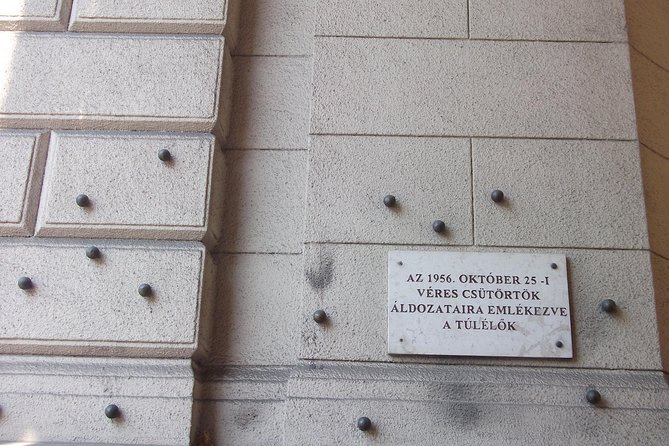
At the Hungarian Parliament Building, the tour focuses on one of the most painful moments of the 1956 Revolution: Bloody Thursday on Kossuth Square.
You view Parliament from outside, and admission is not included. Again, this is a historical stop rather than a building tour. The guide explains what happened in the square and why the event became such an important part of Hungary’s revolt against Soviet-backed rule.
This stop helps place the Communist period in sequence. The tour is not limited to the calmer years of state socialism. It also covers resistance, violence, and the desire for freedom that shaped Hungary’s modern identity.
I would pay close attention here, since the meaning of Parliament changes depending on the story being told. It can look like a grand symbol of government on a typical sightseeing walk. In this context, the square becomes a place of protest, danger, and national memory.
The route does not promise an interior visit, so combine this tour with a separate Parliament admission if seeing the building inside is important to you.
Crossing to Buda and ending at Bambi Café
The final part usually takes you across the Danube to Buda, ending at Bambi Café on Frankel Leó út, near central Buda and Margaret Bridge. Coffee is included.
Bambi is a particularly good ending because it is not a polished museum recreation. The café opened in 1961 and has changed little over the years. It gives you a chance to sit down and discuss what you have seen in a setting tied to the period itself.
The café stop is also where the tour becomes less formal. You can ask about modern Hungarian politics, current events, or anything that did not fit neatly into the walking route. Daniel, one of the people involved with the tour team, is known for encouraging broad political discussion, though the conversation remains separate from the formal route.
In cold or wet weather, the ending often shifts to the Pest side, closer to the starting point. That is sensible, but it means you should not treat Bambi Café as guaranteed in every condition. If the café is a major reason for booking, check the plan on the day.
Some accounts of the tour also refer to an old terminal or train station as part of the Communist-era setting. The exact route can vary with weather and the guide, so think of the experience as a guided walk through connected sites rather than a fixed museum itinerary.
The guides and the value of a small group
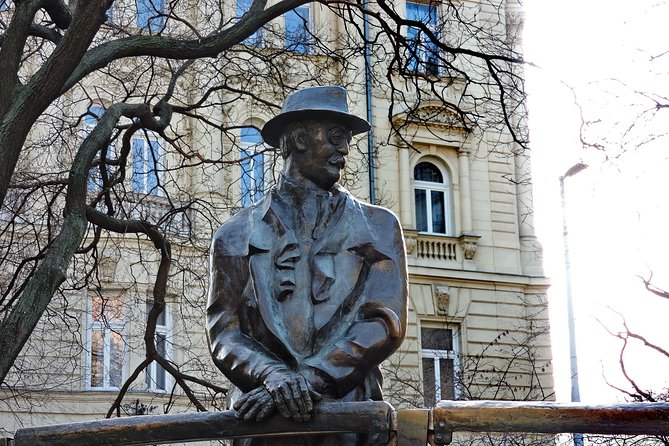
The tour is offered in English and is limited to 10 people. For this subject, the group size matters more than it would on a simple orientation walk.
You will likely have more chances to ask about family life, housing, work, religion, education, or the secret police. The guide can adjust the pace and explain a point again without addressing a crowd of 30 people.
Several guides are associated with the experience. Judit is praised for warm storytelling and for answering questions carefully. Gabriel, also called Gábor in Hungarian, is described as patient and enthusiastic, even in rain and cold. Greg is particularly effective for visitors who want a conversational afternoon, while András brings a wider view of the wartime and prewar background.
Virág is a strong fit for people who want more academic detail. She studied the Communist era and wrote a thesis on the subject. Raymond’s family accounts offer a different kind of authority, rooted in what nationalization and housing controls did to his relatives.
You cannot necessarily choose among these guides when booking. Still, the range of names gives you a sense of the team’s approach: history, personal testimony, political context, and room for questions.
Is $59.13 a fair price for three hours?
At $59.13 per person, this is not the cheapest walking tour in Budapest. You are paying for a specialized subject, a small group, an English-speaking historian or history-focused guide, metro tickets, and coffee.
I think the value is good if you have already seen the major sights and want help making sense of Hungary’s twentieth century. A three-hour private guide would cost much more, while a large group tour would usually offer less room for discussion.
The price is harder to justify if you want a general introduction to Budapest, lots of interiors, or a fast checklist of famous attractions. This tour spends time on explanation, context, and personal stories. That means fewer conventional sightseeing stops, but more attention to how the city’s past affected real households.
The tour is often booked about 23 days in advance, so it is wise to reserve ahead if your dates are fixed. Free cancellation is available up to 24 hours before the 2:00 p.m. start time. Changes or cancellations inside that window are not accepted for a refund.
Who should book this Budapest history walk?
I would recommend it to you if:
- You want to understand Hungary beyond its churches, cafés, and grand architecture.
- You are interested in the Cold War, the 1956 Revolution, or life under a one-party state.
- You prefer a small group where questions are welcome.
- You value personal stories as much as dates and political labels.
- You have already taken a general Budapest tour and want a more focused subject.
- You are comfortable walking outdoors for most of three hours.
It is also a good choice for families with older teenagers who can follow a serious political story. The guides explain difficult events in accessible English, and one Japanese-speaking participant specifically appreciated the slow, clear delivery.
I would choose another activity if you need an indoor tour, have limited walking ability, or mainly want to see the inside of Parliament and St. Stephen’s Basilica. Neither interior visit is part of this experience.
Should you book Communism in Hungary with a Historian?
Book it if you want Budapest’s streets to explain more than architecture. The best parts are the small group, the personal family accounts, the discussion of 1956, and the unusual finish at Bambi Café.
Go in expecting an outdoor history walk, not a museum tour. Wear suitable shoes, allow for changing weather, and remember that the final café stop may move to Pest on a wet or cold day.
For $59.13, I see this as a worthwhile specialist tour, especially early in your Budapest stay if you want a stronger framework for understanding the city. If your interest is only casual, the subject may feel more serious than you want on a holiday afternoon. If modern Hungarian history matters to you, this is one of the more useful ways to encounter it.
FAQ
Where does the tour start?
It starts at Kempinski Hotel Corvinus Budapest, Erzsébet tér 7-8, 1051 Budapest.
What time does the tour begin?
The scheduled start time is 2:00 p.m.
How long does the tour last?
The experience lasts about three hours.
What language is the tour offered in?
The tour is offered in English.
How many people can join the tour?
The group has a maximum of 10 travelers.
Are metro tickets included?
Yes. Metro tickets used during the tour are included.
Is coffee included?
Yes. Coffee is included at the usual final stop, Bambi Café.
Does the tour go inside Parliament?
No. The Parliament stop focuses on the exterior and the events of Bloody Thursday on Kossuth Square. Admission inside is not included.
Does the tour go inside St. Stephen’s Basilica?
No. The basilica is viewed from outside, with discussion of churches and religious life during communism.
Where does the tour end?
It usually ends at Bambi Café on Frankel Leó út in Buda, near Margaret Bridge. On colder or wet days, it often ends on the Pest side near the starting area.
Just added around Budapest
- Budapest: Private, Personalized Pub Crawl, 3 drinks included★ 4.5 · 3 reviews
- Private day trip from Budapest to Bratislava, Vienna, and back★ 3.5 · 3 reviews
- Budapest: Private Adventure Sightseeing Bicycle Tour★ 4.5 · 3 reviews
- Private Danube Bend tour – full day★ 4.5 · 3 reviews
- Budapest: Guided City Walking Tour in Buda and Pest★ 5.0 · 3 reviews
- Budapest Old Jewish Quarter History Private Walking Tour★ 5.0 · 3 reviews
- Lake Balaton Full Day Private Wine Tour★ 5.0 · 3 reviews
- Budapest Urban Feast – Food Tour with Wine Tasting & Coffee House★ 4.5 · 3 reviews
Communist History Tours, compared.
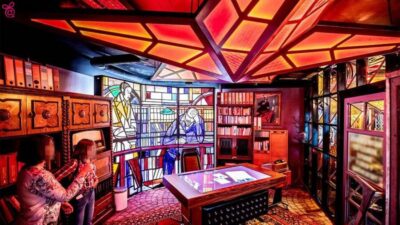
Communist History Tour with House of Terror Option
Read our review →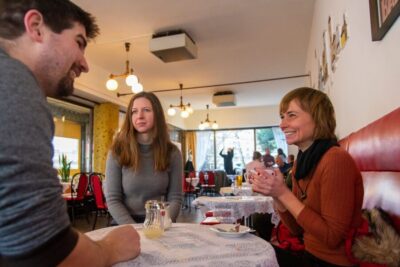
3-Hour Walking Tour About Communism (Small Group)
Read our review →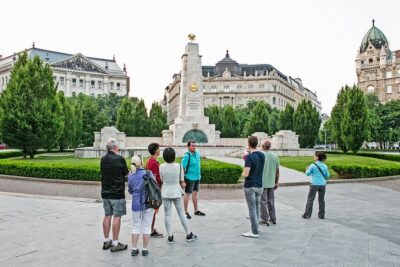
Lives of Hungarians Under Communist and Capitalist system
Read our review →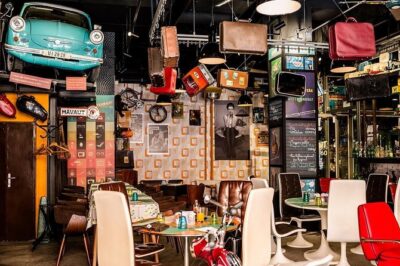
Private Budapest Hammer & Sickle Communist Times Tour
Read our review →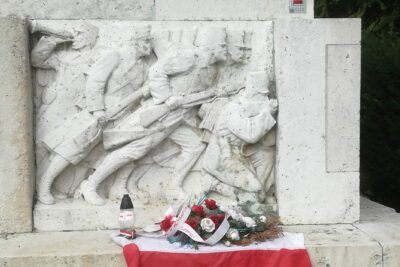
Communist History Evening Walking Tour of Budapest
Read our review →Browse the lists this tour appears in