
Reviewed · COMMUNIST HISTORY TOURS
Communist Budapest Walking Tour
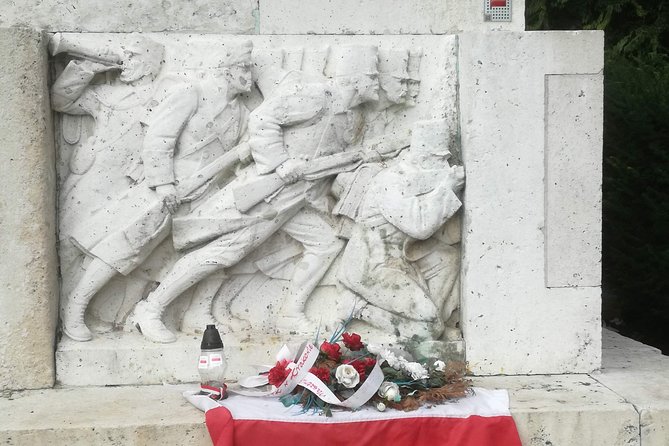
Budapest’s communist past is easiest to understand when you see it in the streets, not just behind museum glass. This 3-hour tour links the first 1956 demonstration at Bem József Square with Parliament, Cold War symbols at Freedom Square, drab-but-prized housing blocks, and the heroic statues around the former People’s Stadium.
I like the way the route shows both oppression and ordinary progress, including the small freedoms of Goulash Communism and the modern conveniences that made a 1970s apartment desirable. I also like the use of old photographs on an iPad, which helps you see how Stalin-era Budapest looked. The main drawback is that the tour can feel light for anyone already familiar with Hungarian communism, and your public transport tickets cost extra.
Key points to know before you book
- The route connects the 1956 uprising to daily life: You see protest sites, political monuments, housing blocks, and parade routes rather than only formal memorials.
- Your guide is a historian or similar specialist: Guides may be professors, doctoral students, historians, journalists, art critics, or published authors.
- The tour uses Budapest’s transport system: You travel by metro and Stalin-era trolley bus, with tram and metro tickets not included.
- The 1970s housing estate adds social context: Its grey blocks show why a state-issued apartment could feel like a major prize to a young family.
- Freedom Square packs the Cold War into one stop: The U.S. embassy, Soviet monument, Reagan statue, and atomic shelter entrance sit close together.
- The experience suits beginners best: It gives a clear introduction, while people with strong prior knowledge may want more detail on the transition to democracy.
Why this tour works better than a museum visit alone
Communist Budapest can be hard to read at first. A broad boulevard may look like just another city street. A concrete housing block may seem bleak. A statue of a worker or soldier can blend into the background.
The value here is the connection between place and event. Your guide explains what happened at each stop, then shows how those political decisions shaped ordinary life. You are not simply hearing about the 1956 revolution, Stalinist control, or Goulash Communism as separate subjects. You are moving through the city where those forces played out.
The phrase Goulash Communism refers to the system that gave Hungarians limited personal and consumer freedoms in exchange for obedience on major political matters. That bargain is central to the tour. Budapest under communism was not presented as a simple story of misery from beginning to end. It was a period of fear, compromise, adaptation, progress, and frustration.
That balance makes the experience useful. You learn why people could be pleased to receive a new apartment while still living under a repressive political system. You also see why the Hungarian path toward the end of communism felt more evolutionary than revolutionary than the events in some neighboring countries.
More communist-era history walks:
- Budapest: Communist History Tour with House of Terror Option
★ 4.8 · 182 reviews - Communism in Hungary with a Historian
★ 5.0 · 70 reviews - Budapest: 3-Hour Walking Tour About Communism (Small Group)
★ 4.7 · 70 reviews
Bem József Square and the first great protest
The meeting point is Bambi Espresso, at Frankel Leó út 2/4, near Bem József Square. This is a fitting start because the square hosted the first large demonstration of the 1956 uprising.
Your guide begins with the political meaning of the place, then helps you picture the crowd and the pressure building around the revolution. This opening gives the rest of the tour a clear starting point: Hungary’s challenge to the existing system was not an abstract political debate, but a public movement that filled city streets.
One pleasant detail here is a coffeehouse that has kept its original 1960s interior. It offers a small but useful glimpse into daily life. Instead of seeing the communist period only through monuments and violence, you get a sense of the spaces where people drank coffee, met friends, and carried on with ordinary routines.
The square is also a good place to ask questions. If you already know the basic story of 1956, ask how the uprising is remembered in Budapest or how the official version changed over time. If you know little about the period, this is where the guide can establish the basic political background before the route moves toward Parliament.
Kossuth Square and the wounds of 1956
From Bem József Square, you take the metro to Kossuth Square. The transport ride is part of the experience, but you need to buy your own metro and tram tickets.
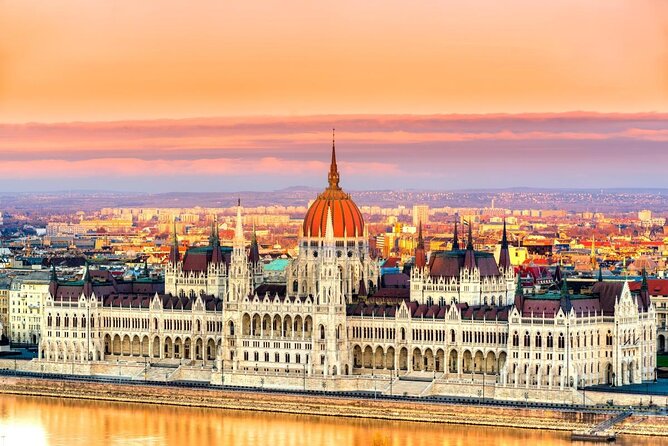
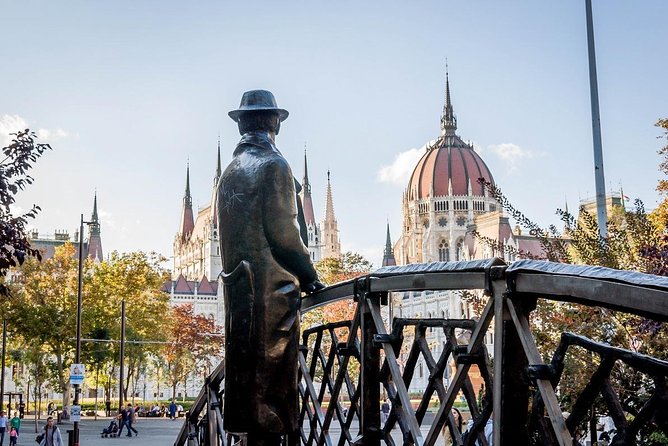
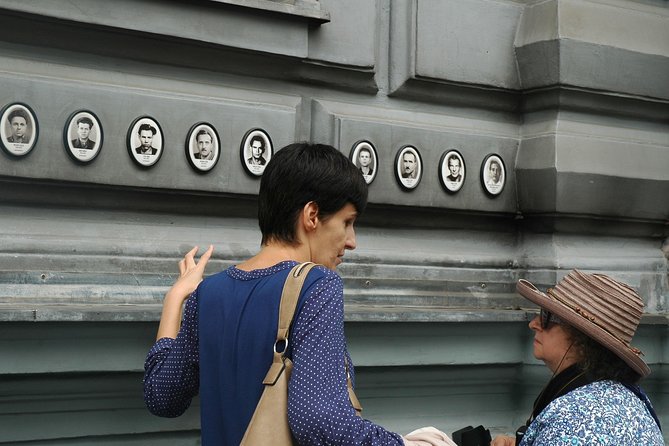
Kossuth Square, in front of Parliament, was the site of major political events during the 1956 revolution. Here, monuments and memorials point to the political and armed conflicts that marked the uprising. The grand setting of Parliament contrasts with the violence and uncertainty tied to the square.
This stop helps you understand the importance of public space in a one-party state. A demonstration in front of Parliament was not merely a gathering. It challenged authority in a visible and dangerous way.
The square is likely to work best for you if your guide takes time to explain what each monument represents. The buildings and open space are impressive, but the meaning is not always obvious from a quick glance. This is one reason a specialist guide matters more here than a standard city walk.
The experience is offered privately or in a small group, which can make a difference at stops like this. You have a better chance to ask about the memorials, the revolution, and the way Hungary’s political story fits into the wider Cold War.
Freedom Square’s four Cold War symbols
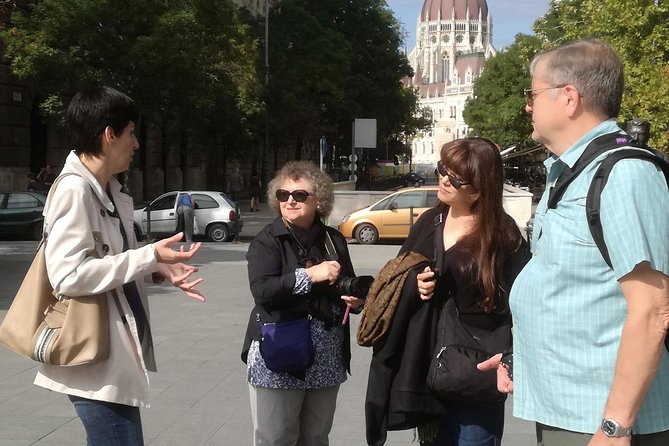
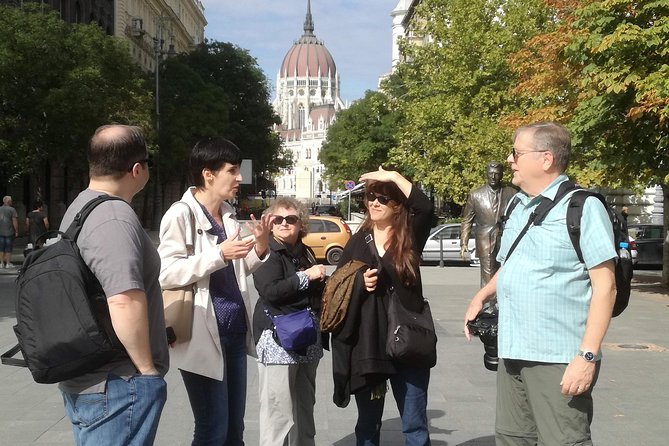
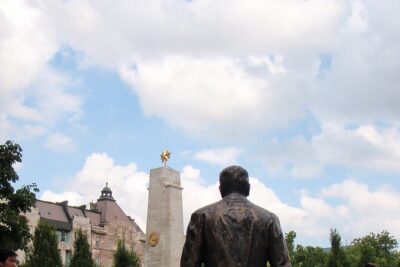
A short walk takes you to Freedom Square, where four structures bring different sides of the Cold War into one compact area: the U.S. embassy, a monument to the Soviet army, a statue of President Ronald Reagan, and the entrance to a secret atomic shelter.
The arrangement is unusually direct. You can look at the Soviet presence, American protection, political memory, and fear of nuclear war within the same short walk. It is a useful lesson in how Budapest remembers competing powers and competing versions of the past.
The atomic shelter entrance adds an unsettling practical note. It reminds you that Cold War politics was not only about speeches and flags. It also shaped how people thought about survival and possible attack.
This section should appeal to anyone who likes political history presented through physical evidence. You do not need to know every detail in advance. The guide’s job is to explain why these particular objects matter together.
More walking tours in Budapest:
- Budapest: Buda Castle Walk with Saint Stephen’s Hall
★ 4.5 · 3,012 reviews - Big Bus Budapest Hop-On Hop-Off Bus and Walking Tour
★ 3.5 · 2,206 reviews - Budapest: Buda Castle District Walking Tour
★ 4.6 · 2,108 reviews - Budapest City Landmarks Walking Tour in 2 Hours
★ 5.0 · 2,048 reviews
The 1970s housing blocks and Goulash Communism
The route then heads by metro to a housing estate on the edge of the city center. This is one of the most valuable parts of the tour because it moves away from famous political sites and shows how the system affected homes, families, and expectations.
Today, the housing blocks may look plain and grey. In the 1970s, however, a young Hungarian family could be delighted to receive an apartment there. Older Budapest buildings lacked some of the elevators and modern conveniences that came with these newer blocks.
That contrast is the heart of the stop. The buildings were part of a controlled system, but they also represented genuine material progress for many residents. A new apartment could mean more comfort, better facilities, and a break from older housing conditions.
This is where the idea of Goulash Communism becomes easier to grasp. The state could offer practical improvements and a modest private life while keeping tight control over major political questions. The result was neither complete freedom nor constant revolutionary turmoil.
You should not expect an architectural showcase. The housing estate is valuable because it is ordinary. It gives the tour a chance to talk about daily life rather than only leaders, uprisings, and monuments.
Puskás Stadium and Socialist Realist sculpture
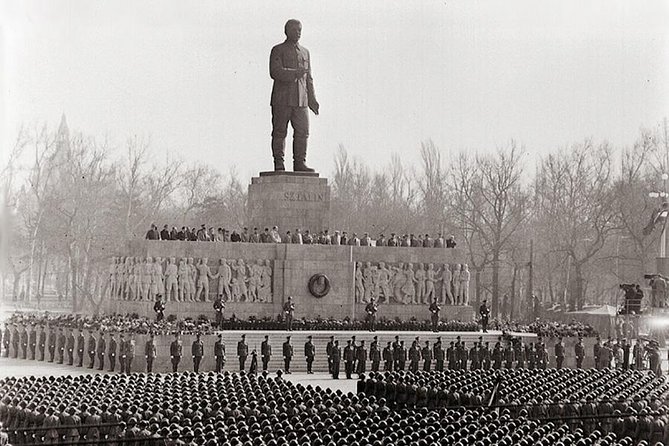
The former People’s Stadium, now Puskás Soccer Stadium, provides one of the clearest collections of Socialist Realist statues in the city. The figures show heroic workers, soldiers, and intellectuals, all pointing toward a supposedly bright future.
These sculptures were designed to communicate a political message through idealized bodies and confident poses. They are not subtle. That is precisely why they are useful. You can see how the state wanted citizens to picture labor, military service, education, and collective progress.
The stadium site also connects politics with public spectacle. Large venues and broad avenues were useful settings for mass events, ceremonies, and demonstrations of unity. The statues and stadium help explain how the government presented its version of the future in physical form.
Your guide uses an iPad and old photographs to compare present-day Budapest with the city during Stalin’s era. This visual contrast should help you notice changes that are easy to miss while walking. A modern street may occupy the same space as a former parade route, but an old photograph can reveal the banners, crowds, and monumental staging that once dominated it.
A Stalin-era trolley bus and the May Day boulevard
The tour includes a short ride on one of Stalin’s trolley buses to Dózsa György Street. The ride breaks up the walking and adds another everyday detail to the story.
Dózsa György Street was used for May Day parades, and its broad scale makes more sense when you understand its ceremonial purpose. This was a boulevard for mass display, not just a route for getting from one neighborhood to another.
The old photographs are especially helpful here. You can compare the present appearance of the street with its Stalin-era use and see how political theater shaped the city. The guide may also adjust the discussion to your interests. Andras, one guide named in the tour information, is described as taking a conversational approach and adapting the route when participants had already seen some of the main sites.
That flexibility is worth having on a history tour. You may know the basic events but want more on housing, propaganda, or everyday life. Or you may arrive with almost no background and need the story explained in plain terms.
The House of Terror and the weight of memory
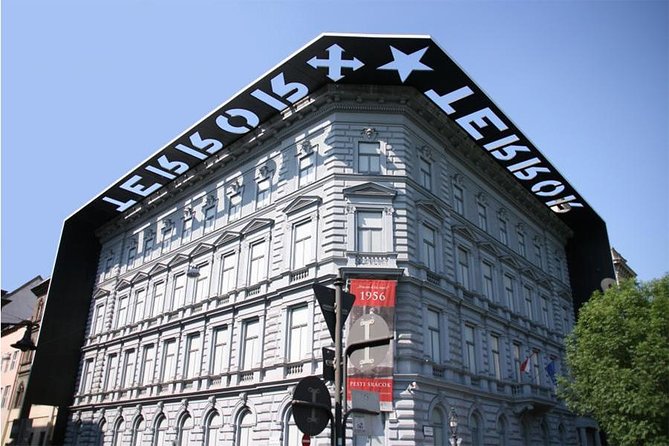
The final stop is the House of Terror, located in the former headquarters of the secret services. The museum commemorates the crimes of communism, with particular attention to the Stalinist years.
The tour does not include entry to the museum, so think of this stop as an exterior conclusion rather than a full museum visit. In front of the building is a section of the Berlin Wall, a fitting reminder that communist rule in Central Europe was part of a wider political order.
Ending here gives the route a darker tone. Earlier stops show how the system operated in public spaces, homes, transport, and ceremonies. The House of Terror brings the focus back to coercion and state violence.
If you want to visit the museum inside, allow separate time in your Budapest schedule. The walking tour itself lasts three hours, and the supplied information does not include museum admission. The exterior visit still works as a closing point because it ties Hungarian events to the wider collapse of communist rule in Europe.
How much history do you get in three hours?
Three hours is enough to build a strong outline, but not enough to cover every political turn from the end of World War II to 1989 in equal depth. The route includes a lot: the 1956 uprising, Cold War politics, Stalinist public art, housing policy, May Day parades, secret services, and the end of the communist era.
That breadth is a strength for first-time learners. You get several entry points into the subject, and the city itself helps hold the story together.
The tradeoff is depth. If you already know Hungary’s postwar history, you may find parts of the tour familiar. One past participant felt the discussion stayed close to the basics and did not add enough about daily life or the transition to democracy. That is a fair caution, especially if you have already taken detailed communist-era tours in Prague or Berlin.
The experience seems strongest when you use it as an introduction or a way to organize what you already know. Before you go, it helps to decide what you want from the guide. Ask about the 1956 revolution, Goulash Communism, family life, the fall of communism, or the meaning of the statues. A private or small-group format gives you the best chance to steer the conversation.
Price, transport, and practical value
At $123 per person, this is not a bargain city walk. You are paying for a specialist-led experience rather than a simple stroll past landmarks. The value depends heavily on how much you want historical interpretation and whether your group benefits from a private or small-group setting.
The tour includes a 3-hour walking route and a historian guide. It does not include metro or tram tickets. The itinerary also uses a trolley bus, so keep a little extra money available for public transport.
The price is easier to justify if you want an informed conversation with a professor, doctoral student, historian, journalist, art critic, or published author. It is harder to justify if you only want a quick introduction to communist symbols or a photo stop at the House of Terror.
The route involves a fair amount of walking, several public transport rides, and a steady flow of information. One past participant noted feeling tired after the walking and the amount of material. Wear comfortable shoes and avoid placing another demanding activity immediately afterward.
Free cancellation up to 24 hours before the tour and the option to reserve now and pay later make planning less risky. English is the stated language, and starting times vary, so you need to check availability when booking.
Who should book this Budapest history tour?
I would recommend it most strongly to you if:
- You know little about Hungary between the end of World War II and 1989.
- You want to understand how communism shaped ordinary housing and public life.
- You prefer a guide-led explanation to reading plaques on your own.
- You are interested in the 1956 uprising and Cold War politics.
- You enjoy seeing less polished parts of a city, including housing estates and political monuments.
- You want a private or small-group discussion with room for questions.
I would be more cautious if you have already studied Hungarian communism in detail or taken several specialist tours in Prague and Berlin. The experience may not add enough new material unless you request a particular focus.
Its strongest feature is the range of places. You move from a protest square to Parliament, from Cold War symbols to family housing, then from Socialist Realist statues to the former secret-service headquarters. That mix gives you a grounded picture of Budapest under communism.
Should you book the Communist Budapest Walking Tour?
Book it if you want a clear, city-based introduction to Hungary’s communist decades and you value a specialist guide. The housing estate, old coffeehouse interior, trolley bus ride, and Socialist Realist statues give the subject a human scale that a standard sightseeing tour usually misses.
Skip it if you want a highly advanced account of the fall of communism or a museum-heavy experience. At $123, the tour needs to offer more than basic facts for experienced history students.
For most visitors with limited background, the route is a useful way to understand why Budapest’s communist past cannot be reduced to oppression alone. It was also a period of compromise, new apartments, public spectacle, controlled freedoms, and long memories. That tension is what makes the three hours worthwhile.
FAQ
Where does the Communist Budapest Walking Tour start?
The tour starts at Bambi Espresso, Frankel Leó út 2/4, Budapest 1027, Hungary.
How long does the tour last?
The tour lasts three hours.
What language is the tour offered in?
The tour is offered in English.
Who leads the tour?
The guides are professors, doctoral students, historians, journalists, art critics, and published authors.
Is the tour private or shared?
Private and small-group options are available.
Are public transport tickets included?
No. Tram and metro tickets are not included in the price.
Does the tour visit the House of Terror?
The route takes you to the House of Terror, which is housed in the former headquarters of the secret services. Museum entry is not listed as included.
Can you cancel the tour for a full refund?
Yes. You can cancel up to 24 hours in advance for a full refund.
Just added around Budapest
- Budapest: Private, Personalized Pub Crawl, 3 drinks included★ 4.5 · 3 reviews
- Private day trip from Budapest to Bratislava, Vienna, and back★ 3.5 · 3 reviews
- Budapest: Private Adventure Sightseeing Bicycle Tour★ 4.5 · 3 reviews
- Private Danube Bend tour – full day★ 4.5 · 3 reviews
- Budapest: Guided City Walking Tour in Buda and Pest★ 5.0 · 3 reviews
- Budapest Old Jewish Quarter History Private Walking Tour★ 5.0 · 3 reviews
- Lake Balaton Full Day Private Wine Tour★ 5.0 · 3 reviews
- Budapest Urban Feast – Food Tour with Wine Tasting & Coffee House★ 4.5 · 3 reviews
Communist History Tours, compared.
Communist History Tour with House of Terror Option
Read our review →
3-Hour Walking Tour About Communism (Small Group)
Read our review →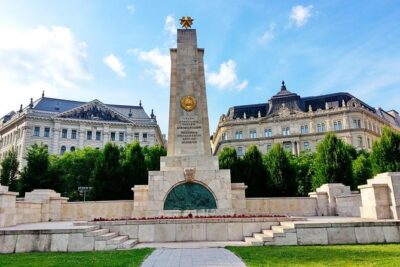
Lives of Hungarians Under Communist and Capitalist system
Read our review →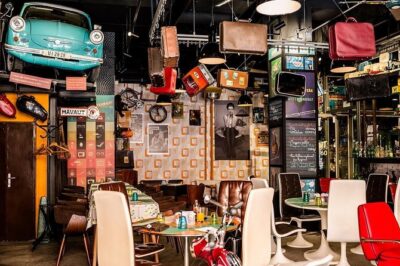
Private Budapest Hammer & Sickle Communist Times Tour
Read our review →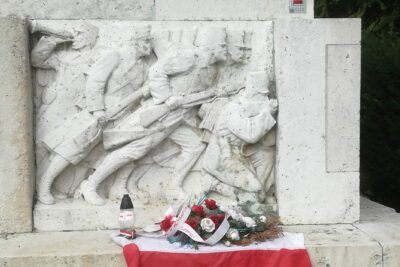
Browse the lists this tour appears in