
Reviewed · COMMUNIST HISTORY TOURS
Born Under The Red Star – Communist tour with Coffee in a Retro Bar
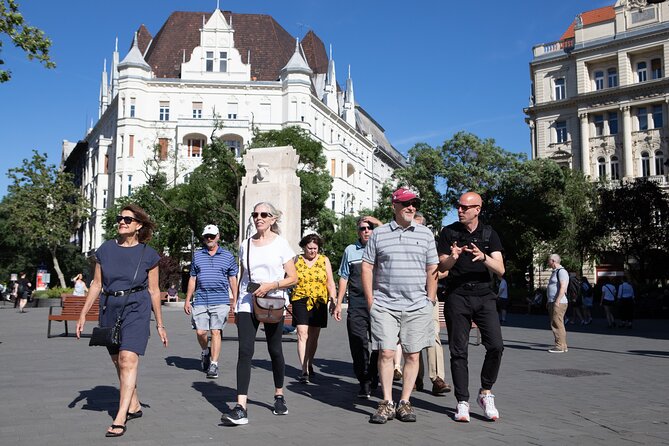
Budapest’s Communist past is easiest to grasp when you see it threaded through ordinary streets and grand public squares. This three-hour walk links Soviet memorials, the House of Terror, the 1956 Revolution memorial, Liberty Square, and Parliament, with a retro soda in a Communist-themed bar along the way.
I like the small maximum group of 15, which gives the guide room to explain sensitive subjects rather than simply point at monuments. I also like the practical advice built into the walk, including maps and suggestions for places you can visit on your own afterward. A guide named Ferenc led one booking with only two people, showing that the experience can feel quite personal when numbers are low.
The main consideration is pace. The tour covers several important sites in about three hours, usually allowing only 15 minutes at each listed stop. Entry to the House of Terror and Parliament is not included, so this is an outdoor history walk with brief exterior visits, not a full museum tour.
Key points to know before booking
- The tour connects Hungary’s Communist past to real Budapest locations, from Soviet memorials to the site of the 1956 uprising.
- A retro Communist-themed bar adds a social pause, with a classic soda plus coffee or tea included.
- The House of Terror is visited briefly, so plan a separate visit if you want to see its exhibitions.
- The walk ends at Liberty Square, a useful central location for continuing your sightseeing.
- The small group limit is 15 people, and some departures may be much smaller.
- At $90.31 per person, the value depends on how much you want guided political context rather than admissions or a long food stop.
Start beneath the Hungarian State Opera
You meet at the Hungarian State Opera on Andrássy út, a central and handsome starting point for a walk through Budapest’s modern political story. The address is Andrássy út 22, and the tour ends at Liberty Square, so you are not returned to the starting point.
That one-way route is useful. You begin near the Opera and move toward several major central sights, finishing near the Hungarian National Bank, the United States Embassy, and other places in central Pest. You should arrive ready to walk and keep the rest of your plans flexible around the three-hour duration.
The tour is offered in English and accepts mobile tickets. It is near public transportation, and most people can take part. Children must be with an adult, and service animals are allowed.
The maximum group size of 15 is worth noting. A group of that size can still feel busy around a monument, but it is small enough for questions and conversation. If your departure is lightly booked, the experience may feel closer to a private walk. Ferenc, one named guide associated with a particularly small booking, led a couple through several parts of Budapest and helped connect the sites to the country’s political setting.
More communist-era history walks:
- Budapest: Communist History Tour with House of Terror Option
★ 4.8 · 182 reviews - Communism in Hungary with a Historian
★ 5.0 · 70 reviews - Budapest: 3-Hour Walking Tour About Communism (Small Group)
★ 4.7 · 70 reviews
The Soviet Heroic Memorial and the problem of memory
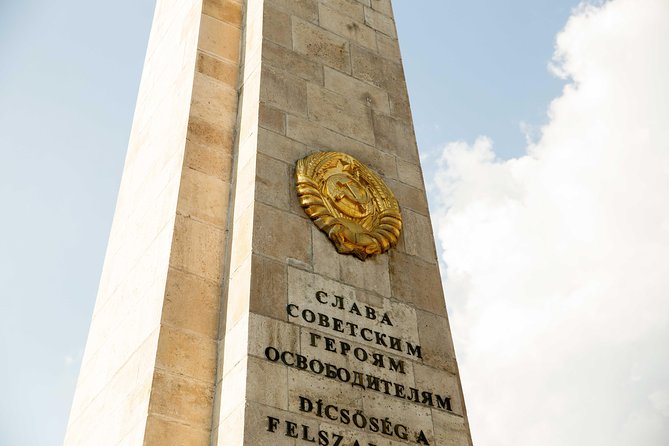
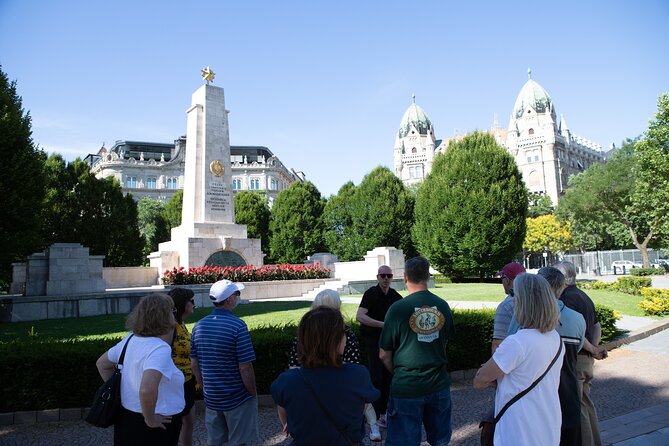
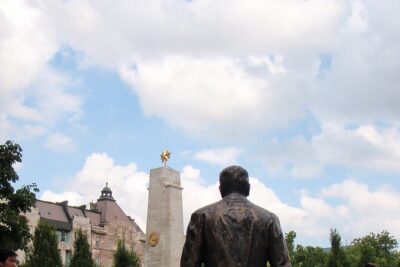
One early stop is the Soviet Heroic Memorial, a white obelisk in a landscaped park. It honors Russian military personnel who served in the Second World War and is a useful first point for discussing how Hungary remembers liberation from Nazi Germany, Soviet influence, and the later Communist period.
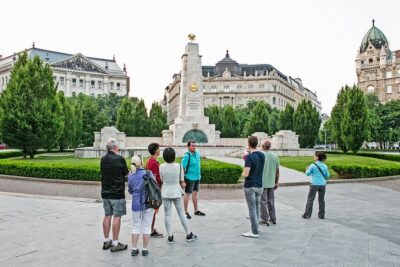
You get about 15 minutes here, with no admission fee. That is enough time to take in the monument and hear the guide’s explanation, but not enough for a long, quiet study of every detail. The value is the setting and the context. A monument can look simple until you understand why its meaning remains politically sensitive.
This is one of the reasons a guide helps. On your own, you might photograph the obelisk and continue walking. With commentary, you can place it within Hungary’s changing relationship with the Soviet Union. Expect interpretation rather than a formal museum presentation.
A short stop outside the House of Terror
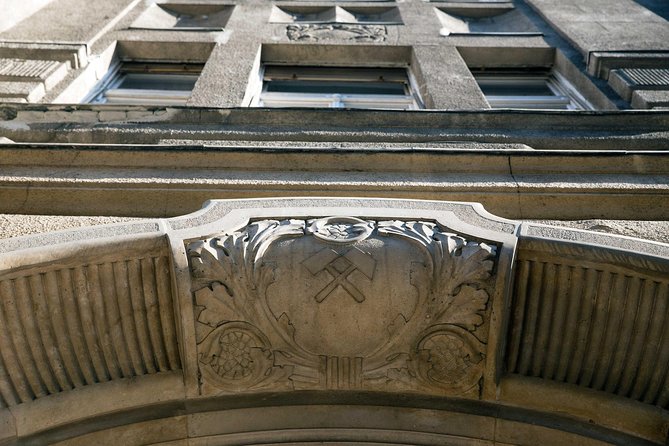
The House of Terror Museum at Andrássy út 60 is one of Budapest’s most important sites for understanding the fascist and Communist regimes of the 20th century. The building is both a museum and a memorial to people who were detained, interrogated, tortured, or killed there.
The scheduled stop is 15 minutes, and admission is not included. That distinction matters. You will receive an introduction and see the building from the outside, but you should not expect to explore the exhibitions during the walk.
I would treat this as a preview. If the subject interests you, return independently with enough time for the museum itself. The short guided visit can help you understand why the address matters before you go inside, while the separate admission keeps the walking tour moving.
The subject matter is grim. This is not a light sightseeing stop, and the experience is best suited to people who want a serious account of political repression. The guide’s role is especially useful here because the building’s meaning goes beyond its facade.
St. Stephen’s Basilica adds a wider Budapest view
St. Stephen’s Basilica brings a different layer to the walk. This Roman Catholic basilica is named for Stephen, Hungary’s first king, and its reliquary holds his right hand. It was the sixth-largest church building in Hungary before 1920.
The tour allows about 15 minutes here. Admission is not included, so the visit is again primarily an exterior stop and a chance to understand the basilica’s place in the city.
At first, this may seem less directly connected to Communism than the other sites. That is precisely why it belongs in the route. Budapest’s political story did not erase its royal, religious, and national traditions. Moving from a Soviet memorial and the House of Terror to a major church gives you a broader frame for the city.
You will not have time for a full interior visit during the scheduled stop. If you want to see the basilica inside, plan that separately and check how it fits with your day. The tour is using the building as part of a larger story, not treating it as a standalone church visit.
A few more Budapest half-days to weigh up
- Grand Segway Tour of Budapest – Private Tour with Coffee Stop
★ 5.0 · 163 reviews - Budapest: City Bike Tour with Coffee Stop
★ 5.0 · 37 reviews - Castle District tour with Matthias Church Ticket & Cake & Coffee
★ 5.0 · 31 reviews - Buda Castle Walking Tour with Matthias church entry, Cake&Coffee
★ 4.5 · 21 reviews
The Liberty Statue and Budapest from Gellért Hill
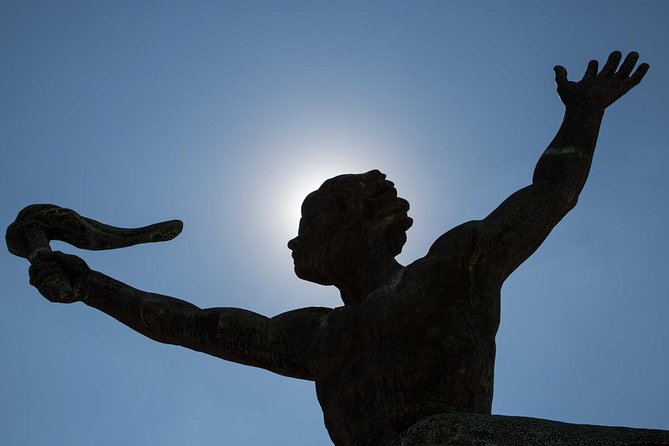
The Liberty Statue, also called the Freedom Statue, is on Gellért Hill. It commemorates people who sacrificed their lives for Hungary’s independence, freedom, and prosperity.
This is one of the more symbolic locations on the route. The monument’s name and purpose invite questions about who is remembered, how political messages change, and how a city gives meaning to public sculpture over time.
The supplied schedule does not list a separate duration or admission detail for this stop. You should therefore think of it as part of the walking route rather than a long programmed visit. The monument is also connected to a hilltop setting, so comfortable shoes are sensible even though the tour is not described as a strenuous hike.
Because the walk is focused on explanation, the guide can help you connect the statue to the country’s shifting ideas of freedom. That makes this stop more useful than a quick photo break, though the available time may vary within the overall three-hour route.
Liberty Square puts conflicting memorials side by side
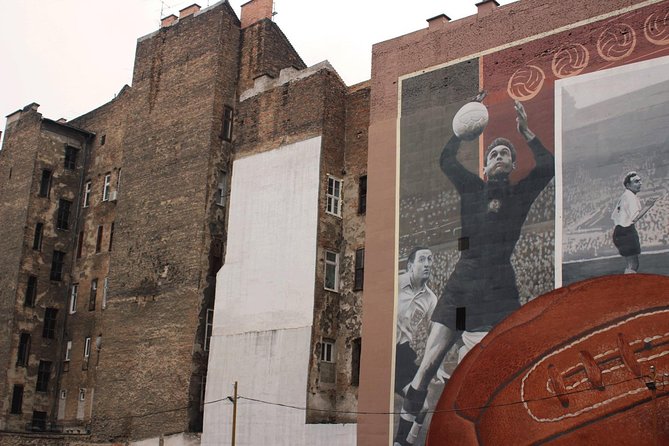
Liberty Square, or Szabadság tér, is one of the strongest stops on the tour. The square contains two controversial memorials, one commemorating Hungarian Jewish victims of the Holocaust and another honoring Soviet soldiers who liberated Budapest from the Nazis in 1945.
The square also contains the United States Embassy and the historicist headquarters of the Hungarian National Bank. That mixture of memorials, government buildings, and public space gives the guide plenty to work with.
You get about 15 minutes here, with no admission charge. The stop is brief, but the square rewards careful attention. The point is not simply to identify buildings. It is to consider how different versions of the past occupy the same city and sometimes the same public space.
The tour ends here, which is practical. You can continue exploring central Budapest, visit nearby sights, or use the maps and recommendations provided by the guide. Since the end point is different from the Opera meeting point, this is also a good place to plan your next activity rather than expecting a return transfer.
The 1956 Revolution memorial recalls open resistance
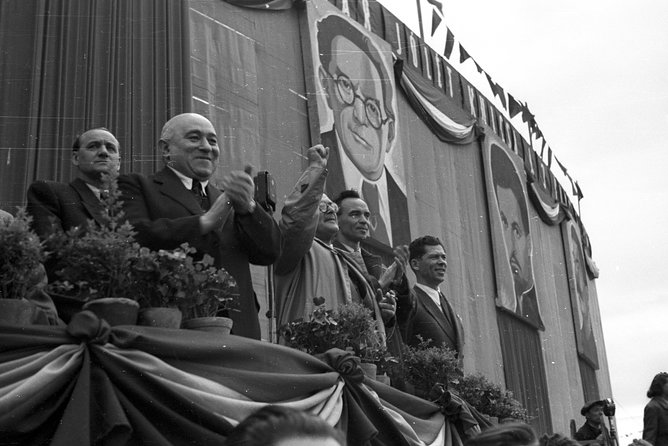
The memorial to the 1956 Hungarian Revolution and War of Independence honors the people who opposed the Communist regime during the uprising. It gives the tour a clear human and political focus: not just the presence of Soviet power, but Hungarian resistance to it.
The stop lasts about 15 minutes and is free to visit. The guide’s explanation is the key part, since a memorial alone cannot tell you the full sequence of events or explain why 1956 remains so important in Hungary.
This is likely to be one of the most valuable stops if you want to understand the country beyond its postcard views. The uprising is central to modern Hungarian identity, and placing its memorial within the walking route helps connect it to the earlier Soviet memorial and the later political symbols at Liberty Square.
You should expect a compact introduction, not a lecture or museum session. The advantage is that the tour keeps moving and shows how the subject fits into the city. The drawback is that anyone wanting detailed military or political analysis will need to continue studying independently.
Parliament closes the walk with Hungary’s grand symbol
The Hungarian Parliament Building, or Országház, is the seat of the National Assembly and one of Budapest’s most recognizable landmarks. Its name translates roughly as House of the Country or House of the Nation.
The stop is scheduled for about 15 minutes, and admission is not included. That means you will have time to view and discuss the building, but not to take the interior tour as part of this booking.
Parliament works well as the closing sight because it brings the route back to the idea of national government. After Soviet memorials, political repression, religious identity, public protest, and contested remembrance, you finish beside the building where Hungary’s national political life is represented.
Allow time later if you want to go inside. The walking tour gives you a useful introduction to the exterior and its importance, but it is not a substitute for a Parliament admission. This is a recurring pattern throughout the experience: the guide provides the connections, while the major interiors remain your responsibility.
The retro bar is more than a coffee break
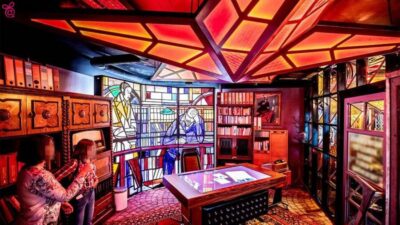
A classic soda in a Communist-themed bar is included, along with coffee and/or tea. This is a welcome change from a route made entirely of monuments and memorials.
The bar’s retro decor gives you a chance to see how the period is presented through everyday objects and design, rather than only through official memorials. A soda may sound like a small detail, but it helps make the subject more tangible. You are pausing in a setting built around the visual language of the Communist era, with the guide available to explain or discuss what you are seeing.
Food and other drinks are not included unless specified. The included refreshment is therefore modest, and you should not book this expecting a full meal or a tasting tour. If you need lunch, plan it before or after the walk.
The break also creates room for questions. Serious political history can be easier to process when it is discussed in an informal setting rather than delivered continuously while walking. Coffee or tea is useful if you prefer something hot, while the retro soda fits the theme of the experience.
What the $90.31 price really covers
At $90.31 per person, this is not a bargain sightseeing stroll based on admissions. The listed stops are mostly free, and entry to the House of Terror, St. Stephen’s Basilica, and Parliament is not included.
You are paying mainly for the guide’s time, the English-language commentary, the small-group format, the themed bar stop, and the maps and recommendations. That can be good value if you want help making sense of Hungary’s 20th-century political story. It is less attractive if you mainly want interiors, photographs, or a low-cost orientation walk.
The tour’s strongest value comes from the connections between places. A guide can explain why a Soviet memorial, a revolution memorial, a church, a government building, and a controversial public square belong in one story. You can then choose which sites deserve a longer independent visit.
Group discounts may improve the price for larger bookings. The tour averages being booked 18 days ahead, so booking early is sensible if your Budapest dates are fixed. The experience has a maximum of 15 people, but availability and group size can vary.
Who will get the most from this walk
I would choose this tour if you want Budapest’s political story explained clearly and in person. It suits first-time visitors who see the city’s monuments but want help understanding the forces behind them.
It is also a good fit if you prefer a focused walk to a long museum visit. The route gives you a citywide introduction, then lets you decide if the House of Terror, Parliament, or Basilica deserves a separate booking.
You should think twice if you dislike serious subject matter or want a relaxed architecture tour with lots of free time. The tour covers fascism, Communist repression, the Soviet role in Hungary, the Holocaust, and the 1956 uprising. Those topics are not background decoration. They are the heart of the experience.
The three-hour format suits someone with a busy Budapest schedule, but the 15-minute stops require attention. You will not linger at every monument. Wear shoes suitable for city walking, bring water, and leave room in your schedule for an independent museum visit if one catches your interest.
Booking details and weather planning
Confirmation arrives when you book, and free cancellation is available until 24 hours before the start time. If you cancel later, the payment is not refunded, and changes made within that period are not accepted.
The experience requires good weather. If poor weather causes cancellation, you are offered another date or a full refund. Keep that in mind when planning a tightly packed Budapest itinerary.
Should you book Born Under The Red Star?
Book it if you want context more than admissions. The tour’s best feature is the way it ties scattered Budapest sites to the country’s difficult political past, while the retro bar and included drink keep the experience from feeling like three straight hours of solemn monuments.
The price is harder to justify if you only want a general city walk or plan to enter every major sight. In that case, you will need to budget separately for museum and building admissions. But if you want an English-speaking guide, a group capped at 15, a compact route through central Budapest, and practical ideas for exploring on your own, this is a focused choice.
The perfect departure would be one with a small group, like the booking led by Ferenc for two people. You cannot count on that, but the group limit keeps the odds reasonable. For a visitor who wants to understand why Budapest’s public spaces carry such strong political meaning, I would make room for this walk.
FAQ
How long does the Communist tour last?
The tour lasts approximately three hours.
Where does the tour start?
It starts at the Hungarian State Opera, Budapest, Andrássy út 22, 1061 Hungary.
Where does the tour finish?
It ends at Liberty Square, Budapest, Szabadság tér.
Is a drink included?
Yes. The experience includes a retro soda in a Communist-themed bar, plus coffee and/or tea.
Are entrance tickets included?
Admission is not included for St. Stephen’s Basilica or the Hungarian Parliament Building. The listed visit to the House of Terror also does not include admission.
How large is the tour group?
The maximum group size is 15 people.
Can I cancel for a refund?
You can cancel up to 24 hours before the experience starts for a full refund. If poor weather causes the experience to be canceled, you will be offered a different date or a full refund.
More Drinking Tours in Budapest
- Budapest: Unlimited Prosecco, Beer and Aperol Spritz Cruise
★ 4.8 · 25,310 reviews - Budapest: Unlimited Prosecco, Beer & Aperol Spritz Cruise
★ 4.5 · 3,371 reviews - Budapest: Bar Crawl with a Local Guide
★ 4.9 · 1,112 reviews - Budapest: Ruin Bar Pub Crawl with Entry Tickets
★ 4.7 · 1,028 reviews
Just added around Budapest
- Private day trip from Budapest to Bratislava, Vienna, and back★ 3.5 · 3 reviews
- Budapest: Private, Personalized Pub Crawl, 3 drinks included★ 4.5 · 3 reviews
- Budapest: Private Adventure Sightseeing Bicycle Tour★ 4.5 · 3 reviews
- Private Danube Bend tour – full day★ 4.5 · 3 reviews
- Budapest: Guided City Walking Tour in Buda and Pest★ 5.0 · 3 reviews
- Budapest Old Jewish Quarter History Private Walking Tour★ 5.0 · 3 reviews
- Lake Balaton Full Day Private Wine Tour★ 5.0 · 3 reviews
- Budapest Urban Feast – Food Tour with Wine Tasting & Coffee House★ 4.5 · 3 reviews
Communist History Tours, compared.
Communist History Tour with House of Terror Option
Read our review →
3-Hour Walking Tour About Communism (Small Group)
Read our review →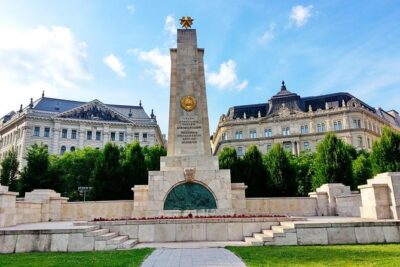
Lives of Hungarians Under Communist and Capitalist system
Read our review →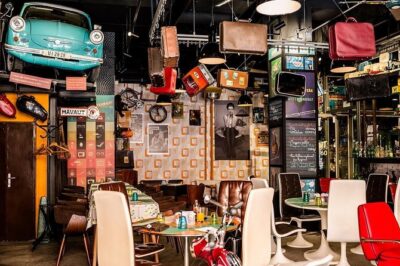
Private Budapest Hammer & Sickle Communist Times Tour
Read our review →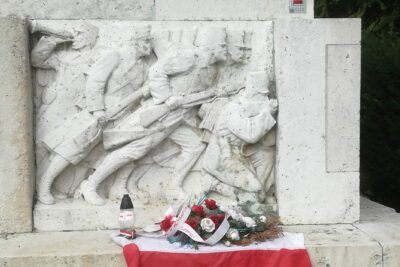
Browse the lists this tour appears in