

Reviewed · COMMUNIST HISTORY TOURS
Born Under The Red Star – The History of Communism in Hungary – Private Tour
Budapest’s communist past is easiest to grasp when you see it in the streets, not just in a museum. This private tour connects Soviet memorials, the 1956 uprising, political monuments, and the Parliament area, while a guide explains how the regime shaped ordinary life. I especially like the private format, which lets you ask direct questions, and the stop at a Communist-themed bar, a small but fitting break from the monuments.
The main caution is value. At about $108 per person, this makes sense if you want a personal guide and focused discussion, but less so if you expect full museum visits. House of Terror and St. Stephen’s Basilica admission is not reliably included, and one tour ended early when the guide met the group away from the hotel.
Key points at a glance
- Soviet memorial and 1956 uprising sites: See the symbols of Hungary’s postwar years and the revolt against Communist rule.
- Private English-language guide: Your group has the guide to itself, with room for questions and personal stories.
- House of Terror stop: You’ll discuss the building and its role under fascist and Communist rule, but museum entry is not included.
- Liberty Square’s competing memorials: This is one of the best places to understand how Hungary remembers occupation, liberation, and loss.
- Communist-themed café break: Coffee, tea, or a retro soda is included, though you should confirm exactly what drink is provided.
- About three hours with pickup: The guide meets you at your requested hotel or apartment address, unless you arrange another starting point.
Why this tour works best as a conversation about life under Communism
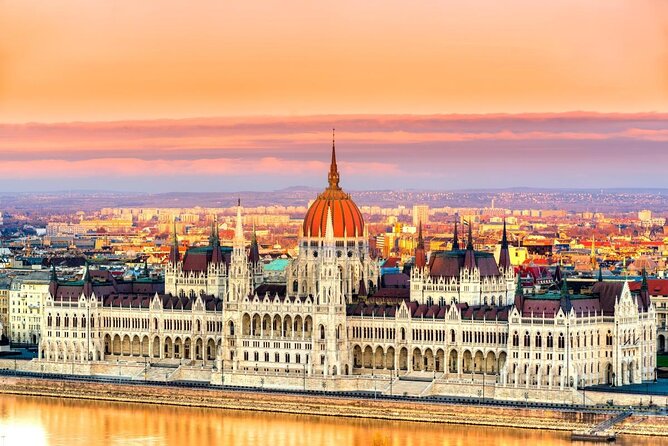
This is not a standard sightseeing walk through Budapest’s grandest buildings. Its purpose is to give political meaning to places you might otherwise pass without much thought.
You’ll hear about Soviet power, the postwar Communist system, the 1956 Hungarian Revolution, and the way those events affected daily life. The strongest part of the experience is likely to be the guide’s ability to connect public monuments with private memory. Julia, Brigit, and Norbert were singled out for their clear explanations, flexibility, friendliness, and personal accounts.
That last point matters. Communism can sound abstract when it is reduced to dates and political labels. A guide who explains how the system affected work, travel, speech, shops, and family life can make the subject much easier to understand. Still, the quality depends heavily on the individual guide. One guide spent too much time on general Hungarian history and current events, leaving little time for life under Communism itself.
I would tell your guide at the start that you want the focus firmly on the Communist period. If you have already taken a general Budapest history tour, say so. That simple request may help keep the three hours on the subject you paid for.
More communist-era history walks:
- Budapest: Communist History Tour with House of Terror Option
★ 4.8 · 182 reviews - Budapest: 3-Hour Walking Tour About Communism (Small Group)
★ 4.7 · 70 reviews - Communism in Hungary with a Historian
★ 5.0 · 70 reviews
Soviet Heroic Memorial: begin with a difficult symbol
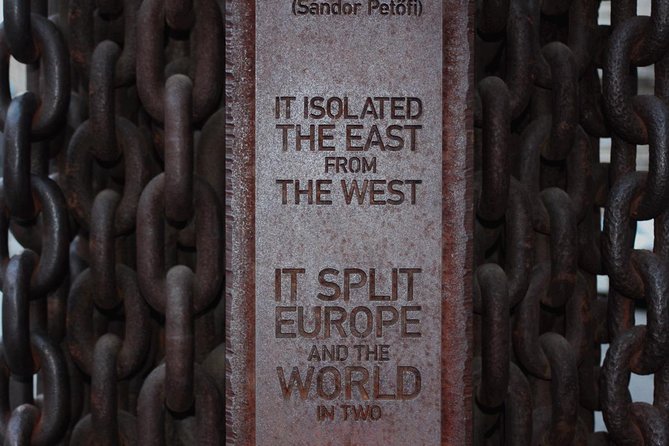
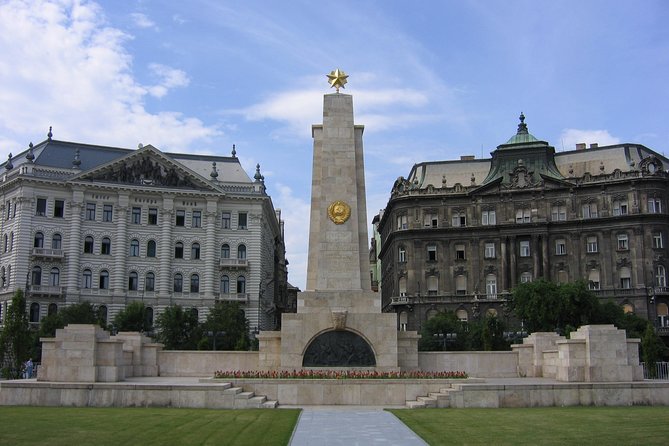
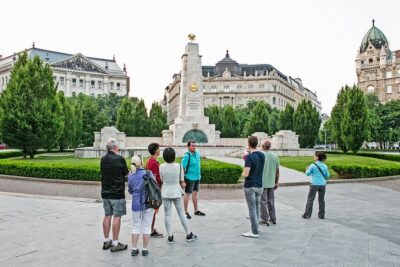
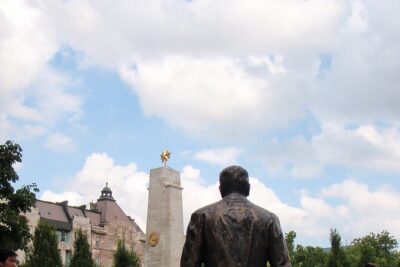
The first stop is a white obelisk in a park, dedicated to Soviet military personnel who served in World War II. It is a brief visit, about 15 minutes, and there is no admission charge.
The memorial is useful because it introduces one of the central tensions in modern Hungarian memory. Soviet troops helped defeat Nazi Germany and liberate Budapest, yet the Soviet Union then imposed a Communist political system on Hungary. A monument to Soviet soldiers can therefore represent both wartime victory and the beginning of a new period of control.
You will not spend long here, so think of it as a starting point rather than a full stop. The guide’s explanation is more important than the obelisk itself. Ask how Hungarians view the memorial today, and how its meaning changed after the end of Communist rule.
House of Terror: important context, but not a museum visit
The House of Terror occupies Andrássy út 60, a building associated with both Hungary’s fascist and Communist regimes. The museum remembers people who were detained, questioned, tortured, or killed there.
The tour includes a short stop of about 15 minutes. That gives you time to discuss the site and understand why it matters, but it does not give you enough time to see the museum properly. Admission is not included, despite confusing wording connected with the tour description. Plan to pay separately if you want to enter.
I would not book this tour mainly for House of Terror. If the museum is a priority, return on your own with enough time to see its exhibits. The private tour can give you useful context before or after that visit, but it is not a substitute for the museum itself.
There is also a practical point here. One group began at House of Terror instead of the hotel, and the tour finished about an hour early because of that arrangement. Confirm your pickup point and expected end time before setting up another booking afterward.
St. Stephen’s Basilica: a grand church beside a political story
St. Stephen’s Basilica is not a Communist site, but its location gives the tour a broader view of Budapest. The basilica honors Stephen, Hungary’s first king, and houses his reputed right hand in a reliquary.
The stop lasts about 15 minutes. You can see the exterior and discuss its place in Hungarian national life, but entry is not included. The tour description once caused confusion about admission, and a guide arranged a basic ticket for one group, limited to the church dome. Do not assume that a full interior or dome visit is part of the price.
This stop may feel like a detour if you want only Communist history. I see its value as background. Hungary’s Communist government tried to reshape public life, but it operated within a much older national and religious tradition. The basilica helps show the contrast between historic Hungary and the ideology that ruled the country after World War II.
If you want to go inside, ask your guide exactly what ticket is available and what it covers. The short timing means you should not expect an extended church visit.
A few more Budapest half-days to weigh up
- Budapest: Historic Cruise with Welcome Drink
★ 4.7 · 6,512 reviews - Budapest Historical Sightseeing – Free Walking Tour
★ 5.0 · 1,302 reviews - Buda Castle District Dark History, Legends and Vampire Night Tour
★ 4.5 · 1,240 reviews - BloodThirsty Hungary: Walking tour & Dark Historical Stories
★ 4.9 · 633 reviews
Liberty Square: where Hungary’s memory gets complicated
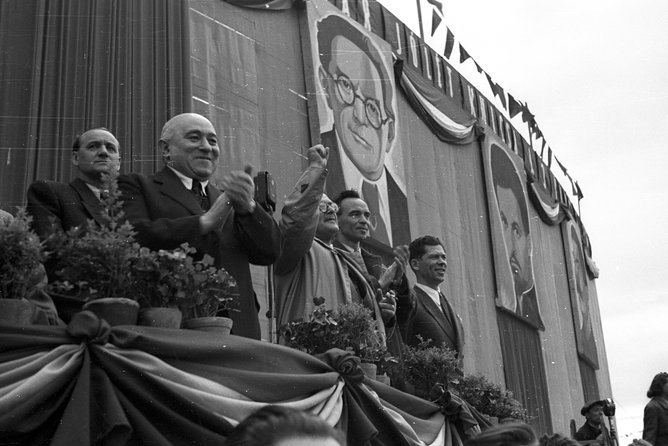
Liberty Square is the most thought-provoking stop on the route. You’ll spend about 25 minutes here, longer than at most other locations, and that extra time is well used.
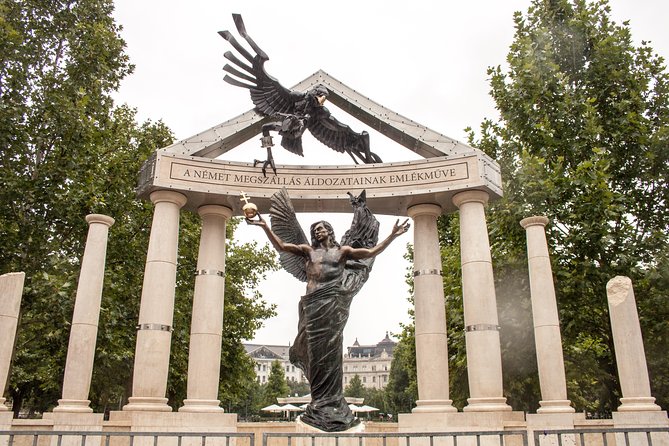
The square contains controversial memorials linked to the Holocaust and the Soviet soldiers who liberated Budapest in 1945. It is also near the United States Embassy and the historic headquarters of the Hungarian National Bank. In one compact area, you can discuss war, occupation, responsibility, Jewish suffering, Soviet power, and the way governments shape public memory.
This is the point where a good guide can turn a walk into a real history lesson. Ask why the memorials provoke debate, how the events are presented, and what changed after 1989. You might also ask how the square’s meaning differs for older Hungarians and younger people who grew up after Communism.
The setting is free to visit, so you are paying for interpretation rather than admission. That is exactly the sort of stop that justifies a private tour, provided the guide keeps the discussion focused and gives you time to ask questions.
The 1956 memorial: understanding Hungary’s open revolt
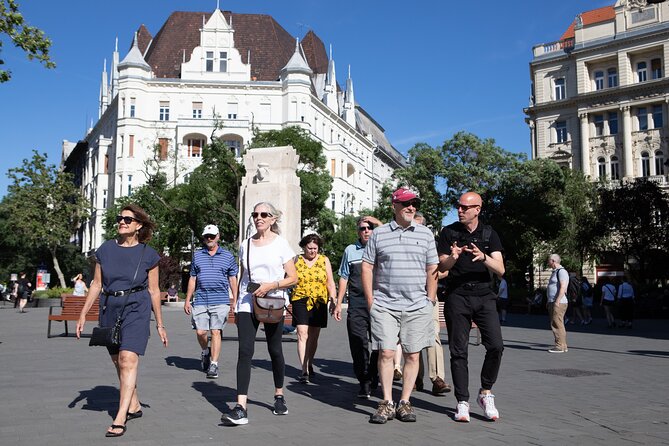
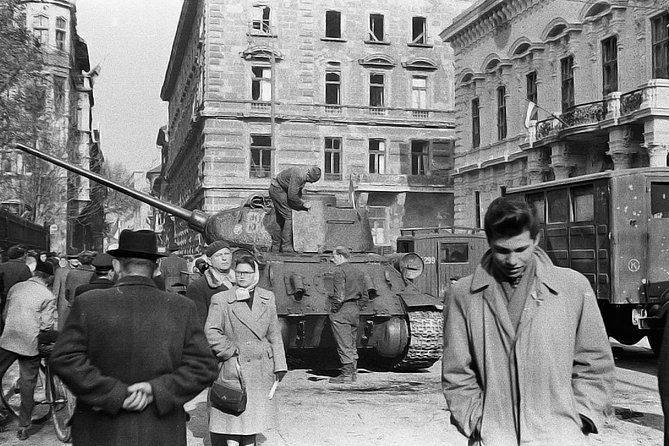
The memorial to the 1956 Hungarian Revolution and War of Independence honors the people who challenged the Communist regime. You’ll spend about 15 minutes here.
The uprising is essential to understanding modern Hungary. It was a popular revolt against Soviet-backed rule, and its defeat left a lasting mark on the country. The memorial offers a chance to ask about the people involved, the goals of the uprising, and what happened when Soviet forces moved against it.
This is another free outdoor stop, so the guide’s explanation carries the experience. I would ask for a clear account of the sequence of events rather than a broad political summary. You want to know what ordinary Hungarians were demanding and why the revolt mattered so much, not just that it happened.
The brief timing is enough for an introduction, but not for a full lecture. If 1956 is your main interest, ask the guide to spend more time here and accept less discussion at another stop.
Parliament: finish beside the symbol of modern Hungary
The Hungarian Parliament Building is the final listed stop, with about 15 minutes outside. It is the seat of the National Assembly and one of Budapest’s most recognizable buildings.
The connection to Communism is indirect but important. Parliament represents the country’s political life today, while the tour has taken you through the memorials and struggles that shaped the road to the present. Your guide can help link the 1956 uprising, Soviet influence, and the later return to parliamentary government.
No Parliament admission is included. The short stop is for viewing and discussion, not an interior tour. If you want to see the building inside, arrange that separately and allow extra time.
Finishing here gives the tour a useful sense of direction. You have moved from a Soviet military memorial to a national political institution. The route does not pretend that history is simple, and that is one of its strengths.
The Communist-themed bar: a small break with a clear purpose
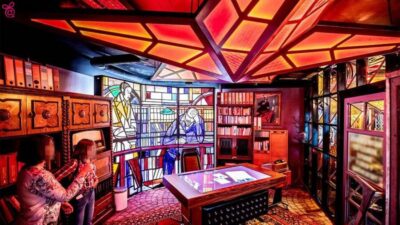
The included café stop is one of the tour’s more unusual features. You receive coffee or tea, and the tour information also describes a retro soda at a Communist-themed bar.
The setting is meant to echo the visual culture of the old period. It gives you a place to sit, ask follow-up questions, and talk about daily life. The stop can be particularly useful if you want to move beyond monuments and hear about food, shopping, work, housing, or travel under the regime.
There is some uncertainty over the exact inclusion. One group received coffee but not the retro drink, and the bar’s museum or entry cost was not covered. I would confirm what beverage is included before booking, and budget for any additional food or drinks.
A café break is not a problem in itself. In fact, I like having a quiet moment in a three-hour history tour. The concern is time. If the café takes half an hour and the tour ends early, you may feel you received a general conversation rather than the focused Communist history promised by the name.
What the $108 price means for your budget
At $108.14 per person, this is not a low-cost walking tour. You are paying for a private guide, hotel or apartment pickup, an English-language experience, the drink break, and the ability to shape the conversation around your interests.
The value is strongest for two or more people who want privacy and questions answered at their own pace. A private tour can also be worthwhile if you have limited time in Budapest and want a strong introduction before visiting House of Terror or other sites independently.
The value is weaker if you expect admission to museums and major interiors. Most stops are outdoor locations with free access, and the House of Terror and basilica entries are not included. Add ticket costs if you want to see those places inside.
I would also compare the price with your group size. A solo visitor pays the full per-person rate, while a larger private group may make the cost easier to justify. Group discounts are offered, but the exact amount is not stated, so check the price for your party before paying.
Timing, pickup, and the physical side of the route
The experience lasts about three hours and pickup is offered at your requested address. Confirmation arrives at booking, and the activity is conducted only for your group.
The route includes several short walking stops and may use public transportation. One account specifically mentions taking the subway to the House of Terror and the Jewish area, so you should be comfortable with a moderate level of walking and moving around Budapest. A moderate physical fitness level is required.
The schedule is fairly tight. There are six listed stops, most lasting only 15 minutes, with 25 minutes at Liberty Square. That format works for a broad overview, but it leaves little room for long museum visits or unplanned questions.
Children must be accompanied by an adult. Service animals are allowed, and the tour is near public transportation. It requires good weather, with a different date or full refund offered if poor conditions cause cancellation. For peace of mind, avoid placing an important timed activity immediately afterward.
Who should book this private Budapest history tour?
I would recommend it to you if you want political history explained on location, prefer private guiding, and are willing to visit the museums separately. It suits people who enjoy asking questions and want a guide to adjust the pace or emphasis.
It is also a good choice if you have already seen Budapest’s main sights and now want a more serious look at the twentieth century. The praised guides, including Julia, Brigit, and Norbert, suggest that personal explanation and flexibility can be the tour’s best features.
I would hesitate if you want a full House of Terror visit, detailed interior tours, or a tightly timed three-hour program with no uncertainty. You should also be cautious if the main reason for booking is the included admission. That is not what you are getting.
Should you book Born Under The Red Star?
Book this tour if a private conversation about Hungary’s Communist period matters more to you than checking off museum interiors. The route gives you a useful set of places, and the strongest guides can make the subject personal and clear.
Before booking, confirm three things: your exact pickup point, the expected finishing time, and which drink is included at the bar. Also ask how much time will be devoted to everyday life under Communism rather than general Budapest history.
At 4.2 out of 5, the experience can be very good, but it is not perfectly consistent. I see it as a promising private introduction, not a complete Communist history program. If you value a personal guide and plan your own museum visits, it can be worth the price. If you want admissions included and every minute tightly focused, spend your money elsewhere.
FAQ
How long does the tour last?
The tour lasts approximately three hours.
Is this a private tour?
Yes. Only your group participates in the activity.
Is hotel pickup included?
Yes. The guide meets you at your requested hotel or apartment address.
Is the tour offered in English?
Yes. English is the listed language.
Is admission to the House of Terror Museum included?
No. You should plan to pay separately if you want to enter the museum.
Is admission to St. Stephen’s Basilica included?
No. Basilica admission is not included. A basic dome ticket was arranged for one group, but you should confirm available entry before visiting.
Is Parliament entry included?
No. The Parliament stop is an exterior visit and admission is not included.
What is included at the Communist-themed bar?
The tour includes coffee and/or tea, and the experience description also refers to a retro soda. Because one account received coffee rather than the retro drink, confirm the exact beverage before booking.
Can children join the tour?
Yes, but children must be accompanied by an adult.
What happens if bad weather cancels the tour?
You will be offered a different date or a full refund if poor weather causes cancellation. Free cancellation is available up to 24 hours before the start time.
Just added around Budapest
- Budapest: Private, Personalized Pub Crawl, 3 drinks included★ 4.5 · 3 reviews
- Private day trip from Budapest to Bratislava, Vienna, and back★ 3.5 · 3 reviews
- Budapest: Private Adventure Sightseeing Bicycle Tour★ 4.5 · 3 reviews
- Private Danube Bend tour – full day★ 4.5 · 3 reviews
- Budapest: Guided City Walking Tour in Buda and Pest★ 5.0 · 3 reviews
- Budapest Old Jewish Quarter History Private Walking Tour★ 5.0 · 3 reviews
- Lake Balaton Full Day Private Wine Tour★ 5.0 · 3 reviews
- Budapest Urban Feast – Food Tour with Wine Tasting & Coffee House★ 4.5 · 3 reviews
Communist History Tours, compared.
Communist History Tour with House of Terror Option
Read our review →
3-Hour Walking Tour About Communism (Small Group)
Read our review →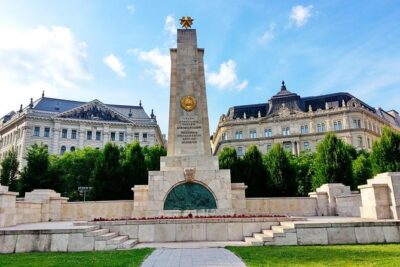
Lives of Hungarians Under Communist and Capitalist system
Read our review →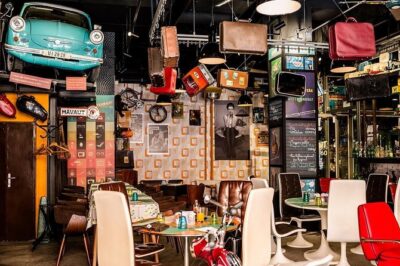
Private Budapest Hammer & Sickle Communist Times Tour
Read our review →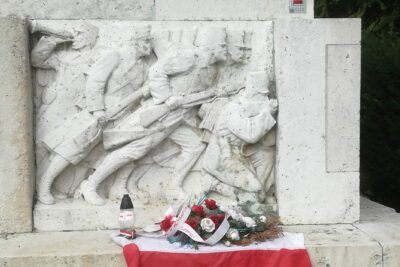
Browse the lists this tour appears in