
Reviewed · COMMUNIST HISTORY TOURS
Life Under Communism with House of Terror or Statue Park
Budapest’s communist past becomes easier to understand when you move beyond dates and slogans. This private three-hour experience begins at Bambi Eszpresszó, an emblematic 1980s meeting place, then uses personal stories and conversation to explain how the system shaped work, shopping, travel, family life, and public behavior.
I like the small private format, which lets Annamaria and Miklos adjust the discussion to your background and questions. I also like the chance to use Budapest’s public transportation during the tour, giving you a look at parts of the city you might otherwise miss. The main consideration is that this is an educational walking and transit experience, not a fast list of major sights, and it is not suitable for people with mobility impairments.
Key points to know before booking
- Bambi Eszpresszó sets the tone: Begin at a symbolic 1980s café rather than a standard sightseeing meeting point.
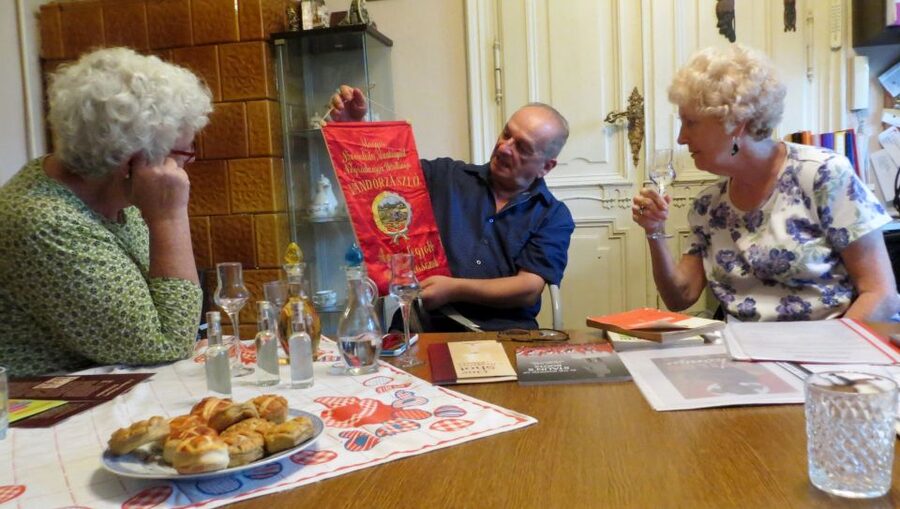
- Annamaria and Miklos lead the program: Expect a personal presentation with room for honest questions and discussion.
- The route can reflect your interests: The guide can adapt the focus to your knowledge level and special requests.
- Public transportation may be part of the experience: You can see ordinary parts of Budapest while moving between stops.
- You choose between House of Terror or Statue Park: Confirm the preferred option and exact plan when arranging your booking.
- It costs $282 for up to five people: The flat private-group price can work well for a family or group traveling together.
Starting at Bambi Eszpresszó in 1980s Budapest
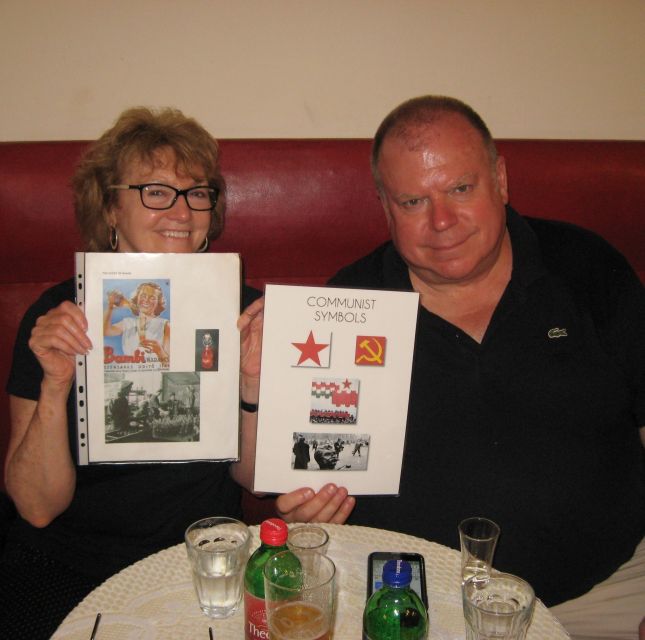
The choice of Bambi Eszpresszó as a starting point is more than a convenient café stop. It gives the subject a human scale. Instead of opening with a long political lecture, the tour begins in a place tied to everyday social life during the 1980s.
That matters because communism was not only a matter of government offices and official speeches. It shaped where people met, what they bought, what they watched, how they found goods, and what they felt safe saying in public. A café connected with the period helps set up those ordinary details.
The available information does not specify whether food or drinks are part of the program, and they are not included in the price. You can treat Bambi as the meeting point and historical setting, rather than assuming you will have a café meal there.
Your guide meets you at your accommodation in Budapest, provided you share the pickup location with the local partner. From there, you make your way to the first stop together. This is useful if you are still getting your bearings, though you should allow enough time for the pickup arrangement and the journey to Bambi.
More communist-era history walks:
- Budapest: Communist History Tour with House of Terror Option
★ 4.8 · 182 reviews - Budapest: 3-Hour Walking Tour About Communism (Small Group)
★ 4.7 · 70 reviews - Communism in Hungary with a Historian
★ 5.0 · 70 reviews
A three-hour lesson about how the system worked
The tour covers the period from the 1960s through the late 1980s. That span is long enough to show change within the communist era, rather than presenting it as one unchanging block of time.
You receive an overview of how the system operated on several levels. The guide then connects that structure with daily life in Budapest. I find this approach more useful than a purely political tour because it helps you understand the gap between official rules and ordinary routines.
The presentation is interactive and personal. Printed materials, notebooks, and pens are provided, so you are not expected to listen passively and remember every term. You can ask questions, make notes, and steer the conversation toward topics that matter to you.
The guides can adapt the tour to the group’s interests and knowledge level. If you already know the basic story of the Cold War, you can spend more time on personal experience and social effects. If the subject is new to you, the guide can explain the larger structure before moving into daily examples.
This flexibility is one of the strongest reasons to book the private version. In a large group, a question about home life, censorship, or public transportation might interrupt the planned route. Here, discussion is part of the point.
What everyday communist life can reveal
The stated focus is everyday life from the 1960s to the late 1980s, along with the changes of the past fifty years. You should expect the guide to connect public events with the choices people made at home and in the city.
That can make the period easier to picture. A political system is often hard to grasp until you see how it affects simple decisions. How people spent free time, how they met friends, and how they handled shortages or restrictions can say as much as a formal speech.
The program also looks at the marks that decades of communism have left on Hungary. Some of those traces may be physical, while others may appear in habits, memories, attitudes, and the way people talk about the past. The supplied details do not promise a set list of buildings or objects, so I would not book this expecting a museum-style checklist.
Instead, you get a guided interpretation of the city and its recent past. That is especially useful if you want to understand Budapest as a living place, not only as a collection of grand monuments.
House of Terror or Statue Park
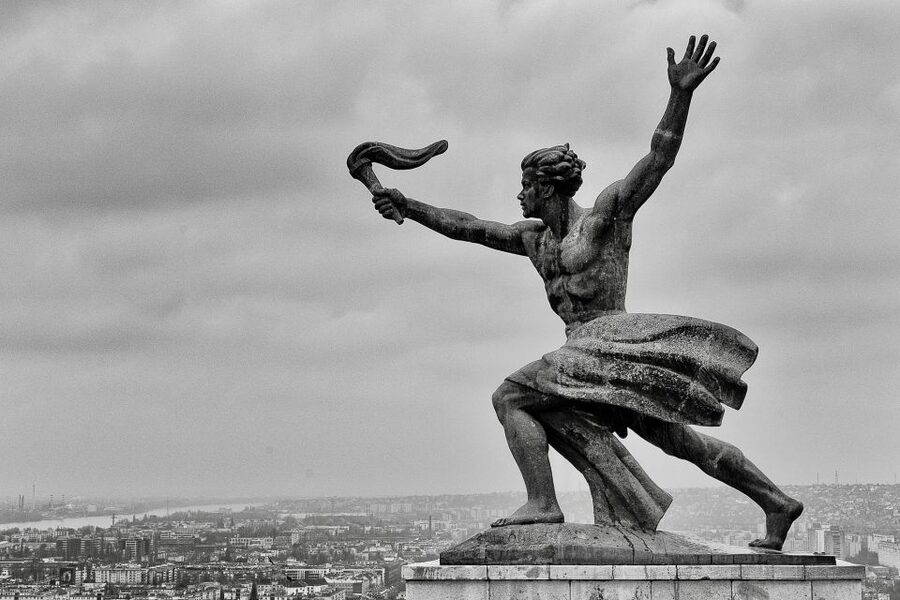
The experience is offered with a choice involving House of Terror or Statue Park. The supplied details do not explain the exact order, admission arrangements, or which option is selected for each booking, so you should confirm that point with the local partner before paying.
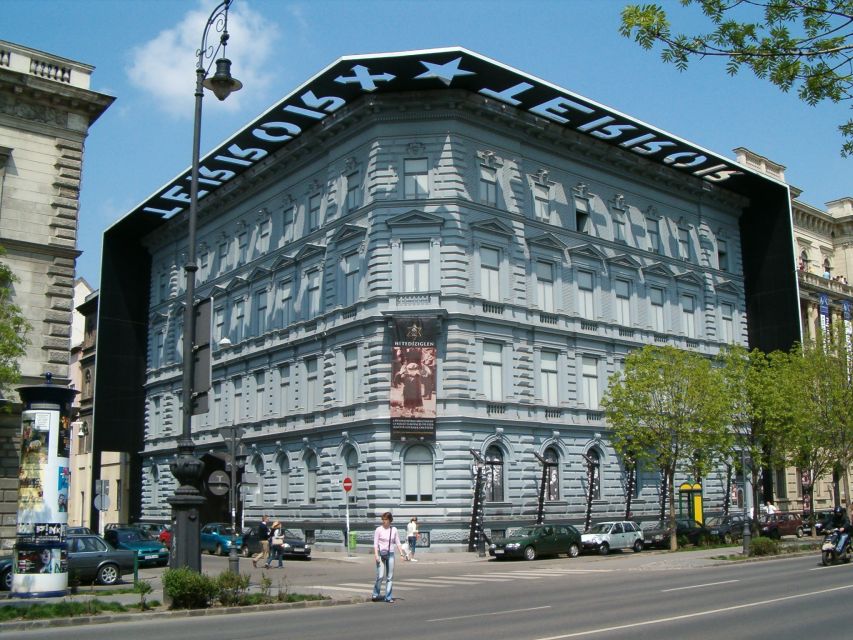
The two names suggest different ways of approaching the subject. House of Terror is associated with the political violence and repression connected with Hungary’s 20th-century dictatorships. Statue Park is known for its collection of communist-era public statues relocated from Budapest after the political changes. Since the tour description does not give a detailed stop-by-stop plan, treat the choice as something to settle during booking rather than assuming both sites are included.
If you want the most direct museum treatment of the period, ask about House of Terror. If you are more interested in the public symbols left behind after the system changed, ask about Statue Park. The guide can also help you decide based on your interests, available time, and the route from your accommodation.
This is an important practical point. The title offers House of Terror or Statue Park, but the core promise is the personal presentation and discussion. Confirming the selected site will help you compare this experience with a standard museum visit.
Same city, a completely different way to spend an afternoon:
- Budapest: City Highlights Cruise with Welcome Drink
★ 4.6 · 35,610 reviews - Budapest: Unlimited Prosecco, Beer and Aperol Spritz Cruise
★ 4.8 · 25,310 reviews - Budapest: Széchenyi Spa Day Ticket with Optional Upgrades
★ 4.3 · 23,911 reviews - Budapest: Nighttime or Daytime Sightseeing Cruise
★ 4.2 · 21,062 reviews
Traveling across Budapest by public transportation
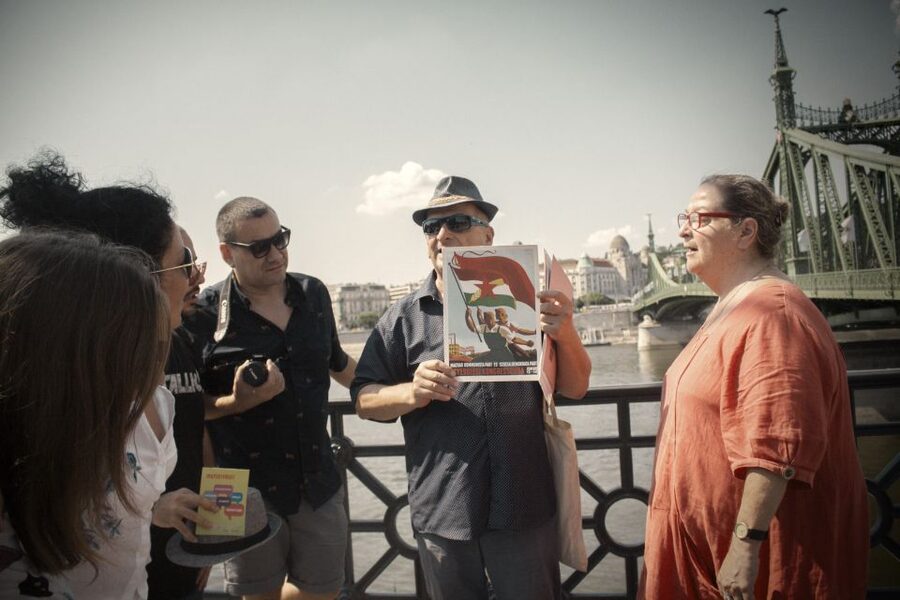
The tour may include a ride on Budapest’s public transportation system. That is not just a way to get from one stop to another. It puts you in the same kind of ordinary city setting that helps this subject make sense.
You may see parts of Budapest that are outside the usual sightseeing circuit. The tour information does not specify which lines, vehicles, or neighborhoods are used, so I would avoid expecting a fixed transit itinerary. The useful part is the movement through the city and the chance to discuss what you are seeing with the guide along the way.
Transportation is not included as a separate tour service, so bring what you need for your own transit costs. The guide will meet you at your accommodation and travel with you to the first stop, but the supplied information does not state that fares are covered.
Wear comfortable shoes and clothing suited to the weather. The experience lasts three hours, and even a relaxed route can feel tiring if you are poorly dressed or uncomfortable on your feet.
Why the private format matters
This is a private group for up to five people. That makes the $282 price easier to assess: it is not a per-person rate for a large shared outing. For five people, the cost works out to about $56.40 per person. For two people, it becomes $141 per person, so the value depends heavily on your group size.
I would consider it a better buy for a family, group of friends, or several people with a strong interest in 20th-century history. A couple can still find it worthwhile if the subject is central to the trip and they value a custom discussion, hotel pickup, and a guide who can adjust the route.
The format also makes it easier to ask direct questions. One person may want to discuss politics, another may be more interested in food and shopping, and another may want to understand how the city changed after the late 1980s. The guide can respond to those different interests instead of giving everyone the same fixed script.
The information provided names Annamaria and Miklos as the program leaders. It also says the tour is available in English, German, and French. If language is important for your group, request your preferred language when you book.
What the guide adds to the experience
A strong guide is especially important for a subject like this. Communist-era history can become dry if it is reduced to dates, party names, and official terms. It can also become too personal if the guide offers memories without explaining the wider system.
This program aims to combine both. You receive a structured presentation, but the format leaves space for personal experience and open dialogue. One guide is described as sharing his own experiences of the Hungarian communist era, which can give the discussion a direct and human quality.
That personal angle should not replace historical context, and the format appears designed to avoid that problem. You first get an explanation of how the system worked, then a picture of daily life and its long-term effects. I like that balance.
The guide’s ability to adapt also helps if your group has mixed knowledge. You do not need to arrive as a history expert. At the same time, people who already know something about Hungary can ask more pointed questions instead of hearing only an introductory speech.
Who will get the most from this tour
I would recommend this experience to you if you enjoy history best when it is tied to real places and personal stories. It is also a good fit if you want to understand Budapest beyond its famous architecture and central sights.
It suits:
- People interested in communist Europe and the Cold War
- Families with older children or teenagers who can engage with a serious historical topic
- Visitors who prefer conversation over a large group lecture
- Repeat visitors looking for a different side of Budapest
- Groups that want a guide to adjust the focus to their own questions
- Visitors who appreciate public transportation and ordinary city settings
It may not suit you if you want a quick sightseeing circuit with many famous landmarks. The tour is built around discussion, context, and interpretation. It is also not suitable for people with mobility impairments, and the practical details do not promise a fully accessible route.
The subject can be emotionally heavy. The supplied information does not describe the presentation as theatrical or graphic, but it does cover the impact of decades of communism and the remnants of that period. Give yourself some quiet time afterward if serious history tends to stay with you.
Practical details that affect your decision
The tour lasts three hours, and starting times depend on availability. Because pickup is included, send the local partner the address of your Budapest accommodation. The guide then meets you there and accompanies you to the first stop.
Food and drinks are not included. Comfortable shoes and weather-appropriate clothing are sensible choices, particularly because the program involves moving through the city and may include public transportation.
Special requests can be submitted in advance. The local partner says the tour can be adapted as much as possible, so tell them about language needs, interests, or other preferences before the day of the experience.
The cancellation policy is helpful for a history-focused activity that may need to fit around changing plans. You can cancel up to 24 hours before the start for a full refund, and the reserve-now, pay-later option lets you hold the booking without paying immediately.
The overall rating is 4.9 from seven ratings, with praise focused on guide quality, flexibility, personal experience, and the chance to see less familiar parts of Budapest. One French-language booking specifically noted that the route was adjustable and that the guide was responsive after booking. That reinforces the practical advice here: contact the local partner early and explain what you want from the tour.
Is $282 a fair price?
The price is $282 for a private group of up to five people. That is a substantial amount for three hours, but the comparison should be with a private guide experience, not with a basic museum ticket.
You are paying for hotel pickup, a private guide, a flexible presentation, printed materials, and a route that may include public transportation and a chosen historical site. The value improves sharply when five people share the cost.
For a group of five, this can be a sensible way to spend part of a Budapest day, especially if you would otherwise book several separate museums and try to connect the story yourself. For one or two people, I would book only if the personal format and communist-era subject are high priorities.
The price does not include food, drinks, or transportation costs. Confirm the House of Terror or Statue Park arrangement before booking so you know exactly what your fee covers.
Should you book Life Under Communism?
Book this experience if you want a thoughtful, personal explanation of how communism affected ordinary life in Budapest. The strongest features are the private format, the flexible discussion, the opening at Bambi Eszpresszó, and the chance to travel through the city with a guide rather than simply read exhibit labels.
I would be especially inclined to book it for a group of four or five people. That brings the per-person cost down and gives everyone room to ask questions. If you are choosing between House of Terror and Statue Park, confirm the exact plan first, then select the option that matches your interest in repression, public symbols, or the city’s changing memory.
Skip it if you want a light, fast tour or if walking and transit are difficult for you. For everyone else, this is a useful way to place Budapest’s communist past in everyday surroundings, with enough flexibility to make the history feel relevant to your own questions.
FAQ
How long does the Life Under Communism tour last?
The experience lasts three hours.
How much does the tour cost?
The price is $282 for a private group of up to five people.
Is this a private tour?
Yes. The activity is offered as a private group experience.
Where does the tour begin?
The program starts at Bambi Eszpresszó, an emblematic meeting place associated with the 1980s. Your guide meets you at your accommodation first and travels with you to the first stop.
Is hotel pickup included?
Yes. Pickup from your accommodation in Budapest is included. You need to tell the local partner where you would like to be picked up.
Which languages are available?
The tour is available in English, German, and French.
Are food and drinks included?
No. Food and drinks are not included in the price.
Does the tour include transportation?
The guide accompanies you from your accommodation to the first stop, and the experience may include public transportation. Transportation is not listed as an included cost, so confirm any fare details with the local partner.
Can I choose House of Terror or Statue Park?
The experience is offered with House of Terror or Statue Park. The exact arrangement is not specified, so confirm your preferred option with the local partner when booking.
Is the tour suitable for people with mobility impairments?
No. The experience is listed as unsuitable for people with mobility impairments.
Can the tour be adapted to my interests?
Yes. The local partner invites you to share special requests, and the guide can adapt the tour as much as possible to your interests and knowledge level.
Just added around Budapest
- Private day trip from Budapest to Bratislava, Vienna, and back★ 3.5 · 3 reviews
- Budapest: Private, Personalized Pub Crawl, 3 drinks included★ 4.5 · 3 reviews
- Budapest: Private Adventure Sightseeing Bicycle Tour★ 4.5 · 3 reviews
- Private Danube Bend tour – full day★ 4.5 · 3 reviews
- Budapest: Guided City Walking Tour in Buda and Pest★ 5.0 · 3 reviews
- Budapest Old Jewish Quarter History Private Walking Tour★ 5.0 · 3 reviews
- Lake Balaton Full Day Private Wine Tour★ 5.0 · 3 reviews
- Budapest Urban Feast – Food Tour with Wine Tasting & Coffee House★ 4.5 · 3 reviews
Communist History Tours, compared.
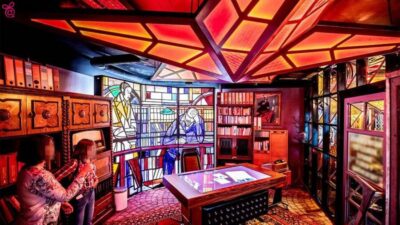
Communist History Tour with House of Terror Option
Read our review →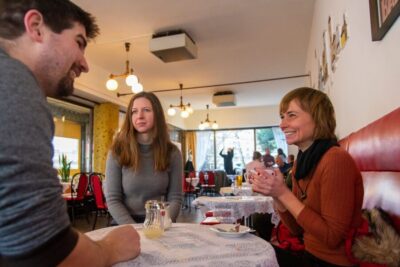
3-Hour Walking Tour About Communism (Small Group)
Read our review →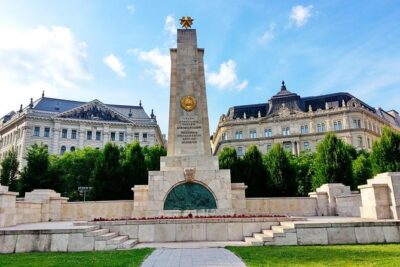
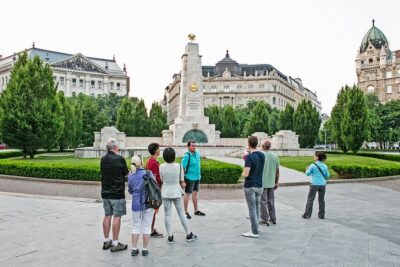
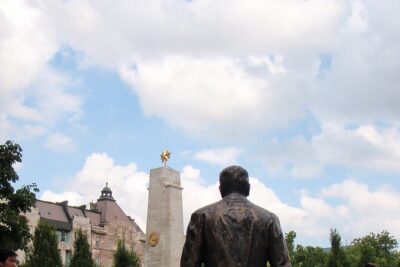
Lives of Hungarians Under Communist and Capitalist system
Read our review →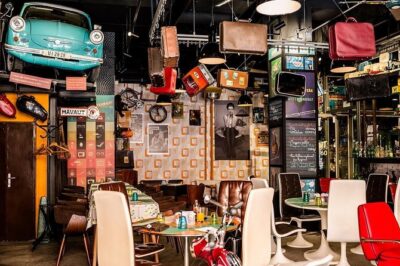
Private Budapest Hammer & Sickle Communist Times Tour
Read our review →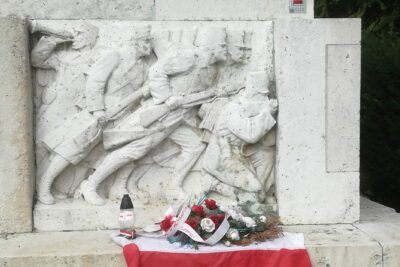
Browse the lists this tour appears in