
Reviewed · COMMUNIST HISTORY TOURS
Life Under Communism” with optional visit to the House of Terror
Budapest’s communist past is not tucked away in one museum. It is scattered across grand squares, old battle sites, memorials, and everyday cafés. This private tour connects those pieces, from the Soviet monument on Liberty Square to the 1956 resistance at Corvin köz, then adds coffee at Bambi Presszó, a surviving piece of old Budapest life.
I especially like the firsthand stories from guides such as Miklós and Balázs, and the way the route links history to real streets rather than treating the subject as a classroom lecture. I also like the choice of adding Memento Park or the House of Terror. The main caution is simple: confirm your selected option, inclusions, and meeting details before you go, since the city walk, statue park, and museum visits are different products within one booking.
Key points before you book
- 1956 comes alive at Corvin köz, where young Hungarians fought Soviet tanks with guns and Molotov cocktails.
- Liberty Square offers a striking political contrast, with a Soviet war memorial near symbols of modern American influence.
- Bambi Presszó adds an everyday human touch, with coffee in one of Budapest’s last cafés linked to communist-era culture.
- You choose the final focus, either the city tour, Memento Park, or the House of Terror Museum.
- This is a private experience for up to five people, so your guide can respond to your interests and questions.
- The price is $280.33 per group, making the value strongest for four or five people rather than a solo visitor.
Why Budapest’s communist story works best on foot
A museum can explain political systems. A walking route shows you where those systems affected ordinary life. Here, the subject moves from Soviet occupation and the 1956 uprising to public memory, propaganda, and the quiet survival of old habits.
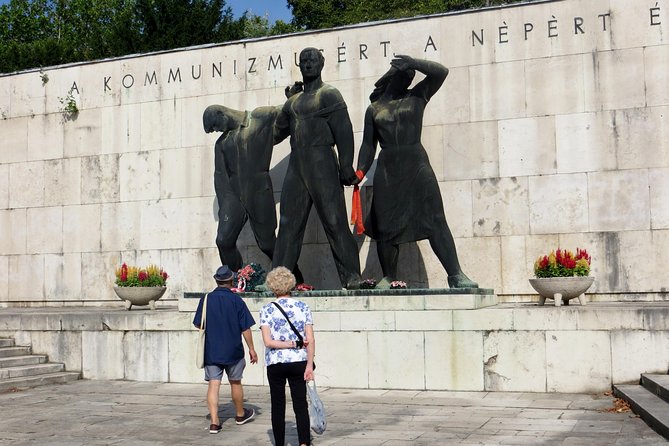
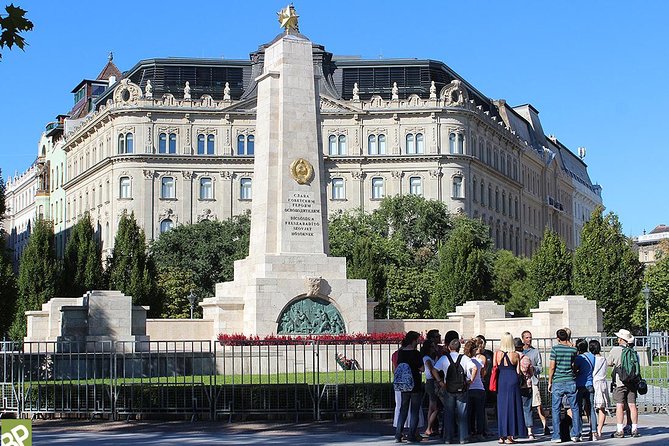
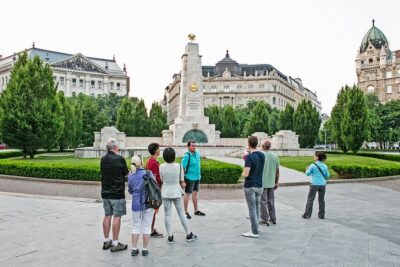
The tour begins at Liberty Square, or Szabadság tér. The square is broad and formal, shaped by the Habsburg period, but its modern meaning comes from the political symbols placed around it. You look at the large memorial to the Soviet army, built to mark the siege of Budapest near the end of World War II.
That memorial remains a sensitive sight. It recalls the Soviet forces that defeated Nazi Germany in Hungary, but it also points toward the decades of Soviet control that followed. A good guide can help you hold both facts at once. The tour is strongest when it avoids treating history as a simple contest between heroes and villains.
The square also includes reminders of the Cold War world beyond Hungary. The route gives you a chance to consider how Budapest’s public spaces were used to express power, loyalty, fear, and resistance. You are not only looking at statues. You are reading the city’s political language.
More communist-era history walks:
- Budapest: Communist History Tour with House of Terror Option
★ 4.8 · 182 reviews - Communism in Hungary with a Historian
★ 5.0 · 70 reviews - Budapest: 3-Hour Walking Tour About Communism (Small Group)
★ 4.7 · 70 reviews
Liberty Square and the Soviet memorial
Liberty Square is a useful opening because it contains several layers of Budapest in one place. Its spacious lawns and formal setting make it pleasant for a pause, yet the square’s monuments carry heavy memories.
The Soviet memorial is grand in scale, which helps explain the power of public art under state socialism. Monumental design was meant to shape public memory. It told people who had liberated them, who deserved honor, and which version of the past should appear in the city center.
Your guide may also explain why these symbols remain in place. Hungary did not erase every communist-era monument after 1989. Some were moved to Memento Park, while others stayed because they marked events that could not simply be removed from public memory.
This is an excellent stop for anyone interested in how cities deal with difficult monuments. It also sets up one of the tour’s key ideas: the past can be rejected politically while its physical traces remain.
Parliament and the tragedy of Kossuth Square
From Liberty Square, the route continues toward Kossuth Square and the Hungarian Parliament Building. You receive about 20 minutes at the square, with no admission fee for the exterior stop.
The building itself is one of Budapest’s grandest sights, but the important story here is the 1956 revolution. On October 25, a crowd gathered in front of Parliament. Protesters included civilians of different ages, including women, children, and older people. A firefight broke out, and the exact number of people killed remains uncertain.
That uncertainty is part of the story. The event became known as a massacre, and news of it helped push Hungary toward open revolt and armed struggle. At Kossuth Square, the revolution stops being an abstract Cold War event. You can picture a civilian crowd facing a government that had lost control and a security force prepared to use violence.
The square also gives you a chance to see the Museum of Ethnography and the Ministry of Agriculture, both facing Parliament. The setting is polished and official, but the guide’s account brings in the fear and confusion that formal architecture cannot show.
If you want a full museum visit at Parliament, this tour does not provide that. The stop is about the square, the building’s exterior, and the 1956 events connected to it.
Petőfi Statue and Március 15. Square
The route then moves to the Petőfi Statue and Március 15. Square near Erzsébet Bridge. The area sits beside the oldest church of Budapest and was renovated in 2011.
This stop connects political protest with public life. The statue honors Sándor Petőfi, the poet linked to Hungary’s 1848 revolution, and the square remains a place where people gather. Its importance is not limited to communist history. Instead, it helps you see how Hungarian national identity has been shaped by repeated struggles for independence.
The location at the foot of Erzsébet Bridge also gives the walk a change of pace. You move away from the formal government district and toward a more open, social part of the city. That shift is useful because the tour is not only about battles and official memorials. It also asks how national memory appears in ordinary urban spaces.
Same city, a completely different way to spend an afternoon:
- Budapest: City Highlights Cruise with Welcome Drink
★ 4.6 · 35,610 reviews - Budapest: Unlimited Prosecco, Beer and Aperol Spritz Cruise
★ 4.8 · 25,310 reviews - Budapest: Széchenyi Spa Day Ticket with Optional Upgrades
★ 4.3 · 23,911 reviews - Budapest: Nighttime or Daytime Sightseeing Cruise
★ 4.2 · 21,062 reviews
Corvin köz and the street fight of 1956
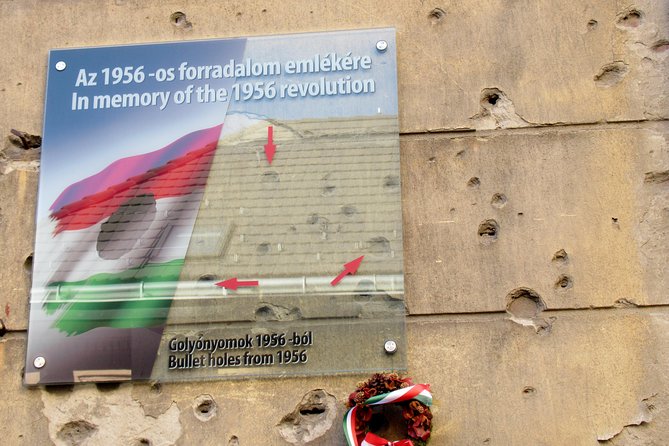
Corvin köz is likely to be the most powerful stop for people interested in the 1956 uprising. In southeast Budapest, this small area became one of the main resistance centers.
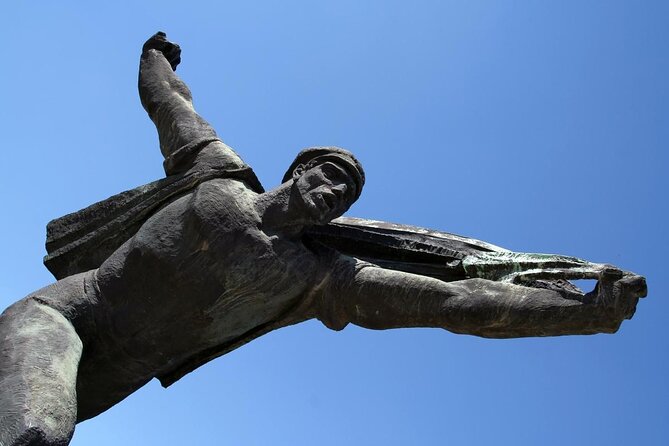
Local young people fought Soviet forces with weapons taken from soldiers and with Molotov cocktails. They faced Soviet tanks in a struggle that was brave, desperate, and ultimately doomed after the invasion crushed the revolution.
The value of visiting Corvin köz is its scale. The location is not a grand ceremonial square. It is a street-level place tied to neighborhood resistance. You can better understand how a national uprising was carried out by people who knew their own streets and were willing to fight from them.
Your guide should explain both the courage and the aftermath. The Soviet invasion did not merely end a political protest. It brought arrests, deaths, prison sentences, exile, and years of fear. A personal account from a guide who grew up with memories of dictatorship can make this portion more direct than a standard sightseeing tour.
This is also where guide quality matters most. Some past participants have praised Miklós for explaining how people survived dictatorship and for answering questions patiently. Others found a guide too quiet or too detached. If you have hearing concerns or want a more discussion-heavy tour, tell the company before the day begins.
Crossing the Danube to St. Gellért Square
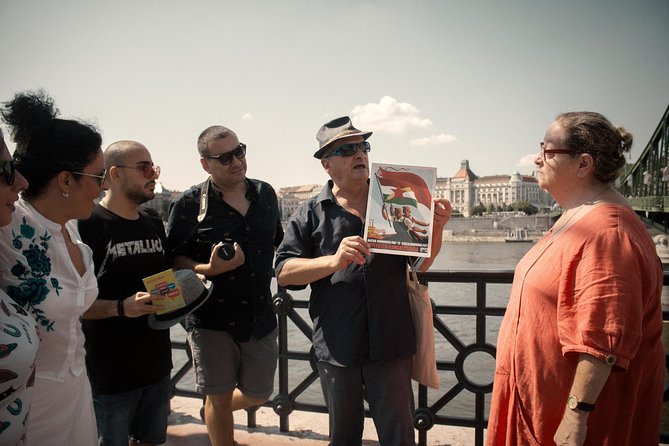
The walk continues across one of Budapest’s bridges toward the foot of Gellért Hill. The crossing gives you broad views and a physical sense of the city’s division between Pest and Buda.
You arrive at St. Gellért Square, named for Bishop Gellért, also known as the Martyr. From here, you can see the Liberty Statue on Gellért Hill. The statue was erected in 1947 to commemorate the Soviet liberation of Hungary.
Again, the meaning is complicated. The word liberation sounds clear, but Soviet military victory led to a political system many Hungarians later resisted. The statue therefore carries two memories at once: the defeat of Nazi rule and the beginning of Soviet domination.
This stop is especially good for photographs and for a pause after the longer walk. The route covers several districts and includes bridges and open squares, so wear comfortable shoes and expect a moderate level of physical effort.
Bambi Presszó and the taste of daily life
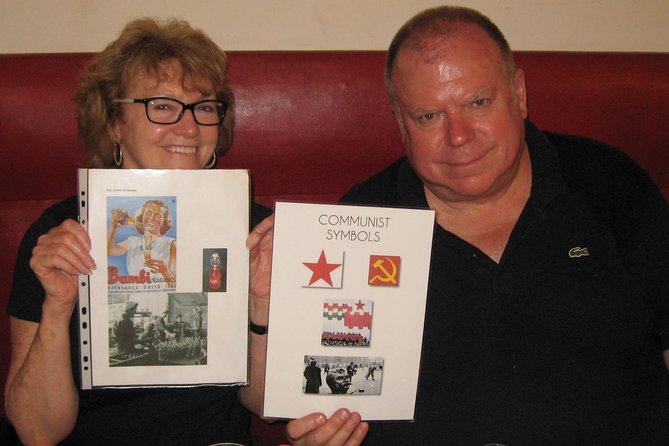
Coffee at Bambi Presszó is one of the tour’s most distinctive details. The café is described as the last stronghold of communist culture, and it gives you a chance to discuss the era through daily habits rather than only through political violence.
A coffeehouse can reveal a lot about a period. People met, talked, waited, watched one another, and made do with what was available. The setting may help you picture the social world behind the Iron Curtain, where private conversations and small routines mattered.
Food and drink beyond the included coffee are not covered, so keep some Hungarian forints handy if you want anything extra. The rest stop also provides a chance to use facilities and sit down, which can make the route easier for older members of your group.
The coffee stop is not a major attraction in the usual sightseeing sense. That is precisely why it works. You are given time to ask questions and hear personal stories, rather than rushing from monument to monument.
Choosing Memento Park for statues and propaganda
If you select Memento Park, allow about one hour for the visit. Admission is included when this option is chosen, but transportation costs may still apply.
After communism collapsed in 1989, Budapest had to decide what to do with public art created to honor the old system. Instead of destroying every statue, the city moved many of them to Memento Park, which opened in 1993.
The park lets you examine communist sculpture in a setting removed from the city center. Lenin statues, Soviet soldiers, and other political works can be considered as objects of art and propaganda. Without their original locations, they also look different. The park creates distance, but it does not erase their purpose.
I would choose Memento Park if you want to understand how a post-communist city manages unwanted symbols. It is also a good choice if you prefer visual evidence and open-air exhibits to a museum focused on documents and interiors.
Budget for local transportation if it is not included in your chosen package. One group paid about 5,000 Hungarian forints for a group travel pass, and transportation can affect the total value of the experience. Ask about this cost before booking, especially if you are comparing the price with a self-guided visit.
Choosing the House of Terror Museum
The House of Terror Museum is the other optional visit and takes about one hour. Admission is included when you select this option.
The museum occupies a renovated building on Andrássy Avenue. Its dark exterior, blade-like walls, decorative entablature, and granite path make the building feel like a monument before you enter. Inside, a T-54 tank is displayed, giving an immediate visual link to Soviet military power.
The museum covers the dictatorships that controlled Hungary, including the period associated with the Arrow Cross and the communist secret police. The supplied details focus on the building and its presentation, so you should treat this option as a museum visit rather than assume the guide will provide a long lecture inside every room.
This choice suits you if you want a more intense, indoor presentation of repression and state terror. It may be less suitable if you prefer a relaxed walk or want to spend most of your time discussing the 1956 street battles.
Be especially careful when booking this option. The experience has several choices, and the city walk does not automatically mean you will enter the House of Terror. Check your confirmation and make sure the selected visit is clearly stated.
How much value do you get for $280.33?
The listed price is $280.33 for a private group of up to five people. That works out to about $56 per person for five people, or about $93 per person for three. For a couple, the cost is much harder to justify unless private guiding is important to you.
The price includes an English-speaking local guide, handouts, and the entrance ticket for the selected visit option. It does not include extra food or drink, hotel pickup and drop-off, or entrance fees not listed.
The strongest value comes from the private format. You can ask questions, request more context, and shape the conversation around family history, architecture, politics, or public memory. Miklós has also helped people use Budapest’s public transportation, which can be useful if you are still getting your bearings.
The weak point is the extra cost and possible confusion around transportation and options. One group felt the price was high after paying separately for transit and admission. Since the listing information says admission is included only for the selected visit option, read the final booking details closely.
Guide style, timing, and practical fit
The experience is offered in English and lasts about three hours, although a private outing can run longer if the group needs extra time or assistance. The tour has been booked about 28 days in advance on average, so it is sensible to reserve early if your Budapest dates are fixed.
Past guide names connected with the experience include Miklós, Balázs, Agy, and Fungarian. The strongest accounts describe guides who explain history with personal stories, adapt the route, and offer help with public transportation. The main criticism concerns a guide who spoke too softly and seemed disengaged.
That difference makes communication important. At the start, tell your guide that you want clear speech and time for questions. If you select the House of Terror or Memento Park, confirm the exact plan before setting out.
Pickup is offered, but hotel pickup and drop-off are listed as not included. That means you should not assume a private car transfer is part of the price. The tour is near public transportation, and the guide may use or explain the transit system.
Children must be accompanied by an adult. Service animals are allowed. You should have moderate physical fitness for the walking, bridge crossing, and use of public transportation if your option requires it.
Who should choose this Budapest experience?
I would recommend it to you if you want political history tied to actual streets and prefer asking a guide questions over following a large group. It is also a good match for families or small groups who want one private conversation instead of several separate museum visits.
History fans will get the most from Corvin köz, Kossuth Square, and the optional House of Terror. People interested in monuments and public memory may prefer Memento Park. If you want the gentlest version, choose the city walk and coffee without adding a museum.
I would hesitate if you want a tightly scripted tour with guaranteed depth inside the museum. The quality depends heavily on the assigned guide, and the difference between an engaging storyteller and a soft-spoken guide can change the whole afternoon.
Free cancellation is available up to 24 hours before the start time. Changes or cancellations made later are not refunded, so keep that deadline in mind.
Should you book it?
Book this tour if you want a private, human-scale look at Budapest under communism, especially if your group can share the $280.33 cost among four or five people. The combination of Liberty Square, Parliament, Corvin köz, Bambi Presszó, and either Memento Park or the House of Terror creates a useful bridge between public monuments and private life.
Before paying, confirm three things: your chosen option, the guide’s meeting and pickup plan, and any transportation costs. If you do that, this can be a thoughtful and unusual addition to a Budapest visit. If you are a couple on a tight budget, compare the cost with visiting the museum or Memento Park independently.
FAQ
How long does the experience last?
The tour lasts approximately three hours. An optional visit to Memento Park or the House of Terror takes about one hour.
How much does the private tour cost?
The listed price is $280.33 per group of up to five people.
Is the tour conducted in English?
Yes. The experience is offered in English.
Is hotel pickup included?
Pickup is offered, but hotel pickup and drop-off are listed as not included. Confirm the exact meeting arrangement before booking.
Can I choose between Memento Park and the House of Terror?
Yes. The experience offers a city tour option, a Memento Park option, and a House of Terror Museum option. Select and confirm the option you want.
Are admission tickets included?
Admission is included for the chosen visit option. Entrance fees not listed are not included.
What is the cancellation policy?
You can cancel up to 24 hours before the experience start time for a full refund. Cancellations or changes made less than 24 hours before the start time are not refunded.
Just added around Budapest
- Budapest: Private, Personalized Pub Crawl, 3 drinks included★ 4.5 · 3 reviews
- Private day trip from Budapest to Bratislava, Vienna, and back★ 3.5 · 3 reviews
- Budapest: Private Adventure Sightseeing Bicycle Tour★ 4.5 · 3 reviews
- Private Danube Bend tour – full day★ 4.5 · 3 reviews
- Budapest: Guided City Walking Tour in Buda and Pest★ 5.0 · 3 reviews
- Budapest Old Jewish Quarter History Private Walking Tour★ 5.0 · 3 reviews
- Lake Balaton Full Day Private Wine Tour★ 5.0 · 3 reviews
- Budapest Urban Feast – Food Tour with Wine Tasting & Coffee House★ 4.5 · 3 reviews
Communist History Tours, compared.
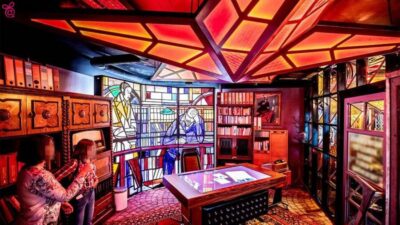
Communist History Tour with House of Terror Option
Read our review →
3-Hour Walking Tour About Communism (Small Group)
Read our review →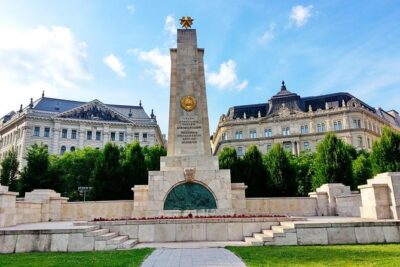
Lives of Hungarians Under Communist and Capitalist system
Read our review →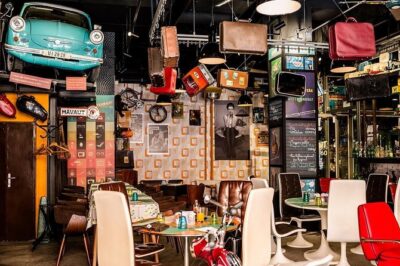
Private Budapest Hammer & Sickle Communist Times Tour
Read our review →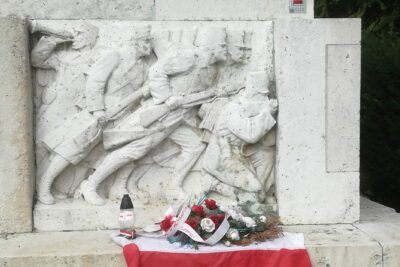
Browse the lists this tour appears in