
Reviewed · HISTORICAL TOURS
Budapest: Historic Downtown ride on E-Bicycles Buda & Pest
Budapest is spread across two very different sides of the Danube, and this 3.5-hour e-bike tour lets you cover both without spending the day on foot. You ride from the Jewish Quarter to Heroes’ Square, Parliament, the Shoes on the Danube Bank, Chain Bridge, Fisherman’s Bastion, and back through the central market area.
I like two things in particular: the electric assist turns the climb to Castle Hill into an easy ride, and the route gives you a useful first look at much of Budapest before you decide where to return. Guides such as Karoly, Oliver, Balint, Susie, and Dori are praised for clear English, humor, and strong local context.
The tradeoff is pace. You stop at many landmarks, but most stops are brief, and this is a city-street ride rather than a relaxed cycle through quiet lanes. You need to be comfortable riding near traffic, and there is no time to enter the churches, museums, baths, or other buildings.
Key points to know before booking
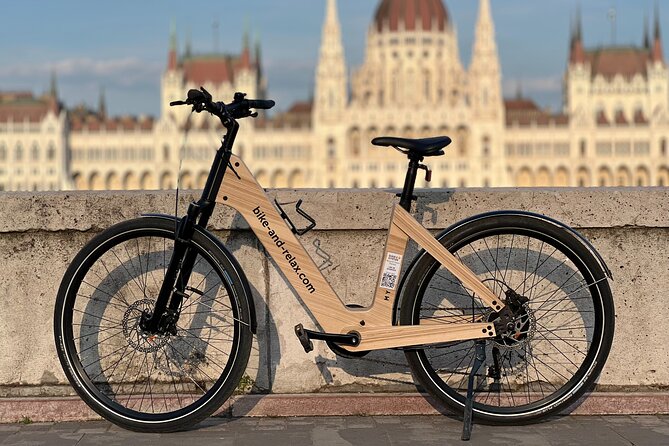
- Castle Hill without the hard climb: The e-bike’s motor is the main reason to choose this tour over a standard bicycle ride.
- Both Buda and Pest in one outing: The route crosses the Danube by Chain Bridge and Liberty Bridge, covering a wide sweep of the city.
- Small groups of up to 10: A compact group makes it easier for the guide to keep everyone together in city traffic.
- A strong first-day orientation: You see many headline sights, then can return later to the places that deserve more time.
- Short stops, no interior visits: Expect exterior views and explanations, not entry to Parliament, the baths, the synagogue, or the churches.
- Not for complete cycling beginners: You should already be able to control a bicycle safely in traffic and meet the stated height and age requirements.
Starting in the Jewish District at Gozsdu Udvar
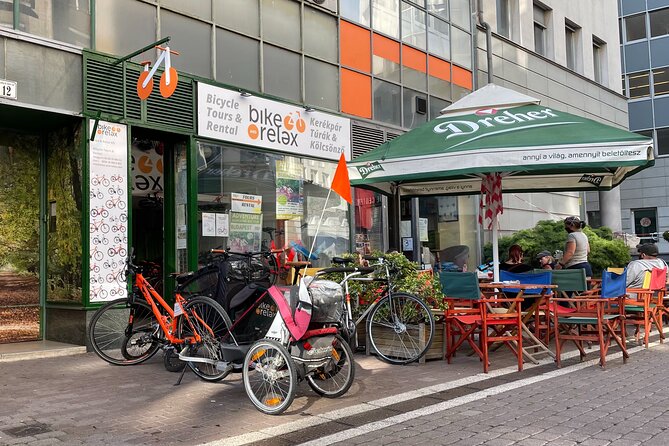
The tour begins at Bike & Relax, Madách Imre út 12, in the back part of Madách Square, close to Gozsdu Udvar. This is a convenient central location in Budapest’s Jewish District, an area known for restaurants, bars, courtyards, and nightlife.
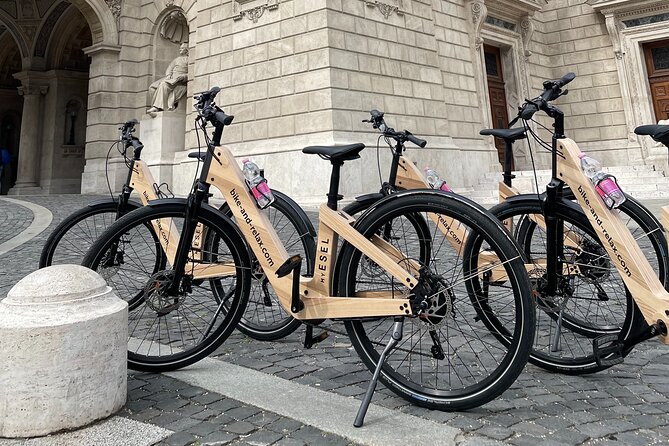
You receive the bicycle, helmet, and bottled water there. Helmet use is not obligatory, though I would wear one, especially because the route includes ordinary city streets and busy crossings. Free luggage storage is also available during the ride, a useful touch if you are carrying a small bag after checking out of a hotel.
Allow a little time to get comfortable with the bike before setting off. The electric assist is easy once you understand it, but one participant specifically advised practicing before the tour begins. That is sensible advice. You should know how the brakes, gears, and motor assistance feel before joining a group in traffic.
The group can include up to 10 people. That is small enough for the guide to check behind, give instructions, and stop if someone falls back, while still large enough to feel like a shared outing rather than a private tour.
A few more Budapest half-days to weigh up
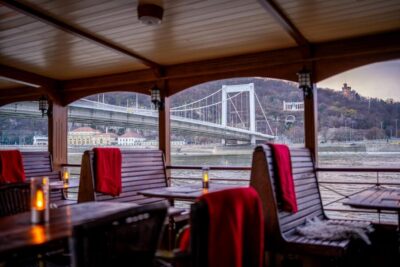
- Budapest: Historic Cruise with Welcome Drink
★ 4.7 · 6,512 reviews - Budapest Historical Sightseeing – Free Walking Tour
★ 5.0 · 1,302 reviews - Buda Castle District Dark History, Legends and Vampire Night Tour
★ 4.5 · 1,240 reviews
Andrassy Avenue to Heroes’ Square
From the Jewish District, you head along Andrassy Avenue, one of Budapest’s grandest routes. The ride passes the Hungarian State Opera House and the House of Terror before reaching Heroes’ Square.
This opening section quickly shows you how Budapest changes from central streets to monumental avenues. The House of Terror provides a reminder of the city’s 20th-century dictatorships, while Andrassy Avenue gives the ride a stately beginning.
Heroes’ Square is one of the longer stops, at about 30 minutes. The monument presents major figures from Hungarian history, including kings and national leaders, and the surrounding buildings frame the entrance to City Park.
The guide’s explanation matters here because the statues can otherwise seem like a grand but confusing lineup. You get a basic framework for Hungary’s past, including its rulers and struggles, without spending an hour inside a museum. The stop is still mainly about the exterior setting, so history fans who want detailed interpretation should plan a separate visit to Budapest’s museums or historic sites.
Vajdahunyad Castle and Szechenyi Baths
Inside City Park, the route continues to Vajdahunyad Castle. The castle looks medieval, but parts of it were created as an architectural display, making it a playful mix of styles rather than a single-period fortress.
You get around 15 minutes here. That is enough to see the striking towers and courtyards, hear the story behind the unusual architecture, and take a few photographs if the group moves efficiently. It is not enough for a slow architectural study or a full interior visit.
The next stop is the Szechenyi Baths, another 15-minute exterior visit. The building is one of Budapest’s best-known thermal bath complexes, and this is a good point for the guide to explain the city’s hot springs and bathing tradition.
Do not confuse seeing the baths with using them. No entrance is included, and the schedule does not allow time for swimming. If a soak is part of your Budapest plans, book it separately and keep this tour focused on orientation.
The City Park section is especially useful because these sights sit away from the tight center. An e-bike lets you link them with downtown without losing much time to public transport or long walks.
Liszt Academy and the return through the Jewish Quarter
The route returns along Andrassy Avenue, then turns toward the Liszt Academy and the Jewish District. The academy is associated with composer Ferenc Liszt, but the building itself is also worth noticing for its Art Deco interior and exterior design.
The stop lasts about 15 minutes. You will hear about the academy and see its distinctive architecture from outside. An interior visit is not part of the tour, so music enthusiasts may want to come back later if opening hours and tickets allow.
From here, you ride through the Jewish Quarter toward downtown. This brings the outing back to the area where it began, but the route then continues to several of Budapest’s major central landmarks.
This part of the ride also explains why an early booking can be useful. You get a sense of how the Jewish Quarter connects with Andrassy Avenue, City Park, and the Danube, which makes later independent exploring less confusing.
Same city, a completely different way to spend an afternoon:
- Budapest: City Highlights Cruise with Welcome Drink
★ 4.6 · 35,610 reviews - Budapest: Unlimited Prosecco, Beer and Aperol Spritz Cruise
★ 4.8 · 25,310 reviews - Budapest: Széchenyi Spa Day Ticket with Optional Upgrades
★ 4.3 · 23,911 reviews - Budapest: Nighttime or Daytime Sightseeing Cruise
★ 4.2 · 21,062 reviews
St. Stephen’s Basilica and Liberty Square
St. Stephen’s Basilica receives a short stop of about 10 minutes. It is Budapest’s largest church and one of the most prominent buildings in the city center. The guide also explains the Holy Right, the preserved hand associated with Saint Stephen and an important religious symbol in Hungary.
Ten minutes gives you a quick look and a short explanation. It does not give you time to explore the interior in detail, climb to a viewpoint, or linger over the artwork. The basilica is an obvious candidate for a return visit if you want to go inside.
Next comes Szabadsag ter, or Liberty Square, for about 15 minutes. This open space sits in Budapest’s financial district and carries heavy political and wartime associations. Monuments and a fountain help frame stories connected with World War II and later Hungarian struggles, including the 1956 uprising against communism.
This is one of the more useful stops for context. Budapest’s grand facades can make the city feel purely imperial, but Liberty Square points to the conflicts that shaped modern Hungary. The guide’s role is important here, since the monuments need explanation to make sense.
Parliament and the Shoes on the Danube Bank
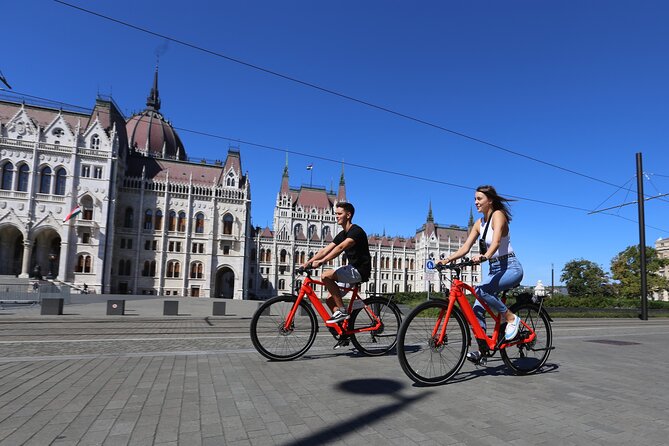
The Hungarian Parliament Building is one of the tour’s major visual rewards. From the outside, you see the vast Gothic Revival structure beside the Danube, built with late 19th-century technology and ambition.
The stop lasts about 15 minutes. You can admire the building and hear about its place in Hungarian political life, including its connection with the 1956 uprising. An interior tour is not included, so you should arrange a separate Parliament visit if you want to see the grand halls and the Hungarian crown regalia.
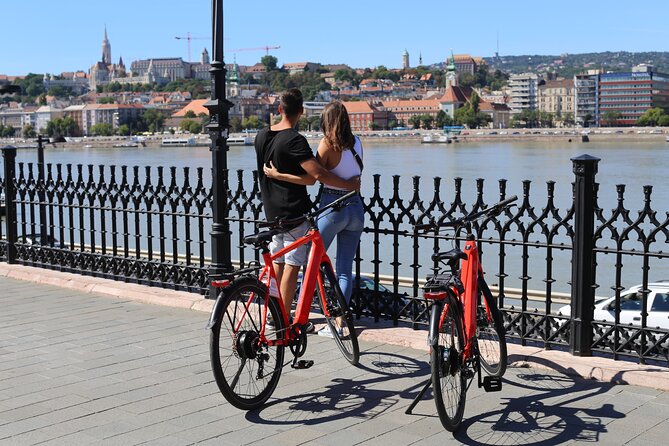
After Parliament, the route reaches the Danube riverbank. The riverfront views are among the strongest photo opportunities of the day, with Buda rising across the water and the historic banks forming a broad city panorama.
The Shoes on the Danube Bank memorial follows. The iron shoes honor Jewish people murdered during the Nazi period in Hungary. The stop is short, around 10 minutes, and the shoes may not be directly reachable if traffic conditions prevent the group from getting close.
This is a quiet and serious part of the route. The bicycle format means you continue after a brief explanation, but the memorial deserves respectful attention. If you want more time, note its position so you can return on foot later.
Crossing Chain Bridge and climbing to Fisherman’s Bastion
The ride crosses the Széchenyi Chain Bridge, Budapest’s oldest bridge across the Danube and one of its defining structures. The bridge links Pest with Buda, so this is the point where the tour changes from broad central avenues to the rising streets of Castle Hill.
Here the electric bicycle earns its price. The climb to the castle area would be tiring on a normal bicycle, especially after several hours of riding. With the motor assistance, you can reach the upper district without turning the outing into a fitness test.
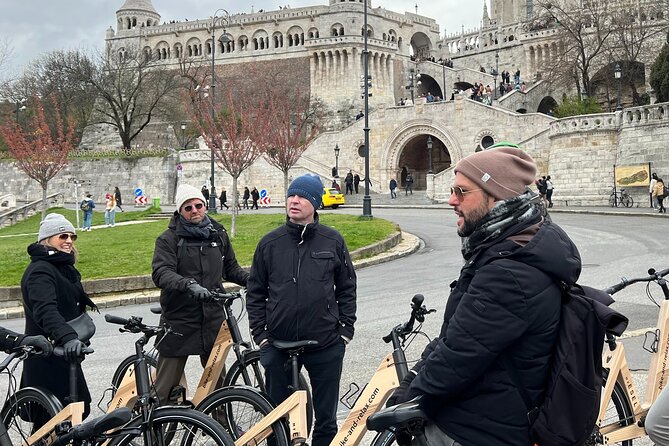
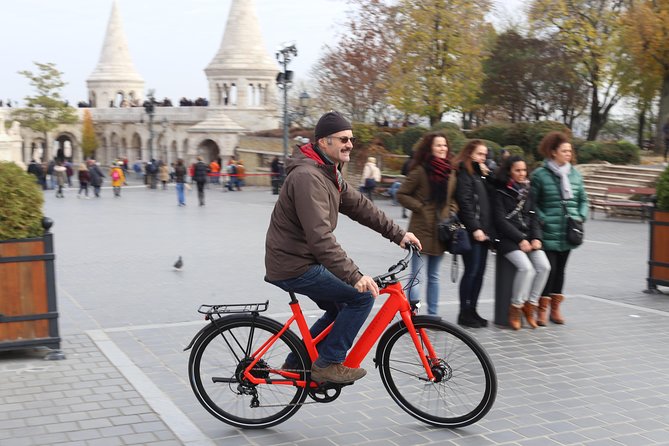
The Castle Hill stop lasts about 35 minutes, the longest stop of the tour. You see Matthias Church and Fisherman’s Bastion, two of Budapest’s most recognizable sights. The bastion provides wide views over the Danube and Pest, while Matthias Church brings together centuries of religious and royal history.
You will not have time for a detailed visit inside either building. Still, the short stop works well for a first look, especially because the route gets you to the hill with little physical strain. Several guides, including Oliver, Karoly, Balint, and Dori, are praised for keeping the group together on the climb and for explaining the city clearly along the way.
This is also where riding ability matters most. The bike makes the hill easier, but it does not remove the need to steer, brake, and watch other road users. If you rarely ride or feel uneasy in traffic, this is not the right tour for learning from scratch.
Royal Gardens, Rudas Baths, and Liberty Bridge
After Castle Hill, you return toward the Danube and pass the Castle, or Royal, Gardens. The route then continues by the historic Rudas Baths, a Turkish-era thermal bath complex.
There is no time to swim. The baths are another exterior sight and another reminder that Budapest’s bathing culture includes more than the better-known Szechenyi complex. If thermal bathing is a priority, plan a separate visit rather than expecting this ride to provide it.
The route then reaches Gellert Thermal Bath before crossing Liberty Bridge to the Pest side. Liberty Bridge is a historic crossing and a well-known meeting point, with open river views that can be particularly attractive around sunset.
The bridge crossing gives you a different look at the city than Chain Bridge. Instead of simply checking off another landmark, you see how the bridges organize Budapest, linking the hills of Buda with the flatter streets of Pest.
Central Market Hall and the Great Synagogue
Near the river on the Pest side, you pass the Central Market Hall. The market remains in operation, so you see an active part of daily Budapest rather than only monuments and government buildings.
The tour does not list a full market visit, and time is limited. Still, note the location. It is an easy place to revisit for food, produce, souvenirs, and a closer look at the historic building.
The final major stop is the Great or Central Synagogue at the entrance to the Jewish Quarter. You receive about five minutes here, enough to see the impressive facade and hear about the Jewish Museum and the memorial to Holocaust victims.
No entrance is included. The short stop is best treated as a marker for a later visit, especially if you want to explore the synagogue, museum, and surrounding district at a slower pace. The ride then returns to Bike & Relax.
What the $65.33 price really buys you
At $65.33 per person, the main value is not admission to attractions. No entrances are included, and nearly all the stops are exterior visits.
You are paying for a bicycle, electric assistance, helmet, bottled water, luggage storage, route planning, and an English-speaking guide for about three and a half hours. You also avoid the time and effort involved in organizing a route across both sides of the river.
I consider the price reasonable if you want a broad introduction to Budapest and would otherwise spend money on several short transport rides or a bicycle rental. The electric motor is particularly valuable because the itinerary includes Castle Hill. A regular bicycle could make that section tiring, while walking would reduce the number of sights you can cover.
The price is less attractive if you prefer slow sightseeing, long photo stops, or interior visits. You will need to return independently to Parliament, St. Stephen’s Basilica, the baths, the synagogue, and other sites if you want to go inside.
The tour is also best booked near the beginning of your stay. It helps you get your bearings, identify areas worth revisiting, and gather practical suggestions about places to eat or drink from the guide.
Who should choose this Budapest e-bike tour?
I would choose it for an active first day in Budapest, especially if you want to see both Buda and Pest before committing time to individual museums and monuments.
It suits you if:
- You can ride a bicycle safely in city traffic.
- You are at least 13 years old and meet the stated height requirement of about 160 centimeters.
- You want to cover a lot of ground without a strenuous standard-bike ride.
- You are comfortable with exterior stops and short explanations.
- You like history, city views, and a fast-moving schedule.
- You want a small group rather than a large coach tour.
You should think twice if you are a complete cycling beginner, dislike riding near traffic, need a child-sized e-bike, or weigh more than 110 kilograms. The operator also does not recommend it for people under 155 centimeters, so check your fit before paying.
Wear clothes and shoes suitable for cycling. The tour runs in most conditions only when the weather is suitable, and rain or other poor weather can lead to a new date or a full refund.
Should you book it?
Book this tour if your goal is to see the shape of Budapest quickly, enjoy a little riding, and save your energy for the city’s museums and restaurants. The route covers an impressive amount, and the e-bike makes the Buda climb the clear highlight.
Skip it if you want to enter several attractions, take an unhurried set of photographs, or avoid city traffic altogether. For most capable cyclists, though, the combination of good equipment, a small group, strong English-speaking guides, and a wide route makes $65.33 a fair buy. Schedule it early, listen carefully to the guide’s suggestions, and mark the places you want to revisit on foot.
FAQ
How long does the Budapest e-bike tour last?
The tour lasts approximately 3 hours and 30 minutes.
Where does the tour start and end?
It starts and ends at Bike & Relax Budapest, Madách Imre út 12, 1075 Hungary.
Does the tour include both Buda and Pest?
Yes. The route visits sights in Pest, crosses the Danube, climbs to Castle Hill in Buda, and crosses back to Pest by Liberty Bridge.
Are bicycle rental and safety equipment included?
Use of the e-bike, bottled water, and a helmet are included. Helmet use is not obligatory.
Are attraction entrance fees included?
No. The tour does not include entry to Parliament, the baths, the Great Synagogue, churches, museums, or other buildings mentioned along the route.
How many people can join the tour?
The maximum group size is 10 participants.
Is the tour suitable for children or cycling beginners?
The minimum age is 13, and no children’s e-bikes are available. You must be able to ride a bicycle safely in traffic, and the tour is not recommended for complete bicycle beginners.
Can I cancel for a full refund?
Yes, if you cancel at least 24 hours before the experience begins. Cancellations or changes made less than 24 hours before the start are not refunded or accepted. If poor weather or an insufficient minimum number causes the operator to cancel, you will be offered another date or a full refund.
Just added around Budapest
- Budapest: Private, Personalized Pub Crawl, 3 drinks included★ 4.5 · 3 reviews
- Private day trip from Budapest to Bratislava, Vienna, and back★ 3.5 · 3 reviews
- Budapest: Private Adventure Sightseeing Bicycle Tour★ 4.5 · 3 reviews
- Private Danube Bend tour – full day★ 4.5 · 3 reviews
- Budapest: Guided City Walking Tour in Buda and Pest★ 5.0 · 3 reviews
- Budapest Old Jewish Quarter History Private Walking Tour★ 5.0 · 3 reviews
- Lake Balaton Full Day Private Wine Tour★ 5.0 · 3 reviews
- Budapest Urban Feast – Food Tour with Wine Tasting & Coffee House★ 4.5 · 3 reviews
Historical Tours, compared.
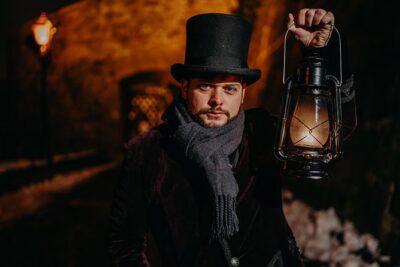
Buda Castle District Dark History, Legends and Vampire Night Tour
Read our review →
BloodThirsty Hungary: Walking tour & Dark Historical Stories
Read our review →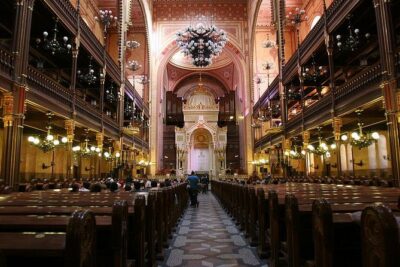
Budapest Jewish Heritage Memorial Walking Tour & Synagogue Entry
Read our review →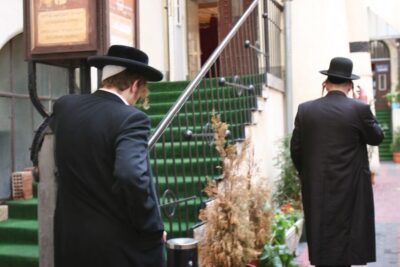
Jewish Heritage Guided Tour with Synagogue Ticket
Read our review →
Budapest Historic Downtown Bicycle Tour in small groups
Read our review →
Jewish History Guided Walking Tour with Historian
Read our review →
Communist History Tour with House of Terror Option
Read our review →Browse the lists this tour appears in