Reviewed · GUIDED
The beginner’s guide to Budapest – Budapest Sightseeing Tour
Budapest can feel scattered at first, with grand Pest boulevards, City Park sights, the Danube, and Buda’s hills pulling you in different directions. This tour solves that problem by using public transport like a local, linking major sights in a single, well-paced introduction.
I like the included coffee and cake, which gives the tour a human pause instead of turning it into a nonstop march. I also like the small group limit of 15, plus the useful map and follow-up recommendations. The main drawback is that three and a half hours leaves little time inside the attractions, and entry fees for Vajdahunyad Castle, St. Stephen’s Basilica, and Parliament are not included.
Key points to know before booking
- Public transport is part of the tour: You do not need to work out every tram or Metro connection on your own.
- The route covers a lot: Heroes’ Square, City Park, Andrássy Avenue, the Basilica, Liberty Square, Parliament, the Chain Bridge, and the Shoes on the Danube memorial all fit into one outing.
- Coffee and cake are included: This adds a welcome local-style break during the walk.
- The group is capped at 15 people: That is small enough for questions and easier movement through the city.
- Several sights are exterior visits: The tour gives you context and views, but admission is not included at three major stops.
- The tone is personal: Guides including Ferenc, László, and Fanni have been praised for patience, clear explanations, and a friendly approach.
Why this is a smart first look at Budapest
The best feature here is not any single monument. It is the route. You begin at the Hungarian State Opera House in central Pest, then move out toward Heroes’ Square and City Park before returning along Andrássy Avenue and heading toward the Danube.
That arrangement helps you understand Budapest as a connected city rather than a pile of separate photo stops. You see how grand avenues lead to public parks, how the river separates Buda and Pest, and how the city’s modern life sits beside reminders of war, dictatorship, religion, and monarchy.
The tour is especially useful on your first day. You get a broad orientation, a map to keep, and recommendations for what to see later. The included transport also removes one common source of holiday stress: figuring out which ticket to buy and how to reach the next sight.
There is a tradeoff. This is an introduction, not a series of full museum visits. Ten or 15 minutes at a location can give you a good explanation and time for photographs, but it will not satisfy you if you want to inspect every statue, enter every building, or linger over details.
A few more Budapest half-days to weigh up
- Budapest: Parliament Building Entry Ticket and Audio Guide
★ 4.5 · 3,844 reviews - Budapest: Opera House Guided Tour
★ 4.6 · 1,533 reviews - Budapest Small-Group Guided Tour on MonsteRoller e-Scooter
★ 5.0 · 1,517 reviews
Meeting at the Opera House and heading to Heroes’ Square
The tour begins outside the Hungarian State Opera House at Andrássy út 22. This is a fitting starting point because the Opera House introduces you to Budapest’s grand 19th-century character before the route moves into the wider city.
From there, the group uses public transport to reach Heroes’ Square. That practical start matters. You are not simply watching a guide point down a boulevard. You are learning how the city works, with your transport ticket already covered.
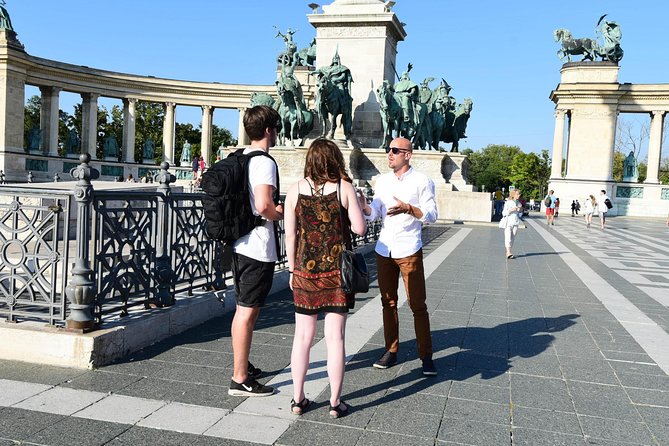
At Heroes’ Square, allow about 20 minutes. The broad square is framed by the Millennium Monument, with statues of the Seven Chieftains of the Magyars and other important Hungarian leaders. The central memorial complex is a quick lesson in how Hungary presents its national story.
You will also see the Memorial Stone of Heroes. It is often mistakenly called the Tomb of the Unknown Soldier, so this is a useful place for a guide to clear up the difference.
The square is open and imposing, but it can also feel like a short stop if you want close views of every figure. Use your time for the main arrangement, photographs, and the explanation of Hungary’s founding story. If you later want a slower look, you can return on your own.
City Park, the baths, and Vajdahunyad Castle
The route continues into City Park, where three very different Budapest sights sit close together.
First comes the Széchenyi Baths and Pool, the largest medicinal bath in Europe. You get roughly 15 minutes here, with no admission included. The tour does not turn into a bathing visit, so bring realistic expectations: this is a look at one of Budapest’s most famous institutions, not time to use the pools.
The baths are supplied by two thermal springs, with water temperatures listed at 74 and 77 degrees Celsius. Those figures help explain why thermal bathing is such a defining part of Budapest life, though you will not be soaking during this stop.
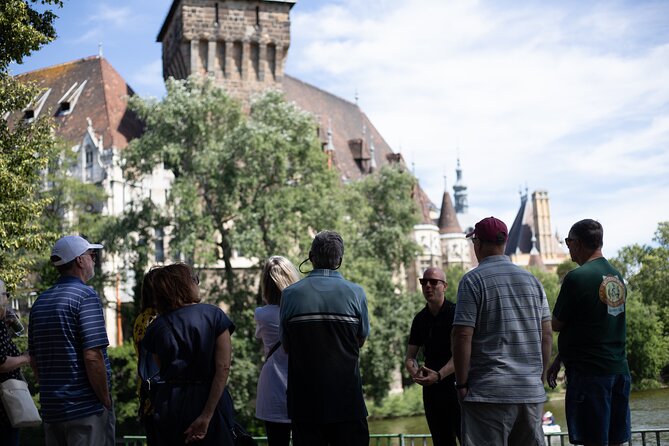
Next is Vajdahunyad Castle, with about 10 minutes outside. The castle was built in 1896 for the Millennial Exhibition, marking 1,000 years since the Hungarian Conquest of the Carpathian Basin in 895. Its design draws on several architectural styles, giving it an unusual storybook appearance.
Admission is not included here. The short visit is best treated as a quick introduction and a chance to see the setting. If castles and architecture are high on your list, you may want to return later with more time.
Together, these stops show a side of Budapest that a central walking tour can miss. City Park is not only about monuments. It also brings together bathing culture, national celebration, and public space.
Walking Andrássy Avenue toward the Opera House
The return route follows Andrássy Avenue, one of Budapest’s grandest streets. The avenue dates from 1872 and links Erzsébet Square with City Park. Its Neo-Renaissance mansions and townhouses helped earn it World Heritage recognition in 2002.
The scheduled stop is about 10 minutes, but the avenue works best as a moving lesson. Look above street level at the facades, balconies, and formal proportions. The value here is seeing how Budapest’s urban design creates a long ceremonial route between the city center and the park.
The Hungarian State Opera House receives another 10-minute stop. Since the tour begins here, the building frames the experience at both ends. It was designed by Miklós Ybl, one of the major Hungarian architects of the 19th century, and its Neo-Renaissance style fits the avenue around it.
No Opera House admission is included. You should think of this as an exterior and neighborhood visit, not an opera performance or interior tour. Still, the location makes sense in a first look at Budapest because it connects architecture, music, and the city’s old central boulevard.
Same city, a completely different way to spend an afternoon:
- Budapest: City Highlights Cruise with Welcome Drink
★ 4.6 · 35,610 reviews - Budapest: Unlimited Prosecco, Beer and Aperol Spritz Cruise
★ 4.8 · 25,310 reviews - Budapest: Széchenyi Spa Day Ticket with Optional Upgrades
★ 4.3 · 23,911 reviews - Budapest: Nighttime or Daytime Sightseeing Cruise
★ 4.2 · 21,062 reviews
St. Stephen’s Basilica and a café pause
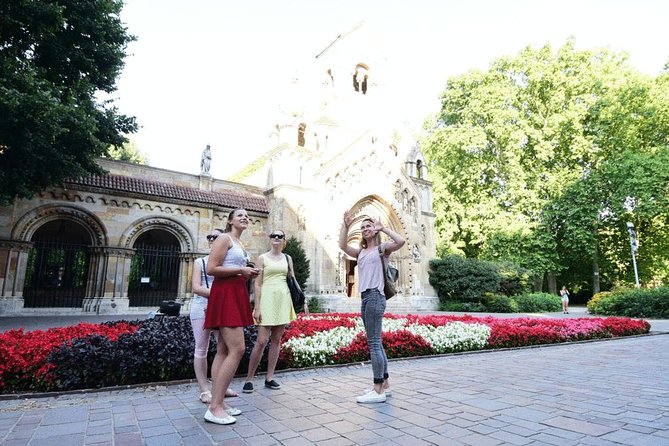
St. Stephen’s Basilica is the next major stop, with about 15 minutes allotted. The Roman Catholic basilica is named for Stephen, Hungary’s first king, who ruled around 975 to 1038. His right hand is kept in a reliquary, an unusual detail that gives the building a strong link to Hungarian kingship and religious tradition.
Admission is not included. Fifteen minutes gives you time to take in the exterior, hear the main story, and decide if you want to return for a fuller visit. If you are interested in churches, art, or the basilica’s interior, plan extra time outside the tour.
The included coffee and cake is one of the experience’s nicest touches. You also receive snacks and coffee or tea, and the stop takes place at a local café. That pause breaks up the sightseeing and gives you a chance to ask questions without trying to walk, listen, and keep up at the same time.
I value this sort of break because it adds local rhythm to the outing. You are not being rushed from one landmark to another for three and a half hours. The café stop also gives you a practical chance to review the map and note recommendations for the rest of your stay.
Liberty Square and Budapest’s difficult 20th century
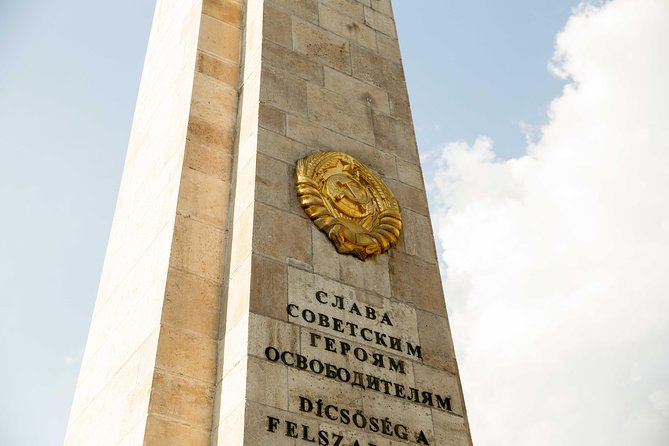
Liberty Square receives about 20 minutes, making it one of the longer stops. That extra time is useful because the square carries several layers of recent history.
The area includes memorials connected with Hungarian Jewish victims of the Holocaust and Soviet soldiers who liberated Budapest from the Nazis in 1945. The subjects are painful and politically sensitive, and they deserve more than a quick photograph. A good guide can help you understand why these memorials remain controversial and how different parts of Hungarian history are represented in the same public space.
The United States Embassy and the historicist headquarters of the Hungarian National Bank also face the square. These buildings add political and architectural context to the visit.
This is one of the points where a local guide brings more value than a self-guided route. You can see the square on your own, but the meaning behind its memorials is not always obvious. The 20-minute allocation gives enough room for explanation and questions, though the depth will depend on the guide and the group.
Parliament, the Danube, and the Chain Bridge
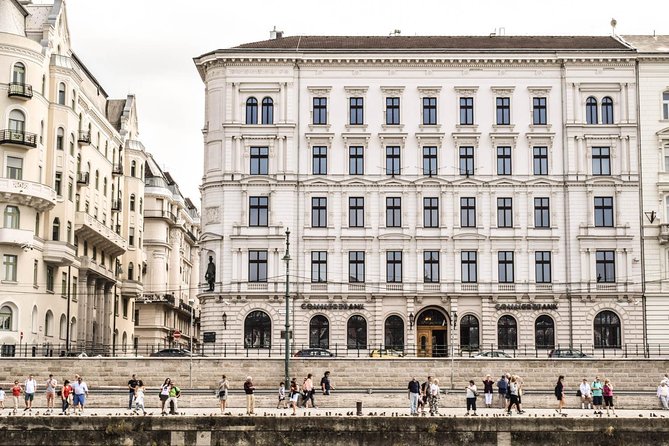
The Hungarian Parliament Building is next, with about 10 minutes. This is one of Budapest’s essential sights, and its position on the Danube makes it particularly striking from outside.
The building is the seat of Hungary’s National Assembly. Its Hungarian name, Országház, means House of the Country or House of the Nation. The tour gives you an introduction to the building and its role, but admission is not included, and the short stop is not an interior visit.
If you want to tour Parliament inside, treat this experience as a useful preview rather than a substitute. You will need a separate plan for entry, and the tour itself does not cover that ticket.
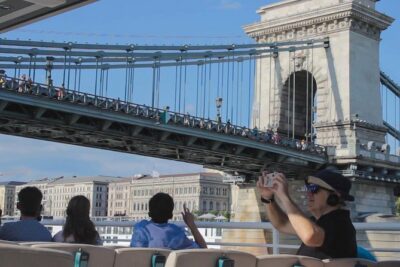
The route then reaches the Széchenyi Chain Bridge, with about 10 minutes for the crossing or viewing area. The bridge spans the Danube between Buda and Pest, the western and eastern sides of the capital. Its importance is both practical and symbolic: it links the two halves of the city that became modern Budapest.
You will not get a long river cruise or a dedicated viewpoint session here. The stop is short, but it helps place the city’s geography in your mind. From this point, you can better understand why the river is central to Budapest’s identity.
The Shoes on the Danube Bank
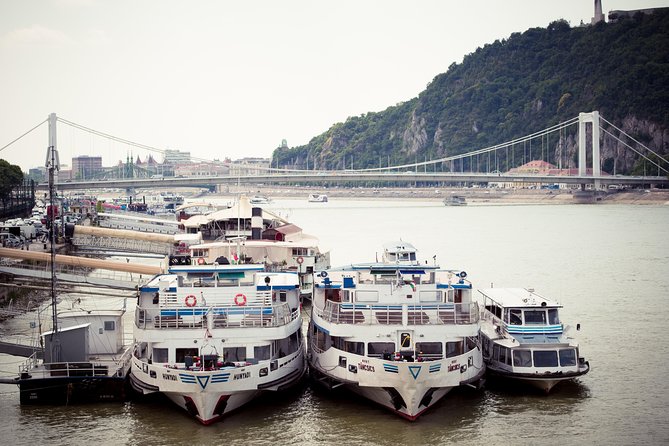
The final listed sight is the Shoes on the Danube Bank memorial, with around 10 minutes. Iron shoes line the riverfront in memory of Jewish people murdered by Arrow Cross militiamen during the Second World War.
This is a small memorial with a large emotional weight. The simple form makes it easy to understand, but it should not be treated as just another stop for quick photographs. The guide can provide the essential background, while you take a quiet moment to consider the people represented by the shoes.
Ending near the river gives the route a serious close. The tour has moved from national legends and grand architecture to the personal cost of Budapest’s recent past. That range is one reason this introduction feels more useful than a sightseeing loop focused only on attractive buildings.
How much value do you get for $94.63?
At $94.63 per person, this is not the cheapest way to see Budapest’s landmarks. You are paying for a small-group guide, public transport tickets, coffee and cake, snacks, a map, and a carefully arranged route across several parts of the city.
The value is strongest if you are new to Budapest and want someone else to handle the connections. You also get explanations that can help you decide which places deserve a return visit. A private guide would normally cost more, while a large coach tour may offer less personal attention.
The value is weaker if you already know Budapest’s public transport system or prefer to spend an hour inside one major attraction. Since entry is not included at Vajdahunyad Castle, St. Stephen’s Basilica, or Parliament, you should add those costs if you want interior visits later.
The group limit of 15 helps justify the price. It is small enough for questions, and the named guides, including Ferenc, László, and Fanni, have been praised for patience, warmth, and clear explanations. The feedback also points to a good pace, with enough time for questions without allowing the tour to bog down.
Who will enjoy this Budapest introduction?
I would choose this for a first visit, especially if you have only a few days and want a strong overview before selecting your own follow-up stops. It suits solo visitors, couples, and families with older children who can manage a moderate level of walking and public transport.
It is also a good fit if you want cultural context rather than a list of dates. The route includes national monuments, architecture, thermal bathing, religion, politics, the Danube, and a memorial to wartime victims.
Children must be accompanied by an adult. The tour operates in all weather, so wear suitable shoes and bring clothing for changing conditions. Service animals are allowed, and the meeting point is near public transportation.
You should reconsider it if you want a slow photography tour, a full museum day, or guaranteed interior access. The experience moves at a steady pace, and several stops are intentionally brief.
Should you book the Budapest Sightseeing Tour?
Book it if you want to get your bearings fast while still hearing the stories behind the sights. The included transit, café break, map, and small group make the day practical, while the route gives you a useful picture of both everyday Budapest and its major symbols.
Skip it if you prefer to plan every stop yourself or want to spend most of your time inside Parliament, the Basilica, or a bath. For a first-time visitor who values guidance, local transport help, and a broad route over long interior visits, this is a sensible and well-rounded choice.
Free cancellation is available if you cancel at least 24 hours before the local start time. Changes or cancellations made later are not accepted for a refund.
FAQ
Where does the tour begin?
It begins at the Hungarian State Opera House, Budapest, Andrássy út 22, 1061 Hungary.
Where does the tour end?
The activity ends back at the meeting point.
How long does the tour last?
The tour lasts approximately 3 hours and 30 minutes.
Is public transportation included?
Yes. Tickets for public transportation are included in the experience.
Is food and drink included?
Yes. Coffee and cake at a local café are included, along with snacks and coffee or tea.
Are admission tickets to the attractions included?
No. Admission is not included for Vajdahunyad Castle, St. Stephen’s Basilica, or the Hungarian Parliament Building. The listed stops at Heroes’ Square, Széchenyi Baths and Pool, Andrássy Avenue, the Opera House, Liberty Square, the Chain Bridge, and the Shoes on the Danube Bank have no admission charge stated for the tour.
How large is the group?
The tour has a maximum of 15 participants and is offered in English. Children must be accompanied by an adult, and the activity requires a moderate level of physical fitness.
Just added around Budapest
- Budapest: Private, Personalized Pub Crawl, 3 drinks included★ 4.5 · 3 reviews
- Private day trip from Budapest to Bratislava, Vienna, and back★ 3.5 · 3 reviews
- Budapest: Private Adventure Sightseeing Bicycle Tour★ 4.5 · 3 reviews
- Private Danube Bend tour – full day★ 4.5 · 3 reviews
- Budapest: Guided City Walking Tour in Buda and Pest★ 5.0 · 3 reviews
- Budapest Old Jewish Quarter History Private Walking Tour★ 5.0 · 3 reviews
- Lake Balaton Full Day Private Wine Tour★ 5.0 · 3 reviews
- Budapest Urban Feast – Food Tour with Wine Tasting & Coffee House★ 4.5 · 3 reviews
Guided, compared.
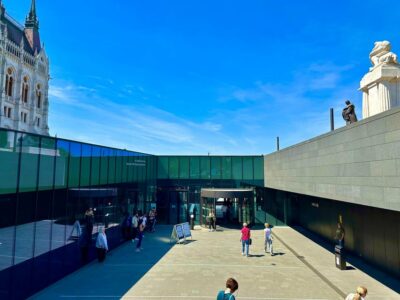
Parliament Building Entry Ticket and Audio Guide
Read our review →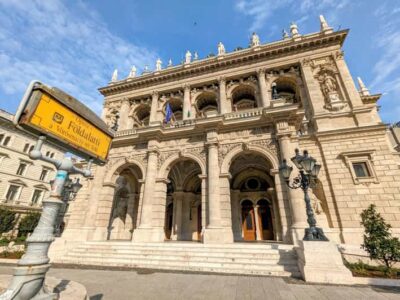
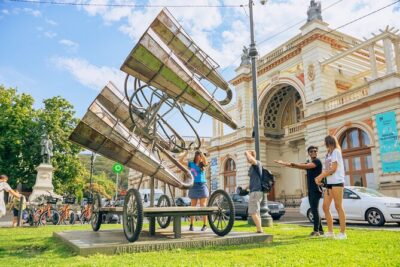
Budapest Small-Group Guided Tour on MonsteRoller e-Scooter
Read our review →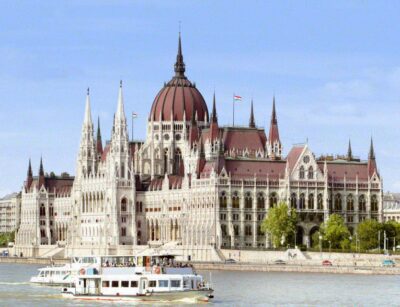
Guided Tour of the Parliament Building in Spanish
Read our review →
Budapest Danube Cruise with Drink, Audio Guide, Margaret Island
Read our review →