
Reviewed · BUDAPEST
Pest side stories with a Historian
Budapest’s Pest side comes into focus on this three-hour history walk, which links grand squares, a working central district, a fairy-tale-looking castle, and Europe’s oldest continental underground railway. The guide does more than point out handsome buildings. You’ll hear why a castle built in 1896 looks medieval, how public spaces changed under different political eras, and what Budapest’s monuments say about Hungarian identity.
I like the small group of no more than 10 and the fact that metro tickets and refreshments are included. I also like the range of places covered, from Elizabeth Square and St. Stephen’s Basilica to Heroes’ Square, Andrassy Avenue, Vajdahunyad Castle, Vorosmarty Square, and the Millennium Underground.
The main tradeoff is simple: this is a lot of ground in about three hours. Several people specifically noted the amount of walking, and a hot afternoon could make the route tiring. You’ll get a fuller picture of Pest than on a short photo walk, but you should wear sensible shoes and be ready to keep moving.
Key points at a glance
- History with human detail: Guides such as Steven, Andrew, and Greg connect statues, buildings, wars, invasions, and political change to the Hungarian people.
- Small-group format: The tour is capped at 10 people, allowing a more personal pace than a large coach excursion.
- Seven varied stops: The route combines central squares, a basilica, a UNESCO-listed avenue, a castle, and a historic metro line.
- A useful metro ride: The Millennium Underground is part of the experience, and metro tickets are provided.
- Strong value for active sightseers: The $58.94 price includes the guide, refreshments, and public transport tickets.
- A walking-heavy afternoon: The 2 p.m. start gives you a half-day activity, but the route is not ideal if you want a slow, seated tour.
Why Pest makes a good history walk
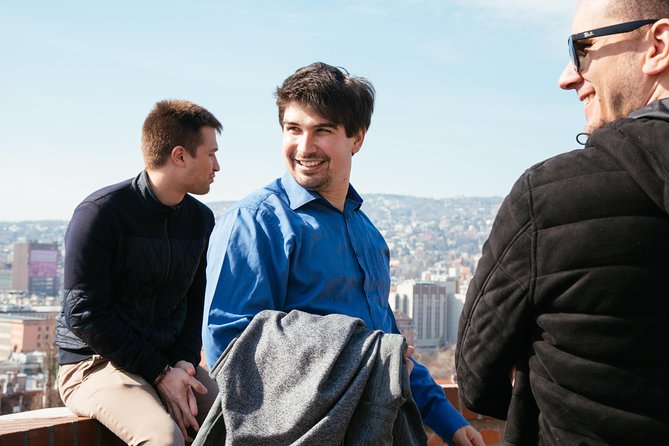
Buda often gets the postcard attention, with its hilltop Castle District and sweeping Danube views. Pest offers a different story. It is flatter, more urban, and filled with the institutions, boulevards, squares, shops, churches, and public monuments that reveal how modern Budapest took shape.
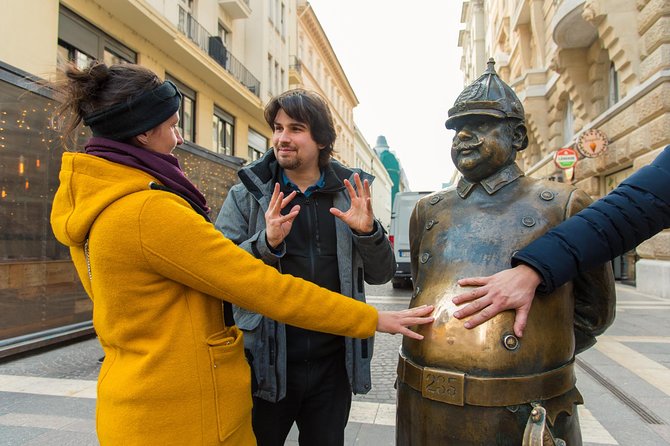
That makes this route a useful choice early in your stay. You’ll cover central places that you might otherwise visit as disconnected stops. The guide can explain how Elizabeth Square changed from a market square to a Stalin-era public space, then into a youthful area filled with nightlife and unusual statues.
The tour also moves between different scales of history. One moment you are looking at the largest church in Budapest. Later, you are examining statues at Heroes’ Square or the details of a castle designed for a national celebration. The changes in scenery help keep the history grounded.
The guide’s role matters here. Andrew is noted for explaining the history of the region and cities while keeping an easy pace. Steven, also called Stephen, linked the waterfront and downtown area to invading powers, wars, statues, financial buildings, and the former grain exchange. Greg led an afternoon route around Pest, while Judit and Daniel are also part of the Budapest Explorers team.
You should not expect a lecture delivered from one fixed spot. This is an active walk, with the story unfolding as you cross the city.
Other Budapest outings people book alongside this one:
- Budapest: City Highlights Cruise with Welcome Drink
★ 4.6 · 35,610 reviews - Budapest: Unlimited Prosecco, Beer and Aperol Spritz Cruise
★ 4.8 · 25,310 reviews - Budapest: Széchenyi Spa Day Ticket with Optional Upgrades
★ 4.3 · 23,911 reviews
Elizabeth Square and the changing face of the city
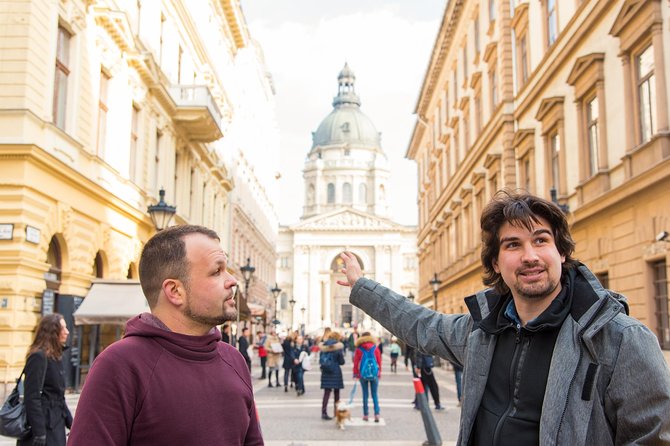
The tour begins at Kempinski Hotel Corvinus Budapest, at Erzsébet tér, at 2 p.m. Elizabeth Square is a useful starting point because it carries several layers of Budapest’s recent past.
The square once served as a market area. It later became associated with the Stalin period and a bus station, and today it is known as a young, party-oriented part of the city. The contrast is the point. A public space can change purpose and mood as the city around it changes.
Allow about 20 minutes here. That is enough time for an introduction to the square, its statues, and its changing role without turning the opening into a long history lesson. You’ll also be close to major central sights, so the setting quickly gives you your bearings in Pest.
This stop may be more valuable with a historian than on your own. Without context, you might simply see a central square with modern activity. With explanation, its past uses become part of the larger story of Budapest’s political and social shifts.
St. Stephen’s Basilica, Budapest’s great church
St. Stephen’s Basilica is described as the largest church in Budapest, and it gives the tour one of its clearest architectural anchors. The church sits on a major square and is one of the city’s essential central sights.
The group may enter if there is interest. That wording matters: interior access is not presented as a guaranteed, fixed part of the visit. If entering the basilica matters greatly to you, treat it as a possible addition rather than the main reason to book.
The planned stop is about 20 minutes. That is enough for a focused look, but not a long, unhurried church visit. The end point is also listed as St. Stephen’s Basilica, although the route may finish at another central point in Pest close to the starting area.
This flexibility can be useful. You’ll be left in a central part of Pest, surrounded by places to continue exploring, eat, or return to your hotel. It also means you should listen for the guide’s final instructions rather than assume the exact ending point is fixed.
Heroes’ Square and more than 1,100 years of Hungary
Heroes’ Square is the historical centerpiece of the route. The square offers an introduction to more than 1,100 years of Hungarian history through its monuments and national figures.
That is a large subject for a 30-minute stop, so the guide’s job is to select the main threads. You’ll likely spend your time learning how the figures and symbols on the square reflect Hungary’s rulers, struggles, and national story. The tour’s guides are praised for connecting statues and buildings to the effects of invading powers and wars, which is the kind of context that makes the square easier to understand.
Heroes’ Square is also a place where the city’s grand scale becomes clear. It is not an intimate street corner. It was designed to express national importance, and the tour uses it as a natural point for explaining Hungary’s long past.
If you enjoy political history, monuments, and the way nations present themselves in public spaces, this will likely be one of the strongest sections. If you prefer markets, cafés, or everyday neighborhood life, the square may feel formal, but it still gives you a necessary framework for the rest of the walk.
Same city, a completely different way to spend an afternoon:
- Budapest: Nighttime or Daytime Sightseeing Cruise
★ 4.2 · 21,062 reviews - Budapest: 1-Hour Evening Sightseeing Cruise with Drink
★ 4.5 · 8,330 reviews - Budapest Danube Cruise and Dinner Options, Live Music and Dance
★ 4.5 · 7,428 reviews - Budapest: Historic Cruise with Welcome Drink
★ 4.7 · 6,512 reviews
Vajdahunyad Castle, a medieval look from 1896
Vajdahunyad Castle is one of the route’s most intriguing stops because its appearance can fool you. It looks medieval, but it was built in 1896. The guide explains why and how it was created, turning what might seem like a decorative curiosity into a lesson about Hungary’s national celebrations and architectural choices.
The stop lasts around 30 minutes. That gives you time to take in the castle’s unusual style and hear the reason behind its design. The site is described as less visited than some of Budapest’s major attractions, which may appeal if you want a stop that feels different from the standard city-center checklist.
The castle adds visual relief after the formal monumentality of Heroes’ Square. It also shows how Budapest looked backward in order to express national identity. The building’s medieval appearance is not an accident, and that story is precisely what makes it worth seeing with a guide.
Do not expect a full museum visit here. The value is in the setting and explanation rather than an extended indoor tour. Your time is limited, and the broader route remains the priority.
Andrassy Avenue and Budapest’s grand urban spine
Andrassy Avenue is described as the pride of Budapestians and has been a UNESCO World Heritage site since 2002. The avenue connects important parts of the Pest route and gives you a chance to understand Budapest as a planned, ambitious capital.
The planned stop is about 30 minutes. Rather than treating the avenue as a simple walk between attractions, the guide can show how its buildings, scale, and public role fit into the city’s development. The route also links naturally with Heroes’ Square and the Millennium Underground.
This is one of those parts of the tour where looking up matters. Budapest’s main avenues are not just ways to get from one sight to another. They express civic pride, wealth, political power, and the wish to present the city as a European capital.
The downside is that an avenue walk can feel less concentrated than a monument stop. You’ll cover ground, and some of the experience comes from the overall view rather than one single landmark. That is also why the guide’s commentary is important.
Vorosmarty Square and commercial Pest
Vorosmarty Square brings the tour back toward the commercial heart of central Pest. It is an iconic square focused on commerce and high-end products, located in the middle of the historic city.
The stop is shorter, about 15 minutes. Think of it as a compact look at the relationship between Budapest’s historic center and its modern retail life. The square gives you a chance to compare the formal national spaces of Heroes’ Square with a place shaped more by shopping, business, and daily city activity.
The guide may also help place the square within the wider story of central Pest. The route has already moved through political, religious, national, and architectural themes. Vorosmarty Square adds the commercial side.
Because the stop is brief, it is not designed for shopping. If you want time to browse stores or linger over a coffee, plan to return later. The tour keeps its focus on the city’s story.
The Millennium Underground, a ride with purpose
The Millennium Underground is the route’s most practical and distinctive inclusion. It is described as the oldest underground railway on the European continent, and metro tickets are provided as part of the tour.
The planned time is about 30 minutes. This is not merely a transport shortcut. The railway helps explain Budapest’s growth and the importance of the city’s late 19th-century development. It also gives your feet a break during a route that covers a large area.
Including public transport makes the tour feel more like an actual city experience than a walk between isolated attractions. You’ll use the system that residents and visitors rely on, while the guide explains why this particular line matters.
For some people, the underground section will be a highlight because it breaks up the walking. For others, it may feel less special than the major monuments. Its appeal depends on whether you enjoy infrastructure and urban history, but the combination of a historic railway and included ticket is a sensible part of the package.
How much walking should you expect?
Plan for substantial walking. The route covers a large area, and the descriptions of the experience make clear that you will move between several major sites rather than remain in one neighborhood.
The pace is not described as rushed. Andrew is specifically associated with keeping an easy pace despite covering a very large area. Still, an easy pace does not mean a short walk. One afternoon was hot, and the distance remained noticeable even though the group saw all the main points.
Wear comfortable shoes. Bring water, especially in warm weather, and consider the 2 p.m. start when planning your day. You may want a quieter morning before this tour rather than scheduling another walking activity immediately afterward.
The small group helps here. With a maximum of 10 people, the guide can keep the party together more easily than a large coach group. The format also makes it more realistic to ask questions or request a little clarification when a historical point catches your interest.
Is $58.94 a fair price?
At $58.94 per person, this is not the cheapest way to see central Pest. It is also more than a basic self-guided walk, but the comparison should include what you receive.
The price covers about three hours with a historian guide, refreshments, and metro tickets. You also get a route that connects seven substantial stops, including places that are easy to visit separately but harder to understand as one story.
The small group is a major part of the value. A 10-person limit gives you a more personal setting than a large bus tour, and one comment specifically contrasted the experience favorably with cruise-ship bus excursions. That is useful if you dislike being moved around in a crowd with little chance to engage.
The value is strongest for someone who wants historical context and an efficient first look at Pest. It is weaker for someone who already knows Budapest well, wants lengthy interior visits, or prefers to set their own pace.
Who will enjoy this Pest walk?
I would recommend it most to first-time visitors, history fans, and anyone who wants a clear introduction to the Pest side without arranging every stop alone. The tour suits people who enjoy hearing why a place matters, not only taking a photograph of it.
It should also work well for independent travelers who want something smaller and more personal than a coach excursion. The group size, refreshments, and included metro ticket remove some of the minor hassles of planning.
Families and older participants may find the route manageable if they are comfortable with several hours of walking. The activity information says most people can participate, but the distance remains the key consideration.
If you have limited mobility, prefer frequent seated breaks, or dislike afternoon heat, this may not be your best choice. Service animals are allowed, and the route is near public transportation, but the tour still requires you to cover a large area on foot.
Practical details before you book
The meeting point is the Kempinski Hotel Corvinus Budapest at Erzsébet tér 7-8. The start time is 2 p.m. The listed ending point is St. Stephen’s Basilica, though the tour may finish at another central Pest location close to the start.
Confirmation is provided when you book. The activity is offered in English, and most people can participate. It is generally wise to arrive ready for an outdoor walk, since the route includes public squares, an avenue, a castle area, and transport between stops.
Free cancellation is available if you cancel at least 24 hours before the local start time. Cancellations or changes made less than 24 hours ahead are not accepted for a refund.
The tour is rated 4.9 out of 5, with 100 percent of listed participants recommending it. The most consistent strengths are the guides’ historical explanations, the small group, and the amount of Pest covered in one afternoon. The consistent caution is the amount of walking.
Should you book Pest Side Stories with a Historian?
Book it if you want a connected story of Pest, not just a list of landmarks. Heroes’ Square, Vajdahunyad Castle, Andrassy Avenue, the basilica, and the underground railway make a strong mix, and the guides bring out the links between monuments, political change, war, and daily city life.
Skip it if you want a slow tour with long interior visits or plenty of free time at each stop. For the right person, the $58.94 cost is justified by the small group, historian-led explanation, refreshments, and included metro tickets. Just plan for a serious walk and save your most comfortable shoes for the afternoon.
FAQ
Where does the tour start?
It starts at Kempinski Hotel Corvinus Budapest, Budapest, Erzsébet tér 7-8, 1051 Hungary.
What time does the tour begin?
The scheduled start time is 2 p.m.
Where does the tour finish?
The listed end point is St. Stephen’s Basilica, at Szent István tér 1. The tour may instead finish at another central location in Pest close to the starting point.
How long does the experience last?
The walking tour lasts approximately three hours.
How many people can join the tour?
The activity has a maximum of 10 participants.
Is the tour offered in English?
Yes. The tour is offered in English.
Are metro tickets included?
Yes. Metro tickets are provided, including for the Millennium Underground section of the experience.
Does the tour enter St. Stephen’s Basilica?
The group may enter if there is interest. Entry is not presented as a guaranteed fixed part of the tour.
Can I cancel for a full refund?
Yes, if you cancel at least 24 hours before the experience’s local start time. Cancellations or changes made less than 24 hours in advance are not accepted for a refund.
Just added around Budapest
- Budapest: Private, Personalized Pub Crawl, 3 drinks included★ 4.5 · 3 reviews
- Private day trip from Budapest to Bratislava, Vienna, and back★ 3.5 · 3 reviews
- Budapest: Private Adventure Sightseeing Bicycle Tour★ 4.5 · 3 reviews
- Private Danube Bend tour – full day★ 4.5 · 3 reviews
- Lake Balaton Full Day Private Wine Tour★ 5.0 · 3 reviews
- Budapest: Guided City Walking Tour in Buda and Pest★ 5.0 · 3 reviews
- Budapest Old Jewish Quarter History Private Walking Tour★ 5.0 · 3 reviews
- Budapest Urban Feast – Food Tour with Wine Tasting & Coffee House★ 4.5 · 3 reviews