
Reviewed · BUDAPEST
Hungary today: a no-taboo conversation
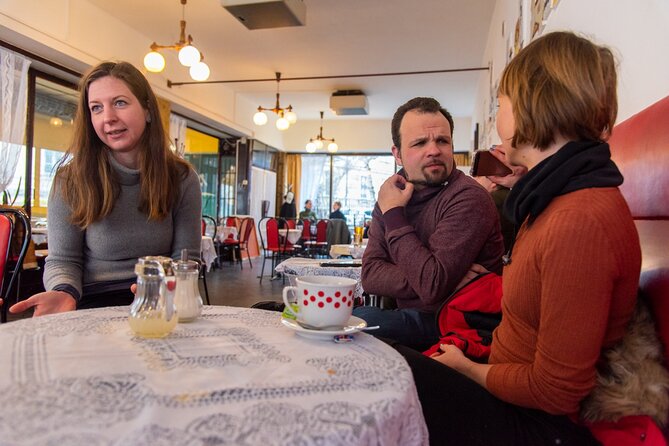
Hungary’s recent story is best understood over coffee, not from a hurried sightseeing bus. At Bambi Café, a Budapest institution that has changed little since the 1970s, Budapest Explorers opens a frank conversation about the fall of Communism, the shift to democracy, and Hungary’s present political direction.
I like the maximum six-person group, which gives you room to ask real questions. I also like the flexible format: Daniel or another host begins with a modern-history primer, then follows your interests into politics, economics, social change, or Hungary’s uncertain future. The main drawback is clear: this is a discussion, not a sightseeing tour, so it will not suit you if you want monuments, photos, or a packed itinerary.
Key points
- A 90-minute talk at Bambi Café: Meet at a cult Budapest café that has retained much of its old character since the 1970s.
- Focused on modern Hungary: The opening covers the past 30 years, especially the move from Communism to democracy.
- Questions shape the experience: You can ask about controversial politics, the economy, Hungary’s past, or possible reforms.
- Small group by design: The activity accepts no more than six people, allowing for a genuine exchange rather than a lecture.
- Hosts include Daniel: One previous participant singled out Daniel’s friendly, informative approach and wished the conversation could have continued longer.
- Useful for repeat visitors: This works best when you already know Budapest’s main sights and want help making sense of present-day Hungary.
Why this conversation belongs in your Budapest plans

Most first visits to Budapest focus on grand architecture, thermal baths, bridges, and food. Those experiences matter, but they do not always explain how Hungary became the country you see today.
This 90-minute meeting takes a different route. You sit down with a Hungarian host and talk about the country’s modern era, with special attention to the past three decades. The discussion may cover the end of Communism, the creation of a democratic system, economic change, and the idea of an illiberal democracy that has shaped Hungary’s political debate in recent years.
That focus gives the experience real value. You are not simply collecting facts about a former Eastern Bloc country. You are asking how political and economic changes affect daily life, public opinion, institutions, and Hungary’s place in Europe.
The format is also unusually direct. The hosts say they will answer all questions honestly, including questions about controversial politics and their own opinions. That does not mean every answer will match your views. It means you have a setting where you can ask about subjects that often receive only a quick mention in standard tours.
Other Budapest outings people book alongside this one:
- Budapest: City Highlights Cruise with Welcome Drink
★ 4.6 · 35,610 reviews - Budapest: Unlimited Prosecco, Beer and Aperol Spritz Cruise
★ 4.8 · 25,310 reviews - Budapest: Széchenyi Spa Day Ticket with Optional Upgrades
★ 4.3 · 23,911 reviews
Bambi Café and the atmosphere of the meeting
The meeting point is Bambi Café, at Frankel Leó út 2-4 in Budapest’s District II. The café is described as a cult spot that has changed very little since the 1970s.
That detail is more than decoration. A café with a long-standing character gives the talk a fitting setting. You are discussing Hungary’s passage from one political system to another while sitting in a place connected to the country’s recent past. The experience does not attempt to recreate history with costumes or a staged performance. It lets the surroundings provide a quiet bit of context.
You should arrive at the café for the 2:00 pm start. The activity ends at the same place after about one hour and 30 minutes. Since there is no movement between sights, you do not need to worry about keeping up with a walking group or finding a second meeting point halfway through.
There is one practical point to keep in mind. The information provided does not specify the exact seating arrangement, food or drink included, or a reserved table. Treat Bambi Café as the meeting place rather than assuming that refreshments are part of the ticket.
How the 90-minute conversation works
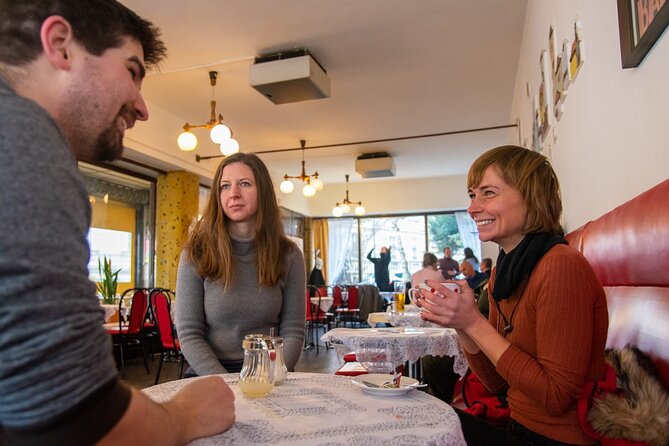
The host starts with an introduction to Hungary’s modern era. The emphasis is on the last 30 years, with historical, economic, and political subjects forming the first part of the discussion.
This opening is useful if you have only a basic understanding of Hungary after 1989. The change from Communism to democracy was not a single overnight event with one simple result. A short overview can help you place later questions in context, especially questions about political power, economic reform, and the direction Hungary has taken in recent years.
After the introduction, the format becomes more open. You can ask what you want to know about Hungary, Budapest, or the country beyond the capital. The stated range is wide:
- Controversial political issues
- Hungary’s turbulent past
- The economy
- The country’s uncertain future
- Ideas for change
- The host’s personal opinions
The host does not follow a rigid list of stops or a fixed speech from start to finish. That flexibility is one of the strongest reasons to book. If you have been wondering about a particular issue, you can bring it up directly rather than hoping a standard guide happens to address it.
Still, I would prepare a few questions before you go. A flexible conversation works best when you arrive with subjects you genuinely want to discuss. Without questions, the host will provide an introduction, but your experience may feel more like a general talk. With questions, you can help shape the second half around your own interests.
What Daniel and the other hosts bring to the table
Daniel is specifically identified as one of the hosts. His style is described as friendly and informative, and the conversation apparently covered enough ground to leave the participant wishing for several more hours.
That is a useful clue about the tone. This is not sold as a formal academic seminar, and you should not expect a university lecture with a bibliography. It is a personal conversation led by someone able to explain Hungary’s current situation and respond to follow-up questions.
Another host, a Hungarian woman, was praised for her understanding of both her own country and the wider world. The supplied information does not provide her name, so I would not assume which host you will meet when booking. If having Daniel specifically matters to you, ask Budapest Explorers before confirming.
The small group is important here. With a maximum of six people, you have a much better chance to ask a question, clarify an answer, or explain your own point of view. A large group would change the mood completely. It could turn sensitive subjects into a one-way presentation, while six people allows something closer to a real exchange.
The limit also means the activity may feel personal. That is a benefit if you want frank discussion. It can be less comfortable if you prefer to remain quiet or listen from the back of a group.
Same city, a completely different way to spend an afternoon:
- Budapest: Nighttime or Daytime Sightseeing Cruise
★ 4.2 · 21,062 reviews - Budapest: 1-Hour Evening Sightseeing Cruise with Drink
★ 4.5 · 8,330 reviews - Budapest Danube Cruise and Dinner Options, Live Music and Dance
★ 4.5 · 7,428 reviews - Budapest: Historic Cruise with Welcome Drink
★ 4.7 · 6,512 reviews
The value of talking about present-day Hungary
The strongest part of this experience is its attention to the present. Many history tours stop after the fall of Communism, as if the story were complete once the old system ended. This conversation continues into the political and economic questions facing Hungary now.
That matters because the same event can look different depending on where you stand. A visitor may see a constitutional change, an economic policy, or a political slogan as an abstract headline. A Hungarian host can explain how such issues are understood within the country and why opinions may differ.
You should not book this expecting a neutral answer to every question. The hosts openly offer their own views. That is not a flaw, but it is part of the bargain. You are receiving a personal interpretation, not an official government briefing or a fully balanced panel discussion.
The best approach is to listen carefully and ask follow-up questions. If you hear a claim that surprises you, ask how the host reached that view or whether other Hungarians disagree. A conversation becomes more useful when you treat it as a chance to understand a point of view, not as a test with one approved answer.
Who will get the most from this experience
I would recommend this meeting most strongly to you if you have already seen Budapest’s main sights or have a basic grasp of Hungarian modern history. One participant specifically described it as ideal for someone who had visited Budapest before and wanted to understand the contemporary situation better.
It can also work on a first visit, especially if politics and recent history are central reasons for your trip. In that case, use the opening overview to establish the basics, then ask the host to connect those ideas to places you have seen around the city.
This is a good fit for:
- Curious adults who prefer conversation to a standard tour
- Visitors interested in Central European politics
- Repeat visitors to Budapest
- People who want Hungarian perspectives rather than only guidebook facts
- Anyone comfortable asking direct questions about sensitive subjects
- Couples or small groups who enjoy discussion
It may be a poor fit for children who need constant activity, anyone looking for a sightseeing route, or visitors who dislike political conversation. The subject matter can be serious, and the experience depends on your willingness to participate.
Is $40.52 a fair price?
The cost is $40.52 per person for about 90 minutes. That is not a bargain if you measure value by the number of monuments visited. You see no listed attraction, and admission to Bambi Café is free.
The value lies elsewhere. You are paying for access to a small-group conversation with a host who can discuss Hungary’s modern political, economic, and social questions. At a maximum of six people, the price supports a more personal format than a large public lecture.
I would judge the price by your interests. If you want a packed day of Budapest sightseeing, put the money toward a longer walking tour or an attraction ticket. If you want to understand why present-day Hungary works and argues as it does, $40.52 can be reasonable, especially if you come prepared with questions and take part in the discussion.
The activity is also easy to fit into a day. It starts at 2:00 pm and returns you to Bambi Café after 90 minutes. Since the meeting begins and ends in one place, you can plan another Budapest activity before or after it without dealing with a long transfer.
Practical details before you book
You receive booking confirmation at the time of purchase, and the ticket is mobile, so you do not need a printed voucher. The meeting point is Bambi Café, Frankel Leó út 2-4, 1027 Budapest.
The café is near public transportation, which helps when reaching District II from other parts of the city. The supplied details do not name a specific tram or bus route, so check your route on the day rather than relying on a particular service.
The activity allows service animals, and most people can participate. No special fitness level is stated, and because the meeting stays at the café, there is no long walk between stops. The information does not provide detailed accessibility features inside the café, so contact the provider if you need a particular seating or access arrangement.
Free cancellation is available if you cancel at least 24 hours before the 2:00 pm start time. Changes or cancellations made less than 24 hours ahead are not accepted for a refund, and the cut-off uses Budapest local time.
How to prepare useful questions
You do not need to become an expert before arriving. A little preparation will simply help you get more from the flexible format.
Think about what you noticed during your time in Budapest. Did a political poster catch your eye? Did you hear different opinions about the country’s direction? Are you curious about the economic changes that followed Communism, or about how people view the democratic system today?
Write down three or four questions. You might ask how Hungarians describe the political changes of the past 30 years, how the economy has affected everyday life, or what the host thinks could improve the country’s future.
Keep the questions open rather than loaded. You are more likely to get a thoughtful answer if you ask how people see an issue instead of demanding a simple judgment. The hosts invite questions on controversial subjects, so directness is welcome, but basic courtesy still makes for a better discussion.
Should you book Hungary Today?
Book it if you want context, conversation, and a Hungarian point of view on the country’s recent past and present. The small group, flexible questions, and 90-minute format make it especially useful after you have seen Budapest’s major sights or when politics is a main interest.
Skip it if your ideal tour means constant movement, famous buildings, or a guide delivering a tightly scripted history lesson. This experience asks you to listen, think, and take part.
For the right audience, the setting and subject make a strong combination. Bambi Café connects the meeting to Hungary’s recent past, while the open discussion brings the story into the present. Come with a few honest questions, and the $40.52 price is easier to justify.
FAQ
Where does the experience begin?
It begins at Bambi Café, Budapest, Frankel Leó út 2-4, 1027 Hungary.
What time does the experience start?
The start time is 2:00 pm.
How long does the experience last?
The experience lasts approximately one hour and 30 minutes.
Where does the experience end?
It ends back at Bambi Café, the original meeting point.
What is the group size?
The activity has a maximum of six participants.
What subjects are discussed?
The conversation can cover Hungary’s recent past and present, the change from Communism to democracy, illiberal democracy, politics, economics, the country’s future, and ideas for change.
Can I ask my own questions?
Yes. The format allows you to ask questions about Hungary, Budapest, controversial politics, the country’s past, the economy, personal opinions, and possible changes.
Who leads the conversation?
The experience is provided by Budapest Explorers. Daniel is one of the named hosts, and another host is also described in the available information.
Is the experience available with a mobile ticket?
Yes. A mobile ticket is available, and confirmation is received at the time of booking.
Can I cancel for a full refund?
Yes, if you cancel at least 24 hours before the experience starts. Cancellations or changes made less than 24 hours before the local start time are not accepted for a refund.
Just added around Budapest
- Budapest: Private, Personalized Pub Crawl, 3 drinks included★ 4.5 · 3 reviews
- Private day trip from Budapest to Bratislava, Vienna, and back★ 3.5 · 3 reviews
- Budapest: Private Adventure Sightseeing Bicycle Tour★ 4.5 · 3 reviews
- Private Danube Bend tour – full day★ 4.5 · 3 reviews
- Budapest: Guided City Walking Tour in Buda and Pest★ 5.0 · 3 reviews
- Budapest Old Jewish Quarter History Private Walking Tour★ 5.0 · 3 reviews
- Lake Balaton Full Day Private Wine Tour★ 5.0 · 3 reviews
- Budapest Urban Feast – Food Tour with Wine Tasting & Coffee House★ 4.5 · 3 reviews