Reviewed · GUIDED
Guided Tour with Admission in Memento Park
Memento Park is where Budapest’s former Communist statues found a second life. Instead of hiding these huge monuments, the city placed them together outside the center, creating an open-air lesson in power, propaganda, and memory. The guided walk turns a strange collection of statues into a readable story.
I like the way the tour connects sculpture with everyday life under Soviet rule, and I like the chance to hear personal anecdotes rather than only dates and political labels. Guides including Eszter, Ilodi, and Louisa have been praised for making both the art and the history clear. The main drawback is the location outside central Budapest, so you need to allow time to reach the meeting point.
Key points at a glance
- A 70-minute guided history walk: Learn how Communist Hungary shaped the monuments and the country around them.
- Personal stories make the past feel close: Guides such as Eszter and Ilodi add human detail to the political history.
- The statues are only part of the visit: You can also see a film, photo exhibition, Stalin’s Grandstand, and a Trabant.
- Small-group format: The tour allows a maximum of 15 people, which should make questions easier.
- English-language outing: The tour is offered in English and begins at 11:30 a.m.
- Good value for history fans: At $30.04 per person, admission and the guided experience are included.
Why Memento Park matters in Budapest
Memento Park preserves the statues that once filled Budapest’s public spaces during the Communist period. After the political changes of 1989 and 1990, many of these monuments were removed from streets and squares. Rather than destroy every reminder, Hungary gathered a selection here.
That decision gives the park its unusual force. You are not looking at Communist sculpture in its original setting, surrounded by official slogans and state ceremonies. You are seeing it after the system has lost its authority. The statues remain large, stern, and confident, but their meaning has changed.
I find that contrast more useful than a simple museum display. A statue designed to project strength can look very different when placed among other symbols of a system that no longer exists. Your guide helps explain that change without reducing the park to a collection of jokes about old political art.
The setting also asks you to think about memory. Should a difficult past be removed, destroyed, or preserved? Memento Park offers one answer: keep the evidence, explain it, and let people look closely.
A few more Budapest half-days to weigh up
- Budapest: Parliament Building Entry Ticket and Audio Guide
★ 4.5 · 3,844 reviews - Budapest: Opera House Guided Tour
★ 4.6 · 1,533 reviews - Budapest Small-Group Guided Tour on MonsteRoller e-Scooter
★ 5.0 · 1,517 reviews
The 70-minute guided walk
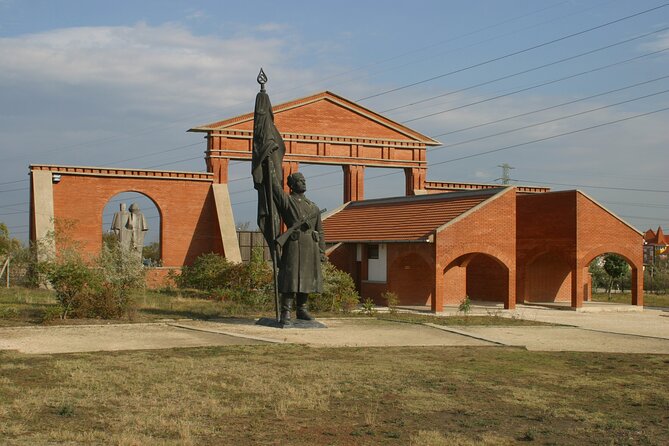
The main tour lasts about 70 minutes. That is enough time to move through the principal monuments without turning the visit into a long academic lecture. The guide sets the political background first, then helps you read the statues as objects of art and propaganda.
This introduction is important. Without context, you might see only oversized figures, military poses, and stern faces. With the history in place, you can ask why a particular person was honored, what message the sculpture sent, and how public art helped shape official thinking.
The strongest part of the experience is the interpretation. Louisa has been praised for explaining sculptures that could otherwise be easy to miss or misunderstand. Eszter is noted for linking the artistic qualities of the monuments with the wider story of 20th-century Hungary. Ilodi brings personal experiences and a lively manner to the walk.
Those differences matter because Memento Park is not a place where every object explains itself. A guide gives you the vocabulary to understand posture, scale, symbolism, and political purpose. You also get a clearer sense of how the period affected ordinary life, not just government buildings and public ceremonies.
The guides also remain available for about 20 minutes after the formal walk for questions. That extra time is useful if you want to ask about a particular monument, clarify a historical point, or discuss something connected to your own family history.
Reading the statues as political messages
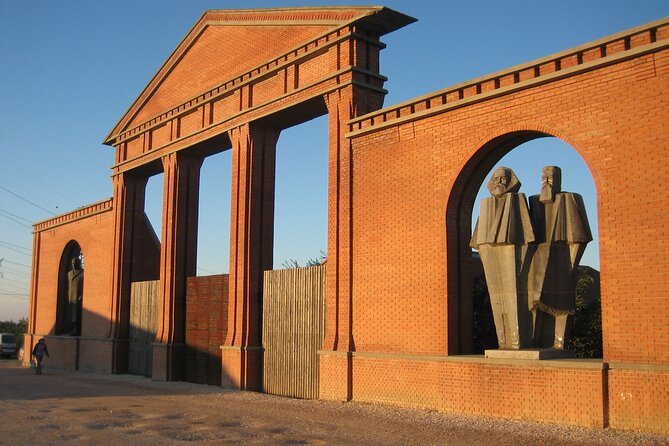
The sculptures are worth seeing for their size and visual drama, but the real value comes from understanding what they were meant to do. These works were not placed in public spaces merely to decorate them. They helped present a preferred version of history and power.
Your guide can point out how the figures project authority, unity, sacrifice, or loyalty. You may also notice how often the human body is enlarged or idealized. That style gives the monuments a force that photographs cannot quite convey.
I would not treat the park as a simple collection of Soviet statues. Hungary’s experience had its own political tensions, and the guide’s explanation of local events makes the visit more specific. The tour places Communist rule in the Hungarian setting, including the experience of Soviet occupation and the Stalin era.
This is also where the personal stories help. A list of rulers and dates can feel distant. An anecdote about how people lived, remembered, or responded to the period gives the monuments a human scale. The best moments of the walk come when the guide moves from a general explanation to a real-life detail.
The tone is serious, but it does not have to be gloomy from beginning to end. The park’s odd mixture of monumental poses, historical weight, and unexpected objects gives the guide room for humor without making light of the subject.
Stalin’s Grandstand and the park’s unsettling details
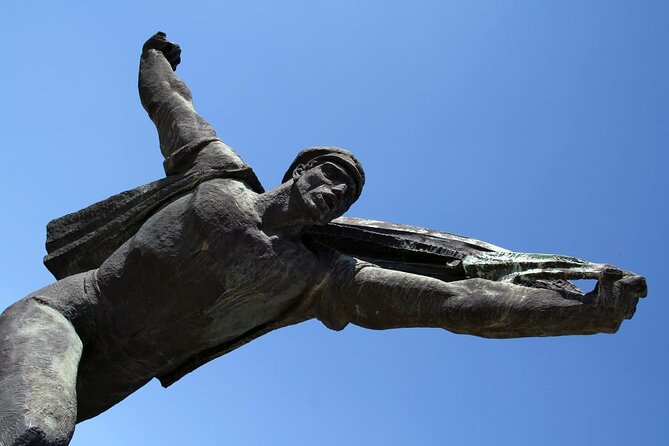
One of the park’s special features is the reconstruction known as Stalin’s Grandstand. It helps you understand how the leader’s image and public ceremonies were presented during the period.
The structure is more than another photo stop. It gives physical shape to the relationship between political power and public display. Standing near it, you can think about who was expected to look up, who occupied the platform, and how architecture helped stage authority.
The tour also includes access to the Barrack, where you can see a film show and photo exhibition. These additions matter because the statues alone tell only one part of the story. Images and moving footage can add a sense of period atmosphere and show how official messages were presented.
The park’s secrets of Stalin’s Grandstand are part of the optional time after the main walk, so ask your guide about them if that detail interests you. The supplied schedule specifically allows time for questions and further exploration, rather than ending the visit the moment the formal commentary stops.
Same city, a completely different way to spend an afternoon:
- Budapest: City Highlights Cruise with Welcome Drink
★ 4.6 · 35,610 reviews - Budapest: Unlimited Prosecco, Beer and Aperol Spritz Cruise
★ 4.8 · 25,310 reviews - Budapest: Széchenyi Spa Day Ticket with Optional Upgrades
★ 4.3 · 23,911 reviews - Budapest: Nighttime or Daytime Sightseeing Cruise
★ 4.2 · 21,062 reviews
The Trabant and the everyday side of Communist Hungary
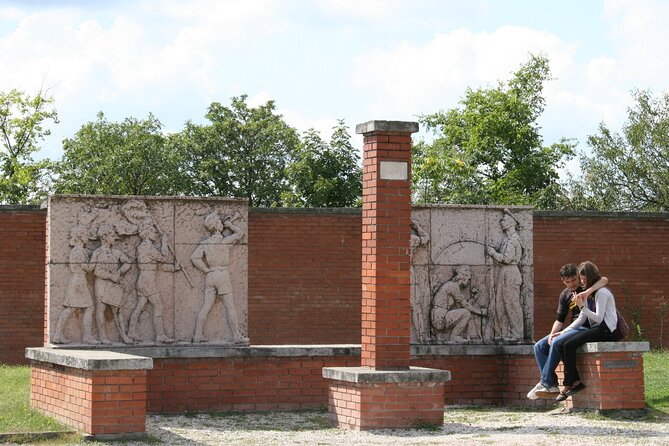
The majestic Trabant is one of the park’s most unexpected attractions. Compared with the monumental statues, this small car brings the period down to street level.
The Trabant helps shift your attention from leaders and ideology to ordinary material life. A public monument tells you what a government wanted people to admire. A modest car suggests something about what people could actually own, drive, and use.
It is also a useful reminder that Memento Park is not only about sculpture. The experience combines political art, historical photographs, film, architecture, and an object connected with daily life. That mix keeps the visit from becoming visually repetitive.
You will have time after the tour to take photographs and inspect these details at your own pace. I would save some of that time for the Trabant, the photo exhibition, and any monument your guide discussed in particular. A second look often works better after you know the backstory.
Why a guide makes such a difference
Memento Park can be visited as a self-guided site, but I would choose the guided option if you want more than unusual photographs. The layout gives you the objects, while the guide supplies the links between them.
A good explanation changes how you look at the sculptures. You begin to notice artistic choices, official messages, and the gap between what a monument intended to say and how it appears today. The guides also answer the questions that naturally arise when you encounter a system and period unfamiliar to you.
The praise for Eszter, Ilodi, and Louisa points to the same strength: the guide does not simply recite information. The best commentary combines political history, artistic interpretation, and personal anecdotes. That combination makes the hour feel purposeful.
The small maximum of 15 people is another plus. It is not a private tour, but it is small enough to make questions realistic. If the guide stays with the group and the pace suits you, you should have a better chance of hearing the explanations clearly than on a large coach outing.
The one caution is that guide quality and style can vary by date. The named guides have received particularly strong praise, but you cannot choose a specific guide from the information provided. Still, the format is designed around explanation, and the tour includes time for questions.
Timing, meeting point, and transport
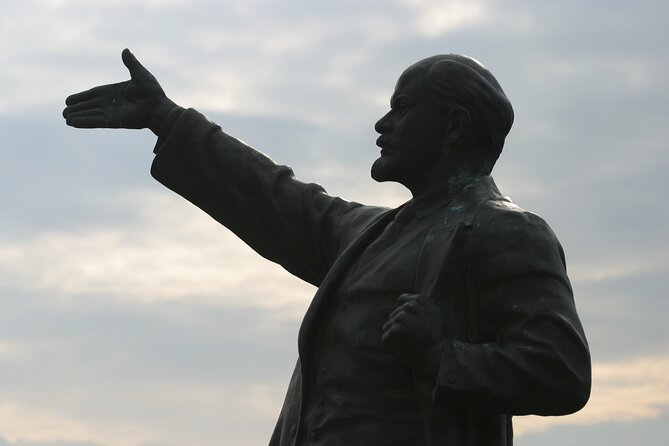
The tour begins at 11:30 a.m. at Memento Park, at the corner of Balatoni út and Szabadkai utca in Budapest’s 1222 postal district. The activity ends at the same meeting point.
That detail matters because this is not a central Budapest walking tour. You should plan your route before setting out and allow enough time to arrive at the park without rushing. The site is near public transportation, but the information provided does not specify a particular bus, tram, or route.
A mobile ticket makes entry straightforward once you reach the meeting point. Confirmation is sent at booking, and the tour is offered in English. Service animals are allowed, and most people can take part.
The start time is fixed at 11:30, and the formal experience lasts about one hour to one hour and ten minutes. Add another 20 minutes if you want to use the question period, plus extra time for the film, photographs, and displays.
Do not plan this as a five-minute stop between central sights. The journey out and back, together with the guided walk, makes it better suited to a half-day plan that gives Memento Park proper attention.
Is $30.04 a fair price?
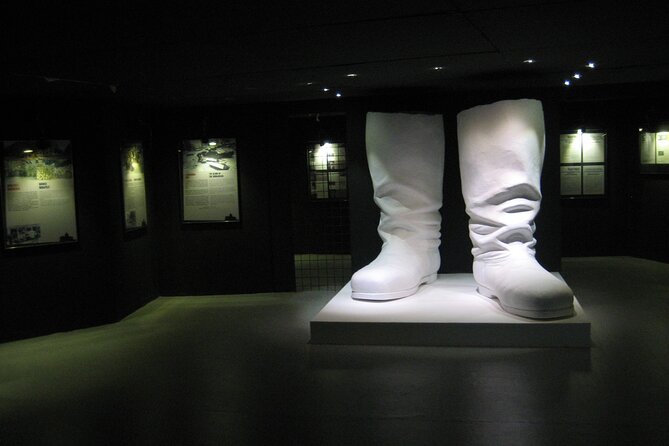
The cost is $30.04 per person, with admission included. I consider that fair if you value interpretation, especially because the park’s meaning is not immediately obvious from the statues alone.
You are paying for more than entry. The price includes a structured English-language explanation, a group capped at 15 people, time for questions, and access to the park’s additional material. For someone interested in modern European history, the guide may be the difference between a memorable visit and a quick look at unfamiliar monuments.
The value is less certain if you only want photographs or if you already know the history well. In that case, the 70-minute commentary may feel slower than exploring on your own. The tour’s strongest selling point is understanding, not convenience or luxury.
The included admission also makes budgeting simple. Just remember that transport to and from the meeting point is not listed as part of the experience, so plan for that separately.
Who should book this experience?
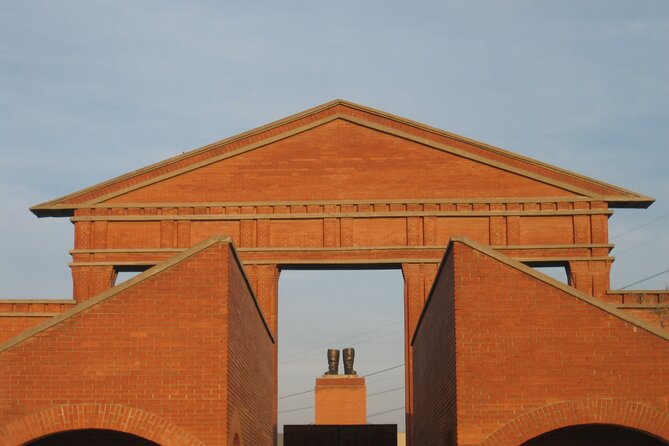
I would recommend it to you if you enjoy political history, public art, museums, or places that preserve difficult memories. It is also a useful choice if you want to understand Hungary beyond the familiar center of Budapest.
The tour suits adults and older students especially well because the subject involves occupation, dictatorship, propaganda, and social change. Families can decide based on the children’s interest in history, since the experience is serious even when the guide uses a light touch.
You should also book it if you prefer asking questions. The formal walk is followed by about 20 minutes with the guide, which gives you room to follow up instead of simply moving on to the next sight.
I would be less enthusiastic if your Budapest schedule is extremely tight or if you dislike travelling beyond the central sights. The park requires a dedicated trip, and its rewards come from attention and context rather than instant visual spectacle.
Free cancellation is available if you cancel at least 24 hours before the local start time. Cancellations or changes made inside that window are not refunded or accepted, so keep the fixed departure in mind when planning.
Should you book the Memento Park guided tour?
Book it if you want Memento Park to make sense, not merely to look unusual in photographs. The guide-led format, English commentary, small group, and extra question time give the statues a clear historical and human frame.
The best reason to go is the combination of art and lived history. Eszter, Ilodi, and Louisa have each been praised for explaining the monuments in ways that connect political events with personal experience. You also get Stalin’s Grandstand, the Barrack’s film and photo exhibition, and the Trabant after the main walk.
Skip it only if you have very little time, already know the subject in depth, or want a completely self-guided visit. For most people with an interest in Budapest’s 20th-century past, $30.04 is a sensible price for a focused, thoughtful visit that is difficult to recreate from the statues alone.
FAQ
Where does the Memento Park tour begin?
It begins at Memento Park, at Balatoni út and Szabadkai utca sarok, 1222 Budapest, Hungary.
What time does the tour start?
The scheduled start time is 11:30 a.m.
How long does the experience last?
The tour lasts approximately one hour to one hour and ten minutes. The base guided walk is about 70 minutes, and the guide remains available for questions for about 20 additional minutes.
Is admission to Memento Park included?
Yes. The admission ticket is included in the $30.04 per-person price.
Is the tour offered in English?
Yes. The experience is offered in English.
How many people can join the tour?
The maximum group size is 15 people.
Just added around Budapest
- Budapest: Private, Personalized Pub Crawl, 3 drinks included★ 4.5 · 3 reviews
- Private day trip from Budapest to Bratislava, Vienna, and back★ 3.5 · 3 reviews
- Budapest: Private Adventure Sightseeing Bicycle Tour★ 4.5 · 3 reviews
- Private Danube Bend tour – full day★ 4.5 · 3 reviews
- Budapest: Guided City Walking Tour in Buda and Pest★ 5.0 · 3 reviews
- Budapest Old Jewish Quarter History Private Walking Tour★ 5.0 · 3 reviews
- Lake Balaton Full Day Private Wine Tour★ 5.0 · 3 reviews
- Budapest Urban Feast – Food Tour with Wine Tasting & Coffee House★ 4.5 · 3 reviews
Guided, compared.
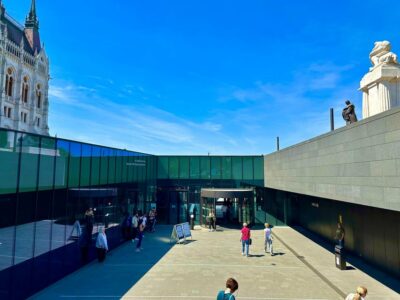
Parliament Building Entry Ticket and Audio Guide
Read our review →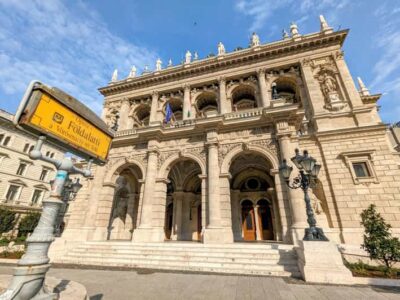
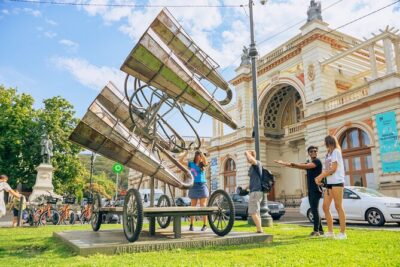
Budapest Small-Group Guided Tour on MonsteRoller e-Scooter
Read our review →
Guided Tour of the Parliament Building in Spanish
Read our review →
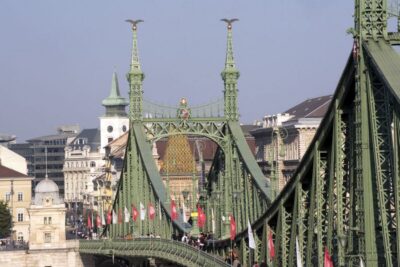
Budapest Danube Cruise with Drink, Audio Guide, Margaret Island
Read our review →