
Reviewed · WALKING TOURS
Downtown Pest Walking Tour
The most striking thing about this tour is how clearly it explains why Pest became Budapest’s political and financial heart. Beginning at Parliament and ending at Heroes Square, you follow the grand civic plan created when Hungary was building a modern nation in the late 19th century.
I like the strong sequence of sights, especially Freedom Square and its Stock Exchange Palace, and I like the chance to see Budapest through a historian’s eyes rather than simply collect photographs. Guides Andras and Zsofia are praised for patient answers, good storytelling, and excellent English. The main consideration is the price: at $123 per person, this is a premium walking tour, so it makes the most sense if you value a private or small-group guide.
Key Points Before You Book
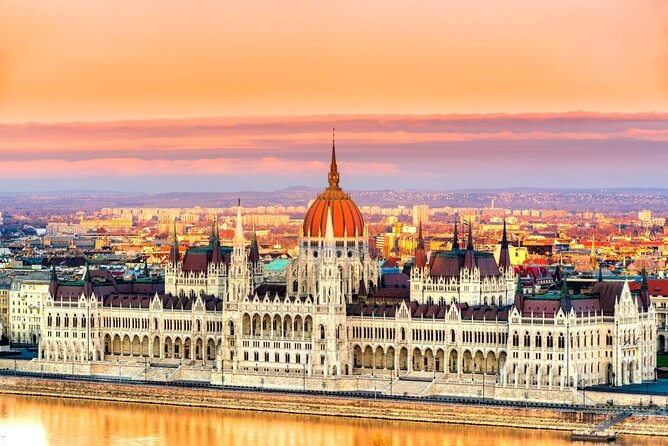
- Parliament sets the scene: Begin at Kossuth Square beside Hungary’s grandest political building.
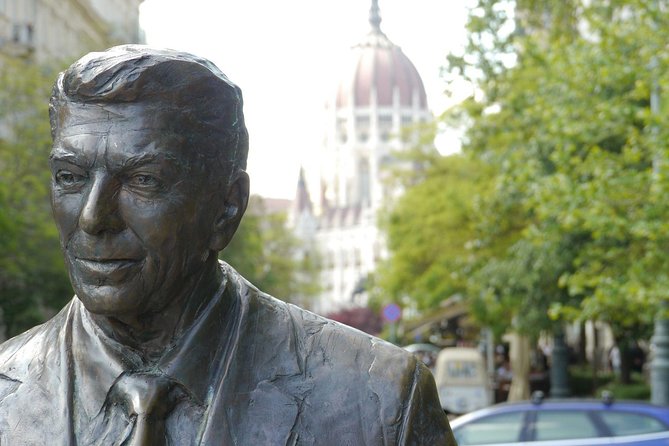
- Freedom Square brings finance and politics together: See the Stock Exchange Palace, former bank buildings, and the statue of Cardinal Mindszenty.
- The route includes difficult history: Pause at the Danube Holocaust memorial behind Parliament.
- Art Nouveau appears along the way: The walk links major monuments with the smaller architectural details Budapest is known for.
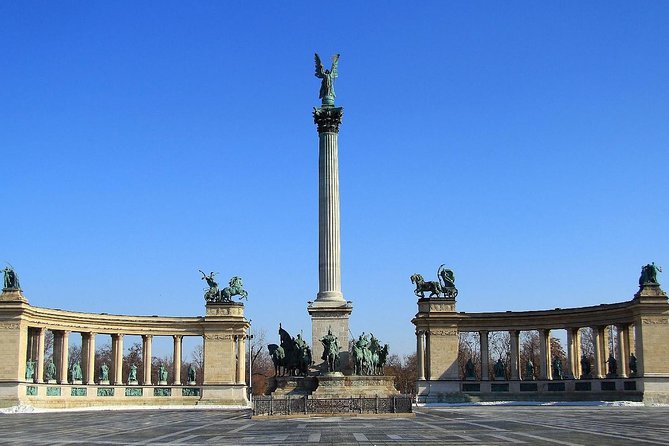
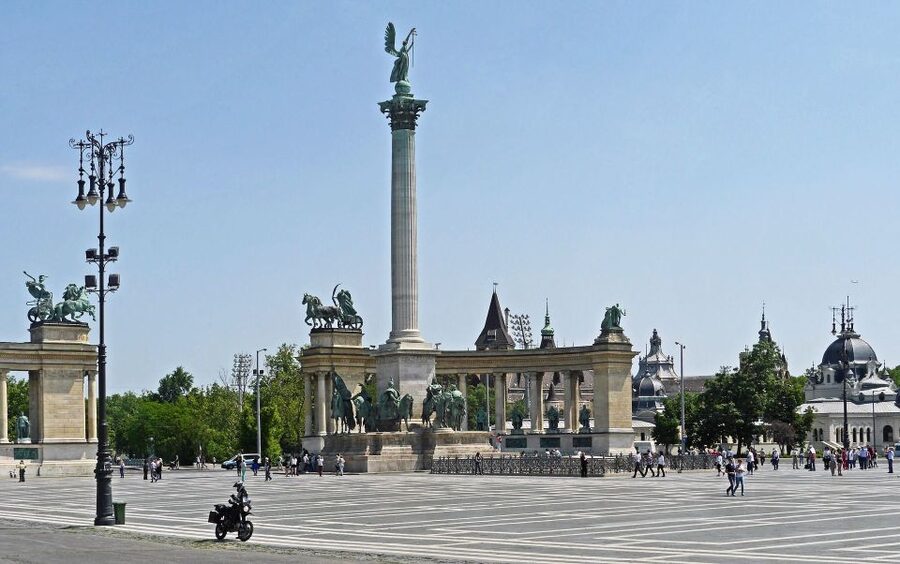
- Andrassy Boulevard leads to Heroes Square: Follow the grand avenue designed for Hungarian nobility and finish at the 1896 millennium monument.
- A historian leads in English: Private and small-group formats are available, with a three-hour schedule and flexible cancellation up to 24 hours before departure.
Why This Pest Walk Works as a First Look at Budapest
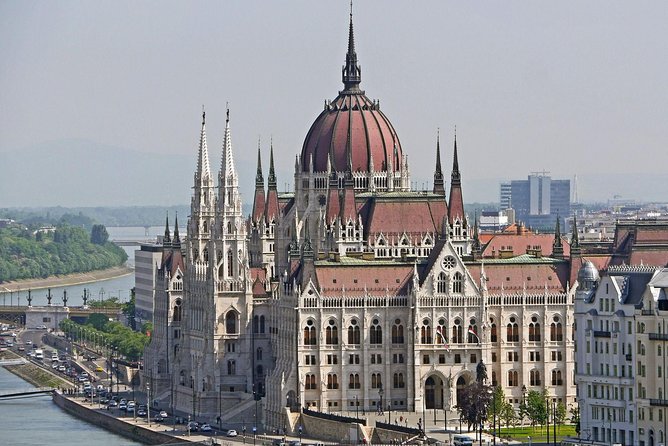
Pest is the flatter, eastern half of Budapest, set across the Danube from Castle Hill. It is also the side of the city where Hungary’s government, banks, churches, Jewish institutions, grand avenues, and cultural buildings gathered during the city’s great expansion.
That makes this route useful for more than sightseeing. You are not simply moving from one pretty building to the next. The walk shows how architecture reflects power. Parliament represents the state, Freedom Square represents finance and national politics, St. Stephen’s Basilica represents Catholic tradition, the synagogue reflects Jewish civic and commercial life, and Andrassy Boulevard reveals how the ruling class wanted the capital to look.
The three-hour length gives the guide room to explain connections that a quick orientation walk would skip. You can ask questions, stop to look up at details, and hear about the people linked to the buildings. The strongest guide feedback points to Andras and Zsofia by name. Andras is described as patient, objective, and easy to talk with, while Zsofia is praised for her storytelling. Those qualities matter on a history-heavy route, since a good explanation can turn a formal square into a place you understand.
There is one practical limit. This is a walking tour with a lot of major stops packed into three hours. You should expect a steady route rather than long indoor visits. The description emphasizes exterior buildings, monuments, and brief stops, so book it for context and city orientation, not for extended time inside Parliament, the basilica, or the synagogue.
More walking tours in Budapest:
- Budapest: Buda Castle Walk with Saint Stephen’s Hall
★ 4.5 · 3,012 reviews - Big Bus Budapest Hop-On Hop-Off Bus and Walking Tour
★ 3.5 · 2,206 reviews - Budapest: Buda Castle District Walking Tour
★ 4.6 · 2,108 reviews
Starting Beside Parliament at Kossuth Square
The meeting point is Szamos Cafe at Budapest’s Kossuth Lajos tér 10. From there, the tour begins in front of Parliament, where the scale of the building immediately gives the walk a sense of purpose.
When Parliament was inaugurated in 1896, it was the largest and most expensive building ever built in Hungary. You will see it from the outside, with time to take in its size and the design choices that make it one of Budapest’s defining sights. The interior is described as dazzling and filled with work by nearly every famous Hungarian painter and sculptor of the era, but this walking tour does not list an interior visit as part of the route.
That distinction is important. If you want to tour Parliament inside, you will need to arrange that separately. This experience is about the building’s place in the city and the story of the new Hungarian nation it helped express.
Kossuth Square also gives the guide a natural place to explain the political ambitions of late 19th-century Hungary. The country was asserting its identity and building institutions to match. Parliament was not designed to be modest. Its size was part of the message.
The Danube Memorial and Budapest’s Hardest Story
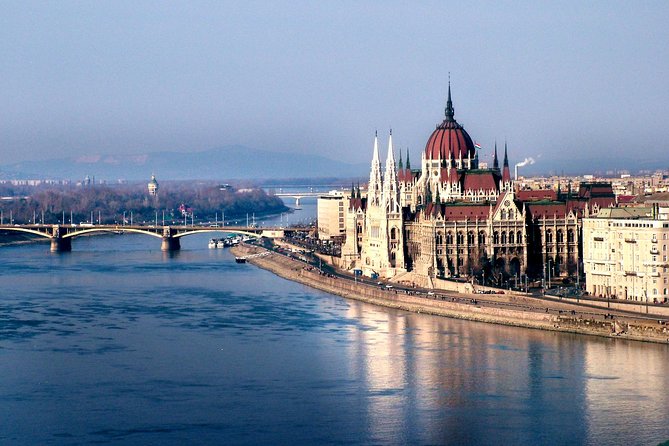
Behind Parliament, on the bank of the Danube, you stop at the Holocaust Monument. It honors the thousands of Jewish citizens of Budapest who were killed at that spot during the final months of World War II.
This is likely to be one of the quieter parts of the tour, despite the open riverside setting. The memorial adds a necessary modern layer to a route that otherwise focuses heavily on the city’s grand 19th-century growth. It reminds you that Budapest’s elegant streets and institutions also carry painful memories.
I value the inclusion of this stop because it prevents the tour from turning into a parade of palaces and decorative facades. The guide can place the Jewish community’s role in the city alongside the later destruction and persecution that reshaped Budapest.
You should be prepared for a serious pause here. It is not a light sightseeing stop, and the subject may affect the mood of the walk. That is part of its value. A city tour that only celebrates architecture leaves out too much of Budapest’s story.
Freedom Square and the Financial Power of Pest
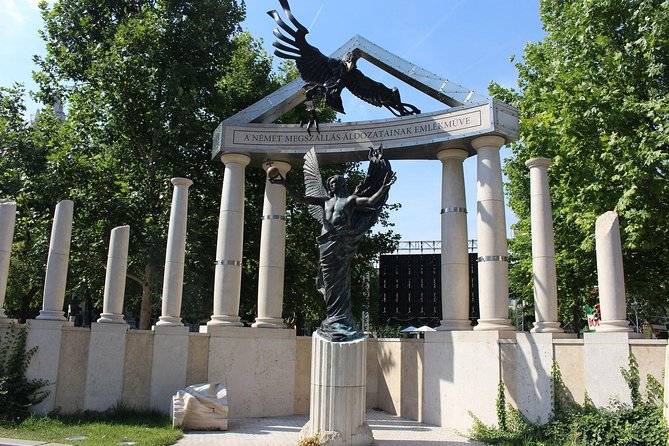
Freedom Square is the next major stop, and it may be the architectural high point of the walk. The square was originally developed as the financial center of Budapest. Its large scale and collection of imposing buildings show how important banking and commerce had become in the growing capital.
The massive Stock Exchange Palace is the key sight. Around it, opulent buildings still house several banks. The square gives you a chance to compare the formal, institutional style of Parliament with the more commercial confidence of the financial district.
This is where a historian’s guidance can be especially useful. A building that looks like a grand office may reveal how money, government, and national identity were tied together. The walk gives you time to consider not just what these buildings look like, but why they were built with such force.
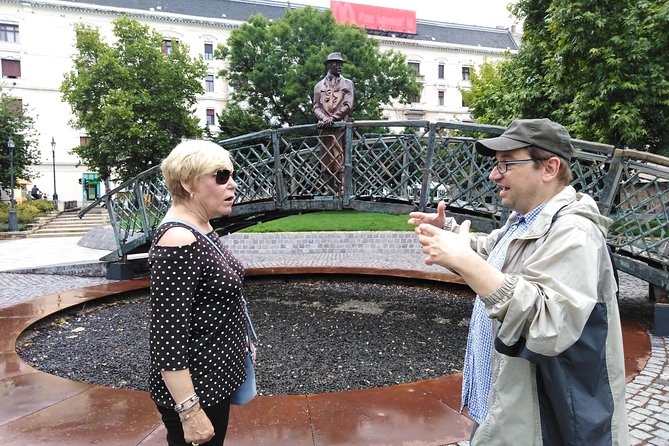
Freedom Square is also a place where politics remains visible. The statue of Cardinal Mindszenty recalls a church leader who spent 15 years hidden in the United States embassy while evading Hungary’s communist authorities. His story adds another layer to the square, connecting its financial architecture with the conflict between religion and the communist state.
If you like urban design, this stop deserves your attention. Look across the open space, then study the facades around its edges. The square works because the buildings are not isolated attractions. Together, they show the ambition of a capital trying to present itself as modern, wealthy, and politically important.
Same city, a completely different way to spend an afternoon:
- Budapest: City Highlights Cruise with Welcome Drink
★ 4.6 · 35,610 reviews - Budapest: Unlimited Prosecco, Beer and Aperol Spritz Cruise
★ 4.8 · 25,310 reviews - Budapest: Széchenyi Spa Day Ticket with Optional Upgrades
★ 4.3 · 23,911 reviews - Budapest: Nighttime or Daytime Sightseeing Cruise
★ 4.2 · 21,062 reviews
Art Nouveau Streets and St. Stephen’s Basilica
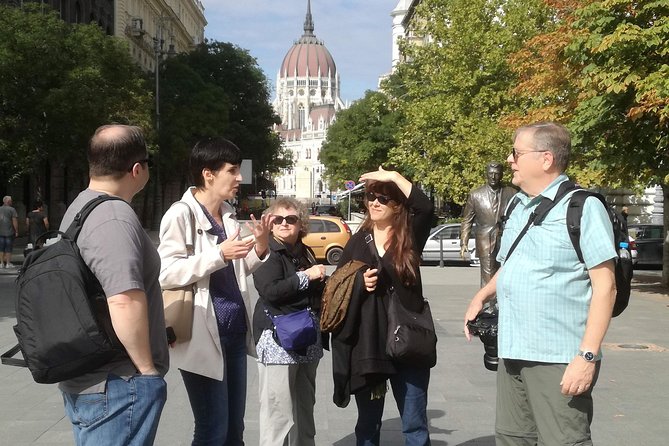
From Freedom Square, you continue toward St. Stephen’s Basilica. Along the way, the route passes several Art Nouveau buildings, one of the architectural styles for which Budapest is famous.
This part of the walk rewards you for looking above street level. The grand landmarks get the attention, but decorative entrances, curved lines, unusual window shapes, and elaborate details often tell you just as much about the city’s taste. You might find that the smaller buildings are easier to appreciate with a guide pointing out what you would otherwise pass without noticing.
St. Stephen’s Basilica provides a major change of scale. Its name honors Stephen, the first king of Hungary, and the building reflects the importance of Catholic identity in the nation’s public life. The tour passes by the basilica rather than promising a full interior visit, so your time here is focused on the building and its place in central Pest.
I like this portion because it breaks up the political and financial emphasis of the opening stops. You move from government to banking to religion, while the street itself supplies a running lesson in Budapest’s decorative architecture.
Do not expect every stop to receive the same amount of time. The route has a fixed three-hour window and ends several kilometers away at Heroes Square. If you want extended photographs at each building, you may need to make quick choices or continue exploring after the tour.
The Great Synagogue and Jewish Budapest
Farther along, you reach the second-largest synagogue in the world. The building is presented as a monument to the important role Budapest’s Jewish population and wealthy bourgeoisie played in the city’s development.
This stop helps explain why Pest grew into a major commercial and cultural center. Jewish citizens were central to the life of the city, and their institutions were part of the urban fabric, not a side story. The synagogue gives the guide a powerful way to discuss community, commerce, religion, and the changing identity of Budapest.
The route description does not include a synagogue interior visit. You should treat this as an exterior and historical stop unless the guide tells you otherwise. If the interior is a priority, check separately before booking so you do not expect more time inside than the tour provides.
The synagogue also connects with the earlier Danube memorial. Seeing both in one walk gives you a fuller picture of Jewish Budapest, from its major contribution to city life to the persecution and murder of the wartime years.
Andrassy Boulevard and the Route to Heroes Square
The tour then follows Andrassy Boulevard, an esplanade designed for Hungarian nobility. This is one of the clearest examples of how city planning can express social ambition. The boulevard was meant to be grand, spacious, and suitable for the country’s elite.
The route travels along and under the boulevard, then pauses briefly at the Opera House. The Opera House adds a cultural note to the procession of state, commercial, religious, and civic buildings. It also shows how Budapest’s leaders wanted the capital to compete with other major European cities in music and the arts.
The short Opera House stop is worth keeping in perspective. The tour does not promise a performance or a detailed interior visit. You are seeing the building as part of Andrassy Avenue’s larger design, so the guide can explain how the boulevard links the central city with the grand monument zone farther out.
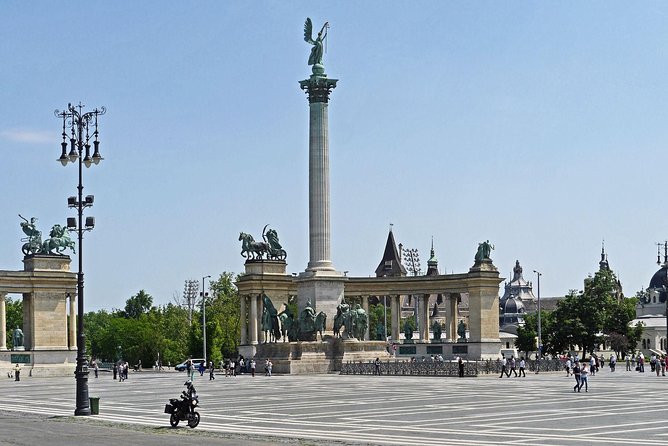
The final destination is Heroes Square. In 1896, Hungarians celebrated the 1,000-year anniversary of the founding of their kingdom here. The square’s monuments give the tour a fitting ending because they turn national memory into a public display.
By this point, you have walked through several versions of Hungarian identity. Parliament presents political authority, Freedom Square presents finance, the basilica presents Catholic tradition, the synagogue presents Jewish civic life, Andrassy Boulevard presents aristocratic taste, and Heroes Square presents the nation’s long story.
The Historian Guide Makes the Difference
A route this packed depends heavily on the guide. Without interpretation, you might remember Parliament, the synagogue, and a few ornate facades. With a strong guide, the same walk can explain how the city’s institutions grew together and how later political events changed them.
The guide language is English. Andras and Zsofia are specifically named guides associated with the experience. Andras is described as patient, objective, good-humored, and willing to answer questions without rushing. Zsofia is praised for strong storytelling and for making three hours pass quickly.
Those details give you a useful picture of the tour style. This is not presented as a theatrical performance or a fast checklist. You should expect conversation, explanations, and room for questions. The feedback also suggests that the guides speak English very well, which is important when the subject includes political conflict, religious institutions, and painful wartime events.
You can choose a private or small-group format. The exact group size is not provided, so you should confirm the available option when checking dates. In general, a smaller format is likely to suit this route because crowded sidewalks and busy squares can make it harder to hear or ask questions.
Is $123 Per Person Good Value?
At $123 per person, the tour is expensive for a three-hour walk. You can see many of these buildings from the street without paying for a guide, and Budapest has plenty of inexpensive ways to get around Pest.
The value comes from the interpretation and the format. You are paying for an English-speaking historian, a carefully connected route, and the option of a private or small group rather than a large general walk. If you are traveling with family or friends and want a guide who can respond to your questions, the price may be reasonable.
It is less convincing if you mainly want a quick introduction or a long list of photo stops. The tour does not list admissions to Parliament, the synagogue, St. Stephen’s Basilica, or the Opera House. You are paying for the guided walk, not a bundle of interior tickets.
I would see it as a strong choice for a first or second day in Budapest, especially if you want the city’s political and cultural story explained in one sitting. It can also help you decide which buildings deserve a later return visit.
The reserve-now, pay-later option keeps your plans flexible, and you can cancel up to 24 hours before departure for a full refund. Starting times vary, so you need to check availability before choosing a date.
Who Should Book This Walk?
You should consider it if you enjoy architecture, politics, religious history, and city planning, or if you prefer asking questions instead of listening to a fixed script. It also suits you if you want to understand how central Pest fits together before exploring the city on your own.
The tour is a good match for:
- First-time visitors who want a strong introduction to Pest
- People interested in Parliament, finance, Art Nouveau, and national identity
- Travelers who prefer a historian rather than a general sightseeing guide
- Couples, families, and friends who can benefit from a private or small-group format
- Visitors who want serious historical context alongside major landmarks
You may want a different plan if your priority is entering several buildings, avoiding a long walk, or keeping costs low. This is an exterior-focused route with a substantial distance between the starting point at Parliament and the finish at Heroes Square.
Final Verdict: A Strong Choice for Context, Not Ticketed Interiors
Book the Downtown Pest Walking Tour if you want Budapest explained as a city shaped by government, finance, religion, Jewish civic life, aristocratic planning, and national memory. The route is well chosen, and the named guides, especially Andras and Zsofia, suggest a thoughtful and personable style.
Skip it if $123 feels too high for a walking tour or if you mainly want inside access to Parliament, the synagogue, the basilica, or the Opera House. For everyone else, the three-hour format offers a useful way to connect Pest’s grandest sights and understand why they were built where they are.
FAQ
How long does the Downtown Pest Walking Tour last?
The tour lasts three hours.
Where does the tour meet?
The meeting point is Szamos Cafe, Budapest Kossuth Lajos tér 10.
Where does the tour begin?
The walk begins at Kossuth Square in front of Parliament.
Where does the tour end?
The tour ends at Heroes Square.
What language is the tour conducted in?
The live tour guide speaks English.
Is the tour private or shared?
Private and small-group options are available. The exact group size is not provided.
What is included in the price?
The price includes a three-hour guided walk through downtown Pest with a historian guide.
Can I cancel the tour?
Yes. You can cancel up to 24 hours in advance for a full refund.
Just added around Budapest
- Budapest: Private, Personalized Pub Crawl, 3 drinks included★ 4.5 · 3 reviews
- Private day trip from Budapest to Bratislava, Vienna, and back★ 3.5 · 3 reviews
- Budapest: Private Adventure Sightseeing Bicycle Tour★ 4.5 · 3 reviews
- Private Danube Bend tour – full day★ 4.5 · 3 reviews
- Budapest: Guided City Walking Tour in Buda and Pest★ 5.0 · 3 reviews
- Budapest Old Jewish Quarter History Private Walking Tour★ 5.0 · 3 reviews
- Lake Balaton Full Day Private Wine Tour★ 5.0 · 3 reviews
- Budapest Urban Feast – Food Tour with Wine Tasting & Coffee House★ 4.5 · 3 reviews
Walking Tours, compared.
Budapest City Landmarks Walking Tour in 2 Hours
Read our review →
3-Hour Orientation Walking Tour of Buda and Pest
Read our review →
Budapest All in One Small Group Walking Tour with Strudel Stop
Read our review →
Buda Castle District Walking Tour with a Historian
Read our review →
BloodThirsty Hungary: Walking tour & Dark Historical Stories
Read our review →
Browse the lists this tour appears in