Reviewed · PRIVATE
Capital Budapest – Half Day Private Tour (4hr)
Budapest is a city best understood from both sides of the Danube, and this private half-day tour gives you that broad view fast. You cross Liberty Bridge, climb into the Castle District, ride the historic M1 metro, then finish among Pest’s grand squares and churches. I like the private format and the practical use of public transport. I also like the relaxed café stop, which gives the tour a human ending rather than one last photo stop.
The main thing to consider is pace. Four hours covers a lot, but most major stops last only 10 to 15 minutes, and admission fees for Fisherman’s Bastion, Matthias Church, Parliament, St. Stephen’s Basilica, and the Great Synagogue are not included. Communication before the tour may also require patience, so confirm the start details clearly.
Key points at a glance
- A true cross-city route: See Buda’s Castle District, Pest’s Parliament and basilica, Heroes’ Square, and the Great Synagogue in one outing.
- Private for up to four people: Your group has the guide to itself, with room to adjust the route around your interests.
- Public transport is part of the lesson: The tour uses Budapest’s metro system, including the M1, the oldest underground line on mainland Europe.
- Miklos may be your guide: The guide named in the available feedback is Miklos, praised for lively stories about Budapest and its past.
- One drink is included: End at Kamara Café near the synagogue with a hot or cold beverage and time to plan the rest of your stay.
- Expect outside views more than full visits: The schedule is built around orientation, photographs, and commentary, not long interior tours.
Why this four-hour route works
A first look at Budapest can feel scattered. Buda rises on the western bank, Pest spreads across the east, and the Danube keeps the two halves visually separate. This tour solves that problem by linking the city’s essential sights into one moving story.
You begin at your Budapest hotel or another agreed central point. The listed meeting point is near Dohány Street, and the tour can finish in the greater downtown area, with Astoria given as a standard end point. That flexibility matters if you have an evening train, dinner booking, or another part of the city you want to reach.
The group limit is four people, which changes the feel from a large walking tour. You can ask questions without shouting across a crowd, and the guide can explain why a place matters instead of simply naming it. The route is still fixed enough to cover the city’s headline sights, but the private setup should help with small adjustments.
I would treat this as an orientation tour with selected short visits. It is especially useful near the start of a Budapest stay, when you want to learn the shape of the city before returning to the places that deserve more time.
A few more Budapest half-days to weigh up
- Private Budapest TukTuk Tour: Custom Route, Hotel Pickup
★ 5.0 · 1,307 reviews - Budapest Essentials Private Tour Highlights and Hidden Gems
★ 5.0 · 861 reviews - Budapest Private Tuk Tuk Half-Day Tour
★ 5.0 · 606 reviews
Liberty Bridge and the first view of Buda
Liberty Bridge is a smart opening point because it puts the Danube at the center of the story. The green bridge links Buda and Pest at the southern end of the city center. It was originally called Franz Joseph Bridge, a reminder that even a short crossing can open a door into Budapest’s imperial past.
The stop is listed at about 10 minutes, so expect a quick introduction and photographs rather than a long bridge walk. From here, the contrast between the lower city and the hillier Buda side becomes clear.
The route continues through St. Gellért Square, named for Bishop St. Gellért, also known as the Martyr for Hungarian Christendom. The square is one of Buda’s most impressive urban spaces, and it helps connect the river crossing with the rise toward the Castle District.
Next comes Clark Square, a key traffic point where the Chain Bridge, the tunnel beneath Castle Hill, the funicular, and several major streets meet. Its flower-filled roundabout may seem like a minor detail, but this is one of those places where Budapest’s transport pattern becomes easy to understand.
Up to Fisherman’s Bastion and Matthias Church
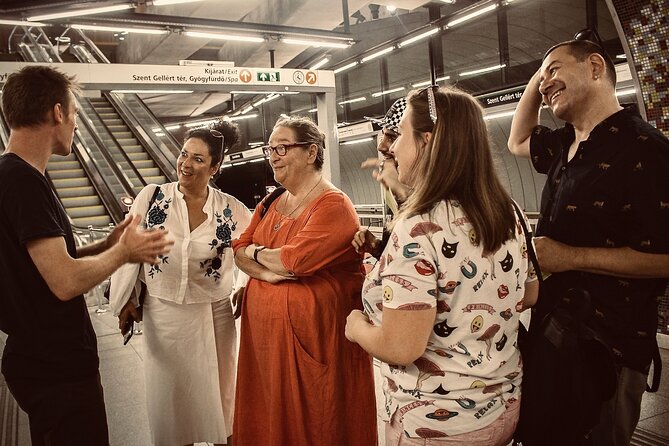
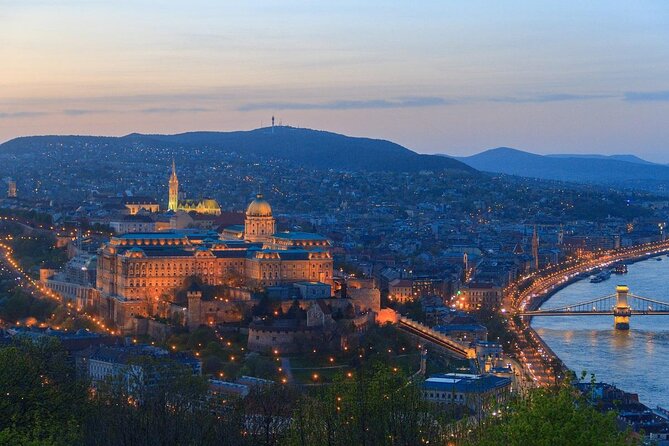
The road toward Buda Castle winds upward beneath Fisherman’s Bastion and toward the Royal Palace. This part of the tour is made for wide views and quick orientation. You see how the hill controls the city below, and the Danube becomes a long dividing line rather than just a strip of water.
Fisherman’s Bastion is one of Budapest’s most recognizable sights. Its Neo-Romanesque terraces face the Danube, and its seven stone towers represent the seven Magyar chieftains traditionally linked with the founding of Hungary in 895.
The official stop is about 10 minutes, and admission is not included. That short window is enough for the main panorama and photographs, but not for a slow walk through every terrace. If you want a careful look at the details, or time to enjoy the view without watching the clock, plan to return on your own.
Matthias Church sits directly in front of the bastion, at the heart of the Castle District. The church is tied to the tradition that it was first built in 1015, although no archaeological remains from that original building survive. Its position makes it easy to pair with Fisherman’s Bastion, but the 10-minute visit again suggests a brief exterior look or a very quick interior visit if you pay the separate admission.
The route also passes Dísz tér, an area of old one and two-storey residential buildings in the central Castle District. In the Middle Ages, simple Gothic houses occupied the square, and traces of those buildings remain in the foundations and walls of later structures. That detail gives the Castle District more depth than a quick parade of grand monuments.
You also pass Vienna Gate, once the connection between the Castle and the road to Vienna. Then the route reaches Széll Kálmán Square, formerly called Moscow Square. It is one of Buda’s busiest transport interchanges and a useful reminder that the Castle District is not an isolated museum quarter. People live, shop, commute, and change buses here every day.
Heroes’ Square and Budapest’s historic M1 metro
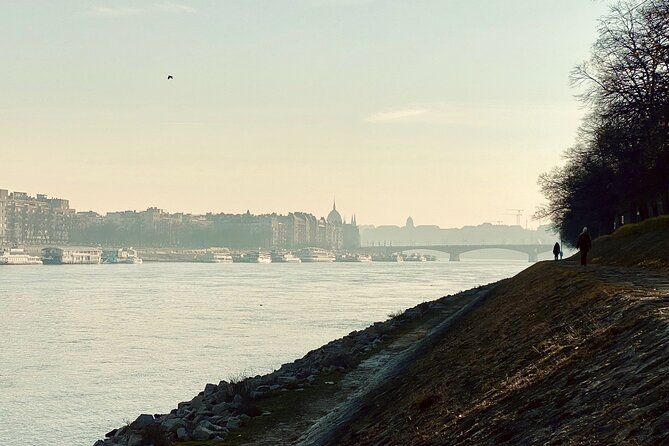
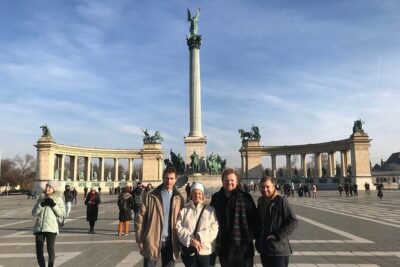
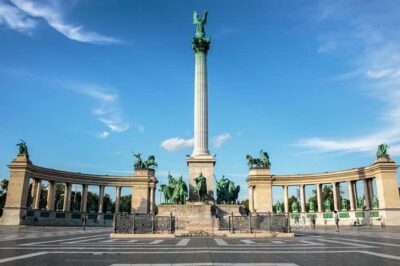
Heroes’ Square shifts the mood from medieval Buda to grand national symbolism. The square is known for its statue complex, including the seven Magyar chieftains and other important Hungarian leaders. A Memorial Stone of Heroes sits nearby, though it is often incorrectly called the Tomb of the Unknown Soldier.
The stop lasts about 15 minutes and is free to enter. That gives you enough time to understand the monument’s layout, take photographs, and hear the basic story behind the figures. It is not enough for a detailed study of each statue, so use the guide’s explanation to decide if you want to return later.
Getting there by Metro Line M1 is part of the experience. Budapest’s M1 is the oldest metro line on mainland Europe and one of the world’s oldest underground railways. This is not just a practical transfer. It gives you a small taste of the city’s public transport heritage and helps you see how quickly Budapest’s different districts connect.
The included public transport pass is useful here. You do not need to arrange a separate ticket for the tour’s planned transport, and the guide can handle the route while you concentrate on the city.
Same city, a completely different way to spend an afternoon:
- Budapest: City Highlights Cruise with Welcome Drink
★ 4.6 · 35,610 reviews - Budapest: Unlimited Prosecco, Beer and Aperol Spritz Cruise
★ 4.8 · 25,310 reviews - Budapest: Széchenyi Spa Day Ticket with Optional Upgrades
★ 4.3 · 23,911 reviews - Budapest: Nighttime or Daytime Sightseeing Cruise
★ 4.2 · 21,062 reviews
Parliament, Kossuth Square, and the Pest side
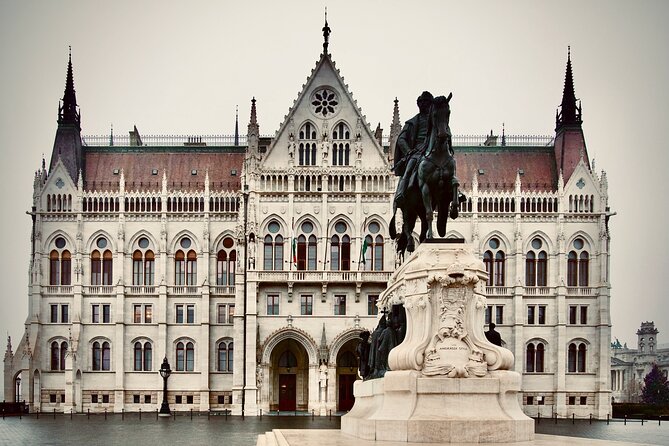
The Hungarian Parliament Building is the grand visual centerpiece of the Pest side. Designed by Imre Steindl in Neo-Gothic style, it opened in 1902 and remains Hungary’s largest building. It sits on Kossuth Square beside the Danube, with the Museum of Ethnography and Ministry of Agriculture facing it.
The planned stop is about 15 minutes, and admission is not included. You should expect an exterior visit and photographs unless your personalized plan includes something more. Parliament deserves more time than this if you want to tour the interior, so ask the guide how the schedule can accommodate that before the day begins.
Kossuth Square itself has changed names over time and was renamed in 1927 for Lajos Kossuth. The square’s size and open sightlines help you take in the Parliament façade, but the real value of a guide here is context. The building is not just a pretty riverside backdrop. It is the seat of Hungary’s National Assembly and one of the country’s main political symbols.
The route then reaches another central Pest square near the United States Embassy and the Hungarian National Bank. The area mixes business and residential buildings, including examples of historicist and Art Nouveau design. This is a useful contrast to the monumental spaces. Budapest’s character often comes from the ordinary streets between major sights.
St. Stephen’s Basilica and the Great Synagogue
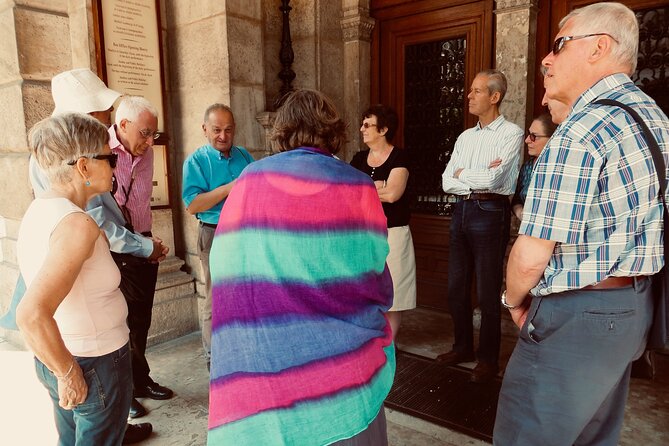
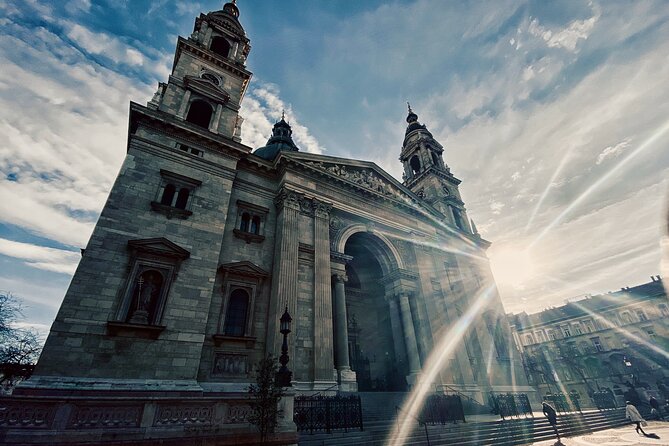
St. Stephen’s Basilica is named for Stephen, Hungary’s first king. A reliquary inside holds what is believed to be his right hand, an unusual and memorable detail that gives the church a direct link to Hungarian royal tradition.
The visit lasts about 15 minutes, with admission separate. That is enough for a short introduction, but not a leisurely examination of the interior. If church architecture or religious history is important to you, mark the basilica for a return visit.
The tour also passes a popular green gathering place beside Deák Ferenc tér. Young people meet here, alcoholic drinks are sold in the grassy area, and the square can remain active until midnight. This brief section helps you see Budapest as a lived-in city, not only a collection of official monuments.
The Great Synagogue on Dohány Street is another 15-minute stop. It is the largest synagogue in Europe, with seating for 3,000 people, and serves as a center of Neolog Judaism. The building is in Erzsébetváros, Budapest’s seventh district, an area that adds a different cultural and religious layer to the route.
Admission is not included, so the timing is important. You can see the building and hear its place in Budapest’s story, but a full visit would require extra time and a separate ticket. If you want to go inside, tell the guide early so the plan can be adjusted as far as possible.
A quiet drink at Kamara Café
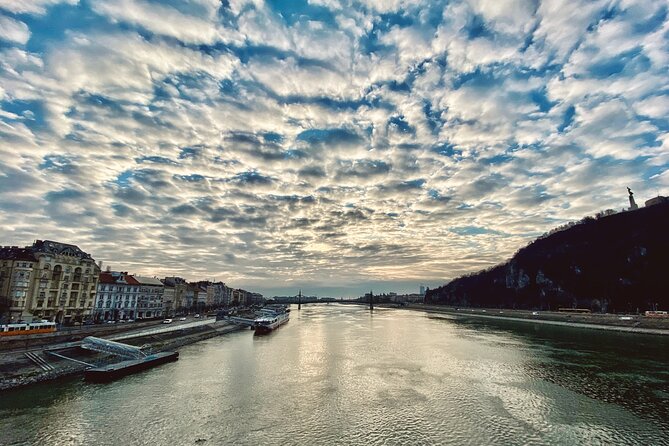
The tour ends with 30 minutes at Kamara Café near the synagogue. One hot or cold drink is included, and this is more useful than it may first sound. After several formal squares and major monuments, you have a calm place to ask final questions, practice a little Hungarian, and discuss what to do next.
A café stop also gives the guide a chance to help shape the rest of your Budapest stay. You can use the included city map and notebook with pen to mark places that deserve a longer visit. The stop is not presented as a meal, so plan your food separately.
I like this ending because it slows the pace. Four hours of sightseeing can become a blur, especially when the route includes both sides of the river. A drink and a final conversation help turn scattered images into a workable plan.
What the $489.24 group price means
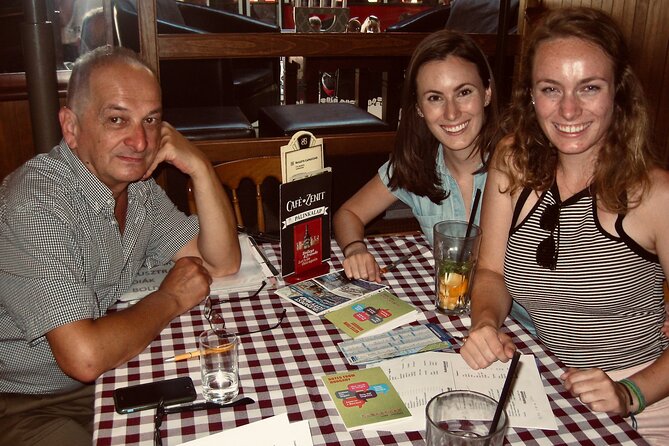
The price is $489.24 for a private group of up to four people. For one person, that is a steep half-day cost. For four people sharing the fee, it works out to about $122.31 each, before any separate admission charges.
The value comes from the private guide, hotel pickup, public transport pass, city map, notebook, pen, and included drink. You are also paying for a route that connects distant parts of Budapest without forcing you to organize the transport yourself.
Still, the price does not cover admission to several headline sights. Fisherman’s Bastion, Matthias Church, Parliament, St. Stephen’s Basilica, and the Great Synagogue all list entrance fees separately. You should budget for those only if you choose to go inside, and you should not expect a full interior tour at every stop during four hours.
For a couple, the cost is easier to justify if you value personal attention and a quick city overview. For a family or group of four, the shared price makes more sense. Solo visitors should compare it with a group tour or self-guided route.
Timing, transport, and communication tips
The advertised hours are 8:00 a.m. to 6:00 p.m., Monday through Sunday, for the stated operating period. Since the route covers many sights, an earlier start may give you a better chance of keeping the schedule comfortable, especially if you want any interior visits.
Pickup is offered from your Budapest hotel or an agreed central point. The usual meeting information also lists Budapest, Dohány u. 4, as a start location. The end point can be personalized within the greater downtown area, with Károly körút near Astoria given as a standard reference.
One practical warning deserves attention. A communication problem was reported before a tour because the booking platform did not clearly confirm when the tour would start. The guide explained that the platform’s matching system and limits on sharing email addresses caused the trouble. I would contact the operator soon after booking through the available channel and confirm the date, time, pickup point, and guide.
The tour is offered in English, and the available feedback specifically names Miklos as the guide. He is praised for telling engaging stories about Budapest and showing more than just the obvious sights. Guide quality matters here because the stop times are short. Good explanations make a 10-minute visit useful; weak ones leave you with little more than photographs.
Most people can take part, service animals are allowed, and the route is near public transportation. The activity is private, so only your own group participates.
Who should book this Budapest tour?
I would choose this tour if you have only a short time in Budapest, want help connecting Buda and Pest, or prefer a private guide to a large group. It also suits a small family or group of friends, since the per-person cost improves with four people.
It is a good fit for first-time visitors who want a city framework before exploring on their own. The route introduces the Castle District, the Danube crossings, the historic metro, Parliament, major churches, and the synagogue district in one compact block.
I would hesitate if your main goal is detailed interior sightseeing. The schedule allows only short stops, and several entry fees are extra. You may get more from this experience by treating it as a guided overview, then returning to Fisherman’s Bastion, Matthias Church, Parliament, or the Great Synagogue later.
Free cancellation is available up to 24 hours before the start time. Changes or cancellations inside that window are not refunded, and poor weather or a failure to meet the minimum number of participants can lead to a new date or a full refund.
Should you book it?
Book it if you want a private, efficient introduction to Budapest and will share the cost with two or three companions. The mix of Buda viewpoints, Pest monuments, public transport, and a café conversation gives you more than a simple sightseeing loop.
Skip it if you already know the city well or want long, unhurried visits inside each monument. For everyone else, especially first-time visitors with four hours to spare, the tour offers a useful map of Budapest’s grand sights and everyday connections, provided you confirm the meeting details and accept the brisk pace.
FAQ
How long is the Capital Budapest private tour?
The tour lasts approximately four hours.
How many people can join the private tour?
The price covers one private group of up to four people.
Is hotel pickup available?
Yes. You can meet the guide at your Budapest hotel or at a central meeting point agreed in advance.
Is the tour offered in English?
Yes. The tour is offered in English.
What is included in the tour price?
The price includes a public transport pass, a city map, a notebook with pen, and one hot or cold beverage at Kamara Café.
Are entrance fees included?
No. Admission is not included for Fisherman’s Bastion, Matthias Church, the Hungarian Parliament Building, St. Stephen’s Basilica, or the Great Synagogue.
Can I cancel for a full refund?
Yes, if you cancel at least 24 hours before the experience start time. Cancellations or changes made less than 24 hours in advance are not refunded or accepted.
Just added around Budapest
- Budapest: Private, Personalized Pub Crawl, 3 drinks included★ 4.5 · 3 reviews
- Private day trip from Budapest to Bratislava, Vienna, and back★ 3.5 · 3 reviews
- Budapest: Private Adventure Sightseeing Bicycle Tour★ 4.5 · 3 reviews
- Private Danube Bend tour – full day★ 4.5 · 3 reviews
- Budapest: Guided City Walking Tour in Buda and Pest★ 5.0 · 3 reviews
- Budapest Old Jewish Quarter History Private Walking Tour★ 5.0 · 3 reviews
- Lake Balaton Full Day Private Wine Tour★ 5.0 · 3 reviews
- Budapest Urban Feast – Food Tour with Wine Tasting & Coffee House★ 4.5 · 3 reviews
Private, compared.

Private Budapest TukTuk Tour: Custom Route, Hotel Pickup
Read our review →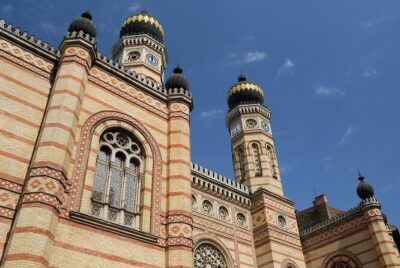
Budapest Essentials Private Tour Highlights and Hidden Gems
Read our review →
Budapest One Way Private Transfer to or from Airport
Read our review →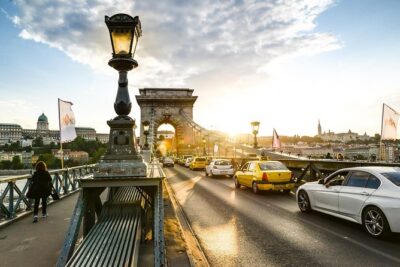
Budapest Private Luxury Sightseeing Tour with Guide and Transport
Read our review →
Private Budapest City tour with Classic Russian Jeep or G-Wagon!
Read our review →
Budapest Private Full Day City Sightseeing Tour Walking or by Car
Read our review →