Reviewed · TOURS
Café Wandering: An Excursion through Budapest’s Belle Epoque
Budapest’s old cafés were more than places for coffee. They were workrooms, salons, newsrooms, and meeting places for writers, artists, and public thinkers. This three-hour walk follows that world through grand interiors, Habsburg-era architecture, and the surprising Asian motifs used by Budapest designers.
I like the small group, limited to eight people, and the chance to ask questions without shouting across a crowd. I also like the academic flavor: your guide may be a professor, historian, journalist, art critic, or published author. Kota, one named guide, earned especially warm praise for an excellent tour.
The main drawback is cost. At $123 per person, this is not a cheap sightseeing walk, and café drinks, cakes, and coffee are extra. You are paying for the guide’s art and cultural background, not a meal or a long list of interior visits.
Key points at a glance
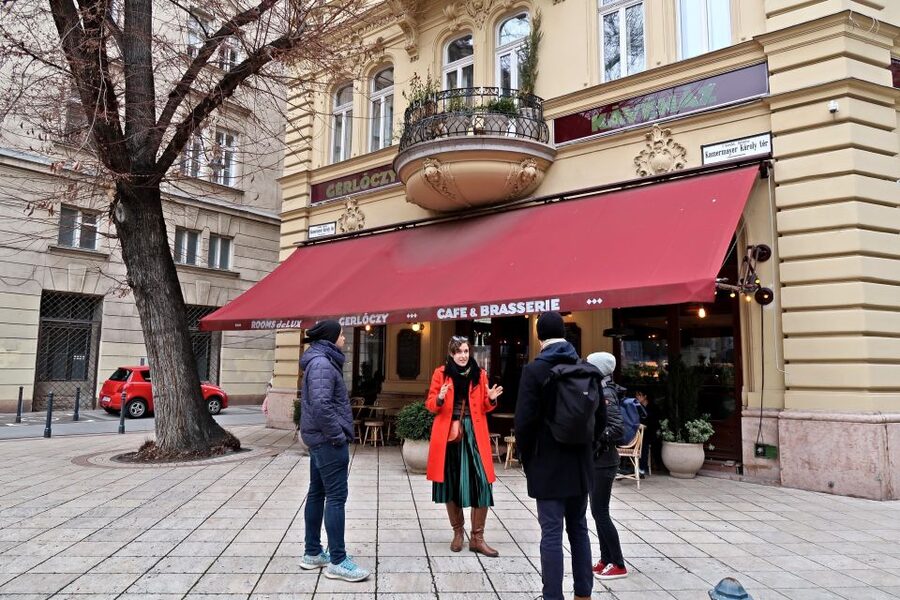
- Gerbeaud sets the tone: Begin on Vörösmarty Square in one of Budapest’s best-known historic cafés, with more than a century of social and culinary history.
- Central Café shows café culture at full strength: Its dignified setting helps explain why cafés mattered so much during the Habsburg period.
- The route links architecture with daily life: You see grand spaces, but also learn how poets, artists, writers, and intellectuals used them.
- Asian details add a twist: Look closely at the decorative motifs and design elements that go beyond standard European ornament.
- The finish is unusual: The walk concludes at the art nouveau orthodox Kazinczy Street Synagogue, a striking change of mood from the cafés.
- The guide is the main value: An English-speaking specialist leads the walk, with small-group access and room for questions.
What this Budapest café walk is really about
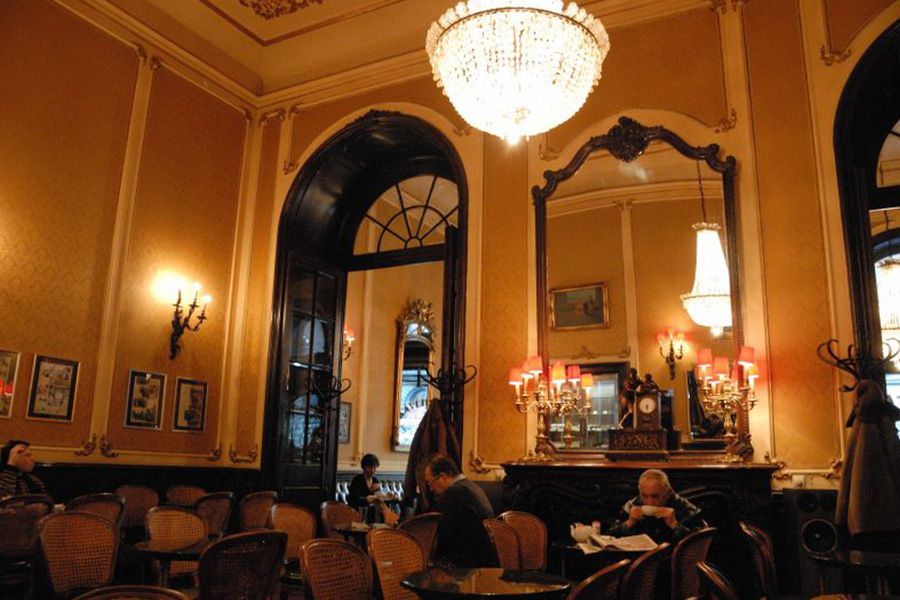
This is not simply a coffee tasting. It is an architectural and cultural walk built around the cafés of Budapest during the city’s Belle Epoque, especially the late 19th and early 20th centuries.
That period brought money, new buildings, public culture, and a strong appetite for cafés. A coffee house could be a place to read, write, debate, meet friends, hear a lecture, or watch the city’s cultural life unfold. The tour uses these interiors to explain that wider world.
I find that approach useful because grand buildings can otherwise blur together. You may admire a decorated ceiling, polished hall, or ornate wall without knowing why it matters. An art historian can point out how the design reflects the era’s confidence, international tastes, and fascination with details from outside Europe.
The experience lasts three hours and uses a small group of no more than eight. That size matters here. Café interiors are better suited to a quiet conversation than a large guided crowd, and you should have a fair chance to hear the guide and ask about details.
Other Budapest outings people book alongside this one:
- Budapest: City Highlights Cruise with Welcome Drink
★ 4.6 · 35,610 reviews - Budapest: Unlimited Prosecco, Beer and Aperol Spritz Cruise
★ 4.8 · 25,310 reviews - Budapest: Széchenyi Spa Day Ticket with Optional Upgrades
★ 4.3 · 23,911 reviews
Starting at Café Gerbeaud on Vörösmarty Square
The meeting point is Café Gerbeaud, at Budapest Vörösmarty tér 7 to 8. This puts you in the heart of central Budapest, on a square that is easy to use as a starting point for the rest of your day.
Gerbeaud is the first lesson in the atmosphere of Imperial Budapest. The café has more than 100 years of history and once served as a social hub for both local people and visitors. Its interior gives you an immediate sense of the polished public world that the walk explores.
You will hear about the café’s role in city life, rather than simply being shown a pretty room. That distinction makes the stop worthwhile. The setting gives you a physical reference for the period before the guide moves on to wider architectural and cultural themes.
You can buy a coffee, cake, or other refreshment here, but it is not included in the tour price. If you stop for something, keep the schedule in mind. The experience is a guided walk, not an open-ended café afternoon.
Taking the tram along the Danube to Central Café
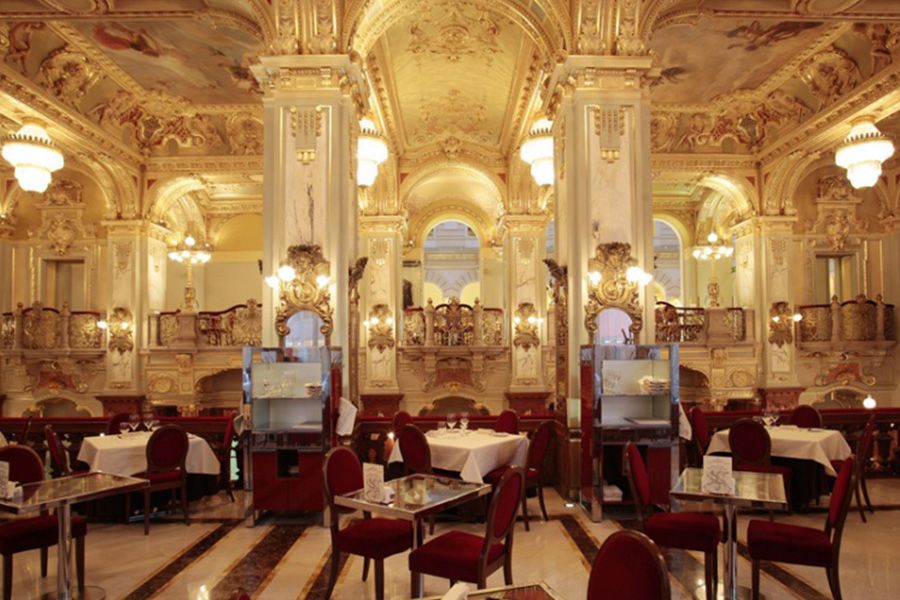
From Gerbeaud, the group takes the tram along the Danube to Central Café. This is a practical change of pace in the route. You are not only moving between attractions, but also getting a brief look at Budapest from public transport.
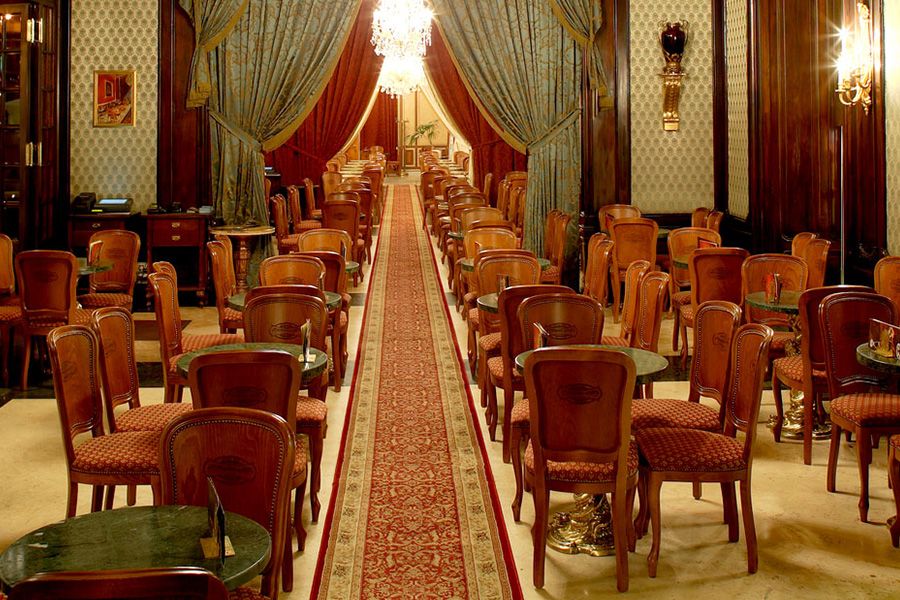
Central Café, also known as Central Cafe and Restaurant 1887, is presented as a particularly dignified example of café house culture. Its name reflects its founding date, and its setting evokes the period when the Habsburg Empire was at a high point of economic and cultural power.
The guide connects the room’s decor with the wider café tradition. Meals, desserts, and drinks were part of the experience, but the café’s value went beyond eating. It offered a public setting where people could read, work, exchange ideas, and watch the city’s cultural life.
For you, the useful point is context. A lavish café was not just decoration for decoration’s sake. It expressed status and ambition, while also providing a place where ordinary social and intellectual activity could take place.
Refreshments remain your responsibility. You can order at the cafés you visit, but the listed price covers the guided walk and art historian, not food or drink. That makes this more suitable for someone interested in interiors and cultural history than for anyone expecting a café-hopping package.
Café Astoria and the grand European coffee house
The route continues to Café Astoria, described as more than a century old and full of the grandeur associated with classic European coffee houses.
This stop helps widen the picture. Gerbeaud and Central Café show different sides of Budapest’s café culture, while Astoria reinforces the scale and confidence of the period. The point is not simply that the room is old. You are encouraged to see how its decoration and atmosphere belong to a broader Central European tradition.
I would pay attention to the relationship between the café’s public role and its formal design. A room made for conversation and business could also be carefully staged, with lavish details meant to signal refinement. The guide’s art background should help you separate those layers.
The walk is not described as a full meal at any café, so plan accordingly. If you want to sample cakes or coffee, you will pay separately. That gives you control over spending, but it also means the $123 price does not include a built-in tasting element.
Same city, a completely different way to spend an afternoon:
- Budapest: Nighttime or Daytime Sightseeing Cruise
★ 4.2 · 21,062 reviews - Budapest: 1-Hour Evening Sightseeing Cruise with Drink
★ 4.5 · 8,330 reviews - Budapest Danube Cruise and Dinner Options, Live Music and Dance
★ 4.5 · 7,428 reviews - Budapest: Historic Cruise with Welcome Drink
★ 4.7 · 6,512 reviews
Művész Coffee House and Budapest’s artist culture
The itinerary includes Művész Coffee House, also called the Artist Cafe. Its name points directly toward the link between cafés and creative life.
This is one of the more appealing themes of the experience. You hear about the poets, artists, and writers who used Budapest cafés, so the rooms become connected to the people who worked and met there. You are not looking at architecture in isolation. You are considering how artists and writers occupied these spaces and made them part of the city’s cultural life.
The supplied route information also describes a visit to Urania Café on Rákóczi Street. Urania houses the city’s oldest film theater and is known for lectures given by prominent intellectuals before large audiences. Since the stop list also names Művész and New York Palace Café, the exact sequence may vary, so check the available starting details when booking.
That difference is worth noting, not because it ruins the experience, but because it affects your expectations. The description presents a wider café and cultural route than one fixed list of five interiors. Ask the guide at the start which stops are included that day if a particular café matters to you.
New York Palace Café and the grand finale of the café theme
The guided route includes New York Palace Café, one of Budapest’s most lavish café settings. Its presence fits the main idea of the walk: the café as a showcase for architecture, social life, and cultural ambition.
The description emphasizes Budapest’s Belle Epoque masterpieces rather than a simple checklist of buildings. At New York Palace, that means taking time with the room’s decorative effect and considering why café interiors were made so grand. You may find the design almost theatrical, especially after seeing the more restrained dignity associated with Central Café.
This stop is listed as a guided visit, so it is not merely a place where you are left to look around on your own. The guide’s commentary is central to the experience. A specialist can explain design choices, compare interiors, and point out details that are easy to miss when you are focused only on the overall grandeur.
The café is also a reminder of the tour’s price question. If you order here, your bill is separate. Those who enjoy historic rooms and want a coffee in the setting may see that as a worthwhile personal extra. Those watching their budget can focus on the architecture and skip the purchase.
Asian motifs in Budapest’s Belle Epoque interiors
One of the most interesting promises of the walk is its attention to Asian motifs and design elements. This prevents the tour from becoming a simple parade of European stucco, mirrors, and formal café furniture.
Designers in this period often looked beyond their immediate surroundings for fresh visual ideas. On this walk, you are asked to examine how Asian references appear alongside European architectural traditions. The value is in comparison: notice the difference between the building’s overall style and the smaller decorative details borrowed or adapted from elsewhere.
The description does not identify each motif or assign a specific origin to every object, so you should not expect a technical catalog of decorative arts. Instead, the guide can direct your eye toward selected elements and explain how they fit the period’s design interests.
I would treat this as a reason to slow down. Café interiors reward close looking. Once the guide points out a pattern, shape, or decorative reference, you may begin to notice similar choices in other rooms.
Ending at the orthodox Kazinczy Street Synagogue
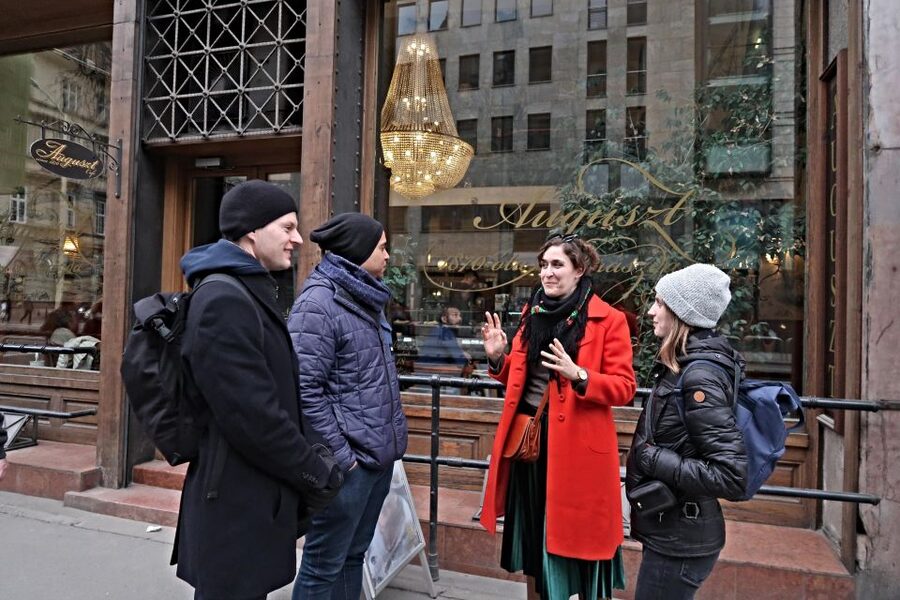
The experience concludes at the art nouveau orthodox Kazinczy Street Synagogue. This is a thoughtful final stop because it moves the subject beyond cafés and into another important expression of Budapest’s architecture and community life.
The synagogue’s art nouveau style gives you a different visual language from the grand coffee houses. Its orthodox identity adds another layer, showing how Budapest’s Belle Epoque was shaped by several cultural and religious communities, not only by imperial public life.
The supplied highlights call attention to the synagogue as a fascinating conclusion, but they do not state that the interior is entered or that admission is included. You should therefore understand the ending as a guided look at the site, with the guide explaining its architectural significance, rather than assume a separate synagogue admission is part of the package.
As a final stop, it helps you connect the cafés to the wider city. Budapest’s architecture from this period was not limited to restaurants and public salons. It also appeared in religious buildings and community spaces, each with its own visual aims.
The guide makes or breaks the experience
The guide is an art historian, and the tour may be led by a professor, doctoral student, historian, journalist, art critic, or published author. That background is important because the route depends on interpretation.
A basic guide could point out ornate rooms and repeat dates. A guide with a strong academic background can explain why the buildings look as they do, how café culture worked, and how the period’s artistic tastes traveled across borders.
Kota is the one named guide connected with the experience, and a verified booking specifically praised Kota as excellent. Another verified booking described the tour as informative. With only four total ratings shown and an overall five-star score, the sample is small, so I would not treat it as proof that every departure will feel identical. Still, the strongest praise points to the right feature: the quality of the explanation.
Because the tour is in English and limited to eight people, it should suit you if you enjoy asking questions about architecture, art, and history. It is less suitable if you want a fast overview with little commentary or a relaxed afternoon spent mainly eating cake.
Is $123 a fair price for three hours?
At $123 per person, the tour costs more than a standard city walk. The price covers three hours with a live English-speaking guide and an art historian, in a group capped at eight. It does not cover café refreshments, cakes, coffees, or other purchases.
The value depends on what you want from Budapest. If you only need directions and a quick look at famous buildings, this will likely feel expensive. You can see many central façades independently, though you would miss the organized cultural explanation.
I see stronger value for visitors who have already seen the main sights and want a focused subject. The tour joins architecture, café culture, literature, design, public transport, and religious architecture in one compact route. You are also paying for access to a guide who can explain the meaning behind details instead of leaving you with photographs and vague impressions.
Keep extra money available if you want to sit down for coffee or cake. Since those purchases are not included, the final cost will be higher than the advertised $123 if you sample several cafés.
Who should book this experience?
I would choose this walk if you enjoy architecture but want more than a list of building names. It is also a good fit if cafés interest you as cultural institutions, not only as places to eat.
The small group suits people who prefer a quieter format. The English-only structure is clear, so you should be comfortable following an English-speaking guide for three hours.
This is a strong choice for:
- Visitors interested in 19th and early 20th century architecture
- People who enjoy literary and artistic history
- Repeat visitors seeking a more focused Budapest subject
- Anyone who likes historic cafés and does not mind paying separately for refreshments
- Travelers who prefer a specialist guide to a broad general tour
I would think twice if you have limited mobility or dislike walking and public transport, since the experience is described as a guided walk with a tram ride along the Danube. The available details do not provide an accessibility assessment, so ask before booking if that is important for you.
The route may also be less satisfying for someone expecting a full café meal or guaranteed extended seating at every stop. The cafés are the subject of the tour, but refreshments are optional and extra.
Practical advice before you go
Meet at Café Gerbeaud, Budapest Vörösmarty tér 7 to 8, at the selected starting time. Availability determines the departure options, so check the schedule rather than assuming a fixed hour.
Wear shoes suitable for a three-hour city walk. The experience combines interior visits, short walks, and a tram ride, so you will be moving between different kinds of stops.
Keep your expectations flexible about the exact sequence. The main description includes Gerbeaud, Central Café, Café Astoria, Urania Café, Művész Coffee House, New York Palace Café, and the Kazinczy Street Synagogue, while the numbered stop list names five café visits. Ask which locations are planned that day if you have a must-see interior.
You can reserve now and pay later, which helps if your Budapest schedule is still changing. Free cancellation is available up to 24 hours before the activity for a full refund.
Should you book Café Wandering?
Book it if you want Budapest explained through its old cafés, design details, and cultural life rather than through the usual headline sights. The art historian guide, eight-person limit, and praised guiding from Kota give the walk a clear point of difference.
Skip it if $123 feels too high for a tour without included drinks, or if you mainly want to sit in cafés and sample desserts. For the right audience, the price buys a focused lesson in Budapest’s Belle Epoque, with rooms, writers, artistic tastes, and public life tied together in a way a self-guided stroll may not provide.
FAQ
How long does Café Wandering last?
The experience lasts three hours.
Where does the tour begin?
The meeting point is Café Gerbeaud at Budapest Vörösmarty tér 7 to 8, 1051.
What language is the tour offered in?
The live guided tour is offered in English.
How large is the group?
The tour is limited to eight participants.
Who leads the experience?
An art historian leads the walk. Guides may be professors, doctoral students, historians, journalists, art critics, or published authors. Kota is one named guide associated with the experience.
Is transportation included?
The route includes a tram ride along the Danube from Gerbeaud to Central Café. The provided information does not specify whether a separate public transport ticket is included.
Which cafés are included?
The listed stops include Central Cafe and Restaurant 1887, Café Astoria Restaurant, Művész Coffee House, and New York Palace Café, with the tour beginning at Café Gerbeaud. The description also refers to Urania Café on Rákóczi Street.
Are coffee, cakes, and other refreshments included?
No. The cost of refreshments, cakes, coffees, and other items selected at the cafés is not included.
Can I cancel the booking?
Yes. You can cancel up to 24 hours in advance for a full refund. You can also reserve now and pay later.
Just added around Budapest
- Budapest: Private, Personalized Pub Crawl, 3 drinks included★ 4.5 · 3 reviews
- Private day trip from Budapest to Bratislava, Vienna, and back★ 3.5 · 3 reviews
- Budapest: Private Adventure Sightseeing Bicycle Tour★ 4.5 · 3 reviews
- Private Danube Bend tour – full day★ 4.5 · 3 reviews
- Budapest: Guided City Walking Tour in Buda and Pest★ 5.0 · 3 reviews
- Budapest Old Jewish Quarter History Private Walking Tour★ 5.0 · 3 reviews
- Lake Balaton Full Day Private Wine Tour★ 5.0 · 3 reviews
- Budapest Urban Feast – Food Tour with Wine Tasting & Coffee House★ 4.5 · 3 reviews
Tours, compared.
Buda Castle District Vampires and Myths Night Tour
Read our review →
Budapest City Landmarks Walking Tour in 2 Hours
Read our review →
3-Hour Orientation Walking Tour of Buda and Pest
Read our review →