
Reviewed · WALKING TOURS
Budapest Walking Tour with a Professional Local Guide
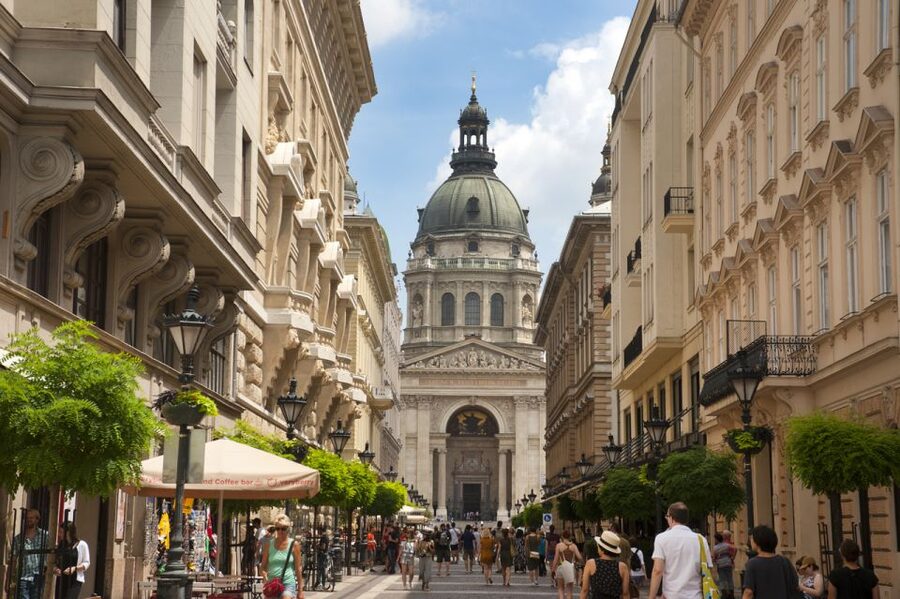
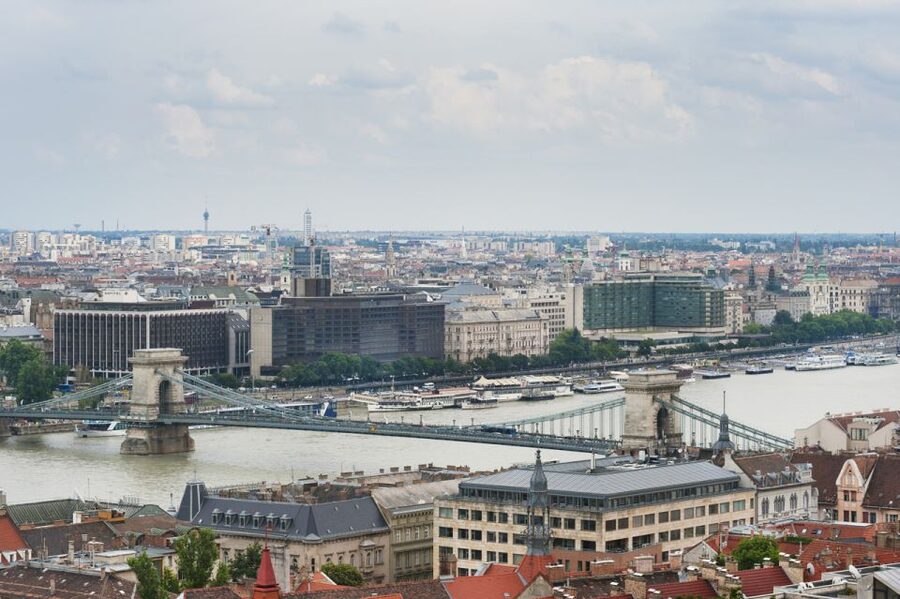
Budapest’s story makes the most sense when you see Pest and Buda together. This three-hour tour links St. Stephen’s Basilica, the Parliament exterior, Buda Castle, and Matthias Church while explaining how medieval kings, 19th-century builders, Nazi rule, Communist dictatorship, and modern democracy shaped the city.
I like the short walking distance, about 1.5 kilometers, because you get plenty of explanation without wearing out your feet. I also like the human side of the history. Guides such as Alexandra, Dominik, and Z have brought humor, personal stories, and clear detail to the difficult years under Communism.
The main consideration is that the $41 price does not include four public transport tickets, which cost 1,400 HUF per person. The route also gives you a city overview rather than long interior visits, so plan separate time for museums and church interiors.
Key points at a glance
- Basilica-to-castle route: Begin in central Pest and finish among the historic sights of Buda.
- Only 1.5 kilometers on foot: Public transport handles the river crossing, making this a manageable introduction.
- 20th-century stories: Expect attention to Nazi and Communist dictatorships, revolutions, and Hungary’s move toward democracy.
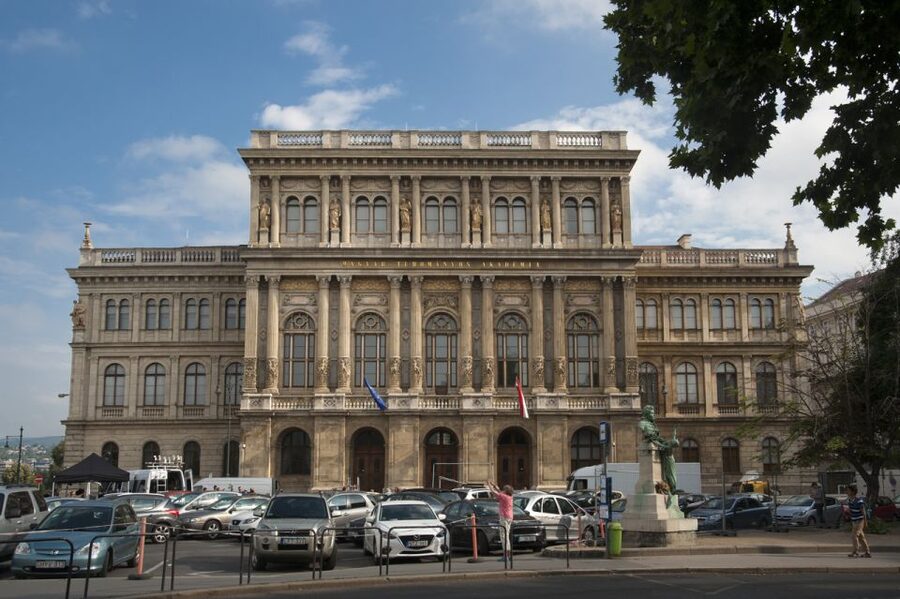
- Major architecture: See St. Stephen’s Basilica, the Parliament exterior, Buda Castle, and Matthias Church.
- Small-group feel: Private and small-group formats are available, useful if you want time for questions.
- English-speaking guides: Alexandra, Dominik, Z, Oliver, Dalia, and others have led this experience at different times.
Why this short Budapest tour works so well
Many first visits to Budapest begin with a long list of landmarks and no clear sense of how the city fits together. This tour solves that problem in three hours. You see the main central sights, cross the Danube by public transport, and finish with a basic mental map of the capital.
That map matters. Pest and Buda are not simply two neighborhoods with different names. The tour uses both sides to explain Budapest’s changing role as a royal center, a fast-growing 19th-century capital, and a city marked by dictatorship, war, revolution, and political change.
I would choose this tour early in a Budapest visit. The route helps you decide where to return later, perhaps for a longer look at the castle district, the Parliament area, or the Basilica.
The walking is intentionally moderate. About 1.5 kilometers is not much for a three-hour city tour, but that is the point. Time goes into stories, questions, and moving between key areas rather than marching from one photo stop to another.
More walking tours in Budapest:
- Budapest: Buda Castle Walk with Saint Stephen’s Hall
★ 4.5 · 3,012 reviews - Big Bus Budapest Hop-On Hop-Off Bus and Walking Tour
★ 3.5 · 2,206 reviews - Budapest: Buda Castle District Walking Tour
★ 4.6 · 2,108 reviews
Starting beside St. Stephen’s Basilica
The meeting point is next to St. Stephen’s Basilica, in front of California Coffee Company. That is a useful central starting place, especially if you are staying in Pest or arriving from another central attraction.
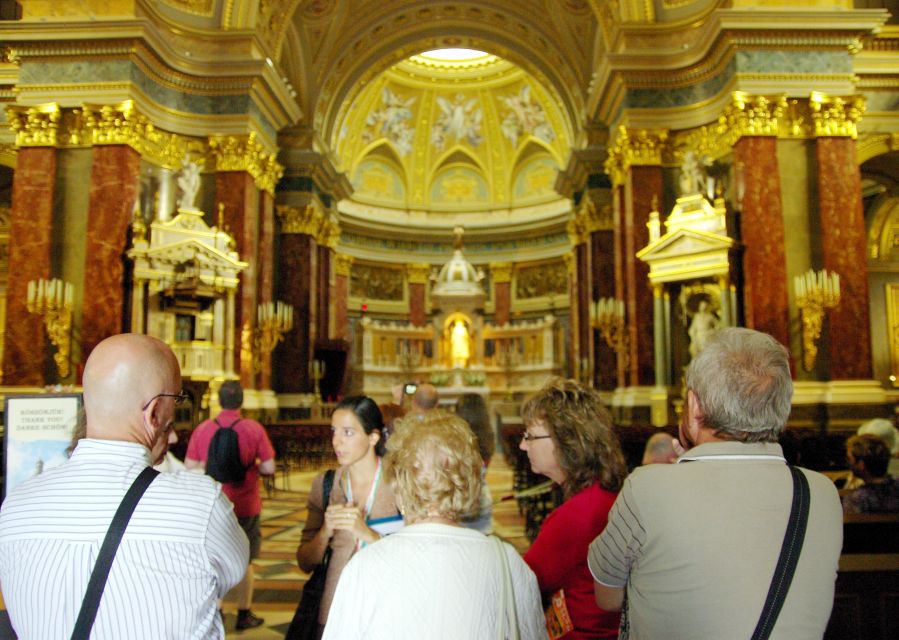
The Basilica gives the guide an impressive first subject. Its scale and formal design introduce Budapest’s religious architecture, while the surrounding streets show the city’s urban character. You can expect the guide to use this area to set the scene before the group heads onward.
A practical tip: arrive with the exact meeting point in mind. The instruction is not simply St. Stephen’s Basilica, but the coffee shop in front of it. In a busy central area, that small detail can save time.
The opening section is also a good test of the guide’s style. Strong guides such as Alexandra have been praised for making information lively and adding local knowledge beyond the standard sights. Z has been described as bringing humor and enthusiasm, while Dominik has handled the city’s difficult 20th-century subjects with care and clarity.
Reading Budapest through its changing eras
The tour’s best feature is its broad historical sweep. You are not given isolated facts about buildings. Instead, the guide connects the medieval royal residence, the rapid urban growth of the 19th century, the Nazi and Communist dictatorships, and Hungary’s recent democratic change.
That range is ambitious for three hours, so you should expect an overview rather than a specialist lecture. Still, it gives you the basic sequence needed to understand why Budapest looks and feels so varied.
The 20th-century section seems especially important. Hungary’s past includes events that affected the whole of Central Europe, and the tour links Hungarian experience with wider European events. One guide has also shared personal stories about life under Communist rule, which can make that period easier to grasp than a list of dates.
This is not a light sightseeing walk with history added as decoration. The route addresses revolutions, dictatorship, and painful parts of the national story. That makes it a better fit for you if you want context, not just landmark photographs.
At the same time, the tone does not appear grim throughout. The strongest guides balance hard subjects with humor and warmth. That mix helps keep the pace comfortable and the subject approachable.
The Parliament exterior and Pest’s grand scale
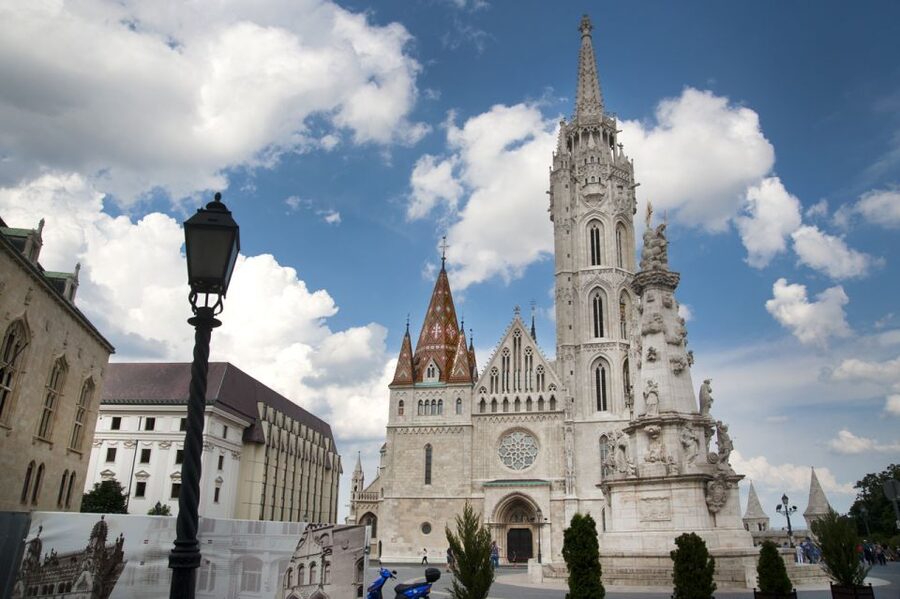
The Hungarian Parliament building is included as an exterior sight. You will not be given a full indoor Parliament visit on this experience, so keep your expectations clear.
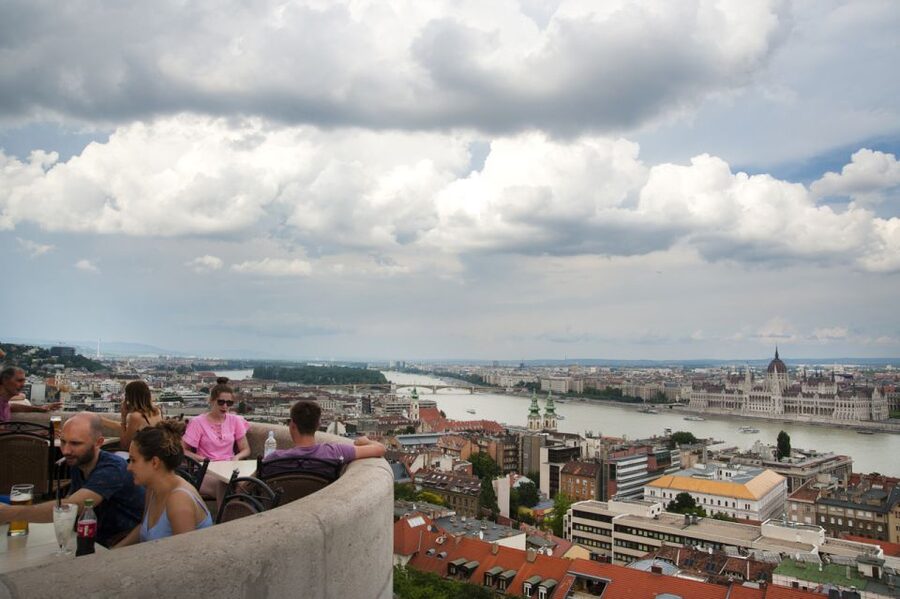
Even from outside, Parliament helps explain Budapest’s civic ambitions and the grand architectural mood of the city. It also gives the guide a chance to discuss how the capital developed during its major 19th-century expansion.
This stop is useful for comparison. The Basilica expresses religious power, while Parliament represents the state. Seeing both within the same short route makes the city’s competing symbols easier to understand.
You may want to take a few minutes for photographs here, but the tour’s exact time at each stop can vary with the guide, group, and conditions. The purpose is orientation and interpretation, not a long photography session.
A few more Budapest half-days to weigh up
- Budapest: Parliament Building Entry Ticket and Audio Guide
★ 4.5 · 3,844 reviews - Budapest: Opera House Guided Tour
★ 4.6 · 1,533 reviews - Budapest Small-Group Guided Tour on MonsteRoller e-Scooter
★ 5.0 · 1,517 reviews - Budapest: Guided Tour of the Parliament Building in Spanish
★ 4.6 · 1,240 reviews
Crossing the Danube without a long hike
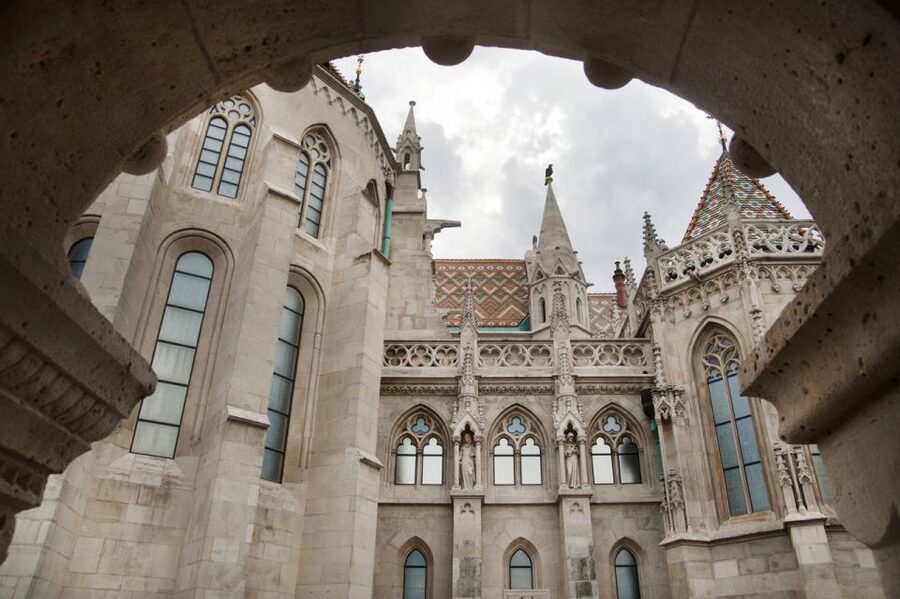
The tour uses public transport to get across the river. Four tickets per person are required, and these are not included in the tour price. The listed cost is 1,400 HUF per person.
This arrangement is one of the practical strengths of the route. You avoid turning the river crossing into a tiring walk and can cover both halves of Budapest in one outing. It also gives you a small taste of how the city works beyond the postcard views.
You should budget for the tickets before setting out. At $41 per person, the tour remains reasonably priced for a three-hour guided introduction, especially in a private or small group. The extra transport fare is modest, but it is still part of the real cost.
The public transport portion means this is not a completely continuous walking route. If you want a tour that stays outdoors and on foot from beginning to end, this may not be your ideal choice. If you value seeing both sides of the city without a long trek, it is a sensible trade-off.
Reaching Buda Castle and the medieval royal setting
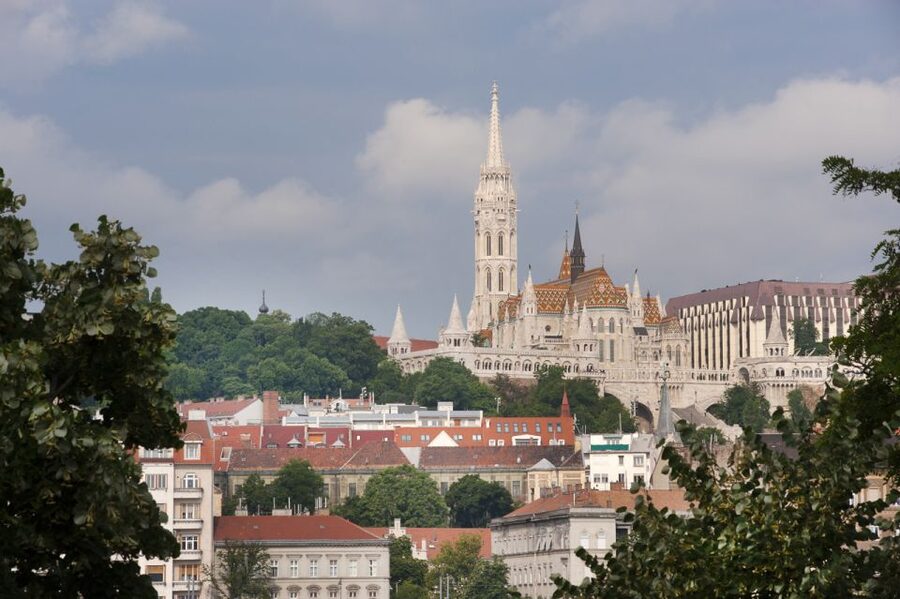
On the Buda side, the focus shifts from the grand urban center of Pest to the city’s older royal identity. Buda Castle represents the medieval royal residence and gives the historical story a different setting.
The guide can show you how Budapest’s past is layered rather than tidy. Royal power, later urban growth, war, dictatorship, and modern life all occupy the same city. The castle area makes that long timeline easier to picture.
The tour emphasizes the exterior experience. You should not assume that your ticket includes entry to palace museums or other indoor sites. That is not a weakness if you want a fast first look, but it matters if the castle is your main reason for booking.
I would use this part of the tour to note places you want to revisit. The guide’s overview can help you decide if you want more time around the castle district after the group finishes.
Matthias Church and Budapest’s religious architecture
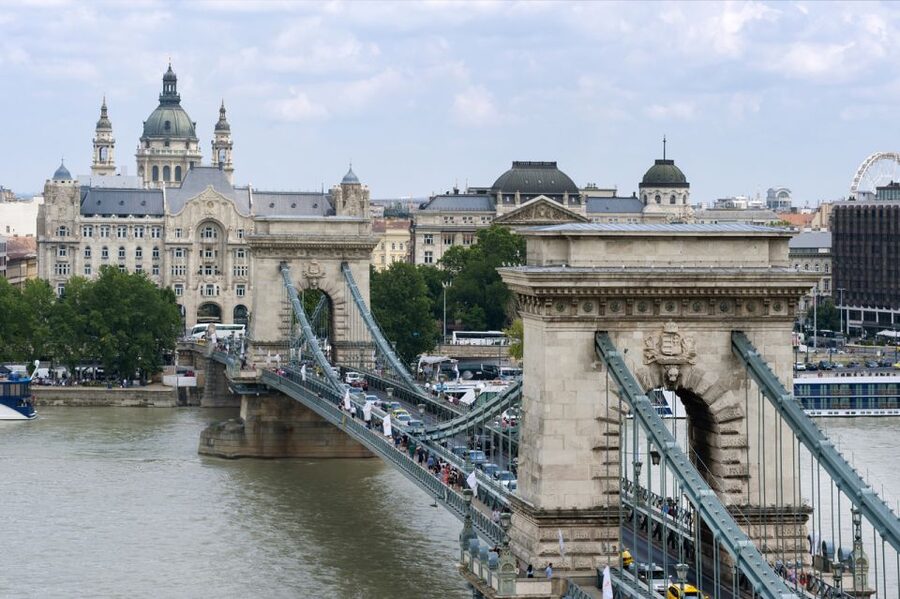
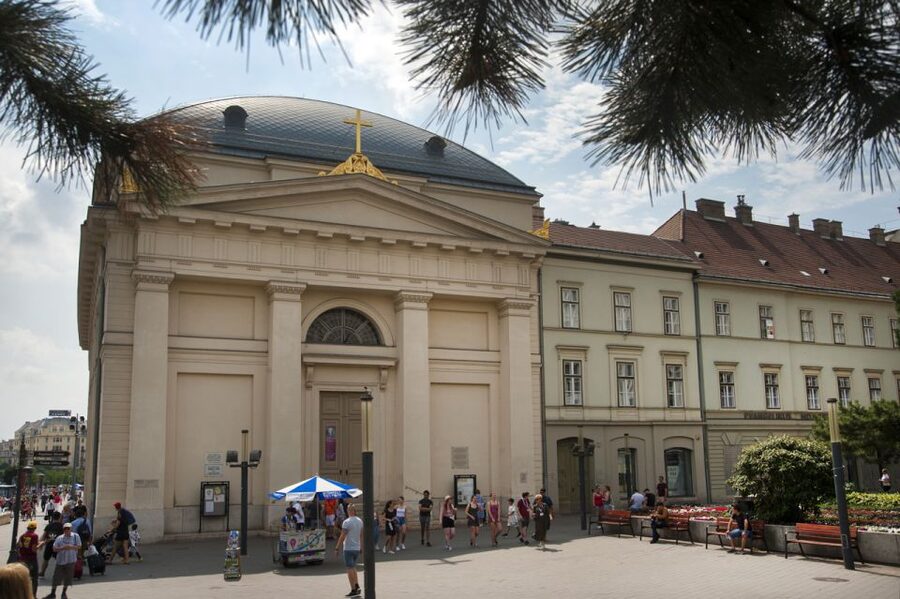
Matthias Church brings Gothic style into the route and gives you a strong contrast with the monumental Basilica in Pest. The church is described as a highlight, with its Gothic character forming part of the Buda experience.
As with the other principal sights, the value here is the explanation. A guide can point out why this building matters within the city’s royal and religious story, rather than leaving you with only its appearance.
If you are especially interested in church interiors, check the exact plan when booking. The supplied details promise the sight and its Gothic splendor, but they do not promise an interior visit. The same applies to the Basilica.
The Buda section also gives the tour a satisfying change of mood. Pest feels more like the formal central capital, while Buda connects more directly with the medieval royal past. You get both without booking two separate introductory walks.
The guides make the difference
The tour is sold with an English-speaking local guide, and the individual guide can shape the experience. Alexandra has been praised for a lively presentation, friendly answers, and extra local detail. Dominik has been described as clear and thoughtful, including on the difficult links between Hungarian and wider European history.
Z brings humor and enthusiasm to the subject. Oliver has led a solid, well-informed route, while Dalia has been especially generous with time and detail. Vikki kept the explanation engaging even on a bitterly cold day, and another guide maintained good cheer during heavy rain.
Those details matter because Budapest weather can change the feel of an outdoor tour. You should bring suitable clothing and shoes, but the guide’s attitude also counts. A patient guide can keep a wet or cold morning from spoiling the experience.
The group format matters too. Private and small-group options are available. A smaller group usually makes it easier to ask about politics, architecture, daily life, or places you pass along the way. It can also make the pace feel less fixed.
What the pace and format really mean
Three hours sounds long enough to cover a lot, and this route does. Still, it is best understood as a well-shaped introduction, not a complete Budapest sightseeing program.
The walking pace is comfortable, and the short distance leaves room for explanation. You will use public transport for the river crossing, then continue with the Buda sights. The format suits you if you want the major framework without spending half a day on foot.
The tour may be less satisfying if you want extended time inside every landmark. The Basilica, Parliament, Buda Castle, and Matthias Church are presented as key sights, but the experience does not include a long interior program.
I also would not book it expecting a food tour, shopping time, or a river cruise. None of those are part of the stated plan. This is a history and architecture walk with a practical cross-city connection.
Is $41 a fair price?
At $41 per person, the cost is fair for three hours with a local English-speaking guide, especially if you choose a private or small-group format. You are paying for the route design and the guide’s ability to connect widely scattered subjects, not simply for access to buildings.
The added 1,400 HUF for public transport tickets should be included in your budget. Since the main landmarks are viewed from the outside unless otherwise arranged, the value depends heavily on how much you want interpretation and local context.
For a first morning or afternoon in Budapest, I think the price makes sense. You see both sides of the river, learn the city’s basic historical sequence, and get practical ideas for the rest of your stay.
If your budget is tight and you are happy to read guidebook material on your own, you could visit many of these areas independently. The advantage here is the chance to ask questions and hear the city explained by a local person.
Who should book this experience?
I would recommend it to first-time visitors, people on short city breaks, and anyone who wants a clear introduction before exploring alone. It also suits visitors who do not have the energy, time, or budget for a longer sightseeing day.
History-minded visitors should find the treatment of dictatorship, revolutions, and democratic change particularly useful. Architecture fans will appreciate the contrast between the Basilica, Parliament, Buda Castle, and Matthias Church.
Families and mixed-age groups may like the modest walking distance, though the historical material includes serious subjects. You should decide if that tone suits your group.
I would be less likely to choose this tour if you already know Budapest well or want a specialist visit inside the major buildings. In that case, a focused castle, church, or Parliament experience may give you more depth.
Booking details worth knowing
The meeting point is beside St. Stephen’s Basilica, in front of California Coffee Company. The tour lasts three hours, runs in English, and offers private or small-group formats.
Four public transport tickets are extra and cost 1,400 HUF per person. Free cancellation is available up to 24 hours before the start, and you can reserve now and pay later, which helps if your Budapest schedule is still shifting.
Starting times depend on availability. Since the walk is outdoors, comfortable shoes and weather-appropriate clothing are sensible choices. The route is not long, but the day can still feel cold, wet, or hot depending on conditions.
Should you book the Budapest Walking Tour?
Book it if you want to understand Budapest quickly and prefer a local guide to a self-guided list of monuments. The combination of short walking, public transport across the river, major architecture, and honest discussion of the Communist period gives you a useful first look at the capital.
The best reason to choose it is the guide-led context. Names and personalities vary, but Alexandra, Dominik, Z, Dalia, Oliver, and Vikki have each brought energy, patience, or personal insight to the route.
Skip it if your priority is long indoor visits or a specialist architectural study. For most first-time visitors, though, $41 plus the transport tickets buys a practical three-hour orientation that can make the rest of Budapest easier to explore on your own.
FAQ
Where does the Budapest walking tour start?
It starts next to St. Stephen’s Basilica, in front of California Coffee Company coffee shop.
How long does the tour last?
The tour lasts three hours.
How much walking is involved?
The stated walking distance is about 1.5 kilometers, or roughly one mile. Public transport is used to cross the river between Pest and Buda.
Are public transport tickets included?
No. You need four public transport tickets per person, costing 1,400 HUF.
Which sights are included?
The route includes St. Stephen’s Basilica, the exterior of the Hungarian Parliament building, Buda Castle, and Matthias Church, along with other central Budapest sights.
What language is the tour offered in?
The live tour guide speaks English. Private and small-group options are available.
Just added around Budapest
- Budapest: Private, Personalized Pub Crawl, 3 drinks included★ 4.5 · 3 reviews
- Private day trip from Budapest to Bratislava, Vienna, and back★ 3.5 · 3 reviews
- Budapest: Private Adventure Sightseeing Bicycle Tour★ 4.5 · 3 reviews
- Private Danube Bend tour – full day★ 4.5 · 3 reviews
- Budapest: Guided City Walking Tour in Buda and Pest★ 5.0 · 3 reviews
- Budapest Old Jewish Quarter History Private Walking Tour★ 5.0 · 3 reviews
- Lake Balaton Full Day Private Wine Tour★ 5.0 · 3 reviews
- Budapest Urban Feast – Food Tour with Wine Tasting & Coffee House★ 4.5 · 3 reviews
Walking Tours, compared.
Budapest City Landmarks Walking Tour in 2 Hours
Read our review →
3-Hour Orientation Walking Tour of Buda and Pest
Read our review →
Budapest All in One Small Group Walking Tour with Strudel Stop
Read our review →
Buda Castle District Walking Tour with a Historian
Read our review →
BloodThirsty Hungary: Walking tour & Dark Historical Stories
Read our review →
Browse the lists this tour appears in