
Reviewed · ST STEPHENS BASILICA TOURS
Budapest: St Stephen’s Basilica Tour
St Stephen’s Basilica saves its best surprise for inside: beyond the grand Neo-Renaissance facade, you find a gold-toned church filled with frescoes, sculptures, and the unusual Holy Right relic. A guided visit gives you the backstory behind what you see, with guides such as Petra, Julia, Alexandra, and Noemi praised for lively explanations and patient answers.
I like the skip-the-line entry, since a short visit to Budapest should not be swallowed by a ticket queue. I also like the option to reach the dome terrace, where you get a 360-degree view over the city and a useful sense of how central the basilica is.
The main catch is simple: the basic tour does not necessarily include the terrace and treasury. Check your selected option carefully, and remember that the upper levels involve elevators plus about 200 steps if you choose to walk the final stretch.
Key points to know before you book
- The Holy Right relic: See the naturally mummified right hand associated with Saint Stephen, Hungary’s first king and Christian ruler.
- The dome terrace: Extended and private options reach a panoramic lookout with 360-degree views over Budapest.
- A story-led church visit: Guides explain the basilica’s art, royal connections, Christian past, and the experience of Cardinal Mindszenty under communism.
- A short, useful time commitment: The visit lasts about 1 to 1.5 hours, making it easy to fit into a central Budapest sightseeing day.
- Good guide reports: Petra, Julia, Alexandra, Noemi, Zsoka, and others are praised for clear English, humor, patience, and detailed answers.
- Dress matters: Shorts, sleeveless shirts, and other unsuitable church clothing are not allowed.
Why St Stephen’s Basilica deserves your time
Budapest has no shortage of grand buildings, but St Stephen’s Basilica is one of the city’s easiest major sights to appreciate quickly. It sits in the heart of Pest, beside a broad square and close to cafes, shops, and other central stops.
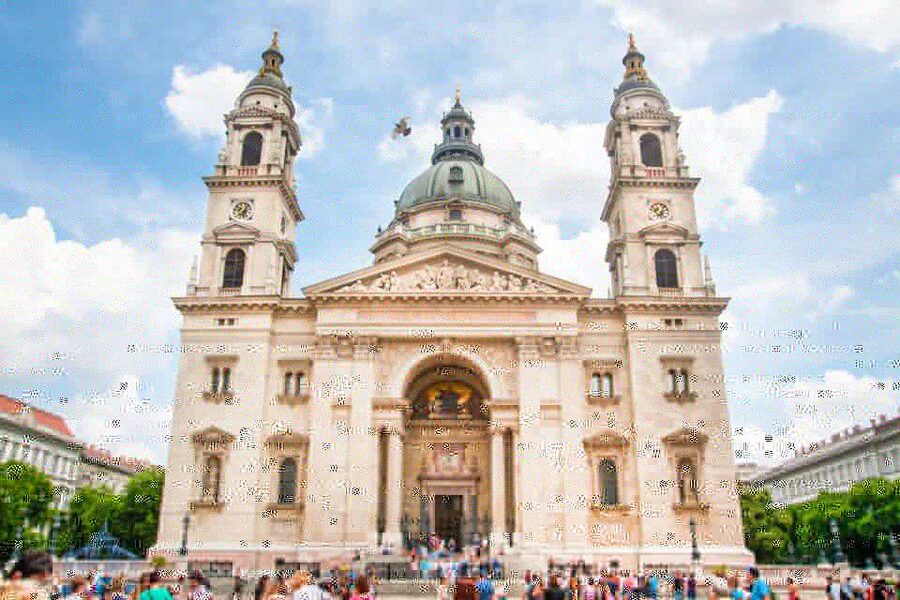
The exterior gives you the first clue. Its Neo-Renaissance design is formal and imposing, with a huge central dome that has become one of Budapest’s most familiar landmarks. I suggest taking a moment outside before meeting the guide. The square gives you room to look up, compare the two bell towers, and see why the basilica was built to project confidence and national importance.
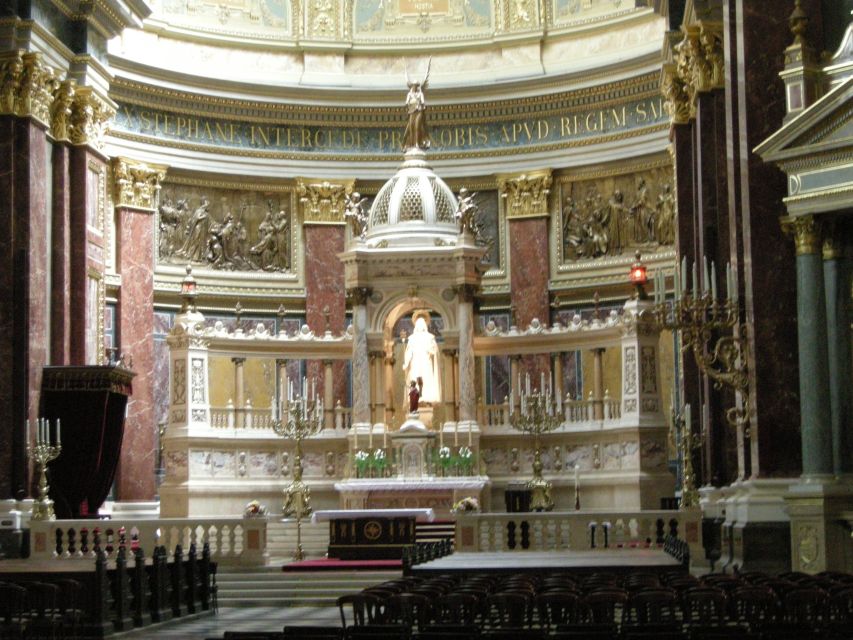
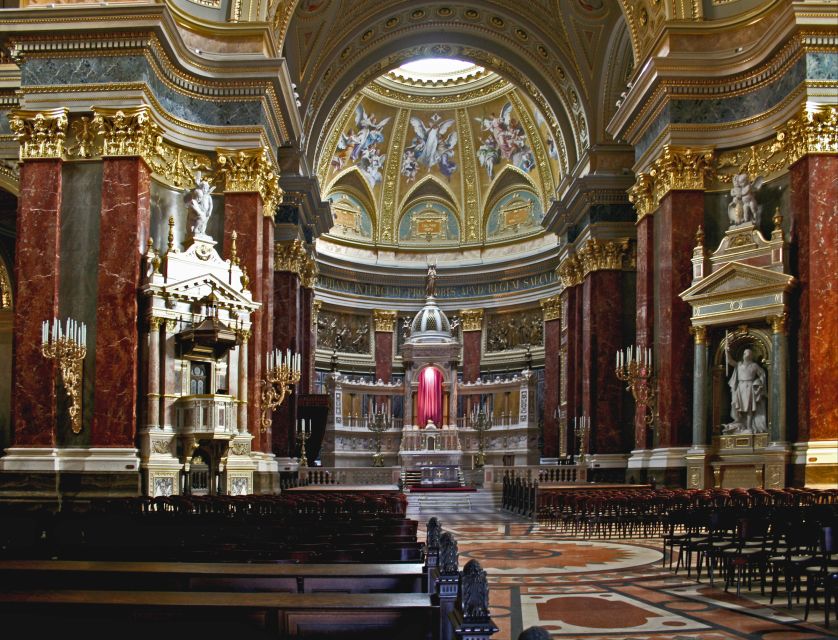
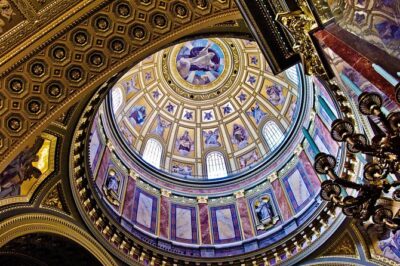
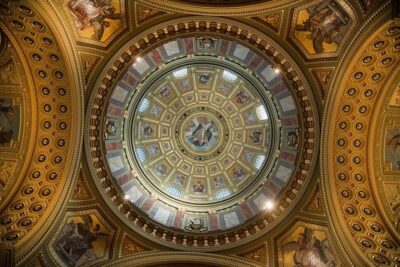
Inside, the mood changes. The building is lavish rather than spare, with gilded surfaces, frescoes, sculptures, and monumental artwork made by leading artists of the late 19th century. You can certainly admire it alone, but a guide helps turn a beautiful room into a place with a sequence of stories.
That distinction matters here. Without context, you may notice gold, marble, paintings, and a large dome, then move on. With a good explanation, you begin to understand the role of Saint Stephen, the importance of Catholicism to Hungarian identity, and the way the building connects religion with national history.
More Basilica visits:
- Budapest: St. Stephen’s Basilica Entry with Terrace Option
★ 4.5 · 6,399 reviews - Budapest: Classical Music Concerts in St Stephen’s Basilica
★ 4.7 · 1,479 reviews - Budapest: Organ Concert in St. Stephen’s Basilica
1,299 reviews
Meeting the guide beside the ticket office
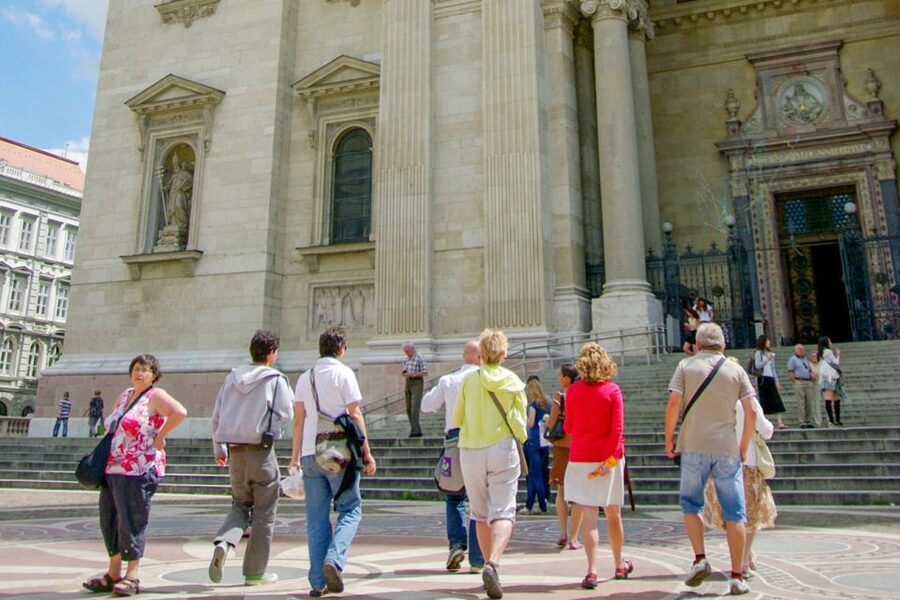
The meeting point is in front of the basilica ticket office, on the square about 50 meters to the right of the basilica steps. It is beside Starbucks, which gives you a useful landmark in a busy central area.
Look for a guide holding a sign marked Guided Tour. If the ticket office is crowded, the guide may wait a few meters away near Starbucks rather than directly in the queue. This is a small detail, but it can save a last-minute scramble, especially if several groups are gathering at once.
The tour is offered in English. Group sizes can vary, with small-group and private formats available. A private tour costs more than the basic per-person price, but it can make sense if your party wants a slower pace or has many questions. One private visit with Naomi was praised for taking time to explain each section rather than rushing from stop to stop.
The advertised price is $21 per person. That is fair if you value a guide and want to avoid waiting, but it is not the cheapest way to enter the church. One past participant felt the guided price was several times higher than buying an ordinary ticket alone. I would frame it this way: you are paying for interpretation, organization, and time saved, not just admission.
Inside the basilica: art that needs a little explanation
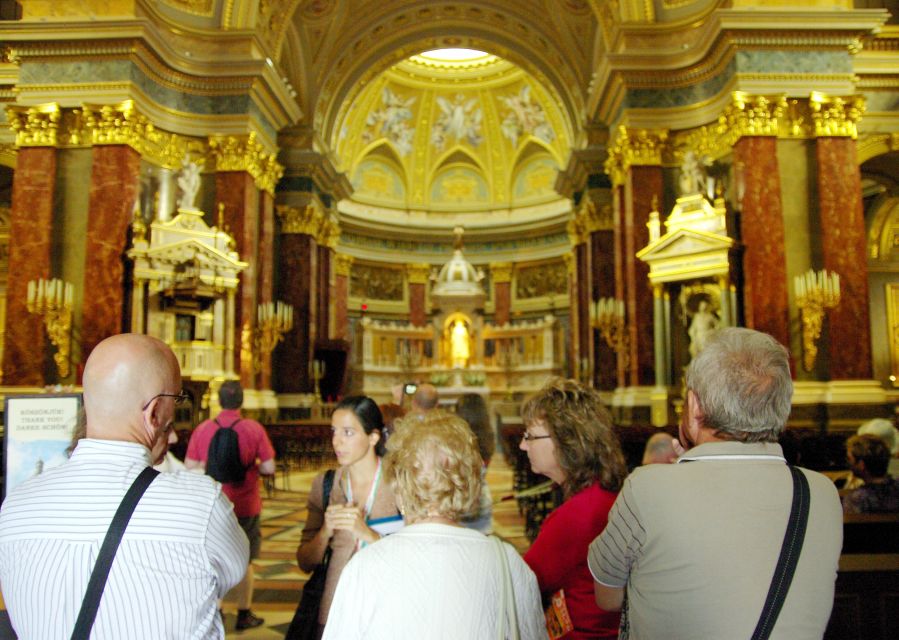
Once inside, your guide leads you through the main church and points out its major artistic features. Expect a polished, ornate interior, with gold decoration, frescoes, and sculpture covering much of the space.
The scale can be hard to judge at first. The dome pulls your eye upward, while the decoration at ground level competes for attention. A guide gives you a viewing order and explains the details that are easy to miss. Several guides, including Petra, Zsoka, Julia, and Alexandra, are praised for making the material approachable without turning the visit into a dry lecture.
That balance is important. This is a working church, not simply a museum room, so the best guide keeps a respectful tone while still making the story lively. Rosie’s guide was described as entertaining while preserving a sense of reverence, which is exactly the right approach for this setting.
You should have time for photographs, though this is not a photography-only visit. The point is to look, listen, and connect the decoration with the story of the building. If you are traveling with different age groups, the tour can work well because guides have been praised for explaining the history in a way that holds the attention of both adults and younger people.
The Holy Right and Saint Stephen’s place in Hungary
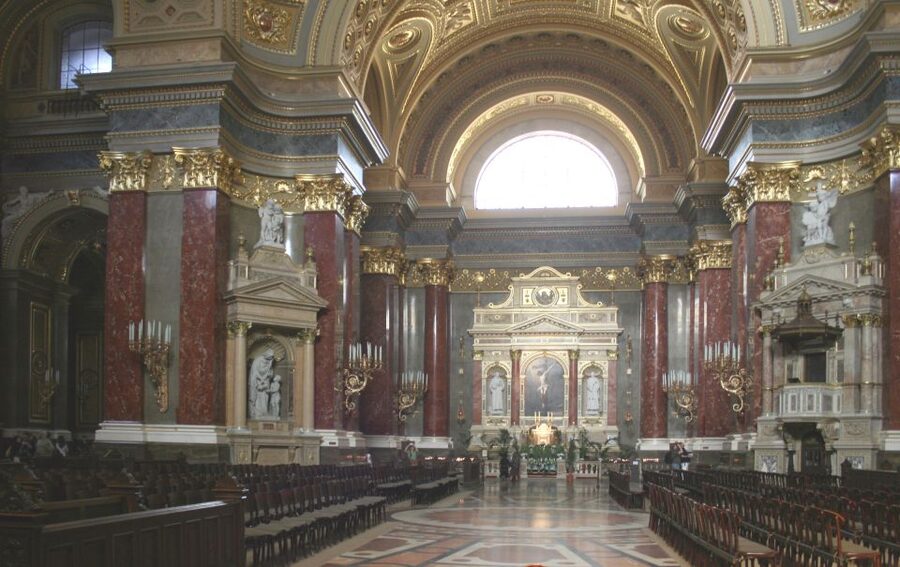
The most distinctive object on the visit is the Holy Right, the naturally mummified right hand associated with Saint Stephen. He ruled Hungary in the 11th century and helped convert the Hungarian people to Christianity.
The relic can seem startling if you do not know its place in the country’s religious and national story. The guide explains why this hand matters and connects it to Saint Stephen’s role in forming a Christian Hungarian state. That makes the display more than an odd historical object.
I find this part especially useful for understanding later sights in Budapest and beyond. The basilica is not presenting Saint Stephen as a remote medieval figure. His name, image, and legacy remain part of Hungarian public life, and Saint Stephen’s Day is a major national celebration.
The experience also gives you a compact introduction to roughly 1,000 years of Christian history in Hungary. The wording is broad, but the tour’s value comes from showing how that long story is represented in one place: through the relic, royal symbols, church art, and the building’s continued religious role.
Same city, a completely different way to spend an afternoon:
- Budapest: City Highlights Cruise with Welcome Drink
★ 4.6 · 35,610 reviews - Budapest: Unlimited Prosecco, Beer and Aperol Spritz Cruise
★ 4.8 · 25,310 reviews - Budapest: Széchenyi Spa Day Ticket with Optional Upgrades
★ 4.3 · 23,911 reviews - Budapest: Nighttime or Daytime Sightseeing Cruise
★ 4.2 · 21,062 reviews
The dome terrace and treasury are worth the upgrade
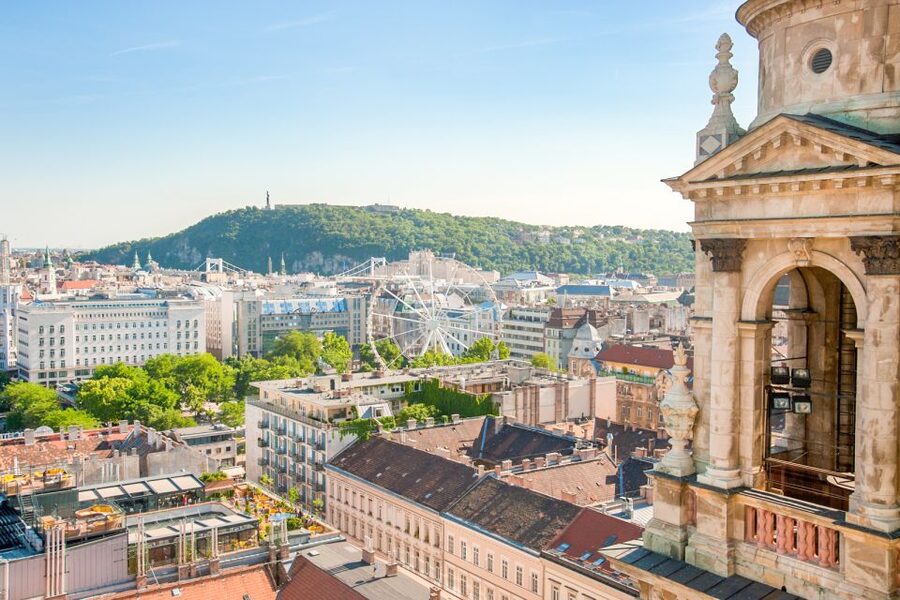
If your booking includes the extended option, you continue to the dome panorama terrace and treasury. If it does not, you may still be able to select a private or extended format, so read the option description before paying.
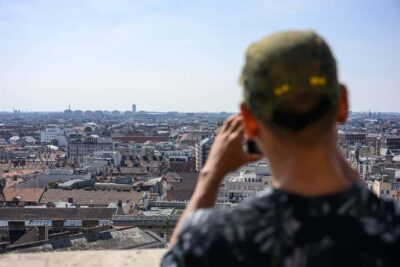
The dome terrace is the strongest reason to choose the longer visit. From the circular lookout, you get a 360-degree view of Budapest. The height lets you see the city from a different angle than street-level viewpoints, and it is particularly useful for orienting yourself after arriving.
The view is not a minor add-on. One visitor described it as especially memorable during the Christmas market season, when the market could be seen below. Other comments repeatedly call the climb worthwhile. The terrace gives the basilica a second identity: first a church filled with art, then a high lookout in the middle of the city.
Getting there requires some patience. You use two elevators, a larger one in the lower part of the building and a smaller one higher up. If the second elevator has a long wait, you may climb about 200 steps instead. The choice depends on your fitness, comfort, and the line at that moment.
One visitor in their mid-60s found the climb manageable, but that should not be treated as a promise for everyone. If stairs are difficult for you, check the exact accessibility details of your chosen option before booking. The activity is listed as not suitable for wheelchair users, and not every format has the same mobility provisions.
The terrace can also feel exposed to weather and crowded at peak times. The information provided does not promise a particular amount of time outside, so think of it as a valuable viewing stop rather than a long, leisurely rooftop stay.
The treasury is reached after a few steps inside the Southern Tower. Here you see liturgical objects and artworks, along with a replica of the crown worn by Hungary’s kings. The collection is smaller and more specialized than the main church, but it adds useful context to the links between religion and monarchy.
The basilica exhibition also includes material about Cardinal Mindszenty, a Catholic church leader of the 1950s and 1960s who was tortured and imprisoned by Hungary’s Communist regime. This section brings the story into the modern era and shows that the building’s history did not end in the Middle Ages or the 19th century.
What the guides add to the visit
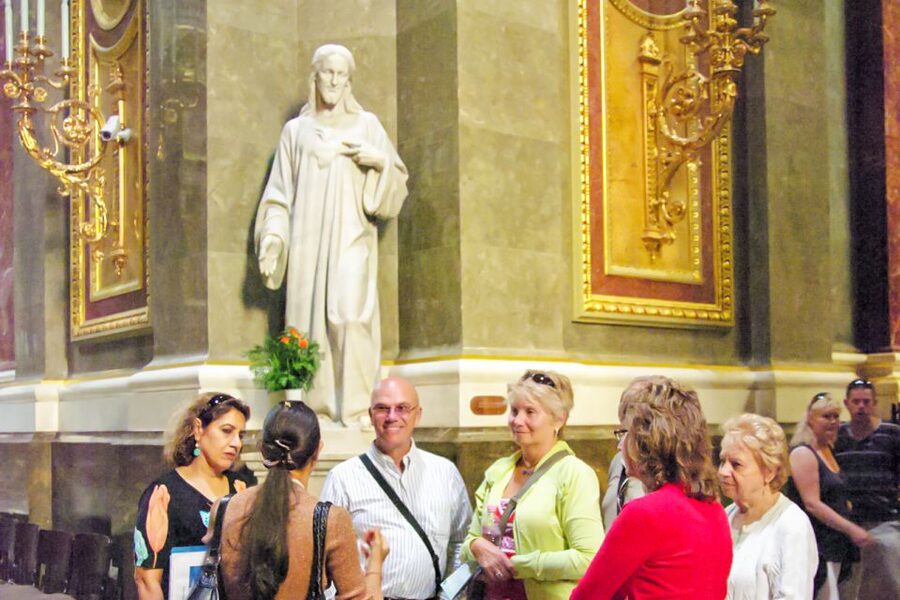
The strongest part of this experience is the human explanation. The building is impressive on its own, but the guide gives you a path through its symbols and past.
Petra appears often among the guide names, and she is praised for being clear, warm, and willing to answer questions. Julia is described as patient, entertaining, and good at keeping the pace comfortable. Alexandra is praised for making the history personal and easy to follow, while Zsoka is noted for taking care of the group as well as explaining Hungarian history.
Other guides, including Noemi, Flora, Louisa, Sara, Leticia, Beaitu, and Naomi, have also been singled out for friendly presentation, strong English, humor, and attention to detail. You cannot choose a particular guide from the information provided, but the repeated pattern is useful: the experience depends heavily on the person leading it, and the guides generally seem to treat questions as part of the visit rather than an interruption.
A small warning: one participant found the opening timeline a little confusing before the group entered the church. That sort of issue can happen when the guide is setting up a broad national story before pointing to individual objects. Once inside, the explanation became easier to follow. If the first few minutes feel dense, keep listening and ask for clarification.
The tour is short enough that the guide has to compress a lot of information. You will get a focused introduction, not a full course in Hungarian history. The best use of your time is to ask about the details that interest you most, especially the relic, royal symbols, the Communist period, or the artwork around the dome.
Timing, clothing, and practical limits
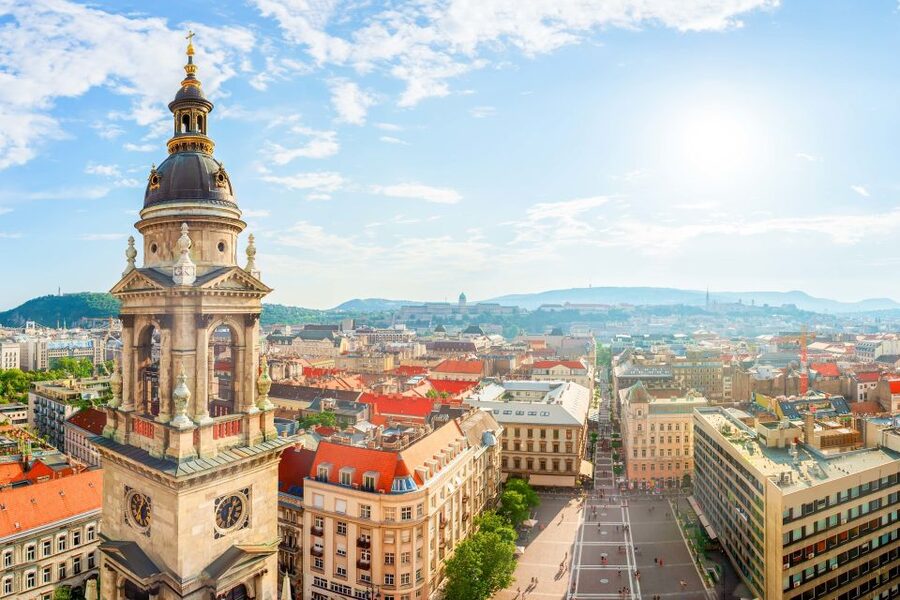
The duration is listed as 1 to 1.5 hours. That makes this a handy choice between lunch and another central Budapest sight, or as a first stop that helps you understand the city’s religious and national symbols.
Starting times vary, so you need to check availability when choosing a date. The basilica can close for special occasions, including wedding ceremonies. Keep some flexibility in your day if the church is a major priority.
Dress as you would for a Catholic church. Shorts, sleeveless shirts, short skirts, and similar clothing are not allowed. Men should uncover their heads inside. Eating, drinking, and smoking are forbidden in the church area.
The church’s rules are not an annoying technicality. Respectful clothing helps you enter without delay and keeps the setting appropriate for worship. If you are sightseeing in summer, bring a light layer that covers your shoulders and choose longer shorts or trousers.
The activity is not suitable for wheelchair users. The dome route includes two elevators and, potentially, around 200 steps, so anyone with limited mobility should check the specific option description before booking. The supplied information notes that some tours may have different mobility and wheelchair provisions, but you should not assume the terrace route is accessible.
Cancellation is flexible up to 24 hours before the tour for a full refund, and you can reserve now and pay later. Those terms are useful if your Budapest plans are still changing, but they do not remove the need to check the date and option carefully. One participant booked the wrong day and was helped by the guide when space allowed, but you should treat that as a lucky rescue, not a standard solution.
Is $21 a fair price?
At $21 per person, the basic experience sits in the reasonable midrange for a central Budapest guided sight. The value depends on what you want from the basilica.
If you only want to step inside, look around, and leave, a self-guided visit may cost less and give you more freedom. If you want to understand why Saint Stephen matters, what the Holy Right represents, and how the basilica connects medieval religion with modern Hungarian history, the guide earns the extra cost.
The terrace and treasury change the calculation. If they are included in your selected extended option, you receive both interpretation and a city viewpoint. That makes the visit more worthwhile for a first trip, especially if you are unlikely to seek out another high viewpoint.
Private touring costs more, but it offers a more personal format. It may suit a family, a couple, or a small group that wants to ask many questions. A standard small group is the better bargain if you are happy to share the guide’s attention.
Who should book this basilica tour?
I would choose this tour if you enjoy architecture but want help understanding the symbols around you. It also suits anyone with limited time, since skip-the-line entry and a compact schedule keep the visit efficient.
The extended option is best for first-time visitors who want a broad view of Budapest and do not mind elevators, stairs, and possible waiting. The private format makes sense for people who prefer a slower pace or need the guide to adapt closely to their interests.
I would hesitate if you dislike organized visits, already know the basilica well, or only want a quiet few minutes inside. The guide is the product here, and the price is higher than simple admission. You also need to accept church clothing rules and the mobility limits of the upper levels.
FAQ
How long does the St Stephen’s Basilica tour last?
The tour lasts about 1 to 1.5 hours, depending on the selected option and availability.
What does the basic tour include?
The basic tour includes skip-the-line entry to St Stephen’s Basilica and a guided tour of the church in English.
Does every option include the dome terrace and treasury?
No. Entry to the panoramic terrace and treasury is included with the extended tour option. The private option includes a guided visit to those areas, so check the option description before booking.
Where do I meet the guide?
Meet in front of the basilica ticket office on the square, about 50 meters to the right of the basilica steps, beside Starbucks. Look for a guide holding a Guided Tour sign.
What can I see inside the basilica?
You can see Neo-Renaissance architecture, gold decoration, frescoes, sculptures, monumental artwork, the Holy Right relic, and, with the extended route, treasury objects and a replica of the Hungarian royal crown.
What should I wear?
Wear clothing suitable for a church. Shorts, sleeveless shirts, and short skirts are not allowed. Men should uncover their heads inside.
Is the tour wheelchair accessible?
The activity is listed as not suitable for wheelchair users. The dome route includes two elevators and may involve about 200 steps, so check the mobility information for your exact tour option before booking.
Should you book it?
Book it if you want the basilica to make sense, not just look impressive. The church is beautiful, but the Holy Right, Saint Stephen’s role, royal symbolism, and Cardinal Mindszenty’s story give the visit much more weight when explained by a good guide.
Choose the extended option if the terrace view matters to you, and confirm that it includes both the dome and treasury. At $21, the standard tour is a sound buy for a short, central sightseeing stop, while the private option is worth considering for a small group that wants time for questions. For most first visits to Budapest, this is a practical way to see one of the city’s major landmarks without wasting time in line.
Just added around Hungary
- Budapest: Private, Personalized Pub Crawl, 3 drinks included★ 4.5 · 3 reviews
- Private day trip from Budapest to Bratislava, Vienna, and back★ 3.5 · 3 reviews
- Budapest: Private 3-Hour Gödöllő Palace Tour★ 4.9 · 3 reviews
- Budapest: Private Adventure Sightseeing Bicycle Tour★ 4.5 · 3 reviews
- Private Danube Bend tour – full day★ 4.5 · 3 reviews
- Budapest Old Jewish Quarter History Private Walking Tour★ 5.0 · 3 reviews
- Lake Balaton Full Day Private Wine Tour★ 5.0 · 3 reviews
- Budapest: Guided City Walking Tour in Buda and Pest★ 5.0 · 3 reviews
St Stephens Basilica Tours, compared.
St. Stephen’s Basilica Entry with Terrace Option
Read our review →
Classical Music Concerts in St Stephen’s Basilica
Read our review →
St.Stephen’s Basilica Grand Organ Concert Tickets
Read our review →
Budapest Christmas Walking Tour & Entry to St Stephen’s Basilica
Read our review →
Budapest Christmas Market Tour with Basilica visit & Chimney cake
Read our review →Browse the lists this tour appears in