
Reviewed · MUSEUMS
Budapest: Mika Tivadar Secret Museum Entry Ticket
Budapest’s Mika Tivadar Secret Museum turns a small corner of Kazinczy Street into a time machine. Inside a former hotel and copper shop, you’ll encounter stories of royal visitors, Budapest’s first cinema, the famous Blue Cat cabaret, wartime Budapest, and the city’s many ethnic communities. The museum’s subject is the building itself, but its story reaches into the surrounding streets.
I like the eight-language audio guide, which lets you explore at your own speed, and I like the chance to have a cocktail or meal in the same building after looking around. The main thing to consider is size: 140 square metres is not much, and this is a self-guided museum rather than a traditional tour with a live guide.
Key points at a glance
- A former hotel with an international guest list: The building is linked with King Edward VII, Otto von Bismarck, and Milan I of Serbia.
- Budapest’s cinema and cabaret past: Learn about the Blue Cat cabaret and the first cinema in Hungary, where Michael Curtiz began his film career.
- A compact, self-guided visit: Plan on about 30 minutes, with the option to stay longer and read at your own pace.
- Audio in eight languages: Scan the provided QR code and listen on your charged smartphone using the museum’s free Wi-Fi.
- A museum with a cocktail bar: The on-site bar and restaurant make this an easy stop before or after exploring District 7.
Why this little museum matters on Kazinczy Street
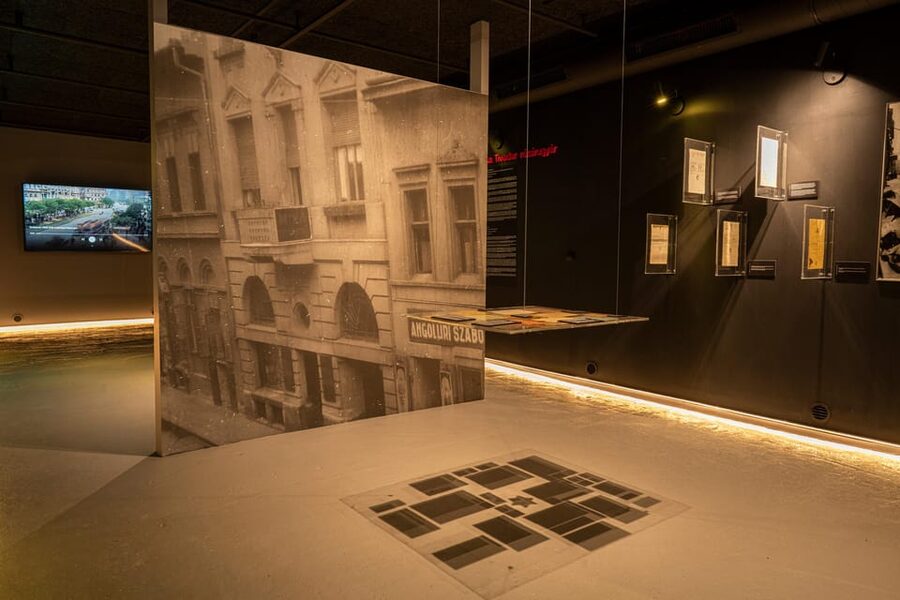
Kazinczy Street is now one of Budapest’s best-known nightlife areas, but the street has passed through several very different chapters. The Mika Tivadar Secret Museum uses one address to explain those changes, from the late 19th century through the years between the two world wars and into the difficult period of World War II.
That approach gives you more than a collection of old objects. You see how one building could serve as a hotel, entertainment venue, workplace, and witness to political change. The museum also looks beyond a strictly Hungarian story, showing how different ethnic communities shaped life in Hungary and how the country was tied to the larger political world of Europe.
I find that especially useful if you are walking around District 7 and seeing only its restaurants, bars, and nightlife. The museum gives the neighborhood a past. It helps explain why the area feels layered rather than newly invented.
The exhibition occupies 140 square metres, so you should not expect the scale of the Hungarian National Museum. Its value comes from concentration. There is a large amount of information packed into a small space, and the subject stays focused on the house, Kazinczy Street, and the people connected with them.
More museums and galleries in Budapest:
- Budapest: Cat Museum Budapest Entry Ticket
★ 4.4 · 2,210 reviews - Budapest: Light Art Museum – Immersive New Media Experience
★ 3.9 · 1,269 reviews - Budapest: Budapest Retro Interactive Museum Ticket
★ 4.4 · 373 reviews
Entering the old hotel at Hotel Mika Downtown
Your visit begins at the Hotel Mika Downtown reception. The staff greet you, provide a printed flyer, and explain briefly what you can discover. There is no museum guide or tour guide included, so you should arrive ready to explore on your own.
That arrangement suits visitors who prefer independence. You are not tied to a group, a fixed speech, or someone else’s pace. You can stop at a photograph, replay an audio chapter, or move on when a subject does not interest you.
The trade-off is that you will not have a historian beside you to answer questions or connect the details in real time. The flyer helps orient you, while the audio chapters provide the main commentary. Bring a charged smartphone, since your own phone is used for the voiceovers and sound effects.
Free Wi-Fi is available, which makes the audio system simple to use. The audio guide is offered in eight languages, a strong feature for an attraction built around written panels, photographs, and historical context. You should still allow a moment to scan the QR code and choose your language before settling into the exhibition.
A compact route through Budapest’s past
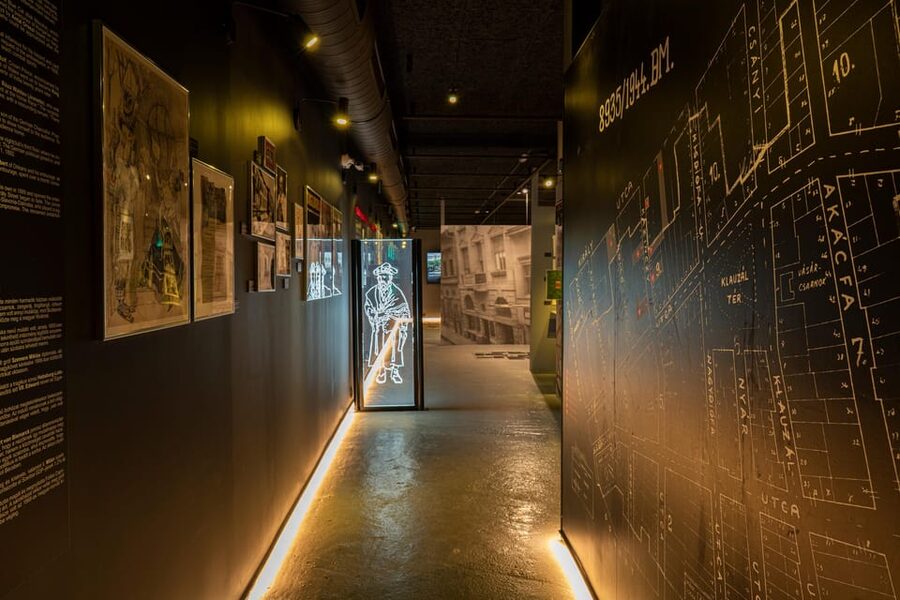
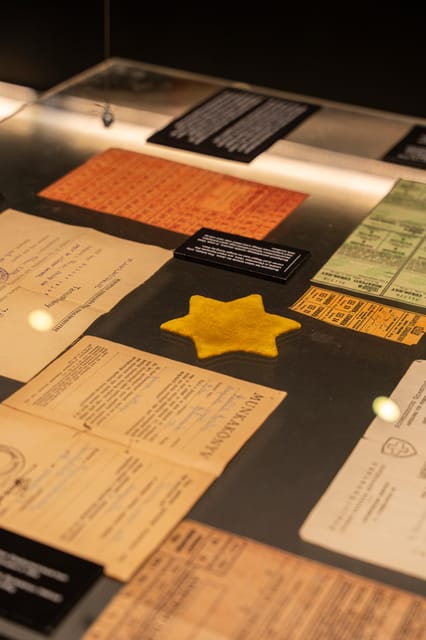
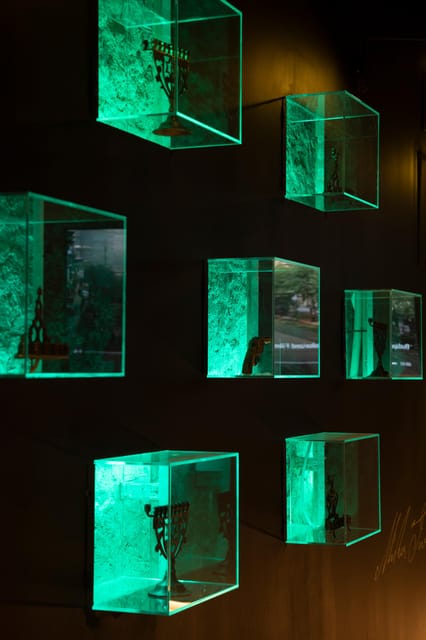
The exhibition is best understood as a sequence of stories rather than a large collection of rooms. The displays use authentic installations, antique objects, photographs, written narratives, voiceovers, and sound effects to recreate the atmosphere of earlier Budapest.
You may begin with the building’s own story, then move outward to nearby properties and events on Kazinczy Street. This wider view is important. The museum is not only asking what happened inside Hotel Mika. It is showing how several neighboring buildings helped shape the district.
The period covered runs from the late 19th century to the years between the two world wars, with material that also explains the building during World War II. The result is a compressed timeline. You move between social life, entertainment, business, architecture, and wartime experience without walking across a large museum complex.
Because the space is small, read the displays carefully instead of rushing from one object to the next. The standard visit takes about 30 minutes, but the museum does not need to be treated like a timed ride. You can stay longer if you want to listen to every chapter or study the photographs.
One useful detail is the background music. It helps create a period mood while you read, rather than leaving you in a silent room of panels. Sound will not replace a live guide, but here it gives the short visit a stronger sense of place.
Royal visitors, cabaret lights, and the first Hungarian cinema
Some of the most memorable material concerns the people and businesses linked with the building. King Edward VII of the United Kingdom, German statesman Otto von Bismarck, and Milan I of Serbia are among the legendary figures associated with the hotel.
These names help you see that the building was not merely a local lodging house. It formed part of an international world in which Budapest attracted political figures, entertainers, business people, and visitors from across Europe. The museum uses those connections to show how local life could intersect with major European events.
The entertainment story is just as striking. Europe’s famous Blue Cat cabaret once operated here, bringing nightlife and performance to the address. The museum also tells how Hungary’s first cinema opened on this site.
That cinema connection leads to Michael Curtiz, the Hungarian-born director who later won an Oscar for Casablanca. Learning that he began his film career on this very spot adds a useful link between Budapest’s early entertainment industry and the wider history of international film.
You will also encounter a surprising connection involving Sylvester Stallone and Arnold Schwarzenegger and a small house on Kazinczy Street. The supplied details do not give away the full explanation, which is part of the fun of encountering the story in the museum itself. It is exactly the kind of odd local connection that can make a short museum visit memorable.
A few more Budapest half-days to weigh up
- Budapest: Széchenyi Spa Day Ticket with Optional Upgrades
★ 4.3 · 23,911 reviews - Budapest: Parliament Building Entry Ticket and Audio Guide
★ 4.5 · 3,844 reviews - Budapest: Full-Day Gellért Spa Ticket
★ 4.2 · 3,340 reviews - Budapest: Cinema Mystica Entry Ticket
★ 4.3 · 3,103 reviews
Wartime Budapest and the city’s many communities
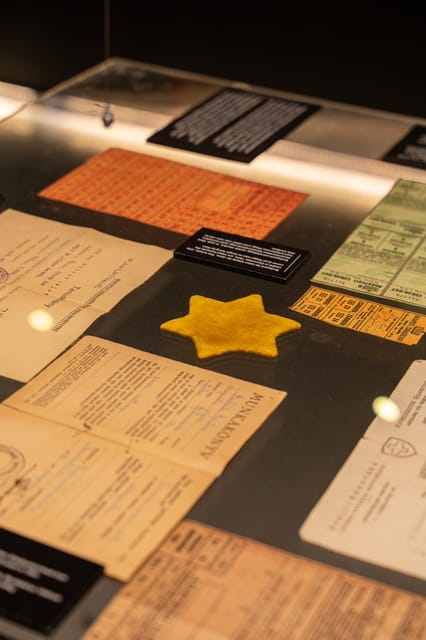
The museum does not present the past as a string of famous names alone. It also deals with the difficult history of Budapest’s Jewish quarter and the Budapest Ghetto, along with the way the property looked during World War II.
This is serious material, and the compact setting means it arrives alongside stories about hotels, cabaret, and cinema. That mixture reflects the real life of a city. Streets used for work and pleasure can also become places marked by fear, displacement, and political violence.
The exhibition places particular attention on the ethnic communities living in Hungary. That makes the experience more welcoming and more useful for an international audience. You may find a cultural connection of your own, but the larger point is that Budapest was never shaped by one group or one national story alone.
Another unusual historical thread links veterans of the 1848 to 1849 Hungarian Revolution with the Mexican Civil War. It is the sort of far-reaching connection that shows how people, political ideas, and military experience moved across borders in the 19th century.
You should not expect a full course in Hungarian history here. The museum offers selected stories tied to a specific building and street. For a first visit to Budapest, that can be an advantage, since the material remains concrete and connected to places you can see outside.
From copper shop to cocktail bar
The museum’s on-site bar and restaurant are part of its appeal. The space once functioned as a copper shop during World War II, and it now offers cocktails and food, including brunch according to the available information.
Having a drink in the same place after exploring the displays gives the visit a pleasant extra dimension. You can look at the building first as a historical site, then as a functioning part of modern District 7. A cocktail can also make this a more relaxed stop for people who are less interested in spending hours in museums.
The bar is not included in the $5 entry price, so treat it as an optional extra rather than part of the ticket. If you are watching your budget, the museum alone remains inexpensive. If you want a break with a drink or meal, the setting makes that addition convenient.
I would plan this stop around your day rather than travel across Budapest solely for the bar. The strongest reason to come is the concentrated local story. The restaurant and cocktail bar make it easier to fit the museum into an afternoon or evening in the district.
What $5 gets you
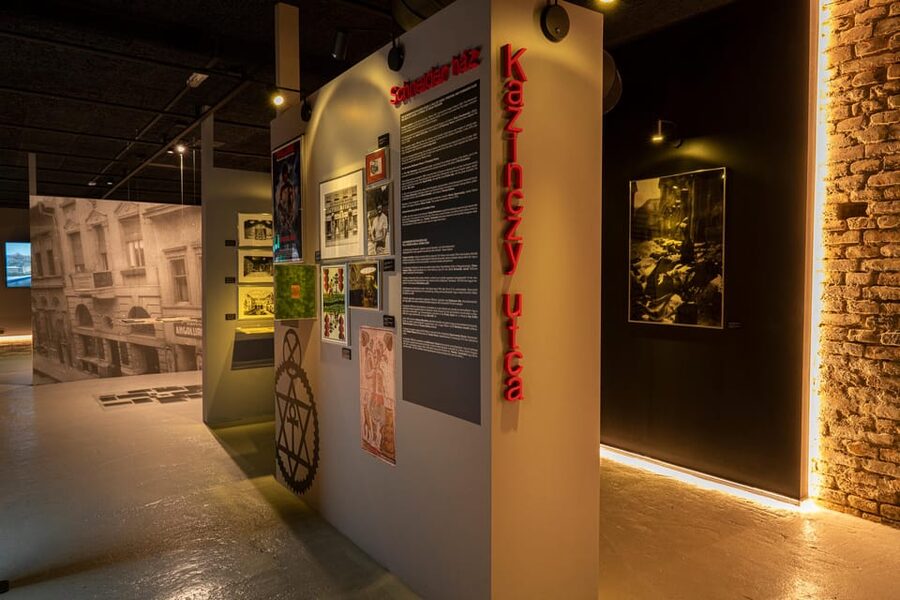
At about $5 per person, this is one of the easier cultural purchases in Budapest. The price includes access to the 140-square-metre museum, the printed flyer, free Wi-Fi, and audio chapters in eight languages with voiceovers and sound effects.
The value is particularly good if you want a short, focused activity between larger sights. You do not need to give up half a day, and the central location makes it practical alongside a walk through District 7.
The price is less compelling if you want a large collection, extensive original artworks, or a personal guide. This is a specialty museum, and its appeal depends on your interest in buildings, neighborhood stories, entertainment history, and Budapest during wartime.
Still, the low cost reduces the risk. You can see the exhibition in roughly 30 minutes, then decide if you want to stay for a drink or meal. It is also a sensible choice on a rainy day when you want something indoors but do not want another major national museum.
Timing, access, and who will enjoy it
The listed duration is 30 minutes, but you can stay as much as you need to finish the displays and audio chapters. If you read quickly, the visit may feel brief. If you listen to every section and study the photographs, allow extra time.
The museum is suitable for adults and older children who can follow historical explanations, though no age guidance is provided. It should appeal most to you if you like:
- Local history tied to real streets and buildings
- Old hotels, cabarets, cinema, and urban life
- Short museums with a clear theme
- Self-guided audio rather than a scheduled group tour
- The chance to combine culture with a cocktail or meal
It may be less suitable if you need a fully guided experience or prefer large museums with many galleries. Wheelchair users should note that the activity is listed as not suitable for wheelchair access.
The meeting point is the Hotel Mika Downtown reception, not a separate street museum entrance. That is worth remembering, especially if you are following a map through the busy District 7 area. The staff provide a short introduction, but the main experience begins when you use your phone to access the audio.
Free cancellation is available up to 24 hours before the visit, and you can reserve while paying later. Those policies are useful if your Budapest schedule is still changing, but the main practical point is simpler: bring your phone charged and be prepared to explore independently.
A good stop before or after District 7 nightlife
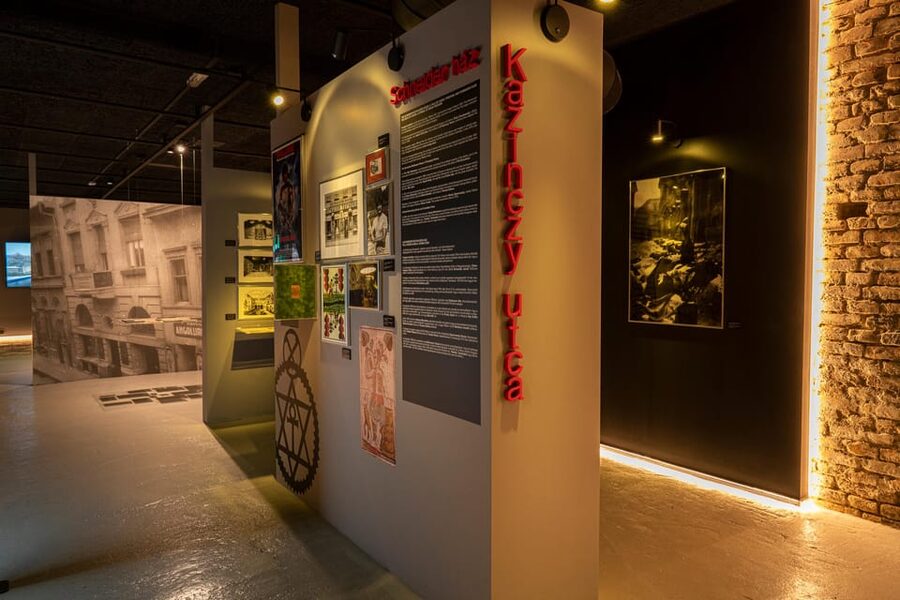
The Mika Tivadar Secret Museum works best as part of a neighborhood outing. Visit before dinner, after a walk through Kazinczy Street, or during an afternoon when you want context for the district’s famous nightlife.
The museum helps you notice that the area is more than bars and restaurants. The Blue Cat, the old hotel, the copper shop, the first cinema, and the wartime stories all show how the same streets can change function while retaining traces of earlier lives.
I would not build an entire day around this museum. Its small footprint and short duration make it a supporting attraction. But that is also what makes it easy to recommend. It fills a gap between major sights without demanding much time, money, or planning.
Should you book the Mika Tivadar Secret Museum?
Book it if you want an inexpensive, unusual look at Budapest through one address. The combination of hotel history, famous visitors, early cinema, cabaret, wartime stories, eight-language audio, and an on-site cocktail bar gives the visit more range than its size suggests.
Skip it if you want a live guide, wheelchair access, or a large conventional museum. For everyone else, the $5 ticket offers a practical half-hour of local context, with the option to linger over the displays or continue with a drink in the former copper shop.
FAQ
Where is the Mika Tivadar Secret Museum?
The meeting point is the Hotel Mika Downtown reception in central Budapest, on Kazinczy Street.
How long does the museum visit take?
The stated duration is 30 minutes. You can stay longer if you want more time with the displays and audio chapters.
Is a tour guide included?
No. Staff greet you, provide a museum flyer, and explain briefly what you can discover, but there is no museum guide or tour guide included.
How does the audio guide work?
You use your own mobile phone to access the audio chapters. Voiceovers and voice effects are included, and free Wi-Fi is available.
How many languages are available for the audio guide?
The audio guide is available in eight languages.
What should I bring?
Bring a charged smartphone. You need it to access and listen to the audio guide.
Is the entry ticket skip-the-line?
Yes. The activity includes skip-the-ticket-line entry.
Is the cocktail bar included in the ticket?
No. The museum ticket includes the museum visit and its listed materials, while drinks and food at the on-site bar and restaurant are not included.
Is the museum wheelchair accessible?
The activity is listed as not suitable for wheelchair users.
Can I cancel the booking?
You can cancel up to 24 hours in advance for a full refund. A reserve-now-and-pay-later option is also available.
Just added around Budapest
- Budapest: Private, Personalized Pub Crawl, 3 drinks included★ 4.5 · 3 reviews
- Private day trip from Budapest to Bratislava, Vienna, and back★ 3.5 · 3 reviews
- Budapest: Private Adventure Sightseeing Bicycle Tour★ 4.5 · 3 reviews
- Private Danube Bend tour – full day★ 4.5 · 3 reviews
- Budapest: Guided City Walking Tour in Buda and Pest★ 5.0 · 3 reviews
- Budapest Old Jewish Quarter History Private Walking Tour★ 5.0 · 3 reviews
- Lake Balaton Full Day Private Wine Tour★ 5.0 · 3 reviews
- Budapest Urban Feast – Food Tour with Wine Tasting & Coffee House★ 4.5 · 3 reviews
Museums, compared.

Light Art Museum – Immersive New Media Experience
Read our review →


Budapest Card: Free Public Transport, Spa & Museums with Delivery
Read our review →
Budapest Dohany Synagogue & Hungarian Jewish Museum & free extras
Read our review →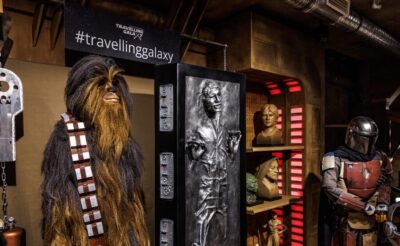
Travelling Galaxy Star Wars Interactive Exhibition
Read our review →Browse the lists this tour appears in