
Reviewed · CONCERTS
Budapest: Concert on the Oldest Working Organ in the City
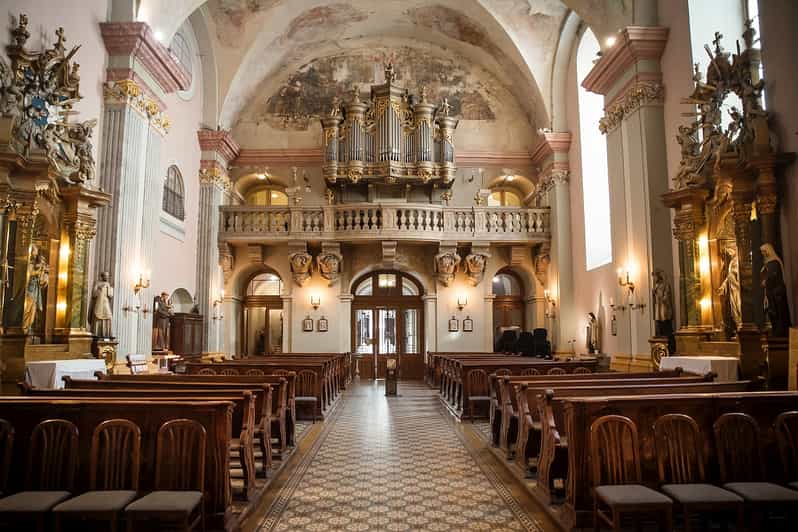
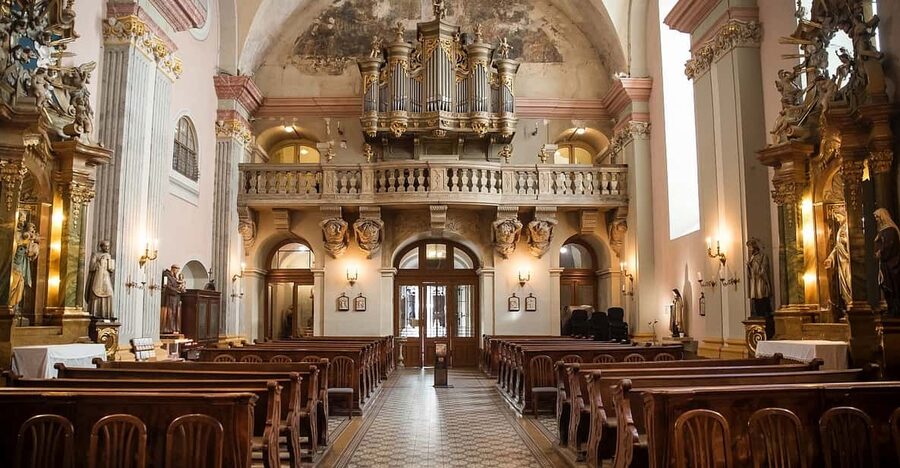
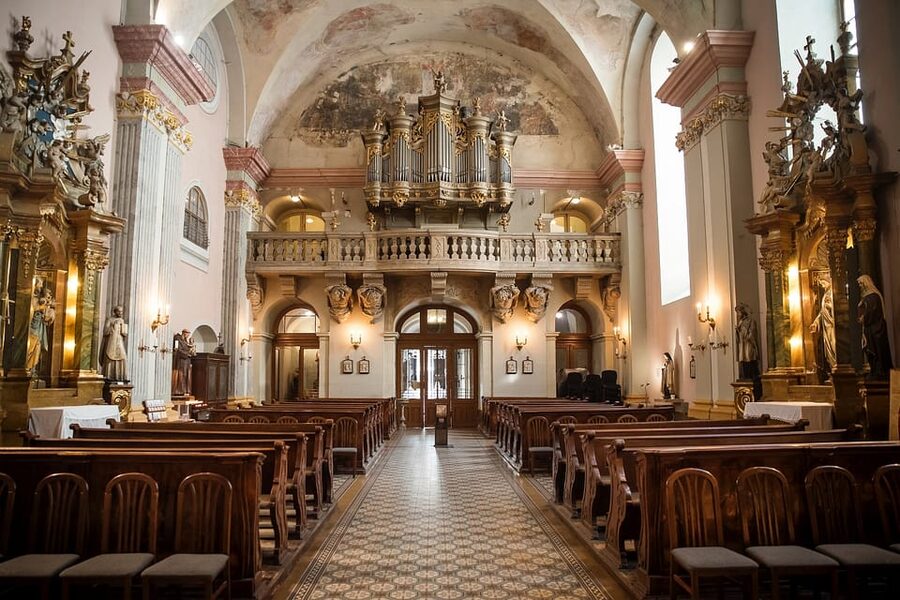
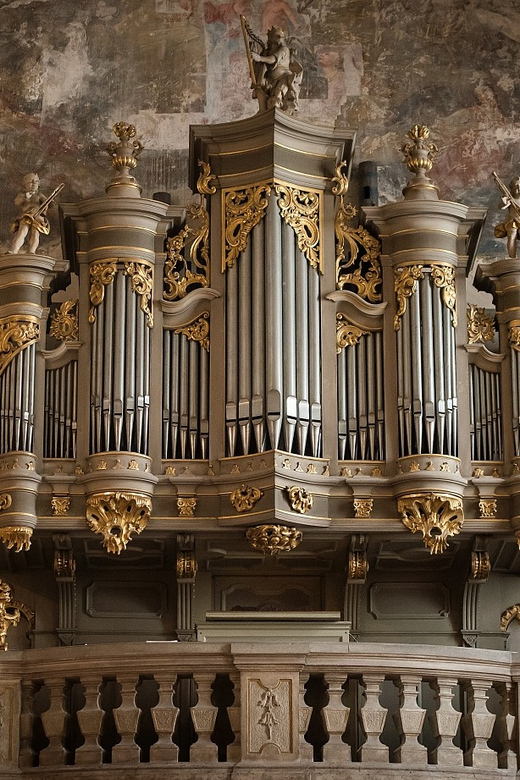
Budapest’s oldest working organ sits inside St. Michael’s Church, a Baroque building at the corner of Váci utca and Nyáry Pál utca. For 70 minutes, you can hear this small, 25-pipe instrument in a peaceful setting, with music ranging from Bach and Vivaldi to Liszt, Mozart, and old Hungarian composers.
I like two things right away: the program changes by date, so you can choose between a Bach-centered recital and a broader mix of organ classics, and the concert remains focused rather than padded. Award-winning Hungarian musician Miklós Teleki leads most performances, while selected evenings feature other organists or soprano Nóra Ducza.
The main consideration is scale. This is not a thunderous cathedral-organ spectacle. The instrument is compact, and the music depends more on clarity, skill, and the church’s atmosphere than on sheer volume. If you want a grand concert hall production, this may feel modest. If you want an intimate hour of serious music, it makes good sense.
Key points to know before booking
- A 25-pipe historic instrument: The organ is small rather than imposing, but its size suits the church and lets you focus on the playing.
- Miklós Teleki leads most dates: The creative director and main organist performs at almost all concerts in the series.
- Programs change by evening: You may hear an all-Bach recital, old Hungarian organ music, or a mix featuring Mozart, Liszt, Dubois, and Bach.
- A screen shows the organist: You can watch the performance as well as listen, which helps you understand the work involved.
- Chamber dates add soprano Nóra Ducza: These performances combine organ music with voice rather than offering solo organ throughout.
- Easy central location: St. Michael’s Church is in Budapest’s 5th District, near the Danube and directly by Váci utca.
Why this small church organ matters
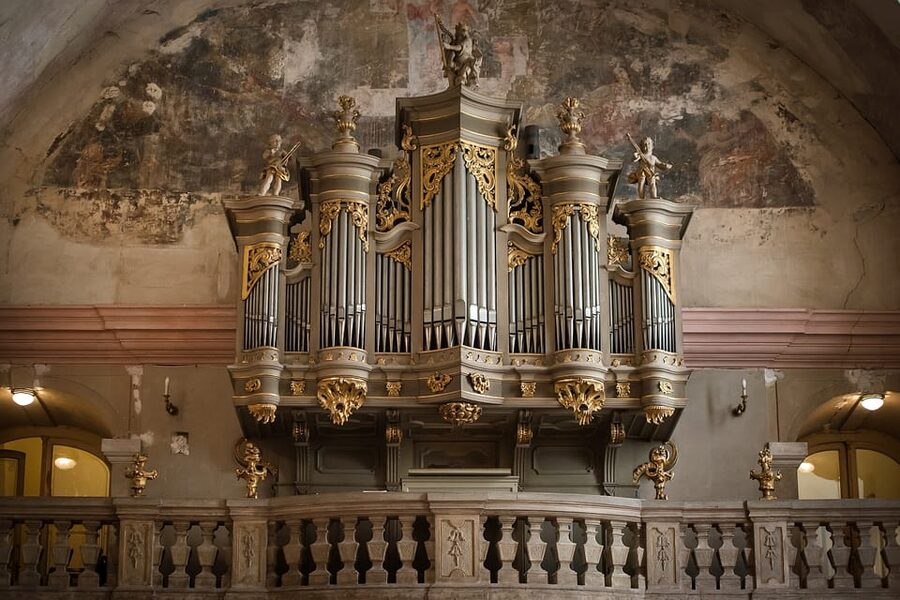
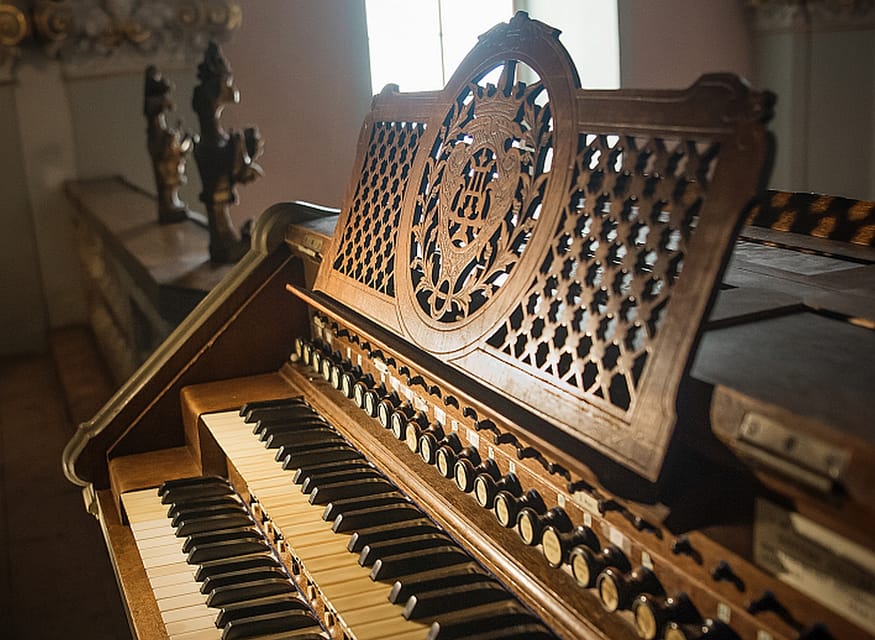
The phrase oldest working organ in Budapest may suggest a giant instrument with ranks of pipes filling a vast church. That is not what you find here. St. Michael’s Church has a 25-pipe organ, a compact instrument installed in a Baroque setting.
That modest scale is part of the appeal. You are not simply waiting for a giant wall of sound to shake the room. You hear the notes take shape in a smaller space, where the church’s acoustics and the organ’s tone work together. The result should suit listeners who value detail and atmosphere over spectacle.
The church gives the concert its visual setting. You enter a white church building at the corner of Váci utca and Nyáry Pál utca, close to the Danube. The location is convenient for fitting the concert into an evening walk through central Budapest, though transportation is not included, so you make your own way there.
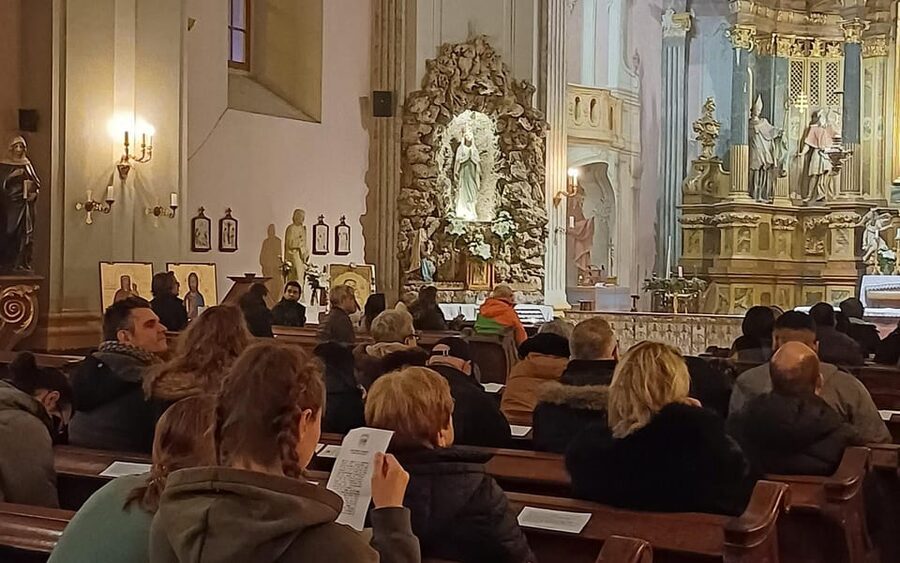
The music also gives the place a clear purpose. This is not background entertainment before another attraction. The concert asks you to sit still, listen, and let the room do some of the work.
A few more Budapest half-days to weigh up
- Budapest Danube Cruise and Dinner Options, Live Music and Dance
★ 4.5 · 7,428 reviews - Budapest: Evening Cruise including Drinks and Live Music
★ 4.1 · 5,512 reviews - Budapest: Candlelit Dinner River Cruise with Live Music
★ 4.7 · 2,154 reviews
The 70-minute concert from arrival to final chord
The concert begins with a short introduction in English and Hungarian. This is useful even if you know little about organ music. You receive a printed program leaflet in both languages, with information about the organ and the pieces you are about to hear.
The leaflet matters because the programs can be quite varied. Without it, a sequence of unfamiliar titles may blur together. With it, you can follow the composers, movements, and order of the music while still listening without needing a full lecture.
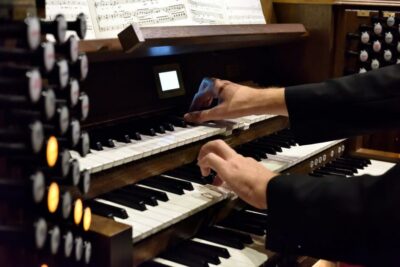
A screen shows the organist playing. Organ performance can be hard to watch in a church because the keyboard and pedals may be high above the main seating area or partly hidden from view. The screen gives you a better sense of the hand and foot work, and it adds a visual thread to music that might otherwise feel invisible.
The rest of the 70 minutes depends on the date you choose. Some evenings feature solo organ music throughout. Others include chamber music, particularly performances with soprano Nóra Ducza and Miklós Teleki.
You should not expect a sightseeing tour, a guide walking you through the building, or a long spoken presentation. The format is simple: enter, receive the program, hear the introduction, and listen to the concert. That simplicity is a strength for anyone who wants a calm evening without a crowded schedule.
The Bach program: a focused test of organ skill
One sample program centers on Johann Sebastian Bach. It includes the Prelude and Fugue in B minor, BWV 544, followed by the Trio Sonata in E-flat major, BWV 525.
The Trio Sonata is especially interesting because it gives the organ a more layered, conversational sound. Bach wrote these works to make the organ behave almost like several instruments at once. You hear separate musical lines answering and supporting one another, rather than only a single melody with heavy accompaniment.
The program then moves to Bach’s arrangement of Antonio Vivaldi’s Concerto in A minor, BWV 593. This brings a different energy into the recital. Vivaldi’s concerto style is bright and rhythmic, while Bach’s organ arrangement lets one performer handle the parts normally shared across an ensemble.
A Pastorella, BWV 590, follows with several sections, including a Prelude, Allemande, Air, and Gigue. The dance titles point to changing moods and rhythms. The final work, the Prelude and Fugue in E-flat major, BWV 552, gives the program a weighty finish.
Choose this type of date if you already enjoy Bach or want a concentrated introduction to his organ writing. It may feel demanding if you prefer a constant parade of familiar tunes. Still, the structure gives you a better sense of how much variety one composer can draw from one instrument.
Mixed programs with Mozart, Liszt, Dubois, and Hungarian music
Other dates offer a wider route through the organ repertoire. One sample program begins with Mozart’s Fantasy in F minor, then includes six old Hungarian organ compositions from Kilián Szigeti’s collection.
That pairing is valuable because it puts a well-known classical composer beside music tied to Hungary. You are not hearing only the standard names found on every classical playlist. The Hungarian selections offer a chance to encounter a less familiar local tradition, although the leaflet is your main aid for context.
Franz Liszt appears with Consolation in D-flat major and the chorale Nun danket alle Gott. Liszt is closely associated with virtuosic piano writing, but his organ music can be more reflective and devotional. The contrast between the two pieces can make the middle of the program feel quieter and more inward.
The program then turns to Théodore Dubois, with In Paradisum and the Toccata in G major. A toccata is often the kind of piece people associate with organ concerts: fast, energetic, and built to show control. The program closes with Bach’s Nun komm, der Heiden Heiland, BWV 659, and the famous Toccata and Fugue in D minor, BWV 565.
This mixed format is probably the safest choice if your musical tastes are broad. You get a recognizable finale, but you also hear Mozart, Liszt, Dubois, and Hungarian works along the way. The tradeoff is that the program may feel less unified than an all-Bach recital.
Same city, a completely different way to spend an afternoon:
- Budapest: City Highlights Cruise with Welcome Drink
★ 4.6 · 35,610 reviews - Budapest: Unlimited Prosecco, Beer and Aperol Spritz Cruise
★ 4.8 · 25,310 reviews - Budapest: Széchenyi Spa Day Ticket with Optional Upgrades
★ 4.3 · 23,911 reviews - Budapest: Nighttime or Daytime Sightseeing Cruise
★ 4.2 · 21,062 reviews
Chamber music dates with soprano Nóra Ducza
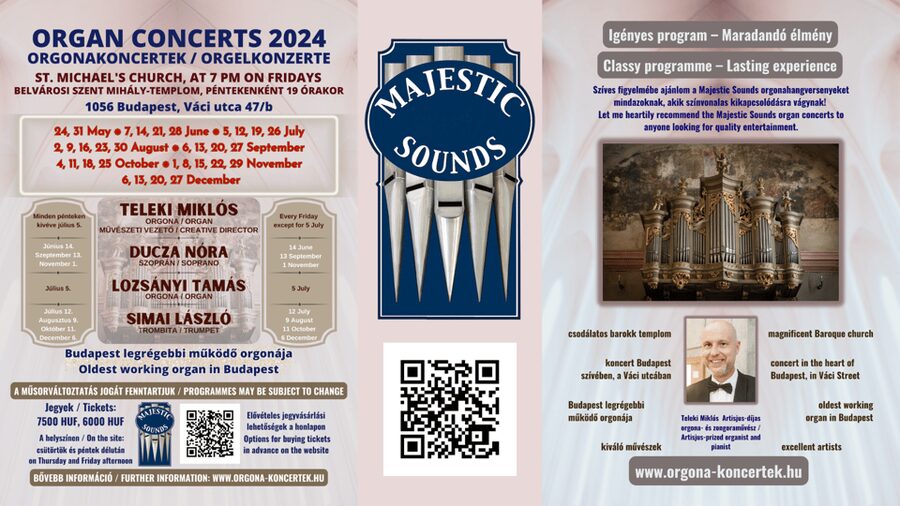
On selected evenings, the series shifts from solo organ to chamber music. Soprano Nóra Ducza performs with Miklós Teleki on May 30, July 18, August 29, October 17, and December 23.
The addition of a voice changes the character of the hour. Organ music can fill a room with complex lines and sustained sound, while a soprano gives you a clear human focus. If you are uncertain about a full organ recital, one of these dates may offer a more varied introduction.
Pay attention when choosing your date. The experience is not identical from one evening to the next. The general format stays consistent, with a short introduction and printed program, but the balance between solo organ and chamber music depends on the performance selected.
The information provided does not specify the exact pieces for each chamber evening, so you should check the current program before booking if a particular composer or style matters to you.
The musicians and the view from the screen
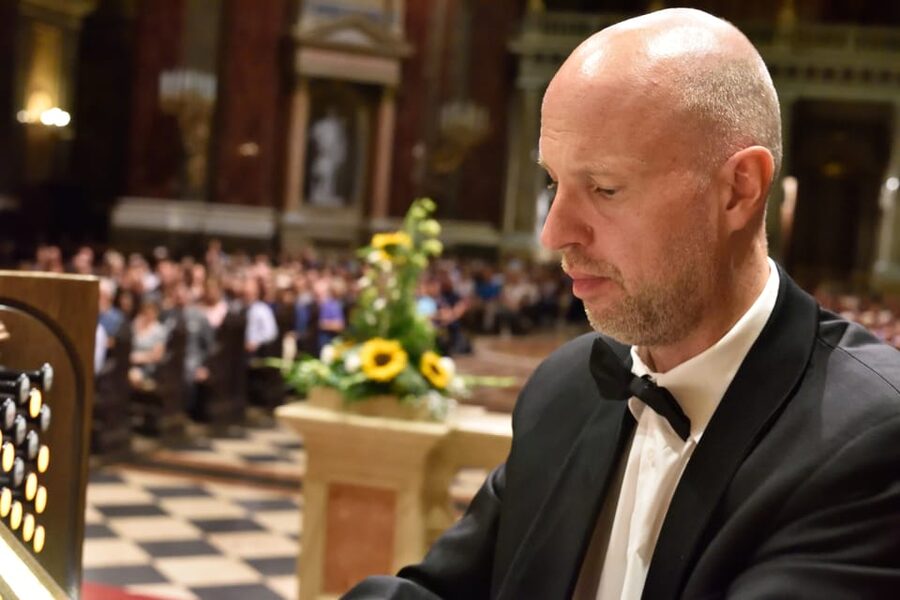
Miklós Teleki is the creative director and main organist of the Majestic Sounds series. He gives about 120 organ and piano recitals a year and performs at almost all of the listed recitals.
There are a few named exceptions. On July 4, Estonian musician Andres Uibo plays the organ. On October 31, the organist is Tamás Lozsányi. These dates give you a chance to hear different approaches within the same church and series.
The screen showing the organist is more than a technical extra. Organ music asks the performer to coordinate hands, feet, registrations, and changes in sound. Seeing that work can make an unfamiliar piece easier to follow. It also helps keep your attention during slower passages.
Still, you should not book this mainly as a visual performance. The setting remains a church, and the point is listening. The screen improves access to the action, but it does not turn the concert into a theatrical show.
A central Budapest location that fits an evening plan
St. Michael’s Church is in the 5th District at the corner of Váci utca and Nyáry Pál utca, with postal code 1056. It is quite near the Danube, making the location useful for a concert before or after a walk along the river.
The white church building should be easy to identify at the stated corner. You meet at the church and finish there, so no vehicle transfer or complicated route is part of the experience. Transportation is not included, and you should allow enough time to reach the entrance in central Budapest.
The concert lasts 70 minutes. That is long enough to feel like a proper performance, but short enough to fit around dinner or other evening plans. Starting times vary, so check the available date and time before you organize the rest of your night.
The ticket process is straightforward. The activity includes entry, and the person at the church door checks the ticket list. You should not need to wait at a separate pickup point.
What the $24 price buys you
At $24 per person, this is a reasonable cultural splurge in central Budapest. You are paying for a live performance, access to a historic church setting, a bilingual introduction, a printed program, and the chance to hear the city’s oldest working organ.
The value depends on how you use it. If you see the concert as a major cathedral-scale production, the small organ may leave you wanting more power. If you compare it with a standard evening of live classical music, the price is appealing because the setting and instrument give the performance a distinct sense of place.
I especially like that the program is not limited to the most obvious crowd-pleasers. Bach, Mozart, Liszt, Vivaldi, Handel, Mendelssohn, Purcell, Franck, Dubois, and old Hungarian compositions all appear across the series. That range lets you choose a familiar program or take a chance on something new.
The ticket also comes with flexibility. You can cancel up to 24 hours in advance for a full refund, and the reserve-now, pay-later option lets you hold a place without paying immediately. Those policies are useful when your Budapest schedule is still changing.
Who will enjoy this concert most
I would recommend this to you if you enjoy classical music, historic churches, or small cultural experiences that do not take over your whole day. It works well for a solo evening, a couple looking for a quiet date, or anyone who wants a break from Budapest’s busy streets.
It is also a good fit for first-time organ listeners. The English introduction, bilingual leaflet, and screen view remove some of the usual barriers. You do not need to know the difference between a prelude, fugue, and toccata to appreciate the sound.
Families may find the 70-minute length manageable, but the concert requires quiet listening. Young children who need constant movement may not enjoy it, and the supplied information does not promise a special children’s format.
Choose carefully if you have mobility needs. The activity is listed as wheelchair accessible, which is important, but the available information does not describe the exact route, seating, or restroom arrangements. You can contact the provider if you need specific access details.
You should also avoid recording. Video and audio recording are not allowed. Put the phone away and treat the concert as an hour when you do not need to document every moment.
Dates worth checking in 2025
Most concerts are Friday evening performances, though starting times vary by date. The series also has two Tuesday night concerts in 2025, on December 23 and December 30.
December 23 is also listed as a chamber music date with Nóra Ducza and Miklós Teleki. That makes it especially useful if you want a seasonal Budapest evening with both voice and organ, though you should check the final program before booking.
July 4 features Andres Uibo, and October 31 features Tamás Lozsányi. The other dates are generally led by Miklós Teleki, whose regular presence gives the series continuity.
Because the repertoire changes, I would not book the first available time without checking the title or composer list. Pick Bach if you want a concentrated organ recital. Pick a mixed program if you want familiar names alongside Hungarian works. Pick a chamber date if you prefer the contrast of soprano and organ.
Practical details for a smooth visit
Book the date first, then check the starting time and program. The concert is at one fixed location, but central Budapest streets can take longer to cross than they look on a map, especially if you are walking from another part of the city.
Arrive with your ticket ready. Entry is handled at the church door, and the name-list system means you should not need a separate ticket exchange. The activity ends back at the church after the performance.
Read the printed leaflet before the music begins. It includes information about the organ and lets you mark the pieces you want to remember. If you are new to organ music, use it as a simple roadmap rather than trying to study every composer.
Expect a short spoken introduction, not a full guided tour. The value comes from the live playing and the atmosphere of St. Michael’s Church. Keep your phone silent, and remember that recording is prohibited.
Should you book the St. Michael’s Church organ concert?
Book it if you want a well-priced, 70-minute classical concert in a central Budapest church, especially if Bach, Liszt, Mozart, or organ music already interests you. The strongest reasons are the unusual 25-pipe instrument, the intimate Baroque setting, the changing programs, and Miklós Teleki’s regular presence.
Think twice if your main goal is overwhelming volume or a huge cathedral organ. This is a smaller-scale performance, and that is both its charm and its limit.
For the best match, check the date-specific program. An all-Bach evening suits focused listeners, a mixed recital gives you the broadest range, and a chamber date with Nóra Ducza offers the most contrast. At $24, it is an easy choice for a calm, distinctive night near the Danube.
FAQ
Where does the organ concert take place?
The concert takes place at St. Michael’s Church in Budapest’s 5th District, at the corner of Váci utca and Nyáry Pál utca. The postal code is 1056, and the church is near the Danube.
How long does the concert last?
The concert lasts 70 minutes. Starting times vary by date, so check availability for the specific performance you want.
Who performs at the concert?
Miklós Teleki is the creative director and main organist, and he performs at almost all recitals. Andres Uibo performs on July 4, and Tamás Lozsányi performs on October 31. Chamber dates feature soprano Nóra Ducza with Miklós Teleki.
Is every concert a solo organ recital?
No. The series offers varied solo organ and chamber music concerts, depending on the date. Check the program before booking if you prefer one format.
Is the concert available in English?
Yes. The concert begins with a short introduction in English and Hungarian, and the printed program leaflet is available in both languages.
Can I record the performance?
No. Video recording and audio recording are not allowed.
Just added around Budapest
- Budapest: Private, Personalized Pub Crawl, 3 drinks included★ 4.5 · 3 reviews
- Private day trip from Budapest to Bratislava, Vienna, and back★ 3.5 · 3 reviews
- Budapest: Private Adventure Sightseeing Bicycle Tour★ 4.5 · 3 reviews
- Private Danube Bend tour – full day★ 4.5 · 3 reviews
- Budapest: Guided City Walking Tour in Buda and Pest★ 5.0 · 3 reviews
- Budapest Old Jewish Quarter History Private Walking Tour★ 5.0 · 3 reviews
- Lake Balaton Full Day Private Wine Tour★ 5.0 · 3 reviews
- Budapest Urban Feast – Food Tour with Wine Tasting & Coffee House★ 4.5 · 3 reviews
Concerts, compared.
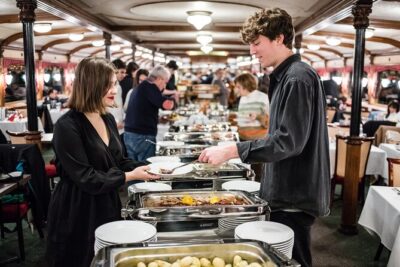
Budapest Danube Cruise and Dinner Options, Live Music and Dance
Read our review →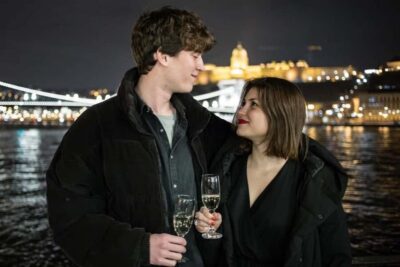
Evening Cruise including Drinks and Live Music
Read our review →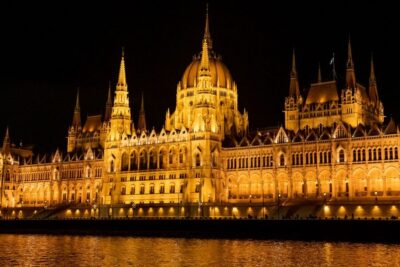
Candlelit Dinner River Cruise with Live Music
Read our review →
Dinner Cruise with Live Music and Folk Dance Show
Read our review →
Budapest Danube River Candlelit Dinner Cruise with Live Music
Read our review →
Classical Music Concerts in St Stephen’s Basilica
Read our review →
Browse the lists this tour appears in