
Reviewed · WALKING TOURS
Budapest Art Nouveau Walking Tour
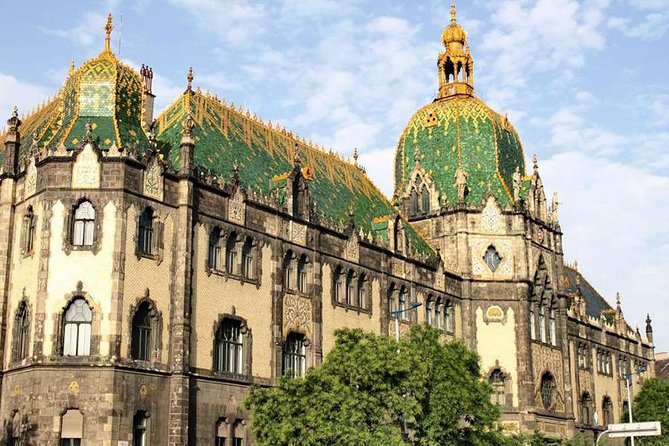
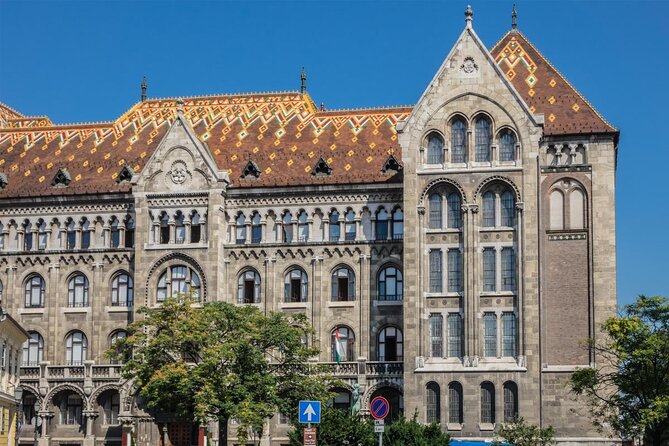
Budapest’s Art Nouveau is not a minor decorative sidestreet style. It shapes whole blocks, from the fanciful roof of the Royal Postal Savings Bank to the ceramic-clad Thonet House. This three-hour walk gives you a focused look at that local style, led by a historian rather than a guide rushing through a general city tour.
I like the small-group format, which makes it easier to stop and study details high above street level. I also like the clear architectural thread: you see how Ödön Lechner and the Zsolnay ceramics factory helped give Hungarian Art Nouveau its own look.
The main consideration is cost. At $126.16 per person, this is not a casual sightseeing stroll, especially since public transport and possible synagogue admission cost extra. The meeting point at Madal Cafe can also be busy, so arrive early and make yourself easy to spot.
Key points to know before booking
- Ödön Lechner takes center stage: Learn how Hungary’s best-known Art Nouveau architect shaped the city’s bold roofs, patterns, and ceramics.
- Four strong architectural stops: The route includes Gresham Palace, the Royal Postal Savings Bank, Thonet House, and Kazinczy Street Synagogue.
- A small group makes the details easier to follow: The tour is limited to a maximum of eight people, with the highlights describing a group of up to six.
- The walk ends inside a synagogue when possible: Kazinczy Street Synagogue includes an interior visit except on Saturdays, with admission at your own expense.
- Plan for transport and pavement time: Some public transport is used, but you pay for your own passes. Comfortable shoes are essential.
- The schedule is flexible: You can choose a morning or afternoon departure, and free cancellation is available up to 24 hours ahead.
Why Budapest Art Nouveau deserves three focused hours
Budapest is easy to admire at street level, but Art Nouveau rewards a slower look. The style uses flowing lines, plant shapes, unusual roof forms, colorful tiles, and decorative details that can disappear if you are only moving between the Parliament, Castle, and thermal baths.
This walk gives you a useful framework. Rather than pointing at pretty façades and moving on, the historian guide explains the movement’s history, design elements, and Hungarian character. That matters because Budapest Art Nouveau is not simply a copy of the styles you might see in Paris, Vienna, or Barcelona.
The route also shows several types of buildings. You see a grand palace turned luxury hotel, a working financial institution designed as an architectural statement, a commercial building known for ceramic tiles, and a religious building with Art Nouveau decoration. That variety makes the tour more useful than a single-photo stop.
You should expect a moderate amount of walking over about three hours. The tour is offered in English and has morning and afternoon departures. A small group is a real advantage here, since the guide can respond to questions and point out details that would be easy to miss in a larger crowd.
One detail needs checking when you book. The tour information describes the group as limited to six in one place and eight in another. The formal maximum is eight, but the actual group size may vary. Either way, this is designed as a small-group walk, not a coach outing.
More walking tours in Budapest:
- Budapest: Buda Castle Walk with Saint Stephen’s Hall
★ 4.5 · 3,012 reviews - Big Bus Budapest Hop-On Hop-Off Bus and Walking Tour
★ 3.5 · 2,206 reviews - Budapest: Buda Castle District Walking Tour
★ 4.6 · 2,108 reviews
Gresham Palace: Art Nouveau on a grand scale
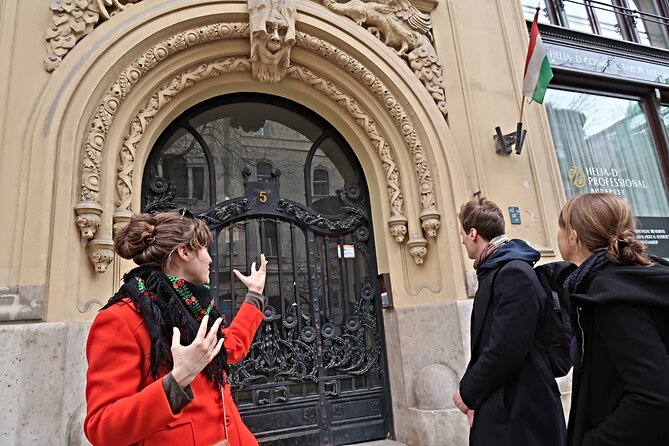
The walk begins at Gresham Palace, one of Budapest’s most eye-catching buildings. Its location and ornate façade make it a strong opening stop, but the point is not just to take a photograph. Your guide uses the palace to show how Art Nouveau could work on a large, luxurious scale.
The building once held offices and luxury apartments. Today it is Budapest’s most luxurious hotel. That change of purpose helps you read the architecture differently. You are looking at a structure designed both for business and for elite private life, with decoration meant to signal wealth, modernity, and taste.
The stop lasts about 20 minutes. You can admire the exterior and discuss the interior design, though you should not expect the same access as a hotel guest. The admission cost is listed as free, but free does not necessarily mean every private hotel area is open for touring.
I would pay close attention to the contrast between the building’s overall size and its smaller decorative touches. Art Nouveau often works through repeated curves, plant-like forms, metalwork, and carefully framed windows. The guide’s explanation is particularly useful here because the most interesting details may be above your normal eye line.
This is also a good place to get comfortable with the tour’s rhythm. You will stop, look upward, hear the design story, then move on. Wear shoes that can handle several hours on city streets, and avoid planning a tightly timed attraction immediately afterward.
Royal Postal Savings Bank and the vision of Ödön Lechner
The Royal Postal Savings Bank is likely the tour’s architectural centerpiece. Designed by Ödön Lechner, it is famous for its flamboyant appearance and for the way it combines a public building with a strong Hungarian design identity.
Lechner is often called the Gaudi of Hungary. The comparison is useful as a quick reference, but it can also oversimplify his work. The guide helps explain what makes Lechner distinct, especially his use of local motifs, colorful surfaces, and ceramics to create a style that feels tied to Hungary.
The 20-minute stop focuses on the building’s design and the entrance hall’s interior elements. This is where a historian guide earns the fee. You are not simply told that the building is unusual. You learn how the pieces work together, why the entrance matters, and how Art Nouveau changed the way architects treated public institutions.
The building also makes a larger point about Budapest at the turn of the twentieth century. A postal savings bank could have been plain and practical. Lechner instead gave it a memorable identity. The result shows how architecture could help a modern institution announce its presence.
Take time to look at the roofline and surface decoration. The building’s character is easy to grasp from a distance, but the guide’s comments should help you connect the large shapes with the small patterns. If you have an interest in architecture, this is the stop most likely to justify choosing a specialist tour instead of a general city walk.
Thonet House and the Zsolnay tile tradition
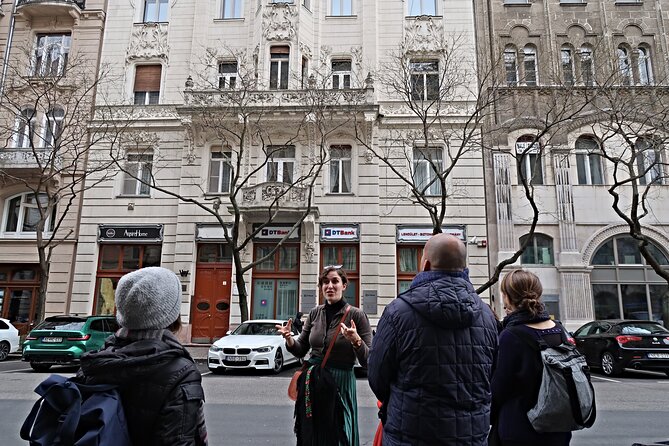
At Thonet House, the focus shifts to ceramic tiles. Hungarian Art Nouveau became famous for tile-covered façades, and the Zsolnay porcelain and ceramics factory in Pécs played an important role in making that possible.
This is a useful pause because tiles are not just decoration. They protect a façade, catch changing light, and give a building color and texture that painted plaster cannot match. They also allowed architects to bring intricate patterns onto the outside of commercial and residential buildings.
The guide connects Thonet House with Zsolnay’s innovations. That gives you a better way to recognize the style elsewhere in Budapest. After this stop, you may find yourself looking at roof tiles and façade ceramics across the city with a sharper eye.
The stop lasts about 20 minutes, and the building is viewed as part of the walking route. Do not expect a museum visit or a hands-on demonstration. The value is in learning what you are looking at and why the materials mattered.
I especially like this part of the route because it turns a visual feature into a practical design lesson. You learn that Hungarian Art Nouveau was not only about graceful lines and floral decoration. It also depended on new materials and skilled production.
Same city, a completely different way to spend an afternoon:
- Budapest: City Highlights Cruise with Welcome Drink
★ 4.6 · 35,610 reviews - Budapest: Unlimited Prosecco, Beer and Aperol Spritz Cruise
★ 4.8 · 25,310 reviews - Budapest: Széchenyi Spa Day Ticket with Optional Upgrades
★ 4.3 · 23,911 reviews - Budapest: Nighttime or Daytime Sightseeing Cruise
★ 4.2 · 21,062 reviews
Kazinczy Street Synagogue and the tour’s final interior
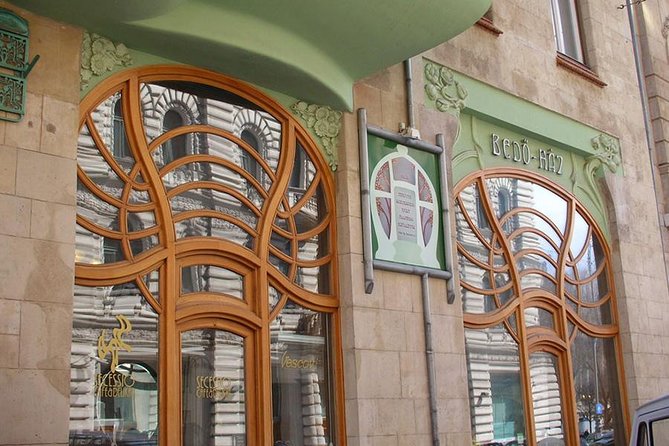
The walk concludes at the Orthodox Kazinczy Street Synagogue, decorated in Art Nouveau style. A synagogue is a fitting final stop because it shows the movement in a religious setting rather than in a bank, palace, or commercial building.
The interior visit is available except on Saturdays, when the synagogue is not visited inside. Admission is not included, and you pay the extra cost if the site is open on the day of your tour. This is an important part of the price calculation, so ask about the current arrangement when booking.
The stop lasts about 25 minutes. That is enough time for a focused visit, but not an extended museum-style tour. Your guide can explain how decorative ideas were adapted for a place of worship and how the interior relates to the building’s broader design.
Because the tour ends here, you are well placed to continue exploring the Jewish Quarter afterward. The route does not include food or drinks, so you will need to arrange those separately. The end point is Budapest Orthodox Synagogue, Kazinczy u. 29-31.
Remember that the interior visit is conditional. If your main reason for booking is to see inside the synagogue, avoid Saturday and confirm the access details. Even without the interior, the exterior remains part of the planned route, but the visit will be shorter and less complete.
What the small group and transport mean in practice
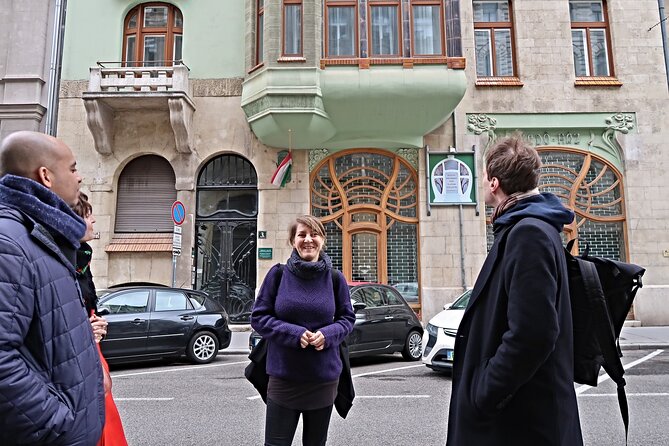
The tour is described as a small-group experience, with a maximum of eight people and a separate reference to six. That size should make it easier to hear the guide in city streets and ask about buildings that catch your eye along the way.
One useful feature is the guide’s willingness to follow a question. A previous booking included a guide who was willing to take the group toward other places in the city that interested them. You should not assume the route can be changed at will, but a small group gives the guide more room to respond than a large scheduled tour.
Some public transport is used during the walk. Passes are not included, and you pay for your own transportation. This is a modest extra, but it is worth carrying a little cash or having a practical way to buy the required pass.
The meeting point is Madal Cafe, Alkotmány u. 4. One person had nearly missed the guide because the meeting place was busy. I would arrive early, stand where the guide can see you, and keep the tour contact details handy.
The end point is the synagogue on Kazinczy Street, not the starting café. That makes the route useful if you plan to continue in the Jewish Quarter, but you should allow extra time if you need to return to your hotel or meet a train.
Is $126.16 a fair price?
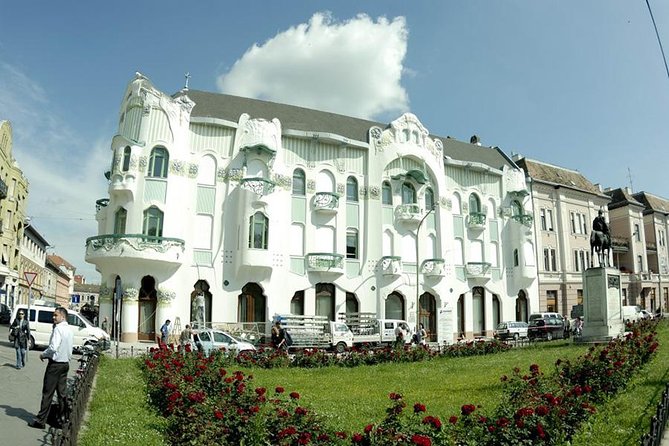
At $126.16 per person, this tour is priced as a specialist architectural walk, not a basic orientation tour. The value rests mainly in the historian guide, the small group, and the focused subject.
I would consider the price reasonable for someone who already has a general Budapest sightseeing plan and wants to understand the city’s architecture at a higher level. You are not paying for a long list of admissions. You are paying for interpretation, a carefully selected route, and the ability to ask questions.
The value is less convincing if you want broad coverage of Budapest’s main sights. The tour does not include the Parliament, Buda Castle, the thermal baths, or a general introduction to the city. It also does not include food, drinks, public transport, or possible synagogue admission.
Group discounts may be available, which could improve the cost for people booking together. Free cancellation up to 24 hours before the start gives you some flexibility, though changes or cancellations inside that window are not refunded.
The high rating of 4.9 from 17 ratings and full recommendation rate point to a consistently strong experience, but the sample is small. I would treat that as encouraging rather than as a guarantee that every guide and departure will feel identical.
Who should book this architectural walk?
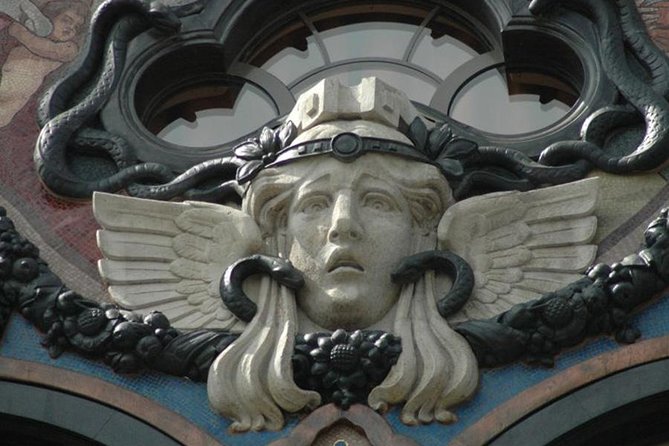
I would recommend it most strongly to you if:
- You notice façades, rooflines, tiles, and interior details.
- You want a specialist tour rather than a basic Budapest overview.
- You prefer a group small enough for questions.
- You have already seen the city’s main landmarks or plan to see them separately.
- You are happy to walk at a moderate pace for three hours.
- You can schedule around the synagogue’s Saturday closure.
It may not suit you if you dislike city walking, want extensive interior access, or need a tour with all costs included. The price also makes it a poor fit for a very tight budget.
The tour is offered in English, and most people can take part. Still, the walking and public transport make comfortable shoes and a little planning worthwhile. Choose the morning or afternoon departure that fits your day, then keep the rest of your schedule loose enough for the walking pace and any transport stops.
My booking advice
Book this tour if Budapest’s Art Nouveau is a main reason you are visiting, or if you want an architectural lens for seeing the city. The sequence works well: a grand hotel, Lechner’s bank, a tile-focused building, and a synagogue interior when available.
Before paying, confirm the group-size expectation, the current synagogue admission, and the public transport arrangement. If you book for Saturday, assume there will be no interior synagogue visit. Those checks will give you a more accurate total cost and prevent disappointment.
I would skip it if you are looking only for Budapest’s headline sights or if $126.16 feels too high for a walking tour with extra expenses. For an architecture-minded visitor, though, this is a thoughtful, compact way to see why Budapest’s Art Nouveau is so distinctive.
FAQ
How long does the Budapest Art Nouveau Walking Tour last?
The tour lasts approximately three hours.
What language is the tour offered in?
The tour is offered in English.
What buildings are visited?
The route includes Gresham Palace, the Royal Postal Savings Bank, Thonet House, and the Orthodox Kazinczy Street Synagogue.
Is admission included?
The historian guide is included. Public transportation, food, drinks, and possible admission to the Orthodox Synagogue on Kazinczy Street are not included.
Can I visit the synagogue interior?
An interior visit is available except on Saturdays. Admission costs extra if the site is open on the day of your tour.
Where does the tour start and finish?
The tour starts at Madal Cafe, Alkotmány u. 4. It finishes at Budapest Orthodox Synagogue, Kazinczy u. 29-31.
How far in advance can I cancel?
You can cancel for a full refund up to 24 hours before the experience begins. Cancellations or changes made less than 24 hours before the start time are not refunded.
Just added around Budapest
- Budapest: Private, Personalized Pub Crawl, 3 drinks included★ 4.5 · 3 reviews
- Private day trip from Budapest to Bratislava, Vienna, and back★ 3.5 · 3 reviews
- Budapest: Private Adventure Sightseeing Bicycle Tour★ 4.5 · 3 reviews
- Private Danube Bend tour – full day★ 4.5 · 3 reviews
- Budapest: Guided City Walking Tour in Buda and Pest★ 5.0 · 3 reviews
- Budapest Old Jewish Quarter History Private Walking Tour★ 5.0 · 3 reviews
- Lake Balaton Full Day Private Wine Tour★ 5.0 · 3 reviews
- Budapest Urban Feast – Food Tour with Wine Tasting & Coffee House★ 4.5 · 3 reviews
Walking Tours, compared.
Budapest City Landmarks Walking Tour in 2 Hours
Read our review →
3-Hour Orientation Walking Tour of Buda and Pest
Read our review →
Budapest All in One Small Group Walking Tour with Strudel Stop
Read our review →
Buda Castle District Walking Tour with a Historian
Read our review →
BloodThirsty Hungary: Walking tour & Dark Historical Stories
Read our review →
Browse the lists this tour appears in