
Reviewed · WALKING TOURS
Budapest Art Nouveau Walking Tour
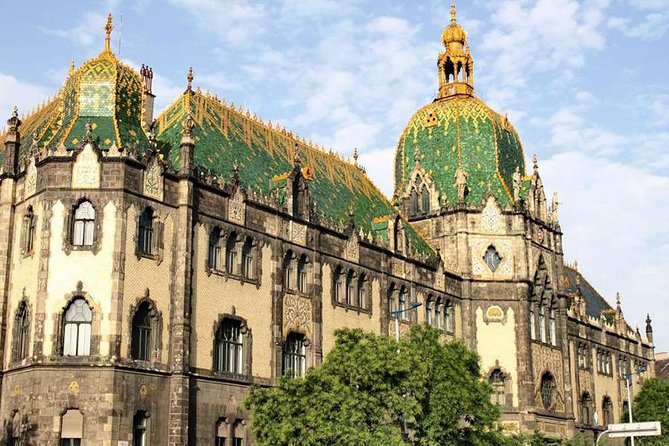
Budapest’s Art Nouveau is not shy. Its buildings use bright ceramics, curved lines, flower forms, and eastern-looking patterns to announce the city’s confidence at the start of the 20th century. This three-hour walk gives you a focused look at that style, especially the work of Ödön Lechner, often called Hungary’s Gaudi.
I like the chance to step inside selected entrance halls, rather than viewing every building only from the pavement. I also like the guide-led explanation of Zsolnay porcelain and Asian motifs, two clues that help you recognize Hungarian Art Nouveau elsewhere in the city.
The main consideration is timing. Some interiors depend on the day of your visit, and the Hungarian National Bank and Orthodox Synagogue on Kazinczy Street have different weekend restrictions. At $123 per person, this makes the tour a better fit for travelers who want serious architectural context, especially in a private or small group.
Key details before you book
- Ödön Lechner’s Postal Bank: See one of Budapest’s most playful and influential Hungarian Secession buildings.
- Gresham Palace interior: Enter the hall when access is available and study its ornate details up close.
- Zsolnay ceramics: Learn why glazed porcelain from Pécs became a signature material on Hungarian facades.
- Oriental design references: Understand how Asian motifs connected Hungarian national identity with a wider European taste for the East.
- Changing site access: Weekend visits may require an altered route because of closures at the National Bank and Kazinczy Street Synagogue.
- A focused three-hour walk: Private and small-group formats make this more personal than a large general city tour.
Why Budapest’s Art Nouveau deserves a dedicated walk
Budapest is often sold through its grand boulevards, thermal baths, Parliament, and coffee houses. Those sights matter, but Art Nouveau explains something more specific: how the city presented itself as modern, prosperous, and culturally independent before the First World War.
Across Europe, Art Nouveau brought architecture, furniture, ceramics, and fine art together. In Hungary, the style became known as Hungarian Secession. Its designers looked to nature, folk patterns, Hungarian identity, and imagined eastern origins while using new materials and daring surface decoration.
That combination gives Budapest a style of its own. You will see building fronts that seem to move, with tiles, floral designs, animal forms, and unusual colors replacing the straight lines of older classical architecture. The guide’s job is not simply to point out pretty details. It is to explain why those details mattered.
I find this kind of walk most useful early in a Budapest visit. Once you know what Zsolnay tiles look like and understand Lechner’s interest in Asian forms, you begin spotting related ideas on your own. The city becomes easier to read.
The tour lasts three hours, enough time for several major buildings and smaller stops without turning into an all-day architecture course. You should still expect plenty of standing and walking, since the experience is built around urban streets and building exteriors.
More walking tours in Budapest:
- Budapest: Buda Castle Walk with Saint Stephen’s Hall
★ 4.5 · 3,012 reviews - Big Bus Budapest Hop-On Hop-Off Bus and Walking Tour
★ 3.5 · 2,206 reviews - Budapest: Buda Castle District Walking Tour
★ 4.6 · 2,108 reviews
Ödön Lechner and the Palace of the Royal Post
The Palace of the Royal Post, also known as the Postal Bank, is the architectural star of the route. Ödön Lechner designed it as a bold expression of Hungarian Secession, using colorful ceramic decoration and strongly shaped rooflines to make a practical financial building feel almost theatrical.
This is where the tour’s focus on material becomes clear. The building is not decorated with a few applied ornaments. Its surface, color, and roof treatment all work together. Zsolnay porcelain helped make that possible, giving architects a durable and highly decorative material for facades.
Your guide can also explain how Lechner used Asian references in his designs. These forms were tied partly to the idea that Hungarians had eastern origins, but they also fit a wider European interest in Orientalism. That distinction matters. The style was both national and international at the same time.
The Postal Bank is a good stop for anyone who thinks architecture tours are mainly about dates and names. Here, the design itself carries the argument. Budapest wanted to look modern, inventive, and unmistakably Hungarian.
The practical limitation is that the route may not provide a full interior visit at every major building. The supplied information specifically confirms access to entrance halls at the Palace of the Royal Post and Gresham Palace, giving you a useful taste of the interiors without promising a complete building tour.
Hungarian State Treasury and the value of Zsolnay tiles
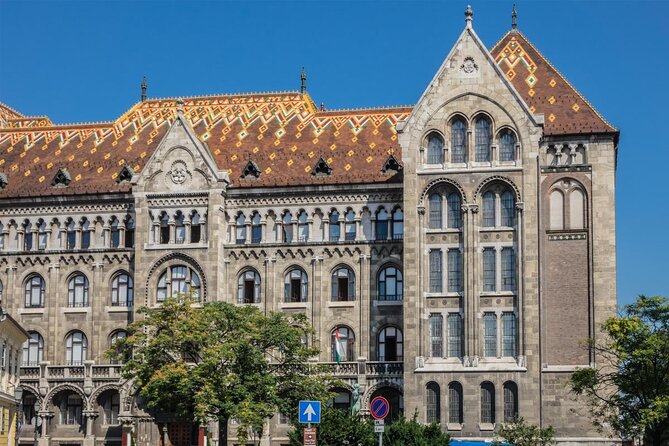
The Hungarian State Treasury adds another view of the same design movement. Look closely at the facade and you will see how color and ceramic surface can change the character of a public institution.
The tour also connects this building to the Hungarian National Bank, where fine examples of Zsolnay porcelain may be seen when access is possible. The National Bank is closed to this tour on weekends, so weekday scheduling is important if that interior is high on your list.
Zsolnay ceramics came from Pécs in southern Hungary. Their use on important buildings was more than a decorative flourish. The tiles gave architects a way to make a building weather-resistant while also filling it with color, pattern, and national character.
I like this part of the route because it gives you a tool for later sightseeing. After the guide points out the ceramic work, you can look at Budapest’s facades with more care. You may notice how a roof, balcony, or entryway uses material to express the building’s purpose and personality.
If you visit on a weekend, the guide can adapt the route to other Art Nouveau sites. Possible replacements include the Gellért Bath Hotel, the Museum of Applied Arts, and the Geology Museum. The exact adjustment depends on the day and on which places are available.
Gresham Palace, where the style moves indoors
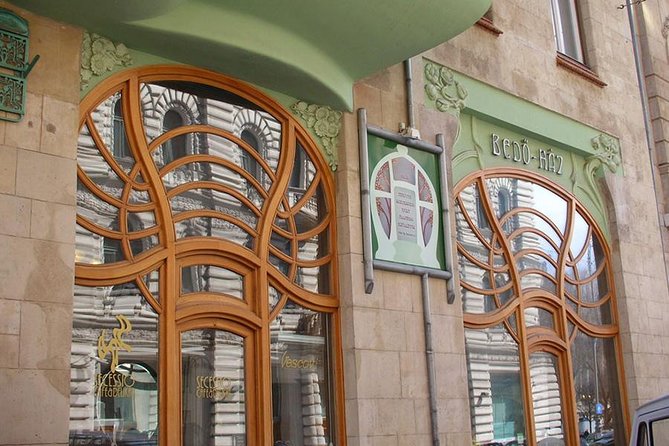
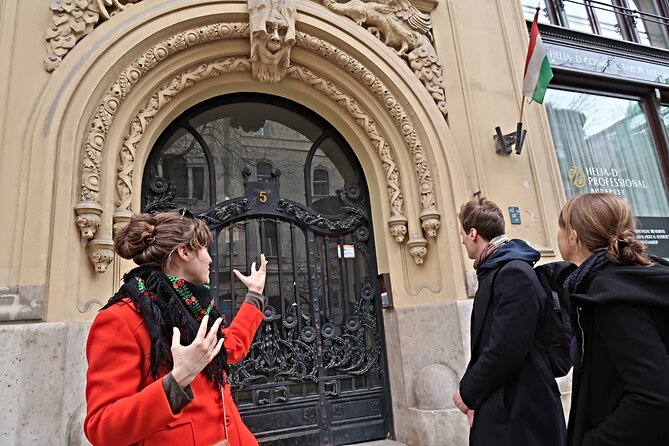
Gresham Palace is one of the tour’s strongest stops because the design continues through the entrance hall. From the street, the building presents the grandeur of a major commercial and residential project. Inside, the decorative program becomes easier to examine at close range.
Pay attention to the combination of metalwork, glass, stone, and repeating organic forms. Art Nouveau was never just a facade style. Its best buildings treated doorways, lamps, stairways, floors, and ceilings as parts of one visual plan.
The guide can help you separate the original design choices from the general impression of luxury. That is valuable in a building as ornate as Gresham Palace, where it is easy to notice only the glitter and miss the way the components fit together.
Access is limited to the entrance hall rather than a complete inspection of the palace. Still, that short look gives the tour a needed indoor pause and lets you compare public exterior decoration with interior detail.
For photographers, this stop should be especially rewarding, though the tour is not presented as a photography outing. If you want time for careful pictures, ask your guide how long the group can pause without disrupting the walking schedule.
Same city, a completely different way to spend an afternoon:
- Budapest: City Highlights Cruise with Welcome Drink
★ 4.6 · 35,610 reviews - Budapest: Unlimited Prosecco, Beer and Aperol Spritz Cruise
★ 4.8 · 25,310 reviews - Budapest: Széchenyi Spa Day Ticket with Optional Upgrades
★ 4.3 · 23,911 reviews - Budapest: Nighttime or Daytime Sightseeing Cruise
★ 4.2 · 21,062 reviews
Bedő House and a smaller-scale Art Nouveau
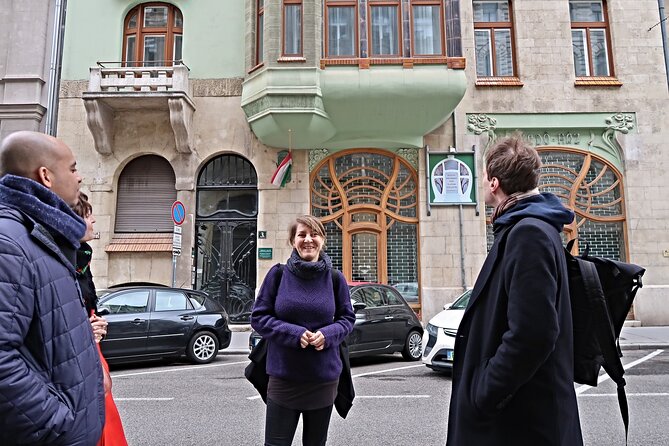
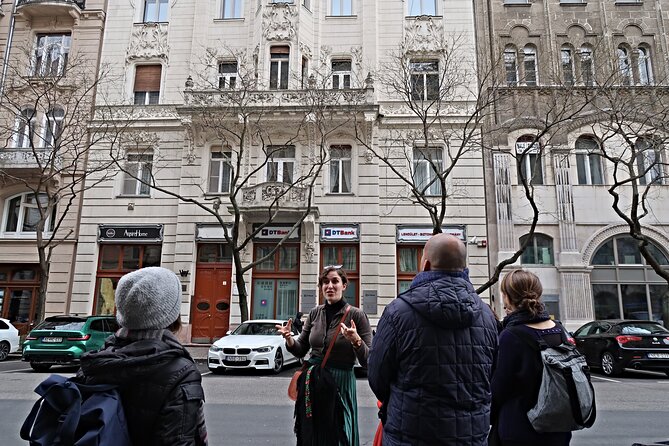
The Bedő House brings the route down from monumental public buildings to a more intimate example. Smaller Art Nouveau structures can be just as revealing because their decoration often feels closer to domestic life.
Here, your guide can show how the style worked at the scale of an urban residence or mixed-use building. Curved lines, plant forms, ceramic accents, and unusual details were not reserved for palaces. They could shape an ordinary street experience as well.
The supplied route describes a guided visit at Bedő House, while the wider tour also includes a small Art Nouveau museum and coffee house. The House of Hungarian Art Nouveau may involve an extra charge of 1,000 HUF per person, about $3.50, if it is open and included.
That cost is modest compared with the overall tour price, but you should know about it before setting out. The museum and coffee house are useful additions for anyone who wants objects and interiors, not only building fronts.
Rózsavölgyi Street and the applied arts
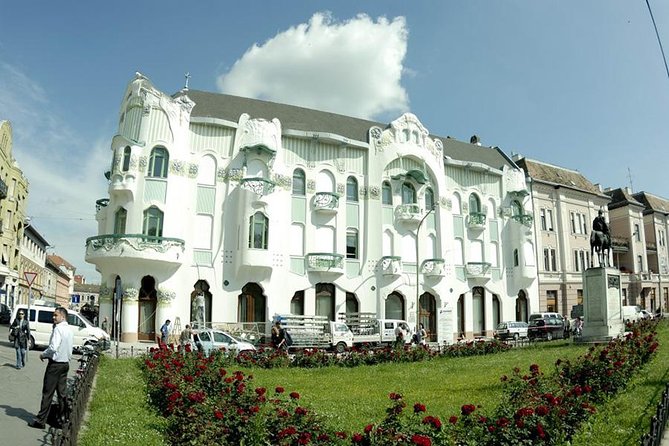
Rózsavölgyi Street gives the tour room to examine Art Nouveau beyond architecture. The experience includes a flower shop with its original interior, a department store, and bank offices among the smaller stops.
These places matter because Art Nouveau was a total design movement. It shaped commercial spaces, signs, furniture, displays, and everyday surroundings. A flower shop with original interior elements can reveal how the style reached ordinary customers, while a bank office shows how financial institutions used modern decoration to project confidence.
The route may also include examples connected to Hungarian applied arts. That is where the discussion of Zsolnay porcelain becomes more concrete. You are not simply told that ceramics were important. You can connect the factory’s work to the surfaces and patterns used around the city.
I would keep your eyes open between the formal stops. The tour is built around Budapest’s streets, so some of the best moments may come when the guide directs your attention to a doorway, roof edge, or upper-story detail you would otherwise pass without looking up.
Thonet House and the language of materials
Thonet House is another important facade stop. Its Zsolnay porcelain tiles show how Hungarian Art Nouveau designers turned a building’s surface into a major visual feature.
The building is also useful for comparing materials. Porcelain, metal, glass, stone, and plaster each behave differently in light and weather. A good guide will help you see how those choices affect the building’s mood and how they were combined into one design.
The reference to Thonet is also a reminder that Art Nouveau reached commercial architecture, not only civic buildings and private mansions. Budapest’s growing economy created clients who wanted their offices and shops to look new, sophisticated, and competitive.
You may not spend as long here as at Gresham Palace or the Postal Bank. That is not a weakness. Several shorter stops keep the tour from becoming too narrowly focused on two famous facades, and they help you see how the style spread through the city.
Paris Passage and a grand urban finish
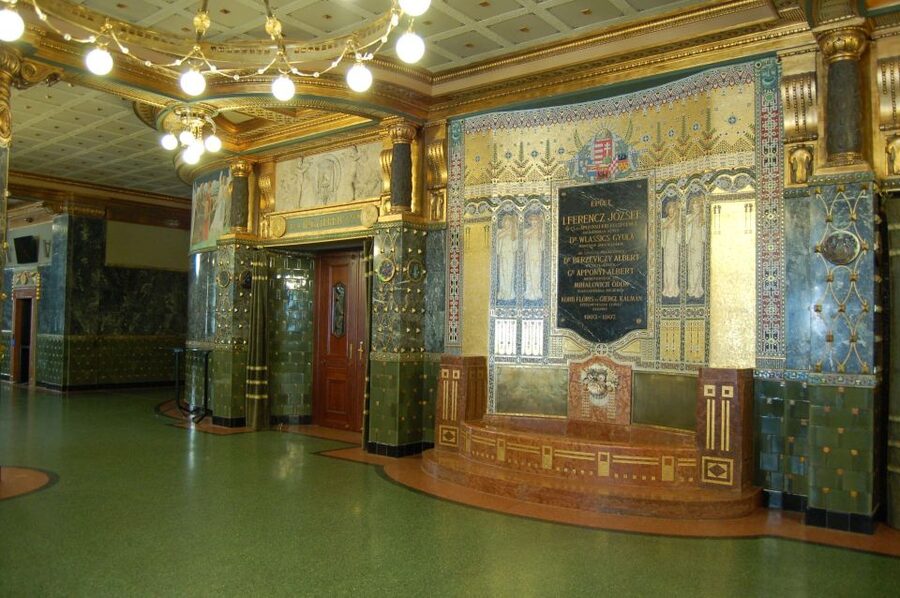
Paris Passage offers a different kind of setting, with the chance to examine a commercial interior and the relationship between Art Nouveau and city life. Passages and department-store spaces were designed for movement, display, and social activity, making them natural places for decorative modern design.
The stop also helps balance the route. The Postal Bank and State Treasury represent public power. Gresham Palace represents high-end urban development. A passage or department store shows how the same visual language entered daily shopping and city business.
Exact access can depend on opening conditions, so treat the route as a guided selection of sites rather than a guarantee that every interior will be available at the same depth. The tour provider can adjust the plan when one location is closed.
Kazinczy Street Synagogue and a memorable finish
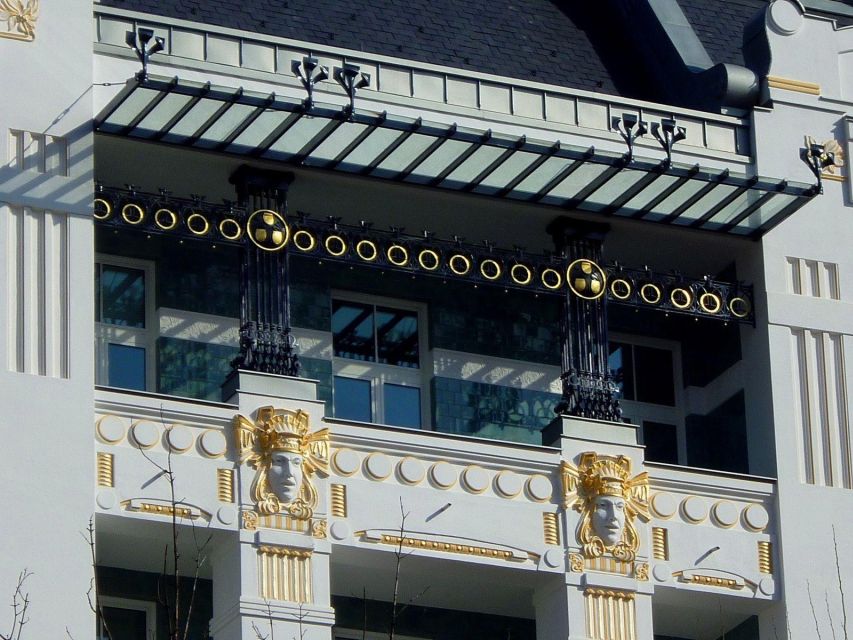
The Orthodox Synagogue on Kazinczy Street is a fitting final stop because it shows how Art Nouveau could serve a religious building. Its interior is described as small but exquisite, with decoration that rewards close attention.
The synagogue is closed on Saturdays. If it is open on your chosen day, admission costs 2,000 HUF per person, about $7. The extra charge is worth considering when comparing the tour’s value, since this is one of the stops that adds interior depth rather than another street-side view.
The design also reinforces the tour’s larger theme. Art Nouveau was flexible enough to work in banks, shops, palaces, museums, and religious spaces. It could express wealth, modernity, national identity, or spiritual character depending on the building.
If the synagogue is unavailable, the walk can be adapted or extended with other Art Nouveau sites. Ask about the replacement before booking if this stop is your main reason for choosing the tour.
What $123 buys you
At $123 per person, this is not a budget walking tour. The price makes the most sense if you choose a private or small-group format and want an art historian to connect the buildings rather than simply identify them.
You are paying for three hours of focused guiding, an English-speaking specialist, and a route centered on a narrow subject. That can be good value for architecture fans, repeat visitors to Budapest, and anyone who wants more than the city’s standard highlights.
The value is weaker if you only want to photograph famous facades quickly. You can see many Art Nouveau exteriors independently, and admission fees and public transport are not included. Tram and metro tickets are your responsibility, and some interiors add their own entry costs.
The flexible cancellation policy, with a full refund available up to 24 hours ahead, reduces some booking risk. You can also reserve now and pay later. Pickup may be arranged, or you can meet centrally at Madal Café on Alkotmány Street.
Who will enjoy this walk most
I would choose this tour if you enjoy buildings, design, urban history, or decorative arts. It suits visitors who want to understand Budapest’s identity through its architecture rather than simply collect landmark photographs.
It is also a good choice for anyone who has already seen Parliament, Buda Castle, and the Danube sights. The route gives you a different Budapest, one shaped by banks, shops, synagogues, residences, and ambitious civic buildings.
Families with older children may enjoy the strong colors and unusual forms, though the value depends on their interest in architecture. For a general first-time sightseeing group with limited time, a broader city walk may cover more ground.
The guide quality matters greatly here. Anna received especially warm praise for being friendly and highly educated in Budapest’s art and history. Another verified booking praised the guide’s strong German, but the advertised tour language is English. If you need another language, confirm it before booking.
Smart timing and planning tips
Try a weekday if the Hungarian National Bank is important to you. Avoid Saturday if the Orthodox Synagogue is a priority, and ask in advance which interiors are expected to be open.
Wear comfortable shoes and allow room in your schedule for walking between buildings. The three-hour duration is fixed, but the precise route can change when sites are closed or when the guide adapts it to your interests.
Choose the central meeting point if hotel pickup is unnecessary. Madal Café, at Alkotmány u. 4, provides a clear central option, while pickup is available as an alternative depending on the selected arrangement.
Bring a little extra Hungarian currency for possible admissions. The listed additions are 1,000 HUF for the House of Hungarian Art Nouveau and 2,000 HUF for the Orthodox Synagogue, though the final route depends on opening conditions.
Should you book the Budapest Art Nouveau Walking Tour?
Book it if you want Budapest’s architecture explained by a specialist, especially if Zsolnay ceramics, Ödön Lechner, and Hungarian Secession appeal to you. The private or small-group format, interior peeks, and flexible route make the $123 price easier to justify.
I would skip it if you prefer a fast, low-cost introduction to the city or if your group has little interest in design. For the right audience, though, this is a sharp, rewarding way to understand the city’s Belle Époque ambition, with enough variety to keep the walk from feeling like a parade of similar facades.
FAQ
How long does the Budapest Art Nouveau Walking Tour last?
The tour lasts three hours.
What language is the tour conducted in?
The live tour guide speaks English.
Is the tour private or shared?
Private and small-group options are available.
Where can I meet the guide?
If you do not choose personal pickup, the central meeting point is Madal Café, Budapest, Alkotmány u. 4. The exact starting location depends on the selected option.
Are public transport tickets included?
No. Tram and metro tickets are not included in the tour price.
Can I enter the Hungarian National Bank on a weekend?
No. The Hungarian National Bank is closed to the tour on weekends, so the route may be adapted.
Is the Orthodox Synagogue on Kazinczy Street always open?
No. The Orthodox Synagogue is closed on Saturdays. If it is open on your tour day, an additional fee of 2,000 HUF per person may apply.
Just added around Budapest
- Budapest: Private, Personalized Pub Crawl, 3 drinks included★ 4.5 · 3 reviews
- Private day trip from Budapest to Bratislava, Vienna, and back★ 3.5 · 3 reviews
- Budapest: Private Adventure Sightseeing Bicycle Tour★ 4.5 · 3 reviews
- Private Danube Bend tour – full day★ 4.5 · 3 reviews
- Budapest: Guided City Walking Tour in Buda and Pest★ 5.0 · 3 reviews
- Budapest Old Jewish Quarter History Private Walking Tour★ 5.0 · 3 reviews
- Lake Balaton Full Day Private Wine Tour★ 5.0 · 3 reviews
- Budapest Urban Feast – Food Tour with Wine Tasting & Coffee House★ 4.5 · 3 reviews
Walking Tours, compared.
Budapest City Landmarks Walking Tour in 2 Hours
Read our review →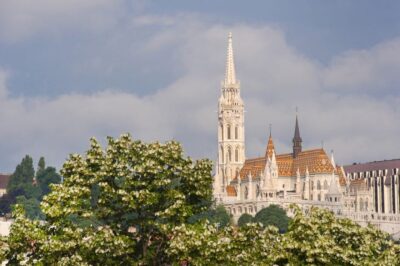
3-Hour Orientation Walking Tour of Buda and Pest
Read our review →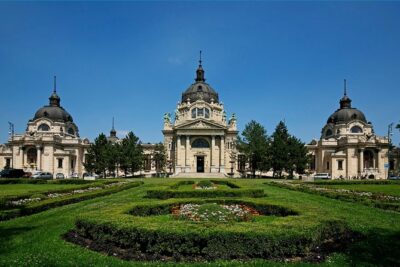
Budapest All in One Small Group Walking Tour with Strudel Stop
Read our review →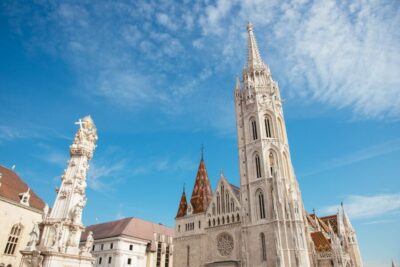
Buda Castle District Walking Tour with a Historian
Read our review →
BloodThirsty Hungary: Walking tour & Dark Historical Stories
Read our review →
Browse the lists this tour appears in