
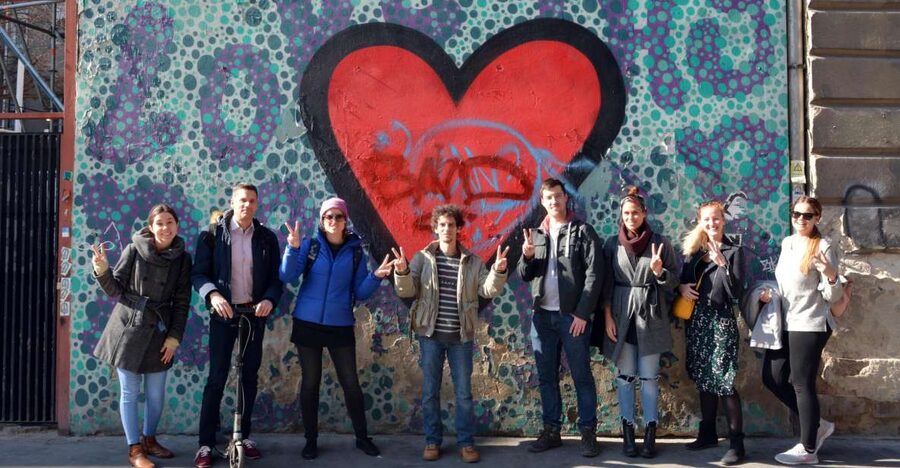
Reviewed · WALKING TOURS
Alternative Budapest Walking Tour
Budapest’s alternative side is best read on foot, one painted wall, converted building, and scruffy courtyard at a time. This small-group walk leads you away from the grand sights and into the Jewish district, where street art, ruin bars, independent shops, galleries, music spaces, and community projects tell a more current story of the city. You may also get a look at both Buda and Pest, though the tour’s strongest focus is the Pest side.
I like the small groups, capped at 10, because guides such as Ray, Petra, Anna, and Krisztián have room to answer real questions rather than deliver a speech. I also like the useful mix of art and context, from graffiti writers and murals to the Jewish quarter’s changing identity. The main drawback is price: at $67, this is not a cheap walk, and visitors mainly seeking famous monuments may find the cost hard to justify.
Key points at a glance
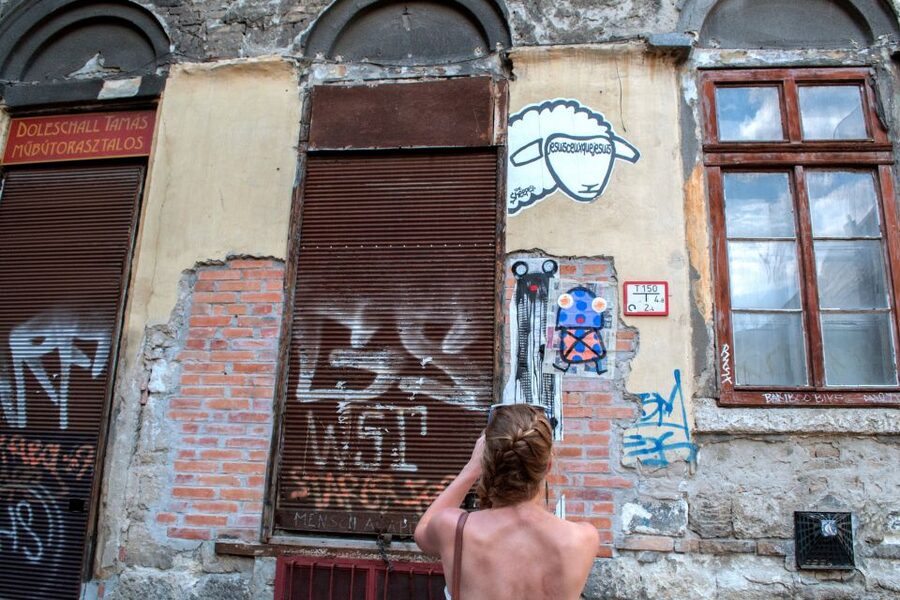
- The Jewish district is the main stage: Explore streets shaped by Jewish life, wartime damage, neglect, new cafés, bars, studios, and creative projects.
- Street art comes with context: Learn about local muralists, graffiti culture, politics, architecture, and why some paint appears on sidewalks and buildings.
- Ruin bars are more than nightlife: Stops may include places connected with community work, bicycle repair, photography, art, and music.
- A small group changes the experience: With no more than 10 people, you can ask questions and get personal suggestions for the rest of your visit.
- Guides bring different strengths: Past tours have been led by Ray, Petra, Anna, Bella, Boti, Anna, and Krisztián, among others, with an emphasis on local stories and easy conversation.
- Bring proper walking gear: Comfortable shoes and weather-ready clothes matter. The tour is not suitable for wheelchair users or people with mobility impairments.
Why Budapest’s alternative side is worth your afternoon
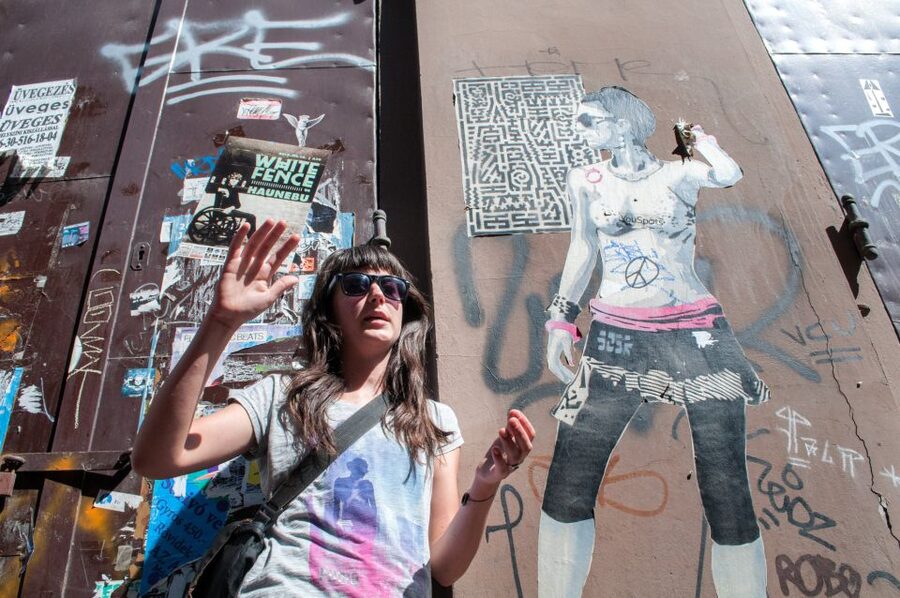
Most first visits to Budapest revolve around the Parliament, Buda Castle, thermal baths, grand boulevards, and the Danube. Those sights deserve their place. But they can leave you with a polished picture of the city, not the scruffy, inventive, sometimes argumentative Budapest that locals inhabit.
This walk shifts attention to the present and near future. You see how neglected buildings and old districts became useful spaces for artists, musicians, shopkeepers, café owners, and community groups. The tour is especially suited to you if you care about how cities change, not just how they looked in the past.
The focus is not only decoration. A mural can lead to a discussion of politics or local identity. A ruin bar can open a conversation about the reuse of abandoned buildings. A design shop can show how young Hungarian makers are presenting themselves. That combination gives the walk more value than a simple hunt for photogenic walls.
The setting changes as Budapest changes. Some places may be temporary, relocated, closed, or altered by the time you visit. That is part of the point. This is an ever-changing cultural walk, not a fixed checklist of monuments.
More walking tours in Budapest:
- Budapest: Buda Castle Walk with Saint Stephen’s Hall
★ 4.5 · 3,012 reviews - Big Bus Budapest Hop-On Hop-Off Bus and Walking Tour
★ 3.5 · 2,206 reviews - Budapest: Buda Castle District Walking Tour
★ 4.6 · 2,108 reviews
Meeting at the Lutheran Church and finding your bearings
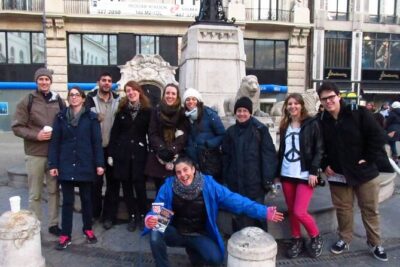
The meeting point is in front of the pale-yellow Lutheran Church, on the church steps. Allow yourself enough time to identify the building and find the guide before the start. If you have trouble locating the group, the local partner can be called for help.
The starting point is practical because the route quickly moves toward the alternative culture of central Pest. Do not expect a hotel pickup or transportation between stops. The included service is the walking tour and an English-speaking professional guide.
The group limit of 10 is one of the strongest practical features. In a large group, a street-art tour can become a follow-the-flag exercise. Here, you have a better chance of hearing the explanation beside a mural, asking why a venue matters, or stopping the guide for a restaurant or bar suggestion.
The walk lasts 2.5 hours. That is long enough to build a picture of the district without taking up an entire day, but short enough to pair with a museum, bath visit, or evening meal.
Reading the Jewish district through art and change
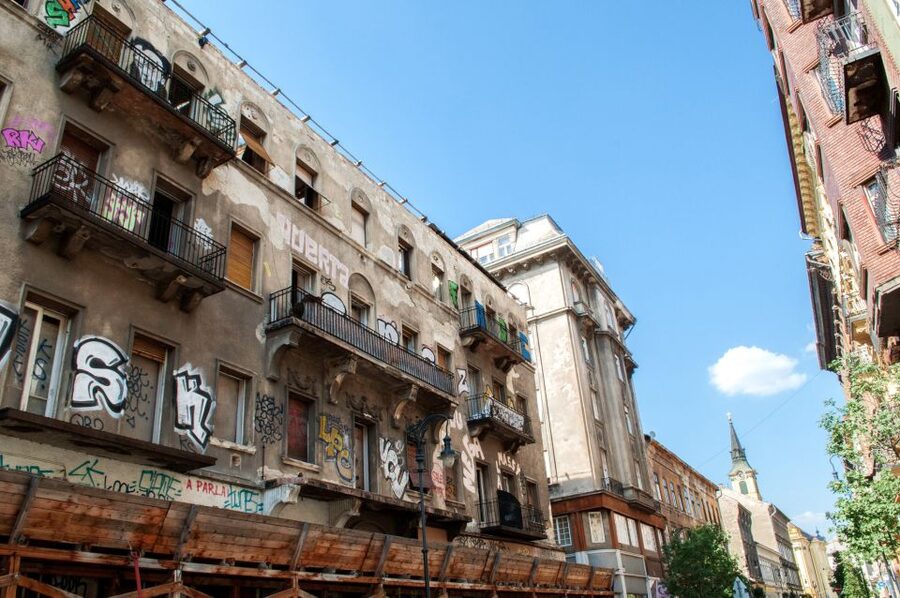
The Jewish district is the heart of the experience. You are not simply shown a few decorated walls. The guide explains how the area’s older Jewish identity connects with its newer role as one of Budapest’s most sought-after quarters for food, cafés, nightlife, design, and culture.
Expect historical landmarks that many standard city walks skip. The route can include abandoned synagogues, cultural centers, squats, galleries, and buildings whose current use says as much about Budapest as their original purpose.
This part of the tour needs a little care. The district’s creative revival is exciting, but it sits beside difficult memories and long-term questions about housing, tourism, nightlife, and preservation. The best guides connect those issues without turning the walk into a formal lecture.
Krisztián, for example, has led walks that connect the Jewish community’s story with the rise of street art, local politics, and ruin bars. Other guides, including Raymond and Anna, have been praised for making historical details easy to follow and tying them to daily life. The result should feel conversational rather than overloaded with dates.
You will also hear how the district moved from neglect toward popularity. That change helps explain the unusual mix of damaged facades, creative businesses, packed entertainment venues, and older local institutions. The contrast is one of the most useful things to notice here.
Street art beyond the photo opportunity
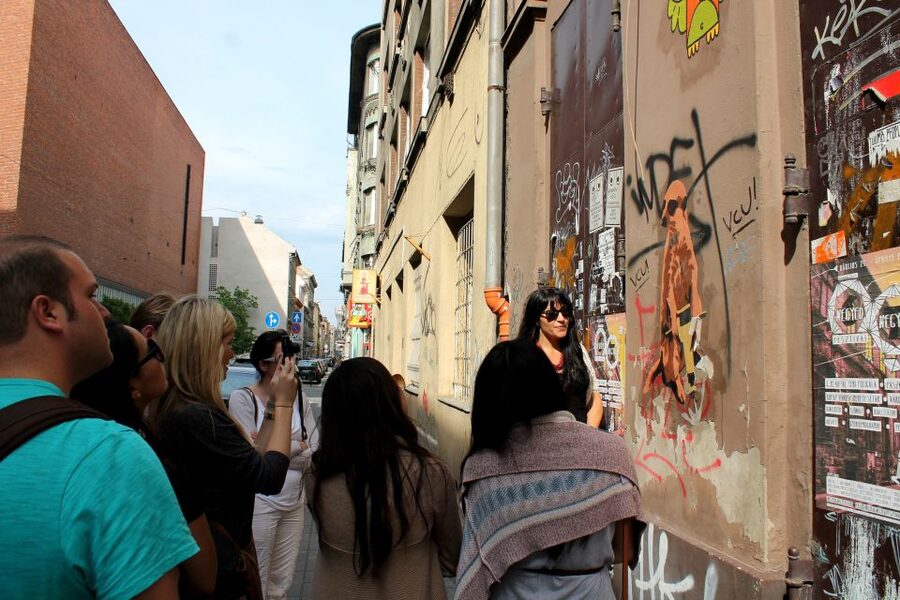
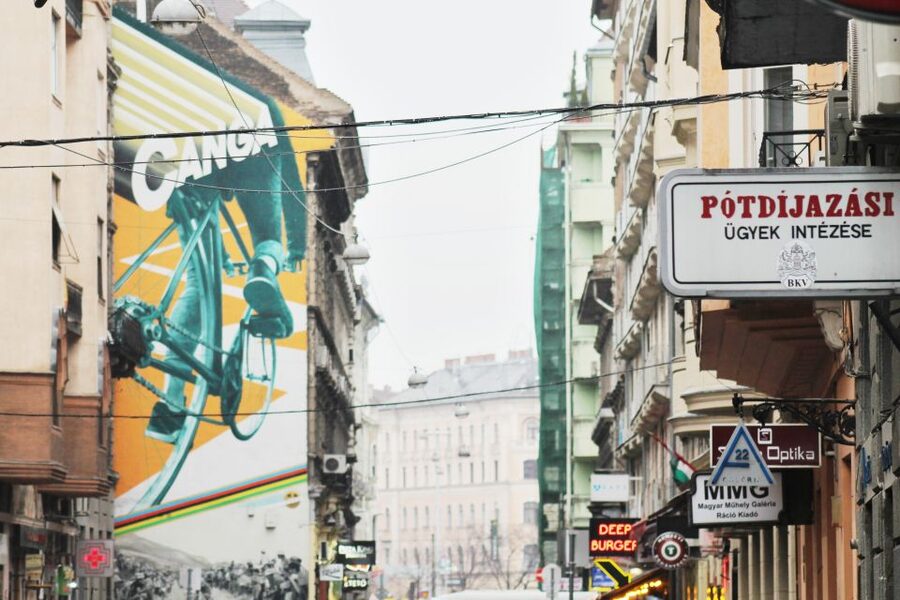
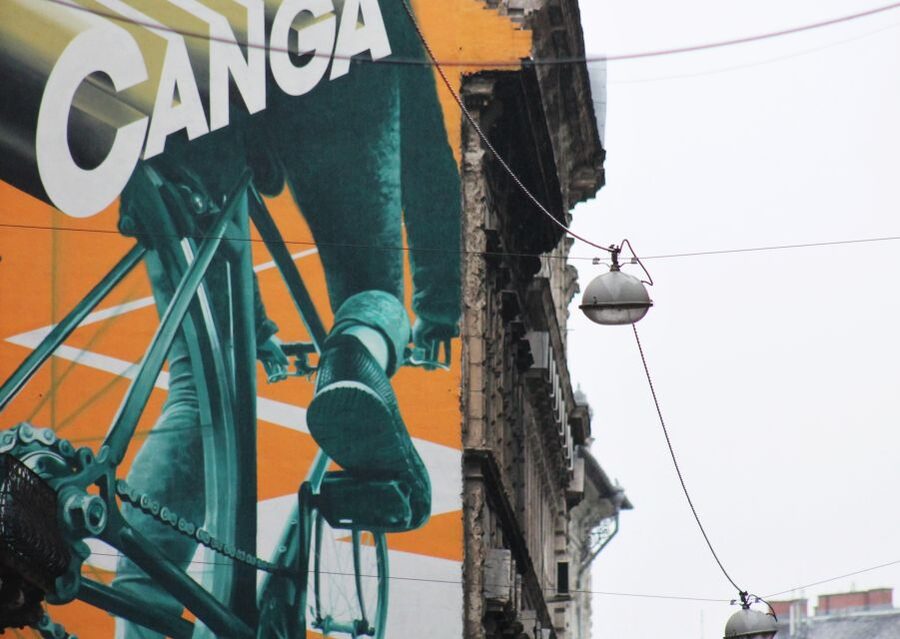
The murals are a major reason to book this walk, but the best payoff comes from learning what you are looking at. Your guide introduces local graffiti writers and street artists and explains the ideas, arguments, or neighborhood stories behind selected works.
The art changes, so no route can promise the same walls forever. You might see large murals, smaller pieces, painted surfaces, and marks that are easy to miss unless someone points them out. One past guide even explained why paint appears on sections of sidewalk and how Hungarians approach architecture differently.
That kind of detail changes your eye for the rest of the trip. After the tour, you may notice a painted shutter, a patched facade, or an odd building detail that would otherwise pass without a second thought.
The tour also avoids treating every painted wall as equally important. Budapest’s street art can be playful, political, commercial, temporary, or quietly local. A good guide helps you tell the difference and gives you a sense of the people and choices behind the work.
If you already spend a lot of time studying international street art, you may not find every image new. A past assessment made this clear: the walk is strongest for its local setting, neighborhood knowledge, and connections between art and city life, not as a specialist survey of global graffiti.
Same city, a completely different way to spend an afternoon:
- Budapest: City Highlights Cruise with Welcome Drink
★ 4.6 · 35,610 reviews - Budapest: Unlimited Prosecco, Beer and Aperol Spritz Cruise
★ 4.8 · 25,310 reviews - Budapest: Széchenyi Spa Day Ticket with Optional Upgrades
★ 4.3 · 23,911 reviews - Budapest: Nighttime or Daytime Sightseeing Cruise
★ 4.2 · 21,062 reviews
Ruin bars with a wider purpose
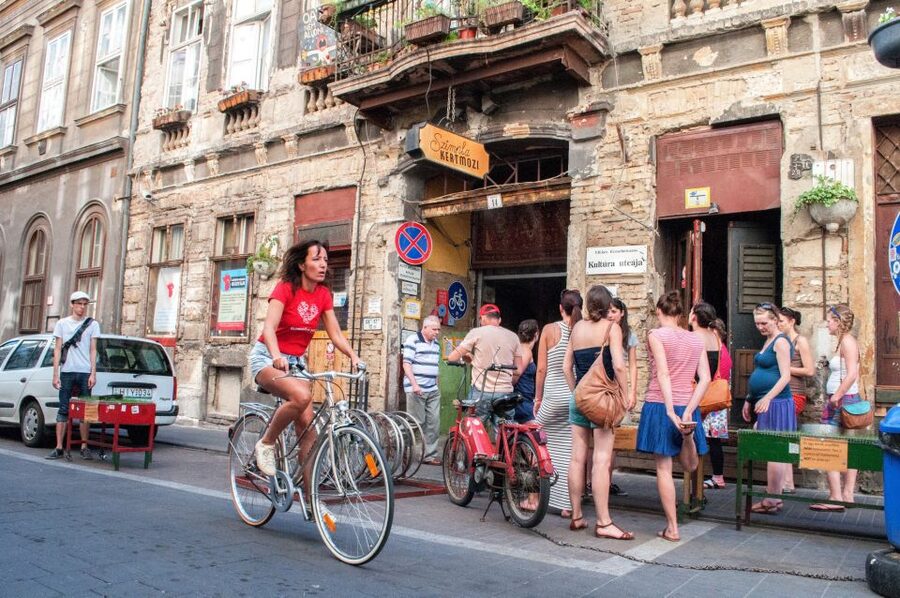
Ruin bars are likely to be the most recognizable part of the tour, especially Szimpla Kert. This famous venue is built from many rooms around a courtyard, with mismatched objects, unusual seating, and even an old Trabant adapted as part of the interior.
The useful thing is seeing the place in context. A ruin bar is not just a quirky drinking stop. These venues helped give abandoned or neglected buildings a new role in Budapest’s entertainment district. They also connect to music, art, social life, and the wider question of what happens when temporary cultural spaces become famous.
The route may include a coffee or beer stop at an art and coffee collective or a ruin bar that also functions as a community center, bicycle workshop, and analogue photography gallery. Food and drinks are not included, so budget separately for anything you order.
The stop adds welcome breathing room after walking through the district. In cold or rainy weather, an indoor pause matters. One winter group stopped for coffee and mulled wine, which shows why weather-appropriate clothing still matters even when indoor breaks are part of the rhythm.
Do not expect a full nightlife tour. The purpose is to understand the role of these places, not to spend the afternoon drinking. The exact venues can change, and some may be crowded or operating differently at the time of your visit.
Cafés, galleries, design shops, and working spaces
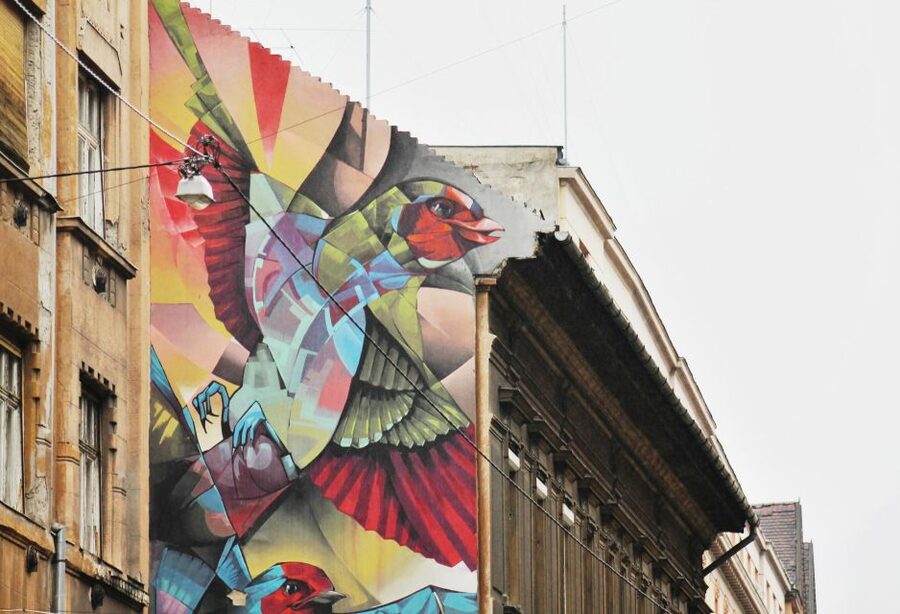
The tour’s range is broader than murals and bars. You might visit a small gallery, independent bookshop café, studio, design store, or art collective. These stops help you see how the alternative scene functions during the day, before nightlife takes over.
Printa is one specific place associated with the route. It combines eco-minded design, art, and coffee, making it a useful example of the district’s creative economy. Another past itinerary included a bookshop café, a simple stop that showed how retail and social space often overlap in this part of town.
You may also encounter hipster stores and studios that would be easy to overlook from a regular sightseeing route. The value here is not buying something. It is seeing what local makers choose to produce, display, and sell.
Because businesses and cultural spaces can change, you should treat these stops as examples rather than guaranteed fixtures. The guide’s current local knowledge is more important than any single venue. Ask for updates on cafés, galleries, music venues, and bars you can visit later.
The guide makes or breaks this walking tour
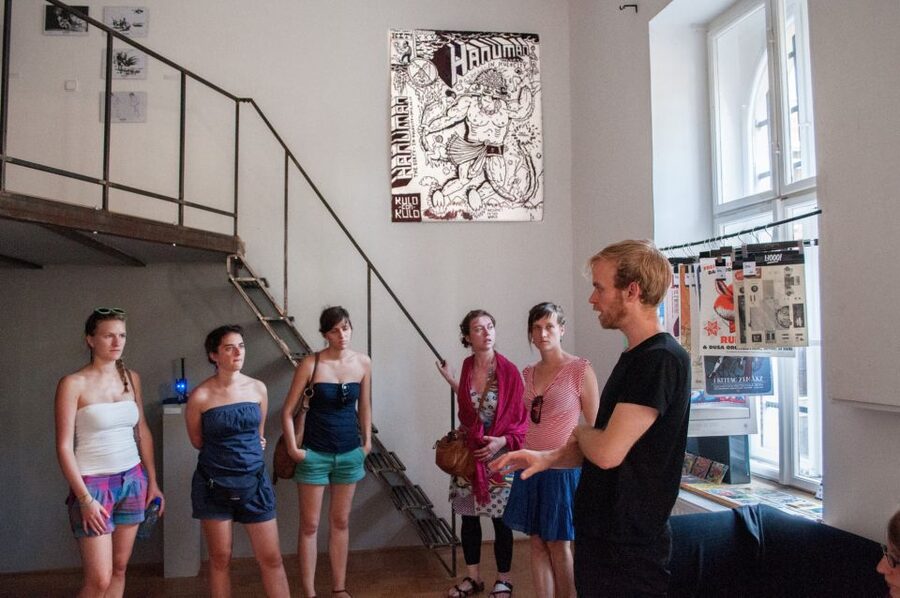
A street-art walk needs more than directions. It needs a guide who can explain local references, answer questions, and keep the group moving without flattening the subject into a list of facts.
The strongest praise for this experience centers on the guides’ warmth, clear English, local knowledge, and willingness to talk. Ray, also referred to as Raymond, has been especially effective at linking murals, buildings, shops, ruin bars, and the district’s past. Petra has been praised for her enthusiasm and personal approach. Krisztián has helped connect Jewish history, street art, politics, and nightlife.
Anna and Bella have also led tours that felt relaxed and flexible. One group found that Anna added useful stops and offered insight into everyday local life. Bella was remembered for making ordinary streets suddenly more meaningful. Boti, whose name may be spelled differently, was praised for giving a personal, information-filled walk.
Guide quality can vary from person to person, as it does on any live tour. The format gives a good guide plenty of room to shape the walk around the group, but you should not expect a scripted museum presentation or identical stops every time.
Use the final part of the tour well. Ask where to eat, which music venues are active, what bars fit your style, or which districts deserve another look. Several guides have been valued as much for practical suggestions as for the walk itself.
What the walking conditions mean for you
This is a city walk, not a bus tour. You will spend 2.5 hours outside, moving between streets and indoor stops. Wear comfortable shoes and clothes suited to the forecast. Rain, cold, or heat can change your enjoyment, even if the guide provides occasional places to sit indoors.
The activity is not suitable for people with mobility impairments or wheelchair users. The information provided does not promise step-free access, a fully accessible route, or a specific accommodation plan, so ask the operator before booking if you have any mobility concern.
The route is in central Budapest and includes both cultural stops and ordinary city streets. You should be ready for a changing pace, short explanations beside public art, and pauses inside cafés, bars, shops, or galleries when the route allows.
The walk is conducted in English. You will get the most from it if you are comfortable following a conversational explanation about history, politics, art, and local culture in English.
Is $67 a fair price?
At $67 per person, this tour costs more than a basic city orientation walk. You are paying for a small group, an English-speaking professional guide, and access to local interpretation rather than entry tickets or transportation.
There are no admission fees included, and food and drinks are extra. That makes the price easier to question if you mainly want to see murals from the street and visit ruin bars on your own.
I think the value depends on how much context you want. If you are curious about Budapest’s creative scene, want to ask many questions, and would otherwise spend time searching for independent venues, the fee can make sense. The guide saves you from piecing together the district’s story yourself.
If you are on a tight budget, compare the cost with a standard walking tour and plan to explore the Jewish district independently afterward. The experience is not essential for seeing Budapest’s headline sights. It is a specialist choice for a different view of the city.
The reserve-now-and-pay-later option and free cancellation up to 24 hours before departure make planning less risky. Still, check the available start time and leave room in your schedule for weather and walking pace.
Who should book the Alternative Budapest Walking Tour?
I would choose this walk early in a Budapest stay. The guide can point you toward cafés, shops, galleries, music spaces, and bars that shape the rest of your visit. Several past groups wished they had taken it on their first day, and that is sound advice.
It suits first-time visitors who have already seen the classic sights or want to balance them with something less formal. It also works well for returning visitors, couples, small friend groups, students of art and architecture, and anyone interested in urban change.
You may not enjoy it as much if you dislike walking, want a fixed list of monuments, or prefer interiors with guaranteed admission. The route is also a weaker fit for people with mobility limitations because accessibility is not provided.
FAQ
Where does the Alternative Budapest Walking Tour meet?
Meet your guide on the steps in front of the pale-yellow Lutheran Church.
How long does the tour last?
The tour lasts 2.5 hours.
What language is the tour conducted in?
The live tour guide speaks English.
How large is the group?
The tour is limited to 10 participants.
What areas of Budapest does the tour explore?
The experience explores Budapest’s alternative culture in both Buda and Pest, with a strong focus on the Jewish district and the surrounding creative scene.
What types of places might I visit?
You might visit street-art sites, ruin bars, live music venues, galleries, design shops, studios, cafés, cultural centers, abandoned synagogues, and community spaces.
Are food and drinks included?
No. Food and beverages are not included, and entrance fees are also excluded.
Is the tour suitable for wheelchair users?
No. The activity is not suitable for wheelchair users or people with mobility impairments.
Should you book it?
Book this tour if you want Budapest’s present-day creative life, not just its grand past. The small group, conversational guides, Jewish district context, street art, and unusual cafés and bars make it a strong way to get your bearings in the city’s alternative quarters.
Skip it if $67 feels too high for a walking route without included drinks or admissions, or if your priority is Budapest’s major historic sights. For the right audience, though, this is a useful and lively introduction to the city’s art, nightlife, and changing neighborhoods.
Just added around Budapest
- Budapest: Private, Personalized Pub Crawl, 3 drinks included★ 4.5 · 3 reviews
- Private day trip from Budapest to Bratislava, Vienna, and back★ 3.5 · 3 reviews
- Budapest: Private Adventure Sightseeing Bicycle Tour★ 4.5 · 3 reviews
- Private Danube Bend tour – full day★ 4.5 · 3 reviews
- Budapest: Guided City Walking Tour in Buda and Pest★ 5.0 · 3 reviews
- Budapest Old Jewish Quarter History Private Walking Tour★ 5.0 · 3 reviews
- Lake Balaton Full Day Private Wine Tour★ 5.0 · 3 reviews
- Budapest Urban Feast – Food Tour with Wine Tasting & Coffee House★ 4.5 · 3 reviews
Walking Tours, compared.
Budapest City Landmarks Walking Tour in 2 Hours
Read our review →
3-Hour Orientation Walking Tour of Buda and Pest
Read our review →
Budapest All in One Small Group Walking Tour with Strudel Stop
Read our review →
Buda Castle District Walking Tour with a Historian
Read our review →
BloodThirsty Hungary: Walking tour & Dark Historical Stories
Read our review →
Browse the lists this tour appears in