
Reviewed · BUDA CASTLE DISTRICT TOURS
Budapest Castle District Walking Tour
Budapest’s Castle District is more than a palace and a pretty overlook. It is a hilltop record of royal power, Ottoman rule, Jewish life, war, reconstruction, and modern Hungarian government. This tour helps you read that story as you walk, from Batthyány Square on the Danube to the terraces above the river.
I like the local guides, who are Budapest-born and bring practical knowledge of the city along with the history. I also like the range of subjects: Matthias Church and Buda Castle are expected, but the medieval Jewish prayer house, wartime destruction, underground defenses, Hungarian hussars, and even public art give the walk more texture.
The main drawback is the climb. You should expect a 10-minute uphill walk, flights of stairs, and plenty of standing. The tour does not enter Matthias Church or any museum, and the final castle stop can feel short if you want lots of time for photographs.
Key points to know before you go
- The route climbs from Batthyány Square to Castle Hill, so wear supportive shoes and be ready for stairs.
- The tour covers more than the palace, including Jewish, Ottoman, wartime, royal, and everyday Hungarian stories.
- Matthias Church and the Hospital in the Rock are viewed from outside, with no admission included.
- Fisherman’s Bastion offers a free viewpoint, although crowds can make the terrace hard to enjoy.
- Guides set the tone, with Dora, Rita, Gary, Zsófia, Sophia, and others praised for clear stories, humor, and good pacing.
- The $3.62 price is a booking fee, while guides depend on donations at the end.
Starting at Batthyány Square beside the Danube
The meeting point is Batthyány Square, at Batthyány tér 1. Look for the metro exit in the park, not simply the square in general. This matters because the area has several exits and open spaces, and arriving at the wrong one could leave you searching for the group.
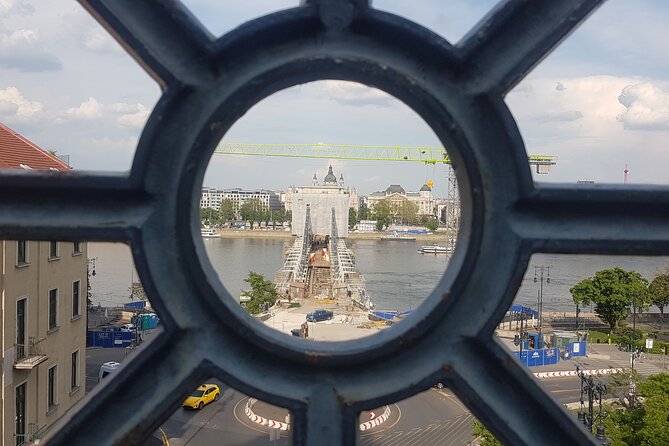
The starting point gives you an immediate visual lesson in Budapest. From the Buda-side square, you are near the Danube and looking toward the grand buildings of Pest. Then the route turns uphill toward the Castle District, changing the feel of the city from riverfront Budapest to medieval Buda.
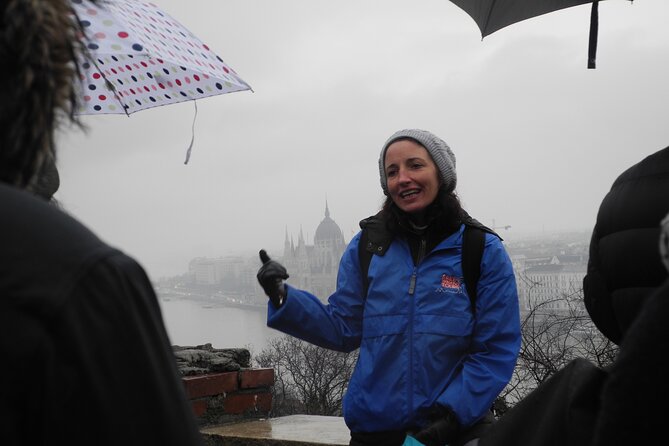
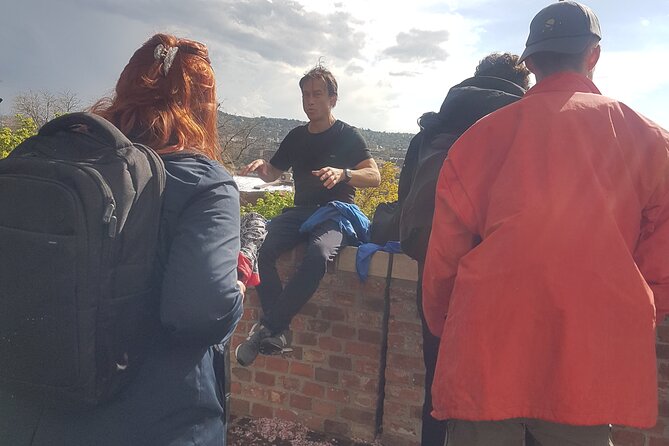
Your guide introduces the plan before the climb. Guides are local and English-speaking, and the group can include up to 30 people. That is not an especially tiny group, but the walking format keeps the experience moving. The best guides use pauses well, giving you time to catch your breath while continuing the story.
The uphill section is not a technical hike, but it is real exercise. Several people have found the walk manageable because guides stop along the way, seek shade when possible, and avoid leaving slower walkers behind. Still, anyone with movement concerns should take the physical demands seriously.
More ways to see the Castle District:
- Budapest: Buda Castle Cave Tour
★ 4.7 · 5,677 reviews - Budapest: Buda Castle District Vampires and Myths Night Tour
★ 4.6 · 3,830 reviews - Budapest: Buda Castle Walk with Saint Stephen’s Hall
★ 4.5 · 3,012 reviews
Matthias Church and eight centuries of changing rule
Matthias Church is one of the Castle District’s key landmarks, but this tour does not take you inside. Instead, you learn how the area changed through wars, occupations, rebuilding, and shifts in population while standing among the historic buildings.
The useful part here is the social context. The guide discusses German, Jewish, and Hungarian communities and their daily lives in the district. That moves the tour beyond kings and military campaigns. You begin to picture the Castle Hill as a lived-in neighborhood, not just a collection of monuments.
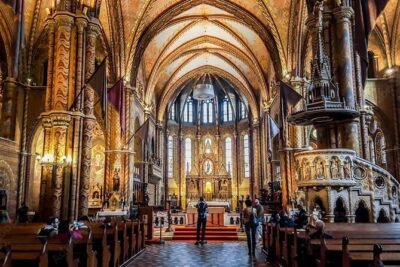
The church itself is visually striking, and you will have time to see its exterior and surrounding architecture. If going inside is important to you, plan a separate visit. This walk gives you the setting and the story, but it is not a substitute for an interior church visit.
I would pay attention to the guide’s explanation of the district’s repeated destruction and rebuilding. Buda’s appearance can feel old and polished today, yet much of what you see has been repaired or reconstructed after serious damage. That tension between old design and newer fabric is one of the most important things to understand about Castle Hill.
Fisherman’s Bastion and the best free view

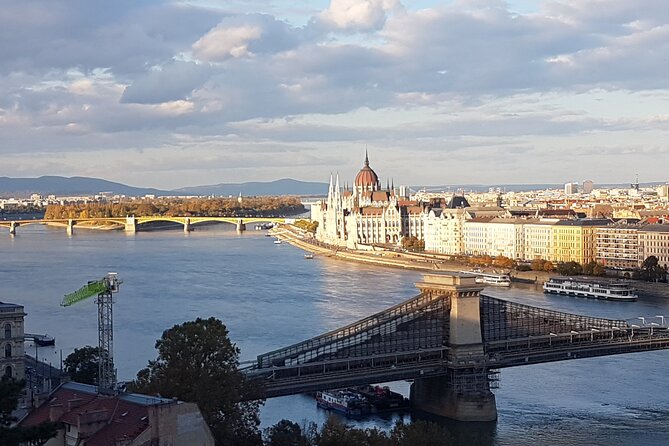
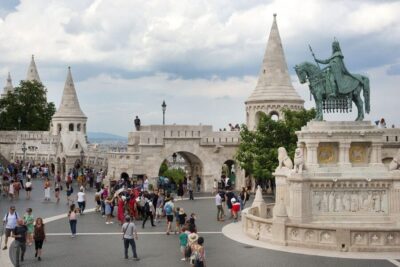
Fisherman’s Bastion is the tour’s big picture stop. Its terraces look across the Danube toward Pest, with some of the city’s most recognizable views. You learn about the connection between the bastion and Walt Disney, as well as Hungarian symbols involving crosses with one, two, or three bars.
The tour also points out how to enjoy the view without paying for every terrace. That is a useful detail because parts of Fisherman’s Bastion may have access charges, while other viewpoints are free. Your guide helps you understand where to stand for the panorama without turning the stop into a ticket-buying exercise.
Crowds are the catch. Fisherman’s Bastion is one of Budapest’s most visited sights, and busy periods can make the terraces feel tight. It may be difficult to linger quietly or frame a clean photograph. The views remain worthwhile, but keep your expectations realistic, especially in warm weather or at popular times of day.
This is also one place where a guide’s delivery makes a clear difference. A lively guide can use the crowds as part of the story and keep the group focused. A slower or more monotone presentation may be harder to follow when people are moving around you.
A medieval Jewish prayer house in a residential corner
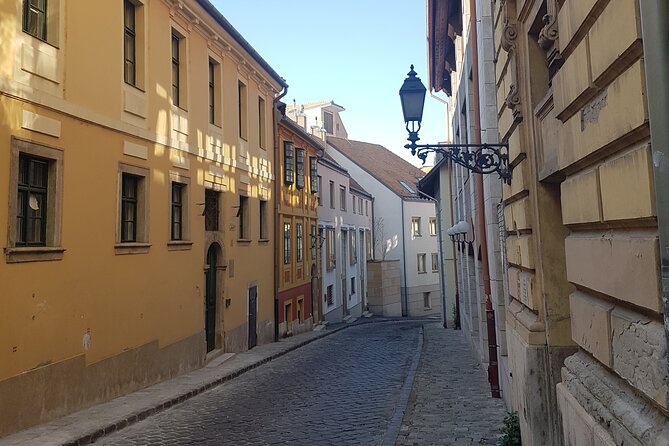
The medieval Jewish prayer house offers a quieter and less expected stop. Rather than staying with the district’s royal image, the route points to Jewish life on Castle Hill and the baroque residential buildings around it.
This is the sort of brief stop that gives the tour its value. You are not only checking off major sights. You are learning that the hill contained homes, religious spaces, and communities with their own routines. The surrounding baroque buildings also show how the district changed over time and how domestic architecture sits beside grand public monuments.
The stop lasts about 10 minutes, so do not expect a full museum-style presentation. Its role is to add a missing part of the district’s story. I find that particularly useful if you are seeing Buda Castle for the first time and want context for the people who lived here, not just the rulers who occupied the palace.
More walking tours in Budapest:
- Big Bus Budapest Hop-On Hop-Off Bus and Walking Tour
★ 3.5 · 2,206 reviews - Budapest: Buda Castle District Walking Tour
★ 4.6 · 2,108 reviews - Budapest City Landmarks Walking Tour in 2 Hours
★ 5.0 · 2,048 reviews - 3-Hour Orientation Walking Tour of Buda and Pest
★ 4.8 · 1,834 reviews
National Archives, wartime damage, and Gül Baba
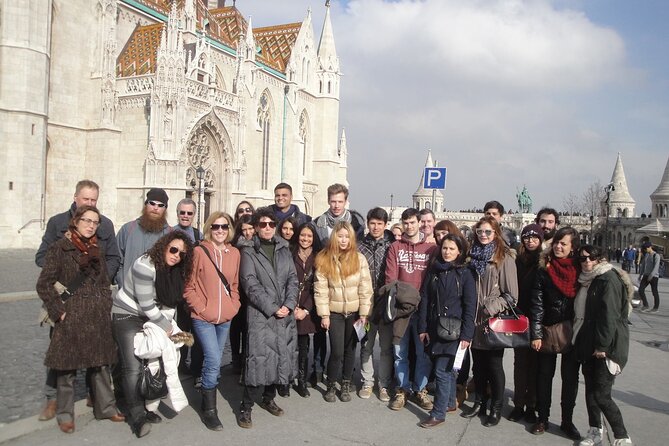
Near the National Archives of Hungary, the guide explains the destruction caused by the Second World War and identifies the area connected with the Nazi stronghold. This section helps you understand why the Castle District cannot be read as a perfectly preserved medieval quarter.
The tour also touches on social geography, including where wealthy Hungarians lived and the Muslim pilgrimage site associated with Gül Baba, an Ottoman Turkish monk and soldier. These subjects bring together several periods that are often presented separately: royal Hungary, Ottoman Buda, modern class divisions, and the violence of the twentieth century.
That broad time span is one of the walk’s strengths. You are not given only a single national story. The guide connects Hungarian, German, Jewish, Ottoman, and wartime chapters, helping you see how power changed hands and how the district absorbed those changes.
Expect another exterior-focused stop. The value comes from the explanation and the surrounding streets, not from entering an archive or special collection. If you prefer long visits inside historic buildings, you may want to add those independently.
Underground Castle Hill and the Hospital in the Rock
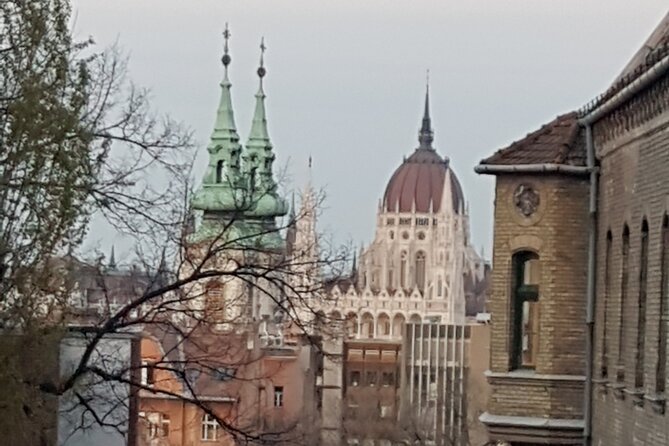
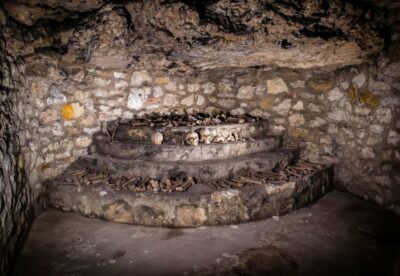
The Hospital in the Rock Nuclear Bunker Museum is introduced from outside. You learn about the underground world beneath Castle Hill, including tunnels and labyrinths used in defense over the centuries.
The stop is a good reminder that the district has two levels. Above ground are churches, palaces, terraces, and residential streets. Below are caves, passages, shelters, and military spaces shaped by the hill’s limestone and strategic position. The tour gives you the story, but it does not include a museum visit or admission ticket.
If the underground side of Buda interests you, keep the museum in mind for a separate visit. This tour will not provide the full bunker experience. It simply explains why the hill’s hidden spaces mattered and how they affected life during conflict.
This part also includes lighter subjects. You may see some of Budapest’s playful public statues and hear about the hussars, the famously bold light cavalry fighters often linked with Hungarian identity. That mix of serious wartime history and humorous public art keeps the two-hour walk from becoming a nonstop parade of dates.
Buda Castle, royal power, and modern government
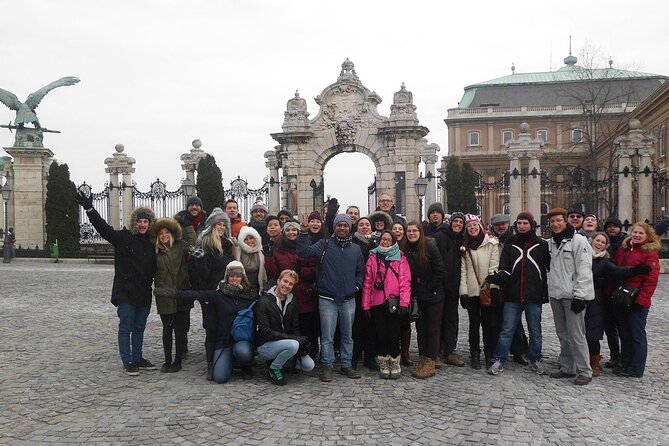
Buda Castle is the grand arrival point. The massive palace complex once served as a residence for Hungarian kings and has been rebuilt many times after war damage. The guide explains that layered past while pointing out the mythical bird of the Hungarians and locations connected with the offices of the president and prime ministers.
The castle area is visually imposing, but do not expect a long palace visit during this tour. The stop is listed at about 20 minutes, and the route still needs to reach its final viewpoint. If you want interior rooms, exhibitions, or a slow architectural study, set aside additional time after the walk.
One practical issue is pacing. A guide may need to balance the castle explanation with the group’s schedule, and some people have found the time here a little rushed for photographs. I would take quick pictures as the group arrives, then listen for the main explanation before the tour moves on.
The castle also works well as a final history lesson because it brings together so many themes from earlier stops: royal residence, military target, reconstruction project, state power, and tourist viewpoint. By this point, you should have a much clearer sense of why Castle Hill matters to Budapest.
The Prince Eugene statue and the final Danube panorama
The tour ends at the equestrian statue of Prince Eugene of Savoy. From the terrace, you get another broad view across the Danube toward Pest. This is the place to ask your remaining questions and collect practical suggestions for exploring Budapest afterward.
Some guides use the final stop for playful questions about Castle Hill landmarks and Hungarian life. That fits the tone of the best tours, which mix serious history with humor and conversation. Guides such as Rita, Dora, Gary, Zsófia, Sophia, and Valeria have been praised for keeping explanations clear, friendly, and engaging. Other guides may be more restrained, so your experience can depend partly on personal style.
The end point is about a 30-minute walk from the original meeting place. That is useful to know when planning the rest of your day. You finish high on the Buda side rather than returning to Batthyány Square, so you can continue sightseeing from there or allow time to walk back.
How the guides shape the experience
The strongest part of this tour is the human delivery. Guides have been singled out for different strengths: Dora for warmth and answers to questions, Rita for humor and energy, Gary for a relaxed but lively approach, Zsófia for detailed historical explanation, and Sophia for patience and clear communication.
The tour can also include Hungarian words, street art, politics, everyday life, and odd details that are easy to miss when walking alone. That variety helps teenagers and adults stay interested, especially during the climb.
Still, no guide suits every listener. A dry delivery can feel long on a hot day, and one guide may speak faster than you can comfortably follow. If you have trouble hearing, stay close to the guide and ask for a repeat. The open streets, wind, traffic, and crowds around Fisherman’s Bastion can make sound less clear.
The guides generally allow rest stops, look for shade, and keep an eye on the group. That helps, but you should still bring water and eat beforehand. One person became unwell near the end after cold weather, little food, and possible low blood pressure. That is a reminder to treat this as active sightseeing, not a gentle stroll.
Price, donations, and what you actually receive
The listed cost is $3.62 per person, but that amount is a booking fee for administration and does not pay the guide. The guides depend entirely on donations at the end, and you choose the amount.
That makes the tour excellent value if you want a guided introduction without paying for entry tickets. Every listed stop is free to access as part of the walk, but the tour does not include admission to Matthias Church, the Hospital in the Rock, or other paid attractions.
I would think of the price as a reservation charge, not the full cost of the experience. Bring enough cash or another suitable way to leave a tip if you feel the guide earned one. The donation model also means the final value depends heavily on the guide’s preparation, storytelling, and ability to manage the group.
The tour is often booked about 16 days ahead. That suggests you should reserve early if your Budapest dates are fixed, especially since the maximum group size is 30 people.
Who should book this Castle District walk
I would recommend it for a first day in Budapest, especially if you want to understand the Buda side before returning on your own. It gives you orientation, major viewpoints, historical context, and a useful list of places to revisit.
It suits you best if you:
- Enjoy history explained through buildings and streets
- Want a local English-speaking guide
- Can manage uphill walking and stairs
- Prefer a broad overview to long museum visits
- Like asking questions during a guided walk
- Want a low-cost way to see the Castle District
It is less suitable if you need step-free access, want to spend a long time inside Matthias Church, or prefer a slow photography tour. The route is not wheelchair accessible, and the physical demands are clearly part of the experience.
Wear shoes with a good grip, carry water, and check the weather. Guides can find shade and pause for rest, but hot sun, cold wind, or rain will affect your comfort. The activity requires good weather, and a cancellation for poor conditions comes with the choice of another date or a full refund.
Should you book the Budapest Castle District Walking Tour?
Book it if you want a strong introduction to Buda’s hilltop district at a very low upfront price. The best guides turn a demanding climb into an easy-to-follow story about kings, Jewish residents, Ottoman rule, war, bunkers, public art, and modern Hungary.
Go in knowing what it is not. You will not enter Matthias Church or the Hospital in the Rock, and you may have limited time at Buda Castle for photos. But if you value clear local history, free viewpoints, and a route that shows more than the headline sights, this is a sensible first look at Castle Hill.
FAQ
Where does the Budapest Castle District Walking Tour begin?
It begins at Batthyány tér 1 in Budapest, at the Batthyány Square metro exit in the park.
Where does the tour end?
The tour ends at the Statue of Prince Eugene of Savoy in Budapest, 1013 Hungary. The conclusion point is about a 30-minute walk from the starting location.
How long does the tour last?
The walking tour lasts approximately two hours.
What language is the tour offered in?
The tour is offered in English.
Does the tour enter Matthias Church?
No. Matthias Church is included as an exterior stop, and the tour does not enter the church.
Is admission to the listed attractions included?
The walking stops have no admission charge included. The tour introduces places such as the Hospital in the Rock Nuclear Bunker Museum, but it does not include entry to the museum.
How much uphill walking is involved?
You should be able to complete a 10-minute uphill walk and manage flights of stairs. A moderate level of physical fitness is recommended.
How much does the tour cost, and should I tip the guide?
The listed price is $3.62 per person, covering the booking fee and administration. The fee does not contribute to the guide’s earnings, so guides depend on donations at the end, with the amount left to you.
Just added around Budapest
- Budapest: Private, Personalized Pub Crawl, 3 drinks included★ 4.5 · 3 reviews
- Private day trip from Budapest to Bratislava, Vienna, and back★ 3.5 · 3 reviews
- Budapest: Private Adventure Sightseeing Bicycle Tour★ 4.5 · 3 reviews
- Private Danube Bend tour – full day★ 4.5 · 3 reviews
- Budapest: Guided City Walking Tour in Buda and Pest★ 5.0 · 3 reviews
- Budapest Old Jewish Quarter History Private Walking Tour★ 5.0 · 3 reviews
- Lake Balaton Full Day Private Wine Tour★ 5.0 · 3 reviews
- Budapest Urban Feast – Food Tour with Wine Tasting & Coffee House★ 4.5 · 3 reviews
Buda Castle District Tours, compared.

Buda Castle District Vampires and Myths Night Tour
Read our review →

Buda Castle District Dark History, Legends and Vampire Night Tour
Read our review →
Buda Castle District Walking Tour with a Historian
Read our review →
Browse the lists this tour appears in