Reviewed · PRIVATE
Private Art Nouveau Tour Budapest
Budapest’s Art Nouveau is not a single look. It shifts from ornate European Secession to distinctly Hungarian designs covered in colorful tiles, floral forms, and castle-like details. This private tour brings that story to life inside places such as the Parisian Passage Café and Liszt Academy, then links the buildings to Hungary’s changing artistic identity.
I like the private format and the guide’s freedom to adjust the pace. I also like the complimentary coffee, since it gives you time to sit in an Art Nouveau interior instead of spending four hours staring upward. The main drawback is that some visits are brief, public transportation tickets are extra, and the Museum of Applied Arts can currently be seen only from the outside because of renovation.
Key points to know before booking
- A private art historian leads your group: You receive personal attention rather than a set commentary for a large crowd.
- The Parisian Passage Café supplies the memorable coffee stop: Its recently renovated interior is part of the architectural experience.
- Lechner and Miksa Róth get special attention: You see how Hungarian Secession developed its own visual language.
- Pickup is offered from hotels and ports: This is useful if you are arriving by river ship or want to avoid finding a city-center meeting point.
- The tour mixes interiors and exteriors: The Liszt Academy and café offer indoor detail, while the Museum of Applied Arts is currently an exterior-only stop.
- The schedule can bend to your needs: Guides have adjusted routes for limited walking ability and added places such as the Four Seasons Hotel or an art museum when suitable.
Why Budapest’s Art Nouveau deserves a focused tour
Budapest is often introduced through grand boulevards, thermal baths, and the Parliament. Those sights matter, but Art Nouveau gives you a more personal view of the city. Look closely and you find ceramic roofs, patterned mosaics, animal forms, curved ironwork, and façades that seem to borrow from folk art, churches, and fairy-tale castles.
A general city tour may point out one or two of these buildings and move on. Here, the guide’s job is to explain the ideas behind them. You learn how European Art Nouveau reached Budapest, how the local Secession movement developed, and how architects such as Ödön Lechner gave Hungarian buildings their own character.
The subject also reaches beyond decoration. The buildings reflect a period when Hungary was eager to express a national identity through music, design, commerce, and public institutions. That is why Liszt Academy, the Postatakarékpénztár, and the Museum of Applied Arts belong in the same conversation, even though they look quite different.
The experience lasts about four hours. That is long enough to connect the stops without turning the outing into a full-day commitment. Since only your group participates, you can ask why a particular tile pattern matters, pause for photographs, or request a shorter walking route.
A few more Budapest half-days to weigh up
- Private Budapest TukTuk Tour: Custom Route, Hotel Pickup
★ 5.0 · 1,307 reviews - Budapest Essentials Private Tour Highlights and Hidden Gems
★ 5.0 · 861 reviews - Budapest Private Tuk Tuk Half-Day Tour
★ 5.0 · 606 reviews
Starting with the Parisian Passage Café
The Parisian Passage Café is an excellent opening or early stop because it makes the style easy to grasp. The recently renovated building has an elaborate passage with a dramatic interior, and the tour takes you through it rather than leaving you to study the exterior from the pavement.
This is also where the included coffee or tea earns its place. You can sit in an Art Nouveau setting and look at the surrounding details with time to spare. A café break sounds simple, but it changes the rhythm of the tour. You are not rushing from façade to façade, and the guide can use the room itself to explain how architecture shaped social life.
The stop is listed at about 30 minutes. Admission is included, but the tour information does not promise a reserved table or a specific drink beyond coffee and tea. If the café is the part you are most excited about, ask your guide how much time is available for sitting and looking around.
Liszt Academy and the art of Hungarian music
The Liszt Academy of Music brings together two of Budapest’s great cultural interests: music and architecture. Located in the city center, the building is described as a major example of the international Secession style, with mosaics and other interior details that are worth seeing inside the hall.
You have roughly 15 minutes here, so expect a focused look rather than a full architectural visit. The short stop works best when the guide directs your eye to the main elements instead of trying to cover every corner.
This is one of the places where an art historian guide adds real value. A mosaic can be lovely on its own, but the explanation helps you connect the decoration to the academy’s purpose and to the wider cultural ambitions of Budapest at the time. The tour is not just a parade of pretty buildings. It asks you to notice how a building’s function affects its design.
Access inside can depend on circumstances at the time of your visit. The supplied details say the group will venture inside the hall, but no promise is made about a concert, rehearsal, or complete building access.
Váci Street, where shopping meets urban palaces
Váci Street is Budapest’s best-known historic shopping street, but this tour uses it for more than retail browsing. During the walk, you stop at several urban palaces and examine their Art Nouveau details and architectural background.
The planned time here is about 30 minutes. That makes it a useful contrast to the grand interiors. Along Váci Street, you see how the style appeared in buildings meant for urban life, commerce, and residence rather than only in major cultural institutions.
I would keep your eyes above shop level. Street activity can pull your attention downward, while the details that matter may be around entrances, upper windows, balconies, and decorative panels. The guide helps you separate original design from later changes, though the available information does not specify how much restoration history is covered at each building.
This part includes walking on city streets, so smart casual clothing and comfortable shoes make sense. The tour operates in all weather, and Budapest’s weather can change quickly. A light rain layer is more useful than dressing only for the photographs.
Same city, a completely different way to spend an afternoon:
- Budapest: City Highlights Cruise with Welcome Drink
★ 4.6 · 35,610 reviews - Budapest: Unlimited Prosecco, Beer and Aperol Spritz Cruise
★ 4.8 · 25,310 reviews - Budapest: Széchenyi Spa Day Ticket with Optional Upgrades
★ 4.3 · 23,911 reviews - Budapest: Nighttime or Daytime Sightseeing Cruise
★ 4.2 · 21,062 reviews
Török Bankház and the move toward Art Deco
The Török Bankház building offers a short but important lesson. Its role is to show the transition between Art Nouveau and Art Deco, two pre-war styles that are often treated as completely separate.
You spend about 15 minutes here, with special attention to the work of Miksa Róth. The stop is valuable because it prevents the tour from becoming a simple hunt for the most decorative façade. Architecture changes by degrees. Geometry, ornament, materials, and ideas begin to shift, and this building helps you see that movement.
If you already know Art Nouveau well, this may be one of the more useful stops. It gives you a comparison point. If you are new to the subject, do not worry about remembering every style label. Focus on the guide’s explanation of what is changing and why.
Postatakarékpénztár and Ödön Lechner’s Hungarian style
The Postatakarékpénztár is one of the tour’s main architectural rewards. It represents the Hungarian national branch of the Secession movement and is associated with Ödön Lechner, one of the key names in Budapest’s Art Nouveau story.
The building is described as having marvelous architecture and enchanted, castle-like details. That description points you toward the visual effect: this is not restrained modernism. The design uses decorative forms to create a strong local identity, with a look that can feel more like a fairy-tale structure than a conventional bank.
You have about 15 minutes at this stop. That is enough for a guided explanation and photographs, but not for a leisurely study of every detail. If you are a serious architecture enthusiast, ask your guide to point out the features that make the building specifically Hungarian rather than simply European Art Nouveau.
This is also where the private format matters. A group of 15 can technically fit the advertised capacity, but the experience will feel most personal with a smaller party. With your own guide, you can ask about Lechner’s influences and compare this building with the Liszt Academy or the Museum of Applied Arts.
House of Hungarian Art Nouveau
The House of Hungarian Art Nouveau is dedicated to the Secession period in Hungarian architecture. The visit offers a closer look at the Hungarian national style and the influences that shaped it.
The scheduled stop is about 15 minutes. It is short, but it helps organize what you have already seen. Rather than treating each building as an isolated object, the guide can use this site to explain the movement as a whole.
The word Hungarian matters here. Budapest’s designers were part of an international artistic current, yet they were also looking for forms that expressed local culture. That tension is one of the most interesting themes in the tour. You see how architects could draw from international ideas while developing a style that felt rooted in Hungary.
The exact access arrangement is not described in detail, so do not assume that every room or display will be open. The value lies in the guided context as much as in the building itself.
Budapest Zoo and the wider range of Secession design
The tour also includes a look at buildings connected with Budapest Zoo. The purpose is to show the range of Art Nouveau and Secession architecture, not simply another grand city-center façade.
This is a useful reminder that the style reached many kinds of places. Zoo buildings could use playful, organic, or storybook forms in ways that a bank or academy could not. The stop broadens your understanding of the movement and keeps the tour from focusing only on formal institutions.
The provided schedule does not give a separate duration for this visit. Treat it as part of the wider route rather than a guaranteed extended indoor tour. Ask your guide how it fits into the day, especially if you have limited time or walking ability.
Museum of Applied Arts, seen from the street
The Museum of Applied Arts is a major example of the Hungarian national style of Secession. Its architecture is part of the lesson, particularly the design features associated with the movement’s distinctive Hungarian expression.
At present, renovation limits the visit to the façade. That is an important practical detail. You will not be touring the museum’s interior galleries during this experience, so book this stop for the exterior architecture and the guide’s explanation, not for an art collection visit.
The scheduled time is about 15 minutes. Even with the building closed for interior exploration, the stop remains worthwhile for anyone interested in Lechner’s work and Hungarian decorative design. Just keep your expectations clear. If seeing the museum’s collection is a priority, you will need a separate plan for a future opening.
What the private guide adds
The strongest part of this experience is the guide. The operator uses professional art historians, and the named guides in the supplied material include Szőke Zsuzsanna, also called Suzy, along with Michael and Bogata.
Suzy is described as tying architecture to Hungarian history, art, and culture. One account also credits her with arranging access to places not usually open to the public and adding a side visit to an art museum. Those extras are not guaranteed, but they show the advantage of a private arrangement: the route can respond to your interests and the day’s possibilities.
Another guide adapted the route for a husband with limited walking ability by using taxis and public transportation. This does not mean transport is included. It means the guide may be able to adjust the plan. Public transportation tickets remain your responsibility, and any taxi cost should be clarified before you use one.
A less positive experience involved difficulty confirming the meeting point between the booking service and the guide, nearly causing a missed tour. Since pickup is offered from any specified hotel or port, give exact details and confirm them directly when possible. This is especially important for a cruise arrival, when waiting at the wrong pier can waste the entire morning.
Price, group size, and practical value
The price is $243.53 per group of up to 15 people. For a full group, that works out to about $16.24 per person, which is strong value for a four-hour private tour with an art historian, pickup and drop-off, and coffee or tea included.
For two people, the per-person cost is much higher. That does not make it poor value, but you are paying for privacy, flexibility, and specialist attention rather than a low-cost group outing. The price makes the most sense for a family, a group of friends, or anyone who wants to shape the discussion around a particular interest.
Admission is listed as free at the scheduled stops. Public transportation tickets are not included. The experience is offered in English, uses a mobile ticket, and can collect you from a hotel or port you specify.
Smart casual dress is requested. The tour runs in all weather, and most people can participate, but the route includes city walking and several outdoor looks at buildings. Service animals are allowed, and the route is near public transportation.
You can cancel for a full refund up to 24 hours before the start time. Changes made inside that 24-hour window are not accepted, and the local time in Budapest controls the cut-off.
Who should book this Budapest architecture tour
I would choose this tour if you enjoy architecture but want more than a list of dates and names. It suits first-time Budapest visitors who want a new way to read the city, as well as repeat visitors who have already seen the major sights.
It is particularly good for:
- Couples or families who prefer a private pace
- People interested in design, music, urban history, or photography
- Groups arriving at a hotel or river port
- Anyone who wants a guide to connect separate buildings into one clear story
- Visitors who need a route adjusted for walking comfort
It is less suitable if you want a museum-heavy experience, a fixed schedule with guaranteed access to every interior, or a low-cost tour for one person. The Museum of Applied Arts is exterior-only during renovation, and the shorter stops leave little time for lingering.
Should you book it?
Book this private tour if Budapest’s buildings catch your eye and you want to understand what you are seeing. The combination of the Parisian Passage Café, Liszt Academy, Lechner’s Postatakarékpénztár, Miksa Róth’s work, and the café break gives the morning or afternoon a clear shape.
Before confirming, send precise hotel or port pickup details and ask about the current interior access at each stop. If you can fill much of the 15-person capacity, the price is especially attractive. If you are a pair with a serious interest in architecture, the personal guide and flexible route can still justify the higher cost.
FAQ
How long does the private Art Nouveau tour last?
The experience lasts approximately four hours.
How much does the tour cost?
The listed price is $243.53 per group, with up to 15 people included.
Is hotel or port pickup available?
Yes. Pickup and drop-off are offered from hotels or ports that you specify when arranging the experience.
Is the tour offered in English?
Yes. English is the listed language.
Is coffee included?
Yes. Coffee and/or tea is included, with time to enjoy it in an Art Nouveau setting.
Are public transportation tickets included?
No. Public transportation tickets are not included in the price.
Can I cancel for a full refund?
Yes. You can cancel at least 24 hours before the experience start time for a full refund. Cancellations or changes made less than 24 hours before the start time are not accepted for a refund.
Just added around Budapest
- Budapest: Private, Personalized Pub Crawl, 3 drinks included★ 4.5 · 3 reviews
- Private day trip from Budapest to Bratislava, Vienna, and back★ 3.5 · 3 reviews
- Budapest: Private Adventure Sightseeing Bicycle Tour★ 4.5 · 3 reviews
- Private Danube Bend tour – full day★ 4.5 · 3 reviews
- Budapest: Guided City Walking Tour in Buda and Pest★ 5.0 · 3 reviews
- Budapest Old Jewish Quarter History Private Walking Tour★ 5.0 · 3 reviews
- Lake Balaton Full Day Private Wine Tour★ 5.0 · 3 reviews
- Budapest Urban Feast – Food Tour with Wine Tasting & Coffee House★ 4.5 · 3 reviews
Private, compared.

Private Budapest TukTuk Tour: Custom Route, Hotel Pickup
Read our review →
Budapest Essentials Private Tour Highlights and Hidden Gems
Read our review →
Budapest One Way Private Transfer to or from Airport
Read our review →
Budapest Private Luxury Sightseeing Tour with Guide and Transport
Read our review →
Private Budapest City tour with Classic Russian Jeep or G-Wagon!
Read our review →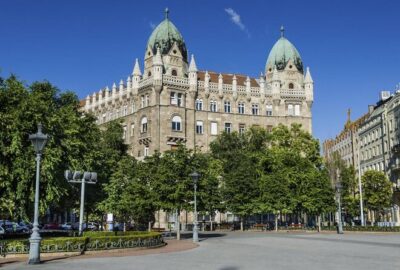
Budapest Private Full Day City Sightseeing Tour Walking or by Car
Read our review →