
Reviewed · BUDAPEST
Analog Photo Trip
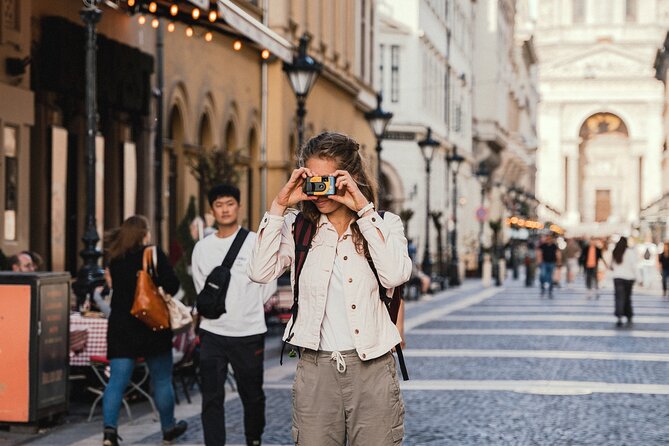
Budapest becomes more personal when you explore it through an analog camera. This 3.5-hour walking and public-transport outing takes you from St. Stephen’s Basilica to Fisherman’s Bastion, with time to frame the Danube, Parliament, bridges, churches, and castle views along the way. You receive a short camera lesson, then learn by taking pictures in the city itself.
I like the small maximum group of 12, which should make it easier to ask questions and get help with the camera. I also like the route’s mix of famous sights and less obvious viewpoints, plus the physical photos that give you something tangible to take home.
The main consideration is the price, $142.97 per person. That is a serious spend for a 3.5-hour activity, especially since the listed stops have no admission charge. The value depends on how much you want the analog photography lesson, personal guidance from Emese Tárnok, and the finished photos.
Key Things to Know Before You Book
- You learn analog photography while seeing Budapest: A short introduction makes the camera approachable, even if you have never used one.
- The route covers major Budapest sights: You visit St. Stephen’s Basilica, Chain Bridge, Parliament, Margaret Bridge, Matthias Church, and Fisherman’s Bastion.
- Tram 2 is part of the experience: The route uses one of Budapest’s most scenic public transport corridors before reaching the later stops.
- The tour begins at 5:00 pm: The afternoon start gives you a useful block of sightseeing without taking up your entire day.
- You finish at Fisherman’s Bastion: The final stop places you in Budapest’s Castle District, surrounded by some of the city’s best-known viewpoints.
- Weather matters: The activity requires good weather, so a poor forecast can lead to a new date or a full refund.
Why an Analog Camera Changes the Way You See Budapest
Most city tours ask you to look, listen, and move on. This one gives you another job: choose what deserves a frame. That small change can slow you down in a good way.
An analog camera makes you consider light, distance, and timing. You cannot fire off dozens of shots and check each one on a screen. You have to look more closely at the basilica’s dome, the lines of a bridge, or the shape of Parliament across the river.
The camera lesson is brief, according to the tour details, so this is not a technical photography course. It is a practical introduction designed to help you use the equipment during the outing. If you already shoot film, you may find the instruction basic. If you are new to analog cameras, that simplicity is useful.
The experience also gives you a souvenir that feels more personal than a standard city photograph. The finished physical photos become a record of what caught your eye, not just a set of images saved on a phone.
Other Budapest outings people book alongside this one:
- Budapest: City Highlights Cruise with Welcome Drink
★ 4.6 · 35,610 reviews - Budapest: Unlimited Prosecco, Beer and Aperol Spritz Cruise
★ 4.8 · 25,310 reviews - Budapest: Széchenyi Spa Day Ticket with Optional Upgrades
★ 4.3 · 23,911 reviews
Starting at St. Stephen’s Basilica at 5:00 pm
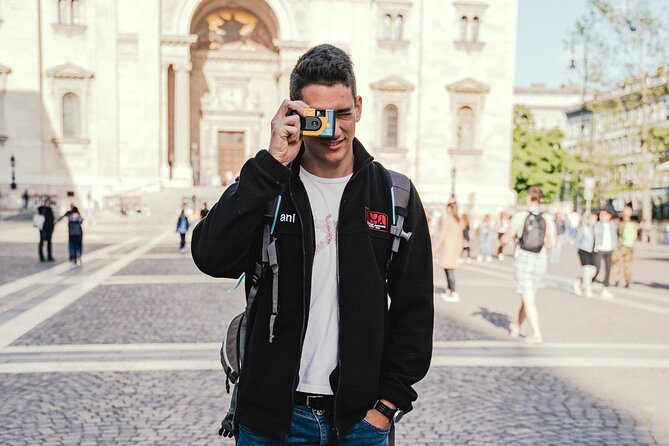
Meet at CBI CompareBudapest, Anker köz 2-4, in central Budapest. The tour starts at 5:00 pm, and the first stop is St. Stephen’s Basilica, one of Hungary’s most important churches.
You spend about 15 minutes looking around and learning about the building. That is enough time for an introduction and a few photographs, but not a long interior visit. The listed admission cost is free, so your payment here is for the guided experience and photography rather than entry.
For your first shots, the basilica offers obvious architectural subjects. You might focus on the broad façade, dome, details around the entrance, or the way the building fits into the surrounding city streets. The guide can also help you get comfortable with the camera before the route becomes more mobile.
This opening stop works well because it gives you a clear landmark and a manageable first assignment. You are not expected to produce perfect photographs right away. You are learning how to use the camera while standing in front of a major Budapest sight.
Chain Bridge and the Buda Castle View
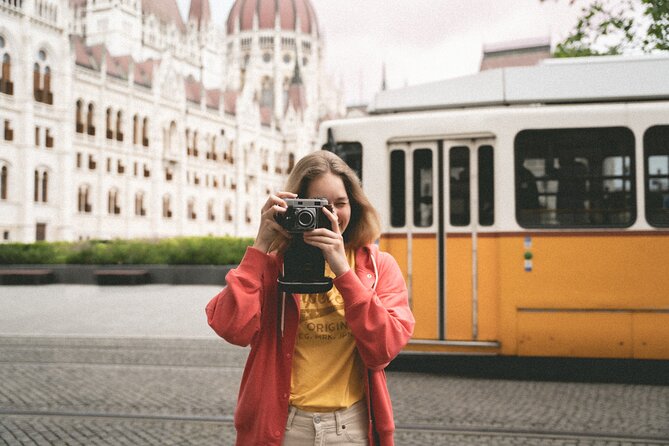
The next listed stop is Széchenyi Chain Bridge, usually called Chain Bridge, where you spend around 15 minutes photographing the view toward Buda Castle. The bridge is one of Budapest’s defining sights, and the castle backdrop gives you a strong city composition right away.
The tour description places this stop before taking Tram 2. That means the bridge view is part of the route’s early transition, not an isolated photo session. You can expect the guide to point out what you are seeing and help you decide how to frame the bridge, river, and hills beyond.
This is one of the places where analog photography can be especially rewarding. A wide city view may look simple on a phone, but a film photograph asks you to decide what belongs in the frame. You may choose the bridge cables, the river, the castle, or a tighter architectural detail.
The 15-minute limit also keeps the outing moving. If you like to spend a long time adjusting every photograph, this may feel quick. The tour is built around seeing several parts of Budapest, so you should expect a series of short photo stops rather than one extended shoot.
Parliament and Kossuth Lajos Square
The Hungarian Parliament Building comes next, with about 15 minutes around Kossuth Lajos Square. This is a chance to photograph one of Budapest’s most recognizable buildings while hearing about the history of the square and its surroundings.
The setting offers more than a single front-facing view. You can look for details in the building’s Gothic Revival design, broad symmetry, and relationship to the open square. The guide’s historical explanation adds context, helping you understand why this location matters beyond its appearance.
Keep your expectations clear: this is an exterior visit. There is no Parliament interior admission listed, and the stop is short. You will see the surroundings and learn about the place, but you will not be taking a formal building tour inside.
I like this part of the route because it pairs well with the analog format. Parliament is visually strong, but its scale can be hard to capture. A guide can help you make a more deliberate choice instead of simply pointing your camera at the whole building.
Same city, a completely different way to spend an afternoon:
- Budapest: Nighttime or Daytime Sightseeing Cruise
★ 4.2 · 21,062 reviews - Budapest: 1-Hour Evening Sightseeing Cruise with Drink
★ 4.5 · 8,330 reviews - Budapest Danube Cruise and Dinner Options, Live Music and Dance
★ 4.5 · 7,428 reviews - Budapest: Historic Cruise with Welcome Drink
★ 4.7 · 6,512 reviews
Margaret Bridge and the Route in Both Directions
At Margaret Bridge, you spend another 15 minutes taking in the view. The key appeal here is perspective. From the bridge, you can look back toward places you have already visited and ahead toward the rest of the route.
That makes this stop useful for understanding Budapest as a connected city. The river is not just scenery between attractions. It shapes the route, the views, and the way Buda and Pest relate to each other.
For photography, Margaret Bridge gives you a chance to work with distance and layers. You might photograph the river, the bridges, the riverbanks, or the skyline. The guide can also help you compare this viewpoint with the earlier Chain Bridge scene.
This is a good spot to pause and check how the camera feels in your hands. By this point, you have had several chances to practice. You should be more comfortable with the basic instructions and ready to make choices without constant help.
Matthias Church in the Castle District
The route then moves toward Matthias Church, where the listed photo stop is about five minutes. That is much shorter than the other stops, so treat it as a quick chance to capture the church rather than a full visit.
Matthias Church is known for its Gothic appearance, and the tour focuses on photographing its striking exterior. Its shape, decorative details, and position in the Castle District make it a natural subject for the analog camera.
The short time here is the main limitation. If you want a detailed look at the church or hope to photograph many angles, five minutes will not be enough. You may need to choose one or two compositions and keep moving.
Still, the brief stop fits the pace of the outing. The church is paired with Fisherman’s Bastion, so you are not spending the final part of the experience in one location. You get a quick architectural frame, then more time to explore the surrounding medieval-inspired setting.
Fisherman’s Bastion and the Final Views
The final stop is Fisherman’s Bastion, where the tour ends. You spend about 15 minutes looking around the bastion, which draws on early medieval architectural styles, and photographing its views.
This is a fitting finish. You end in Budapest’s Castle District rather than returning to the starting point, so you can continue exploring from there if you wish. The tour’s endpoint is Fisherman’s Bastion, Budapest 1014.
The bastion gives you a different visual mood from the earlier city streets and riverside stops. Its towers, arches, and elevated views provide plenty of possible subjects. You might concentrate on the architecture, the city below, or a wider scene that brings several Budapest landmarks together.
Since this is the last stop, it is also where the day’s photography lesson comes together. You have moved from a basilica to bridges, a government building, a river viewpoint, and historic churches. The final photographs can reflect what you found most interesting rather than what the guide chose for you.
What the $142.97 Price Covers in Practical Terms
At $142.97 per person, this is not a low-cost way to sightsee. The stops themselves have no admission ticket charge, and the experience lasts about three and a half hours. You are paying for the guided route, the analog camera activity, instruction, city interpretation, and the physical photos produced from the experience.
That can be fair value if you want something more focused than a standard walking tour. You receive a creative activity and a guided introduction to several major sights in one outing. The small group cap of 12 also matters, since camera instruction is more useful when the guide can give individual help.
The price is harder to justify if you only want to see the landmarks. You can visit the listed outdoor locations without paying for admission, and Budapest has many inexpensive ways to move around the city. The tour makes sense when the photography element is central to what you want.
I would also consider how important souvenirs are to you. A digital photo tour gives you files. This experience gives you physical photographs, which can be especially appealing during a longer trip when you want a small, personal reminder of Budapest.
Timing, Group Size, and Pace
The 5:00 pm start works well for a visitor who wants a morning of independent sightseeing first. It also means you should arrive ready to begin at the stated meeting point, since the route includes several stops and public transport.
The listed duration is approximately 3 hours and 30 minutes, though the actual pace can vary. One couple who moved slowly needed more time than planned, and the guide was patient. That detail matters if you prefer a relaxed pace or need extra time to understand the camera.
The group maximum is 12 people. That is small enough for questions, but it is not a private tour. If every person wants help with a composition, the pace may depend on the group. You should expect a shared activity rather than a one-to-one photography lesson.
The experience is offered in English. Most people can participate, service animals are allowed, and the meeting point is near public transportation. The activity requires good weather, so outdoor comfort is part of the calculation.
Who Will Get the Most From This Experience
I would choose this for you if you want to see Budapest while doing something active and creative. It suits first-time film photographers especially well, since the camera lesson lowers the barrier to trying analog photography.
It also works for couples, friends, and people on a longer rail trip who want a shared activity rather than another museum visit. The physical photos make the outing feel different from a normal sightseeing walk.
You may want another type of tour if you need extensive time at each monument, prefer indoor attractions, or already have advanced photography skills. The stops are short, and the tour is designed to cover ground.
Families and groups should also consider the camera format. It can be fun for people who enjoy learning by doing, but it may not suit anyone who wants a fast, highly structured checklist of sights.
Booking and Weather Advice
Confirmation arrives when you book, and free cancellation is available if you cancel at least 24 hours before the 5:00 pm start time. Cancellations or changes made inside that window are not refunded or accepted.
Because the experience requires good weather, check the forecast before the cancellation deadline. If poor weather causes the tour to be canceled, you can receive a full refund or choose another date.
Wear something suitable for several hours outside and keep your schedule flexible at the end. The tour finishes at Fisherman’s Bastion, not back at the starting point, so plan your onward arrangements from the Castle District.
Should You Book the Analog Photo Trip?
Book it if you want Budapest sightseeing with a creative hook. The strongest reasons are the approachable analog camera lesson, Emese Tárnok’s personal guidance, the carefully chosen route across both sides of the Danube, and the physical photos you take home.
Think twice if $142.97 feels high for a short outdoor tour with free-admission stops. You are paying for the experience rather than entry tickets, and the value depends heavily on your interest in analog photography.
For a first-time visitor who wants major landmarks, city context, and a new hobby in one afternoon, I think it is a distinctive choice. For an experienced photographer seeking long sessions at each sight, the quick stops may feel limiting.
FAQ
How long does the Analog Photo Trip last?
The experience lasts approximately 3 hours and 30 minutes.
What time does the tour start?
The tour starts at 5:00 pm.
Where does the tour begin?
The meeting point is CBI CompareBudapest, Anker köz 2-4, 1061 Hungary.
Where does the tour end?
The tour ends at Fisherman’s Bastion in Budapest’s Castle District, at 1014 Hungary.
Is the tour offered in English?
Yes. The activity is offered in English.
What happens if the weather is poor?
The experience requires good weather. If it is canceled because of poor weather, you will be offered another date or a full refund.
Just added around Budapest
- Budapest: Private, Personalized Pub Crawl, 3 drinks included★ 4.5 · 3 reviews
- Private day trip from Budapest to Bratislava, Vienna, and back★ 3.5 · 3 reviews
- Budapest: Private Adventure Sightseeing Bicycle Tour★ 4.5 · 3 reviews
- Private Danube Bend tour – full day★ 4.5 · 3 reviews
- Budapest: Guided City Walking Tour in Buda and Pest★ 5.0 · 3 reviews
- Budapest Old Jewish Quarter History Private Walking Tour★ 5.0 · 3 reviews
- Lake Balaton Full Day Private Wine Tour★ 5.0 · 3 reviews
- Budapest Urban Feast – Food Tour with Wine Tasting & Coffee House★ 4.5 · 3 reviews