

Reviewed · CITY TOURS
Half day Budapest city tour by car / minivan
Budapest packs imperial avenues, thermal baths, grand bridges, and hilltop views into a surprisingly compact city. This private four-hour car tour lets you cover both Pest and Buda without spending half the day figuring out buses, hills, and city traffic. Guides such as Gergely Szabó, Gregory, and Gabriel bring local knowledge and can answer questions far beyond the standard postcard facts.
I like the door-to-door pickup and the way the route links Budapest’s major sights in one sweep. I also like the flexible feel: past tours have been adjusted around what people already saw, with some groups adding the Great Market Hall, Jewish Quarter, Hungarian food stops, public transport, or a ruin bar. The trade-off is clear: you will see a lot, but several places are viewed from the car or receive only a short stop.
Key points to know before booking
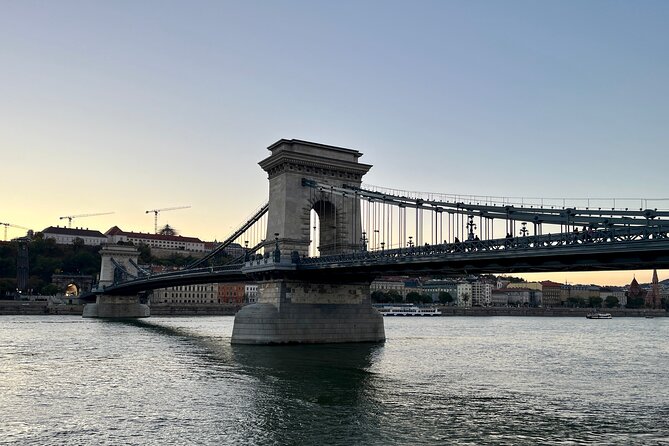
- Four hours covers both sides of the Danube: You visit major Pest sights, cross several historic bridges, then climb into the Buda Castle District and Gellért Hill.
- Hotel pickup is included: The tour can begin at any hotel or other accommodation in Budapest.
- A private guide makes the pace flexible: Only your group participates, and the route can sometimes be adjusted to suit your interests.
- The strongest photo stops are Fisherman’s Bastion and the Citadel: Both offer memorable city views, though the Citadel stop may depend on access conditions.
- Interior visits cost extra: Matthias Church, St. Stephen’s Basilica, and the upper level of Fisherman’s Bastion are not included.
- Comfort comes at a price: At $141.56 per person, the value improves with several people sharing the private vehicle and guide.
Why a car works well for a first look at Budapest
Budapest is split by the Danube, with broad Pest on one bank and hilly Buda on the other. A walking tour can handle one district well, but seeing the full city in half a day takes planning. This route uses a private air-conditioned car or minivan to connect far-flung sights without making you change transport every few minutes.
That matters most at the start of a trip. You can get your bearings along Andrássy Avenue, see the City Park sights, continue through central Pest, cross the Danube, and finish high above the river. You are not simply being driven around without context. The guide is there to explain Hungary’s past and present, answer questions, and point out what deserves a longer return visit.
The tour has a brisk rhythm. Planned stops range from 10 to 20 minutes, with longer time at Heroes’ Square, Matthias Church, and the Citadel. That is enough for photos, a short walk, and an introduction. It is not enough for a full museum visit, a leisurely coffee, or a proper thermal bath session.
A few more Budapest half-days to weigh up
- Budapest: City Highlights Cruise with Welcome Drink
★ 4.6 · 35,610 reviews - Budapest: City Sightseeing Hop-On Hop-Off Bus Tour & Extras
★ 4.1 · 4,337 reviews - Budapest City Landmarks Walking Tour in 2 Hours
★ 5.0 · 2,048 reviews
Andrássy Avenue and the City Park opening
Andrássy Avenue is a fine introduction to Budapest. Built in the late 19th century, it runs from the city center toward Heroes’ Square and is lined with Neo-Renaissance townhouses, cafés, theaters, embassies, luxury shops, and restaurants. The avenue is a sightseeing stop in itself, even when you are mainly viewing it through the vehicle windows.
Your first named stop is Heroes’ Square, where a sweeping statue complex honors the Seven Chieftains of the Hungarians and other important national leaders. The square also includes the Memorial Stone of Heroes and faces the Museum of Fine Arts and the Art Gallery. You have about 20 minutes here, enough to walk around and take in the scale of the place.
I would pay attention to the political meaning as well as the statues. Heroes’ Square has been used for major national events, including the 1989 reburial of Imre Nagy. A good guide can make this stop feel less like a line of stone figures and more like a condensed lesson in Hungarian identity.
Vajdahunyad Castle follows with about 15 minutes. It was created for the 1896 Millennium Exhibition, marking a thousand years since the Hungarian Conquest of the Carpathian Basin in 895. Its design borrows from buildings across the former Kingdom of Hungary, so the result looks like a small architectural sampler rather than one single historical palace.
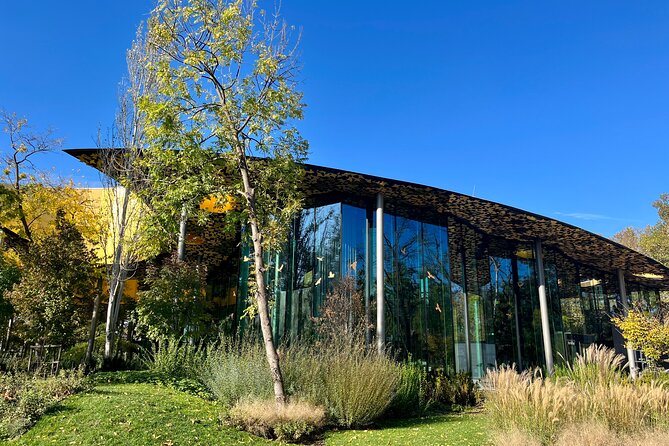
Nearby, the House of Music Hungary receives a short 10-minute look. Opened in 2022, it presents the history of music and occupies a striking modern building selected from 170 international designs. The brief stop is useful for architecture and orientation, but it does not allow time for the full exhibition.
You also pass the Széchenyi Medicinal Bath, Europe’s largest medicinal bath. Its thermal water comes from two springs with temperatures of 74 and 77 degrees Celsius. The tour does not turn this into a bathing visit, so treat it as a preview and return later if soaking is high on your list.
Central Pest, from the Opera House to Parliament
The route returns toward central Budapest along Andrássy Avenue and stops near the Hungarian State Opera House. This Neo-Renaissance building is one of the avenue’s signature sights, and the 10-minute pause lets you see its exterior and hear some context about Budapest’s musical life. An interior visit is not part of the tour.
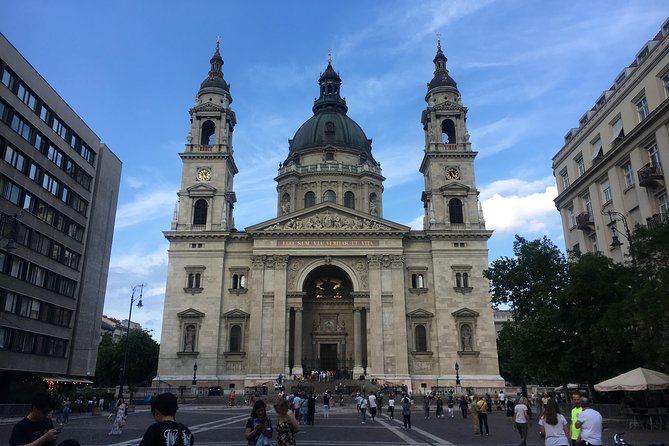
St. Stephen’s Basilica is another important landmark along the way. It honors Stephen, Hungary’s first king, and houses his right hand in a reliquary. The basilica is one of the country’s largest church buildings and serves as the co-cathedral of the Archdiocese of Esztergom-Budapest.
The schedule does not list a timed interior stop at the basilica, and optional entry costs extra. That distinction is worth noting. You will get a useful introduction to the building, but you should not expect to examine the dome, chapels, or relic unless you arrange and pay for additional access.
Liberty Square offers a different kind of history. It sits in the Lipótváros district among offices and residences, with the United States Embassy and Hungarian National Bank facing the square. Several surrounding buildings use Art Nouveau details, giving the area a less ceremonial character than Heroes’ Square.
The 15-minute stop is short, but the square rewards a guide who can connect architecture, government, and modern Hungarian events. It is one of the places where asking questions helps. The guides have handled questions about Hungarian history, neighboring countries, population, economics, and current political life, so you can make this more than a quick photo stop.
Parliament gets another 15 minutes. The huge building sits on Kossuth Square beside the Danube on the Pest bank and houses Hungary’s National Assembly. It is the country’s largest building and one of Budapest’s most recognizable views.
This part of the route is best for exterior appreciation. Parliament’s size is hard to understand until you see it from the riverfront, but a short stop cannot replace a dedicated interior tour. If you want to see the crown jewels, grand halls, or formal visitor route, plan a separate visit and check entry arrangements independently.
Bridges, Buda Castle, and the best city views
The drive between Pest and Buda is one of the tour’s great advantages. You see the Margit Bridge, Budapest’s second-oldest bridge, opened in 1876 and linking the two sides near Margaret Island. You also pass the Zero Kilometre Stone, a three-meter limestone marker from which road distances to Budapest are measured.
The Széchenyi Chain Bridge is the star of the crossing. Opened in 1849, it was the first permanent bridge across the Danube in Hungary. English engineer William Tierney Clark designed it, and Scottish engineer Adam Clark built it. The bridge makes an excellent talking point because it is not just attractive, it explains how Buda and Pest became one connected city.
The route then climbs toward the Buda Castle District. Matthias Church gets about 20 minutes, while entry is not included. The church is commonly associated with King Matthias, though its formal name is the Church of the Assumption of the Buda Castle. Its present form is largely late Gothic, with major restoration in the 19th century.
From the outside, you can appreciate the patterned roof and ornate Gothic design. If you want to see the interior, allow extra time and pay the admission fee. The scheduled stop is enough for a first look, not a full examination.
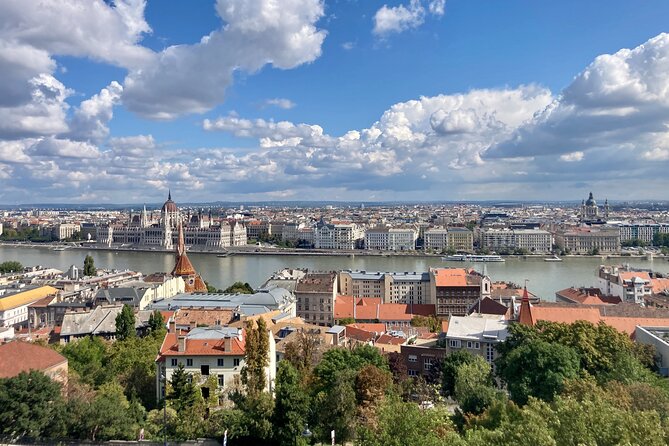
Fisherman’s Bastion follows with about 15 minutes. Its Neo-Romanesque terraces were built between 1895 and 1902 on the base of part of the old Buda Castle walls. The long façade runs parallel to the Danube, creating some of the city’s most familiar viewing platforms.
This is likely the most rewarding short stop for photographs. You look across the river toward Parliament, Pest, and the bridges, with Matthias Church close by. The upper terraces require an extra fee, so ask the guide what access is included before heading up. Even a brief visit can be worthwhile, but people who want time for every terrace should return on foot later.
Same city, a completely different way to spend an afternoon:
- Budapest: Unlimited Prosecco, Beer and Aperol Spritz Cruise
★ 4.8 · 25,310 reviews - Budapest: Széchenyi Spa Day Ticket with Optional Upgrades
★ 4.3 · 23,911 reviews - Budapest: Nighttime or Daytime Sightseeing Cruise
★ 4.2 · 21,062 reviews - Budapest: 1-Hour Evening Sightseeing Cruise with Drink
★ 4.5 · 8,330 reviews
Gellért Hill and the closing panorama
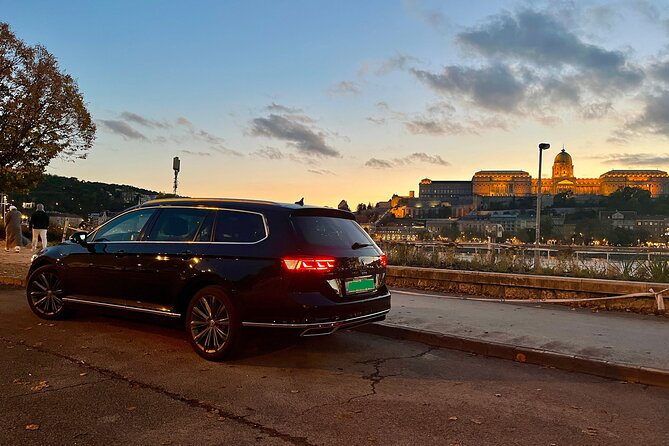
The Citadel Lookout on Gellért Hill is scheduled for about 20 minutes. The fortification was built in 1851 by Julius Jacob von Haynau, a commander of the Austrian Empire, and the hilltop provides one of Budapest’s broadest views.
This is another place where the car saves energy. Reaching a hilltop lookout can take effort on foot, especially after a morning of sightseeing. You get a quick orientation to the Danube, bridges, Buda, and Pest, then continue to the Gellért Baths.
The Gellért Baths form part of the Hotel Gellért and were built between 1912 and 1918 in the Art Nouveau, or Secession, style. The 10-minute stop is an exterior introduction, not time for swimming or a spa treatment. Like Széchenyi Bath, it works best as a reminder to return on another day.
The two hilltop viewpoints, Fisherman’s Bastion and the Citadel, are the tour’s visual high points. If you care most about scenery, tell the guide early. The planned itinerary already gives these places time, but a private format makes it easier to protect those stops if traffic or questions take longer elsewhere.
What the guide adds to the ride
The vehicle is only half the product. The guide determines whether the tour feels like a useful city introduction or a fast drive past buildings. Gergely Szabó is identified as a Budapest native and has led tours covering history, culture, geography, neighboring countries, and present-day issues. Gabriel and other guides have also led the route, so the exact personality and style can vary.
The strongest feedback centers on clear English, local perspective, friendly service, and flexibility. That combination is important in a four-hour tour. You need someone who can explain a complicated past in plain language, keep the route moving, and still stop to answer your questions.
Past custom routes have included the Jewish Quarter, Great Market Hall, traditional Hungarian foods, public transport, and a famous ruin bar. These additions are not guaranteed on the standard route, and fitting them in depends on time and your priorities. Still, the examples show that you should speak up if you want food, neighborhoods, or everyday Budapest instead of only grand monuments.
One caution is worth keeping in mind. A private tour can vary if a different guide handles the day. The provider has worked with colleagues for many years, but the experience depends on who arrives. Confirm your guide if that matters to you, especially if you want a particular balance of history, food, architecture, or current affairs.
Price, timing, and who gets the best value
The listed price is $141.56 per person. That is not cheap for four hours, especially for one person, but you are paying for a private guide, private transportation, door-to-door pickup, bottled water, and an air-conditioned vehicle. Group discounts are available, and the value improves as your party shares the vehicle and guide.
I would compare it with the cost of arranging several taxis, learning the transport system, and paying for separate guiding. The car is most useful for families, small groups, older people, and anyone with only one free morning or afternoon. It is also practical in hot, cold, or rainy weather.
The tour is not the best choice if you prefer long walks, museums, or slow meals. You will see many sights, but most stops are short. Admission fees for Matthias Church, St. Stephen’s Basilica, and the upper level of Fisherman’s Bastion are extra, so budget for those only if you want to go inside.
Pickup is available from any hotel or other accommodation in Budapest, and a wide range of start times makes it easier to fit around flights, trains, or another booking. Confirmation arrives at booking, service animals are allowed, and most people can participate. Free cancellation is available up to 24 hours before the start time. Changes or cancellations inside that window are not refunded.
Should you book this Budapest city tour?
Book it if you want a fast, comfortable orientation and would rather spend four hours seeing the shape of Budapest than mastering its transport system. It is especially useful on your first full day, when the guide can help you decide where to return for longer visits.
I would also book it for a family or group that values privacy and door-to-door service. The clean vehicle, bottled water, air conditioning, and ability to ask unlimited questions add real comfort. The strongest route highlights are Parliament, the Chain Bridge, Matthias Church, Fisherman’s Bastion, and the Citadel.
Skip it if your ideal day means entering every major building, lingering over architecture, or soaking in a thermal bath. This is a broad first look, not a slow cultural study. Go in expecting short stops and some sightseeing from the car, and the $141.56 price can make sense. Expect a full day of interiors and walking, and you may find the pace too quick.
FAQ
How long is the Budapest city tour?
The tour lasts approximately four hours.
Where can the tour begin?
Pickup is available from any hotel or other type of accommodation in Budapest.
Is this a private tour?
Yes. Only your group participates in the activity.
Is transportation included?
Yes. The tour includes private transportation in an air-conditioned car or minivan, along with door-to-door service and bottled water.
Are entrance fees included?
Some optional interior visits require additional payment. This includes entry to Matthias Church, St. Stephen’s Basilica, and the upper floor of Fisherman’s Bastion.
What happens if I need to cancel?
You can cancel up to 24 hours before the start time for a full refund. Cancellations or changes made less than 24 hours before the start time are not accepted for a refund.
Just added around Budapest
- Budapest: Private, Personalized Pub Crawl, 3 drinks included★ 4.5 · 3 reviews
- Private day trip from Budapest to Bratislava, Vienna, and back★ 3.5 · 3 reviews
- Budapest: Private Adventure Sightseeing Bicycle Tour★ 4.5 · 3 reviews
- Private Danube Bend tour – full day★ 4.5 · 3 reviews
- Budapest: Guided City Walking Tour in Buda and Pest★ 5.0 · 3 reviews
- Budapest Old Jewish Quarter History Private Walking Tour★ 5.0 · 3 reviews
- Lake Balaton Full Day Private Wine Tour★ 5.0 · 3 reviews
- Budapest Urban Feast – Food Tour with Wine Tasting & Coffee House★ 4.5 · 3 reviews
City Tours, compared.
Budapest City Landmarks Walking Tour in 2 Hours
Read our review →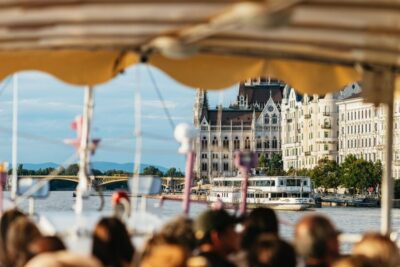

Hungarian Chimney Cake Workshop in the City Center
Read our review →


Private Budapest City tour with Classic Russian Jeep or G-Wagon!
Read our review →Browse the lists this tour appears in