Reviewed · TOURS
Tiny Sculptures, Big Stories: Kolodko mini statue tour
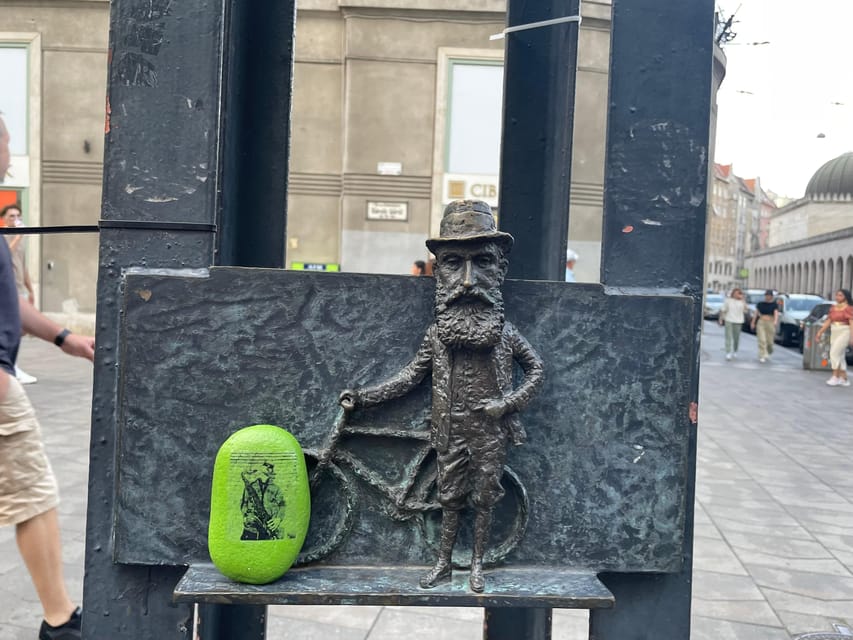
Budapest’s smallest artworks tell some of its biggest stories. This Kolodko mini statue tour turns the city into a treasure hunt, sending you after tiny bronze figures tucked beside streets, bridges, stations, and busy public spaces. Each statue connects to a local legend, a bit of pop culture, or a chapter of Budapest’s past.
I like two things right away: ET’s personal approach and the way the tour uses public transport to link different parts of the city. You do not simply stand in one square and listen. You search, guess, ride, walk, and then hear why each statue is there.
The main consideration is the amount of walking and moving around. The statues are spread across Budapest, so comfortable shoes matter. The advertised duration is 2.5 hours, while the itinerary also describes a three-hour guided outing, so confirm the exact timing when you book.
Key points at a glance
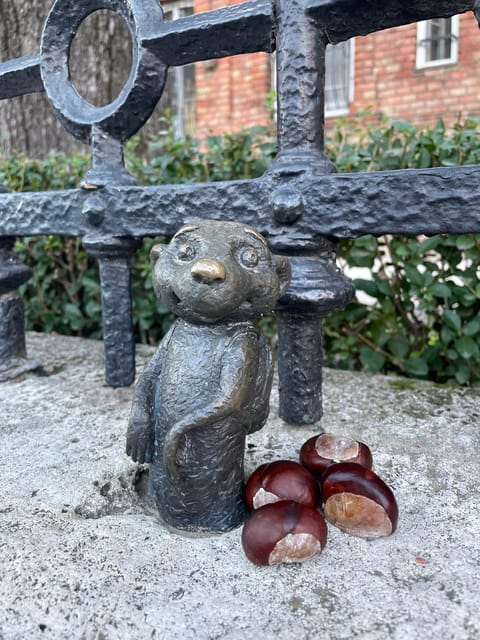
- A citywide treasure hunt: Look for small bronze statues that are easy to miss without a guide.
- Stories behind the art: ET explains the folklore, politics, pop culture, and neighborhood meaning linked to each sculpture.
- Pest to Buda: Begin near the New York Café and finish at Szent Gellért tér, crossing the city by foot and public transport.
- Small-group feel: The group is limited to 10 people, and the route can be adapted when numbers are low.
- Around 15 statues is typical: Some outings have found more, with one guest seeing about 25 during the rest of a Budapest stay.
- Tickets included: Tram, metro, and other public transport used during the activity are covered.
Why these tiny statues make a fine Budapest introduction
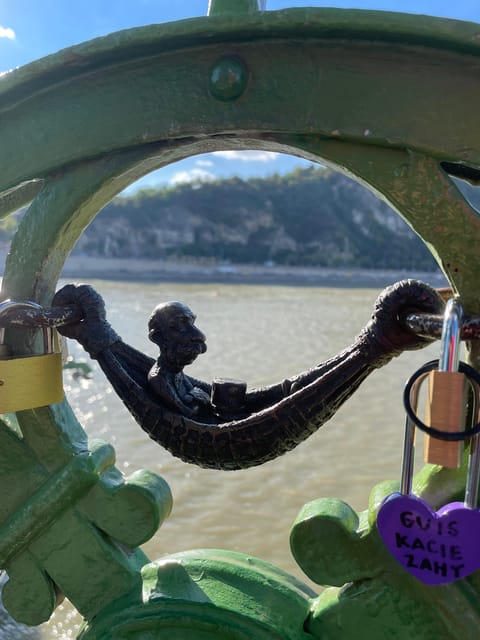
Mihail Kolodko’s sculptures are deliberately small. You may walk past one several times without noticing it. That is part of the fun. Instead of being given a long list of monuments, you are asked to pay attention to street corners and ordinary parts of town.
The result is a different kind of city tour. A large landmark tells you what Budapest wants you to see. A tiny guerrilla sculpture often reveals what locals find funny, touching, strange, or worth remembering.
The statues also give ET a natural way to talk about the city. One stop may lead into folklore. Another may touch on politics or popular culture. The setting can open a conversation about how neighborhoods have changed and how Budapest’s alternative art scene fits into daily life.
I like this mix because it avoids the usual split between art tour and history tour. You get both, but in small portions. The sculpture catches your eye first. The story gives it meaning afterward.
Other Budapest outings people book alongside this one:
- Budapest: City Highlights Cruise with Welcome Drink
★ 4.6 · 35,610 reviews - Budapest: Unlimited Prosecco, Beer and Aperol Spritz Cruise
★ 4.8 · 25,310 reviews - Budapest: Széchenyi Spa Day Ticket with Optional Upgrades
★ 4.3 · 23,911 reviews
Starting at the New York Café on the Pest side
The meeting point is in front of the entrance to the New York Café. This is a clear location, but it can be crowded around the café, so give yourself enough time to find the entrance rather than arriving at the last second.
The tour begins on the Pest side of Budapest. From there, ET leads you toward the first small sculptures and begins showing you how to search. The important skill is not speed. It is learning where to look.
Some figures may sit low near the pavement. Others may be tucked beside a building or placed where the surrounding neighborhood matters to the joke. ET’s style, based on the experience described by past participants, is interactive: he may encourage you to spot the statue before explaining the story.
That small pause changes the mood. You are not just receiving information. You are hunting for clues, and the guide’s explanation comes after the discovery.
Finding the meaning behind each Kolodko sculpture
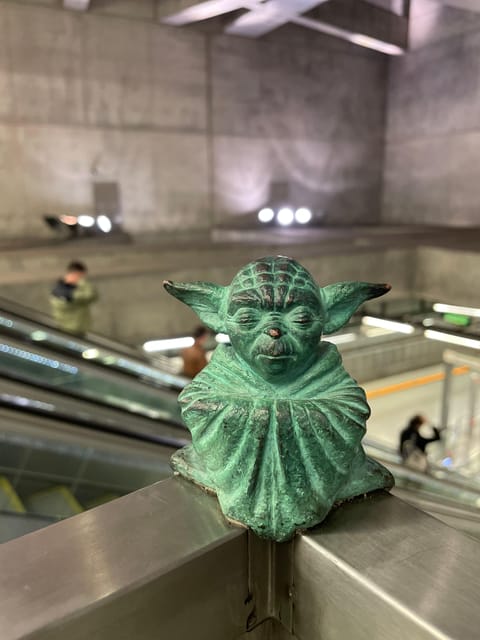
The best part of the outing is not simply counting statues. It is understanding why each one occupies its particular place.
Kolodko’s pieces reflect local legends and the character of the neighborhoods around them. Some connect to familiar cultural references. Others comment on politics or pop culture. ET explains the background in short, lively stories rather than burying each stop under a lecture.
This approach suits Budapest well. The city has layers of history, but you do not need a formal timeline at every corner. A miniature figure can offer a quick entry point into a larger subject, then let you move on before the pace slows.
You may see around 15 sculptures during the standard outing, depending on the route and group. That number is not guaranteed. A private or very small group can move faster, while a larger group may stop longer for questions and photos.
Past outings have also included a few secret stops and other forms of street art. Do not treat these as fixed attractions in the schedule, but the route can include more than the statues alone.
A moving tour, not a single neighborhood walk
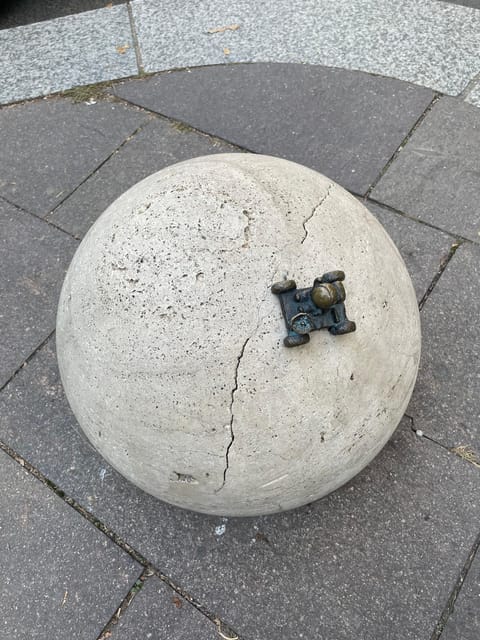
One useful feature is the use of public transport. The tour begins in Pest and finishes on the Buda side at Szent Gellért tér, so you cover more ground than you would on a simple walking loop.
Public transport tickets are included. ET handles the tickets during the activity, which removes one small but real source of stress. You can focus on the next statue instead of trying to work out which ticket to buy before boarding.
The exact vehicles used can vary. Past outings have included trams, metro rides, and other forms of local transport. One private outing even used bikes along with public transport. That should not be treated as a standard promise, but it shows how flexible the route can be.
This setup is valuable if you are new to Budapest. You get a practical sense of how Pest and Buda connect, rather than seeing only the streets around your hotel. One participant used the tour at the start of a visit and found it helpful for getting a feel for the city. That is a good reason to book it early in your stay.
The drawback is that transport adds movement and timing. You may need to board, get off, cross roads, and keep track of the group. ET is praised for handling this smoothly, but you should still expect an active outing rather than a slow café-to-café stroll.
Same city, a completely different way to spend an afternoon:
- Budapest: Nighttime or Daytime Sightseeing Cruise
★ 4.2 · 21,062 reviews - Budapest: 1-Hour Evening Sightseeing Cruise with Drink
★ 4.5 · 8,330 reviews - Budapest Danube Cruise and Dinner Options, Live Music and Dance
★ 4.5 · 7,428 reviews - Budapest: Historic Cruise with Welcome Drink
★ 4.7 · 6,512 reviews
The synagogue and Danube connections
The synagogue and Danube are listed among the highlights, giving the tour a link to two important parts of Budapest.
The synagogue adds a strong cultural and historical setting to the route. The activity is not presented as a formal synagogue interior tour, so you should not assume a detailed visit inside. Instead, expect the surrounding area and its connection to Budapest’s stories to form part of the wider route.
The Danube brings another change of setting. Budapest makes more sense when you see how the river separates Pest from Buda and how the city’s major districts connect across it. A sculpture near the river can also gain meaning from its surroundings, rather than feeling like an isolated art object.
The route ends at Szent Gellért tér on the Buda side. This is a central stopping point with easy onward access into the city. Ending there also gives the outing a satisfying shape: you begin in central Pest, collect stories across the city, and finish across the river.
What ET adds to the experience
The guide is named ET in the booking information, and several participants also refer to him as Etele. His greatest strength is the combination of local familiarity and easy conversation.
ET is from Budapest and focuses especially on its small sculptures and street art. He also talks about everyday life, neighborhoods, local culture, politics, and the city’s changing identity. That range matters because the statues are not museum pieces separated from real life. Their humor depends on knowing something about the city around them.
The best fit for this guide style is someone who likes questions and conversation. You can ask about pop culture, local politics, or why a sculpture was placed in one location rather than another. When the group is small, ET can adjust the route to match what you have already seen.
One outing had just two participants and included discussion of local culture and politics. Another private route was changed after the guest explained which parts of Budapest they had already visited. These examples suggest that the tour is not locked into a rigid script when the group size allows room to adapt.
That flexibility has limits. The activity is still built around finding as many statues as possible, and a larger group may follow a more set route. You should book it for the subject and the guide’s local storytelling, not as a guaranteed private tour.
How much walking should you expect?
You will walk for much of the tour, with public transport filling the gaps between statue clusters. The exact distance is not provided, but the repeated advice is clear: bring comfortable shoes.
The walking is not only exercise. It is how you reach the lesser-known corners where the miniatures are placed. If you want to see more statues, walking faster and spending less time at each stop may help. If you prefer longer conversations and photos, the count may be lower.
Winter conditions deserve attention. One outing took place in cold weather and snow and was still enjoyable, but poor weather can make small statues harder to spot and streets less comfortable. Dress for the forecast, especially if you are visiting between December and February.
The tour can suit adults and children, particularly children who enjoy scavenger hunts and surprising details. Younger children may find the transport changes and walking tiring, so consider their usual pace before booking.
How many statues will you see?
The honest answer is: it depends.
About 15 sculptures is a useful expectation based on the routes described. Some groups have seen more, and one participant kept searching after the tour and found 25 additional statues during the rest of the trip. ET also sends a map showing where other statues can be found, which gives you a way to continue the hunt independently.
Do not judge the experience only by the final number. Ten well-explained statues can be more rewarding than 25 rushed sightings. The point is to learn the visual language of Budapest and gain the confidence to notice more miniatures on your own.
If you are determined to see the largest possible number, tell ET at the start. Route choices can change when the group is small, and the guide may adjust the outing around your interests and schedule.
What you get for $35
At $35 per person, the price is reasonable if you value local guiding, included transport, and access to places you might miss alone.
You are not paying for a grand monument entrance or an elaborate meal. You are paying for a guide who knows where to look, understands the stories, manages the city’s transport, and links small artworks to wider subjects.
The included public transport tickets add practical value. So does the small group limit of 10. A large group would make a statue hunt less personal, especially when a sculpture is tiny and several people need a chance to see it.
The value is strongest for a first visit or for someone who has already seen Budapest’s major sights and wants a fresh angle. If you only want famous landmarks, this may feel too indirect. If you enjoy art, local jokes, and neighborhood details, $35 buys a useful two-and-a-half-hour introduction to another side of the city.
Reserve now and pay later is available, and you can cancel up to 24 hours before the activity for a full refund. Those terms make it easier to fit the tour into a changing Budapest schedule.
Who should book this tour?
I would point this tour toward several types of visitors:
- First-time visitors who want help getting oriented between Pest and Buda.
- Repeat visitors who have already seen the main sights and want something less predictable.
- Street-art fans interested in small public works rather than gallery rooms.
- Families with curious older children who enjoy searching and guessing.
- Solo visitors who prefer a small group and an easy way to meet people.
- People who like local conversation about culture, politics, folklore, and daily life.
It is less suitable if you dislike walking, do not want to use public transport, or prefer a fixed list of major attractions. It also may not be the right choice for anyone expecting a formal art lecture or a full guided visit inside the synagogue.
Final call: book it if you like Budapest’s smaller stories
I would book this tour if you want to see Budapest through details rather than only monuments. The tiny statues give you a playful reason to explore, while ET supplies the context that makes each stop worthwhile.
Book it near the start of your stay if you want help finding your way around. Book it later if you have already covered the famous sights and want a change of pace.
Bring comfortable shoes, allow for weather, and expect the route to involve walking, trams, metro rides, and surprises. At $35, the tour offers good value for an active visitor who wants art, folklore, and local conversation in one outing. It is a smart pick for the curious, but not for someone seeking a relaxed, stationary sightseeing tour.
FAQ
Where does the Kolodko mini statue tour begin?
The group meets in front of the entrance to the New York Café in Budapest.
Where does the tour finish?
The tour finishes at Szent Gellért tér on the Buda side.
How long does the activity last?
The advertised duration is 2.5 hours. The itinerary also describes a three-hour guided tour, so confirm the exact timing when checking availability.
What language is the tour conducted in?
The live tour is conducted in English.
How large is the group?
The tour is limited to 10 participants.
Are public transport tickets included?
Yes. Public transport tickets used during the activity are included in the price.
How much does the tour cost?
The listed price is $35 per person. You can reserve now and pay later, and cancellation up to 24 hours in advance qualifies for a full refund.
Just added around Budapest
- Budapest: Private, Personalized Pub Crawl, 3 drinks included★ 4.5 · 3 reviews
- Private day trip from Budapest to Bratislava, Vienna, and back★ 3.5 · 3 reviews
- Budapest: Private Adventure Sightseeing Bicycle Tour★ 4.5 · 3 reviews
- Private Danube Bend tour – full day★ 4.5 · 3 reviews
- Budapest: Guided City Walking Tour in Buda and Pest★ 5.0 · 3 reviews
- Budapest Old Jewish Quarter History Private Walking Tour★ 5.0 · 3 reviews
- Lake Balaton Full Day Private Wine Tour★ 5.0 · 3 reviews
- Budapest Urban Feast – Food Tour with Wine Tasting & Coffee House★ 4.5 · 3 reviews
Tours, compared.

Buda Castle District Vampires and Myths Night Tour
Read our review →
Budapest City Landmarks Walking Tour in 2 Hours
Read our review →
3-Hour Orientation Walking Tour of Buda and Pest
Read our review →