Reviewed · PRIVATE
Private Art Nouveau Budapest Tour
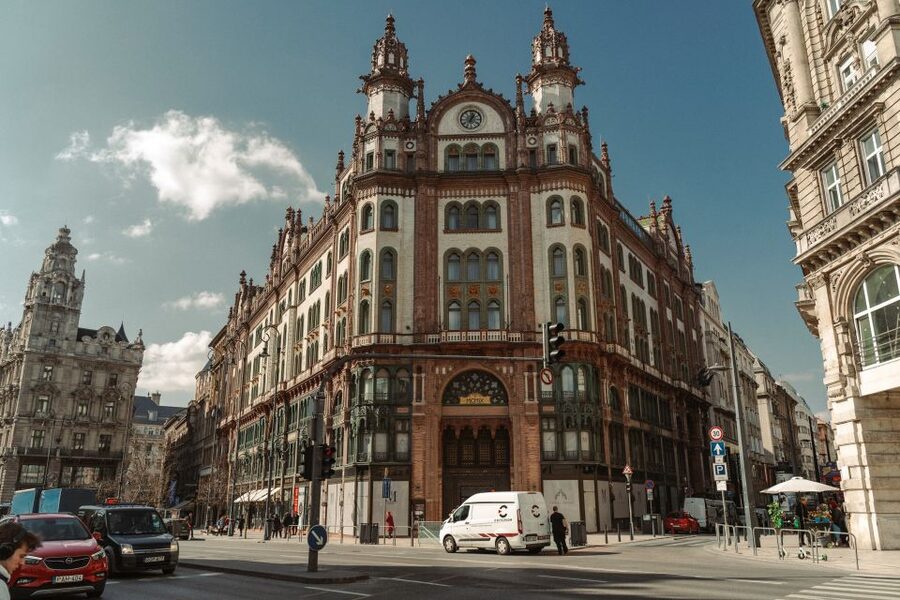
Budapest’s Art Nouveau is easy to miss if you stick to the grand Parliament and castle sights. This private four-hour walk brings you face to face with wavy facades, colored roof tiles, stained glass, and playful Hungarian design, including Ödön Lechner’s Museum of Applied Arts, Gresham Palace, and the Hungarian State Treasury.
I like the expert-led focus and the fact that the route can change around your hotel pickup. I also like the café break in the House of Hungarian Art Nouveau, where the architecture lesson continues over coffee and cake. The main drawback is reliability: one recent booking reported that the guide never appeared, so confirm your meeting details and refund arrangements before setting out.
Key Points
- Ödön Lechner’s Museum of Applied Arts: Begin with one of Budapest’s boldest Art Nouveau buildings and a leading example of Hungarian national style.
- A private route for your group: Hotel pickup and a flexible starting point make this easier to shape around your schedule.
- Gresham Palace and Liberty Square: See several of central Budapest’s finest period buildings in a compact walking route.
- A café stop with cake: Pause at the House of Hungarian Art Nouveau, which also holds a private collection from the period.
- Art-historian guidance: Guides such as Suzy, Peter Horvath, and Joel have been praised for vivid explanations and access to special interiors.
- Best for architecture fans: The tour rewards people who want to understand details, movements, and design choices rather than simply collect photographs.
Why Budapest’s Art Nouveau Rewards a Four-Hour Tour
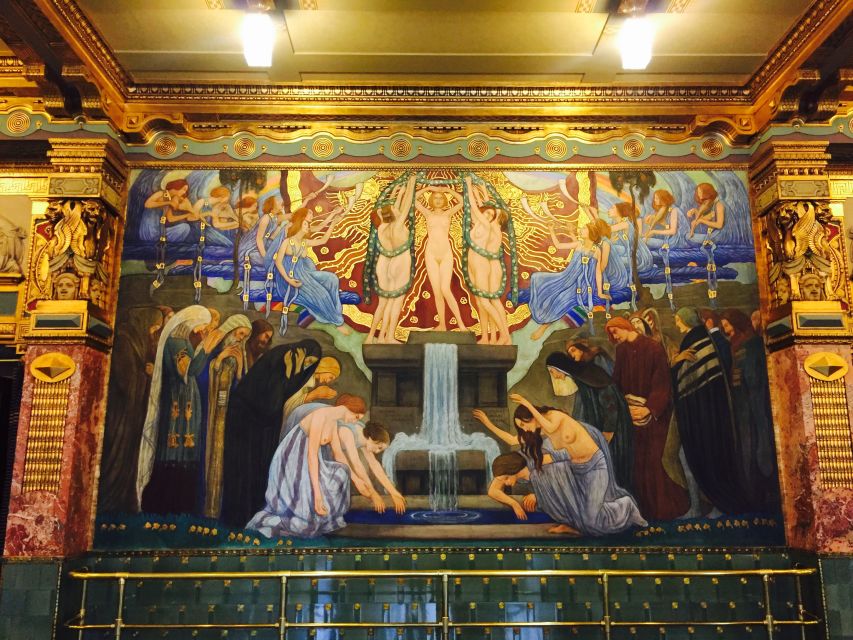
Budapest’s Art Nouveau era was short but remarkably productive. Around the turn of the 20th century, architects borrowed from several European movements, including Viennese Secession, German Jugendstil, and French and Belgian Art Nouveau.
Hungarian architects also developed a local style of their own. It often combines flowing lines and decorative surfaces with Hungarian folk patterns, bright ceramic tiles, and unusual roof shapes. That local approach is one reason Budapest feels different from Vienna or Brussels, even when the same broad artistic ideas appear.
I find this style easiest to appreciate with a guide because the details are not always obvious from street level. A rounded window may look like decoration until someone explains how it fits the building’s larger design. A roof covered in colorful tiles may seem cheerful, but it also tells you which architect and workshop shaped the building.
This tour is built around that close reading of the city. You are not just moving between famous addresses. You are learning how to spot uneven surfaces, curling metalwork, stained glass, ceramic ornament, and asymmetrical lines as you walk.
The private format matters here. You can ask why one building resembles Vienna while another feels distinctly Hungarian. You can also slow down when a facade catches your eye, rather than keeping pace with a large group.
A few more Budapest half-days to weigh up
- Private Budapest TukTuk Tour: Custom Route, Hotel Pickup
★ 5.0 · 1,307 reviews - Budapest Essentials Private Tour Highlights and Hidden Gems
★ 5.0 · 861 reviews - Budapest Private Tuk Tuk Half-Day Tour
★ 5.0 · 606 reviews
Starting at the Museum of Applied Arts
The strongest starting point is the Museum of Applied Arts, the work of Ödön Lechner. He is often called the Hungarian Gaudí, a nickname that points to his unusual forms and fearless use of decoration.
The museum is especially useful as an opening lesson because it gathers several features associated with Hungarian Art Nouveau in one place. Expect a bold exterior, rounded and irregular forms, and a striking roof finished with colored tiles. The building gives you an immediate sense of how far Budapest’s architects moved from the straight lines and restrained decoration of earlier periods.
Your guide can help you look beyond the postcard view. Notice how the roof changes the building’s silhouette, and how the decorative treatment reaches across the facade rather than being limited to a few small details. The building is not meant to fade into the street. It asks you to stop.
The tour information describes the museum as the ideal place to begin, but your actual starting point can vary because hotel pickup is included. If you are staying outside the central area, the route may be adjusted to avoid retracing ground. Ask your guide at the start whether the museum is included as the first major stop or whether you will reach it later.
This is also a practical reason to wear comfortable shoes. Four hours includes walking, a short tram ride, and several stops where you will want to look upward. Budapest’s Art Nouveau is often at roofline level, so your neck gets a workout along with your feet.
Walking Toward Central Budapest by Tram
After the opening stop, the route continues on foot before using a short tram ride back toward the center. That small piece of public transport adds a useful local touch. You are not being driven from facade to facade in a sealed vehicle. You see how these buildings fit into the everyday city.
The tram ride also helps keep the tour focused. Budapest has Art Nouveau buildings spread across different streets, and a four-hour tour needs some movement between clusters. The ride is not the main event, but it breaks up the walking and gives you a quick view of the city between architecture stops.
There has been some confusion in the past about public transport costs. One booking involved payment for an all-day metro ticket even though the group used the metro only once, and the guest understood that the ticket would be included. The current activity details list hotel pickup, a guide, and the café drink, but they do not clearly list a public transport ticket as an included item.
I would clarify this before the tour begins. Ask whether any tram or metro fare is covered, and whether you need to buy a ticket yourself. That small question can prevent an otherwise avoidable disagreement.
Reading the Buildings Around Váci Street
Central Budapest brings you to several Art Nouveau buildings around Váci Street. This area is a good place to see how the style worked in commercial and urban settings.
Here, the architecture is not isolated in a museum district. You encounter decorative facades among shops, offices, and ordinary city traffic. Look for the way windows are framed, how curves soften the corners of buildings, and how surface decoration gives each structure its own personality.
A guide makes a real difference on this stretch because the best details can be easy to overlook. The tour promises much more than the small selection usually found in a standard guidebook, and the private format lets you stop for questions without holding up a large crowd.
This section may feel less like a formal sightseeing circuit and more like a guided city walk. That is part of its appeal. You are learning to identify a style in context, not just admiring one famous building at a time.
Keep your expectations realistic, though. The experience centers on exteriors and selected interiors rather than a guaranteed tour of every building. Access can depend on the building, the day, and the guide’s arrangements. Past guides have sometimes taken groups inside places that are not normally easy for sightseers to enter, but you should treat that as a possible bonus, not a promise.
Same city, a completely different way to spend an afternoon:
- Budapest: City Highlights Cruise with Welcome Drink
★ 4.6 · 35,610 reviews - Budapest: Unlimited Prosecco, Beer and Aperol Spritz Cruise
★ 4.8 · 25,310 reviews - Budapest: Széchenyi Spa Day Ticket with Optional Upgrades
★ 4.3 · 23,911 reviews - Budapest: Nighttime or Daytime Sightseeing Cruise
★ 4.2 · 21,062 reviews
Entering the Grand World of Gresham Palace
Gresham Palace offers a change of mood. After the more openly Hungarian character of Lechner’s work, this building presents a polished, luxurious version of Art Nouveau in a central setting.
The tour takes you into the palace to enjoy its atmosphere, both historic and present-day. The name alone draws plenty of attention, but the value here is in seeing how design works inside as well as outside. Ornamental details, elegant spaces, and carefully finished surfaces show how the style served wealthy clients and major urban development.
Your guide can connect the palace to the wider European Secession movement. Budapest was part of the same artistic conversation as Vienna, yet its architects did not simply copy Viennese models. The contrast becomes clearer as you move through the tour.
Gresham Palace is also a good stop for anyone who prefers architecture with a sense of drama. The Museum of Applied Arts is bold and inventive. Gresham Palace is more polished and grand. Together, they show two different sides of the period.
If you have mobility concerns, ask about the exact interior route in advance. The supplied details do not describe step-free access or the number of stairs, so the guide is the best person to advise you.
Coffee and Cake at the House of Hungarian Art Nouveau
The café stop takes place at the House of Hungarian Art Nouveau on Liberty Square. You receive a coffee or soft drink and a piece of cake, but the pause is more than a refreshment break.
The house contains a private collection from the Art Nouveau period, giving you another chance to see the movement through smaller objects and decorative pieces. That matters because architecture can make the era seem enormous and distant. Interior objects show how the same taste for curves, pattern, color, and craft reached into daily life.
I like this part of the tour because it gives the four-hour walk a natural pause. You can sit down, review what you have seen, and ask your guide about details that went by quickly on the street.
The café setting also adds a distinctly Budapest touch. Instead of grabbing a drink from a generic stop, you continue the theme in a period-inspired environment. The included cake keeps the break simple, with no need to decide where to stop or split up from the group.
The exact drink choice is limited to coffee or a soft drink, and the information provided does not specify dietary alternatives or a particular cake. If food allergies or dietary restrictions matter to you, mention them when booking.
Liberty Square and the Hungarian State Treasury
Liberty Square is one of the tour’s most rewarding areas because several buildings from the same period face or surround the square. You can compare their designs without making a long journey across town.
This is where the movement’s variety becomes clear. Similar dates do not produce identical buildings. Some structures use strong curves and color, while others lean toward a more restrained Secession look. Your guide can point out how materials, rooflines, windows, and ornament create different moods within the same broad period.
The final major sight is the Hungarian State Treasury. Its roof is one of the tour’s memorable details, especially because it is largely invisible from street level. The tour brings you close enough to appreciate it rather than leaving you with a distant glimpse.
That is a useful lesson in Budapest sightseeing: some of the city’s best architectural work sits above eye level. You may walk past a building several times without realizing what is happening on its roof. A guide who knows where to position you can turn an ordinary street view into a proper architectural stop.
The route described here ends with the State Treasury, but because hotel pickup and customized routing affect the order, your guide may arrange the stops differently. The essential sights should remain the focus, but ask for the planned sequence if you have a firm schedule afterward.
How the Private Format Changes the Experience
The tour costs $377 per group of up to 25 people and lasts four hours. That price looks high for one or two people, but the calculation changes with a larger group. At the maximum size, the cost works out to about $15 per person. For a couple, it is a much more expensive private outing, though you receive personalized attention and hotel pickup.
A group of 25 is technically allowed, but the experience will feel different at that size. A private group of four or six can ask more questions and stay close to the guide. A full group may be harder to gather around a facade or hear clearly on a busy street.
I would book this for people who care enough about architecture to make the private price worthwhile. If you simply want to see a few pretty buildings, a standard city walk may cost less. If you want to understand why the buildings look the way they do, the specialist guide is the main value.
Guide quality appears to be especially important. Suzy has been praised for her passion for Art Nouveau and Budapest history. Peter Horvath has been singled out for stories, anecdotes, and descriptions delivered with real feeling. Joel has also been praised for bringing history and architecture to life and for showing places that are not easy for ordinary sightseers to access.
Guide assignments can change, so you cannot assume one particular person will lead your tour. Still, those names give you a useful standard. You want a guide who can explain the movements, notice small details, and adjust the route when weather or access changes.
The tour is offered in English, Spanish, French, Italian, and Portuguese. That makes it a practical choice for mixed-language families or couples who prefer to discuss architecture in a language other than English.
Timing, Weather, and What to Bring
The advertised length is four hours, but the schedule can shift. One past booking moved from 10 a.m. to 1 p.m. so the group could attend a guided visit at the Music Academy. The change added value for that particular group, and the tour eventually lasted five and a half hours.
Do not count on an extension, but stay open to a reasonable timing change if your guide proposes a special opportunity. At the same time, make sure you understand the new finish time if you have dinner, a performance, or a train booked.
The tour runs through open streets and squares, so weather matters. A past guide adjusted the plan during poor weather to keep the visit enjoyable. Bring comfortable shoes, and dress for several hours outdoors with a café pause rather than a full indoor museum program.
Hotel pickup is included, and the meeting point can be your hotel, apartment, or another agreed place in the city. Give the operator a clear address and phone number, and confirm the pickup time. One serious no-show was reported, which makes reconfirming especially sensible.
Free cancellation is available up to 24 hours before the tour for a full refund, and you can reserve now while paying later. Those terms help if your Budapest plans are still shifting, but they do not remove the need to check the meeting arrangements.
Who Should Book This Budapest Architecture Walk
I would choose this tour if you have already seen the main Budapest sights and want a more specialized side of the city. It also works well early in a stay, since the guide can help you notice Art Nouveau details during the rest of your time in Budapest.
It is particularly suited to:
- Architecture and design enthusiasts
- Visitors who enjoy art history explained on the street
- Families or friends who want a private pace
- People who prefer hotel pickup to finding a meeting point
- Groups looking for a café stop built into the route
- Visitors comfortable paying a group price for personal attention
It is less suited to anyone seeking a low-cost walk, a long museum visit, or a guaranteed set of interior entries. Much of the value comes from interpretation and route knowledge, not from admission tickets.
Should You Book the Private Art Nouveau Budapest Tour?
Book it if Budapest’s buildings interest you beyond the usual postcard stops. The combination of Lechner’s Museum of Applied Arts, Gresham Palace, Liberty Square, the Hungarian State Treasury, and the café collection gives you a strong look at the city’s short but inventive Art Nouveau period.
The best reason to choose it is the guide. Past departures have included excellent specialists such as Suzy, Peter Horvath, and Joel, and their storytelling appears to turn decorative details into memorable history. The main reason to hesitate is the uneven service record, including a reported no-show and uncertainty about public transport costs.
Before paying, confirm the pickup, guide language, transport arrangements, and expected route. If those points are clear, this is a worthwhile private splurge for a small group that wants Budapest explained rather than merely photographed.
FAQ
How long is the Private Art Nouveau Budapest Tour?
The advertised duration is four hours. A past tour lasted five and a half hours after the schedule changed to include a guided visit at the Music Academy, but an extension is not guaranteed.
What is the price of the tour?
The price is $377 per private group of up to 25 people. The per-person value improves substantially with a larger group, while a couple will pay the full private-group price between them.
Where does the tour begin?
Hotel pickup is included. You can meet the guide at your hotel, apartment, or another agreed location in Budapest. The Museum of Applied Arts is described as the best starting point, but the route can change according to your meeting point.
Which buildings are included?
The planned highlights include the Museum of Applied Arts, Gresham Palace, buildings around Váci Street and Liberty Square, the House of Hungarian Art Nouveau, and the Hungarian State Treasury.
Is public transportation included?
The listed inclusions do not clearly state that tram or metro tickets are included. A past booking involved confusion about an all-day metro ticket, so ask the operator whether you need to pay for public transport separately.
Is coffee included?
Yes. The tour includes coffee or a soft drink and a piece of cake at the House of Hungarian Art Nouveau.
Which languages are available?
The live guide service is offered in English, Spanish, French, Italian, and Portuguese.
What should I bring?
Bring comfortable shoes. The tour includes walking through central Budapest, time in public squares, and a short tram ride.
Just added around Budapest
- Budapest: Private, Personalized Pub Crawl, 3 drinks included★ 4.5 · 3 reviews
- Private day trip from Budapest to Bratislava, Vienna, and back★ 3.5 · 3 reviews
- Budapest: Private Adventure Sightseeing Bicycle Tour★ 4.5 · 3 reviews
- Private Danube Bend tour – full day★ 4.5 · 3 reviews
- Budapest: Guided City Walking Tour in Buda and Pest★ 5.0 · 3 reviews
- Budapest Old Jewish Quarter History Private Walking Tour★ 5.0 · 3 reviews
- Lake Balaton Full Day Private Wine Tour★ 5.0 · 3 reviews
- Budapest Urban Feast – Food Tour with Wine Tasting & Coffee House★ 4.5 · 3 reviews
Private, compared.

Private Budapest TukTuk Tour: Custom Route, Hotel Pickup
Read our review →
Budapest Essentials Private Tour Highlights and Hidden Gems
Read our review →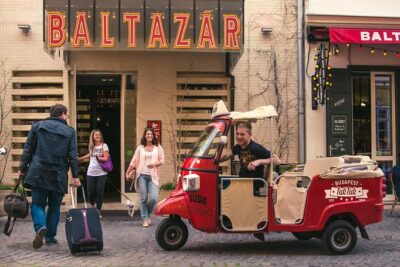
Budapest One Way Private Transfer to or from Airport
Read our review →
Budapest Private Luxury Sightseeing Tour with Guide and Transport
Read our review →
Private Budapest City tour with Classic Russian Jeep or G-Wagon!
Read our review →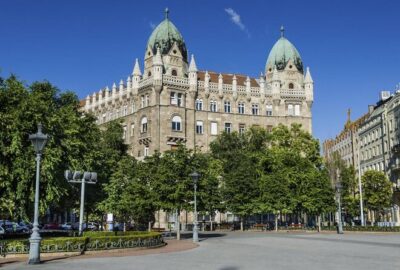
Budapest Private Full Day City Sightseeing Tour Walking or by Car
Read our review →