
Reviewed · BUDA CASTLE DISTRICT TOURS
Budapest: The WWII Siege of Buda Castle & Bomb Shelter Tour
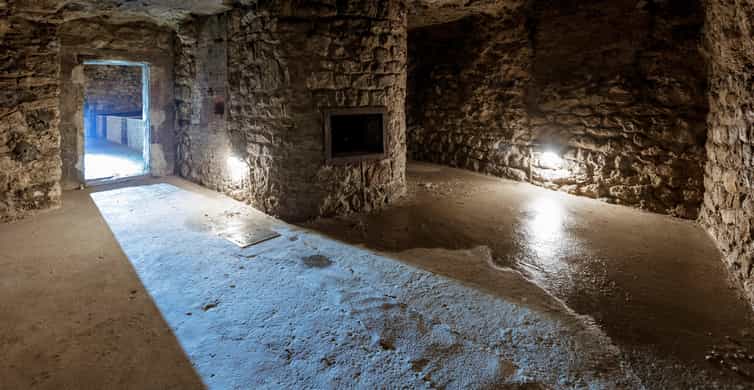
The most powerful part of this tour is the shift from Castle Hill’s handsome streets to the dark underground shelters where civilians, soldiers, and the wounded endured Budapest’s 52-day siege. Diaries and memoirs put human detail behind the dates, while the cave system shows how people tried to survive cold, hunger, disease, and overcrowding.
I like the combination of above-ground clues and original shelter spaces, including bullet holes, secret doorways, and ventilation shafts. I also like the $24 price for 90 minutes with an English-speaking guide, especially if you want more than the usual palace views. The drawback is the physical setting: steep stairs, narrow corridors, cobbles, and cool, sometimes wet floors make this unsuitable for anyone with mobility problems or claustrophobia.
Key points to know before you book
- The story centers on the 52-day siege: Learn what happened after the Soviet Red Army encircled Budapest on Christmas Eve 1944.
- You enter the Buda Castle Cave: About 35 minutes are spent in the underground cave and shelter system.
- The tour uses personal accounts: Diaries and memoirs help explain what survival felt like for people below Castle Hill.
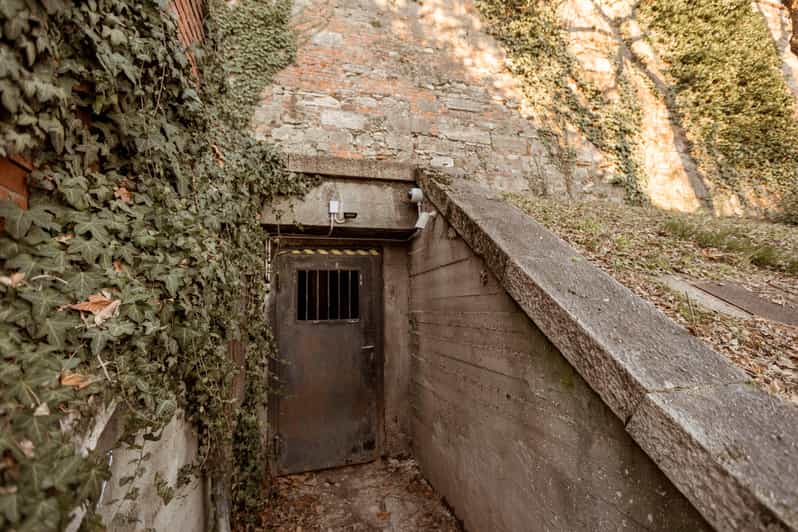
- You walk through real wartime traces: Look for bullet holes, concealed doors, cellar spaces, and shelter ventilation shafts.
- The ground is demanding: Expect cobbled streets, steep stairs, narrow corridors, and surfaces that may be wet.
- The temperature stays near 12°C: Bring a light layer even in warm weather, and wear shoes with a firm sole.
Why the Buda Castle siege story matters
Budapest’s wartime story is often reduced to a few dates and grand buildings. This walk gives you a more physical sense of the conflict. On Christmas Eve 1944, Soviet forces surrounded the German-occupied capital. The siege lasted 52 days, trapping German and Hungarian soldiers, civilians, and wounded people inside the city.
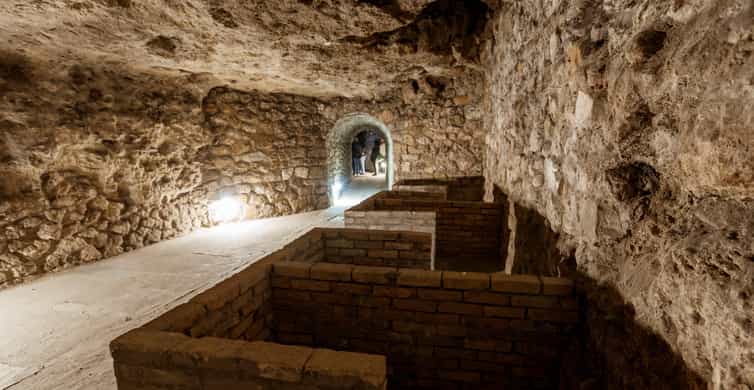
Buda Castle became one of the main refuge areas. People crowded into cellars, palace spaces, and the natural and man-made caves beneath the historic residential district. They faced no simple shelter-in-place routine. Water and food were scarce. Darkness, cold, illness, and too many people in too little space made daily life dangerous.
I find the setting useful because it keeps the story close to ordinary survival. You are not only hearing about military movements. You are learning how people tried to protect family members, preserve possessions, care for the wounded, and salvage royal treasures while artillery and street fighting raged above them.
The comparison with Stalingrad gives you a sense of the siege’s scale and brutality, but the tour’s real strength is its local focus. It explains what the fighting meant inside Buda Castle, where residents and soldiers were confined together.
More ways to see the Castle District:
- Budapest: Buda Castle Cave Tour
★ 4.7 · 5,677 reviews - Budapest: Buda Castle District Vampires and Myths Night Tour
★ 4.6 · 3,830 reviews - Budapest: Buda Castle Walk with Saint Stephen’s Hall
★ 4.5 · 3,012 reviews
Starting at Dísz Square and walking along Úri Street
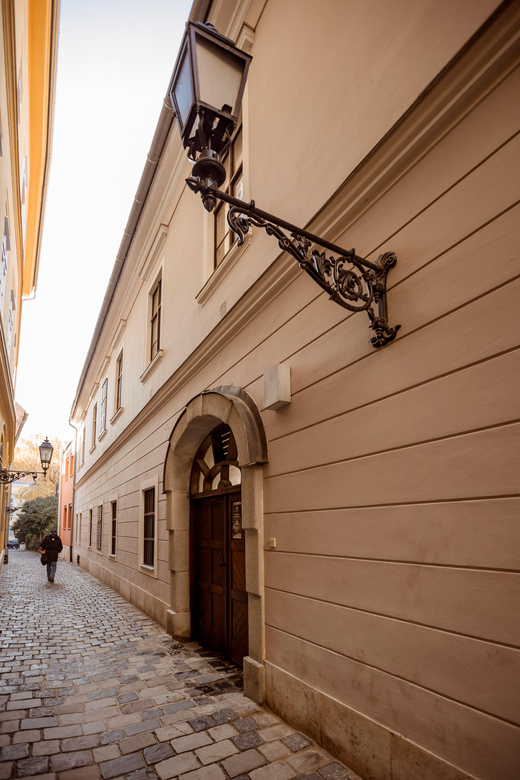
The tour begins at De la Motte B. Palace, at Dísz Square 15. Look for the large green gate next to the Posta building and the staff member holding a turquoise umbrella with the Buda Castle Walks logo.
This meeting point is worth finding early. Construction or other work in the Castle District can make the area confusing, and the tour starts promptly. The group cannot wait for late arrivals, so allow time to reach Castle Hill and locate the gate.
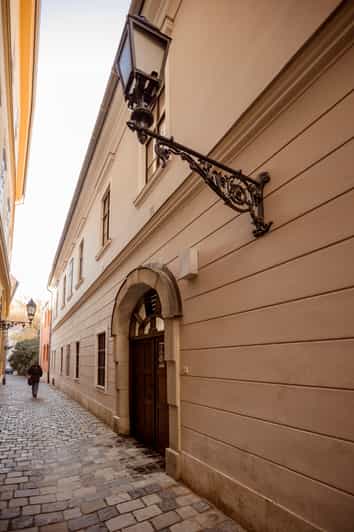
From there, you walk along Úri Street and through the Palace District. This opening section gives the guide a chance to explain the layout of Buda Castle and point out signs of the siege above ground. You may see bullet holes, unusual doorways, and ventilation shafts linked to public shelters.
That outdoor portion matters. Without it, the cave could feel like an isolated attraction. Instead, you begin to understand the streets and buildings above the underground spaces. The guide connects the places you see to the people who lived, fought, and hid there.
The walking is not a gentle stroll through a flat old town. Castle Hill has cobbles, and the route includes slopes and stairs. If you enjoy history walks, that movement helps the story feel grounded. If you have sore knees or find uneven paving difficult, take the warning seriously.
Entering the Buda Castle Cave and bomb shelter
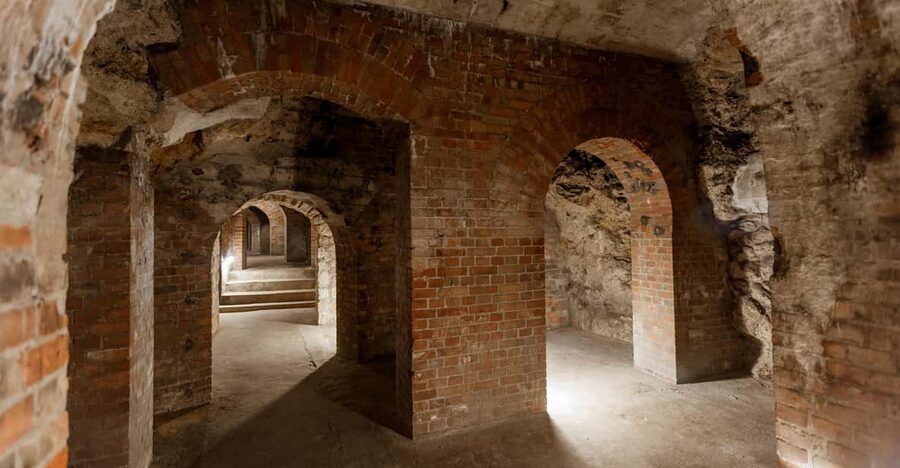
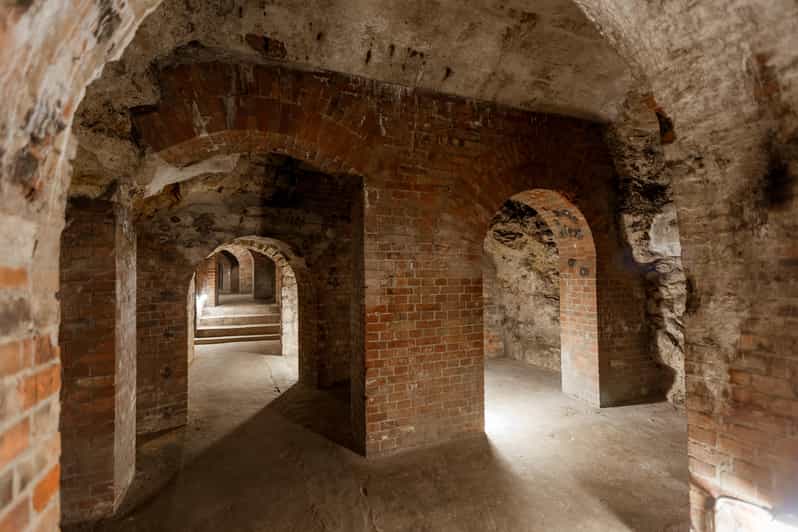
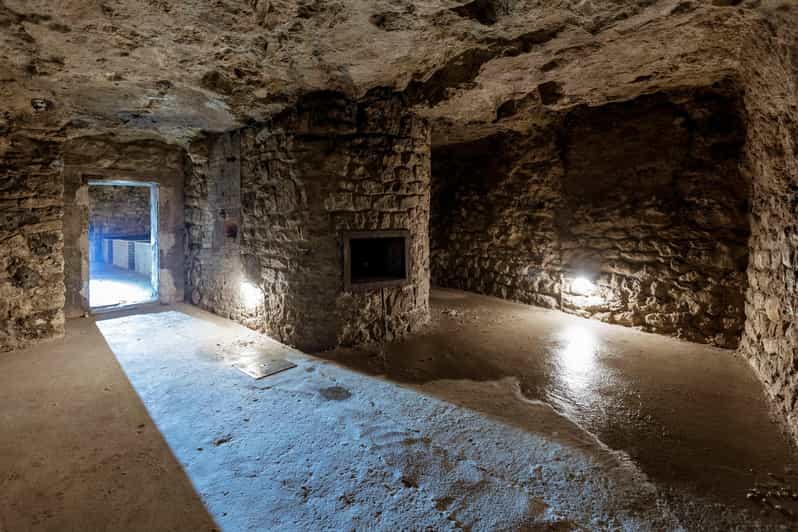
The underground portion lasts about 35 minutes, though much of the overall tour involves the cave and cellar system. You enter the Buda Castle Cave, a network of dark but illuminated passages beneath the district, and visit a cellar in an old dwelling house as well as an original Second World War bomb shelter.
The cave is the emotional center of the experience. Your guide describes how tens of thousands sought refuge in spaces like these, including civilians, troops, and injured people. The conditions were harsh enough to become a struggle for survival rather than a short wait for an air raid to pass.
The temperature below ground is about 12°C, or 54°F, throughout the year. In summer, that cool air may feel welcome at first. After several minutes, you will be glad to have a sweater or light jacket. In winter, dress in layers so you can stay comfortable when the tour moves back outdoors.
The passages are narrow in places. They are illuminated, but this is not a bright museum gallery with wide floors and large display cases. You may encounter steep steps, low-light areas, solid stone surfaces, and occasional dampness. Anyone with claustrophobia should think carefully before booking.
How the guide brings the siege to life
The guide does most of the interpretive work. The tour is built around diaries and memoirs, which shift the focus from abstract battlefield history to fear, exhaustion, thirst, and the instinct to stay alive.
Guides reported for this experience include Rita, Jonas, Kopp, and Balazs. Their approach may differ, but the feedback points to a common strength: strong command of the subject and an ability to answer questions beyond the basic route. Balazs, for example, is described as especially passionate about the period, while Kopp has handled wider questions about history, politics, and philosophy.
Jonas has also been singled out for keeping the tour engaging and easy to follow. Personal headphones are used on some departures, which helps when the group is walking or standing in a noisy area. One practical caution: an accent or pronunciation style can occasionally make details harder to catch, particularly for anyone who is not a native English speaker.
I would ask questions if the group allows time. The guides can explain the period before, during, and after the Second World War, not just the 52 days underground. That wider context helps explain why Budapest was occupied, why the siege took place, and why the Castle District became so important.
The subject is painful. You will hear about death, disease, hunger, and people trapped in appalling conditions. This is not a light castle walk with a brief wartime aside. I think the serious tone is appropriate, but you should choose another activity if you want a cheerful introduction to Buda.
Same city, a completely different way to spend an afternoon:
- Budapest: City Highlights Cruise with Welcome Drink
★ 4.6 · 35,610 reviews - Budapest: Unlimited Prosecco, Beer and Aperol Spritz Cruise
★ 4.8 · 25,310 reviews - Budapest: Széchenyi Spa Day Ticket with Optional Upgrades
★ 4.3 · 23,911 reviews - Budapest: Nighttime or Daytime Sightseeing Cruise
★ 4.2 · 21,062 reviews
Following the route back toward Lovas Way
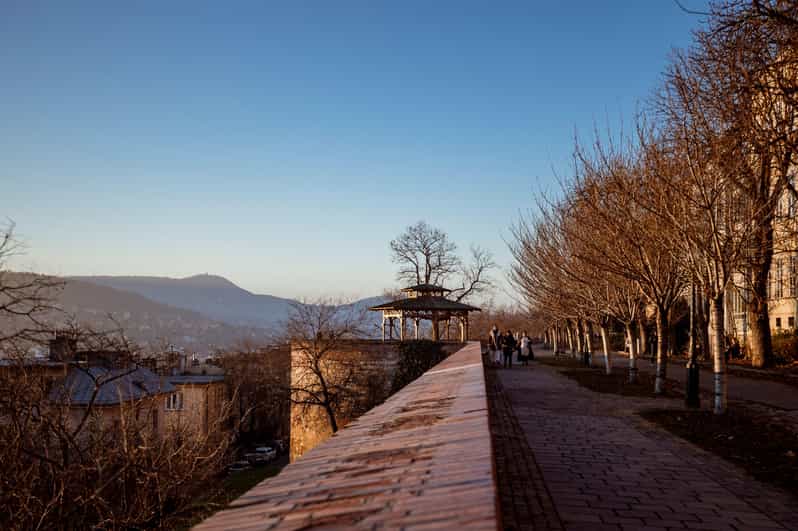
After the underground section, the route continues through the Castle District and along Lovas Way. This transition gives you another look at the relationship between the visible streets and the spaces below them.
The above-ground walk also helps with orientation. By this point, you have heard how shelters were connected to homes, public spaces, and palace areas. Looking at the buildings again, you can pay closer attention to the physical clues the guide pointed out earlier.
The route finishes at Szentháromság Square, rather than returning to Dísz Square. That is useful if you plan to continue exploring Matthias Church, Fisherman’s Bastion, or other parts of Castle Hill, though those sights are not part of the tour itself.
One practical benefit of finishing near Szentháromság Square is the timing. The 90-minute length fits neatly into a morning or afternoon plan. One departure ended near sunset, giving the group attractive views from the western side of the castle walls afterward. That depends on your starting time and season, but it is worth checking when choosing a slot.
What $24 buys you
At $24 per person, this is a reasonably priced specialist tour. You are paying for an English-language guide, the outdoor walk through the Palace District, and entry into the Buda Castle Cave and bomb shelter area.
The value comes from the interpretation. You could walk around Castle Hill and spot old masonry or bullet damage on your own, but you would miss the connection between those traces and the people sheltering below. You would also have little way to identify which cellar spaces were used during the siege or understand why the underground network mattered.
Ninety minutes is a good length for this subject. It is long enough to build a serious account of the siege without turning into an all-day history lecture. Still, the time passes through a mix of walking and storytelling, so do not expect every corner of the cave system or every phase of the war to receive equal attention.
Flexible booking helps if your Budapest plans are uncertain. You can cancel up to 24 hours ahead for a full refund, and the reserve-now, pay-later option means you do not need to pay at once. Those are useful safeguards, but the key booking issue is still the start time. Arrive early.
Who will get the most from this tour
I would choose this tour if you have a serious interest in modern European history, military history, memorial sites, or the ordinary experience of civilians in wartime. It also suits anyone who wants to see a less polished side of Buda Castle.
The recommended minimum age is 14. That makes sense because the subject matter is grim and the physical route requires care. Teenagers who enjoy history may find the cave especially memorable, while younger children may struggle with both the mood and the walking conditions.
You should be comfortable walking for 90 minutes on uneven ground. The tour is not suitable for wheelchair users or people with mobility impairments. It is also not a good choice if narrow, enclosed spaces cause anxiety.
Bring water and perhaps a small snack. Wear comfortable shoes, preferably with a reliable grip. The walk runs in all weather, including rain, and includes both outdoor and indoor sections, so a rain layer and warm clothing are sensible.
How this fits into a Budapest visit
The tour works well after you have seen some of Budapest’s major landmarks. If you already know the basic shape of Castle Hill, you can focus more easily on the siege story and the small physical details along the route.
It also makes a useful counterpoint to the grand views and restored facades around the castle. Buda Castle can feel formal and scenic from the outside. The cave shows the same district under pressure, when elegant buildings became military positions, homes became shelters, and underground rooms filled with frightened people.
Use the official on-site visit planner before you go to check current traffic conditions and closures in the Buda Castle Palace District. The supplied address is Dísz Square 15, but local construction can affect how easily you reach the meeting point.
Do not plan a tight connection immediately afterward. The tour normally lasts 90 minutes, but you will want a little time to exit the group, orient yourself at Szentháromság Square, and continue across the hill.
Should you book the Buda Castle siege tour?
Book it if you want a focused, well-guided look at Budapest during the Second World War, especially if the idea of entering a real bomb shelter appeals to you. The combination of survivor accounts, visible wartime traces, and underground spaces gives the subject weight that a standard sightseeing walk cannot match.
Skip it if you want a relaxed route, dislike enclosed passages, or cannot manage steep stairs and cobbled streets. For everyone else, $24 is fair value for a focused 90-minute experience, and the modest group setting can make it easier to hear guides such as Rita, Jonas, Kopp, or Balazs.
FAQ
How long does the tour last?
The tour lasts 90 minutes.
What language is the tour conducted in?
The tour is conducted in English with a live guide.
Where does the tour begin?
It begins at De la Motte B. Palace, Dísz Square 15, 1014 Budapest. Meet next to the Posta building at the large green gate.
How will I identify the tour staff?
Look for a staff member holding a turquoise umbrella marked with the Buda Castle Walks logo.
Where does the tour finish?
The tour finishes at Szentháromság Square.
Does the tour enter the Buda Castle Cave?
Yes. The route includes a guided visit to the Buda Castle Cave and its underground labyrinth.
Will I visit an original bomb shelter?
Yes. The experience includes an original Second World War bomb shelter and a cellar in an old dwelling house.
Is the tour held outdoors and indoors?
Yes. The programme combines walking through the Castle District with visits to underground cellar and cave spaces.
What temperature should I expect underground?
The cellar and Buda Castle Cave are approximately 12°C, or 54°F, throughout the year.
Is the tour suitable for children or people with mobility challenges?
It is recommended for ages 14 and older. It is not suitable for children under 14, wheelchair users, people with mobility impairments, or people with claustrophobia.
Just added around Budapest
- Budapest: Private, Personalized Pub Crawl, 3 drinks included★ 4.5 · 3 reviews
- Private day trip from Budapest to Bratislava, Vienna, and back★ 3.5 · 3 reviews
- Private Danube Bend tour – full day★ 4.5 · 3 reviews
- Budapest: Private Adventure Sightseeing Bicycle Tour★ 4.5 · 3 reviews
- Budapest: Guided City Walking Tour in Buda and Pest★ 5.0 · 3 reviews
- Budapest Old Jewish Quarter History Private Walking Tour★ 5.0 · 3 reviews
- Lake Balaton Full Day Private Wine Tour★ 5.0 · 3 reviews
- Budapest Urban Feast – Food Tour with Wine Tasting & Coffee House★ 4.5 · 3 reviews
Buda Castle District Tours, compared.

Buda Castle District Vampires and Myths Night Tour
Read our review →

Buda Castle District Dark History, Legends and Vampire Night Tour
Read our review →
Buda Castle District Walking Tour with a Historian
Read our review →
Browse the lists this tour appears in