Reviewed · GUIDED
Budapest: Guided Tour of the House of Music, Hungary
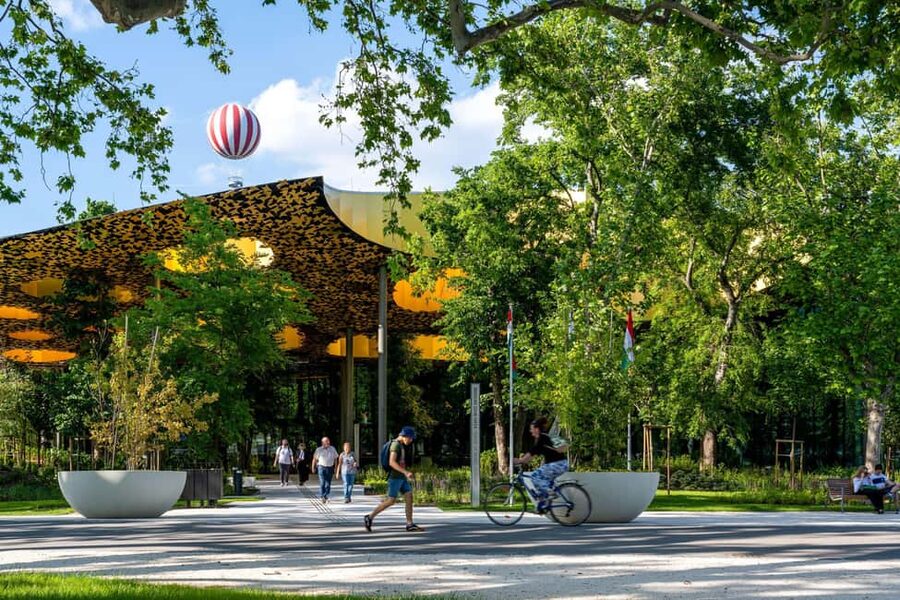
The House of Music Hungary is less a box for concerts than a piece of sculpture you can walk through. Its undulating roof, pierced by circular openings and covered with thousands of leaf-like metal elements, seems to float above the glass walls. I like the way the building lets City Park enter the design, and I like that the tour explains how beauty, sound, daylight, and sustainability work together.
The one-hour visit is especially good for architecture fans and curious adults who want more than a quick photograph. Guides such as Dora bring warmth and energy to the explanation, but remember that this is an architectural tour, not a full museum visit. Exhibitions, the Sound Dome, and Creative Sound Space are not included.
Key points to know before you book
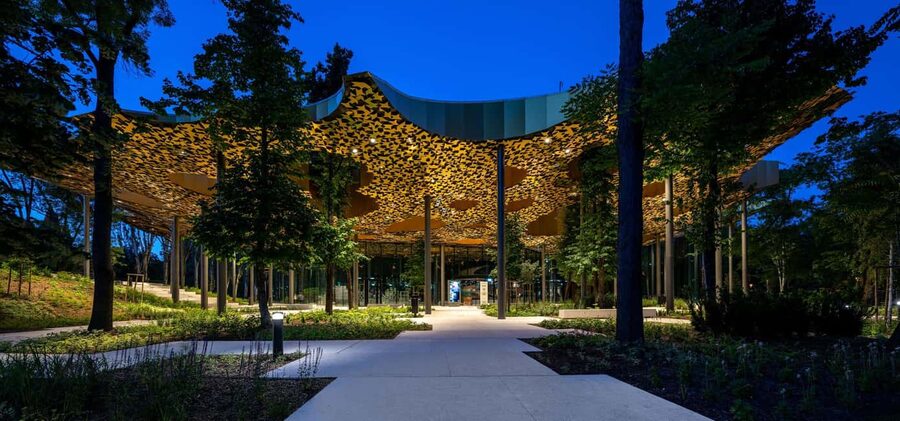
- A roof made for more than show: The leaf-like canopy helps shape the building’s light and acoustics while giving it its striking floating form.
- A guided look behind the glass: The tour explains the exposed concrete, wood, open levels, and connection between the interior and City Park.
- An excellent spiral staircase: This staircase is one of the building’s most memorable visual details and a real work of art in its own right.
- Important spaces are included: You see the concert hall, library and archives, outdoor areas, foyer, and gift shop.
- A focused one-hour visit: The $13 price is reasonable if you want architectural context, but less so if you mainly want interactive music exhibits.
- A friendly English tour: Dora has received special praise for her clear, upbeat explanations, and the activity is wheelchair accessible.
Why the House of Music is worth your time
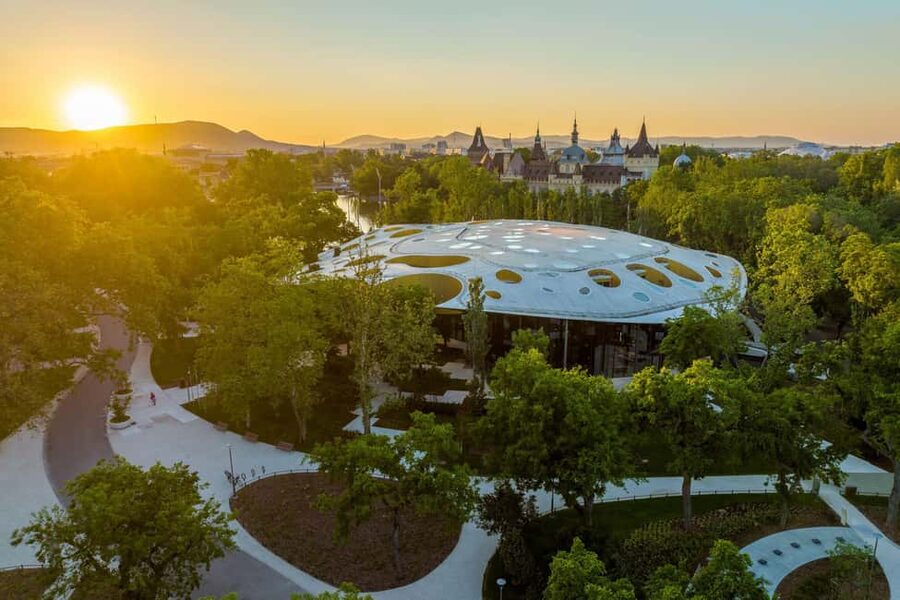
Budapest has no shortage of grand buildings, but the House of Music takes a different route. Instead of relying on stone, domes, or historic decoration, it uses glass, exposed concrete, timber, and a dramatic roof to create a building that feels open to its surroundings.
That matters because City Park is not just a backdrop here. The building was designed as a continuation of the park, with the boundary between outside and inside kept deliberately soft. From the foyer, you can look toward trees and open space rather than a blank wall. Natural light reaches deep into the interior, and the broad public areas make the building feel more like a gathering place than a sealed performance venue.
I find that this is the sort of place that becomes more interesting once someone points out the reasons behind its appearance. Without a guide, you may notice the roof and glass walls but miss how the shape affects sound, daylight, and movement. The tour gives you a way to read the building.
The setting also makes the activity easy to pair with a walk through City Park. You do not need to set aside half a day. A one-hour guided visit can fit neatly between other sights in the park, though you should allow extra time if you want to linger in the foyer, visit the gift shop, or enjoy the café.
A few more Budapest half-days to weigh up
- Budapest: Parliament Building Entry Ticket and Audio Guide
★ 4.5 · 3,844 reviews - Budapest: Opera House Guided Tour
★ 4.6 · 1,533 reviews - Budapest Small-Group Guided Tour on MonsteRoller e-Scooter
★ 5.0 · 1,517 reviews
Starting inside the foyer
The tour begins inside the foyer, which is a sensible meeting place. It gives you an immediate feel for the building’s scale and for its relationship with the park. The broad, open space and extensive glass make the first impression less about a formal entrance and more about crossing into a public room filled with light.
Your guide uses this opening area to explain the basic idea behind the building. The House of Music was designed by Japanese architect Sou Fujimoto, whose approach here treats nature as part of the architecture rather than scenery placed outside it.
Look up as you get your bearings. The roof is not a simple flat cover. It rises and falls in waves, with circular openings that bring daylight into the interior and help connect different levels of the building. The canopy includes thousands of small metal elements shaped like leaves, giving the ceiling a changing, organic appearance.
The foyer is also where the building feels most accessible to people who are not attending a concert or museum program. You can see how the designers wanted music, education, and public life to share the same structure. Open spaces and different levels encourage people to move, pause, meet, and look around.
For the best experience, arrive ready to listen from the start. The meeting point is inside, and the tour is short enough that a late arrival could mean missing the introduction to the building’s central design ideas.
Looking up at the floating roof
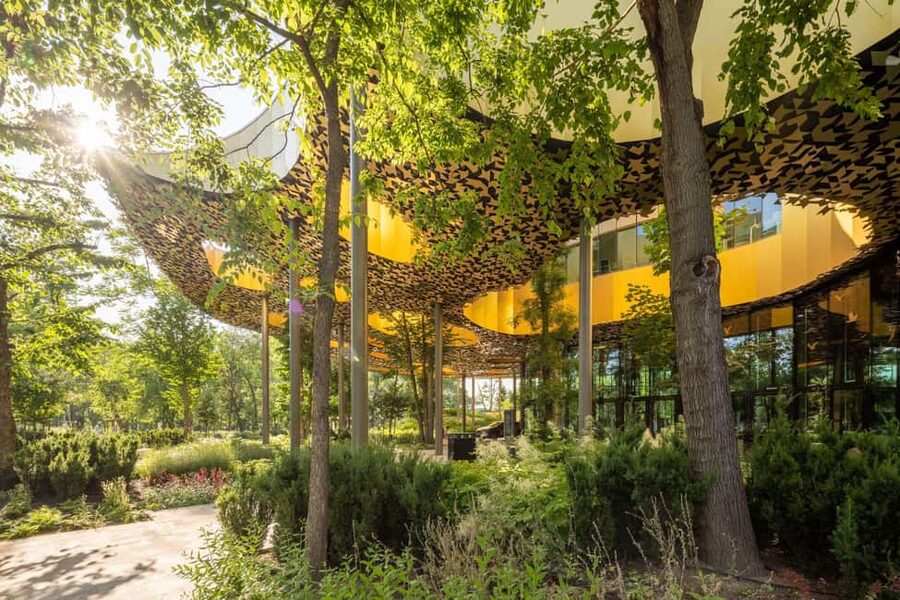
The roof is the star of the exterior portion of the tour. Its shape gives the House of Music a light, almost weightless appearance, even though it is a major architectural structure. The circular cutouts prevent it from becoming a solid lid and allow daylight to filter through.
The thousands of leaf-like metal pieces add texture and movement. From a distance, the roof reads as one sweeping form. Up close, the repeated elements give it a more detailed character. This is a useful reminder that the building was meant to echo the natural setting, not simply copy a traditional park pavilion.
Your guide also explains that the roof has a practical role. Its form contributes to the building’s acoustics and natural lighting. That combination is one of the most useful ideas to understand during the tour: the design is not decoration added after the engineering. The visual effect comes from solving real needs.
The roof’s circular openings also change the way you experience the spaces below. Light arrives from above in controlled patches rather than only through the vertical glass walls. Depending on the area, you might find yourself looking through the openings toward sky and trees, which reinforces the feeling that the building is open to its surroundings.
If you are mainly interested in Budapest’s traditional architecture, this may feel like a sharp change of pace. That is part of its appeal, but it also means the tour will not provide the historic detail you would get from a palace, church, or nineteenth-century boulevard building. Its subject is modern design and the way a cultural building works.
Moving through glass, concrete, and wood
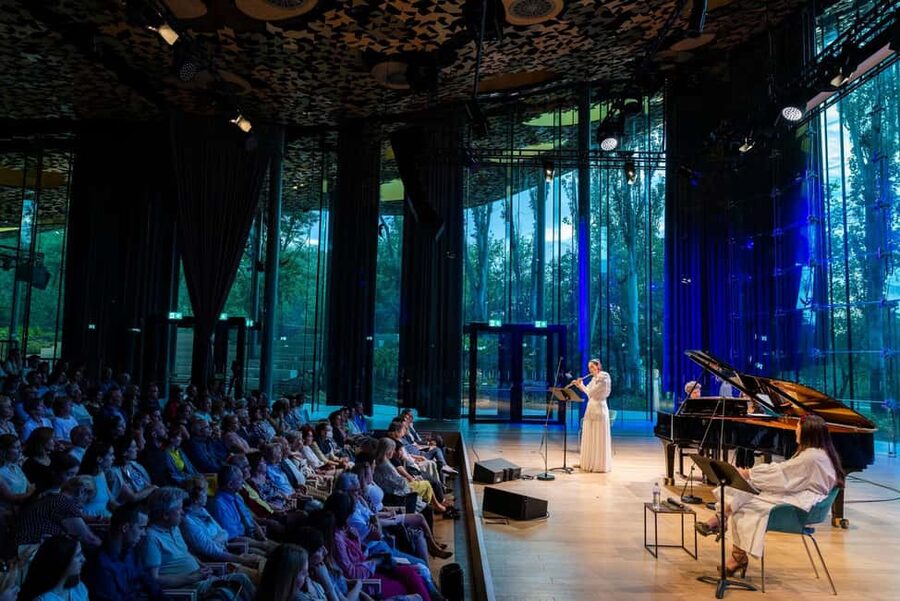
Inside, the tour focuses on the materials that shape the mood of the House of Music. The extensive glass keeps views toward City Park in sight, while exposed concrete gives the building a clear structural character. Wooden elements add warmth and help prevent the interior from feeling cold or industrial.
I like this balance. Concrete alone could make a music center feel severe. Glass alone might make it feel anonymous. The timber details soften the harder surfaces, while the open plan gives the interior room to breathe.
The guide points out how the various levels and open spaces support community use and music education. You do not need to enter an exhibition to understand the building’s purpose. The layout itself shows an effort to make music part of daily public life, not something limited to ticketed performances.
This is also where the tour helps you notice the relationship between movement and sound. The shape of a cultural building affects how people gather, how voices carry, and how concert spaces are separated from public circulation. You may not hear a performance during the visit, but the guide explains how the building’s materials and form were chosen to support sound quality in both performance spaces and shared areas.
Do not expect a technical engineering lecture at every turn. The experience is designed for a general audience, and the one-hour format keeps the pace moving. Still, if you enjoy architecture, this is a chance to ask about details that can be easy to overlook, such as why the walls are exposed, why the roof is perforated, or how the open design fits a music center.
Same city, a completely different way to spend an afternoon:
- Budapest: City Highlights Cruise with Welcome Drink
★ 4.6 · 35,610 reviews - Budapest: Unlimited Prosecco, Beer and Aperol Spritz Cruise
★ 4.8 · 25,310 reviews - Budapest: Széchenyi Spa Day Ticket with Optional Upgrades
★ 4.3 · 23,911 reviews - Budapest: Nighttime or Daytime Sightseeing Cruise
★ 4.2 · 21,062 reviews
The spiral staircase and changing viewpoints
The spiral staircase is one of the building’s best details. It is not merely a way to get from one level to another. Its shape adds a strong visual line to the open interior and gives you changing views as you move around it.
A good guide will use the staircase to explain how the House of Music unfolds vertically. Rather than presenting one grand room and a series of closed corridors, the building offers layered spaces, overlooks, and connections between public functions.
The staircase also suits the building’s theme. Music is often about rhythm, repetition, and movement, and the staircase has a visual rhythm of its own. That does not mean the architecture becomes a literal music instrument. Instead, the building uses curves, spacing, and changing perspectives to keep you aware of motion.
You may find this section especially rewarding if you enjoy photography. The combination of the staircase, timber, concrete, glass, and roof openings creates strong lines and contrasts. Photography is not the main purpose of the tour, though, so listen first and take pictures when the guide allows it.
Seeing the concert hall, library, and archives
The included tour gives you a look at important spaces beyond the main foyer. That includes the concert hall, library and archives, outdoor areas, and gift shop. The precise order can depend on the guide and the building’s operation, so think of these as parts of the architectural route rather than guaranteed long stops in each room.
The concert hall matters because it shows how the building’s visual language serves a working performance space. Here, the conversation returns to acoustics. Shape, materials, and roof structure all play a part in how sound behaves. Even without a live performance, you get a better sense of why the House of Music needed such careful planning.
The library and archives add another layer. They point to the building’s role in music education and preservation, not just entertainment. A music center can host performances, but it can also collect knowledge, support learning, and give people a place to explore sound at their own pace.
Outdoor areas help complete the concept. The building is meant to connect with City Park, and the exterior spaces show how that relationship works beyond the glass walls. The park setting is one of the strongest reasons to visit in person. Images can show the roof, but they cannot give you the same sense of how the building sits among open space and trees.
The gift shop is included as part of the route, but it should not determine your decision to book. Consider it a final stop rather than a major attraction. The real value lies in the explanation of the architecture and in access to spaces that you might not understand from an independent walk around the exterior.
How sound and sustainability shape the design
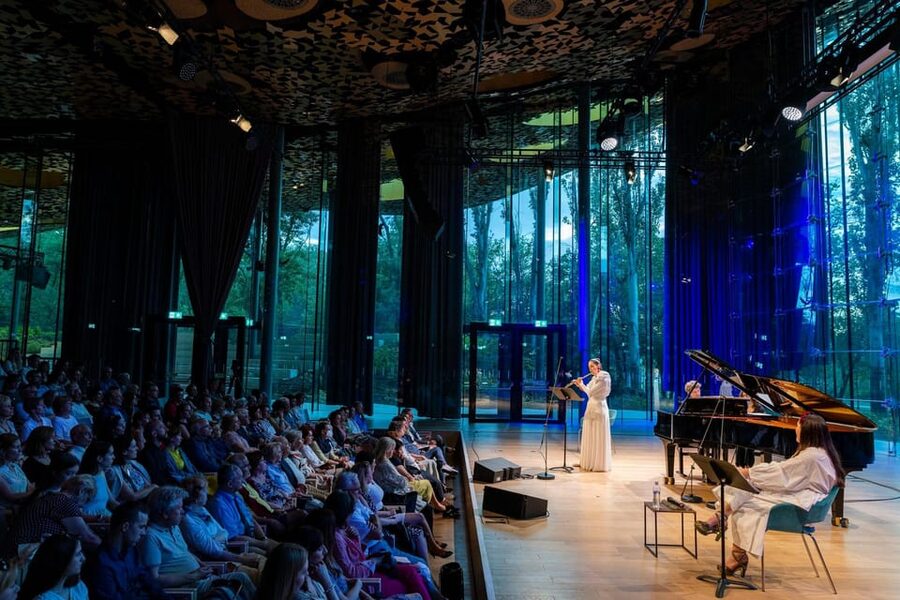
The House of Music is built around sound, yet the tour is not simply about musical history. It explains how architecture can support music before a note is played.
The building’s form and materials were selected with acoustics in mind. The guide discusses how the shape of the spaces, the roof structure, and the surfaces help optimize sound in performance areas and public zones. This is useful context because the building’s unusual appearance is tied to its purpose.
The same applies to sustainability. Geothermal energy and rainwater harvesting are among the features highlighted during the visit. These systems show that the building’s relationship with nature is not only visual. The park connection also extends into the way the building uses energy and manages water.
You should keep your expectations in check. A one-hour tour cannot explain every technical system in depth, and you will not be testing the acoustics through a concert during the visit. Still, the guide helps you see the building as a coordinated project rather than a striking shell.
That is the central lesson I take from the experience: good modern architecture can make practical decisions visible. A roof can control light, support sound, and create an identity at the same time. Glass can provide views while making public areas feel open. A park setting can shape the building rather than merely surround it.
What the $13 price really gets you
At $13 per person, this is a modestly priced guided experience by Budapest sightseeing standards. The value depends on what you want from the building.
If you only want to walk through the foyer, photograph the roof, and admire the views, you may not need a paid tour. The building’s exterior and public areas are the main visual draw, and an independent visit could be enough for a quick look.
I think the fee makes better sense if you care about why the House of Music looks and functions as it does. You get an English-speaking guide, a structured route, explanations of the concert hall and other spaces, and a clearer understanding of the acoustics and sustainability systems.
The price does not include the exhibitions, Sound Dome, or Creative Sound Space. This is the most important value warning. If you are hoping for hands-on sound activities or a full museum day, you will need to arrange those separately. The guided tour is best treated as an architecture-focused introduction.
The short duration is another advantage. One hour is long enough to cover the building’s key ideas without taking over your day. It is a good fit if you have already planned time in City Park and want a focused cultural stop rather than a full afternoon indoors.
Who will enjoy this one-hour visit
I would recommend this tour most strongly to:
- Architecture fans interested in Sou Fujimoto’s organic design
- People who want to understand modern buildings instead of only photographing them
- Music lovers curious about concert hall acoustics and cultural spaces
- Visitors already spending time in City Park
- Adults and older teenagers who can follow a one-hour guided explanation
- Anyone who prefers a short, structured activity at a low price
The experience is not suitable for children under 15, according to the activity information. That age rule makes it less useful for families with younger children, especially since the focus is explanation rather than interactive exhibits.
The tour is wheelchair accessible, which is helpful for visitors who need an easier route through a modern public building. Assistance dogs are allowed, but other pets are not.
The English guide is a real part of the value. Dora has received especially strong praise for her friendly manner, positive energy, and detailed explanations. Another guide, described as having white hair with colorful highlights, was also remembered for being kind, professional, and engaging. Guide assignments can change, but these details suggest that the human side of the tour is handled with care.
Booking and timing advice
The activity lasts one hour, with starting times shown when you check availability. Since the House of Music is in City Park, I would place it alongside other park sights rather than crossing Budapest only for this short activity.
Reserve with enough time to reach the foyer before the start. The meeting point is inside, and the tour ends back there. That makes the activity easy to follow, but it also means you should not expect a one-way route that drops you at another Budapest sight.
The free cancellation policy allows a full refund when you cancel at least 24 hours in advance. You can also reserve now and pay later, which is useful if you are still arranging your Budapest schedule. Those policies reduce the risk of booking a one-hour activity ahead of time.
Bring your attention more than anything else. The best details are overhead, around the staircase, in the glass connections to the park, and in the explanations of how the structure supports music. A quick visit can become much more rewarding when you take time to look at the junctions between roof, wall, and open space.
Should you book the House of Music tour?
Book it if you want a clear, guided explanation of one of Budapest’s boldest modern buildings. The $13 fee is good value for architecture fans, especially because the route includes the concert hall, library and archives, outdoor areas, and the building’s main public spaces.
Skip it if your priority is interactive music content. The exhibitions, Sound Dome, and Creative Sound Space are not included, so this tour will not replace a full visit to the House of Music’s other attractions.
For most adults spending time in City Park, I would book it if the schedule fits. The tour is short, the price is gentle, the English guidance adds useful context, and the building offers something very different from Budapest’s historic monuments. Just arrive expecting architecture, acoustics, and design rather than a concert or exhibition visit.
FAQ
How long does the House of Music guided tour last?
The tour lasts one hour. Starting times are available when you check the schedule.
What language is the tour offered in?
The tour is conducted in English by a live guide. Dora is one guide associated with especially positive feedback, though guide assignments may vary.
Does the tour include the House of Music exhibitions?
No. Entry to the exhibitions, Sound Dome, and Creative Sound Space is not included.
Which parts of the building are included?
The guided experience includes the building’s architectural features, concert hall, library and archives, outdoor spaces, foyer, and gift shop.
Where does the tour begin and end?
The tour begins inside the foyer and ends back at the same meeting point.
Is the tour wheelchair accessible, and are pets allowed?
The activity is wheelchair accessible. Pets are not allowed, although assistance dogs are permitted.
Just added around Budapest
- Budapest: Private, Personalized Pub Crawl, 3 drinks included★ 4.5 · 3 reviews
- Private day trip from Budapest to Bratislava, Vienna, and back★ 3.5 · 3 reviews
- Budapest: Private Adventure Sightseeing Bicycle Tour★ 4.5 · 3 reviews
- Private Danube Bend tour – full day★ 4.5 · 3 reviews
- Budapest: Guided City Walking Tour in Buda and Pest★ 5.0 · 3 reviews
- Budapest Old Jewish Quarter History Private Walking Tour★ 5.0 · 3 reviews
- Lake Balaton Full Day Private Wine Tour★ 5.0 · 3 reviews
- Budapest Urban Feast – Food Tour with Wine Tasting & Coffee House★ 4.5 · 3 reviews
Guided, compared.
Parliament Building Entry Ticket and Audio Guide
Read our review →

Budapest Small-Group Guided Tour on MonsteRoller e-Scooter
Read our review →
Guided Tour of the Parliament Building in Spanish
Read our review →

Budapest Danube Cruise with Drink, Audio Guide, Margaret Island
Read our review →