
Reviewed · WALKING TOURS
Walk and Cook Budapest
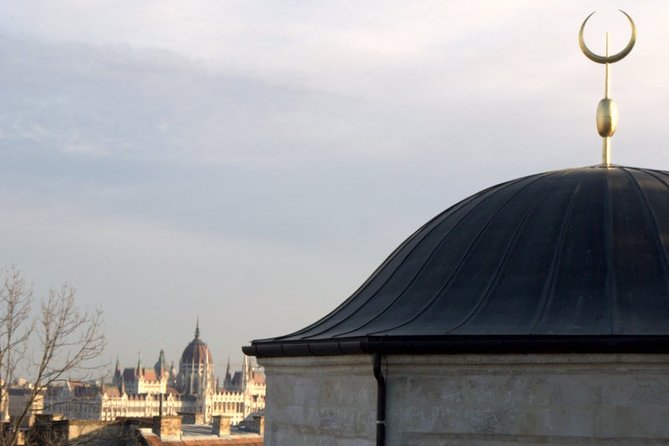
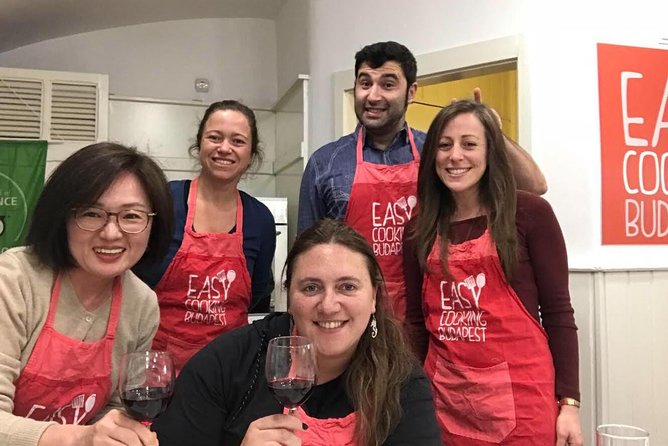
Budapest’s past is served at the table on this five-hour experience. You walk through sites tied to Ottoman rule, the Austro-Hungarian period, and Jewish life during the Second World War, then cook a Hungarian meal shaped by those same outside influences. I like the small group of no more than 10 and the fact that the evening ends with a proper sit-down dinner, not just a quick tasting. I also like the clear link between places, people, and food.
The main consideration is the price: at $131.06 per person, this is not a cheap walking tour or a simple cooking class. You are paying for both, plus the time and personal attention that come with a small group. The walking portion lasts about 1.5 hours, so be ready to move through the city before settling into the kitchen.
Key points at a glance
- Three strong Budapest stops: Gül Baba’s Tomb, the Hungarian Parliament Building, and the Great Synagogue frame the city’s Ottoman, imperial, and Jewish stories.
- A 1.5-hour history walk: The guide connects Budapest’s political past with the ingredients and dishes you later prepare.
- Cooking followed by dinner: You do not just watch a demonstration. You help make Hungarian dishes and then sit down to eat.
- A maximum of 10 people: The small group should make it easier to ask questions and take part at the stove.
- Several possible Hungarian menus: Choices include stuffed peppers, roast goose, székelygulyás, fánk, mákos guba, and plum dumplings.
- English and mobile ticketing: The experience is offered in English and is near public transportation.
Why the history and cooking belong together
Many city tours separate sightseeing from food. This one tries to explain why Hungarian cooking tastes the way it does. The country’s food culture developed through contact, conflict, migration, empire, and religious communities. That gives the cooking lesson a useful frame instead of treating paprika and dumplings as isolated curiosities.
The walk looks at what the Ottoman Empire left behind, what happened to Budapest’s Jewish population during the Second World War, and what was built during the Austro-Hungarian period. You then head to the kitchen and prepare dishes that reflect connections with the nations and cultures that shaped Hungary.
I like this structure because it gives you something to remember beyond a list of monuments. If you learn that a dish carries several layers of influence, you are more likely to recognize its place in Hungarian life when you order food later.
The tour is also a good choice if you want conversation and participation rather than a large group following a flag. With no more than 10 people, you should have a better chance to hear the guide clearly, ask about the sites, and get involved in the cooking.
More walking tours in Budapest:
- Budapest: Buda Castle Walk with Saint Stephen’s Hall
★ 4.5 · 3,012 reviews - Big Bus Budapest Hop-On Hop-Off Bus and Walking Tour
★ 3.5 · 2,206 reviews - Budapest: Buda Castle District Walking Tour
★ 4.6 · 2,108 reviews
Gül Baba’s Tomb and the Ottoman chapter
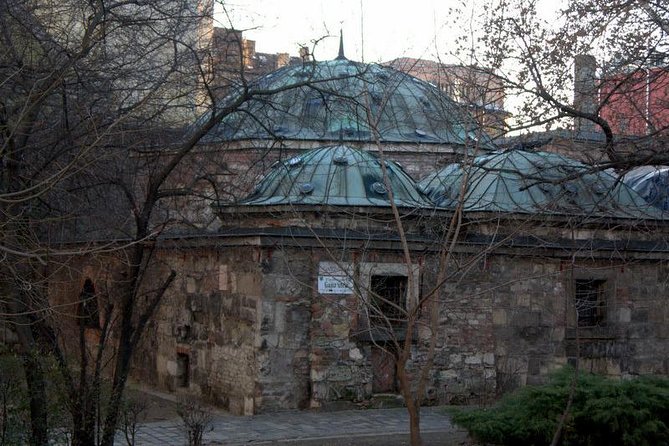
The first listed stop is Gül Baba’s Tomb, also known as Gül Baba Türbéje. It introduces the Ottoman period before the tour moves on to other chapters of Budapest’s past.
This stop matters because it gives the history walk an unusual opening. Many first-time visits to Budapest begin with the grand buildings along the Danube. Starting with a tomb connected to Ottoman rule points you toward the city’s less obvious layers.
Your guide uses this part of the walk to explain what the Ottoman Empire left behind. That context helps you understand that Budapest was shaped by more than the Austro-Hungarian age that appears in so many photographs.
The supplied details do not promise entry inside the tomb or a long visit there, so I would treat it as a historical stop rather than a full museum tour. If you want extensive architectural detail at every location, the cooking part will naturally leave less time for that. The value here is the link to the larger story.
Parliament and the Austro-Hungarian era
The Hungarian Parliament Building is the second major stop. Its presence gives the walk a grand change of scale after Gül Baba’s Tomb.
The building represents the period when Budapest developed under the Austro-Hungarian arrangement. Your guide discusses the beautiful buildings constructed during that era, placing Parliament within the city’s wider growth and political identity.
The experience lists Parliament as a stop, but it does not say that an interior visit is included. Plan on learning about and seeing the building as part of the walking route rather than assuming you will take a formal tour inside.
That distinction is important. A visitor who wants a dedicated Parliament interior visit should arrange that separately. For this experience, the building works as one part of a broader conversation about power, architecture, and the city’s changing role.
I like the contrast between this stop and the first one. Gül Baba’s Tomb points to Ottoman rule, while Parliament brings you into the grand imperial period. Within a short walking tour, Budapest becomes a city of overlapping eras rather than a collection of unrelated sights.
The Great Synagogue and Budapest’s Jewish story
The Great Synagogue, or Nagy Zsinagóga, is the third listed stop. This is where the walk turns toward the history of Budapest’s Jewish people, including what happened to them during the Second World War.
That subject gives the tour emotional weight. It also keeps the food discussion from becoming shallow. Jewish communities helped shape the cultural life and cooking of Budapest, and the guide’s historical explanation gives you a better sense of how food, identity, and loss can be tied together.
The information provided does not state that admission to the synagogue is included. I would therefore plan for an exterior or nearby historical stop unless the operator confirms otherwise. If you want to tour the synagogue grounds or interior, ask before booking so your expectations match the five-hour plan.
The three stops create a useful sequence: Ottoman influence, Austro-Hungarian architecture, and Jewish Budapest during wartime. The walk is not simply a scenic introduction. It prepares you to see the later cooking session as part of the city’s history.
Same city, a completely different way to spend an afternoon:
- Budapest: City Highlights Cruise with Welcome Drink
★ 4.6 · 35,610 reviews - Budapest: Unlimited Prosecco, Beer and Aperol Spritz Cruise
★ 4.8 · 25,310 reviews - Budapest: Széchenyi Spa Day Ticket with Optional Upgrades
★ 4.3 · 23,911 reviews - Budapest: Nighttime or Daytime Sightseeing Cruise
★ 4.2 · 21,062 reviews
From city streets to the kitchen
After about 1.5 hours of walking, you head to the kitchen. The change of pace is one of the experience’s best features. You move from listening and looking to handling ingredients and preparing food.
The exact cooking format is not described in detail, so you should not expect a fixed list of tasks or a guaranteed recipe at every booking. What is clear is that this is a hands-on workshop, followed by a full dinner.
That means the experience suits you if you want to do more than sample finished dishes. You will have a chance to connect the earlier discussion with the meal itself, including the outside influences that helped shape Hungarian cooking.
The small group should matter most here. A maximum of 10 participants is modest enough for a more personal class, though the amount of individual instruction can still depend on the group and the dish being prepared. The English-language format makes it practical for international visitors who want to ask questions while cooking.
If you are looking for a quick food stop between museums, this is too long. The tour takes about five hours, and the cooking and dinner portion forms a large part of the experience. I would schedule it as a major half-day activity, not as a casual add-on.
What may appear on your plate
The sample menus offer a good picture of the range. One option centers on töltött paprika, or stuffed peppers, with mákos guba for dessert. Mákos guba is a sweet dish made with bread and poppy seeds, and it gives the meal a distinctly Hungarian finish.
Another menu includes roast goose with onion potatoes and braised cabbage, followed by fánk, a special donut. This is the most substantial-sounding combination in the sample list, with a main course, two savory sides, and a fried dessert.
A third option is székelygulyás, described as goulash soup with sauerkraut, followed by szilvásgombóc, or plum dumplings. This menu shows that Hungarian food is not limited to the paprika-heavy dishes many people know from tourist menus.
The sample dishes should be treated as examples rather than a firm promise of one meal. The supplied information lists several possible mains and desserts, but it does not explain how the menu is selected or whether dietary substitutions are available. If you have allergies, follow a vegetarian diet, or need another adjustment, contact the operator before booking.
I like the menu variety because it makes the cooking session feel more worthwhile. Roast goose, stuffed peppers, goulash with sauerkraut, poppy-seed dessert, donuts, and plum dumplings offer different views of Hungarian home cooking. You are not being offered one famous dish and sent on your way.
Is $131.06 a fair price?
At $131.06 per person, the cost is high compared with a standard Budapest walking tour. It is also higher than many short cooking demonstrations. The fair comparison is a combined experience lasting about five hours, with a guided city walk, a hands-on class, and a full dinner.
The value improves if you would otherwise book these activities separately. You get historical context before cooking, an English-speaking guide, a small group, and a meal at the end. The maximum of 10 people is especially important for anyone who dislikes large classes where the instructor does most of the work.
The price is harder to justify if you mainly want sightseeing. You will spend only about 1.5 hours on the city walk, and the details do not include guaranteed interior access to Parliament or the Great Synagogue. In that case, a dedicated sightseeing tour may give you more time at the major buildings for less money.
It is also not the best value if you want a formal culinary course with advanced technique. The available information presents the class as a cultural cooking experience, not professional training. I would pay for the connection between Budapest’s history and its food, the personal scale, and the complete meal.
Who will enjoy this most?
I would recommend this experience to first-time visitors who want a quick but meaningful introduction to Budapest. The walk gives you several major themes, while the meal lets you spend time in one place and talk through what you have seen.
It also suits couples, solo visitors, and small groups who prefer a personal setting. The maximum of 10 people is small enough to support conversation without requiring a private booking.
Food-minded history fans are the natural audience. You get the Ottoman period, the Austro-Hungarian era, Jewish Budapest, and Hungarian dishes in one continuous activity. That combination is more useful than a food tour that names dishes without explaining their background.
You may want to skip it if you dislike cooking, need a very fast itinerary, or want extensive monument interiors. The tour is built around participation and context. It is not a hop-on, hop-off sightseeing circuit, and it is not described as a museum tour.
One personal note from the available feedback is worth mentioning: a participant thanked Kata and Karolina for guiding them and creating good memories during the Christmas period. That suggests these names may be connected with the hosting team, but you should not assume both guides will lead every departure. If having a particular guide matters to you, confirm that in advance.
Timing, transport, and the small practical details
The activity starts and ends at the meeting point in Budapest. The exact street address is not supplied here, so check the final booking confirmation carefully before setting out.
The tour is near public transportation, which helps because you are combining a walking route with a kitchen session. Even so, allow time to reach the meeting point. The experience runs for approximately five hours, and the route includes several city locations before the cooking begins.
Wear comfortable shoes. The first section is a city walk, not a seated lecture. You may also want to avoid scheduling another fixed activity immediately afterward, since the cooking and dinner timing can affect the finish.
The ticket is mobile, so you can show it from your phone. Confirmation is sent within 48 hours of booking, subject to availability. The tour requires a minimum number of participants, and if that number is not met, you will be offered another date or experience, or a full refund.
Cancellation is flexible if you plan ahead. You can cancel at least 24 hours before the local start time for a full refund. Changes or cancellations made within 24 hours are not accepted and are not refunded.
Final call: book it for the connection
I would book Walk and Cook Budapest if I wanted one activity that combines city history, local food, and a small-group setting. The strongest feature is the handoff from the street to the stove. You learn about Budapest’s Ottoman, imperial, and Jewish chapters, then sit down to dishes shaped by the same broad cultural connections.
I would not book it as my only Parliament or synagogue visit, since interior admission is not stated. I would also think twice if $131.06 feels steep for a half-day activity.
For the right reader, though, the price buys more than dinner. It buys a guided way to understand why Hungarian food developed as it did, with Kata and possibly Karolina among the hosting team, and with a group small enough to keep the experience personal. If that sounds like the Budapest you want to meet, this is a strong choice.
FAQ
How long does Walk and Cook Budapest last?
The experience lasts approximately five hours. The walking portion lasts about 1.5 hours, followed by the cooking workshop and full dinner.
Which Budapest sights are included?
The listed stops are Gül Baba’s Tomb, the Hungarian Parliament Building, and the Great Synagogue, also called Nagy Zsinagóga.
Is the tour offered in English?
Yes. The experience is offered in English.
How many people can join the tour?
The activity has a maximum of 10 travelers.
What food might be prepared?
Sample dishes include stuffed peppers, roast goose with onion potatoes and braised cabbage, and székelygulyás with sauerkraut. Sample desserts include mákos guba, fánk, and plum dumplings.
Can I cancel for a full refund?
Yes. You must cancel at least 24 hours before the experience’s local start time for a full refund. Cancellations or changes made less than 24 hours before the start time are not accepted or refunded.
Just added around Budapest
- Budapest: Private, Personalized Pub Crawl, 3 drinks included★ 4.5 · 3 reviews
- Private day trip from Budapest to Bratislava, Vienna, and back★ 3.5 · 3 reviews
- Budapest: Private Adventure Sightseeing Bicycle Tour★ 4.5 · 3 reviews
- Private Danube Bend tour – full day★ 4.5 · 3 reviews
- Budapest: Guided City Walking Tour in Buda and Pest★ 5.0 · 3 reviews
- Budapest Old Jewish Quarter History Private Walking Tour★ 5.0 · 3 reviews
- Lake Balaton Full Day Private Wine Tour★ 5.0 · 3 reviews
- Budapest Urban Feast – Food Tour with Wine Tasting & Coffee House★ 4.5 · 3 reviews
Walking Tours, compared.
Budapest City Landmarks Walking Tour in 2 Hours
Read our review →
3-Hour Orientation Walking Tour of Buda and Pest
Read our review →
Budapest All in One Small Group Walking Tour with Strudel Stop
Read our review →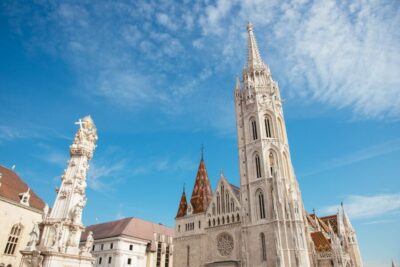
Buda Castle District Walking Tour with a Historian
Read our review →
BloodThirsty Hungary: Walking tour & Dark Historical Stories
Read our review →
Browse the lists this tour appears in