
Reviewed · STREET ART
Street Art and Alternative Tour in Budapest
Budapest’s District VII reveals a different face when you stop staring at grand buildings and start studying walls, utility boxes, stickers, and tiny objects tucked into side streets. This two-hour walk with ET, an active part of the local art scene, focuses on what the city’s street artists are saying, not just what they are painting.
I like the small group limit of eight, which gives you room to ask questions and lets ET adjust the conversation to the people in front of him. I also like the route’s unusual mix of large murals, smart-art images, stickers, bronze sculptures, and political messages. The main drawback is simple: you walk slowly but continuously on narrow streets, so this is not a sit-down art tour or an easy option for anyone who dislikes being on foot.
Key points to know before booking
- District VII from street level: Explore a part of central Budapest through side streets and local art rather than standard sightseeing stops.
- More than giant murals: Look for stickers, small installations, painted walls, bronze pieces, and art placed where you might otherwise walk straight past.
- ET leads the conversation: Expect explanations about artistic choices, local events, politics, and the changing character of the area.
- A real walking tour: The pace is slow, but the route involves about two hours on foot and includes thin streets.
- Small group format: The maximum of eight people makes discussion easier and helps the guide respond to your interests.
- Convenient finish: The walk ends at Szimpla Kert, Budapest’s oldest ruin bar and one of the city’s best-known symbols.
Why Budapest’s street art deserves two hours
Budapest is famous for its grand avenues, thermal baths, cafés, and ornate architecture. Yet District VII also has a lively visual language that is easy to miss if you only follow the main sightseeing circuit.
This tour asks you to slow down. A large mural may catch your eye first, but ET also points out small stickers, altered street objects, compact images, and details placed at eye level or lower. The result is less like visiting a gallery and more like learning how to read the city as you walk through it.
That distinction matters. You may arrive expecting a parade of beautiful paintings and find that many works are really about messages. Some comment on politics, social issues, or current events. Others make a small joke or turn an ordinary object into a visual surprise. The art is not presented as decoration alone. It is part of a public conversation.
I especially like that the experience does not reduce street art to a collection of colorful photo stops. ET explains why a piece exists and how local events have shaped the way artists express themselves. You get a more useful understanding of Budapest’s creative scene, even if you are not an art specialist.
A few more Budapest half-days to weigh up
- Budapest: Street Art and Underground Movements Walking Tour
★ 5.0 · 238 reviews - Alternative Street Art Free Walking Tour of Budapest
★ 4.5 · 53 reviews - Budapest: Alternative Street Art & Jewish Tour
★ 4.8 · 49 reviews
Starting at Telep-Art Galéria on Madách Imre út
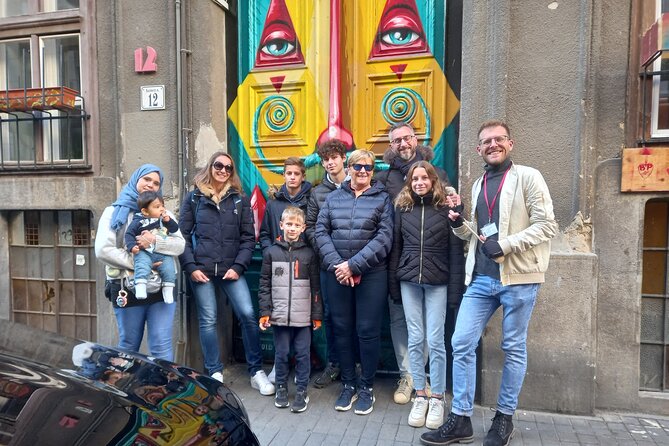
The meeting point is Telep-Art Galéria at Madách Imre út 8, in the 1075 postal district. This places you in District VII, a central area well suited to a walking tour focused on independent art and alternative culture.
The start at an art gallery sets the tone. You are not being gathered beside one of Budapest’s usual monuments and then led toward a set list of famous sights. The subject is clear from the first minute: local art, creative expression, and the smaller details that can disappear in a busy city center.
Be careful with the meeting directions. One particularly useful detail is that ET is said to make the meetup instructions clear, but you should still allow time to locate Telep-Art Galéria before the start. A mobile ticket and nearby public transportation make the practical side straightforward, though the supplied information does not specify which transport lines or stops to use.
The walk itself is described as slow. That is good news for anyone who wants time to look, listen, and ask questions. It also means you should not think of the two-hour duration as a quick introduction from one landmark to the next. The point is to stop often and examine things that are easy to pass.
Small streets, large murals, and art at eye level
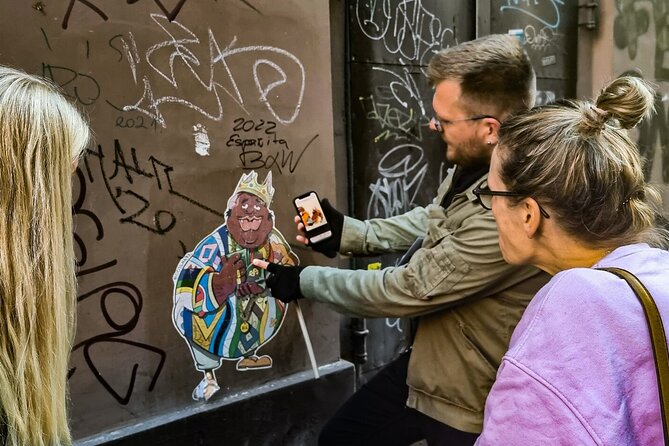
The route moves through narrow streets, with ET showing you many kinds of street art along the way. The exact sequence can change, and the guide has indicated that he varies the tour depending on the day and the group. That flexibility is useful because street art is not a fixed museum collection. Pieces can change, disappear, or be replaced.
You might see broad wall paintings that reshape a blank building frontage. You may also encounter stickers, small images, bronze sculptures, smart-art pieces, and other compact works. The variety is one of the strongest reasons to choose this tour. It trains you to look beyond the large mural that everyone photographs.
The smaller works may be the most rewarding part. A sticker on a box or a tiny figure on a street fixture can carry a message that would be invisible from a passing car. ET’s role is to show you where to look and explain what the work may be responding to. Afterward, you are likely to scan walls and street furniture on your own instead of seeing only the official sights.
That is a genuine benefit for the rest of your Budapest stay. The tour gives you a new habit: pause, look closer, and ask who made this, why here, and what it might mean. You do not need an art background to enjoy that change in perspective.
Politics, public messages, and the changing district
A major strength of the experience is its attention to political and social ideas. One of the tour’s central themes is that street art often presents a critical view of the world. ET connects pieces to events and changes in Budapest, especially in and around District VII.
This is where the walk becomes more than a hunt for attractive backdrops. Some art may be playful, but some is pointed. You can expect discussion about how artists use public space to express opinions and how creative work reflects the wider mood of a neighborhood.
The subject is not treated as black and white. That is important in a city where old buildings, new businesses, nightlife, local residents, and creative projects share tight streets. ET’s approach encourages questions and conversation rather than giving you a single official interpretation.
I would recommend this part most strongly to people interested in politics, current affairs, visual culture, or the way cities change. If you want only colorful murals and quick photo opportunities, parts of the discussion may feel more serious than expected. If you like understanding why art appears where it does, this is likely to be the heart of the tour.
Same city, a completely different way to spend an afternoon:
- Budapest: City Highlights Cruise with Welcome Drink
★ 4.6 · 35,610 reviews - Budapest: Unlimited Prosecco, Beer and Aperol Spritz Cruise
★ 4.8 · 25,310 reviews - Budapest: Széchenyi Spa Day Ticket with Optional Upgrades
★ 4.3 · 23,911 reviews - Budapest: Nighttime or Daytime Sightseeing Cruise
★ 4.2 · 21,062 reviews
ET’s guiding style and the value of eight people
ET is described as passionate about street art and involved in Budapest’s art scene. That personal connection shapes the experience. He does not simply identify an artist or point toward a wall. He discusses the ideas behind the work, places it in a local setting, and answers questions as the walk unfolds.
The group cap of eight is a real advantage at $36.20 per person. You are paying more than you would for a self-guided walk, but you receive interpretation, local context, and a chance to ask about pieces that catch your attention. In a small group, it is also easier to hear on narrow streets and keep the conversation moving.
The tour is interactive. People with different ages, national backgrounds, and levels of art experience can take part without needing specialist knowledge. ET has also adjusted weekday tours to suit the people attending, so the experience may feel more like a conversation than a standard speech.
That personal format has a tradeoff. The precise route and emphasis may vary. If you prefer a tightly timed itinerary with a guaranteed list of named murals, this walk may feel less predictable. I see the flexibility as a plus for street art, but it is worth knowing before you book.
Ending at Szimpla Kert in Kazinczy Street
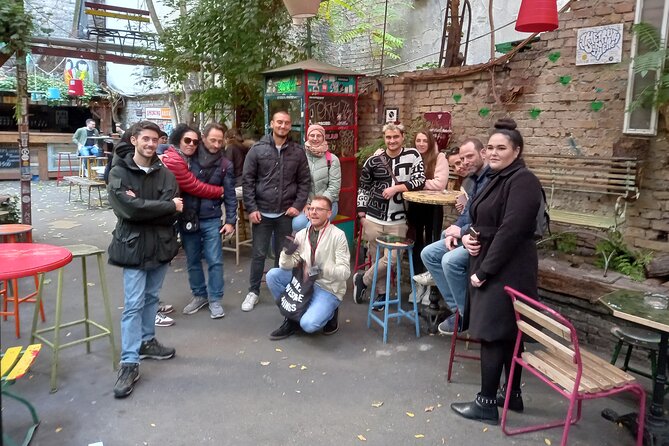
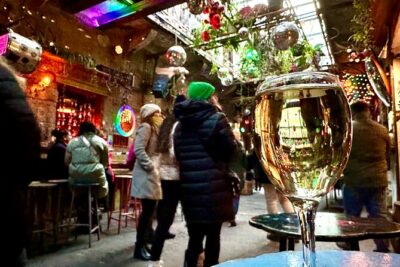
The tour ends at Szimpla Kert, at Kazinczy u. 14. This is Budapest’s oldest ruin bar and one of the city’s symbols, so the finish gives you an easy next step after the walk.
The ending is well chosen for the subject. Szimpla Kert is closely linked with the alternative side of Budapest, and it gives you a natural place to continue looking at the city’s creative culture after the guide says goodbye. The tour does not include a stated drink or hosted visit, so think of Szimpla Kert as the endpoint rather than an included bar experience.
This also helps with planning. You finish in a central district with a famous local landmark nearby, rather than being left at an isolated suburban location. If you are arranging your first afternoon in Budapest, the route from Telep-Art Galéria to Szimpla Kert gives you both an activity and a useful orientation to District VII.
Do not expect the walk to cover all of Budapest’s art districts. It concentrates on one neighborhood and its small streets. That focus is part of the value, but you will want another plan for Buda, the Danube, the Parliament area, and the city’s classic monuments.
Is $36.20 a fair price?
At $36.20 per person, this is a reasonable price if you want interpretation rather than a map and a list of addresses. The cost pays for a two-hour guided walk, an English-speaking guide, a maximum group size of eight, and access to ET’s personal knowledge of the local scene.
The value is strongest for first-time visitors who would not know where to find the less obvious work. It is also useful for anyone who wants to understand the ideas behind the images rather than simply photograph them. A self-guided search would cost less, but you could easily miss the stickers, small pieces, and background that make the route worthwhile.
The price may feel less attractive if you are already familiar with Budapest’s street art or mainly want a fast mural tour. The walk is deliberately slow, and conversation is a major part of the experience. You are paying for attention and context, not just distance covered.
The fact that the experience is often reserved about 25 days ahead suggests that you should not assume you can always decide at the last minute, especially if your dates are fixed. You can cancel for a full refund up to 24 hours before the start time. Changes or cancellations within 24 hours are not accepted for a refund.
Who will enjoy this walk most?
I would choose this tour for people who like cities from the side rather than the postcard front. It suits visitors with an interest in art, politics, local culture, photography, and neighborhood change.
It is also a good first-day activity if you want to get your bearings in District VII. The pace gives you time to notice the streets, and the finish at Szimpla Kert leaves you in a lively central area for the rest of the afternoon or evening.
Families can take part, and most people can participate. Service animals are allowed, and the route is near public transportation. Still, keep the walking requirement in mind. The tour lasts about two hours, and the route uses narrow streets. If standing and walking for that long is difficult, ask before booking because no special route adjustments are stated.
Art lovers will probably get the most from the variety. You are not limited to polished murals. The tour includes work that may be tiny, temporary, political, or deliberately rough around the edges. That makes it less predictable than a formal gallery visit, but also closer to how street art actually works.
Practical tips for making the most of it
Wear comfortable shoes. The route is not described as strenuous, but you will be walking slowly for roughly two hours, with repeated stops on city streets.
Bring a phone with your mobile ticket available. The meeting point is specific, so check the address before setting out and leave a little spare time to find Telep-Art Galéria.
Come ready to ask questions. ET’s strength is discussion, and the experience works best when you point out something you want explained or share your own reading of a piece.
Look down and around, not only straight ahead. The small works are easy to miss, and the tour’s purpose is partly to teach you how to notice them. After the walk, give yourself time at Szimpla Kert rather than rushing immediately to the next sight.
English is the offered language. If you want a tour in another language, this is not the right choice based on the available details.
My verdict: book it for a different Budapest
I recommend booking this tour if you want Budapest with the volume turned down and the details turned up. ET brings enthusiasm, local art knowledge, and historical and political context to a part of District VII that many people pass without really seeing.
The strongest reasons to go are the small group, the range of art forms, and the focus on meaning. You will not simply collect mural photos. You will learn how to spot stickers, boxes, small sculptures, and critical messages that can change the way you walk through the city.
Skip it if you dislike walking, want a fixed list of major sights, or prefer art without political discussion. For everyone else, $36.20 buys a thoughtful two-hour introduction to Budapest’s alternative side, ending at one of the city’s best-known ruin bars.
FAQ
Where does the Street Art and Alternative Tour in Budapest start?
The tour starts at Telep-Art Galéria, Madách Imre út 8, 1075 Budapest, Hungary.
Where does the tour end?
The walk ends at Szimpla Kert, Kazinczy u. 14, 1075 Budapest, Hungary. Szimpla Kert is described as Budapest’s oldest ruin bar and one of the symbols of the city.
How long does the tour last?
The experience lasts approximately two hours.
What language is the tour offered in?
The tour is offered in English.
How many people can join the tour?
The group has a maximum of eight people.
What kinds of street art will I see?
The tour can include murals, stickers, bronze sculptures, smart-art images, and other forms of small or large street art.
Is the tour suitable for most people?
Most people can participate, and families can join. Service animals are allowed. Keep in mind that the experience involves walking through narrow streets for about two hours.
Can I cancel for a full refund?
Yes. You can cancel at least 24 hours before the experience starts for a full refund. Cancellations or changes made less than 24 hours before the start time are not accepted for a refund.
Just added around Budapest
- Budapest: Private, Personalized Pub Crawl, 3 drinks included★ 4.5 · 3 reviews
- Private day trip from Budapest to Bratislava, Vienna, and back★ 3.5 · 3 reviews
- Budapest: Private Adventure Sightseeing Bicycle Tour★ 4.5 · 3 reviews
- Private Danube Bend tour – full day★ 4.5 · 3 reviews
- Budapest: Guided City Walking Tour in Buda and Pest★ 5.0 · 3 reviews
- Budapest Old Jewish Quarter History Private Walking Tour★ 5.0 · 3 reviews
- Lake Balaton Full Day Private Wine Tour★ 5.0 · 3 reviews
- Budapest Urban Feast – Food Tour with Wine Tasting & Coffee House★ 4.5 · 3 reviews
Street Art, compared.
Street Art and Underground Movements Walking Tour
Read our review →
Alternative Street Art Free Walking Tour of Budapest
Read our review →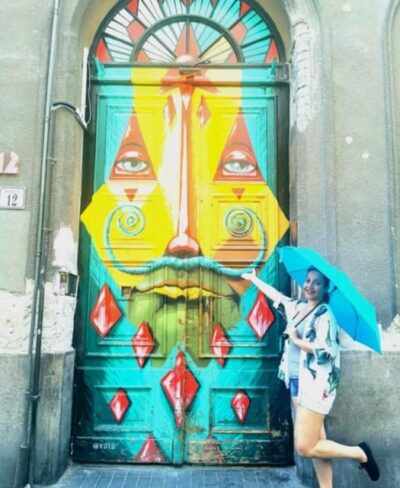

Budapest Vibe: Ruin Bars, Street Art and Culture Tour
Read our review →
Original Budapest Alternative Street Art & Jewish Tour
Read our review →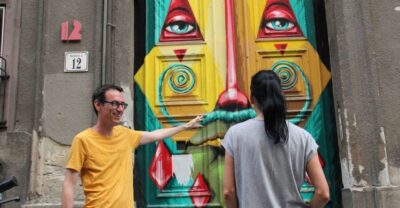
Budapest Urban Art – Private Street Art Tour with a Drink in a Ruin Bar
Read our review →Browse the lists this tour appears in