
Reviewed · WALKING TOURS
Budapest Walking Tour: Explore Top Sights & Hidden Gems
Budapest reveals its character in quick changes of scene: one minute you are studying bold murals in District VII, and the next you are inside Szimpla Kert, a former ruin turned nightlife landmark. This two-hour walking tour links Budapest’s art, Jewish heritage, modern architecture, and grand church squares without asking you to commit a whole day.
I like the small maximum group of 15, which should make it easier to hear the guide and ask questions. I also like the mix of places: the tour is not only about postcard views, but also about street art, difficult memories, and a scruffy old building that helped shape Budapest’s nightlife. The main concern is that the route can change. One departure shifted both its time and its district, leaving a customer without the promised Jewish Quarter visit.
Key points to know before you book

- District VII murals: See colorful public art created through Budapest’s Street Art Project, with admission included.
- Szimpla Kert: Enter the landmark ruin-bar setting and learn how a damaged building became a cultural and nightlife center.
- Jewish Quarter memorials: Spend about 30 minutes with statues that honor Budapest’s Jewish community and remember Holocaust victims.
- A sharp architectural contrast: The 1970s Szakszervezetek Háza offers a look at central Budapest beyond its older imperial buildings.
- St. Stephen’s Basilica meeting point: The tour begins and ends at Szent István tér 1, making the logistics simple.
- Compact English tour: The experience lasts about two hours, costs $36 per person, and allows no more than 15 people.
A short walk through several Budapests
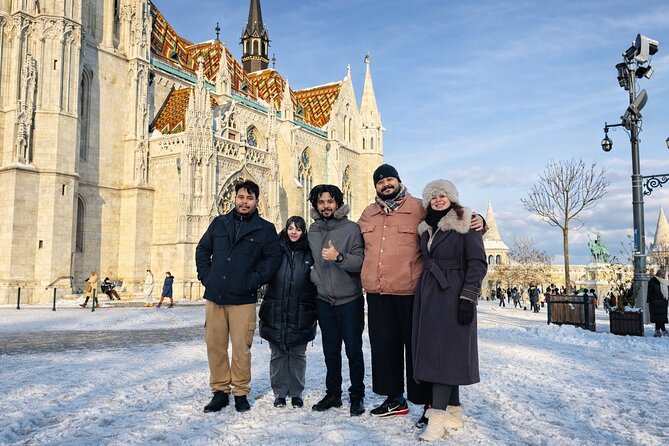
Budapest is not one tidy historic center. It is a city of grand churches, worn courtyards, modern concrete, Jewish heritage, public art, and late-night culture, often sitting close together.
That is the real appeal here. In a short span, you move from the formal setting of St. Stephen’s Basilica to District VII, where murals cover walls and old buildings carry the marks of a more complicated past. You get a quick introduction to the city’s character rather than a long march through a single theme.
The tour is conducted in English and includes a professional guide. One guide named Janet has led a departure and was praised for her handling of the walk, though you should not assume she will be your guide. The maximum of 15 people is useful in a city walk. A group that size is still social, but it is far more manageable than a large crowd stopping on narrow pavements.
At $36 per person, this is not the cheapest way to wander Budapest. Still, the price can make sense if you want a guide to connect the places rather than simply point them out. The value rests on the explanation and route. Most of the stops have no admission charge, so you are paying for the guide’s time, local context, and the convenience of seeing several areas in one sitting.
More walking tours in Budapest:
- Budapest: Buda Castle Walk with Saint Stephen’s Hall
★ 4.5 · 3,012 reviews - Big Bus Budapest Hop-On Hop-Off Bus and Walking Tour
★ 3.5 · 2,206 reviews - Budapest: Buda Castle District Walking Tour
★ 4.6 · 2,108 reviews
District VII murals, Budapest’s open-air gallery
The first featured stop is District VII, where murals were created as part of Budapest’s Street Art Project. The project helped turn plain walls and neglected surfaces into an open-air gallery.
You should expect about 20 minutes here. That is enough time to see a selection of works and hear why public art matters in this part of the city, but it is not a full street-art tour. If murals are your main interest, you may want to return later and explore more on your own.
This stop works well at the start because it gives you an immediate sense of present-day Budapest. The paintings bring color and energy to streets shaped by older buildings and serious historical events. The contrast is useful: the city is not frozen in a museum version of itself.
The tour does not charge an admission fee for the murals. You are seeing public art as part of the street, which is exactly the point. Wear comfortable shoes, since this is a walking experience and the city streets are the setting, not a controlled attraction.
Szimpla Kert and the rise of the ruin bar
Next comes Szimpla Kert, one of Budapest’s best-known nightlife spots. It began in a dilapidated building and was later filled with mismatched furniture, art, and spaces for live events.
The planned visit lasts about 20 minutes. That gives you time to take in the odd rooms and improvised look, while the guide explains how the place fits into Budapest’s nightlife. You are not booking an evening out here, and the supplied details do not promise a drink, meal, or live performance during the tour. Think of this as a cultural stop, not a bar crawl.
I like this part of the route because it explains an important Budapest idea: an old building does not always need to be polished into respectability before it becomes useful again. Szimpla Kert’s appeal comes from its rough edges, handmade feel, and changing social life.
There is also a practical point. A nightlife venue can feel very different during the day than at night, and this short stop will not give you the full evening atmosphere. If you want to experience Szimpla Kert as a bar, return separately. The walking tour gives you the backstory and visual introduction, then keeps moving.
The Jewish Quarter and its memorial statues
The most serious section of the walk is the approximately 30-minute stop in Budapest’s Jewish Quarter. Here, statues honor the Jewish community and commemorate people killed during the Holocaust.
This is the longest listed stop, and rightly so. The memorials need time. You are not simply checking off another sight. You are being asked to pause, look closely, and consider what happened to the community that lived here.
The Jewish Quarter is one of the places where Budapest’s past and present sit side by side. The district is associated today with nightlife and creative activity, but its memorials point to the lives lost and the damage done during the Holocaust. A guide can help keep the visit grounded in people and place rather than turning it into a string of dates.
You should pay close attention to the promised route when booking. One departure was changed from District VII to District V after a time change, and that meant the Jewish Quarter was omitted. The company later acknowledged that the itinerary change should have been communicated in advance. If this district is the reason you are booking, confirm the meeting time and route before the tour, especially if you have a tight final day in Budapest.
That issue does not erase the value of the planned stop, but it matters. A walking tour is partly a promise about where you will walk. If the Jewish Quarter is essential to your plans, do not treat a last-minute route change as a minor detail.
Same city, a completely different way to spend an afternoon:
- Budapest: City Highlights Cruise with Welcome Drink
★ 4.6 · 35,610 reviews - Budapest: Unlimited Prosecco, Beer and Aperol Spritz Cruise
★ 4.8 · 25,310 reviews - Budapest: Széchenyi Spa Day Ticket with Optional Upgrades
★ 4.3 · 23,911 reviews - Budapest: Nighttime or Daytime Sightseeing Cruise
★ 4.2 · 21,062 reviews
Szakszervezetek Háza and a 1970s Budapest
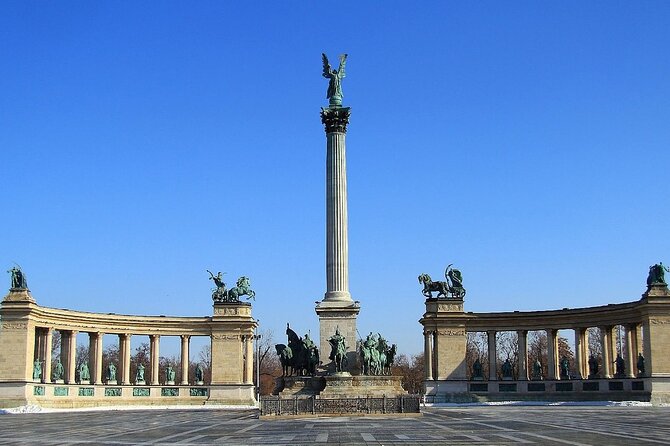
The itinerary also includes Szakszervezetek Háza, an iconic central Budapest building constructed in the 1970s. It originally served as a hub for Hungary’s trade unions.
This stop offers a useful break from the city’s better-known churches and older facades. Budapest is often presented through its Austro-Hungarian architecture, but the 1970s building reminds you that the city has a modern political and architectural layer too.
The visit is listed as about 30 minutes, giving the guide room to discuss the building’s original purpose and place in Hungarian public life. The available details do not specify whether you enter the building, so expect the focus to be the structure and its story rather than a guided interior visit.
I appreciate this kind of stop because it broadens your view. You may not have placed a trade-union headquarters on your Budapest wish list, but it can help explain how the city changed under state socialism. It also gives the walk a better balance. Without it, the route might feel like a tour only of old churches, murals, and nightlife.
St. Stephen’s Basilica and an easy finish
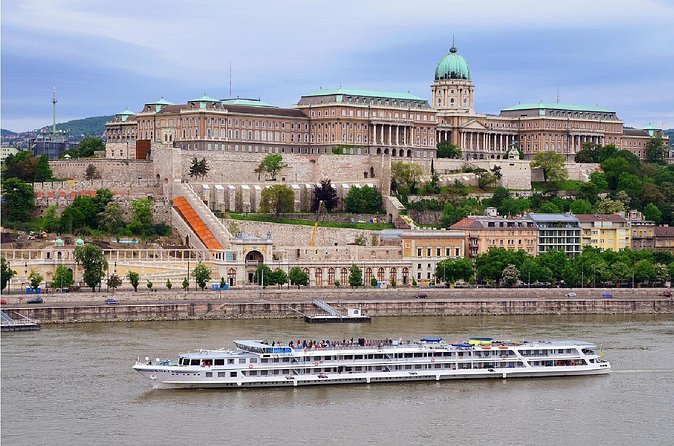
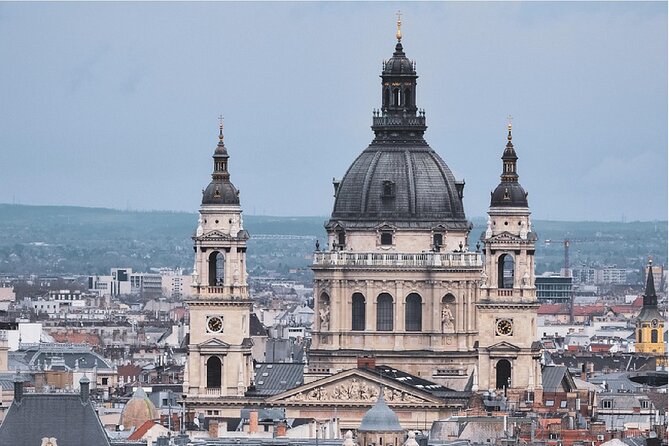
The meeting point is St. Stephen’s Basilica at Szent István tér 1, 1051 Budapest, and the activity ends back there. The basilica provides a clear central landmark, which makes the start and finish less stressful than meeting on an unnamed street corner.
The supplied timing lists about 20 minutes for this part of the experience, along with a few extra stops kept as surprises. Since the tour begins and ends at the same location, you can plan another central Budapest activity afterward without arranging a separate return transfer.
The basilica is also a fitting anchor for the route. Its formal square and grand religious setting contrast with the street art and ruin-bar culture of District VII. The walk therefore has a simple visual rhythm: polished and monumental, then rough and creative, then solemn and reflective, with modern architecture added to the mix.
Do not assume that the tour includes entry inside the basilica. The included items specify a guided walking tour and a professional guide, while all listed stops show admission as free. If seeing the interior or another part of the church is important to you, ask the provider before booking or plan a separate visit.
What $36 buys you in two hours
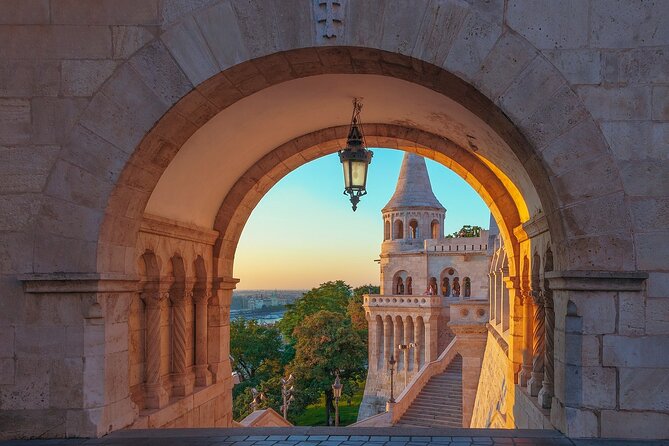
The $36 price is reasonable if you want orientation and interpretation in a short window. You get a professional English-speaking guide, a planned route, and several subjects that would be easy to miss if you only followed a standard sightseeing path.
The cost is less compelling if you only want to photograph the murals or see the outside of the basilica. The listed stops do not require admission fees, and several can be visited independently. In that case, you are paying mainly for the connections between places and for the guide’s explanation.
For a first day in Budapest, the compact length is a strength. You can use the tour to learn which areas deserve more of your own time. The Jewish Quarter, Szimpla Kert, and District VII all offer reasons to return, while the tour’s two-hour format leaves room for lunch, a museum, or another appointment.
The timing is also a limitation. Five listed stops, each with roughly 20 or 30 minutes, leave little room for lingering. You will get an introduction, not an exhaustive study. If you prefer slow photography, long conversations, or detailed architectural analysis, a private or longer tour may suit you better.
Group size, timing, and practical planning
The maximum group size is 15 people. That is small enough for a guide to address the group without shouting, though the actual number may be lower or close to the limit.
The tour is offered in English and lasts approximately two hours. Build in a little flexibility around the end, since a walking route can take longer when the group pauses or the guide adds an unscheduled explanation. The meeting and end point are the same, at St. Stephen’s Basilica.
The experience is near public transportation, which helps if you are staying outside central Budapest. The details do not state the exact walking distance, pavement conditions, or number of stairs, so anyone with mobility concerns should ask the provider before booking. Service animals are allowed, and most people can participate.
Gratuities are not included. They are optional, so you can decide after the tour based on the guide’s work and the experience you received.
Free cancellation is available up to 24 hours before the local start time for a full refund. Changes made inside that 24-hour window are not accepted, and cancellations during that period are not refunded. That rule makes it worth checking your plans early, particularly because one departure had its time changed at short notice.
Who should book this Budapest walk?
I would choose this tour if you want a quick introduction to District VII and the Jewish Quarter, with enough variety to keep the walk moving. It suits first-time visitors, people with only a short stay, and anyone who prefers a guide to explain why a place matters instead of simply naming it.
It is also a good match if you enjoy contrasts. You will see public art, a ruin-bar landmark, Holocaust memorials, a 1970s civic building, and a major basilica in one compact experience. That is a useful snapshot of Budapest’s many eras and moods.
I would be more cautious if your schedule is rigid or if the Jewish Quarter is your main reason for booking. The reported route change is the key warning. Confirm that the advertised District VII and Jewish Quarter route is operating, and do so before the 24-hour cancellation deadline if possible.
Should you book it?
Book this walking tour if you value a short, guided introduction to Budapest’s less formal side and want the convenience of starting and ending at St. Stephen’s Basilica. At $36, it offers fair value for an English tour capped at 15 people, especially when you want context for the street art, nightlife, memorials, and modern architecture.
Skip it if you have already explored District VII on your own, need guaranteed access to a particular site, or want a long and highly detailed history walk. The itinerary may change, and two hours gives you a brisk overview rather than a complete study. For the right schedule, though, this is a useful first look at Budapest beyond the grand avenues.
FAQ
How long does the Budapest walking tour last?
The tour lasts approximately two hours.
What language is the tour offered in?
The tour is offered in English.
How much does the tour cost?
The listed price is $36 per person.
Where does the tour begin?
The tour begins at Szent István tér 1, 1051 Budapest, Hungary, beside St. Stephen’s Basilica.
Where does the tour end?
The activity ends back at the meeting point near St. Stephen’s Basilica.
What places are included on the walk?
The planned stops include District VII murals, Szimpla Kert, Budapest’s Jewish Quarter, Szakszervezetek Háza, and St. Stephen’s Basilica. There are also a few additional surprise stops.
Is admission to the stops included?
The listed stops have no admission charge. The included part of the booking is the two-hour guided walking tour and professional guide.
How many people can join the tour?
The tour has a maximum of 15 participants.
Are service animals allowed?
Yes. Service animals are allowed.
Can I cancel for a full refund?
Yes. You can cancel at least 24 hours before the local start time for a full refund. Cancellations made less than 24 hours before the start are not refunded.
Are tips included?
No. Gratuities are optional and are not included in the price.
Just added around Budapest
- Budapest: Private, Personalized Pub Crawl, 3 drinks included★ 4.5 · 3 reviews
- Private day trip from Budapest to Bratislava, Vienna, and back★ 3.5 · 3 reviews
- Budapest: Private Adventure Sightseeing Bicycle Tour★ 4.5 · 3 reviews
- Private Danube Bend tour – full day★ 4.5 · 3 reviews
- Budapest: Guided City Walking Tour in Buda and Pest★ 5.0 · 3 reviews
- Budapest Old Jewish Quarter History Private Walking Tour★ 5.0 · 3 reviews
- Lake Balaton Full Day Private Wine Tour★ 5.0 · 3 reviews
- Budapest Urban Treats – Cake and Coffee House Tour★ 5.0 · 3 reviews
Walking Tours, compared.
Budapest City Landmarks Walking Tour in 2 Hours
Read our review →
3-Hour Orientation Walking Tour of Buda and Pest
Read our review →
Budapest All in One Small Group Walking Tour with Strudel Stop
Read our review →
Buda Castle District Walking Tour with a Historian
Read our review →
BloodThirsty Hungary: Walking tour & Dark Historical Stories
Read our review →
Browse the lists this tour appears in